

Be creative when photographing your subject
Saturday 28 June 2025, 16:08 by Nando Harmsen | 2,920 views | 4 commentsThis article was translated from Dutch with the help of AI. Read the original.
Have you seen something you'd like to photograph? Don't just point your camera at it and take the shot. Think about composition and framing. Look around carefully first and consider the possibilities. Make a choice before taking the photo.
As an example, I am using a pigeonnier I saw in the Tarn in France. A pigeonnier is a tower for pigeons, whose droppings were used to fertilise the vineyards. This was a fine example, standing on little legs.
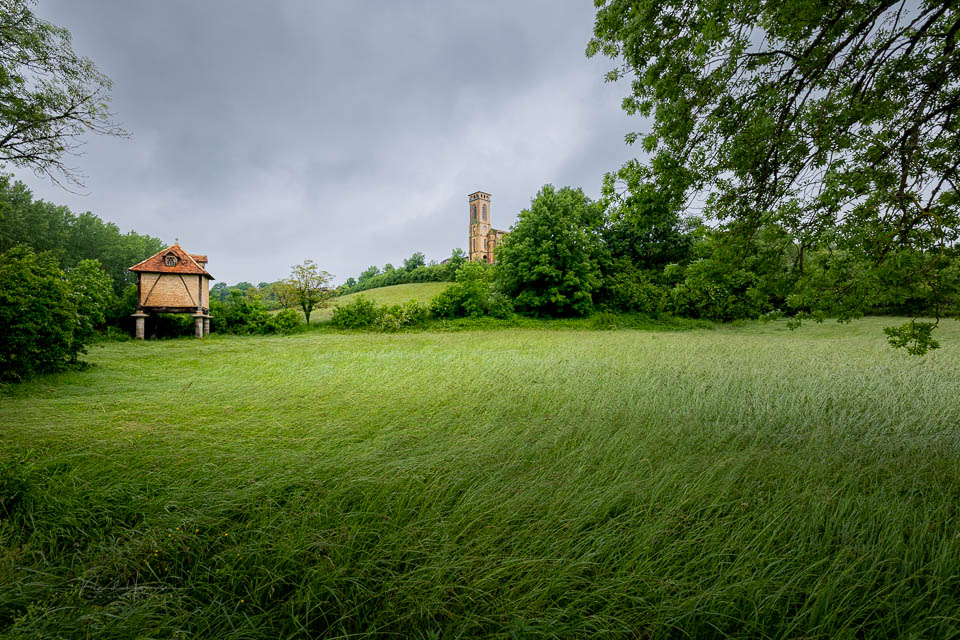
Behind the field is a village with a proud church tower rising above everything else. I choose not to include it in the frame so that the pigeonnier gets all the attention. I choose a focal length, a clear view, and take a snapshot.
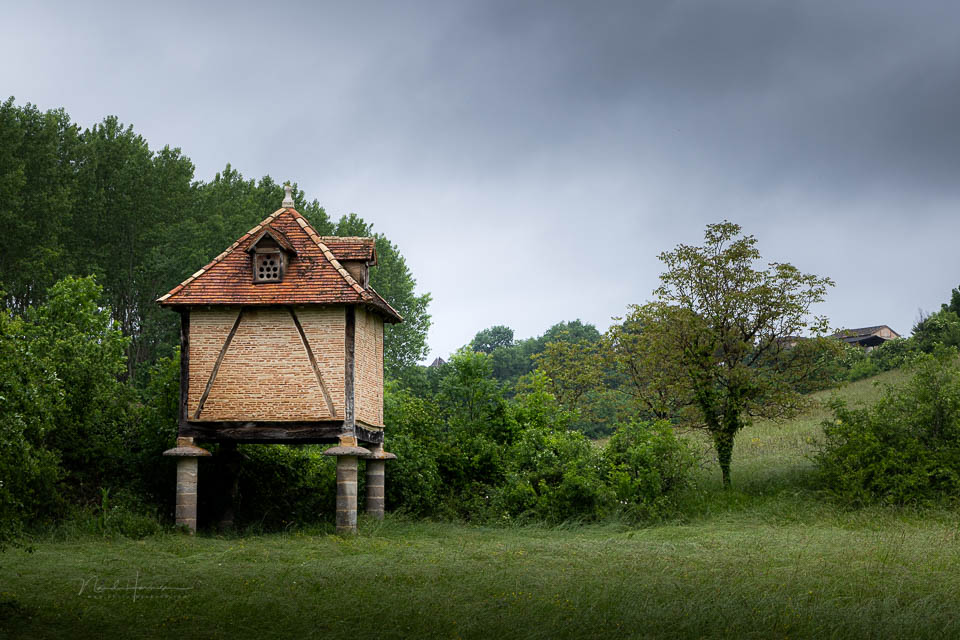
Although this snapshot isn't wrong, it creates little tension in the image. It is just a photo of a pigeonnier, nothing more. So I look around further and see a tree that could serve as a nice subject in the foreground. It adds depth and allows me to hide the church tower behind it.
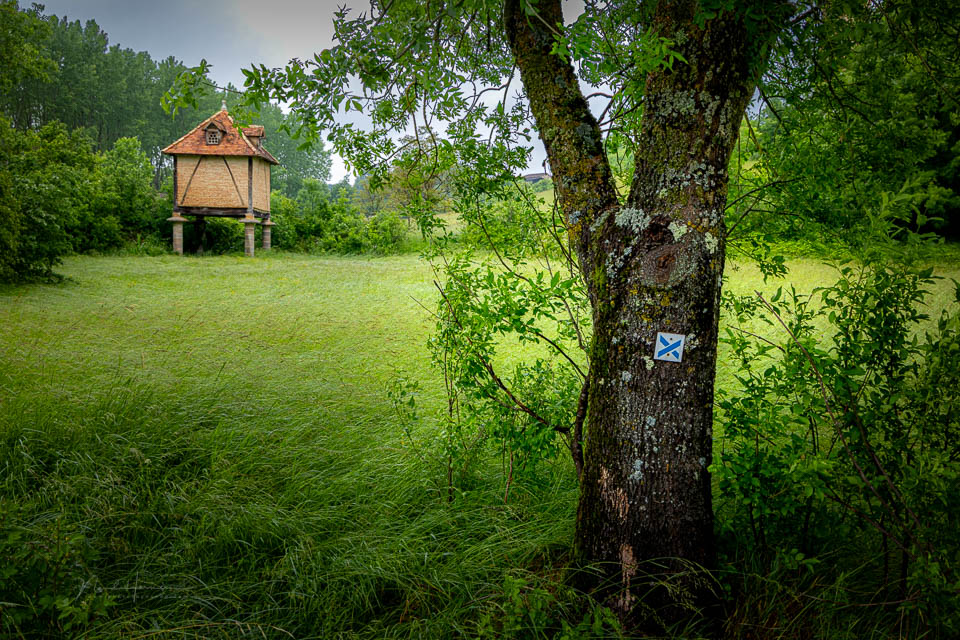
As the field is next to the road, I am standing close to the tree. With a wide angle, I get both the tree and the pigeonnier in the photo. But the latter is further away and therefore small in the frame. The attention is now entirely on the tree.
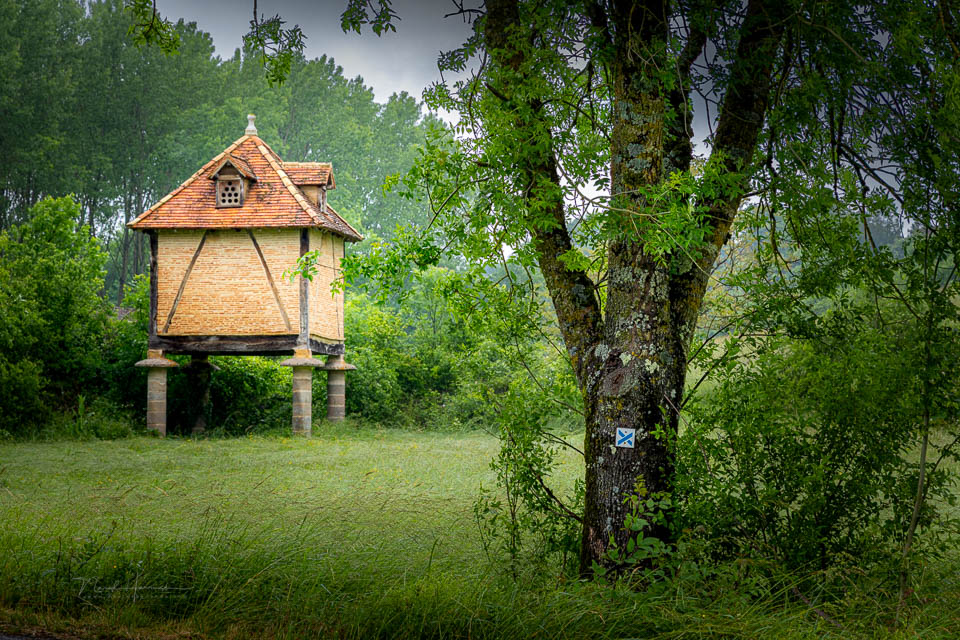
I decide to stand on the other side of the road and choose a longer focal length. This keeps the tree almost the same size in the frame, but the pigeonnier appears much larger. The result is that the pigeonnier now gets all the attention.
I decide to walk around once more. I can't enter the field itself, so I am limited to standing on the road. But I find a gap through the trees. Unfortunately, the church tower is positioned exactly behind the pigeonnier. Here too, standing further away and using a longer focal length helps. I manage to hide the church tower.
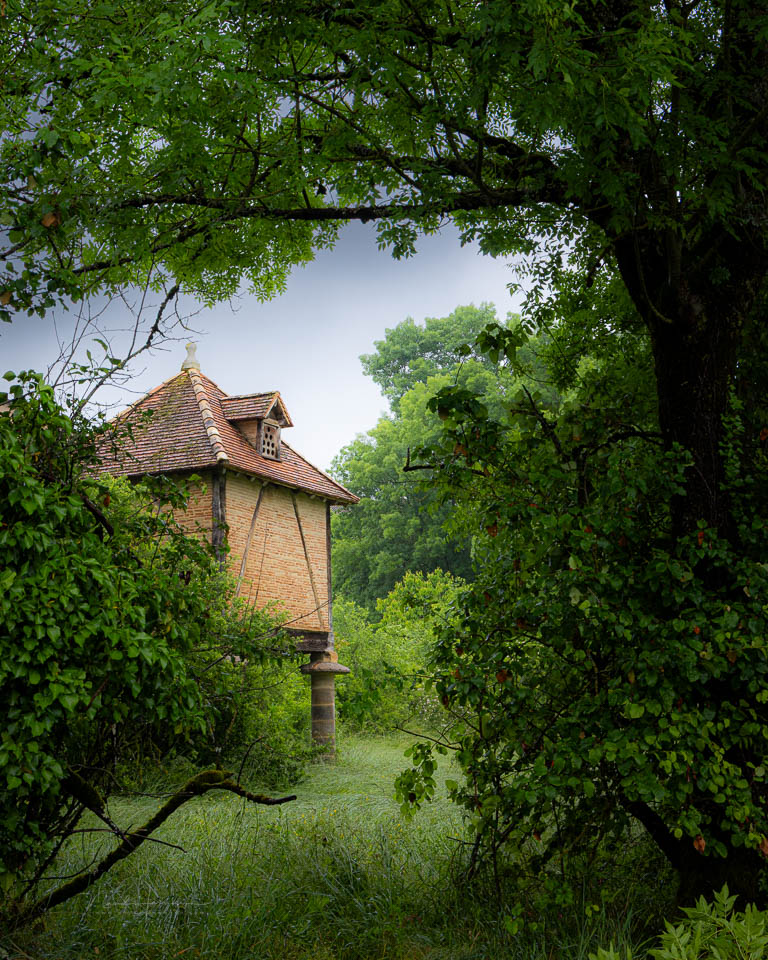
Remember that this isn't about right or wrong. The most important thing is what you, as a photographer, like. But you have to work that out when you are there.
The advice is, don't just take a photo of a subject. By looking around carefully first, you can often photograph a subject in a more beautiful or interesting way. Even with whatever limitations there may be.
About the author
Nando Harmsen has been photographing for more than 40 years. He specialises in wedding photography and landscape photography. Nando also gives talks, workshops, masterclasses and photo trips, and regularly reviews new and interesting equipment.
You might also like
-
 Creative photography with a Lensbaby
by Laura van der Burgt
-
 Taking creative portrait photos
by Elja Trum
-
 Dreamy, creative nature photography with a Lensbaby
by Laura van der Burgt
-
 Is theoretical knowledge the basis for creativity?
by Liesbeth van Asselt
4 comments
-
 Donald Willemsen wrote on Saturday 28 June 2025 at 21:44 | reply
Nando, I think it is an educational story, but at the same time also a subjective story. What you do or do not consider an exciting photo may be completely different for another photographer. That is not wrong, mind you. But opinions are divided. A discussion about that is difficult to have. There is simply no arguing about taste.
Translated from Dutch.
Often, examples of contemporary photographers are referred to. If you then mention the name of a photographer from the past, you get a look of: Who in God's name are you talking about.
Visions change over time and if you are a fan of an older vision, you are old-fashioned.
I don't think your vision is wrong, but my vision is different. I am a bit more old-school.
For example, take the photos of Oradour that I showed in the forum. I very deliberately post-processed them as you saw them. That was and is my vision. You look at them differently. That is also your right. When I was there, I felt a certain atmosphere. I also felt the horror of the atrocity that took place there.
You experienced it differently, very matter-of-factly and as a tourist attraction.
For me, it was not that.
Such feelings and impressions play a role in taking a photo and that is different for every photographer. Those differences are allowed to exist. -

-

 ifiamminghi wrote on Tuesday 1 July 2025 at 11:47
| reply
ifiamminghi wrote on Tuesday 1 July 2025 at 11:47
| reply
Nice structure of this article, I think this will be enriching for many (although we all know that it can be different for every photographer and/or viewer).
Translated from Dutch.
But I already find the underlying idea enriching. -
 MARCEL Govaerts wrote on Tuesday 1 July 2025 at 12:39 | reply
I thank you for this explanation, as the reader's attention is drawn to the importance of the choice of lens in relation to the composition the photographer is aiming for.
Translated from Dutch.
Have your say
Please note: Articles older than a week can only be commented on by signed-in visitors.Would you still like to comment? sign in or create a free account.
Become a better photographer every week
A practical photography tip in your inbox every week.
39,079 photography enthusiasts already receive the tips! More about the weekly mail. Or keep up to date via  Facebook.

Elja Trum
Photofacts; everything to do with photography!
Would you like to take better photos and keep up with what is happening in photography? Photofacts publishes articles that teach you something about photography — from a product announcement to a practical shooting tip or a look at a website. Photofacts covers photography every day and is a hobby project of Elja Trum's that got out of hand. The articles are written by a team of volunteer authors. If you would enjoy writing one or more articles for Photofacts, do get in touch.More about PhotofactsPhotofacts is made possible in part by
