

There are more important things than camera settings
Thursday 3 March 2022, 15:30 by Nando Harmsen | 4,739 views | 7 commentsThis article was translated from Dutch with the help of AI. Read the original.
Your camera settings are important for a good exposure. They can also determine how your subject is captured. But they do not make a good or successful photo. There are more important things than camera settings.
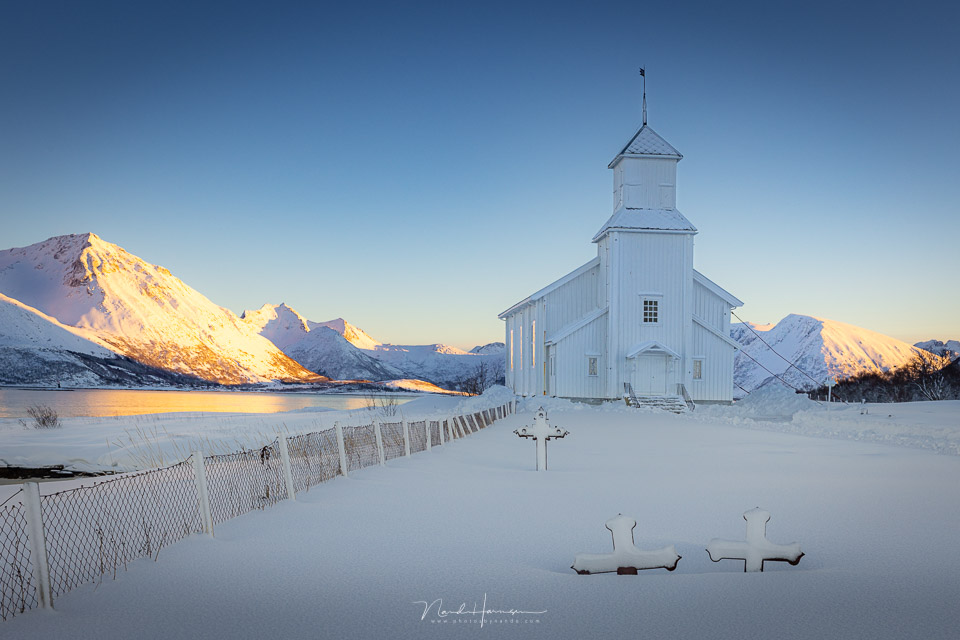
I have just returned from Norway. For two weeks, I guided several groups of photography enthusiasts for Fotografie-reizen.nl across the fairytale-like islands of Lofoten. The mountains of the fjords rise high above the sea, and the land is covered in a thick layer of snow.
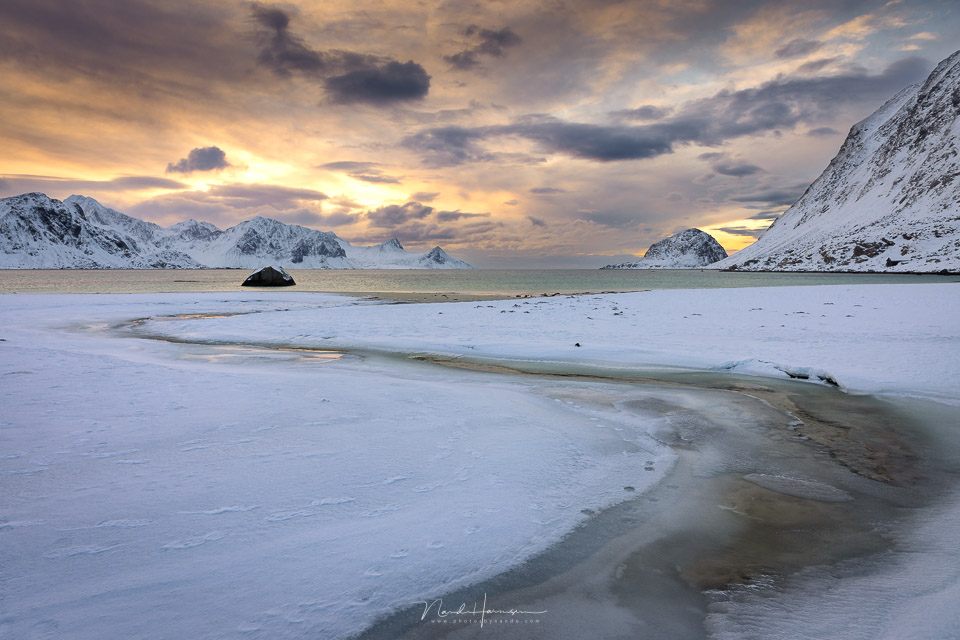
The weather is different every day, and it can vary from one fjord to the next. That makes this small part of Norway so popular with many photographers.
Because Lofoten is so far above the Arctic Circle, the sun never rises high above the horizon at this time of year. The golden hour lasts all day.
Camera settings
It is good to achieve an optimal exposure. For a landscape photographer, the aperture is often important, and sometimes the shutter speed for capturing moving water or clouds.
You choose an aperture and the shutter speed, or ISO value, and the third exposure setting follows automatically. It is no more difficult than that.
If your shutter speed is not what you want, you can adjust the ISO to change it. A higher ISO gives you a faster shutter speed. If you want longer shutter speeds, you use a neutral density filter.
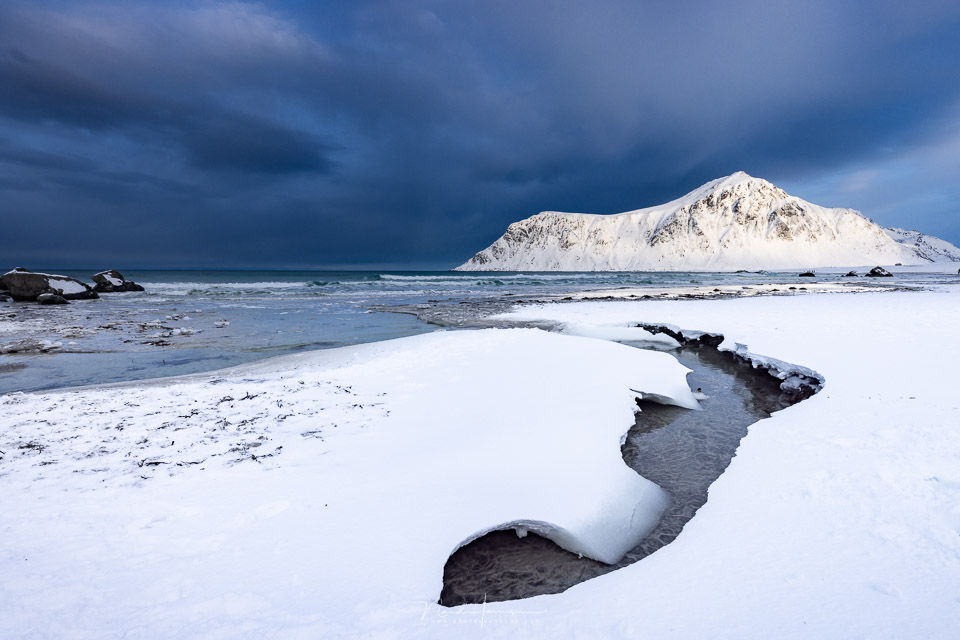
How you set the exposure is not important. You can use manual (M) mode, or one of the semi-automatic exposure settings, which for a landscape photographer often means aperture priority (A or Av). The end result is exactly the same. One method is no better than the other.
What is more important than settings
Some people worry far too much about how to set the exposure. The self-imposed obligation to use the camera in manual mode is still very common. But it does not matter how the camera is set, as long as the exposure is correct.
I do not worry about how to set it. Personally, I prefer to use aperture priority, so the camera does part of the setting for me. That gives me more time and attention to spend on creating a pleasing composition.
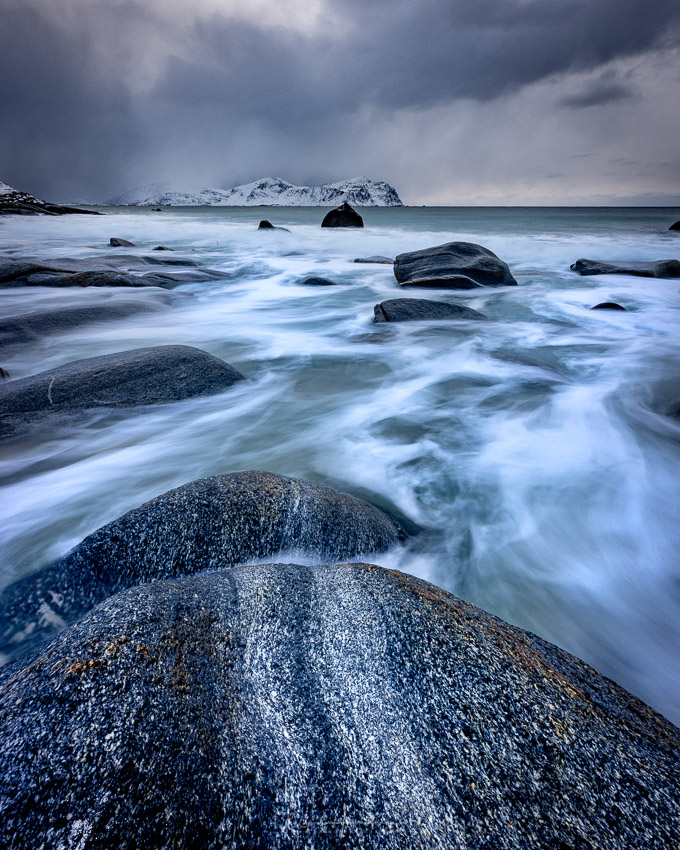
Composition is much more important than exposure. The way the frame is filled, the use of lines in the photo, the composition. Many people are so focused on setting the exposure that composition seems to become secondary.
Look for lines in your landscape, and at all the elements and how they can be distributed across your image to best effect. Experiment with your own position, height and distance. Moving just one step can already make a difference.
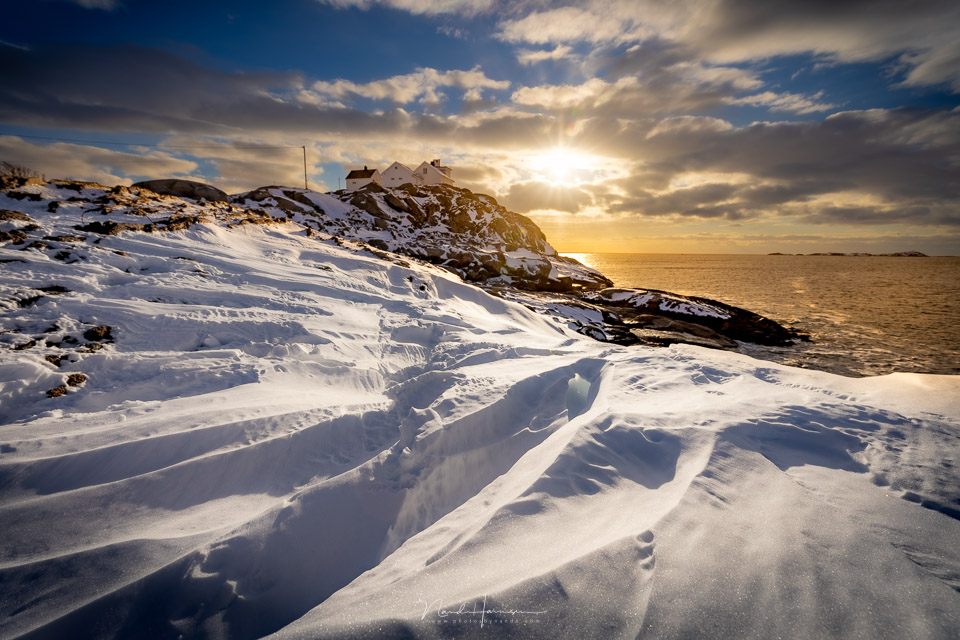
Also pay attention to the edges of your frame. Give your subject room and do not place it against the edge. Keep distracting elements at the edges out of the frame. Look at the background and experiment with focal length to manipulate the relationship between foreground and background.
Composition is important, exposure is just a setting
For a good photo, exposure is therefore secondary. Even if the exposure is perfect, a photo will only be good when the image itself is appealing. If your image is appealing but the exposure is not quite right, you can still correct that in post-processing. The reverse is not possible.
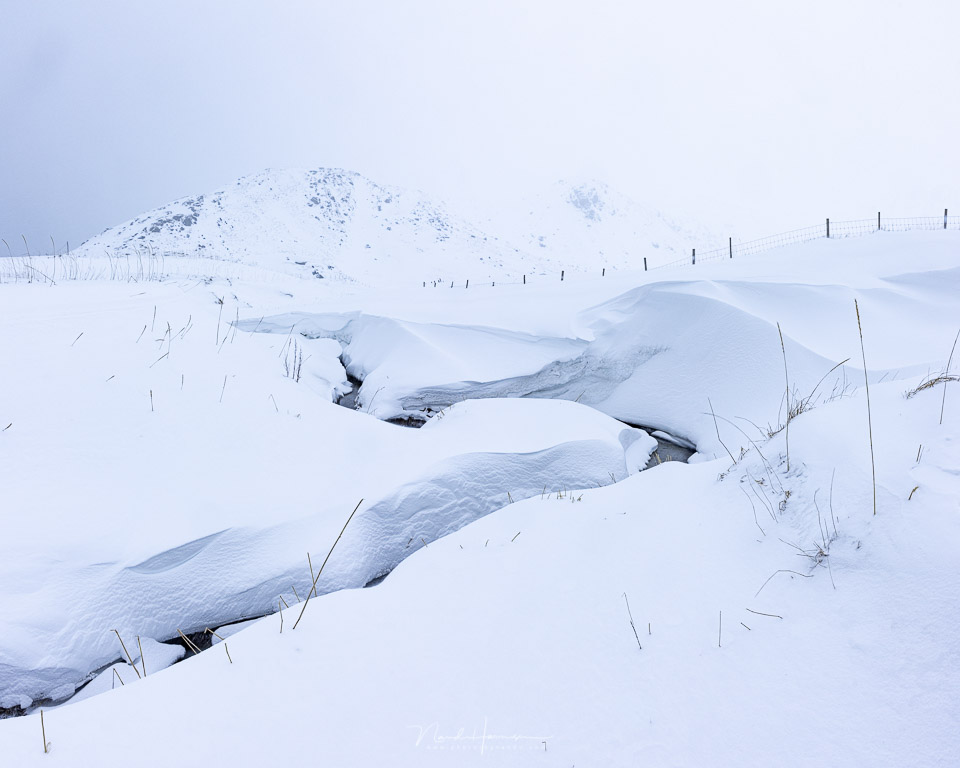
That is why you should pay more attention to your composition, the lines in the image and how the frame is filled. You need to get that right. That is how you make a good photo. Exposure is merely a measurement of the available light and the setting of the correct values.
Make setting the exposure second nature
Of course, a good exposure is important. Know how to set it and how to correct it when you change a value. It is something you should not have to think about too much.
Make it second nature. That leaves you more time for the most important part of a photo: creating a good and appealing composition.
About the author
Nando Harmsen has been photographing for more than 40 years. He specialises in wedding photography and landscape photography. Nando also gives talks, workshops, masterclasses and photo trips, and regularly reviews new and interesting equipment.
You might also like
-
 Composition tip: Use horizontal lines
by Elja Trum
-
 Play with perspective to influence lines
by Nando Harmsen
-
 Central composition, or not?
by Nando Harmsen
-
 Composition tip: Use symmetry
by Elja Trum
-
 Composition tip: Creating a sense of urgency
by Elja Trum

7 comments
-

 Ytos
wrote on Thursday 3 March 2022 at 16:43
| reply
Ytos
wrote on Thursday 3 March 2022 at 16:43
| reply
Nice piece, Nando. When I was still teaching workshops, the first lesson was always about composition and guidelines you can use for it. Of course, the follow-up lessons were important too, because to achieve certain effects, you ultimately need to know what shutter speed, aperture and ISO do. But no matter how you look at it, in every photo discussion we eventually came back to how compelling a photo was and especially what role composition played in it.
Translated from Dutch. -
 Donald Willemsen
wrote on Friday 4 March 2022 at 09:14
| reply
Donald Willemsen
wrote on Friday 4 March 2022 at 09:14
| reply
I (almost) completely agree with you Nando. However, when you deliberately want to/have to overexpose or underexpose, you need to pay attention to your settings. But every photo must have a good composition, otherwise it won't be pleasant to look at.
Translated from Dutch. -

-
Donald Willemsen
wrote on Friday 4 March 2022 at 10:43
| reply
@Nando, if the exposure meter indicates that with the selected settings the meter is exactly in the middle (at 0), then formally there is a correct exposure. Yet sometimes you deliberately want to overexpose or underexpose. Formally, there is then no longer a 'correct exposure', but the exposure is determined according to the photographer's preference. In that case, the photographer's vision determines what a correct exposure is, but the camera's settings indicate that there is overexposure or underexposure. A correct exposure is then a subjective concept in your eyes. In my eyes, there is a correct exposure when an objective meter says that an exposure is correct.
Translated from Dutch. -
Nando
wrote on Friday 4 March 2022 at 11:45
| reply
@Donald Willemsen;
Translated from Dutch.
a light meter does not necessarily indicate a good exposure. The meter cannot assess the situation, but determines the amount based on a number of parameters. That is why an incorrect reading occurs when, for example, there are predominantly white or black parts in the photo. You correct it to get it right and agreed, taste is also a factor there.
It is therefore wrong to assume that the meter always indicates the correct exposure.
Have a look at my explanation of the light meter in the course on this subject: https://photofactsacademy.nl/belichting-voor-gevorderden/de-belichtingsmeter -
 Smits wrote on Friday 4 March 2022 at 15:54 | reply
If you take your advice to its logical conclusion, then the way you learn to drive a car doesn't make sense. Then you first have to get your car under control. (~ camera settings) Then you enter traffic (~ dealing with people, models,...) and finally you have your driver's license, and you can go racing at Zandvoort
Translated from Dutch. But you mean that before getting your driver's license, you should go karting first.
-
 martinphili wrote on Friday 4 March 2022 at 19:46
| reply
martinphili wrote on Friday 4 March 2022 at 19:46
| reply
but photographing simply isn't driving.
Translated from Dutch.
But indeed, what is in the photo is more important than how it was made.
You can also take good photos on automatic.
Have your say
Please note: Articles older than a week can only be commented on by signed-in visitors.Would you still like to comment? sign in or create a free account.
Become a better photographer every week
A practical photography tip in your inbox every week.
39,077 photography enthusiasts already receive the tips! More about the weekly mail. Or keep up to date via  Facebook.

Elja Trum
Photofacts; everything to do with photography!
Would you like to take better photos and keep up with what is happening in photography? Photofacts publishes articles that teach you something about photography — from a product announcement to a practical shooting tip or a look at a website. Photofacts covers photography every day and is a hobby project of Elja Trum's that got out of hand. The articles are written by a team of volunteer authors. If you would enjoy writing one or more articles for Photofacts, do get in touch.More about PhotofactsPhotofacts is made possible in part by
