

Tips for concert and event photography
Monday 13 February 2017, 14:41 by Fabian Viester | 15,376 views | 16 commentsThis article was translated from Dutch with the help of AI. Read the original.
I see more and more (beginning) photographers secretly smuggling their camera into concerts at music venues or theatres. I have some practical tips to help them take their concert and event photography to the next level!
Accreditation
It is not legal to smuggle your camera inside and then photograph your idol throughout the entire pop concert. Even at smaller local music venues, people do not appreciate it when you sneak your camera inside. Still, there are definitely options!
Send an email to the local music venue near you! They are often very happy to receive photos for PR purposes, their social media or after-sales. You can take photos at the concert and they can use your images afterwards for promotional purposes.
Depending on the rules of the music venue, you may also get a 'plus one' (meaning you can bring someone else) or drink tokens. Good arrangement, right?
If this does not work, or you want to take a different route, you can also continue secretly photographing concerts and build a portfolio of the concerts you have photographed, and especially the photos you have taken.
This gives you a stronger foundation when you later apply to an official publication. I started photographing at the local music venue just around the corner from me. This is where I photographed my first concert more than a year ago: Causes.
A while later, they performed at Pinkpop in Landgraaf and conquered the whole of the Netherlands! So you see, small music venues are also home to great talent.

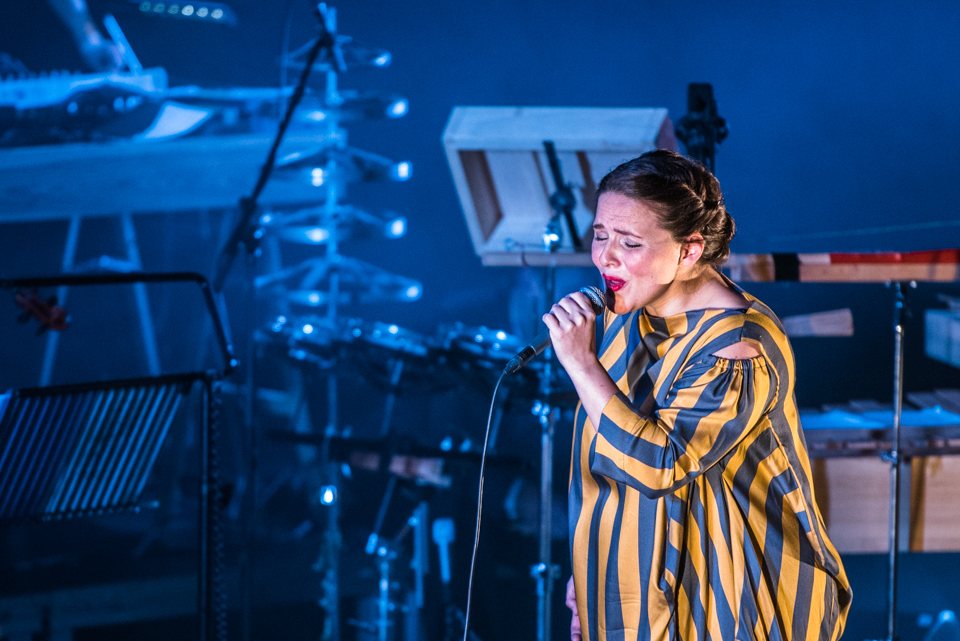
With the portfolio you have built up, legally or illegally, you can later approach an official publication, online blog or media website. If they are seriously interested, they will let you photograph a trial concert or concerts, after which you will become part of the permanent team of photographers.
A term you often hear in event and concert photography is accreditation. Accreditation is basically the promise you receive from the organisation, often in combination with an artist's management, that you may photograph the artist and enter the venue with a camera. You will receive written confirmation, a special wristband, sticker or something similar for this.
So if you email your local music venue, convince them why they should give you access to the concert. Also emphasise what the venue will gain from letting you take photos.
Will you also deliver the photos to them or the artist? Or will they never see the photos? This is a good lesson to learn and will come in handy when you want to arrange other things.
Unwritten rules
There are several unwritten rules when photographing artists at concerts or festivals:
- At a festival or large concert, the rule of thumb is that photographers, who are related to the press, may photograph the first three songs. Stick to this! It is a shame if you carry on and are then sent away by security. It is simply not done. The paying audience comes first. Always follow the rules of the production manager or tour manager.
- Photograph without flash. In dark venues, it dazzles both you and the artist and is very distracting for the audience who have paid for their ticket.
- Do not push your way through the crowd. Find a spot and stay there. Only move if it is really necessary. At smaller venues, there is no separate place for photographers, so you stand among the audience. It is different if you also need to capture the audience. In that case, you do have to make your way through the crowd.
- The audience is king. They have paid for their ticket. So give them the space they need.
- Do not get in the way of other fellow photographers. Their connections may come in handy later. Cherish them!
So how do you start?
Start at small, free festivals and music venues near you. And find out how to work with light. Look at the great masters who have been doing this for a while and see how they have achieved this technically.
What shutter speeds do you need and which aperture do they use? How much ISO? You can often also research concert photos on platforms such as 500px and Flickr. These are often available online with EXIF data. Learn from this and develop your own style.
Do not copy other people's techniques. Also watch recordings of concerts by the artists you are going to photograph. When are the most exciting moments, or the moments when special effects are used? Preparation is never a bad thing. Also read these 10 tips for concert photography!
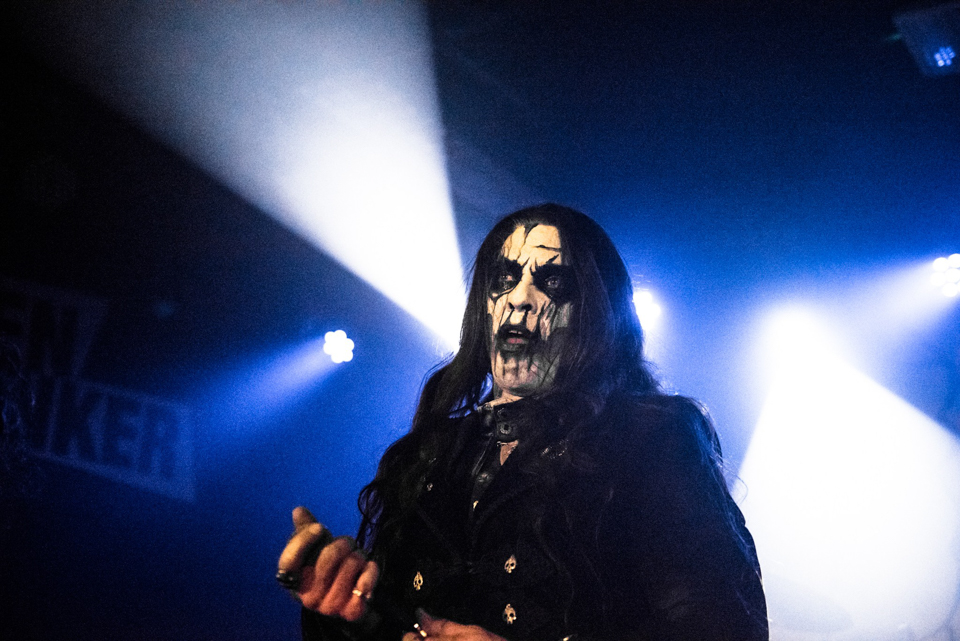
Know your camera settings inside out!
You are basically put in a dark hole and have to know your camera inside out. You cannot start looking with a little torch for the button that controls your ISO or shutter speed. Know how to set your exposure and ISO values, and understand what different focusing methods do and what effect they have.
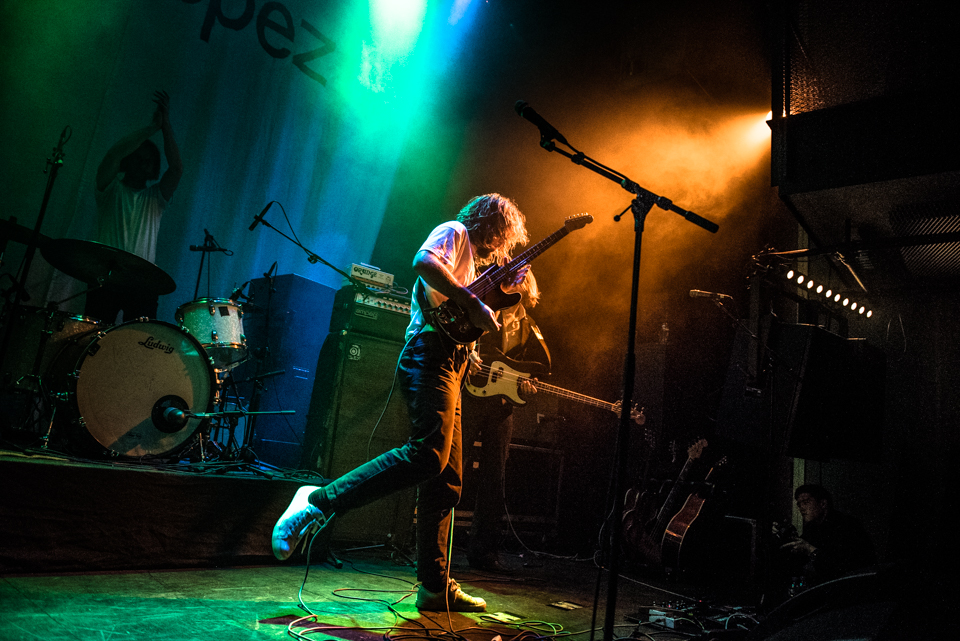
Many music venues have mixed lighting. LED light, spotlights, floodlights and laser light in all kinds of colours and different colour temperatures. On top of this, there is often haze or smoke to accentuate the light.
These lighting conditions confuse the camera's electronics. The result is that very few usable photos remain. Practise with your settings, set your camera to manual mode and photograph in RAW.
Photograph as much as possible to gain experience. Practice makes perfect! Also make sure that you do not put 100 photos online when publishing your photos. People expect a compilation with the real highlights and showstoppers of that evening. So only publish these and make a strict selection of your best images.
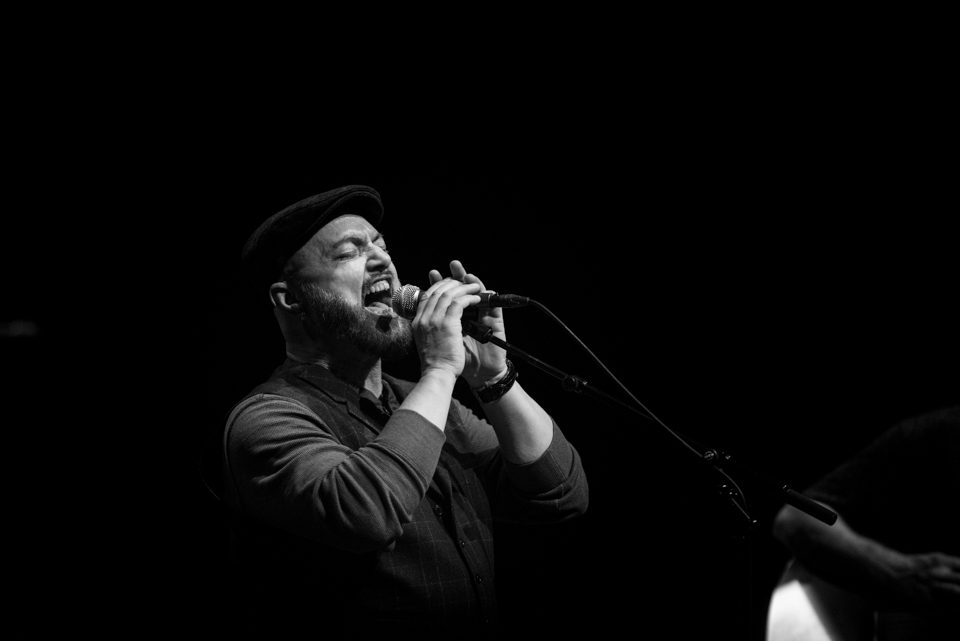
With backlighting, you often get silhouettes. In such a situation, pay attention to the artist's movements and make sure your camera is set to spot metering. Newer cameras have an icon for spot metering with an asterisk (·)*. This metering mode combines spot metering and matrix metering and often finds the best balance between the different types of light.
For the rest, leave your camera on automatic white balance. Correct this afterwards in a photo-editing programme such as Photoshop or Lightroom. Setting your white balance manually at a concert takes a great deal of time.
Build a portfolio
It is not about the biggest venues or best-known artists, but about you and your own style. Build a portfolio in which you show your best photographic work.
Larger organisations often ask for this and often give you trial assignments before you can actually join the team. Only start here if you know that you have developed far enough and can deliver consistent photo quality.
Sharing your photos
So, now you have taken photos at a concert or event. But how do you make sure they reach the right people or fans? These days, not using social media is unthinkable. So use it too.
Tagging the right people in your photo on Instagram, combined with well-chosen tags, helps enormously. Posting photos on the right pages on Facebook also increases your visibility. If you photograph at the same music venue, theatre or recurring free festival more often, people will start to recognise you and your photographic style.
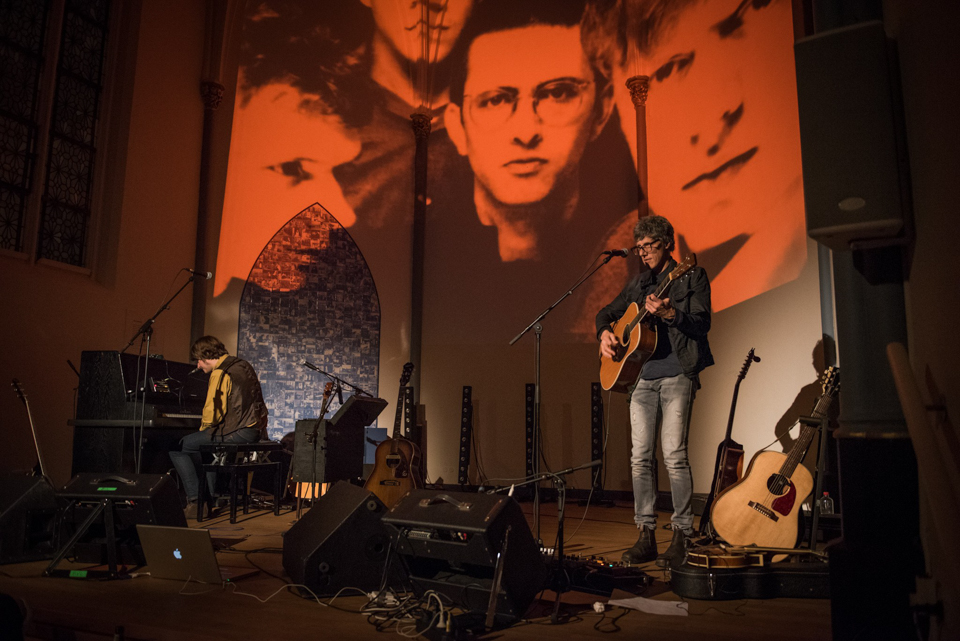
Enough light?
'Hopefully there is enough light..' I often hear people say. But you can also take good photos in low light. Even if you are attached to your flash, and are not allowed to use it, it can still be a useful tool.
You can programme it to help you focus in dark situations without actually flashing. In addition, playing with light is something you have to learn and practise during concerts. No matter how much or how little light there is.
I want to end this article with the most important tip for concert photography: do not forget to enjoy the music, because that is what you came for. Otherwise, you will have spent hours, or the first three songs, taking photos without seeing who was on stage. That would be an infinite shame!
Oh yes, do not forget your earplugs!
I assume you found my article about concert and event photography useful. I also started from scratch, but have already worked with Douwe Bob, HAEVN, The Brahms and various other bands. So above all, do not give up! You can see personal work or my own portfolio on my website.
About the author
Marketeer bij Online Media Advies. Professioneel concert en evenementenfotograaf onder de noemer Fabian Viester Photography.
You might also like
-
 Jupiter, Venus and the moon form a smiley on 16 May
by Michelle Peeters
-
 Venus's date with the moon
by Tanja Thomas
-
 Review: Nikon D850
by Rob Jansen
-
 An Ode to 'Gear Acquisition Syndrome'
by Michelle Peeters
-
 Photographing the silence during coronavirus
by Michelle Peeters
16 comments
-
 Jeroen de Haan wrote on Tuesday 14 February 2017 at 11:29 | reply
Good tips! As an addition perhaps: don't be afraid to photograph at high ISO; you won't manage with less than 800, definitely 1600 or higher. And invest in, rent or borrow a fast (tele)lens, both for beautiful depth of field and a shorter exposure time.
Translated from Dutch. -

 fabianviester
wrote on Tuesday 14 February 2017 at 11:37
| reply
Hi Jeroen!
Translated from Dutch.
Of course. Although I don't think this is a tip, but something one simply has to discover along the way. Shooting at f/4, ISO 500 and 1/200s is not impossible either. I speak from experience. Modern cameras can easily handle ISO values between ISO 800-2000. If you have a full-frame camera, you can easily shoot photos with ISO values between 3200-10,000.
A setting I often use is: ISO 6400, 1/250s, f/2.8 and a focal length between 14-200mm.
Thanks for your nice comment and for reading my article!
Regards,
Fabian -
 Donald Willemsen
wrote on Tuesday 14 February 2017 at 11:46
| reply
A nice piece to read, but it remains vague. Then the link to the 10 tips is more valuable.
Translated from Dutch.
The author advises setting AWB and tip 4 of the 10 tips says that you should set the WB to artificial light (I can imagine that), but who is right?
The author also does not reveal any details about the most common settings he uses. He also does not provide any exif data with his photos. My conclusion: the link to the 10 tips is more interesting. -
fabianviester
wrote on Tuesday 14 February 2017 at 11:51
| reply
Dear donniebelg,
Translated from Dutch.
Thanks for your response! Artificial light can work, but AWB is also no problem with modern cameras. I never correct my white balance for concert photos and simply shoot them all on AWB. A good lighting technician and a good photographer do not actually need to correct that afterwards.
Setting the white balance to artificial light beforehand can work, but it does not necessarily result in better photos. So I think this is also a personal matter and purely depends on what you as a photographer find most convenient and achieve the most optimal results with. During a concert I do not have the time to check whether I achieve the most optimal results with the white balance set to AWB or artificial light. I simply shoot on AWB.
Thanks for reading my article.
Regards!
Fabian -
Donald Willemsen
wrote on Tuesday 14 February 2017 at 12:15
| reply
Dear Fabian,
Translated from Dutch.
Thank you very much for your response. I myself also always photograph in AWB and in Raw. I correct things afterwards if necessary. My track record includes, among others, Angelo Branduardi, Toots Thielemans, Gerard Lenorman, Gocoo, Urban Trad etc.
You also write about publishing. How do you deal with portrait rights in such a case? My concert photos are always taken during free concerts in public spaces. I do not use those photos commercially.
Best wishes,
Donald -
fabianviester
wrote on Tuesday 14 February 2017 at 12:32
| reply
Hi Donald,
Translated from Dutch.
Thanks for your response! I always correct things afterwards too (although I often think this isn't even necessary, if you get the picture right)
By the way, I've photographed various bands from our own country and at various festivals I've had international and national artists in front of my lens. You should think of: Douwe Bob, HAEVN, Faithless and others. You can view these on my website: https://www.fabianviester.nl
As I said, I often photograph at festivals, or at pop venues in my region. Through this media outlet I am accredited and have access to the concert hall or festival grounds and the photo pit. At a festival, I am told on the spot in the photo pit by security whether there are restrictions from management (e.g. only photographing the first two songs or not being allowed to photograph from the photo pit but from the middle of the audience) or nothing is said.
In the case of photographing for a pop venue, I get free access to the hall, sometimes with a second ticket included. This varies. Photographing then often goes as follows: 'You may photograph the entire concert, but the first 3 songs from the front', after which the paying guest may enjoy the concert. And you have to do it from the back or sides of the hall.
In both cases, an artist or a visitor to a concert venue may invoke their portrait rights. But people hardly ever do this, in my experience. If an artist does not want to be photographed, the pop venue would not allow photographers in. Or at a festival, you would immediately be told by tour management or security (in the event that, for example, no photos may be taken at all).
If an artist (which seems unlikely to me) or someone who attended the concert (that can happen) gets in touch and asks me to take the photo offline, I first look at whether there is a valid reason. If there is, I simply take the photo offline without any fuss. This has never happened so far.
I hope this has clarified it a bit for you.
Regards!
Fabian -
 Thoon_Loque
wrote on Tuesday 14 February 2017 at 13:46
| reply
I don't entirely agree with your statement Fabian that a good photographer and a good lighting technician don't need to adjust the light balance.
Translated from Dutch.
Especially not since the introduction of the many LED lights. They can certainly be worked with very well, but it really isn't ideal, and a little tweaking of the light balance often works wonders already! -
fabianviester
wrote on Tuesday 14 February 2017 at 13:51
| reply
Hi Thoon,
Translated from Dutch.
A good photo is made during the concert and you don't tweak it in post-processing. I also photograph at the Oefenbunker music venue in my area. Just 8 LED lights on stage and a smoke machine. And just look at what you can already do with that, without any adjustments to the white balance afterwards (obviously other adjustments in Lightroom, but nothing else).
https://fabianviester.nl/carach-angren-oefenbunker/
Obviously, those minor adjustments to the white balance are not an unnecessary luxury from time to time, but personally, I don't really like doing that.
Regards!
Fabian -
 Eric de Kuijper wrote on Tuesday 14 February 2017 at 20:49 | reply
As a rule, I never photograph the first 2 songs of an artist.
Translated from Dutch.
Whichever artist it is, they all need to get into it and build an interaction with the audience. After the first 2 songs you generally get much better photo material. There are always exceptions, so do stay alert, also e first 2 songs. -
 guest wrote on Tuesday 14 February 2017 at 20:59 | reply
Hi Eric,
Translated from Dutch.
If you're at Pinkpop or another large festival opposite a major national or international artist, then you have no use for 'observing during the first 2 songs'. If I photograph for a music venue or cover an entire festival for the organisation itself, then I have the rights to do this and can often photograph an entire set. But if you're only allowed to photograph the first 3 songs as a guest or press photographer, then you photograph those. You don't put everything into that one last song. Good preparation and checking which songs the artist plays during the first 3 songs and how he behaves (by doing research) is a much better solution than observing for 2/3 songs when you're allowed to photograph 3, I think.
But if you get good photos by using this tactic, then you should definitely keep doing it.
Have lots of fun with photography and thanks for your response.
Regards,
Fabian -
fabianviester
wrote on Tuesday 14 February 2017 at 21:00
| reply
Hi Eric,
Translated from Dutch.
If you are at Pinkpop or another large festival standing opposite a major national or international artist, then 'observing during the first 2 songs' is of no use to you. If I photograph for a music venue or cover an entire festival for the organization itself, then I have the rights to do so and can often photograph an entire set. But if you are only allowed to photograph the first 3 songs as a guest or press photographer, then you photograph those. You don't put everything on that one last song. Good preparation and checking which songs the artist plays during the first 3 songs and how he behaves (by doing research) is a much better solution than observing for 2/3 songs when you are allowed to photograph 3, in my opinion.
But if you get good photos by using this tactic, then you should especially keep doing it.
Lots of photography fun and thanks for your response.
Regards,
Fabian -
 Jan wrote on Wednesday 15 February 2017 at 00:20 | reply
Most of the photos shown here as examples don't make me happy: I only like the fourth black-and-white one, the rest are much too cluttered. I'm not a concert photographer but every now and then I make a series when I happen to be at a concert, but I would never make them like the examples here: then no photos at all. Maybe that's because I'm not interested in who is on stage but in how the musicians look in the shots, and the music also has to do something for me. Whether or not they are well-known musicians doesn't matter to me.
Translated from Dutch. -
fabianviester
wrote on Wednesday 15 February 2017 at 07:27
| reply
Hi Jan,
Translated from Dutch.
Thanks for your response! To each their own opinion, of course. Thanks for reading my article and good luck with your photography.
Best,
Fabian -
 Palex wrote on Thursday 16 February 2017 at 10:44 | reply
And what do you hear from professional photographers who finally break through.. "Rush jobs".
Translated from Dutch.
So as an amateur you still have fun but why would you want to break through? It doesn't earn you a cent and you have to rush and you have to apply for access and that sort of thing, you are limited in your space.
You might as well stay an amateur and still have fun with it.
I do this kind of thing voluntarily sometimes. You get a perfunctory thank-you. -
Palex wrote on Thursday 16 February 2017 at 11:04 | reply
Addition: Fabian I looked at your website but I am missing a gut feeling. Also the portraits of the gym staff, that really can't be done.. you removed the color with Photoshop but there are still leaks of color in the faces and hands everywhere. The only portrait I like is that man in the office who is looking from right to left. The compositions are also too busy or not a nice crop. From behind the stage it indeed looks like from behind the stage..If you are going to give advice, know that you are also seen on a large scale and will receive some well-intended criticism. I would say: "practice for a while longer". But you are already doing that, but wait a little before becoming too publicly known, I think, until you have improved yourself.
Translated from Dutch. -
fabianviester
wrote on Thursday 16 February 2017 at 11:19
| reply
Dear Palex,
Translated from Dutch.
Thank you for your comment. That is being worked on. In my blogs I write about my experiences and tips based on those experiences. People who find that useful do something with it or recognize themselves in it. And some just have something to moan about.
The color of the gym photos is being worked on. Something went wrong there. As for composition during portrait photos: something like that is entirely discussed with my client. What they want to convey, where the photos are taken and how. I work with clients who have a clear vision and I translate that into the photographic image. They were satisfied, so I am too.
Thank you for your response Palex, but this article is about concert photography, and not about my development so far and things that need to be rectified, adjusted or done differently.
Still, thank you for your response and good luck with your activities.
Regards,
Fabian
Have your say
Please note: Articles older than a week can only be commented on by signed-in visitors.Would you still like to comment? sign in or create a free account.
Become a better photographer every week
A practical photography tip in your inbox every week.
38,764 photography enthusiasts already receive the tips! More about the weekly mail. Or keep up to date via  Facebook.

Elja Trum
Photofacts; everything to do with photography!
Would you like to take better photos and keep up with what is happening in photography? Photofacts publishes articles that teach you something about photography — from a product announcement to a practical shooting tip or a look at a website. Photofacts covers photography every day and is a hobby project of Elja Trum's that got out of hand. The articles are written by a team of volunteer authors. If you would enjoy writing one or more articles for Photofacts, do get in touch.More about PhotofactsPhotofacts is made possible in part by
