

Review: Nikon D850
Friday 6 October 2017, 23:46 by Rob Jansen | 14,897 views | 11 commentsThis article was translated from Dutch with the help of AI. Read the original.
Through Photofacts and Nikon, I was able to try out the D850 for a while to see how it performs in the studio, in a sports hall at a volleyball match, and at a concert by Linde Schöne in Merleyn's small, dark concert venue in Nijmegen. I also tested how it performs in the studio.

Nikon D850 specifications
- 45.7-megapixel full-frame BSI CMOS sensor
- Sensitivity: 32 - 102,400 ISO (native: 64 - 25,600)
- 153-point autofocus (from the Nikon D5)
- 7 frames per second (9 with grip)
- 4K video (24, 25 or 30p), without crop factor
- Full HD video (120p)
- 3.2-inch tilting touchscreen
- XQD and SD memory card slots
- 8K interval shooting
- Focus stacking option
- Weather-sealed body
- Bluetooth and Wi-Fi
Portrait, concert and action photography
As a photographer, I am interested in portrait, concert and sports/action photography. I own a Nikon D750 and a Nikon D4.
I mainly use the Nikon D4 for concert and sports photography, especially volleyball, where autofocus speed, a high ISO range and the number of frames per second play an important role.
I mainly use the D750 in the studio, for reportage and general photography, but it also comes along as a backup for concerts and sports matches. The D750 is a real all-round camera, but when it comes to speed, ISO performance and focus, it performs less well than the D4.
A good replacement?
Now there is the new D850, with exceptionally good specifications for me: 45.7 megapixels, ideal for studio work, landscape photography, macro and so on, an ISO range of 64-25,600, the super-fast autofocus from the D5, and 7 frames per second.
These specifications seem ideal for studio, concert and sports photography. All in all, on paper this looks like the camera that could replace both my D750 and my D4.
In this review, I will not go into detail about the specifications and everything it can do, as enough has already been written about that. I am purely writing down my own experiences and what my impressions were, based on my way of photographing.
That also means I will not discuss some of the new features because I simply have not used them.
Controls
The first thing you notice is the bright viewfinder with its large field of view. This is a clear improvement over the D750. The difference compared with the D4 is negligible.
The difference in controls between the D750 and the D4 is considerable. I never really got used to the layout of the menu selection button on the D750. The layout on the D850 is much clearer and more in line with the D4.
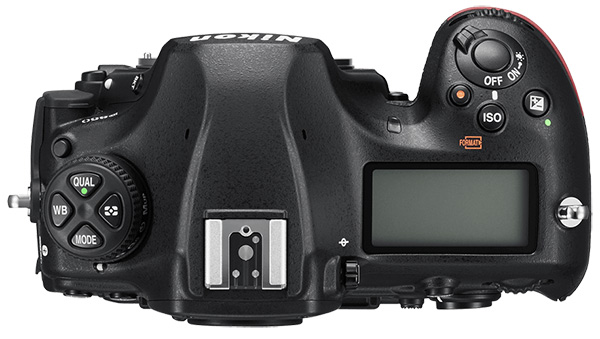
The 'fun' mode button on the D750 has been replaced by a roughly equivalent button, as on the D4, with the four selection buttons on top, including the Mode button. This gives quick access to the programme choices A, M, P and S.
The WB button, for choosing the white balance. The exposure button, for setting the type of metering, and the Qual button, which lets you select the format in which the photos are saved.
The ISO button is now fixed in the position next to the shutter release, where I also programmed it on the D750 instead of the video button. The illuminated function buttons are also useful. In a dark concert venue or during night shots, they are very handy.
The tilting display now also has touchscreen controls, which is very useful when using the menu structure. You simply tap the option and do not have to confirm it with the OK button every time. When looking back at your photos, you can zoom in with two fingers and swipe to the next one.
Live view
Live view has really improved compared with the Nikon D750. I did not like using Live view on the D750 because focusing was very slow and not really accurate. As a result, I stopped using it.
Live view on the Nikon D850, on the other hand, works much better. Focusing is considerably faster, you can select your focus point via the touchscreen and even take the photo. This works very nicely!
You can also see the exposure value and adjust it directly. I expect that I will use Live view regularly as a result.
The Supersilent function combined with Live view works well. It uses the electronic shutter, which makes absolutely no sound. Very useful when complete silence is required, such as in nature, at classical concerts or at funerals.
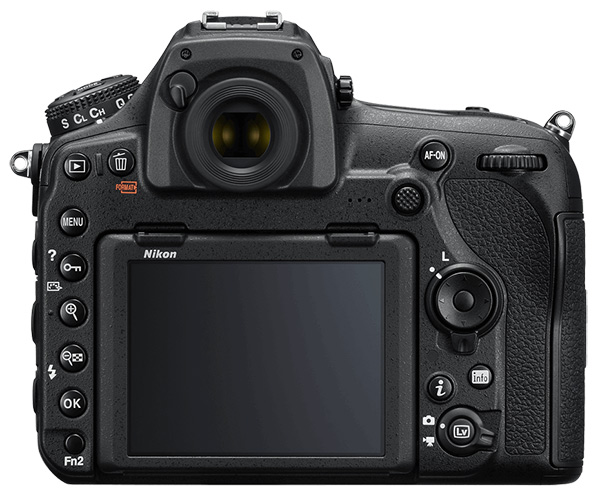
Focusing system
The focusing system, which is the same as the system in the D5, is a real breath of fresh air. It is super-fast and accurate, and 3D tracking with face detection is ideal for the type of photography I do.
Speed of 7 frames per second.
The 7 frames per second are more than enough for me personally. The D4 manages 11 frames per second, but in practice I never keep the shutter pressed for long when photographing sports. I take a maximum of four shots per action, but usually two or three.
Image quality
As expected, the 45.7-megapixel sensor produces highly detailed images, ideal for studio photography and for producing large prints. Another advantage is that you can crop more and still have enough resolution left for prints.
ISO value
In my view, the images from the D4 produce the 'cleanest' results at high ISO values, but it does have considerably fewer pixels. The Nikon D850, with its larger number of pixels, is just slightly worse, but in my view images up to 6,400 are perfectly usable.
Wi-Fi/Bluetooth
The D850 can also send JPGs to your phone via Wi-Fi/Bluetooth, allowing you to share them straight away on social media. The great thing is that it actually works!
The D850 in practice
After collecting the D850 from Photofacts, I stopped by Waalhalla, an indoor skate park, and thought I could put the D850 through a proper test there in terms of focusing, speed and high ISO values.
I met Remy there, skating with friends. Remy was happy for me to take some photos, so I could carry out my first test.
For the first shots, I used my 70-200mm f/2.8 VRII. What immediately stood out was the lightning-fast autofocus, which also kept tracking Remy neatly using 3D tracking. I shot at the maximum speed of 7 frames per second.
I increased the sensitivity to 5,000 ISO and set the aperture to f/2.8 in A mode, aperture priority. This left me with a shutter speed of 1/500 second, which is enough to freeze the action.
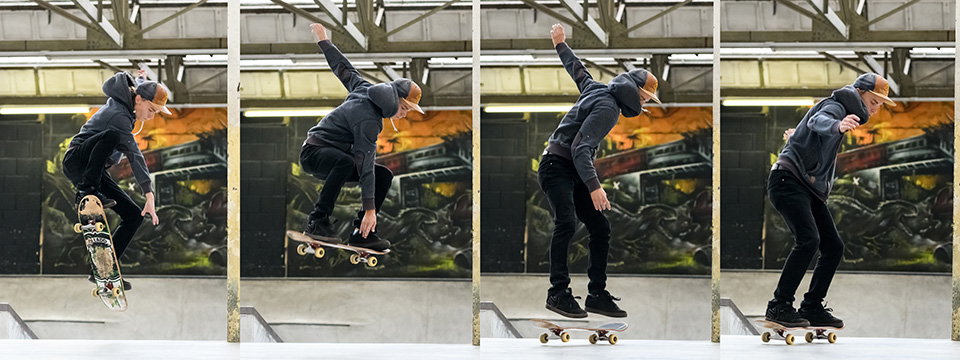
We then went to another part of the skate park. It was a little darker there, so I attached the SB910 flash to use a subtle fill flash. I wanted to get closer to the action, so I mounted the 24-70mm f/2.8 on the D850.
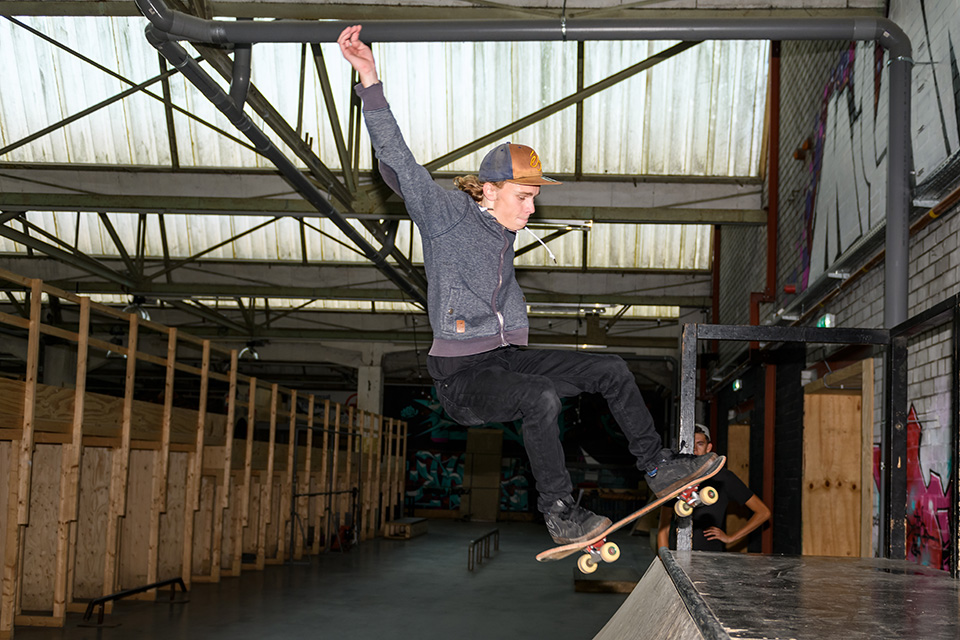
While photographing, I noticed that I could immediately find all the buttons by feel, apart from the ISO button. It has moved slightly, so you have to search for it for a moment. The D850 also fits slightly better in the hand than the D750, although I do have fairly large hands.
In this first action photography test, the D850 beats the D750 by a considerable margin. Compared with the Nikon D4, I feel that the D4's images are just a little cleaner, but it also has far fewer pixels.
Macro photography
The next day, the weather was good and I saw some butterflies fluttering around in the garden. So I mounted my 105mm f/2.8 VR macro lens on the camera and went to see how the D850 handled this.
To begin with, I am not a macro photographer and perhaps I do not do things the way they should be done. I am simply not a tripod person, so I shot everything handheld with image stabilisation switched on.

I have to say that the autofocus performs very well here. There was some hunting now and then, but that happens quickly when you shoot macro with autofocus. When I later viewed the images on my PC, I was very impressed by the quality of the sensor.

Photographing a volleyball match
On Saturday, Trivos D1 played SSS in their first home match. The ultimate test to find out whether the D850 could handle this too.
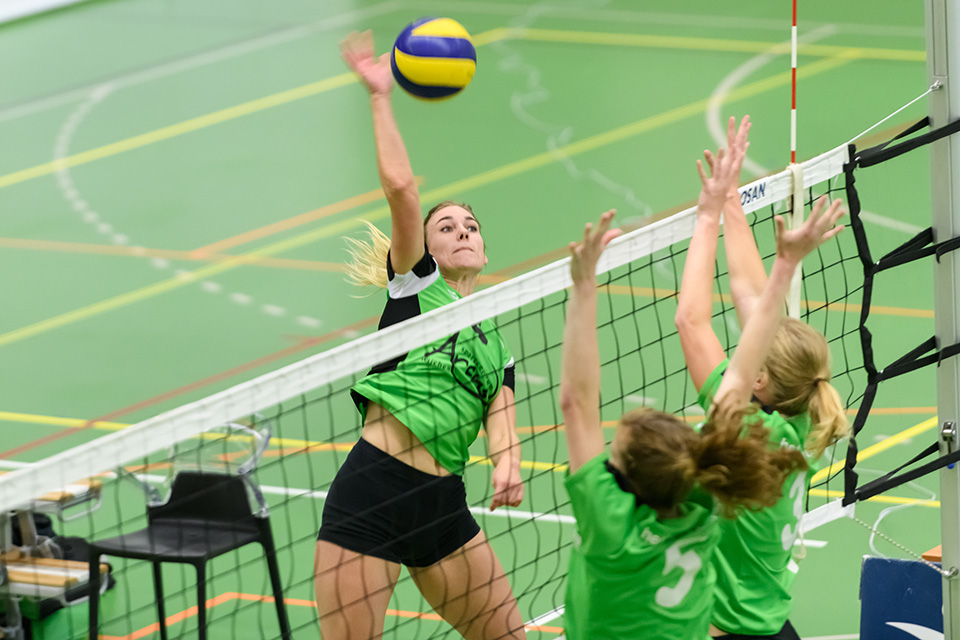
Volleyball is a very difficult sport to photograph. It often takes place in poorly lit sports halls, meaning you often have to work above ISO 6400 to retain a reasonably fast shutter speed, because the game moves very quickly.
On top of that, the net is often in the way, or a teammate or opponent appears in the frame.
But the most important thing is still capturing the right moment.
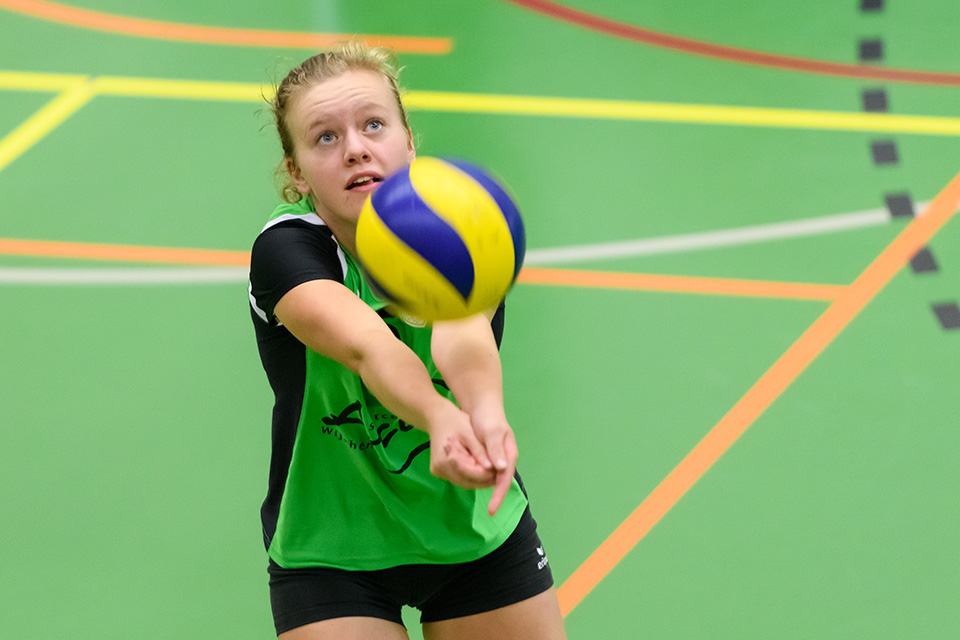
I photographed with the 70-200mm f/2.8 VRII. The focus is genuinely lightning-fast and the tracking also works well, but I still do not get images that are as crisp as with the D4. The noise on the D4 is better at high ISO values.
You may not be able to compare the two because the D850 has more than twice as many pixels, but this is the difference I experience compared with the D4.
The photos are OK and perfectly usable, but secretly I had expected a little more.
It may also be that the lens, which I did not have calibrated beforehand, has problems with all those megapixels. The latest version of the 70-200mm will probably perform better, or perhaps I should have had the 70-200mm calibrated on the D850 beforehand.
The 7 frames per second are actually just a little too slow for volleyball. When shooting at 11 frames per second, the images are slightly closer together, allowing you to capture the moments as they happen more effectively, for example, the ball is hit, hits the block and bounces away.
With a grip, a special battery and charger, the fps can be increased to 9. That might be enough, but it will cost you a thousand euros.
Photographing in the studio
In my small studio, I asked Lisa to model so I could shoot some portraits. As expected, the Elinchrom flashes worked perfectly with the Nikon D850.
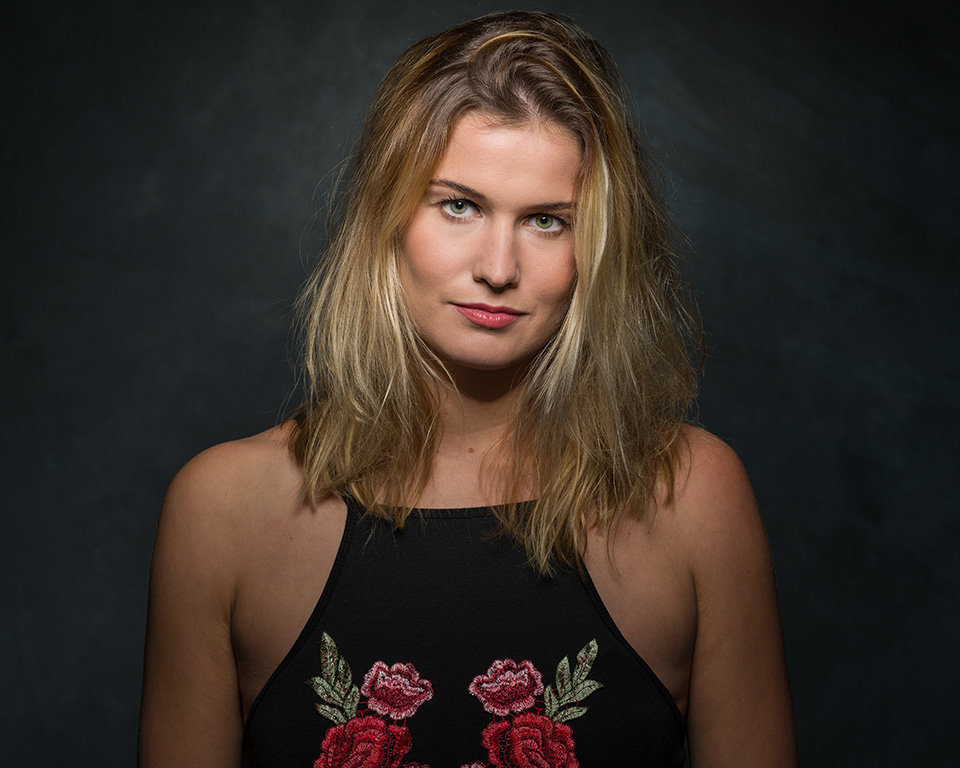
The D850 has a low ISO value of 64, giving you the option of shooting with the lens wide open and creating a very shallow depth of field. The photo below was taken with the Nikon 85mm f/1.4, my favourite portrait lens.
For the lighting, I used one lamp with a beauty dish and grid as the main light, and a lamp with a reflector and grid aimed at the black background.
I also had the opportunity to try out the D850 during a very enjoyable and educational workshop by Frank Doorhof, organised by Fotoclub Wijchen.
It was held at the Vasim cultural centre in Nijmegen. There were 18 of us and everyone had a short opportunity to take a few photos of the models Sanne and Linde. This was the one I liked best.
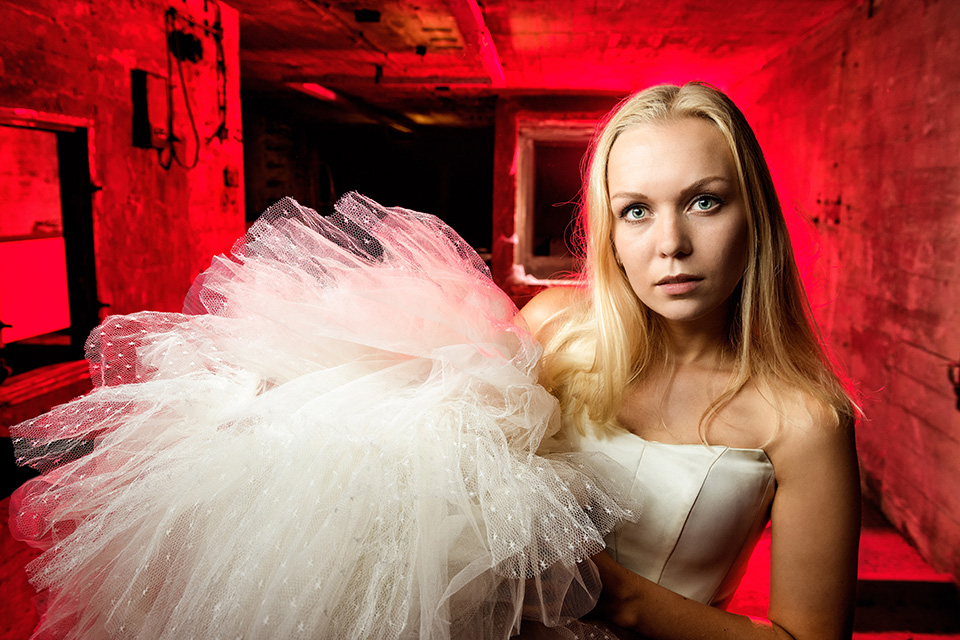
On the afternoon when I unfortunately had to return the D850, Ron came to visit. I took the portrait below against a grey paper background. Later, I added the texture of the wall and floor in Photoshop, with this as the result.
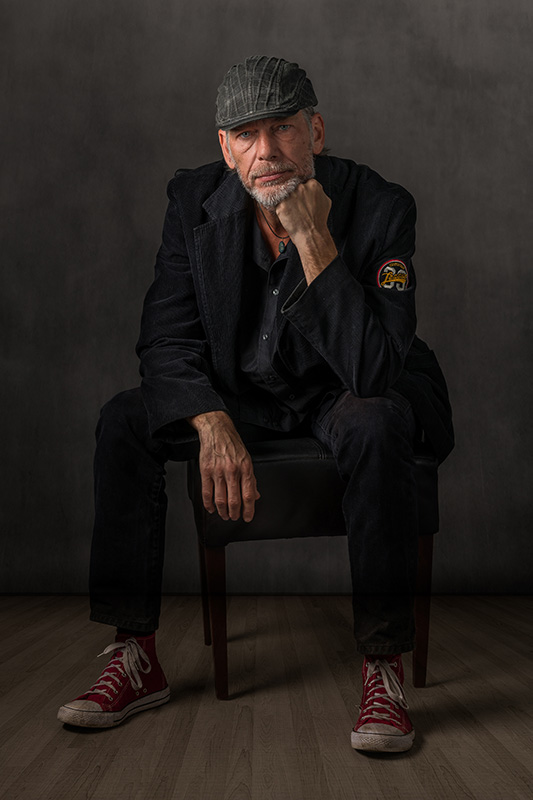
For the lighting, I used a flash with a 135-centimetre octabox. I used a silver reflector to lift the black clothing slightly on the shadow side.
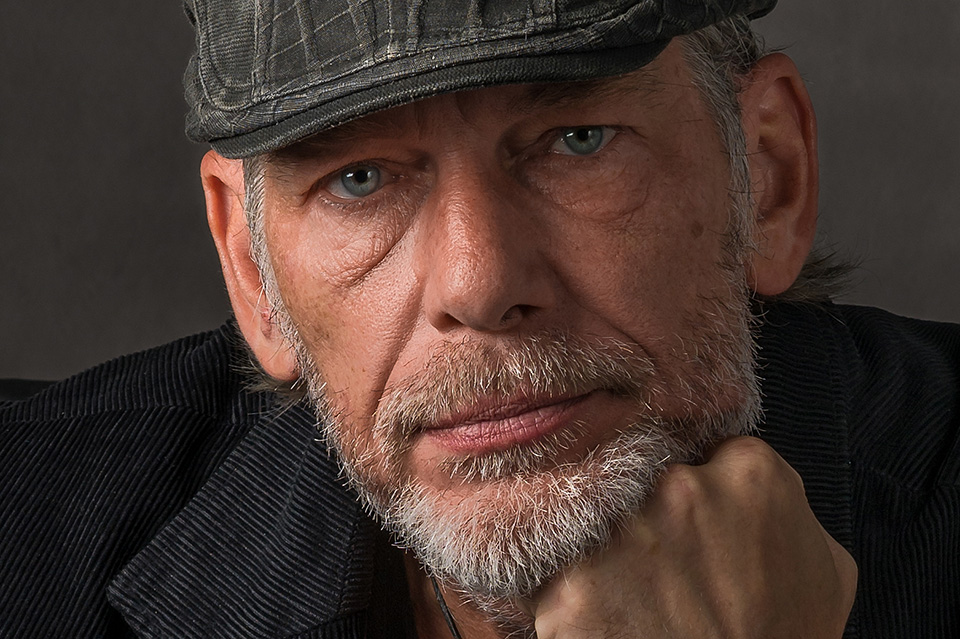
In short, in the studio the D850 beats the D750 and the Nikon D4 by a wide margin and produces fantastic images at a huge resolution.
And then the question is: how does the D850 perform for concert photography?
What makes concert photography so difficult?
- You only have a short time to photograph, often just the first three songs or less
- There is usually little light and you have no control over it either. The band's lighting technician handles that
- If you are unlucky and a lot of smoke is used together with mainly red and blue light from behind, it becomes very difficult to take a good photo.
- There is often a lot of movement too, so you want a reasonably fast shutter speed. This means you often have to increase your ISO considerably. This places significant demands on the sensor in terms of noise at high ISO values and dynamic range
To test this, I was allowed to photograph a concert by Linde Schöne. She is an up-and-coming rapper from Nijmegen who gave one of her first performances at Merleyn in Nijmegen.
Merleyn is a small concert venue where many new bands give their first performances. It has a capacity of 150 people.
The venue was sold out for Linde Schöne. So it was important to arrive on time to get a spot at the front. It is an unwritten rule in concert photography that you only photograph from the front during the first three songs and then leave so you do not get in the audience's way.
Because it is a small venue, I only brought my 14-24mm and 24-70mm lenses. I shot the songs from the front with the 14-24mm, then used the 24-70mm from the side.
The photo below was taken from the front during the first three songs:
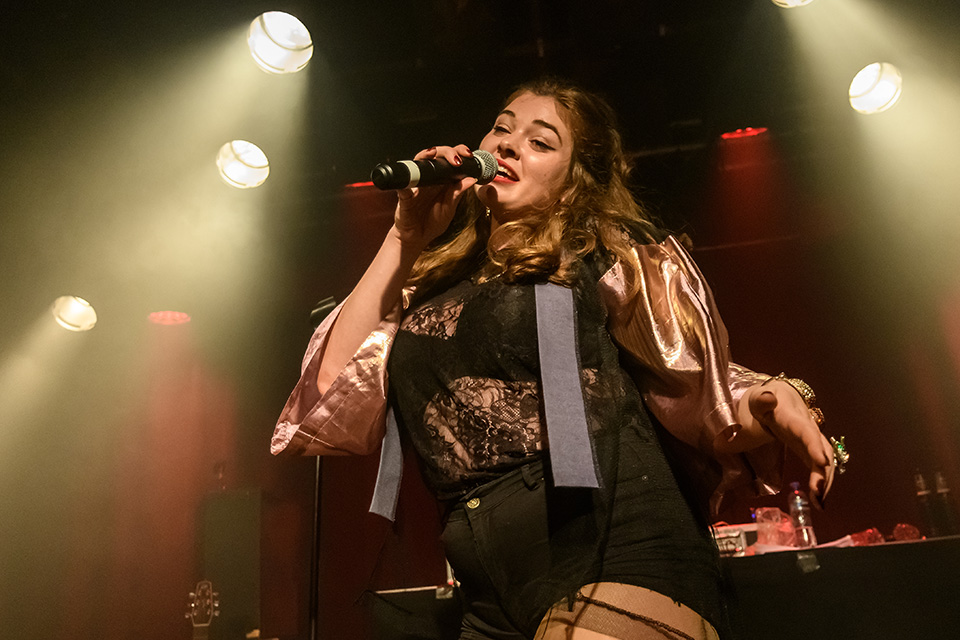
After the third song, I moved to the side, which meant photographing through the audience. The chance of a head or an arm appearing in the frame was therefore very high.
This is where the tilting display and touch controls come in handy. They did not work properly on the D750 because the focus was far too slow, so I rarely used them.
But on the D850, they work perfectly. You hold the camera above your head, look at the display and decide where the focus should be. You press the spot where the focus should be.
As soon as you press the shutter, it focuses and takes the photo. There is still a short delay, so you may miss fast-moving subjects, but overall it worked very well. The advantage is that you can now photograph from a completely different perspective, as shown in the photo below:
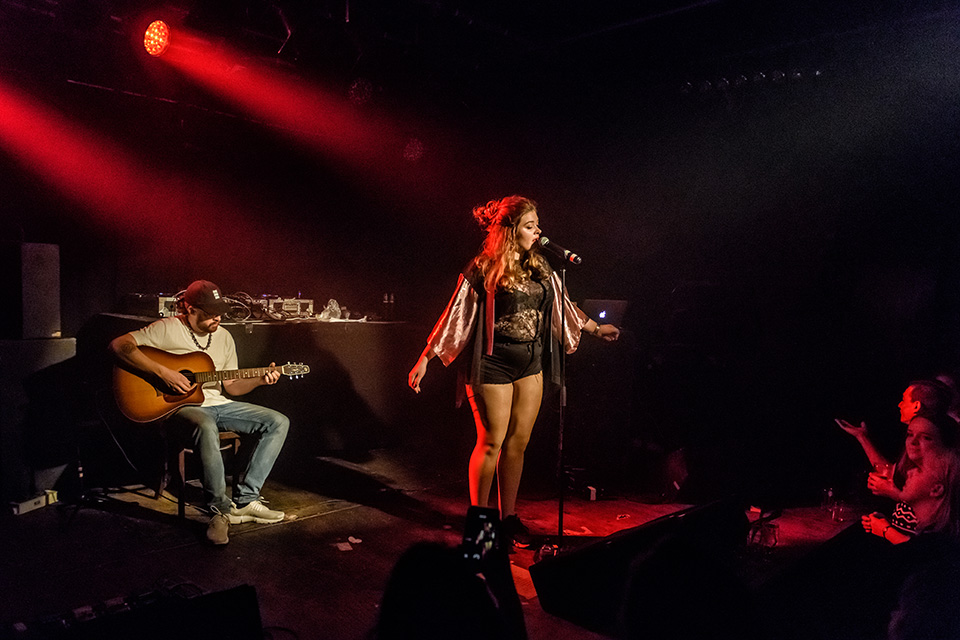
I then sat at the side of the stage and was able to take this photo:
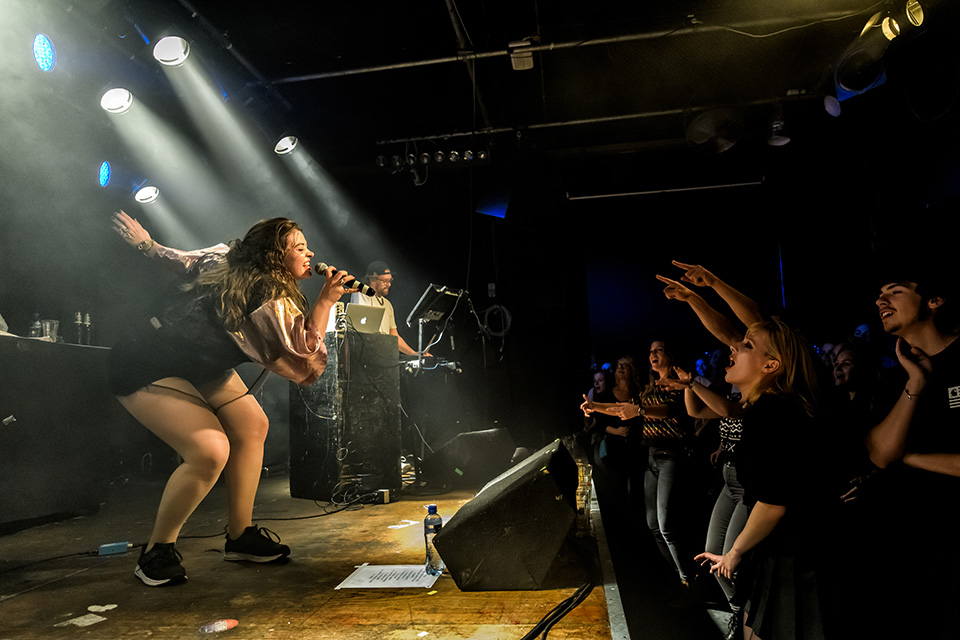
The D850 performed very well while photographing the concert and I find the images comparable to the performance of the D4. It was a fantastic evening at Merleyn and the D850 really performed well here.
If you would like to see more photos from the concert, follow this link.
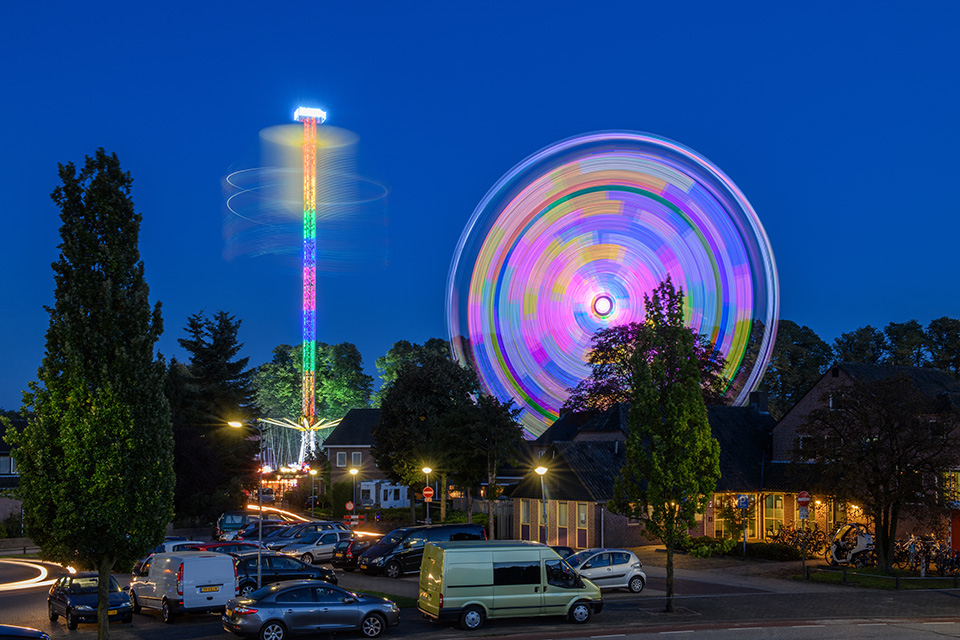
During this period, I also used the Nikon D850 for some more general photography and took a night-time photo of the fair in Wijchen. I took this photo from a tripod and it consists of two photos because both rides were never in the air at the same time.
My conclusion
The D850 is a major improvement over the D750. In my view, essential improvements have been made in every area. A brief summary:
The 45.7-megapixel sensor, improved noise levels at high ISO values, the super-fast focusing system, the new Live view with touchscreen display, and a completely silent shutter in Live view mode.
Wi-Fi/Bluetooth works and is ideal for quickly sending JPGs to your phone so you can share them on social media. The number of frames per second has now increased to seven, with a very large buffer.
In my view, the D850 still falls short compared with the D4, but this is mainly the case with serious sports photography. The D4's images have slightly less noise at high ISO values and appear sharper to me.
But as mentioned earlier, this may also be due to the lens used, which had not been calibrated. This will probably work perfectly with the latest version of the 70-200mm.
What does this mean for me?
I definitely want to buy a Nikon D850, which will replace the D750.
For me, the D850 is number one for photographing in the studio, at concerts, at the skate park, for macro and for general photography.
If you need top speed, as is sometimes necessary in sports photography, and you want images with slightly better noise at high ISO values, while large files are not essential, I still prefer the D4.
So the D4 will not be leaving for the time being. Perhaps for the Nikon D850s, or its successor?
Are there no disadvantages?
The biggest disadvantage is the large files, which put a considerable strain on your computer's performance.
Everything takes a little longer, so you will need to upgrade to a faster computer sooner than if you did not work with such large files. But that is really a luxury problem.
You could also mention the high purchase price as a disadvantage, but when you look at what you get, I feel that it justifies the high price.
Around 3,800 euros for a body is of course a lot of money. I also think that the grip and special battery and charger are far too expensive. You have to pay a thousand euros to go from 7 to 9 frames per second.
About the author
Naast een full-time baan ben ik fotograaf met een passie voor concert, sport en portretfotografie zowel op locatie als in de studio. Op mijn website robjansenfotografie.nl kun je mijn werk zien.
You might also like
-
 Review: Nikon Z 6 full-frame mirrorless camera
by Michelle Peeters
-
 Review: Nikon Z 50
by Michelle Peeters
-
 Review: Nikon ZR
by Nando Harmsen
-
 Review: Canon EOS R5
by Nando Harmsen
-
 Review: Nikon Z5 II
by Nando Harmsen
-
 Nikon DSLR cameras, an overview
by Paul Oosterlaak
11 comments
-
 Ton wrote on Sunday 8 October 2017 at 01:44 | reply
Nice article Rob, but what I also noticed with the Nikon D500 is that you can only freeze things properly at 1/1250. 1/500 gives much more motion blur than other models and brands do! And I see it now with the D850 too, so moving one step higher in ISO solves this again!
Translated from Dutch. -

 Paul Oosterlaak wrote on Sunday 8 October 2017 at 11:24
| reply
Good review. Just a comment about the noise performance. If you want to compare that between 2 cameras, you should never compare at pixel level if the cameras have different resolutions.
Translated from Dutch.
You are then enlarging the images from the higher resolution sensor more, which makes it unfair. You should always compare at the same "print size". And then pixel size doesn't matter at all anymore, only sensor size (and noise reduction algorithms): DP Review
@Ton: motion blur is related to the pixel density of the sensor. Since the D850 and D500 have almost the same pixel density, you also have comparable motion blur. -
 Niels Peperkamp wrote on Monday 9 October 2017 at 11:21 | reply
nice, but it's all very expensive. simply unaffordable for most people. especially when you read what kind of lenses are being used, you're already well over 9000.00 (the lenses mentioned) and I'm not even talking about the Nikon D4, it gets even more expensive. I also wonder whether I want to keep looking at Photofacts. It's all going a bit too fast for me. Niels
Translated from Dutch. -

-
 Rob Jansen
wrote on Monday 9 October 2017 at 11:46
| reply
@ Ton, that's right, but that comes at the expense of noise again, which is why I think the D4 is better suited for this.
Translated from Dutch.
@ Paul, agreed, it may not be fair, but I think the D4 is more suitable for "real" sports photography, you do indeed miss the mega resolution of the D850, but that's the compromise you make with yourself. -
Paul Oosterlaak wrote on Monday 9 October 2017 at 18:58
| reply
@Rob: I actually think the D5 is more suitable for that. The D850 with grip already does 9fps with the 153 AF-point system and you still have plenty of room for cropping as a bonus. But anyway, they are both beautiful cameras.
Translated from Dutch.
@Niels: well, if you read a car magazine, it also contains tests with very expensive cars that you may never drive, and then we're talking hundreds of thousands. But fortunately, there are also many articles here about very affordable equipment, or free tips and tricks. Something for everyone. -
Rob Jansen
wrote on Monday 9 October 2017 at 23:17
| reply
@Paul, completely agree Paul, The D5 is a bit better again with more pixels, but in my review I made the comparison with the D4 and the D750, because I own both of them and know their performance.
Translated from Dutch. -
 Mabotje wrote on Sunday 15 October 2017 at 20:38
| reply
I read somewhere that the 70/200 2.8 VRII wouldn't be 'good enough' for the D850 and that you should have the newer E version? That one costs more than € 3000,- though! That's really not fun anymore if you can only get the maximum out of the D850 with that. I have the VRII now and am super happy with that lens. I really hope that it doesn't undo the investment in a D850. I am still going to wait a while until the hype is over and there are more reviews available.
Translated from Dutch.
I just can't seem to understand how that works with calibrating, so I still need to look into that. If anyone knows any good tips or a good link for that, then very much appreciated. -
Paul Oosterlaak wrote on Sunday 15 October 2017 at 21:32
| reply
@Mabotje: it really depends on what you expect and demand. With the D850, your lens will give you more detail than with your current camera, but don't expect sharpness from corner to corner at a wide aperture.
Translated from Dutch.
It depends on what you consider so important about the D850. If you get a kick out of a huge amount of detail, then you need to invest in better glass. Something that was already clear with the D810 and is now even more so with the D850.
You see the same thing with Canon's 5DsR and many L lenses. In tests on, for example, photozone, they fail in droves when it comes to good sharpness from corner to corner and not just in the center. But when I put my Sigma 50/1.4 Art and especially my 135/1.8 Art on the 5DsR, I do get spoiled with enormous sharpness from corner to corner at a wide aperture. -
Rob Jansen
wrote on Tuesday 17 October 2017 at 19:35
| reply
@Mabotje, newer cameras often have an option that allows you to adjust the back and front focus of any lens, you do this by giving each specific lens an offset with the Auto Focus fine-tuning, which corrects the front or back focus. You can do this yourself, but I went to Chipclean in Heumen myself to have this done. they have a test bench there where the focus ends up nicely in the middle. I took a look at what the values are for my 70-200mm VRII lens, and then you can see that it is set to -10 on my D750 and to -6 on my D4. This way you know for sure that the focus is basically adjusted as well as possible on your camera.
Translated from Dutch. -
 A.Gooier wrote on Monday 23 September 2019 at 12:32
| reply
The Nikon D850 has become cheaper in the meantime. I bought the camera for 2800 euros, so it's quite affordable. I also have Sigma Art lenses, top quality for a low price.
Translated from Dutch.
By the way, as for the amount for the camera, other people spend the money on travel or other things.
Have your say
Please note: Articles older than a week can only be commented on by signed-in visitors.Would you still like to comment? sign in or create a free account.
Become a better photographer every week
A practical photography tip in your inbox every week.
38,839 photography enthusiasts already receive the tips! More about the weekly mail. Or keep up to date via  Facebook.

Elja Trum
Photofacts; everything to do with photography!
Would you like to take better photos and keep up with what is happening in photography? Photofacts publishes articles that teach you something about photography — from a product announcement to a practical shooting tip or a look at a website. Photofacts covers photography every day and is a hobby project of Elja Trum's that got out of hand. The articles are written by a team of volunteer authors. If you would enjoy writing one or more articles for Photofacts, do get in touch.More about PhotofactsPhotofacts is made possible in part by
