

Review: Photographing in Any Situation - Frank Doorhof
Friday 23 August 2019, 14:07 by Michelle Peeters | 9,599 views | 1 commentThis article was translated from Dutch with the help of AI. Read the original.
Almost every photographer has to deal with it: space, or the lack of it. This often results in last-minute improvisation, which is a shame because it does not always benefit the quality of the end result.
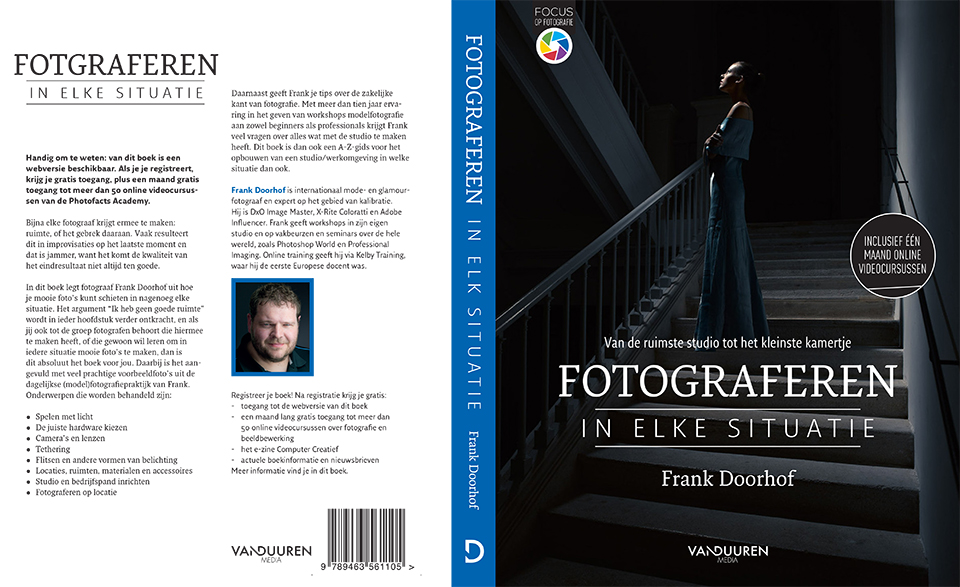
In this book, photographer Frank Doorhof explains how to take great photos in almost any situation. The argument 'I don't have a good space' is disproved in every chapter.
If you are also one of those photographers who has to deal with this, or you simply want to learn how to take great photos in any situation, this is definitely the book for you.
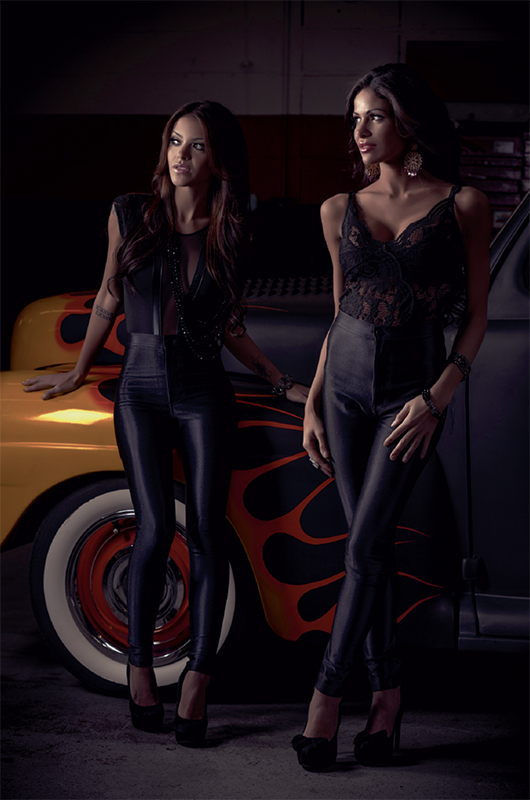
It is also packed with many beautiful example photos from Frank's day-to-day model photography practice.
Frank also gives you tips about the business side of photography. With more than ten years' experience teaching model photography workshops to both beginners and professionals, Frank gets many questions about everything related to the studio.
This book is therefore an A to Z guide to building a studio or working environment in any situation.
A quote
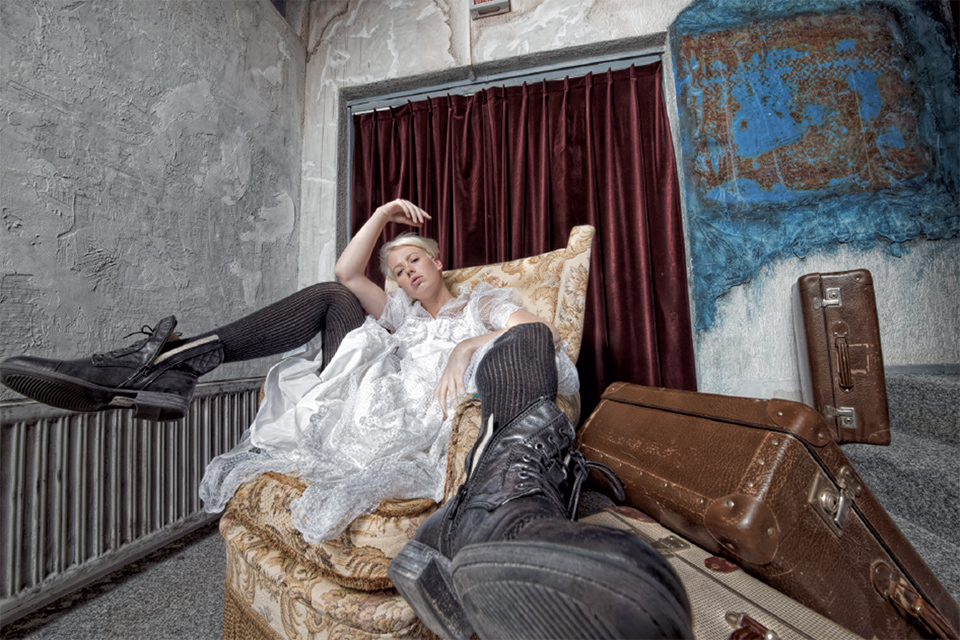
Below is a quote from the book that actually sums up its strength perfectly. It is always the gaps in your knowledge that cause you to get stuck in your development.
Most teachers can no longer put themselves in a beginner's shoes and simply reel off their list of 'facts', as if these bite-sized pieces of information should allow you to achieve the intended result without any problems.
It sounds so logical, but you still notice that many people move too quickly past the basics. How many books have you come across that show you the most beautiful photos and lighting setups, but pay almost no attention to the distance at which the light is placed, the angle it is at and, not least, how the post-processing was done.
A photo is so much more than just a lighting diagram. A good photo is a collaboration between the model, the styling, the lighting, the expression and so much more that simply listing all those subjects would already take up a significant part of this book.
The basics of light are actually not that difficult at all. I have been giving workshops for many years and the problem is that people have 'gaps' in their knowledge, which means they do not see certain things. Books about lighting setups are often written by people who do have this knowledge.
With such a book, you can learn to choose the right lighting setups, but you will never get exactly the same effect yourself as you see in the example photos. Everything, quite literally everything, influences how the light looks.
Chapter overview
1. Introduction
2. Lighting theory
3. The hardware
4. The camera
5. Tethering
6. Hardware, the lighting
7. Continuity and certainty
8. Small locations
9. The separate space
10. Accessories, costumes and furniture
11. Being creative with materials
12. Large spaces
13. Your own business
14. Your own studio: points to consider
15. Furnishing your own studio further
16. A closer look at walls and backgrounds
17. Going outside, photographing on location
18. Location, location, location
19. Lighting techniques on location
20. Tips for locations
21. Business considerations
About the book
After Frank's first (translated) book Mastering the model shoot (Handbook of model photography) was published, he was regularly asked to write a follow-up.
Although this first book was already very complete, he did respond to those requests. However, he wanted to offer something new rather than a rewritten version of a successful book.
He made the decision בעקבות his Q&A sessions, or question-and-answer sessions, where it often emerged that people became frustrated because they could not exactly recreate his examples. They sometimes became so frustrated that they lost motivation and stopped pursuing a fantastic hobby, for the wrong reasons.
The problems they encountered were often caused by gaps in their knowledge, which meant they became stuck in their development, as already mentioned in the quote above.
The Handbook of model photography mainly covered working with the model, lighting, Photoshop, styling and so on. Although some attention was paid to locations, Frank felt that this was still not covered in enough detail.
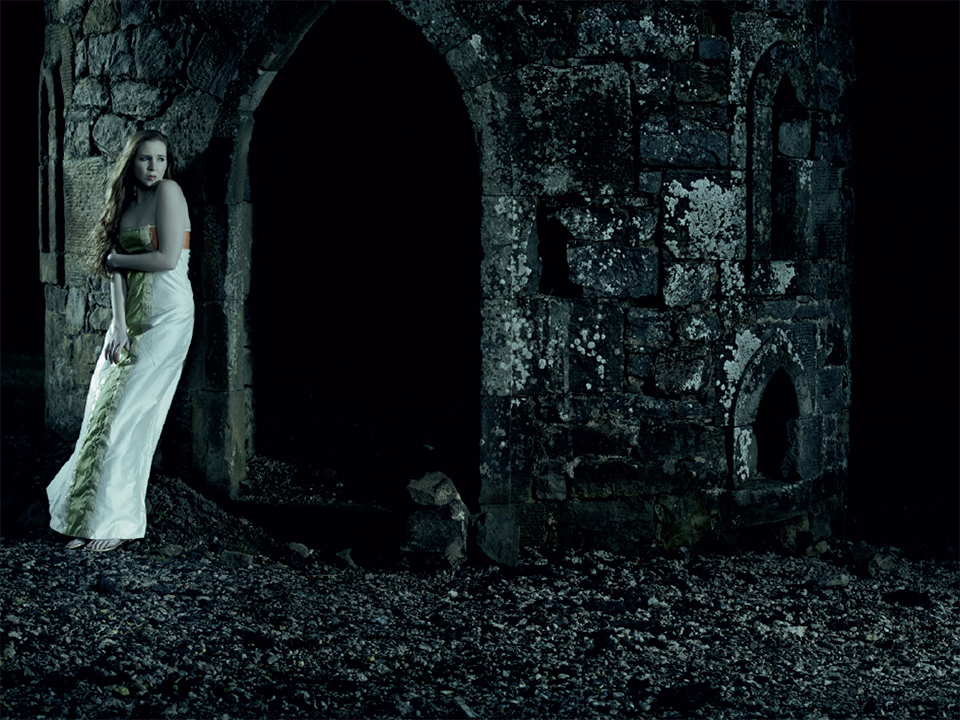
In this book, he looks for the best tips, locations and solutions for a successful photo shoot, with the aim of coming home with top photos in almost any situation.
Chapter 2 - Lighting theory
This is a very important chapter. I learned a lot from it. Frank starts by explaining what you can do with dust on your lens, and how it can give your photo that extra bit of atmosphere. As long as you get it right.
He then explains the inverse square law, which was completely new to me and deals with light falling off over distance. He visualises the difficult definition with examples, so the effect is immediately clear.
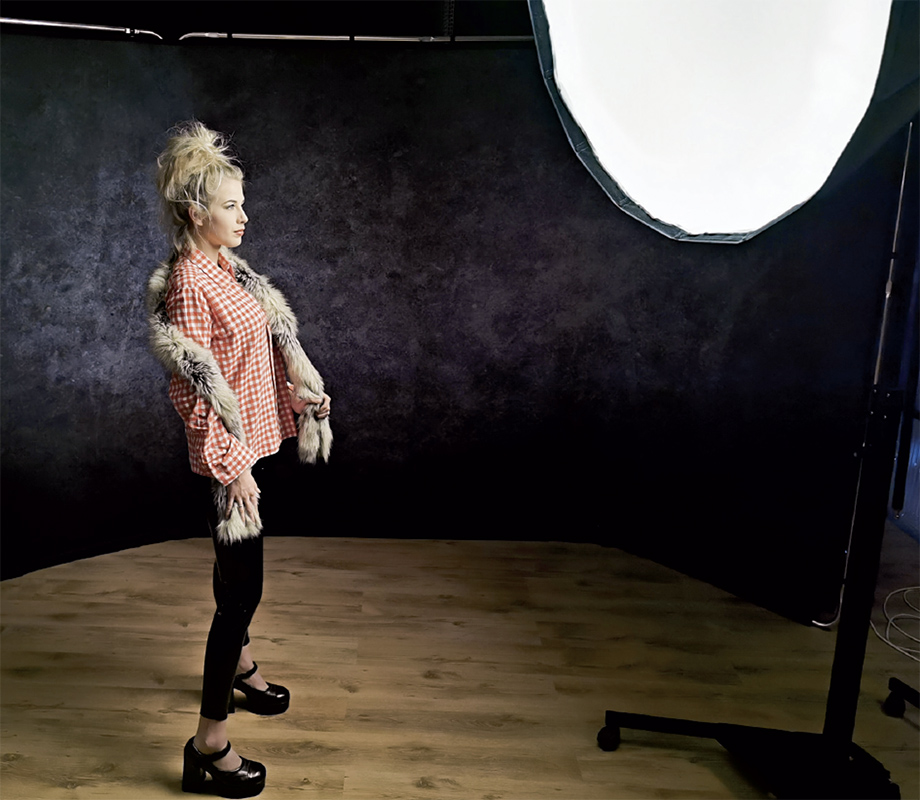
It comes down to this: if you reduce the distance between the light source and your model, less light reaches the background. The light therefore falls off more quickly, partly because the beam is more limited, or less wide. You can achieve the same effect with a beauty dish with a grid. A vignette is also created around the model and more attention is drawn to the subject.
You can also do the same by adjusting the distance between the model and the background.
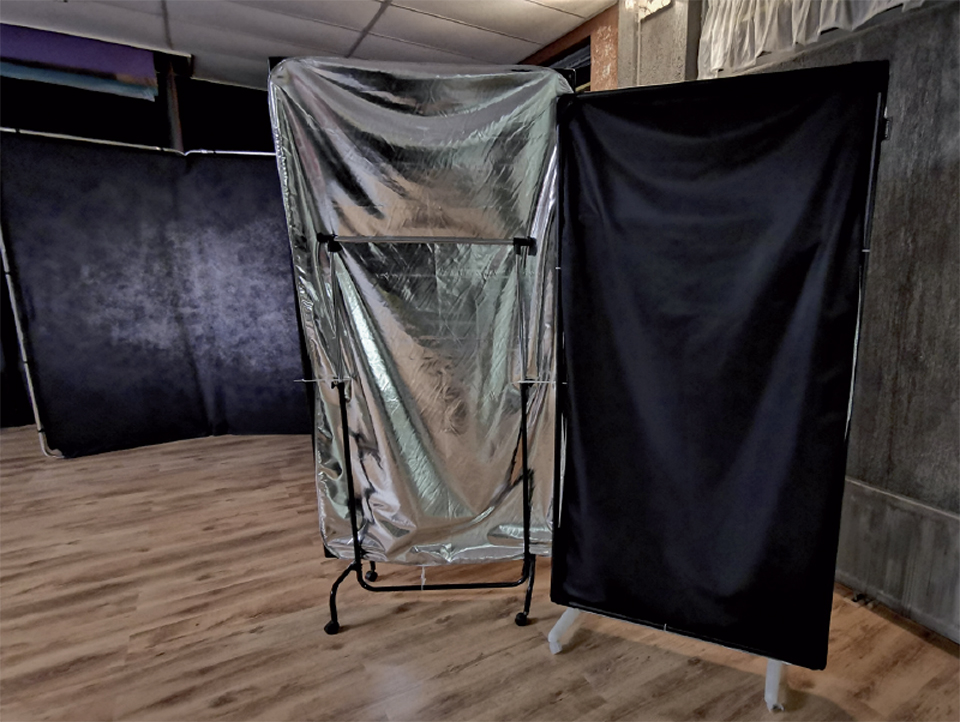
He then continues with shadow gradients and how you can influence them by using so-called 'flags', which absorb the light, as it were. He explains how you can use them as 'light shapers'.
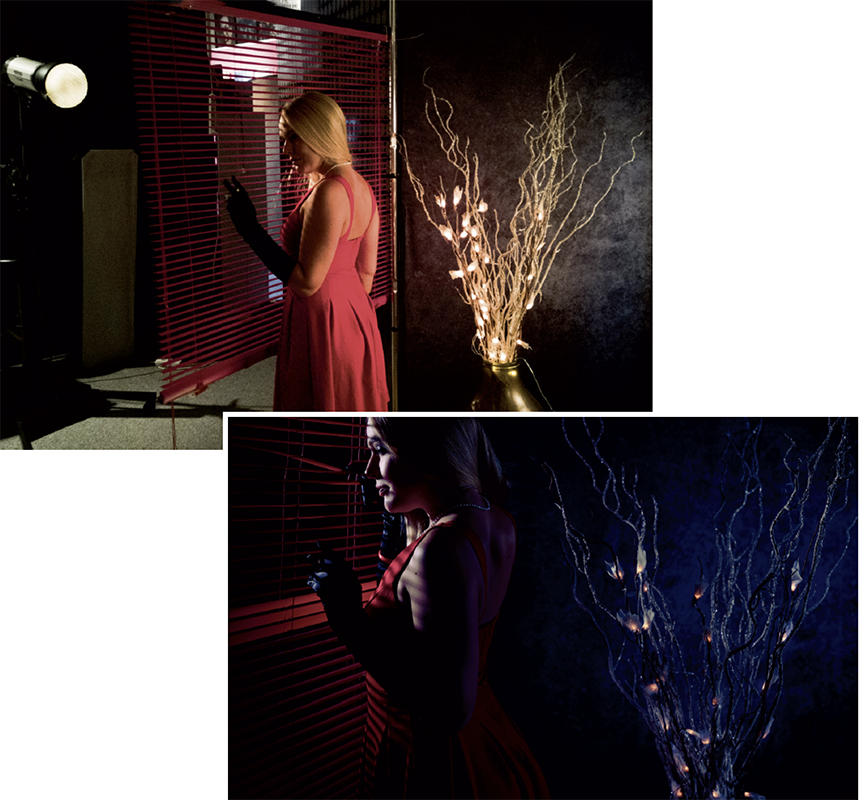
He covers how to photograph your model beautifully through blinds, again by playing with distances, in detail while still getting straight to the point. One eye-opener for me was that if you turn the model's body slightly, you effectively increase the distance between the blinds and the model, giving you a softer line.
Frank considers lens flare one of the best extras in a photo, a real atmosphere-maker. You therefore see it regularly in his photos. However, if it falls in the wrong place, your photo is ruined. He explains how to add it in such a way that it adds atmosphere to your photo rather than detracting from it.
He explains the use of Tilt and Shift lenses and their effects. In model photography, the effect can lead to extremely pronounced differences in focus, which he feels suit certain photos.
Chapter 3 - The hardware
This chapter is about the equipment you should buy to achieve good results. Should you buy a PC or Mac, do you need a laptop or tablet, which disc system is safe, convenient and fast, and how do you keep everything in sync?
Chapter 4 - The camera
When someone asks Frank about his favourite camera, he always gives the huge cliché answer: 'The camera I have with me.' So it does not really matter that much for most work. A good photo does not depend on the number of megapixels, the type of sensor and so on. But it does help!
For model photography, he recommends a camera with a little more resolution and very good high-ISO performance. Speed, two to three frames per second, is also an important issue.
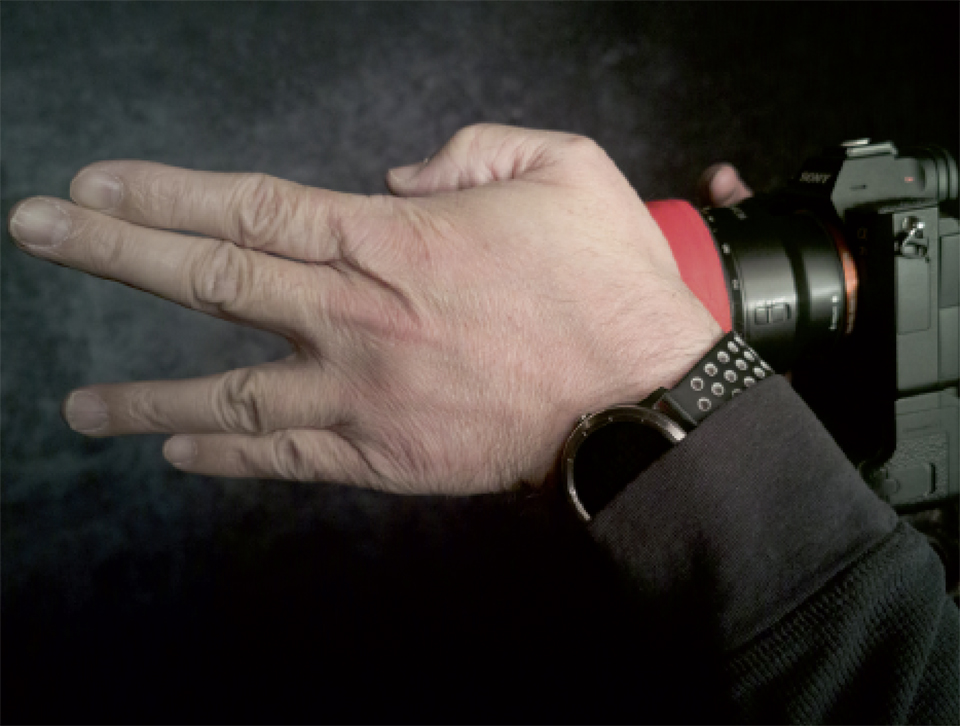
As a lens, Frank prefers a 24-70 f/2.8 because it gives you both a wide-angle lens, 24, and a telephoto lens, 70, and it is a very fast lens. He also shows what a lens does in terms of distortion and what happens when you play with the distance to your model.
Chapter 5 - Tethering
Tethering, sending photos from the camera to a connected smart device or PC/Mac via a wired or wireless connection, is a fantastic way to assess photos on location or in the studio.
The different ways of shooting tethered are covered in detail, including Frank's own preference and why.
Chapter 6 - Hardware, the lighting
The same applies to lighting as to cameras: you should be able to take a good photo with all types of lighting. A really good photo should tell a story, and whether it was taken with a torch or the most expensive flash units does not really matter.
A statement Frank often makes during workshops and lectures is: 'Most photographers let the light control them, when they should actually be controlling the light themselves.'
If you really understand what light does, you can create a great image with any light source. Frank shows this using many examples that make everything very clear.
Flash lighting versus continuous lighting, aperture, ISO, freezing movement, continuous lighting, modifiers and types of light, alternative light and flash units, light placement and gels are all covered in this chapter.
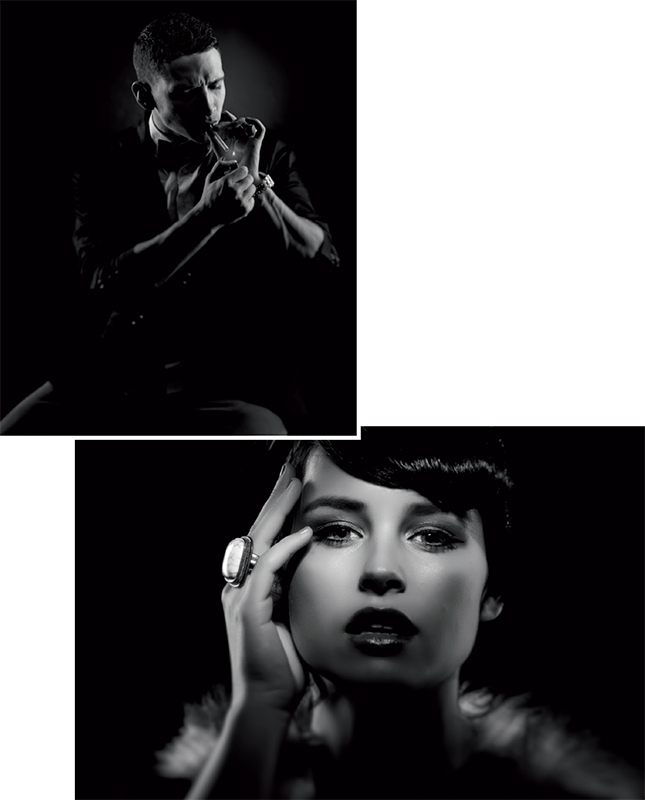
Frank often works with grids for very focused light and plays with the distance between the light and the model to create very powerful images. Styling is sometimes essential too, and black and white helps as well.
Chapter 7 - Continuity and certainty
This chapter covers colour balance, the white balance card, the ColorChecker, how colour works, camera settings, monitor calibration and the light meter.
The easiest solution is a white balance card. Shoot a white balance card for every set and use it to set the colour temperature. They are cheap and last a long time, as long as you keep them out of the sun.
Chapter 8 - Small locations
This is a very interesting chapter, especially if you do not have your own studio. He immediately counters the excuse that you cannot take good photos because the location is too small.
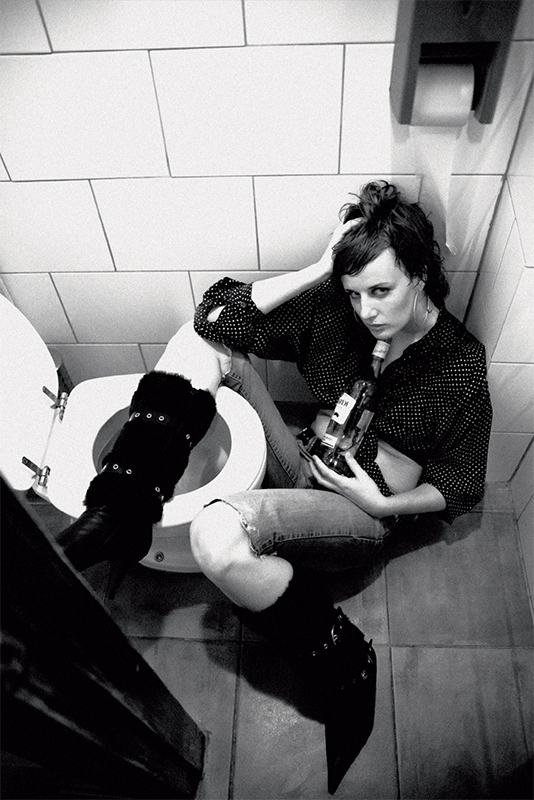
This absolutely does not have to be an obstacle. You can even take photos in a toilet, if you shoot from above or from a very low viewpoint.
He immediately adds that you should look for models who see further than just their 'beauty'. Look for models who are up for anything. Ultimately, it is about the story and the photo, and the model is 'merely' the actress. Actresses who only want to or can play roles because they are so beautiful are often very boring.
Frank shows how you can use a living room as a studio, again with the help of fun examples and ideas.
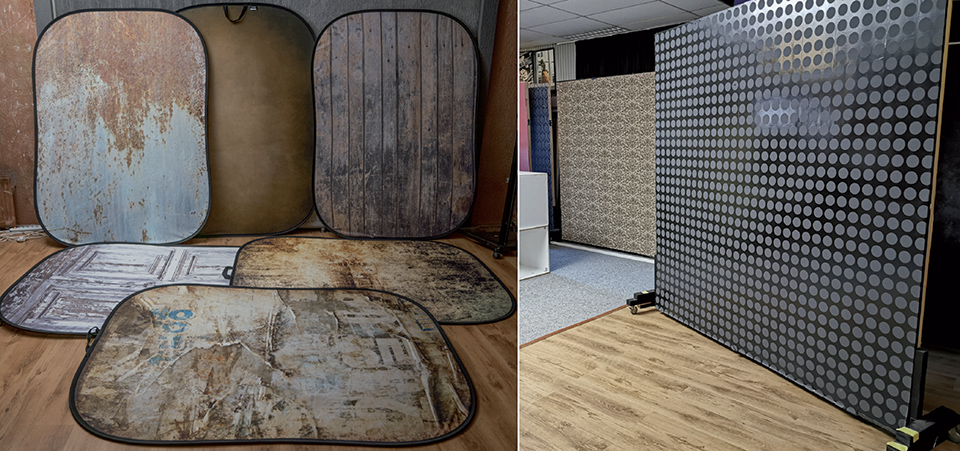
He also shows how you can make optimum use of the space in a small, or too small, studio, for example by using smaller speedlights or system flashes instead of large studio flashes. He shows how you can be creative with walls and floors.
Other chapters
The remaining chapters are packed with tips, along with the necessary examples in photos and detailed explanations, about locations and how to make optimum use of them.
How to improvise when faced with limitations and still achieve very surprising results. Outdoor locations are also covered in detail, with all the associated and possible lighting techniques. It is an incredible wealth of information.
What did I think of it?
The book is truly a huge asset. Not just to read from cover to cover, which will take you quite a lot of time because it is a substantial book packed with useful information, but it also works well as a reference book. You can find almost immediately what you were looking for.
The book is logically structured and the chapter titles appear on every page. It is easy to read, and if you think you do not immediately understand something, it is gradually explained as you continue reading.
It is definitely not a further elaboration of his first book. It is a genuine follow-up, which I think will be just as successful as the first one!
Price and where to order
The price of this book is 34.99 euros. You can order the book from any bookshop, Bol.com or, of course, directly from Van Duuren Media.
If you register the book after purchase, you will receive a number of benefits, including one month's free access, worth more than 10 euros, to our online courses on Photofacts Academy.
Our newest course also went live today: Photo Shoot Under Control. This course, taught by Frank Doorhof, is also a perfect match for Frank's new book.
Frank's book for free
To celebrate the launch of Frank's new book and its accompanying video course on Photofacts Academy, we have a great offer for you. You can now receive the book 'Photographing in Any Situation' free with an annual Photofacts Academy membership.
As well as the book and Frank's video course, you will immediately get access to more than 50 different video courses about photography and post-processing. So you only pay the normal price of 129 euros for the annual membership and receive the book, worth 34.99 euros, free at home.
» Become a member now (including Frank's new book)
About the author
Michelle Peeters is fotografe en oprichter van DeuxBleus Fotografie. Michelle herkent het bijzondere in het gewone en het gewone in het bijzondere. Ze heeft zich nooit willen specialiseren en is daardoor van alle markten thuis.
You might also like
-
 This Friday: Free Webinar with Frank Doorhof
by Elja Trum
-
 20 photography books you should read!
by Michelle Peeters
-
 Review: The Photoshop Layers Book - Johan Elzenga
by Michelle Peeters
-
 Review: Photo book 'Voor altijd Rotterdam'
by Erik van Rosmalen
-
 Review: Blurb photo books via Lightroom Classic
by Nando Harmsen
-
 Review: Geekoto Y-Wing Reflector
by Elja Trum
1 comment
-
 Ton van de Blaak wrote on Tuesday 27 August 2019 at 12:38 | reply
I have seen the course and a clear explanation is given about the subjects . Have now ordered the book so I can look at it again to see how what.
Translated from Dutch.
Have your say
Please note: Articles older than a week can only be commented on by signed-in visitors.Would you still like to comment? sign in or create a free account.
Become a better photographer every week
A practical photography tip in your inbox every week.
38,982 photography enthusiasts already receive the tips! More about the weekly mail. Or keep up to date via  Facebook.

Elja Trum
Photofacts; everything to do with photography!
Would you like to take better photos and keep up with what is happening in photography? Photofacts publishes articles that teach you something about photography — from a product announcement to a practical shooting tip or a look at a website. Photofacts covers photography every day and is a hobby project of Elja Trum's that got out of hand. The articles are written by a team of volunteer authors. If you would enjoy writing one or more articles for Photofacts, do get in touch.More about PhotofactsPhotofacts is made possible in part by
