

Book: Practical Guide to Filters by Bob Luijks
Friday 26 January 2018, 14:41 by Michelle Peeters | 7,857 views | 0 commentsThis article was translated from Dutch with the help of AI. Read the original.
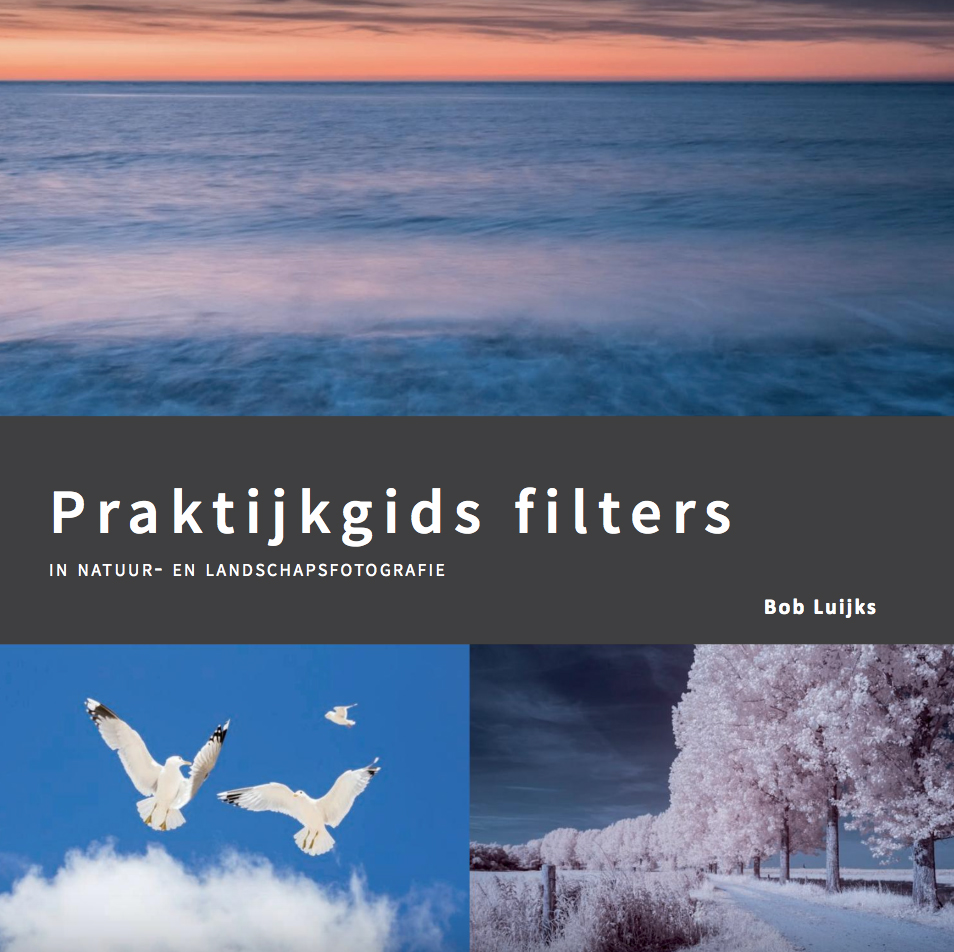
Filters, are they still relevant today? Can't everything be recreated digitally? After reading this book, you'll know better. Some filters, such as the polarising filter, simply cannot be recreated in post-processing. That makes them indispensable.
Wildlife photography is more popular than ever. More and more people have a camera and head out when the weather is good to capture the beauty of our own surroundings.
With filters, you can take considerably better landscape photos! That makes them essential for every landscape and wildlife photographer. Wildlife photographer Bob Luijks describes all available filters in this practical guide, along with their features and how to use them in practice.
Examples make everything clear straight away and inspire you to get started yourself.
Analogue disappears
When digital cameras arrived, typical analogue accessories such as filters seemed to be disappearing from the natural landscape. After all, you can do everything on the computer, can't you?
At first, this really did seem to be happening: one filter brand after another went bankrupt, until only a handful of brands remained. Even the popular Cokin did not survive. But photographing with filters is now making a huge comeback.
Filters make a comeback
The rise of the digital camera did, however, lead to an opposite revolution a little later. As more and more people started taking photographs, there was once again a great demand for filters. So much so that the bankrupt Cokin made a successful comeback.
At the moment, you can choose from a record number of brands and 'flavours'. That sounds ideal, but it can sometimes leave you lost in the filter jungle.
There are now dozens of filter brands, and new products come onto the market every month.
The last book about filters, however, dates back 30 years. Bob Luijks, a gifted landscape photographer and teacher, felt that the time had come for a new standard work on filters.
Pure practical experience
He immersed himself in the subject, testing, applying and using everything himself. This book contains no 'hearsay', but honest and pure practical experience. Bob shares his knowledge, experience and enthusiasm in a no-nonsense way.
This book describes every conceivable filter, their features, what to look out for when buying them and how to use them practically in the field. Dozens of examples make everything clear and provide plenty of inspiration to get started yourself.
What does this book cover?
• Polarising filter
• Graduated neutral density filter
• Neutral density filters
• Other filters
• Accessories
• Digital solutions
• Making your own filters
• Practical use
What did I think?
I thought it was a very practical book with plenty of depth, and I learned a lot from it. The author has extensive knowledge of the subject. He explains why it is not possible to recreate all the effects of filters digitally. He does not, however, glorify physical filters, and also devotes a major chapter to digital filters.
He explains the difference between a graduated neutral density filter, for balancing contrast between a well-exposed sky and a white landscape, and a neutral density filter, which is like looking at images through a pair of sunglasses, very clearly.
He also shows the effect of a neutral density filter with a long exposure time. When photographing water, this clearly shows movement. By moving your camera yourself, the details blur and you get a beautiful, abstract image.
He also explains how a polarising filter works. It brings out intense colours and removes glare, making the landscape come more to life. You can also use it to remove reflections, for example in a shop window.
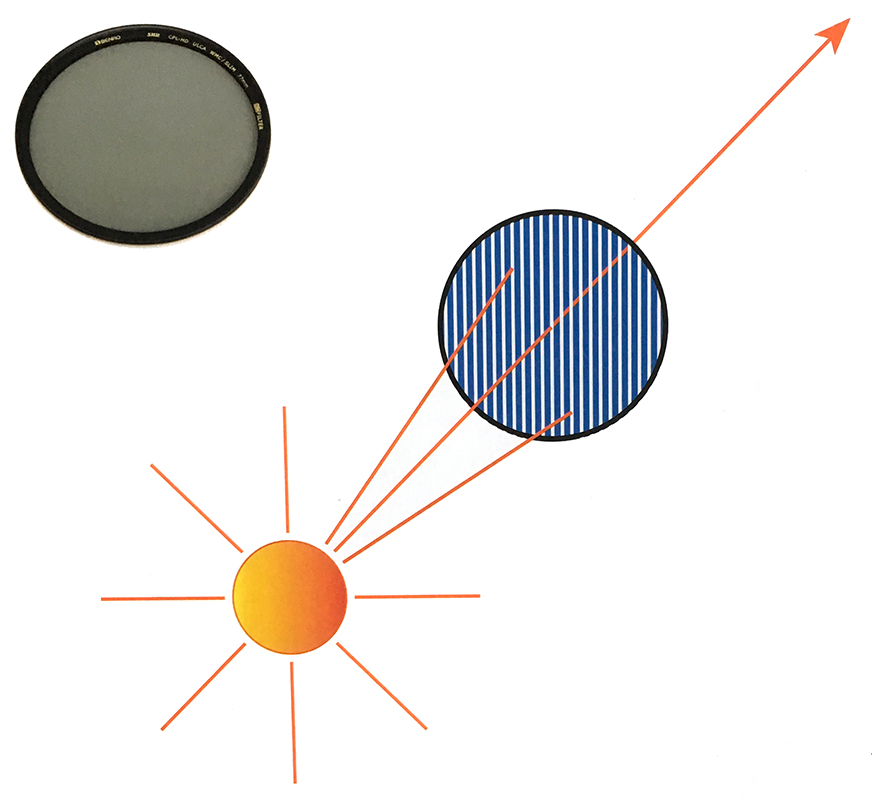
I found the trick for knowing where the effect of a polarising filter is strongest in the sky a real eye-opener:
To find out where the effect of a polarising filter is strongest in the sky, extend your index finger and thumb. They now form a 90-degree angle to each other. Then point your index finger towards the sun. Your thumb can move freely around the axis of your index finger and shows you where the filter has its greatest effect.
Price and where to order
The book costs 24.99 euros and can be ordered from Bol.com, among others.
About the author
Michelle Peeters is fotografe en oprichter van DeuxBleus Fotografie. Michelle herkent het bijzondere in het gewone en het gewone in het bijzondere. Ze heeft zich nooit willen specialiseren en is daardoor van alle markten thuis.
You might also like
-
 20 photography books you should read!
by Michelle Peeters
-
 Book: Scott Kelby, how do you do that in Photoshop?
by Michelle Peeters
-
 Review: Practical Nature Photography Book NXTLVL
by Michelle Peeters
-
 Review: The Photoshop Layers Book - Johan Elzenga
by Michelle Peeters
-
 Review: Haida variable ND filter with built-in polarisation
by Nando Harmsen
-
 Interview with photographer Bob van Zalm
by Michelle Peeters
0 comments
Be the first to share what you think!
Have your say
Please note: Articles older than a week can only be commented on by signed-in visitors.Would you still like to comment? sign in or create a free account.
Become a better photographer every week
A practical photography tip in your inbox every week.
38,840 photography enthusiasts already receive the tips! More about the weekly mail. Or keep up to date via  Facebook.

Elja Trum
Photofacts; everything to do with photography!
Would you like to take better photos and keep up with what is happening in photography? Photofacts publishes articles that teach you something about photography — from a product announcement to a practical shooting tip or a look at a website. Photofacts covers photography every day and is a hobby project of Elja Trum's that got out of hand. The articles are written by a team of volunteer authors. If you would enjoy writing one or more articles for Photofacts, do get in touch.More about PhotofactsPhotofacts is made possible in part by
