

Review: Haida variable ND filter with built-in polarisation
Friday 19 August 2022, 16:32 by Nando Harmsen | 5,311 views | 0 commentsThis article was translated from Dutch with the help of AI. Read the original.
A variable ND filter can be very useful. You only need one filter while still being able to block different amounts of light. Haida has released a variable ND filter with a polarising filter built in.
I'm not a fan of variable ND filters. Some time ago, I reviewed the Haida variable ND filter for a filter system. Although it is a clever solution for anyone who doesn't want to buy or carry too many filters, it does have some drawbacks.
Read my review of this filter to find out why I don't consider it the best solution for photography.

Although you're often better off with standard ND filters for photography because they deliver consistent quality, a variable ND filter is preferable for filming. It allows you to respond quickly to changing lighting conditions while filming.
Why use a variable ND filter for film?
For film, it's not advisable to simply use automatic exposure. You're very limited in how you can set the exposure.
You want the shutter speed to be twice the frame rate, which means 1/50 sec at 25 fps, or 1/100 at 50 fps. In other words, you can't use shutter speed to control the exposure.

The aperture determines the depth of field, and in principle you don't want to use that too much to control the exposure either. If you do, your film may not have the look you had in mind.
That really only leaves ISO for controlling your exposure. Without going into too much detail, the base ISO value is sometimes as high as ISO 400 or ISO 800, especially when filming in log. In short, this also creates limitations.
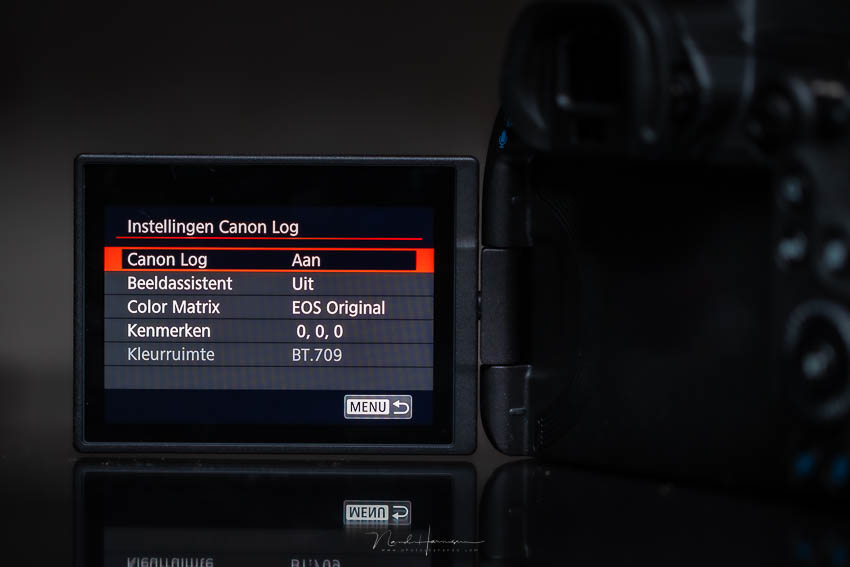
If you film outdoors or in bright lighting conditions, you're very limited in your exposure settings. You may be forced to set the aperture to f/16 or f/22, or even force the ISO down to ISO100 just to get somewhere near a good exposure.
That's where an ND filter comes in. If you film and shoot in bright lighting conditions, an ND filter is essential for keeping the shutter speed, aperture and ISO at the desired values.
The Haida CPL VND Pro II
Because not all cameras used for film, like the recently reviewed Canon EOS R5 C, have a built-in variable ND filter, you have to put a filter on your lens. The Haida CPL VND Pro II is one such filter.
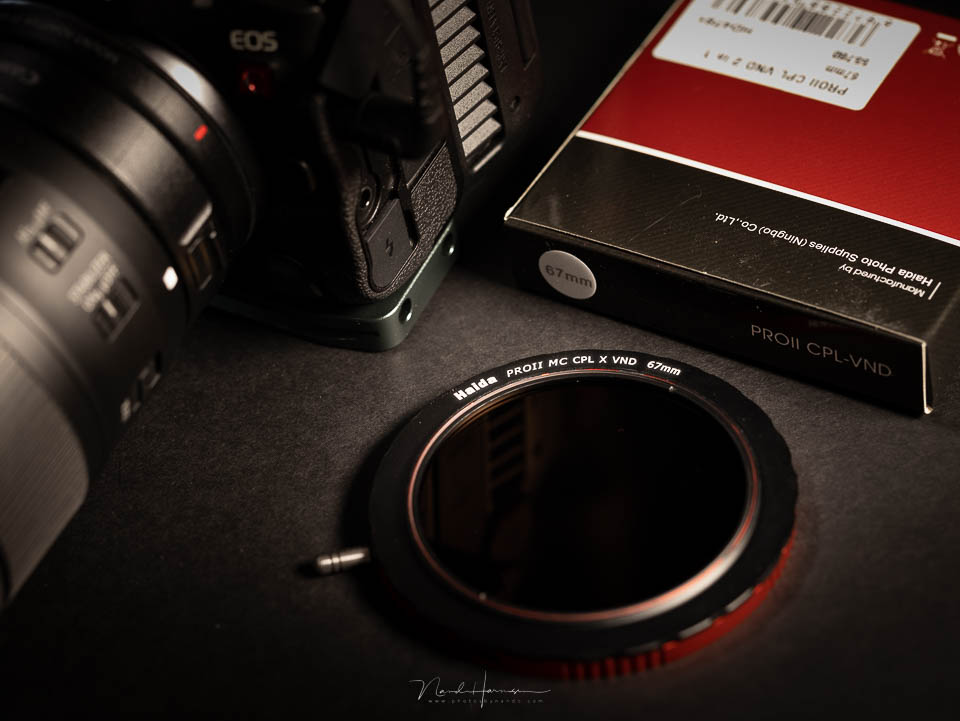
The special thing about this filter is its built-in polarisation. A variable ND filter is already based on the relative rotation of two polarising filters, but the Haida CPL VND Pro II allows you to rotate the filter for the desired ND strength as well as rotate it for the polarisation.
The Haida CPL VND Pro II is an ND filter that can vary between a 3-stop ND filter and a 7-stop ND filter. The limitation that you can't go lower or higher prevents the dreaded cross pattern that I showed in the review of the Haida M10 inset variable ND filter.
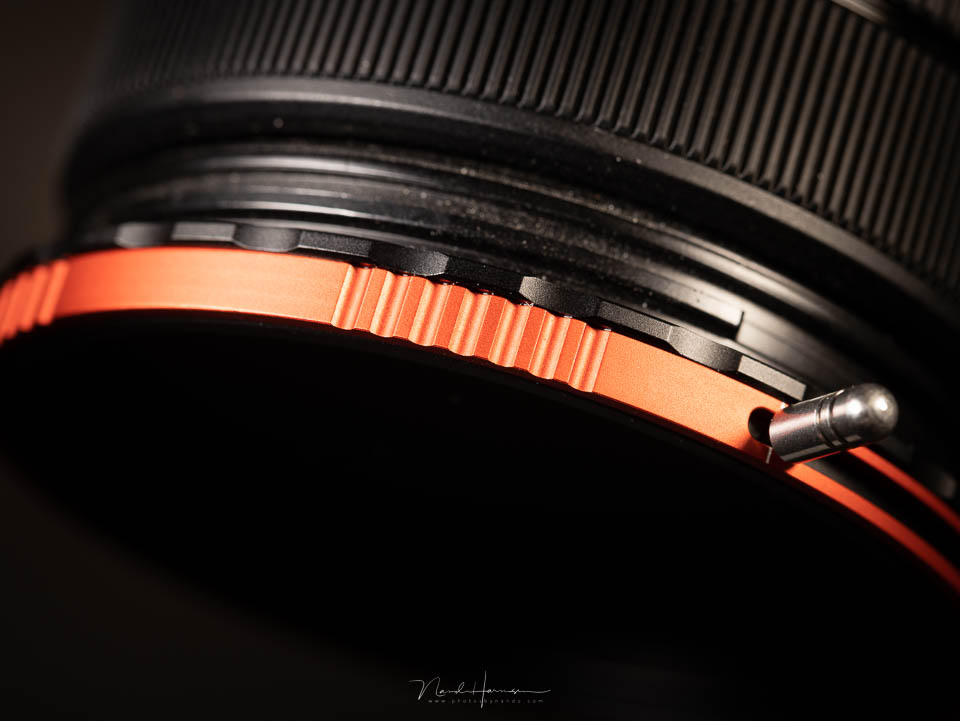
The set strength of the VND filter can be read in the narrow edge inside the red ring. A nicely finished lever allows you to vary the strength continuously. In other words, you can use any desired strength between 3 and 7 stops. You're not limited to whole, half or even tenths of stops.
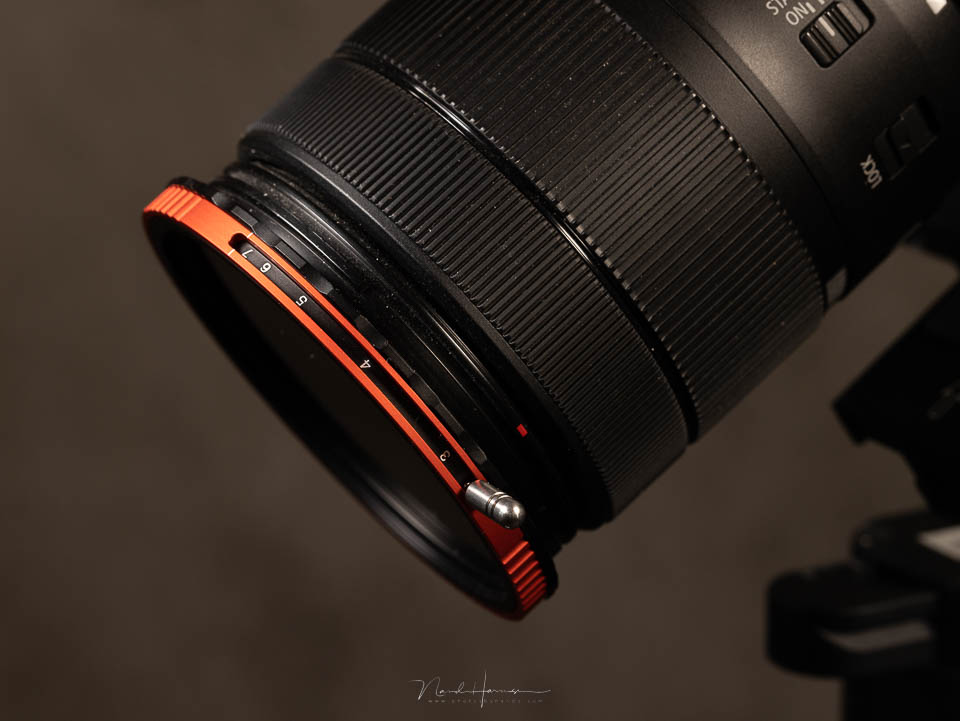
Since a VND filter already uses polarising filters, adding the option to rotate the entire filter, separately from the rotation for the strength of the VND filter, is enough to change the polarisation. Haida has done this with the CPL VND Pro II filter.
Using the filter
For filming, it's useful that rotating the VND filter is effortless. The large lever makes this easy. You can even do this while filming, if you want to. The continuous adjustment means you can simply turn it until the exposure is correct.
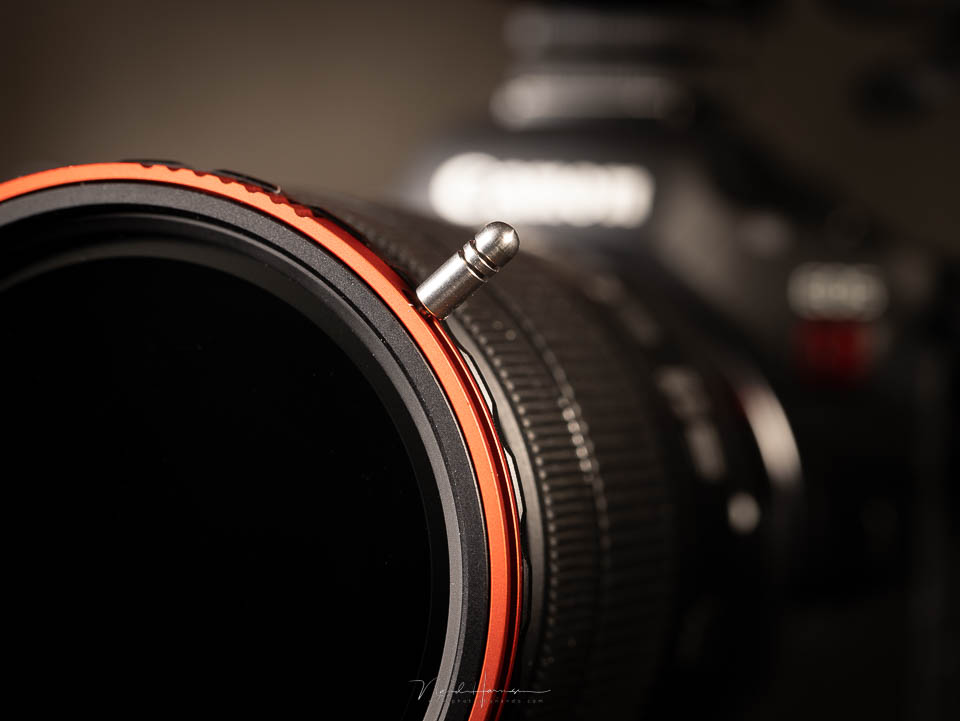
The polarisation provided by the filter changes when adjusting the VND strength. This means that after setting the correct VND strength, you can adjust the desired polarisation. Rotating the complete filter no longer changes the VND strength.
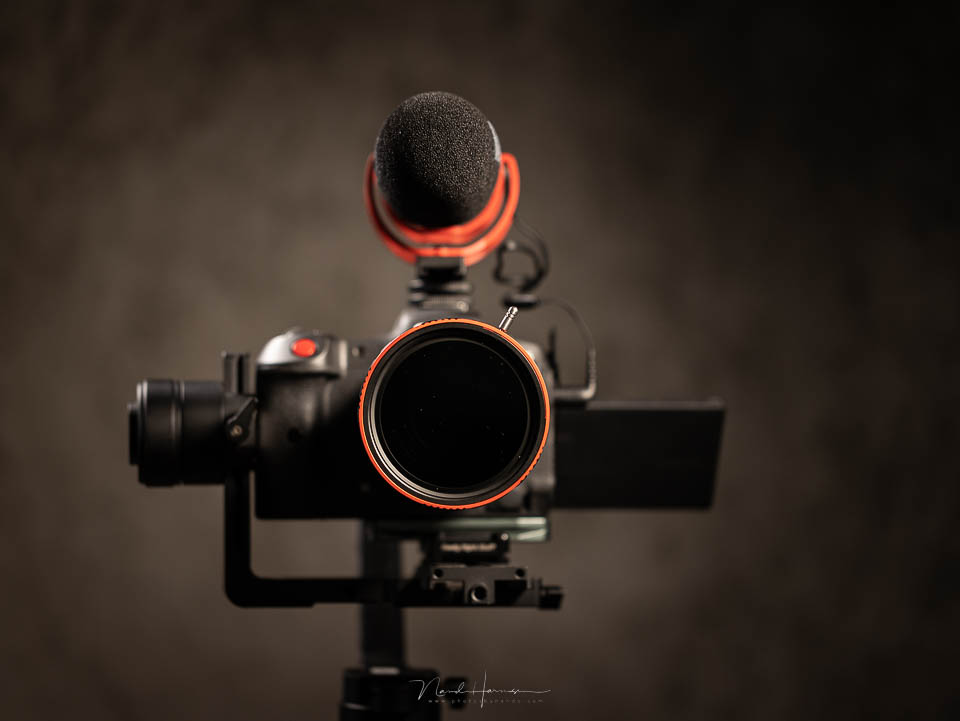
The total weight of the Haida CPL-VND Pro II filter is 48 grams for the 67mm diameter I received. A larger filter will naturally weigh a little more. This weight doesn't cause any problems when balancing the camera on a gimbal or Glidecam.
The filter has a good grip, so fitting it is no problem at all. Rotating it for the polarisation is easy thanks to the thick red ring. Do bear in mind that with extreme wide-angle lenses, this thickness can cause vignetting.
Although this will hardly be a problem for filming because of the 16:9 aspect ratio. For photography, however, it is something to watch out for.
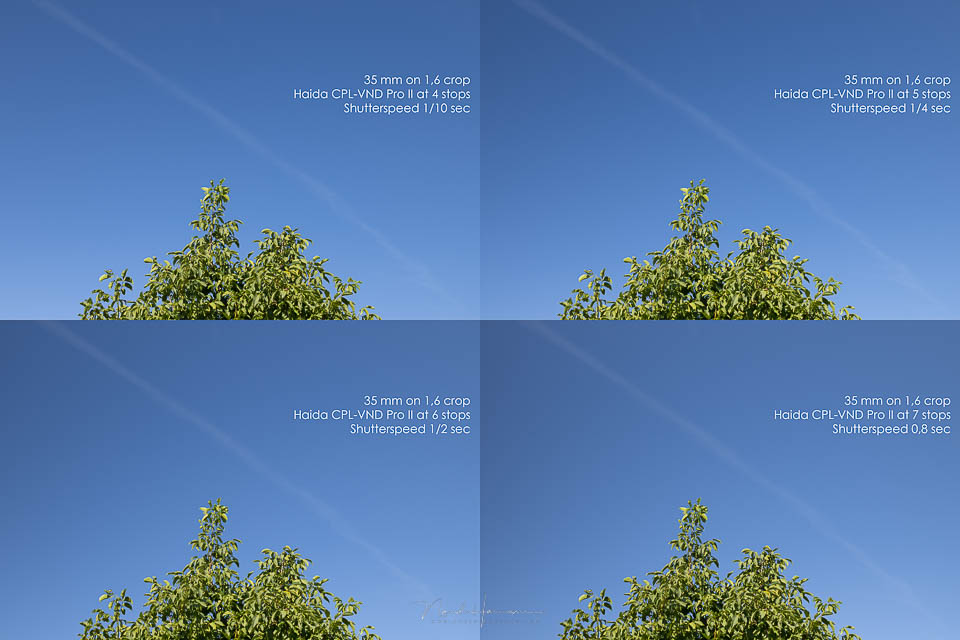
A simple test, photographing an even sky with the Haida CPL-VND Pro II filter, shows that no cross pattern occurs.
Because polarisation always occurs, you only see the normal polarising effect in the sky. This can be enhanced by adjusting the polarisation separately from the ND strength.
Conclusion
The Haida CPL-VND Pro II is a well-designed filter with a very solid build. It is easy to fit, and rotating the filter for the polarisation has pleasant resistance, so it doesn't change accidentally when adjusting the VND strength.
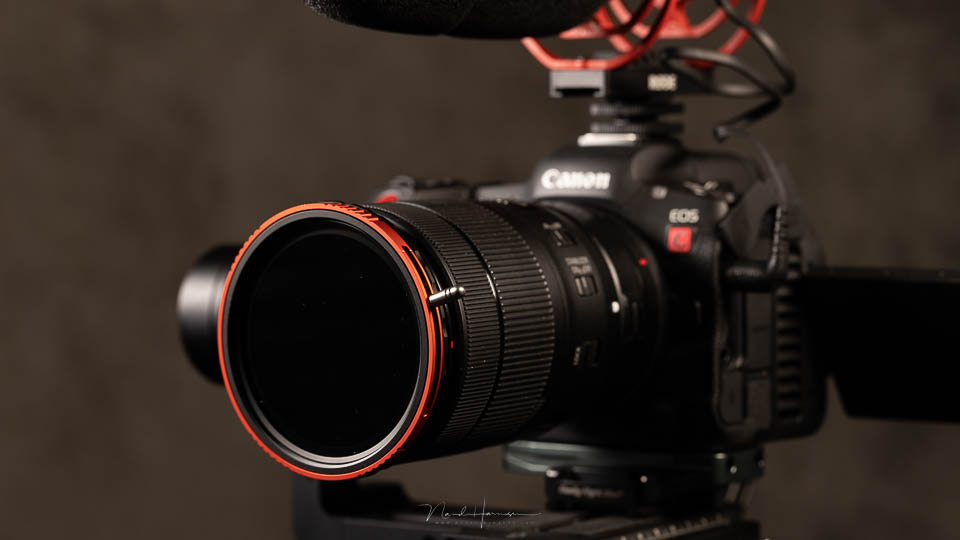
The variable ND filter is very pleasant to use. The continuous adjustment makes it possible to control the exposure very precisely while filming. The metal lever is neatly finished and pleasant to use.
The strength of the VND filter is well suited to filming, and the dreaded cross pattern doesn't appear in the image. So you don't have to worry about it unexpectedly ruining your footage.
Pros
- Robust build and good finish
- Polarisation rotation has pleasant resistance
- Continuous adjustment of VND strength between 3 and 7 stops
- No cross pattern
- Good image quality
- No colour shift
Cons
- Thickness can cause vignetting with ultra-wide-angle lenses in photography
- Small VND strength numbers in the cut-out can be difficult to read, although in practice you don't use them
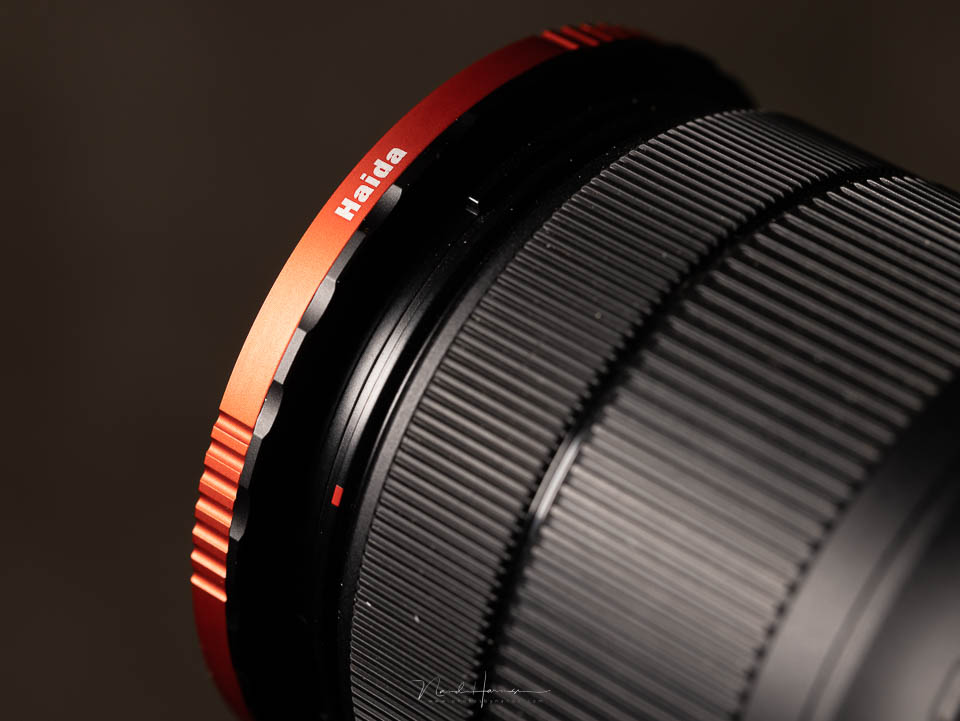
A variable ND filter is essential for anyone who films. The Haida CPL VND Pro II is a good choice if you're looking for a solid filter with good quality, in terms of build, use and image.
Do you want to avoid having to buy this type of filter in multiple diameters? Then choose a large size such as 82mm or even 86mm, and use step-up rings to make it fit lenses with smaller diameters.
About the author
Nando Harmsen has been photographing for more than 40 years. He specialises in wedding photography and landscape photography. Nando also gives talks, workshops, masterclasses and photo trips, and regularly reviews new and interesting equipment.
You might also like
-
 Review: Haida M10 Insert Variable ND filter
by Nando Harmsen
-
 Review: Haida X in 1 Ultra-Low Reflection Magnetic Filter
by Nando Harmsen
-
 Variable ND filter, or not?
by Nando Harmsen
-
Which ND filters should you choose as a beginner?
by Nando Harmsen
-
Do not use a variable grey filter for photography
by Nando Harmsen

0 comments
Be the first to share what you think!
Have your say
Please note: Articles older than a week can only be commented on by signed-in visitors.Would you still like to comment? sign in or create a free account.
Become a better photographer every week
A practical photography tip in your inbox every week.
39,079 photography enthusiasts already receive the tips! More about the weekly mail. Or keep up to date via  Facebook.

Elja Trum
Photofacts; everything to do with photography!
Would you like to take better photos and keep up with what is happening in photography? Photofacts publishes articles that teach you something about photography — from a product announcement to a practical shooting tip or a look at a website. Photofacts covers photography every day and is a hobby project of Elja Trum's that got out of hand. The articles are written by a team of volunteer authors. If you would enjoy writing one or more articles for Photofacts, do get in touch.More about PhotofactsPhotofacts is made possible in part by
