

Look, look, look in street photography, and you will see more
Monday 21 September 2020, 20:02 by Jan Poldervaart | 5,646 views | 8 commentsThis article was translated from Dutch with the help of AI. Read the original.
I have been involved in street photography for several years now. Usually in my home city of Rotterdam. Regularly in other cities in the Netherlands too, abroad or much further afield.
Rotterdam is a wonderfully photogenic city. There is something for every photographer. Beautiful architecture for the architectural photographer. Tall buildings, attractive façades and modern design.
Visit the new central station, for example.
Take a look at the bridges over the Maas.
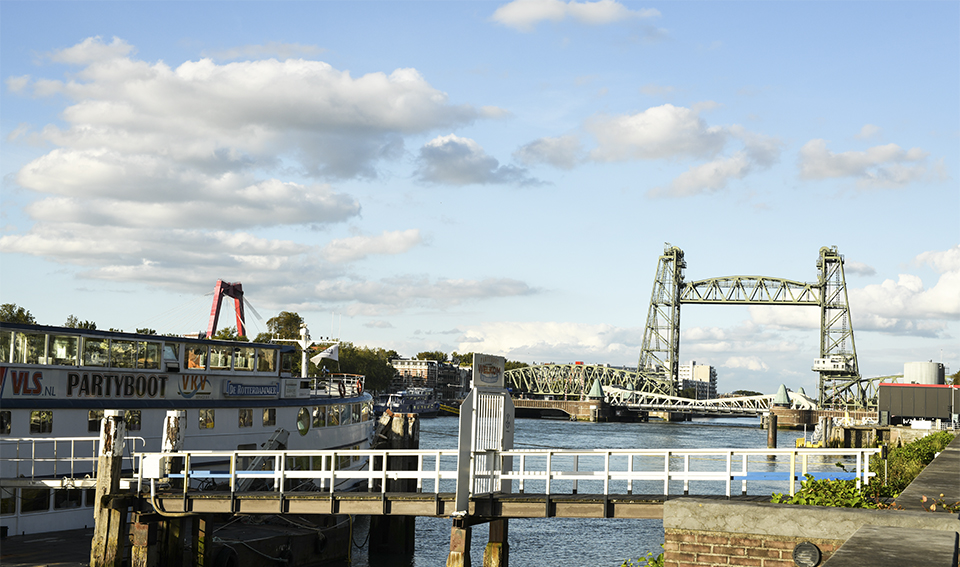
Tourists are well catered for too. There is plenty to see in Rotterdam. The Euromast offers a view of the endless city. The many museums, including of course the national photography museum.
Well worth a visit for every photographer. A lovely city centre with the Koopgoot and its many shops, along with the Markthal. Do go there and have a look.
For the harbour photographer, there is of course the enormous wealth of water. The inner harbours, sometimes with old ships still there, and the Maas, which runs all the way to Hoek van Holland.
As a photographer, it is great fun to take a trip on a Spido boat. A visit to the enormous Maasvlakte, with its seagoing ships and many containers, is more than worthwhile. Wonderful to photograph.
Of course, there is something to do or experience for every photographer. But then I become a sort of tourist information office, and that is not really the point either. Although I am happy to be an ambassador for promoting that fantastic city of Rotterdam.
Why street photography
But as I said, street photography makes my blood flow faster. People sometimes ask me
why street photography? Why photograph strangers you do not know? Why just go out onto the street?
My answer is then: why did Cartier Bresson often capture his 'decisive moment' on the street? Why did Eugene Atget photograph old Paris? Why did a nanny called Vivian Maier feel the need to take street photographs?
And many more photographers of that kind, such as: Ed van der Elsken, Otto Snoek, Hans Aarsman or Merel Schoneveld, and many others. Look them up on the internet.
Illustrious predecessors who all liked, or still like, being among people and capturing what they do on film.
Look, look, look
But the question that is often asked too is: how do you take a street photograph like that? What do you look for?
There is no clear-cut answer. What I can say is that you have to look, look and look again. Then you see much more. You do have to enjoy photographing people and being out on the street.
Find a place in the city and first look around you.
What is going on? What are people doing?
If you observe carefully first, you will naturally start seeing things that are fun to photograph. Only then get started. With what? It does not matter. Your mobile phone, compact camera, DSLR or mirrorless camera.
Practise looking and photographing. And once you have caught the bug for photographing people on the street, move on to buying a better camera or lenses, for example. I will come back to that later.
To give you a preview of a street photograph, I will analyse a photo so that you start looking at street photographs more carefully. The same applies here: look, look, look, then you see more.
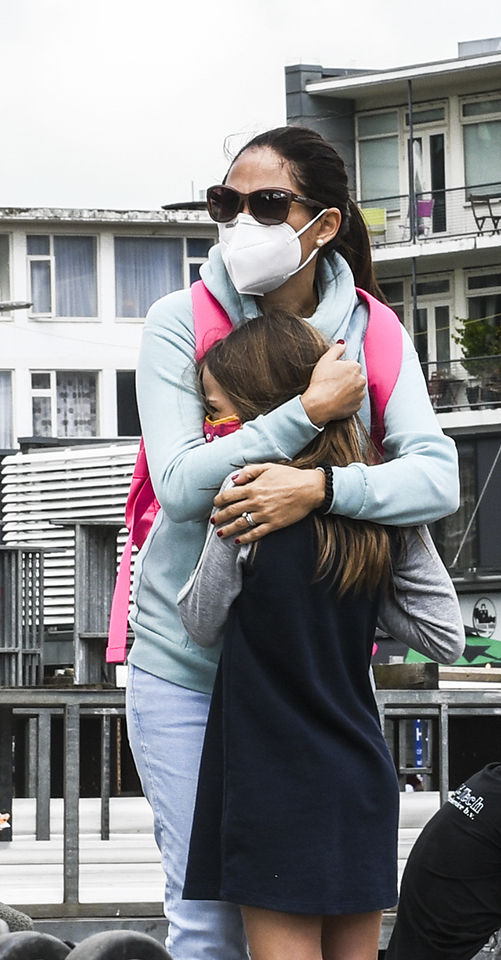
Just take a look at this photo. It is a detail from a street photograph, but already a story in itself. What do you see in the photo? Why are they doing what they are doing? What story would you make of it?
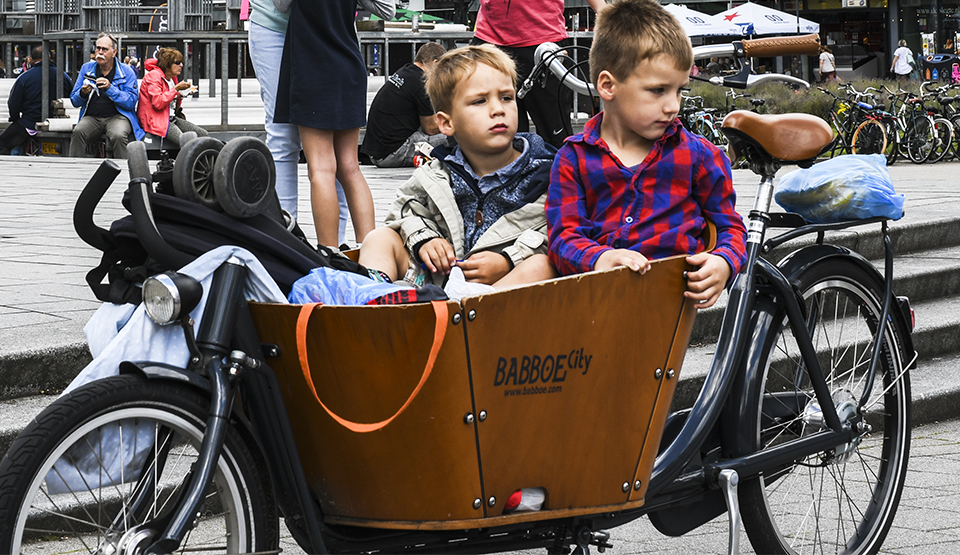
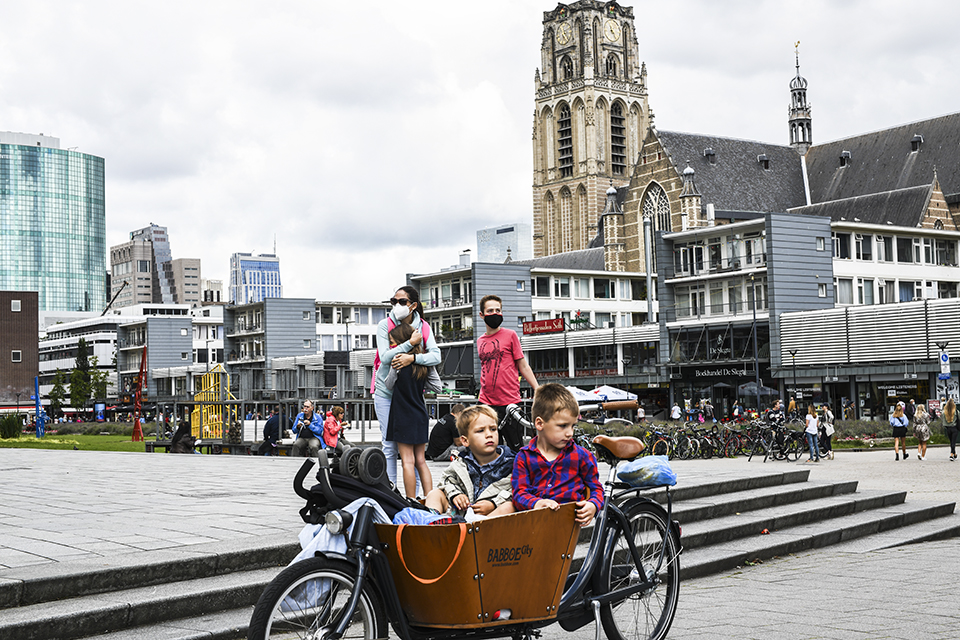
Another photo of children in a bicycle box. Why are they sitting here? What are they looking at? Where are their parents? Tell your story?
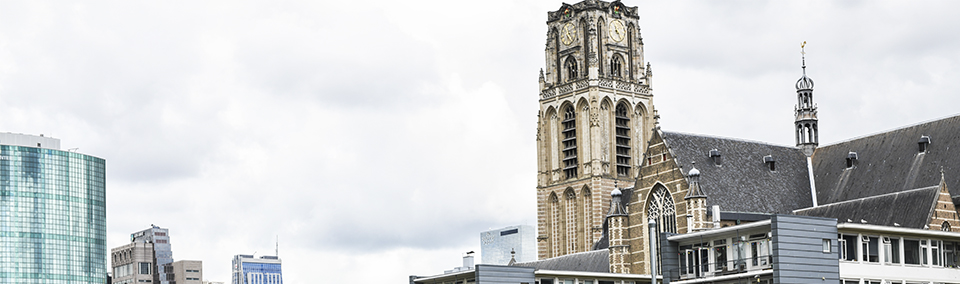
The next photo shows something of the surroundings. Which buildings do you see, and do you recognise the city?
Then there is the man in the red shirt wearing a face mask. Who is he? What is he doing here? Who does he belong with?
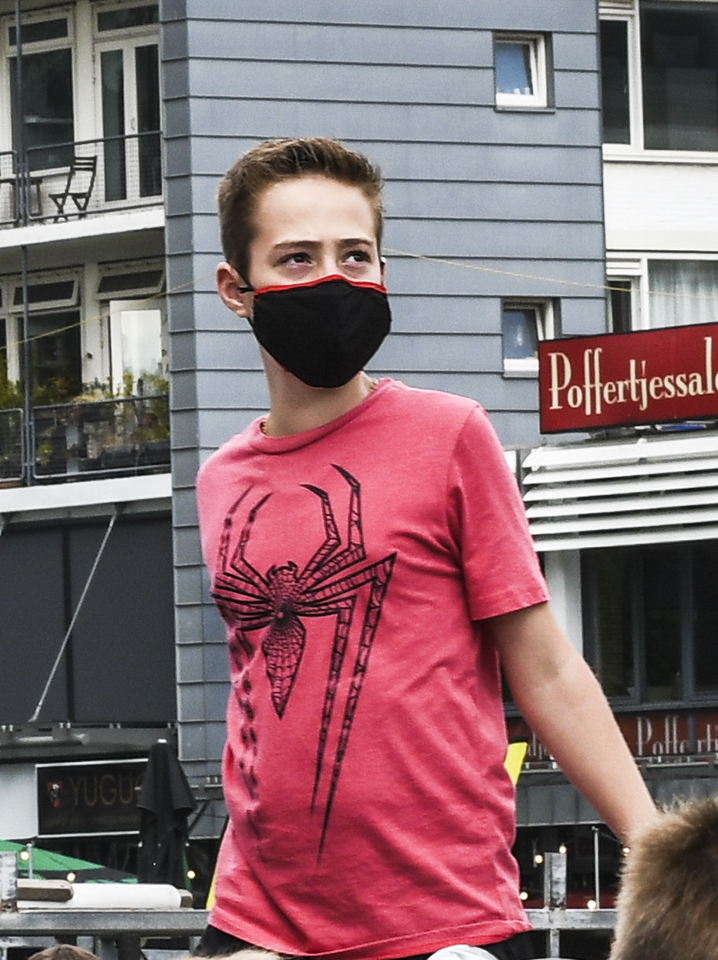
The full photo tells you the whole story. You see the complete context. By looking carefully at your street photograph, you see more. Pay particular attention to details.
The great thing is that everyone can create their own story around the photo. My story is different from yours. That is what makes street photography so much fun.
At the same time, you are writing history. When you look back at a street photograph later, you can see how people were dressed. What the city looked like. Which things existed. That is another thing that makes street photography so much fun.
Take a look at photos by other street photographers, for example those by Vivian Maier. In that respect, she was far ahead of her time and wrote history.
About the author
Jan Poldervaart is straatfotograaf en fotografeert met name in Rotterdam. Jan is lid van fotoclub de Phoenix in Rotterdam, huiskamerclub Focus17en het fotografencollectief Rotterdamstreets. Bekijk zijn werk op dutchartandphotographer.
You might also like
-
 Review: Photo book 'Voor altijd Rotterdam'
by Erik van Rosmalen
-
 Street photography: follow your street heroes
by Jan Poldervaart
-
 Street photography tip: Use the city's advantages
by Michiel Heijmans
-
 Street photography tip: Shoot safely through glass
by Michiel Heijmans
-
 Street photography tip: Take business cards with you
by Michiel Heijmans
-
 Street photography theme: face masks and the big bad wolf
by Jan Poldervaart
8 comments
-
 Parel wrote on Monday 21 September 2020 at 20:47 | reply
We'd love to hang another beautiful street photo of yours on the wall in our new house!
Translated from Dutch. -
Jan Poldervaart wrote on Tuesday 22 September 2020 at 06:49 | reply
Thanks Parel. I already have a nice street photo for your new home. Wishing you lots of enjoyment in your new home. Regards: Jan
Translated from Dutch. -
 Rob van 't Zelfde wrote on Tuesday 22 September 2020 at 11:41 | reply
What kind of lens do you usually use when shooting on the street ?
Translated from Dutch. -
Jan wrote on Tuesday 22 September 2020 at 19:26 | reply
Hello Rob,
Translated from Dutch.
I work with a Nikon full-frame camera with a 50 mm prime lens. So you have to get reasonably close to people with this. In general, always positive reactions from people on the street. Do you do street photography yourself too?
Regards: Jan -
 M van Hulsen wrote on Tuesday 22 September 2020 at 22:05 | reply
Jan, this is actually the first time I’ve seen a photo analyzed like this. Nicely done and explained.
Translated from Dutch.
This shows how good the street photo is. Although I have the feeling that street photography isn’t appreciated by most people. -
Jan wrote on Wednesday 23 September 2020 at 08:52 | reply
Hello M. van Hulsen,
Translated from Dutch.
Thank you for your nice response and compliment. Very often we don't stop to think about the images we see, probably because of the abundance of photos. Especially with street photography, it's nice to see the story in the image. The challenge for the street photographer is to capture this. Hans Aarsman is a master at dissecting photos. Read one of his books if you want to look at photos even better.
Best regards: Jan -
guest wrote on Wednesday 23 September 2020 at 17:34 | reply
Hello Jan, which book by Hans Aarsman are you talking about?
Translated from Dutch.
Greetings,
Jean -
Jan wrote on Thursday 24 September 2020 at 09:13 | reply
Hello Jean,
Translated from Dutch.
Hans Aarsman wrote for the Volkskrant and described news photos as a detective. The so-called Aarsman collection. The following books, among others, are by him: What You Don't See, from the Aarsman collection. I See, I See and the photo detective. He wrote more books.
Various photos by Hans Aarsman can be viewed and downloaded for free via the website of the Netherlands Photo Museum.
greetings: Jan
Have your say
Please note: Articles older than a week can only be commented on by signed-in visitors.Would you still like to comment? sign in or create a free account.
Become a better photographer every week
A practical photography tip in your inbox every week.
38,982 photography enthusiasts already receive the tips! More about the weekly mail. Or keep up to date via  Facebook.

Elja Trum
Photofacts; everything to do with photography!
Would you like to take better photos and keep up with what is happening in photography? Photofacts publishes articles that teach you something about photography — from a product announcement to a practical shooting tip or a look at a website. Photofacts covers photography every day and is a hobby project of Elja Trum's that got out of hand. The articles are written by a team of volunteer authors. If you would enjoy writing one or more articles for Photofacts, do get in touch.More about PhotofactsPhotofacts is made possible in part by
