

Choosing between continuous light or flash for portraits
Saturday 1 June 2024, 21:42 by Nando Harmsen | 3,538 views | 2 commentsThis article was translated from Dutch with the help of AI. Read the original.
When existing light is not enough, you need to add your own light. You can use a flashgun or continuous light. Choosing between them can be difficult, as both have advantages and disadvantages. I have listed them for you.
Using your own light has many advantages. It can brighten dark areas and significantly improve the quality of the light. It prevents ugly shadows, light coming from an unwanted direction, or high ISO values.
You can combine existing light and your own light source seamlessly. Nothing in the photo shows that flash was used. Or that a continuous light source was used, as that is also possible. In the past, this was a lamp. Now, in almost all cases, it is an LED panel or a COB LED lamp.
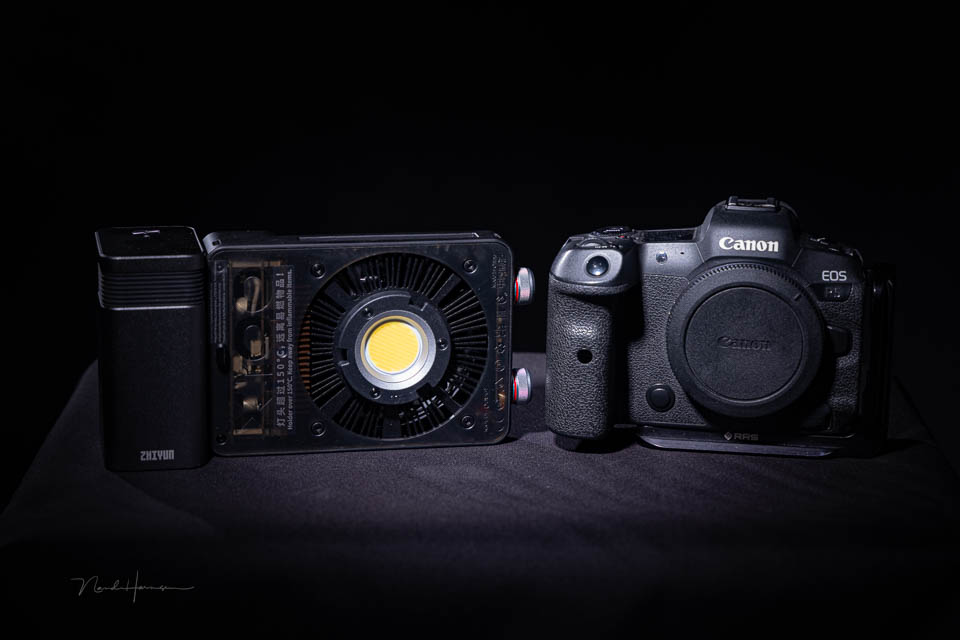
What is best to use? Continuous light or flash. Ask different photographers, and you will get different answers. It may well be that there is no single answer, and that everything depends on preference and circumstances.
That is why I have listed some advantages and disadvantages. You can then decide for yourself what is most suitable for your own photography.
Flash and no flash
The biggest difference between continuous light and flash is the flash itself. A flashgun gives a short burst of light. Continuous light is... Well, continuously on.
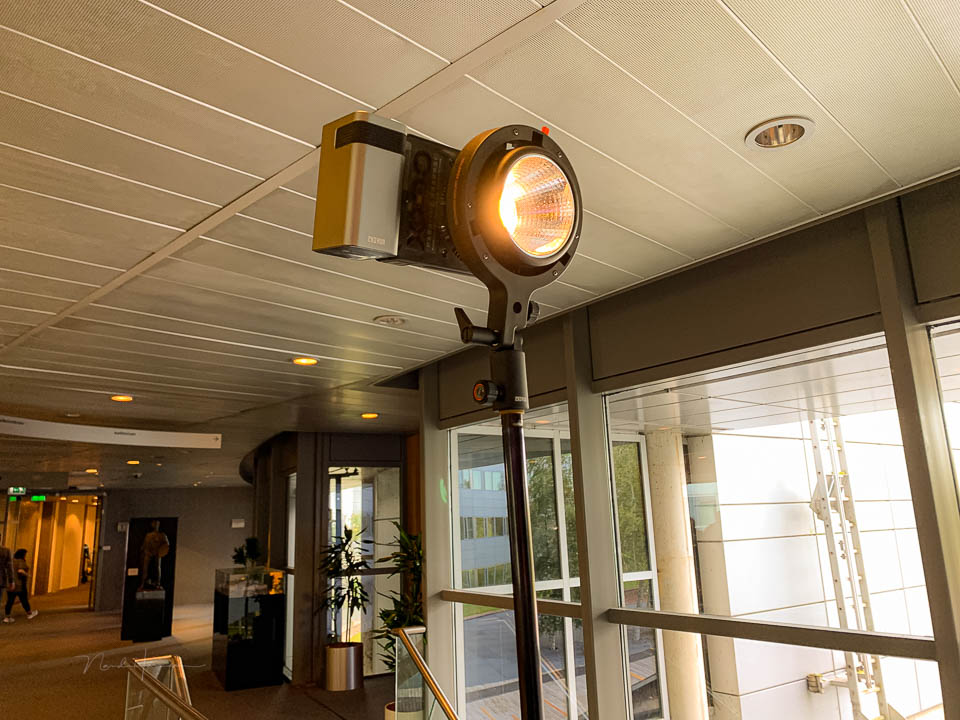
A flash means that there is light for only a short moment. This can be dazzling, but otherwise it has no effect on the ambient light. If you use continuous light, the surroundings will also be lit continuously. It can ruin the atmosphere.
Bright and not so bright
The energy used by continuous light is released all at once by a flash. As a result, a flashgun can always produce much more light during that short flash. In other words, you have more light available.
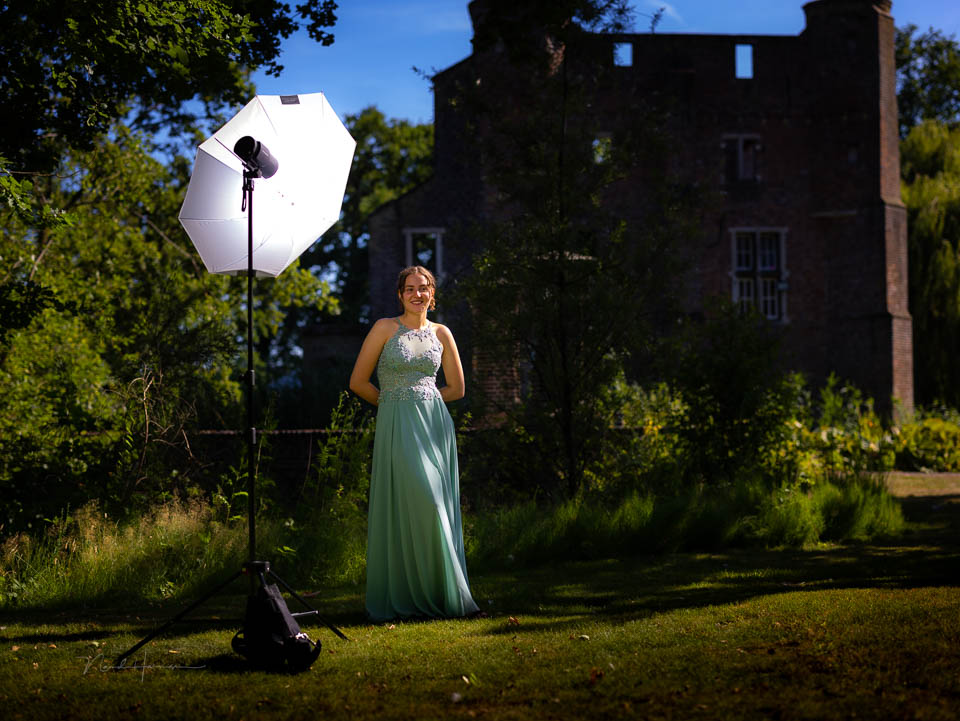
Continuous light often means you still need to use high ISO values, unless the light is very close. A flashgun gives you more freedom when positioning it. You can cover a greater distance.
Portable and easy-to-move light source
If you need a lot of light, continuous light often means using large LED panels or a very powerful COB light source. They also need a lot of energy, in the form of a battery or even a mains socket.
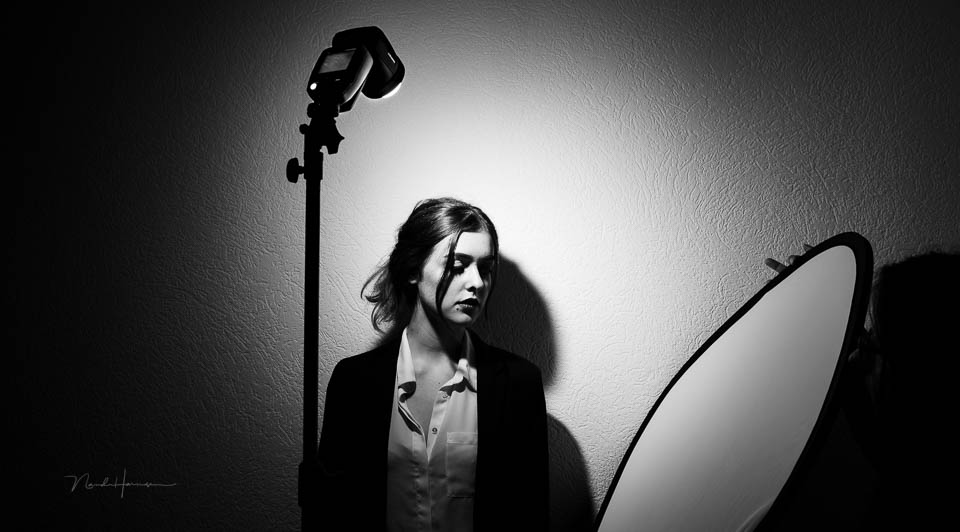
Because a flashgun only has to provide light for a short time, it can be much more compact. It also needs much less energy, so you need less heavy batteries. It becomes portable.
Seeing the light and not seeing it
A flashgun only gives light when you take a photo. That means there must be existing light to see your subject and to focus. But more importantly, you only see exactly where there is light and where there is no light after you have taken the photo.
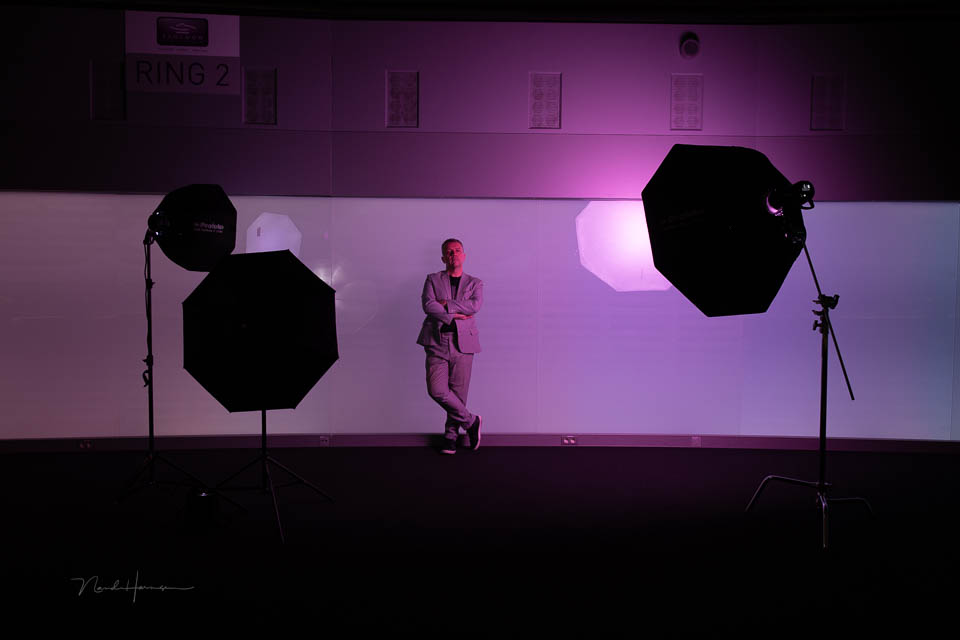
Continuous light lets you see immediately where the light falls on the model and where it does not. You can already adjust the direction of the light without having to take a test photo.
What is your preference?
As mentioned earlier, one is not better than the other. Sometimes a flashgun works better, and sometimes continuous light is more pleasant. But it is also mainly a personal preference. What is your preference? Share it in a comment below this post.
About the author
Nando Harmsen has been photographing for more than 40 years. He specialises in wedding photography and landscape photography. Nando also gives talks, workshops, masterclasses and photo trips, and regularly reviews new and interesting equipment.
You might also like
-
 LED versus flash: which is better?
by Elja Trum
-
 Elinchrom announces LED 100 C continuous light
by Elja Trum
-
 Godox announces V100 flashgun
by Elja Trum
-
 Review: SmallRig RM 40C mini LED video light
by Nando Harmsen
-
 When do you use flash and when do you use LED light?
by Liesbeth van Asselt

2 comments
-
 Donald Willemsen wrote on Tuesday 4 June 2024 at 10:53 | reply
I have recently started using a Godox speedlite V1c. It also has continuous light to see how the light falls on a model.
Translated from Dutch.
The disadvantage of continuous light is the energy consumption, especially if you need a lot of light to take a photo.
We are trying to use energy more economically after all. Then it is not appropriate to use such energy guzzlers. I would rather use a flash.
I have 3 studio flashes that work on mains power and the modelling light uses 150W per lamp. So that is 450W in total. I use the modelling light for as short a time as possible, specifically to illuminate the subject. Then the modelling light goes out and I work with the flash.
So I prefer flash light over continuous light because of the energy consumption.
Nando, thank you for your clear story. -
 guest wrote on Tuesday 4 June 2024 at 22:09 | reply
I have been working with flash for years, but started using LED lighting last year. I am very satisfied with it, especially because I often photograph models indoors and a flash does not always produce the desired effect. I do have LED lights with higher wattage that can also be used with regular light shapers. A somewhat higher ISO is necessary, but current cameras can handle that just fine.
Translated from Dutch.
Have your say
Please note: Articles older than a week can only be commented on by signed-in visitors.Would you still like to comment? sign in or create a free account.
Become a better photographer every week
A practical photography tip in your inbox every week.
39,024 photography enthusiasts already receive the tips! More about the weekly mail. Or keep up to date via  Facebook.

Elja Trum
Photofacts; everything to do with photography!
Would you like to take better photos and keep up with what is happening in photography? Photofacts publishes articles that teach you something about photography — from a product announcement to a practical shooting tip or a look at a website. Photofacts covers photography every day and is a hobby project of Elja Trum's that got out of hand. The articles are written by a team of volunteer authors. If you would enjoy writing one or more articles for Photofacts, do get in touch.More about PhotofactsPhotofacts is made possible in part by
