

The lockdown and block survival guide
Saturday 1 January 2022, 15:15 by Frank Doorhof | 4,142 views | 5 commentsThis article was translated from Dutch with the help of AI. Read the original.
Well, the title might make it seem as if I have written this article far too late, and let's hope we don't have to deal with any more new lockdowns for the time being, but the events of the past two years have got me thinking and eventually led to this article.
See it more as a retrospective, with tips for the future. The tips naturally apply to all kinds of 'limitations on our creativity'.
Suddenly, there it was, a virus that meant we could no longer do our work. I have worked as a photographer for years, but above all I work with workshops, demos and so on. For the work I do, I have to work with other people. Even just a model is essential, and that was impossible for a long time.
Like many of you, probably, I ended up on the sofa with Netflix, Prime and so on for the first few weeks. And to be honest... if someone had told me four years ago that we would have a period of lockdowns in which you were forced to stay at home, I would probably have shouted: 'Oh, lovely, working on my music, going for nice bike rides and of course getting some rest'.
Because let's not beat about the bush, most of us work hard and often really long for some rest. But when you are 'forced' to take a sabbatical, all those ideas suddenly collapse and you end up on the sofa. What goes wrong?
During workshops, I hear a lot of excuses. From 'I can't do that because I have the wrong lens' to 'I can't do that because...'. Literally fill in anything you like.
I always start my workshops with a kind of motto.
'In life there are three choices: Give in, Give up or Give it everything you've got.'
In Dutch, this sounds a little less fluent, but it means that you can either sit back and give up, choose to simply do what is possible, or go all in on the new situation.
This is my motto, yet I still ended up on the sofa for the first few weeks, just like many others.
As creative people, we need to be busy, but we sometimes forget that there is so much more outside our own field. Above all, we can learn from all those different aspects of photography.
So although this article is called and themed around lockdowns, you could also apply it to literally any other kind of 'block'. Because that is what it really is.
So how do you get out of it?
For me, at some point I realised that this was going to last for a while and that I probably would not have any models in front of my camera for the foreseeable future. But that doesn't mean I can't improve myself... right?
In terms of photography, I decided to tackle some 'problem' areas. I can light a model reasonably well, but smaller things can sometimes be quite a challenge. Especially when you want to fit them into a concept.
With a model, you can create a fun outfit or work with expression, but what on earth do you do with a product?
I am not a product photographer, and don't get me wrong, I can photograph a product on a white background, but telling a real story and bringing out the essence of a product is a different matter entirely.
For me, it is mainly a certain atmosphere that a product evokes in me, and I see colour as one of the main elements of that atmosphere.
In this case, I tried to create an atmosphere that I felt suited the pedal, with some elements in the background and, of course, a light source aimed at the subject itself.
.jpeg "RJ amps")
Now you might ask yourself: 'Frank, you're not going to tell me you're becoming a product photographer, are you?' Well, I can reassure you, that is indeed not the intention.
But... having said that, I would advise everyone reading this to give it a serious try. And for the following reasons:
1. Atmosphere is universal
With a model, I can often immediately see from the clothes and the model themselves which direction I want to take. A bit of smoke, some colour, a cool background with some lens flare. Or very focused but soft light against a lovely neutral background. That works with models.
But then you pick up a product. What now?
And suddenly you are standing there as almost a complete beginner, holding an action figure or a guitar pedal, wondering how on earth you can make something interesting out of it.
2. Every beginning is difficult
The first time you put a model in front of the camera, the first building you have to photograph or the first landscape. We all came home with photos that we probably now think: 'How did that happen...'
The fact is, though, that by practising and working hard, we hopefully become better and better at creating an image. But what is an image, really?
In some cases, an image is purely a record of an event, and naturally needs to be captured as neutrally and truthfully as possible. In most cases, an image is a creative expression in which the subject is not the only important thing. Every aspect of a photo matters.
As a workshop instructor, I think this is one of the hardest things to explain to a group or an individual. Photography is not just about light. In fact, although photography officially means painting with light, light is of course extremely important to me personally, but in the end it is only a choice of... atmosphere.
Think about it.
Max Verstappen in a racing suit and helmet, sitting at a little table with a hamburger. Does that work?
No, of course not. But... it does make a unique image.
Now put Max Verstappen in shorts and a T-shirt at a table with the same hamburger. Everything makes sense. But it does not make a unique image.
Okay, that's odd...
Not quite.
If we think back to that first photo, we are creating an environment with conflicting expectations. You do not expect someone sitting on a terrace in full racing gear and a helmet to be eating a hamburger.
But what if you put the race track and the pit crew in the background? Then you can also create a story about him being so far ahead that he has time to grab a burger.
In other words, put the subject in different situations and the whole thing tells a different story.
Also, the more extreme you make it, the fewer people will think: 'What a strange photo'. This is one of the reasons, for example, why someone like David Lachapelle has become so famous.
His photos are a pile-up of absurd situations that could never happen in real life.
'Okay Frank, all very well, but that's with models?'
Correct, but it also proves that there is more to it than just the subject.
Once we realise that, we can apply it universally to almost any kind of photography.
A good example was a few years ago, when I did a portfolio review. All the photos in the portfolio were absolutely fine. Except for one.
A photo of a letterbox. Not an interesting subject, and certainly not an interesting photo. It had no place in a portfolio at all.
To my surprise, the photographer did not agree. I had got it wrong.
That letterbox was unique, the last of its kind. Well, good for you, but I don't see that, and I think it is ugly as well.
What is going wrong here?
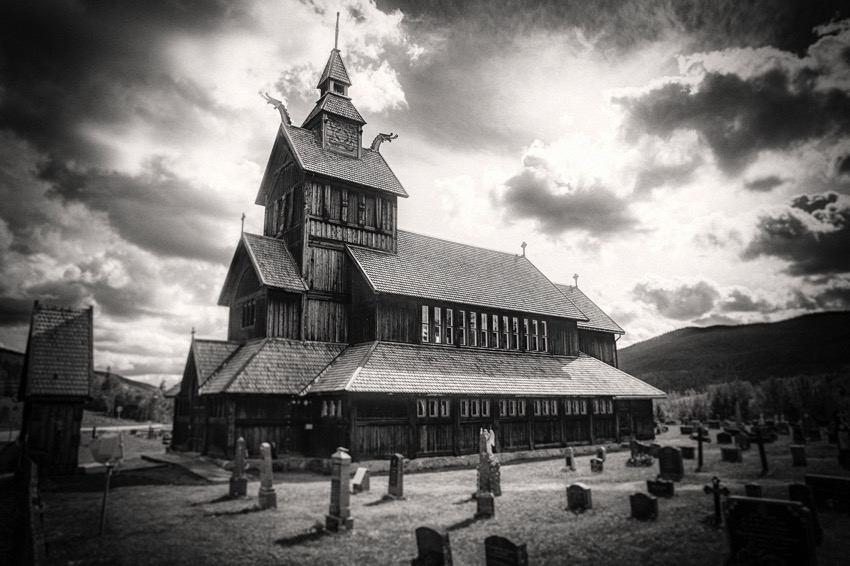
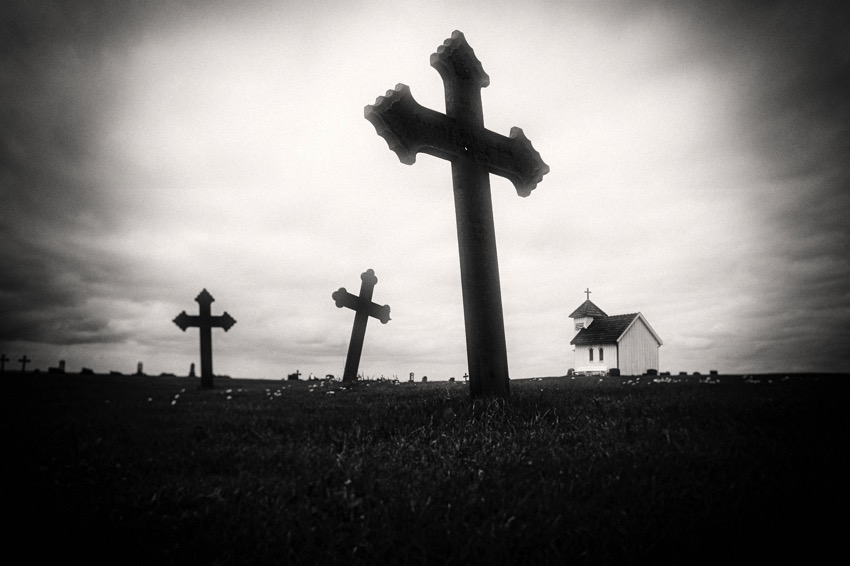
Take photos of a church, for example. If we simply photograph the church from the point of view of 'Look, a church', it is a nice photo of a church, but it will not do much for most people. Perhaps if you tell a very good story with it, but as a photo itself... Nope, nothing.
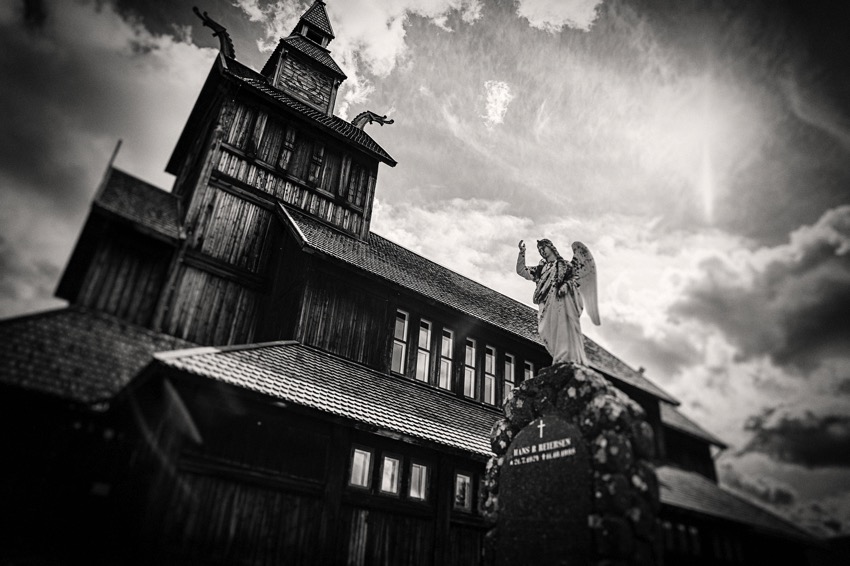
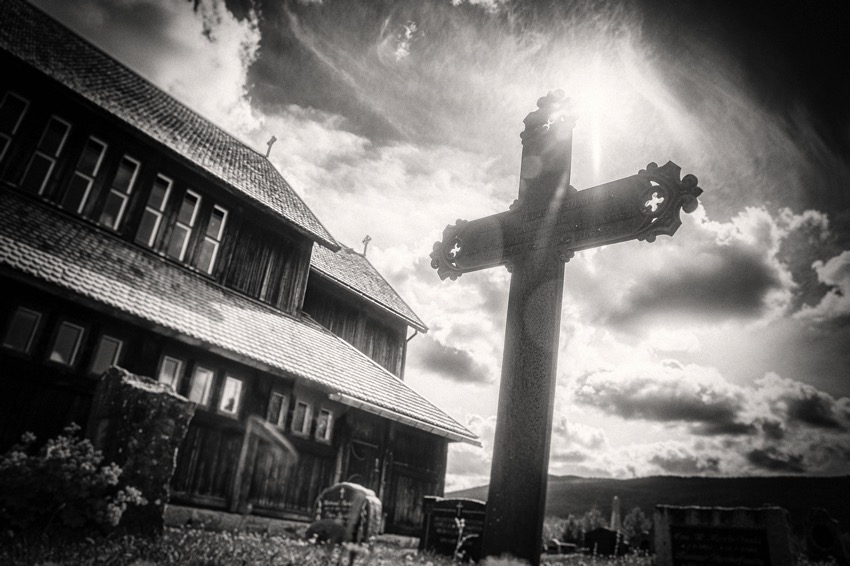
But... what happens if we photograph that church in a completely different way? Walk around the area and look for unusual perspectives. How does the light fall? Is there a way to show the size of the subject?
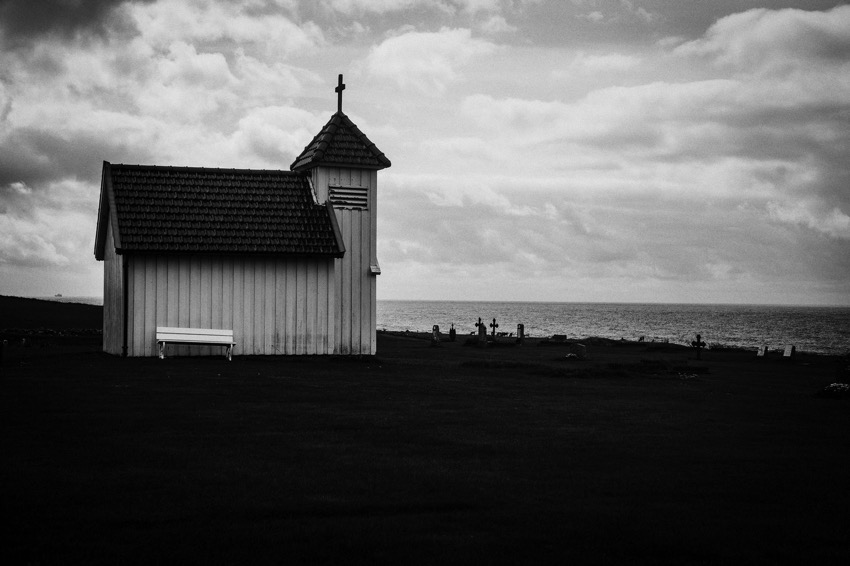
As you can see in the examples, this makes an ENORMOUS difference. It is no longer just a photo of a subject, it becomes a story.
For church 1, I mainly worked with viewpoint and wide-angle.
For church 2, I added other elements to the photo. In my view, they make it much more interesting and stronger.
The strange thing is that we often do all this well within our own area of expertise, but when we have to do something different, it is often much less successful.
Don't get me wrong, I do not mean that you should be able to achieve the same quality in every aspect as a photographer, but...
Jay Maisel
Years ago, I got to know Jay Maisel. An absolute icon in the world of photography, but above all someone who can literally make anything look beautiful.
I remember sitting at the front during a presentation by Jay at one of my first Photoshop Worlds. Everyone uses music under their presentations, but Jay is strongly against it: 'If your images need music, they fucking aren't good enough'.
And to be honest, we sat there open-mouthed, watching a collection of his well-known work, but especially, believe it or not, his private photos.
The way Jay photographed his family, home and private 'snapshots' had an unprecedented beauty and atmosphere. Every photo seemed better than the previous one, and each photo gave you a glimpse into the person, but above all, the situation.
Jay speaks with some difficulty, but explanation, let alone music, was not really needed. The photos did the work.
That was the moment my eyes were opened.
GESTURE... GESTURE... GESTURE...
WTF is GESTURE?
That was the magic word, 'find Gesture'.
Well... great, I cannot even translate it into Dutch. Although I absolutely understand the word, in that context... No, absolutely not.
And it took quite a while. It was not until a year later, when we visited Jay in New York, that the penny dropped. Gesture cannot be captured in one word.
It is the essence of the subject. In other words, find the essence of your subject and photograph it. The subject is NOT important...
That's easy for you to say, tell that to your model.
But... Jay is 100 per cent right.
Although the model is often central to my work, it had never occurred to me that, if I gave a little more attention to the rest, the model might actually attract even more attention.
That sounds a little strange. You give more attention to something else, and as a result your subject stands out more. But it actually makes perfect sense.
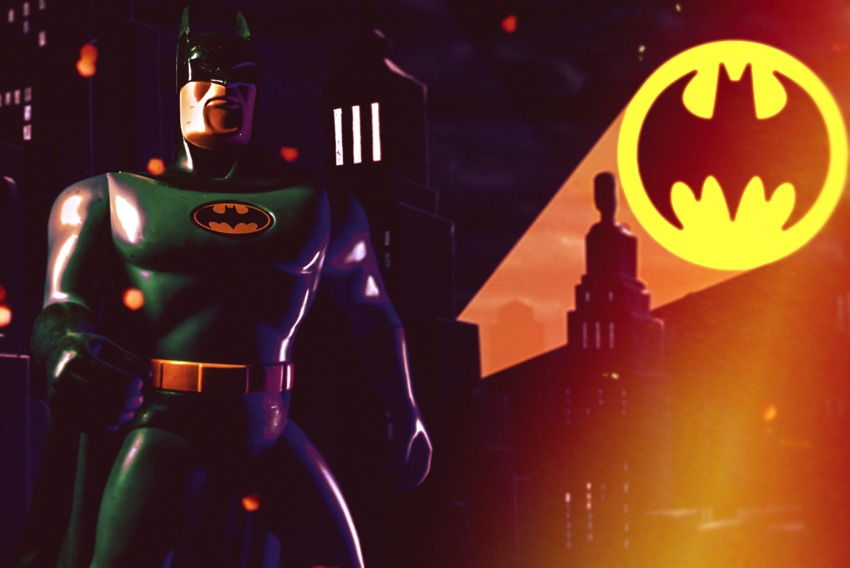
I collect things from Batman and old, iconic horror and science-fiction films. Naturally, you end up with a nice collection of collectibles.
Let's be honest, you do not just throw those in a cupboard. You arrange them neatly, adjust the lighting, create different heights in the cabinets, et cetera, et cetera. The environment in which the collectibles are placed is very important for the atmosphere.
Yet when photographing, we very often think from the model's point of view. As a model photographer, this sometimes makes it very difficult for me to suddenly switch to a subject I have no control over. Whether that is a building, a collectible or a photo taken on the street.
Drum machine
With this drum machine, I created a different atmosphere through colour and focused light than you would get with an ordinary product photo.
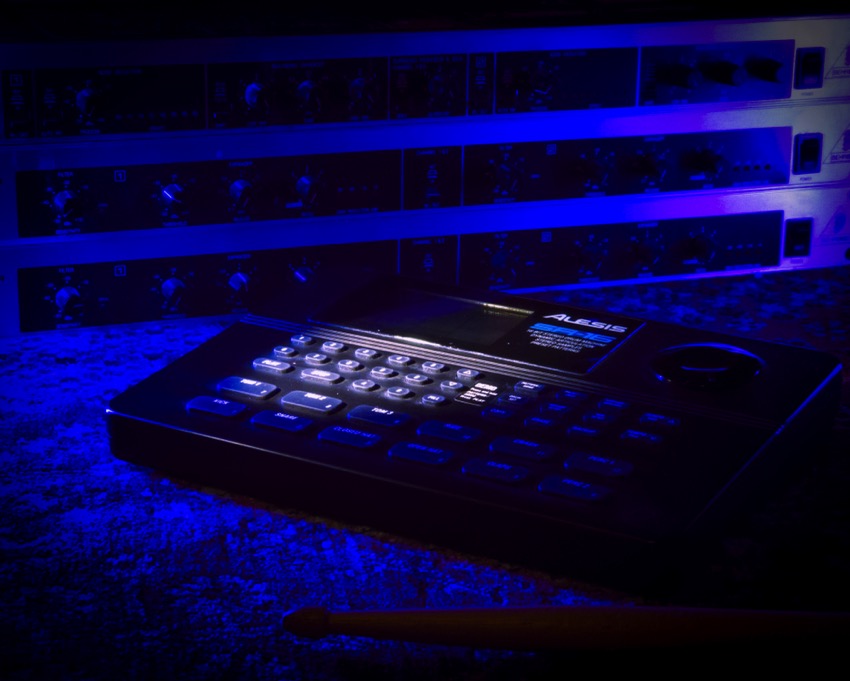
A very simple lighting setup, as you can see here, all LED lighting.
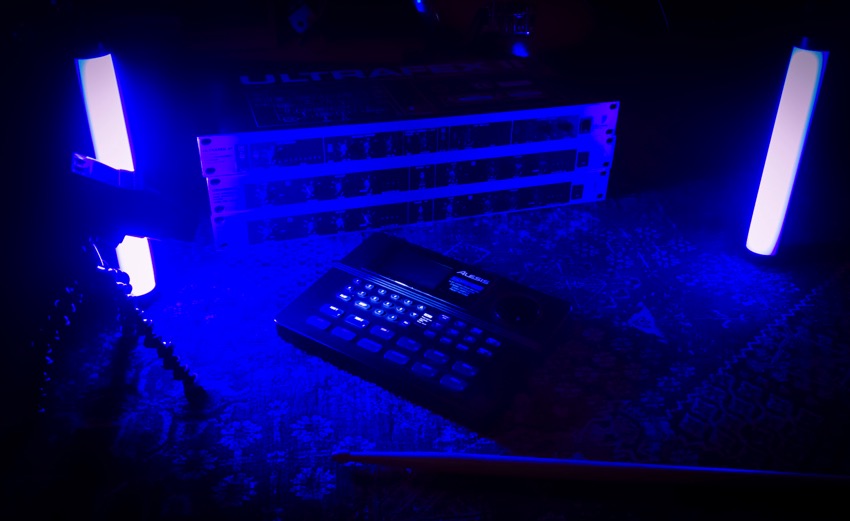
What I took from Jay is 'find Gesture' and how I translate that as 'find the essence'.
When the lockdowns came into force and I was back on my feet a little after the initial shock and disappointment, I therefore started working on my other hobbies. I used the time to look for the essence of what I photograph.
The first photos were... Well... not really very good.
But gradually I noticed that, with subjects that interested me, I quickly moved from recording to creation.
I have also always had problems with compositing, combining photos, in Photoshop, so it was the right time to start working on that as well.
The result was a few photos that are certainly not brilliant, but do show enormous progress compared with what I had done a few years earlier, recording versus creation. I can also tell you that it became more and more fun.
Here are a few examples of the collectibles in a more atmospheric setting. As I said, I am no expert at combining photos, but it is great fun to work on, something I normally have very little time for.
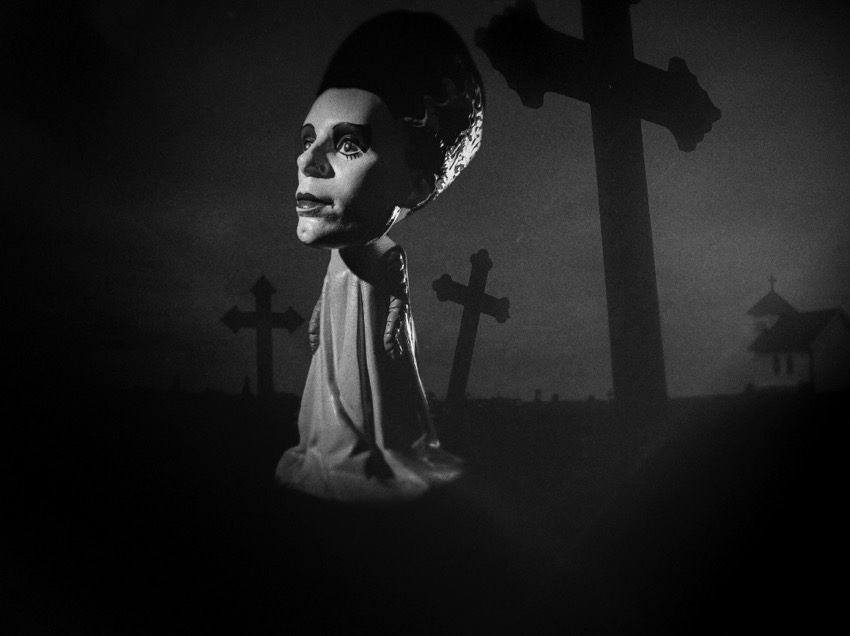
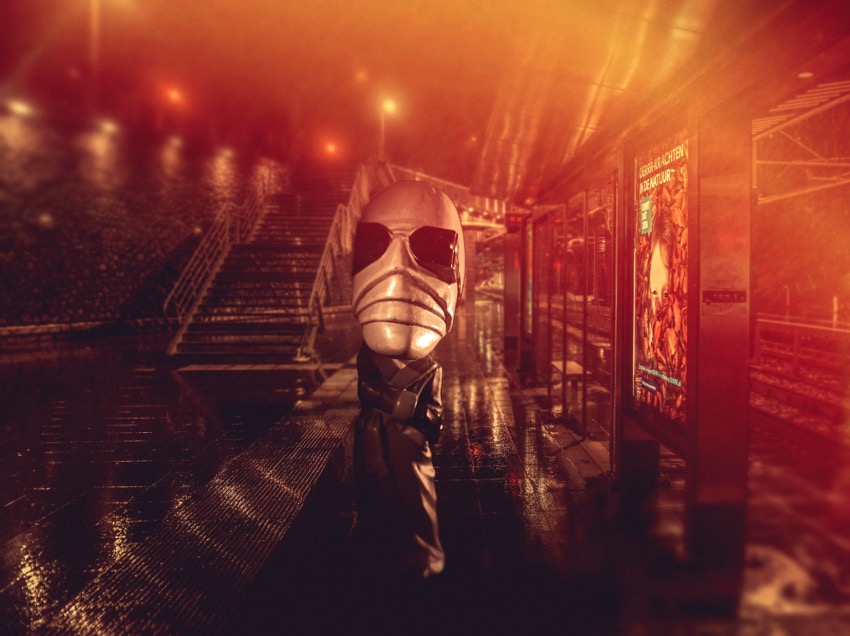
In the summer of this year, I met someone who builds guitar pedals. My valve amplifier had developed a problem, and I ended up there for the repair. When I saw the pedals, I came up with the idea of borrowing a few and offering to take some photos for him, free of charge.
As I was offering it for free, I could of course also afford to mess it up. The first series I made was actually what we usually know.
White background with good detail of the pedals, everything clearly visible and the position of the knobs as the maker wants it. Perfectly fine for him, but extremely boring.
-Edit.jpeg "RJ amps")
-Edit.jpeg "RJ amps")
The response was still very positive. Although it was not my turn yet, he started working on my amplifier anyway. What he did not know was that I had much more planned.
Into the studio with Annewiek
A guitar pedal is... well, it is difficult to explain, but according to some people it is the soul of the sound. Hundreds and even thousands of euros are paid for pedals with certain serial numbers, just look up Klon.
Something that is so important for the sound, but above all, let's be honest, for the guitarist's experience, surely needs to be photographed differently from a white background. Come on, that does not excite me at all.
So what goes with making music? Exactly. Smoke, colour, gels, warmth, atmosphere, dark studios, working through the night, but above all, that magic pedal that makes everything possible. Without that pedal, you are nothing, okay, that is marketing.
And believe it or not, you hardly need to see the pedal at all? The atmosphere and a hint of the pedal are often enough.
Think of the Marlboro Man, for example. In my view, it is still one of the most brilliant advertising campaigns. You did not even have to see what the brand was, just that cowboy, that atmosphere, those photos. Wow... you could almost start... Fortunately, we are smarter nowadays. :D
But that atmosphere does work.
A simple packet of cigarettes against a white background will not convince people to buy it. But of course everyone wants to IDENTIFY with a tough cowboy who has everything in life, until the camera stops rolling and he ends up on oxygen, coughing, of course.
And when there is a brand on it... Well, there you have it.
With this in mind, I carried on. After the white background, we built a small set. Nothing special, and to be honest, even easier to light than the white background.
When we sent this series of photos over, the response was hugely enthusiastic. As an added bonus, he now had extra motivation to make that amplifier especially beautiful for me. Although this was never my intention, it is of course always a nice bonus.

.jpeg "RJ amps")
.jpeg "RJ amps")
.jpeg "RJ amps")
But we were not there yet.
At the beginning of the Corona lockdowns, I could photograph a model with a prop or accessory, but let's be honest. The attention was always on the model.
And now I wanted to do things differently, so when we got the chance to work with a model at this year's FotoFair, 2021, I took it. The pedals and a guitar came along.
.jpeg "Claudia, FotoFair")
For people who know my work, the photos may look standard for what I normally do. But believe me, the thinking behind them was radically different from how I had thought in the past.
The focus is literally on the product now, and the model is there to create atmosphere. For me as a model photographer, who almost always thinks from the model's point of view, this was a huge change, but one I am going to get a great deal out of.
It has become a long article, but I hope you have made it this far, because it is time for the conclusion.
Conclusion
If you skipped things and are only reading this, please go back, otherwise the content will not make sense.
Not being able to do the things you live for as a creative person is incredibly difficult. We get all our energy from our work. We have an uncontrollable urge to create something every minute, and if we do not, then... well, I almost feel guilty.
If that is no longer possible, there is a very good chance that you will fall into a very dark hole. But try to prevent that. Find the areas where your weaknesses lie. Through social media, there is always someone willing to help you identify them.
Then take a few steps back and look at what you can do to improve this.
For beginners, simply turning off the lights, picking up a torch and moving it around products is an ENORMOUS step forward. Take a bottle that is half-filled with water or another liquid. What happens if you shine the torch through it and it is red? What happens if you move the torch up or down? Does tilting it make a difference?
And once you are a few steps further, pick something you are passionate about, just for fun. Collectibles, for example. But it could of course also be your pet.
Try not just to record it, but to create something that shows the essence of that subject. They certainly do not have to be masterpieces, I would label all the examples in this article as fun, but definitely not professional material.
Still, you will notice that working with subjects outside your comfort zone and creating atmosphere around them makes it much easier to photograph when you can return to your normal work.
I personally notice very clearly that my way of thinking had already been completely turned upside down for street and travel photography after my visits to Jay Maisel. But during Corona, the way I look at 'set building', creating atmosphere, changed by a full 100 per cent.
This may be difficult to see in the end result, but it is also about training your eyes and brain to see solutions and atmosphere, and especially to express them.
So do not hide behind the excuse 'I can't do it' or 'it is not possible at the moment' and stop developing. Do things that force you to adapt, use smaller light sources, much smaller in my case, try different Photoshop techniques, but above all, try to create instead of record.
And believe me, as soon as you can do what you love most again, you will notice that you work much faster and produce better work.
Even though I had hardly given any workshops and therefore had no routine at all, I did produce work in the last series of workshops that made me think, 'Hey, this is completely new again', and that gives me inspiration for the years to come.
About the author
Frank Doorhof blogt dagelijks in het Engels op zijn website en geeft wekelijks workshops model fotografie in zijn studio in Emmeloord, maar ook op locatie in binnen en buitenland. Van beginners tot gevorderde, iedereen kan bij Frank terecht. Ook voor specifieke 1 op 1 workshops, of maatwerk voor groepen.
You might also like
-
 What to Photograph During Lockdown
by Frédéric Paulussen
-
.jpg "Inspiration, essential for your photography!") Inspiration, essential for your photography!
Inspiration, essential for your photography!by Laura van der Burgt
-
 Atmospheric images without leaving the house
by Laura van der Burgt
-
 Who inspires you, and why?
by Elvira Smit
-
 Review: Photo Blocks from Profotonet
by Michelle Peeters
-
 Review: Inspiration by Ap Dijksterhuis
by Erik van Rosmalen
5 comments
-
 Rian Verweijmeren wrote on Tuesday 4 January 2022 at 11:00 | reply
As always, incredibly interesting and inspiring ! Thanks Frank.
Translated from Dutch.
-
 Henk wrote on Tuesday 4 January 2022 at 14:01 | reply
Frank what an inspiring story, I really needed that right now.
Translated from Dutch.
I was also a bit in lockdown, and wondered what else you can do with photography, different from what you usually do in the free world without corona hassle.
Now this was just the push to start exploring this too, and I think it's educational as well. Thanks! -
 Frea Kroese wrote on Tuesday 4 January 2022 at 14:25 | reply
Thanks, Frank! Inspiring!
Translated from Dutch. -

 frank doorhof
wrote on Tuesday 4 January 2022 at 16:04
| reply
frank doorhof
wrote on Tuesday 4 January 2022 at 16:04
| reply
Thanks for the nice reactions
Translated from Dutch.
It remains difficult of course but above all keep being creative
-
 Liesbeth wrote on Wednesday 5 January 2022 at 17:14 | reply
Thanks! An incentive to look for opportunities close to home and try things I normally wouldn't have thought of. Further immersing myself in developing my skills is also a good encouragement for me. As a layperson/amateur, I easily tend to think that it's too complicated.
Translated from Dutch.
Hang in there, someday this misery will come to an end
Have your say
Please note: Articles older than a week can only be commented on by signed-in visitors.Would you still like to comment? sign in or create a free account.
Become a better photographer every week
A practical photography tip in your inbox every week.
39,024 photography enthusiasts already receive the tips! More about the weekly mail. Or keep up to date via  Facebook.

Elja Trum
Photofacts; everything to do with photography!
Would you like to take better photos and keep up with what is happening in photography? Photofacts publishes articles that teach you something about photography — from a product announcement to a practical shooting tip or a look at a website. Photofacts covers photography every day and is a hobby project of Elja Trum's that got out of hand. The articles are written by a team of volunteer authors. If you would enjoy writing one or more articles for Photofacts, do get in touch.More about PhotofactsPhotofacts is made possible in part by
