

Landscape photography tip: Try photographing in daylight too
Thursday 1 July 2021, 14:41 by Nando Harmsen | 4,704 views | 4 commentsThis article was translated from Dutch with the help of AI. Read the original.
Most landscape photos are taken during the golden hour or at twilight. And for good reason. There is beautiful sidelight, and the light is often soft and warm. Don't let this stop you from taking photos during the day as well.
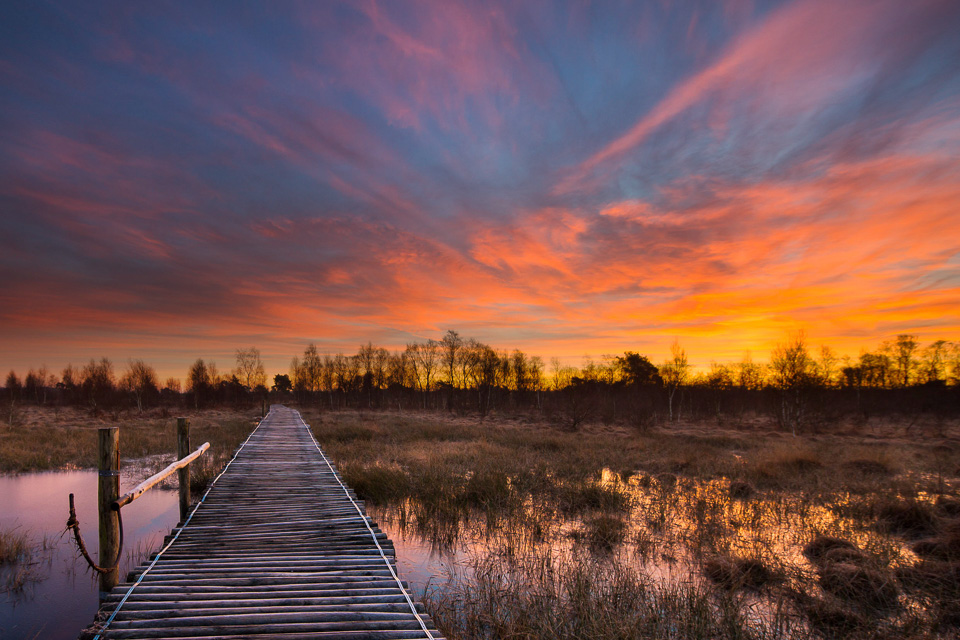
Almost every landscape photographer will tell you that the best time of day is during the morning or evening, when the sun is low in the sky. It's not called the golden hour for nothing. But if you only photograph during this time, doesn't it become a bit monotonous?
Photographing during the day is usually avoided because the light is harsh. At least, that's what is assumed to make it unsuitable for landscape photography. And it's true that it becomes much more difficult to create a beautiful image in this light.
That difficulty is often due to the fact that beautiful light distracts from a poor composition. The shortcoming is masked. Take away the beautiful light, and often little remains of the photo.
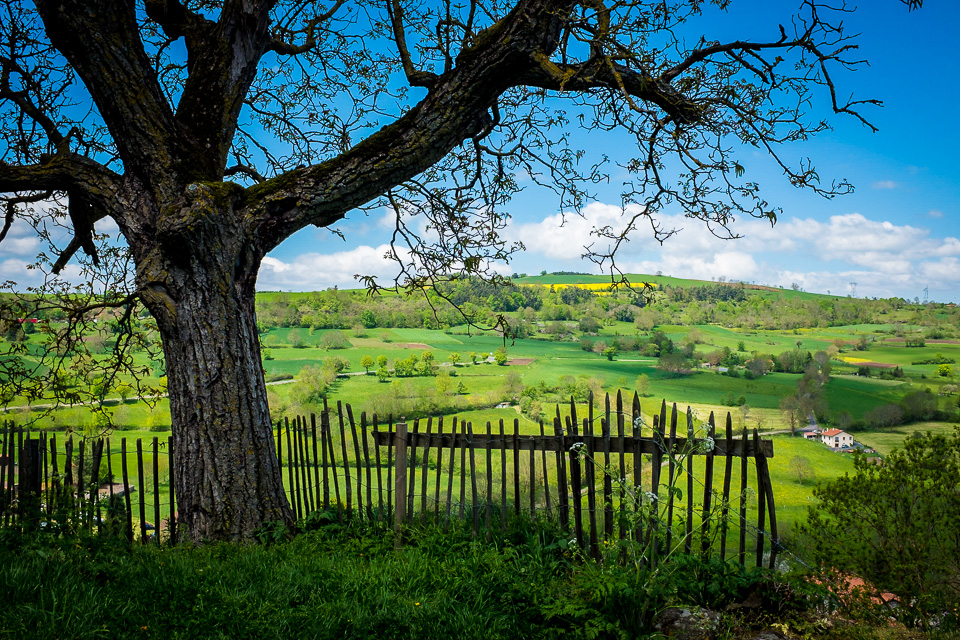
Still, harsh daylight can work fantastically. In a forest, for example, or with other elements in a landscape where the difference between light and dark is clearly visible. So play with light and dark, sunlight and shadow, and pay attention to a good composition.
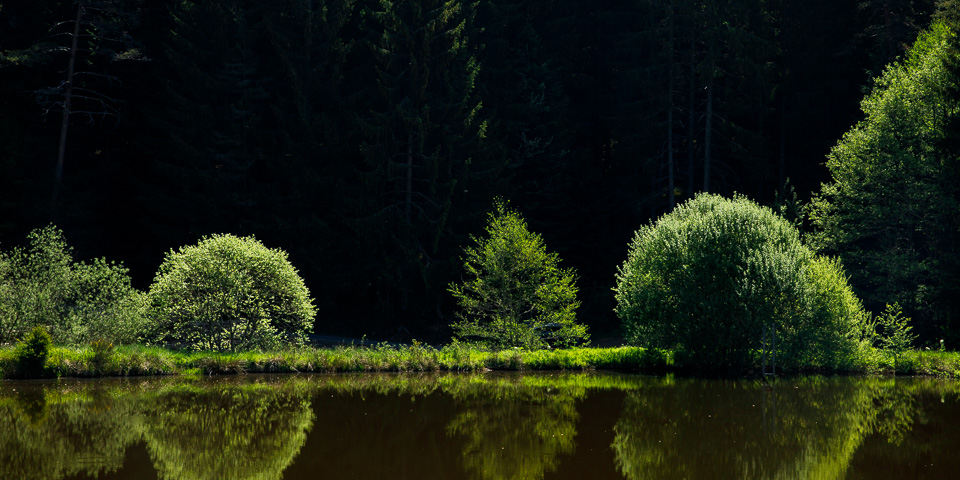
It's not that you should stop photographing at sunrise or sunset because everyone else does it. No, do both. Both during that golden hour of the day and in normal daylight. You just need to pay more attention to good image structure, composition, and the interplay of light and dark.
De Landschapsbijbel, with 101 tips for magnificent landscape photos
This tip is part of the book De Landschapsbijbel, in which I share 101 tips for magnificent landscape photos. The book, filled with beautiful photos, gives you all the information you need to start creating your own fantastic landscape photo.
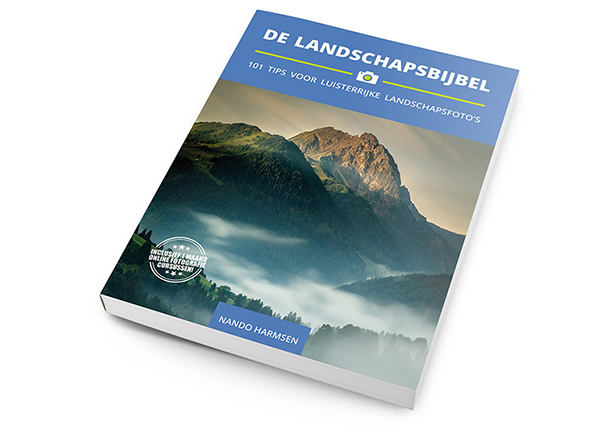
Don't have De Landschapsbijbel yet? Order it via the order page and buy the book separately, or at an attractive discount together with a membership of Photofacts Academy.
About the author
Nando Harmsen has been photographing for more than 40 years. He specialises in wedding photography and landscape photography. Nando also gives talks, workshops, masterclasses and photo trips, and regularly reviews new and interesting equipment.
You might also like
-
 Using Daylight for a Natural Effect
by Anniek Snoeijs
-
 Set your camera to daylight saving time
by Nando Harmsen
-
 Photographing people during the golden hour
by Nando Harmsen
-
 Night photography tip: choose the blue hour
by Nando Harmsen
-
 How blue can the blue hour be?
by Nando Harmsen

4 comments
-
 guest wrote on Tuesday 6 July 2021 at 10:32 | reply
An excellent article with good tips
Translated from Dutch.
Sometimes hitting the nail on the head. Very recognizable. I don't often go out during the golden or blue hour myself. I usually do landscape photography during the day. The light is indeed harsh then, except in gray weather. The biggest problem I find then is the large differences in contrast. That can be solved with graduated neutral density filters, but then you have to have them. Good filters are simply quite expensive and I can't spare that money. I try to solve the differences in contrast in Photoshop, but that doesn't always work out as desired. Especially when the differences in contrast are too large. -

-
 Freddy Van Erp wrote on Tuesday 6 July 2021 at 12:31 | reply
Photographing in overly bright daylight!
Translated from Dutch.
Think of a polarizing filter that accentuates the clouds, or could actually reduce the harsh light by turning in the opposite direction? Or am I mistaken? -
 Nando
wrote on Tuesday 6 July 2021 at 15:07
| reply
Nando
wrote on Tuesday 6 July 2021 at 15:07
| reply
@Freddy,
Translated from Dutch.
A polarizer does indeed make the blue sky darker. A dark sky will therefore reduce the contrast between the sky and foreground.
But be careful with wide-angle lenses and the inevitable uneven polarization in the sky. That's a hell of a job to correct in PS.
Personally, I would use a polarizer little or not at all for bringing out detail in the sky.
Have your say
Please note: Articles older than a week can only be commented on by signed-in visitors.Would you still like to comment? sign in or create a free account.
Become a better photographer every week
A practical photography tip in your inbox every week.
39,023 photography enthusiasts already receive the tips! More about the weekly mail. Or keep up to date via  Facebook.

Elja Trum
Photofacts; everything to do with photography!
Would you like to take better photos and keep up with what is happening in photography? Photofacts publishes articles that teach you something about photography — from a product announcement to a practical shooting tip or a look at a website. Photofacts covers photography every day and is a hobby project of Elja Trum's that got out of hand. The articles are written by a team of volunteer authors. If you would enjoy writing one or more articles for Photofacts, do get in touch.More about PhotofactsPhotofacts is made possible in part by
