

How blue can the blue hour be?
Monday 17 March 2025, 20:02 by Nando Harmsen | 4,219 views | 2 commentsThis article was translated from Dutch with the help of AI. Read the original.
There are two moments that are very appealing for photography. They are the golden hour and the blue hour. The warm colours of the former are attractive. But how blue can the blue hour be?
The blue hour is the moment that starts about half an hour after sunset and lasts until darkness falls. It is called the blue hour, but you have to travel very far north for it to last an hour. In the Benelux, it lasts no longer than about fifteen minutes.
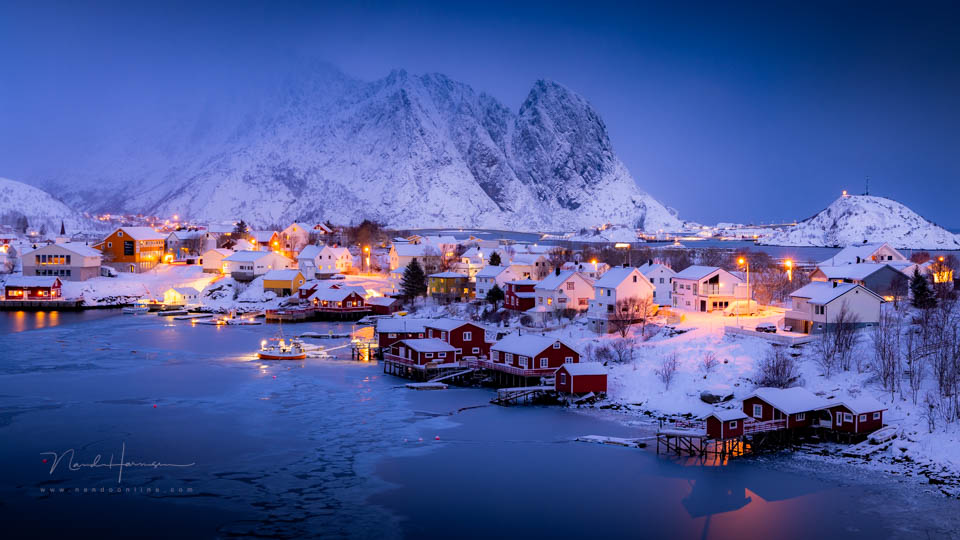
You have to be there in time to photograph during this moment. Especially when the lights in towns and villages are on, it creates a beautiful contrast. It is more attractive than photographing in the evening, when it is really dark.
How blue can the blue hour be? If you set your camera's white balance to daylight, you will really see the blue colour. If you set the white balance to automatic, the camera will often make the blue colour less intense or even try to remove it completely.
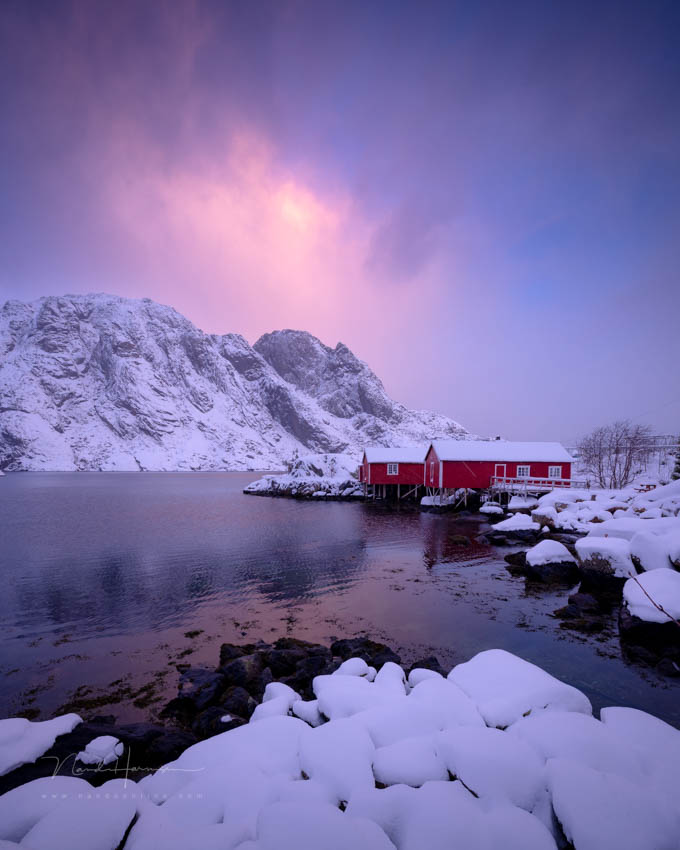
I don't think there is a right or wrong. A photo should be pleasant to look at. But above all, it should convey the atmosphere of the moment, of the blue hour.
That can mean slightly enhancing the warmth of the artificial light while retaining the blue light of this time of day. Or you can let the blue dominate, whatever you prefer.
I often hear that landscape photos taken during the blue hour are considered too blue. Especially when you keep the white balance on daylight, as I always do, the whole photo turns blue. That is when you really see how blue the blue hour is.
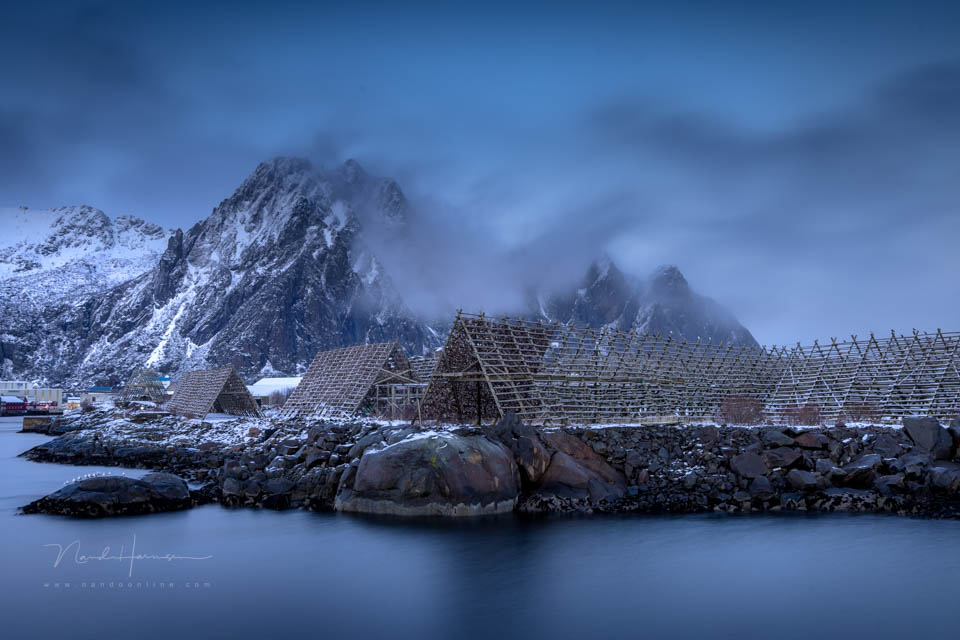
Is that wrong? Should you adjust the white balance to make the blue hour less blue? Here too, there is no right or wrong. Sometimes it is necessary to reduce the blue tint. Sometimes it isn't. It all depends on what you want to say with your photo.
Don't be afraid to adjust your white balance if you think it is necessary. But bear in mind that if you photograph during the blue hour, you should also be able to tell that it was taken at this time of day. If you correct the blue colour completely, you might as well have photographed during the day.
About the author
Nando Harmsen has been photographing for more than 40 years. He specialises in wedding photography and landscape photography. Nando also gives talks, workshops, masterclasses and photo trips, and regularly reviews new and interesting equipment.
You might also like
-
 Night photography tip: choose the blue hour
by Nando Harmsen
-
 Capturing the Blue Hour with Your Phone
by Elja Trum
-
 Photographing people during the golden hour
by Nando Harmsen
-
 Why yellow likes blue (and vice versa)
by Martin van Rooij
-
 Photographing a common blue butterfly at 't Ham
by Erik Nevels
-
 One Hour in One Place
by Michiel Heijmans
2 comments
-
 Donald Willemsen wrote on Tuesday 18 March 2025 at 10:55 | reply
Nando, it is an interesting article and a nice plea for the blue hour. You know that the color blue is a cold color and that is why it also fits the photos you include in the article. Photos from a cold region close to the Arctic Circle.
Translated from Dutch.
But does photographing during the blue hour in the warmer regions (subtropics) look just as beautiful? I cannot speak from experience, but I think it will come across as very confusing compared to the photos you include in this article.
Personally, I prefer warm tones more and from experience I know that warm tones in a photo from warm regions work very well. In any case better than cold tones. I have to admit that it has to do with feeling and taste.
Still, I think the photos in the article are beautiful despite the fact that they are cold tones. Why? It simply fits here because they are photos from cold regions.
But the golden hour appeals to me more. -
 Marcel Govaerts wrote on Tuesday 18 March 2025 at 13:42 | reply
In response to Donald Willemsen, I can report that I live in Brazil, 74.6 km south of the equator. There is no such thing as a 'blue hour' here. The sun sets at around 18.20 min and a quarter of an hour or a little more later it is pitch dark. The sunrise (from around 5.29 a.m.) also lasts barely until 6.15 a.m. By then it is already full daylight, although not yet very intense. I photograph landscapes and seascapes here, so far in the early morning, but in the evening twilight you also get beautiful skies and vistas here
Translated from Dutch.
Have your say
Please note: Articles older than a week can only be commented on by signed-in visitors.Would you still like to comment? sign in or create a free account.
Become a better photographer every week
A practical photography tip in your inbox every week.
39,079 photography enthusiasts already receive the tips! More about the weekly mail. Or keep up to date via  Facebook.

Elja Trum
Photofacts; everything to do with photography!
Would you like to take better photos and keep up with what is happening in photography? Photofacts publishes articles that teach you something about photography — from a product announcement to a practical shooting tip or a look at a website. Photofacts covers photography every day and is a hobby project of Elja Trum's that got out of hand. The articles are written by a team of volunteer authors. If you would enjoy writing one or more articles for Photofacts, do get in touch.More about PhotofactsPhotofacts is made possible in part by
