

The sense and nonsense of a low viewpoint in landscape photography
Monday 28 November 2022, 20:02 by Nando Harmsen | 5,702 views | 6 commentsThis article was translated from Dutch with the help of AI. Read the original.
I often see landscape photographers immediately choose a low viewpoint. When I ask why, the answer is almost always about including the foreground in the photo to create depth. Although it can sometimes make sense, I believe it is more often pointless.
They often call it a frog's-eye view. A low viewpoint, with the camera terribly close to the ground. But think about what a frog on the ground actually sees. Not much, because even grass rises above the little creature.
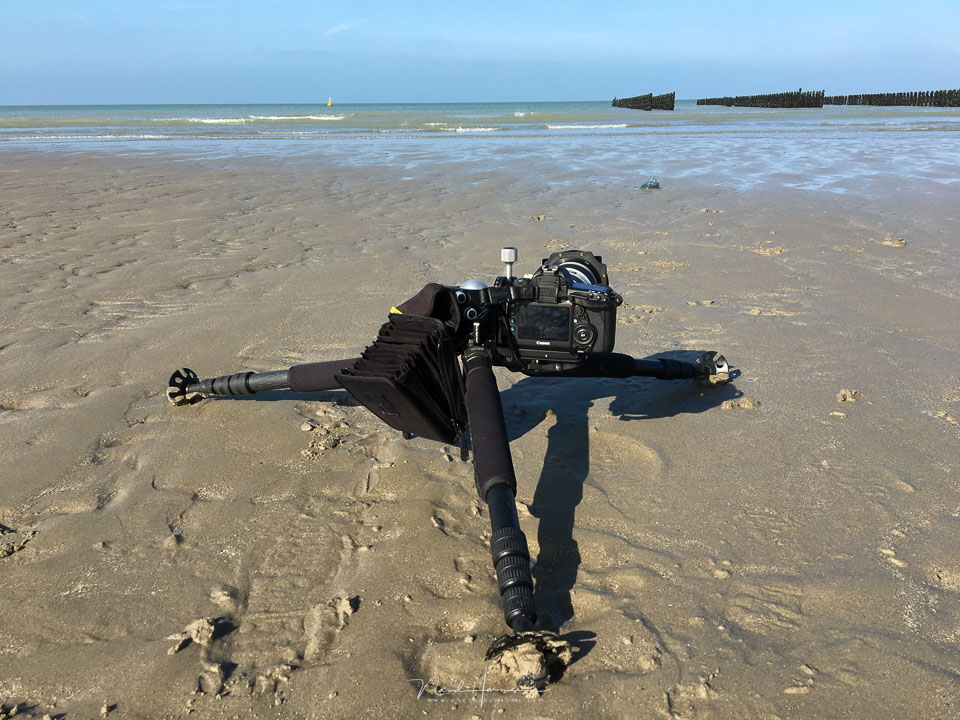
When you really want to give the frog a view of the landscape, you have to let the little creature fly. Then you get a true bird's-eye view, and the landscape opens up so you can see a long way into the distance.
I am not saying that you should make frogs fly. Just let them sit on the ground and leave flying to the birds. But there is a lesson in this for the landscape photographer. Do not choose a low viewpoint because you think it will always produce a more interesting image.
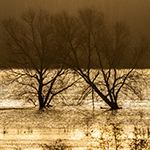
Look at the following photo and tell me what you see. There are three birch trees rising high above the landscape. What can you see in the landscape? In fact, nothing or very little. All you see is the birch trees against the sky.
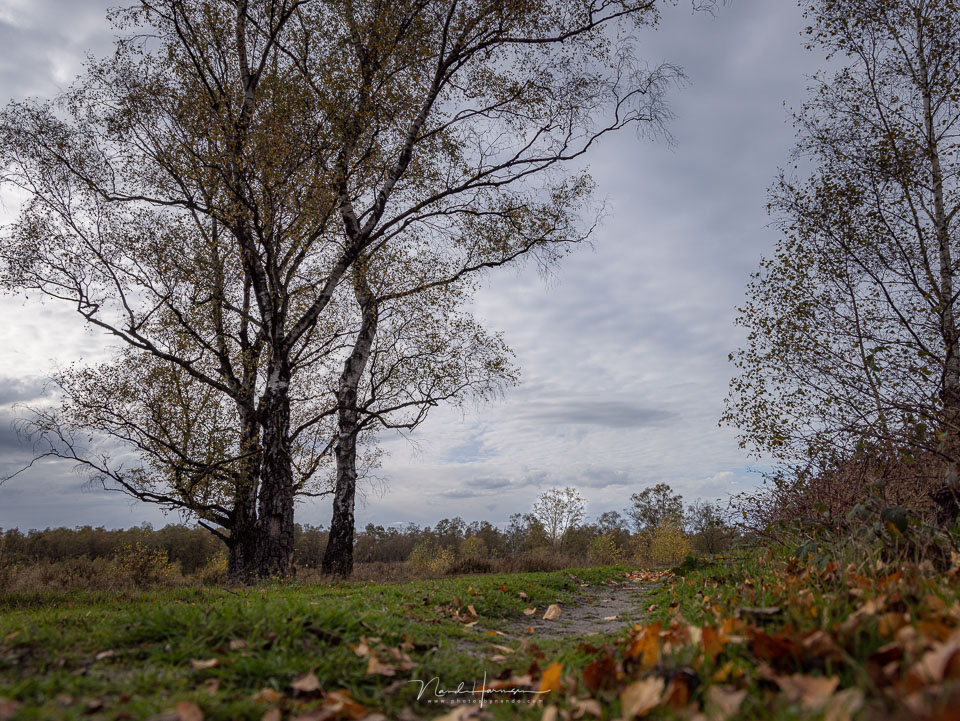
Although I also consider this a landscape photo, there is hardly any landscape to see. It is a photo of birch trees.
If this is what you want to show, this is a decent photo from a beautiful viewpoint. This perspective has the camera on the ground, the view of that frog.
Now look at the photo I took from a higher viewpoint. Because you are looking down more at the landscape, you actually see the landscape. The trees have a place in the landscape.
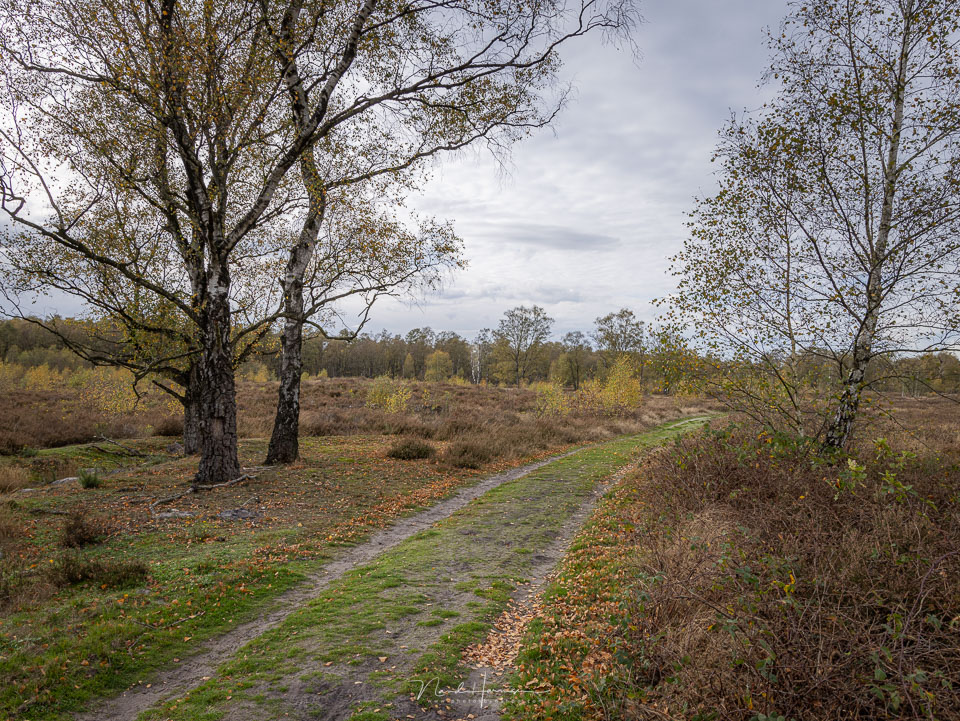
Did you know that I photographed these trees from exactly the same spot? Taking this photo from a higher viewpoint makes a path visible that could not be seen from the frog's-eye view. The heath behind the birch trees also becomes visible, along with everything else that can be seen in the landscape.
Of course, these became two completely different photos, each telling a different story. So the message is, first take a good look at the landscape and decide what you want to include in the photo. Then choose the right height. But do not automatically choose a low viewpoint.
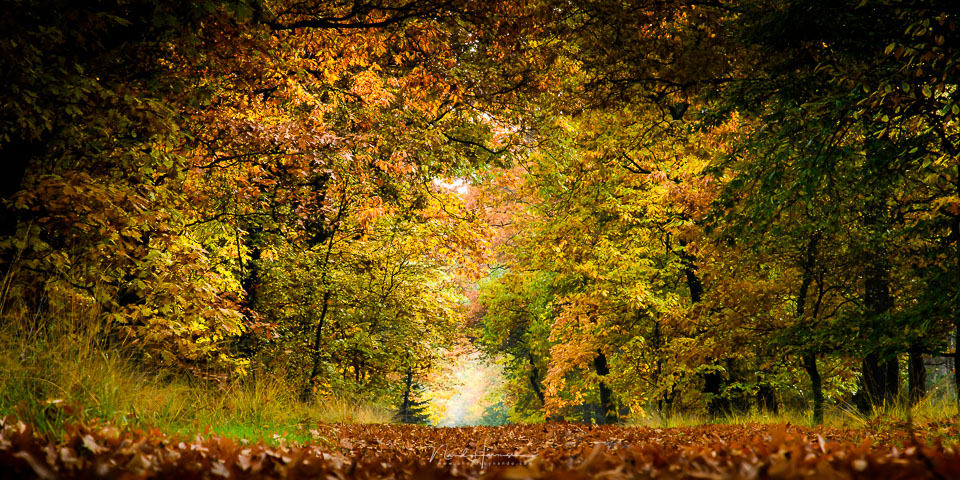
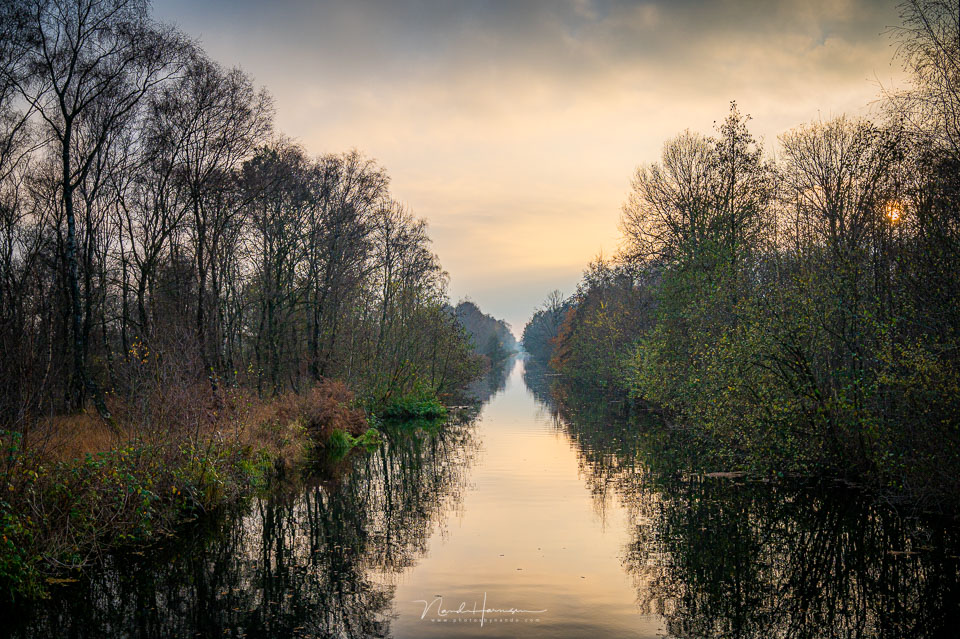
So do not automatically lie down with your camera on the ground just because you need to include a foreground. Choose the height that works best for your photo. You will notice that if you really want to show the landscape, you will more often choose a higher viewpoint.
About the author
Nando Harmsen has been photographing for more than 40 years. He specialises in wedding photography and landscape photography. Nando also gives talks, workshops, masterclasses and photo trips, and regularly reviews new and interesting equipment.
You might also like
-
 Low, lower, lowest: finding the right viewpoint
by Erik Nevels
-
 Create calm in your photos with a low viewpoint
by Nando Harmsen
-
 Don’t always choose the lowest viewpoint for your landscape photo
by Nando Harmsen
-
 Always choose the right viewpoint for your photo, less is more
by Nando Harmsen
-
 A telephoto lens isn't just for birds
by Erik Nevels

6 comments
-
 MacBigfoot wrote on Tuesday 29 November 2022 at 10:44 | reply
You have a video in which you leave your tripod standing and first "jump around" with the camera to determine a nice viewpoint.
Translated from Dutch.
The same applies here:
First look for a nice composition with the camera in your hand, or try out several compositions.
Only then set up your tripod and put the camera on it.
Take the time to determine what you want to photograph and how you want to photograph it. -
 guest wrote on Tuesday 29 November 2022 at 11:08 | reply
@Nando, you know me by now and you know, I can be quite critical. Now, with the argument above, I agree with you completely. Indeed, you usually shouldn't take a low viewpoint, so to speak, just to get some foreground in the photo for a sense of depth.
Translated from Dutch.
Much better is to include an object that is in the foreground in the composition, because that creates depth. That could be a tree, a thick branch on the ground, a tree stump, a large boulder, you name it. With an object in the foreground, you create a good sense of depth. A low viewpoint is then not necessary. -
 Gert van Eck wrote on Tuesday 29 November 2022 at 14:01 | reply
Hi Nando, this article of yours really rubs me the wrong way. It does feel more like a crusade against the low viewpoint. But without explaining what reasons there might be for doing it anyway. When I want to show a foreground object in the landscape as well as the beautiful sky, I have no choice but to take a low viewpoint, as in this photo https://gertvaneck.com/fotografie/natuur/universum/landschap/nederrijn
Translated from Dutch.
I can show both the beautiful Dutch cloudy sky and the vastness of the Nederrijn this way, including a foreground object. And I certainly wouldn't approach a birch tree in a landscape the way you did in your two examples, which in my opinion do not do justice to the story. But rather like this, for example: https://gertvaneck.com/fotografie/natuur/universum/landschap/sallandse-heuvelrug
And you see, I don't always lie flat on my stomach and my tripod isn't always in its lowest position either. -

 Nando
wrote on Tuesday 29 November 2022 at 14:50
| reply
Nando
wrote on Tuesday 29 November 2022 at 14:50
| reply
@Gert van Eck:
Translated from Dutch.
No, it's not a crusade. A low viewpoint can be fun, but it has to be functional. With your photo of the Nederrijn, you show the stones, and a cloudy sky. The Nederrijn is merely an image element that doesn't play the leading role. That's the cloudy sky above the stones. A disadvantage of that photo, moreover, is the position of the horizon. As a viewer, you are now asking me to pay attention to the stones, and attention to the sky. I have to choose what I look at, and that gives the image a restless feeling.
The birches you photographed cannot be compared with my image. It's a completely different photo, a beautiful photo, incidentally. You had a nice hilly landscape at your disposal, I had flat land.
I'm not saying that you should never take a low viewpoint. I'm only saying that you shouldn't blindly choose a low viewpoint. It has to add value. -
 johan wrote on Wednesday 30 November 2022 at 04:35 | reply
You are right, on the other hand landscape photos taken from eye level (+- 1.60 m) are often boring and made out of laziness.
Translated from Dutch. -
Have your say
Please note: Articles older than a week can only be commented on by signed-in visitors.Would you still like to comment? sign in or create a free account.
Become a better photographer every week
A practical photography tip in your inbox every week.
39,079 photography enthusiasts already receive the tips! More about the weekly mail. Or keep up to date via  Facebook.

Elja Trum
Photofacts; everything to do with photography!
Would you like to take better photos and keep up with what is happening in photography? Photofacts publishes articles that teach you something about photography — from a product announcement to a practical shooting tip or a look at a website. Photofacts covers photography every day and is a hobby project of Elja Trum's that got out of hand. The articles are written by a team of volunteer authors. If you would enjoy writing one or more articles for Photofacts, do get in touch.More about PhotofactsPhotofacts is made possible in part by
