

Photographing or cropping a panorama
Sunday 22 January 2023, 15:30 by Nando Harmsen | 4,881 views | 0 commentsThis article was translated from Dutch with the help of AI. Read the original.
Sometimes it is nice to have a panorama. It gives you a sense of space and can be impressive. You can do this in two ways.
Make a panorama with multiple photos and then stitch them together, or use a wide-angle lens and make a panorama crop. Which do you choose?
We were standing on the beach of the Opal Coast, a place where panorama photography can produce beautifully expansive images. How you make a panorama essentially depends on the lens you have available.
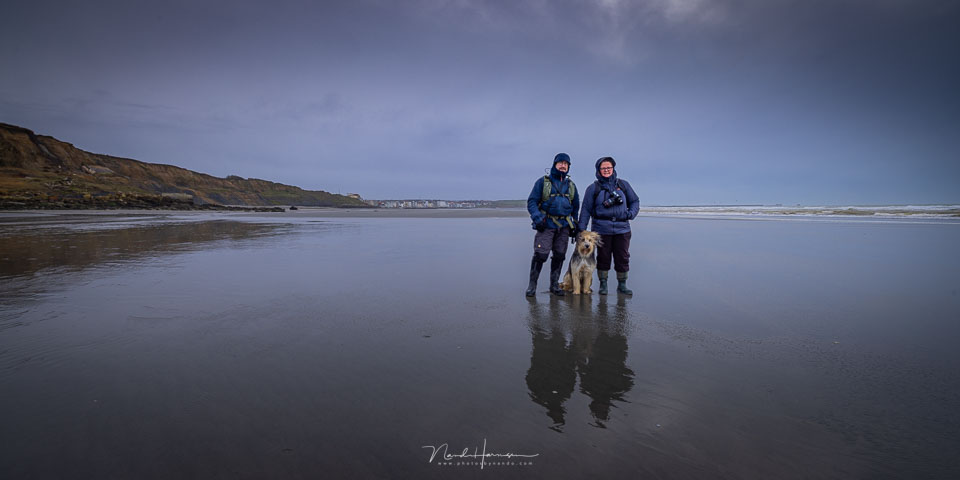
An empty beach is... Well, empty, of course. In that case, the angle of view you have makes little difference to the sense of space. Whether you photograph at 15mm or 35mm, what you get in the photo is emptiness. Unless, of course, there are things relatively close by on the horizon.
But the focal length makes a big difference to the foreground. And that foreground can be very important in panorama photography, since you then have a clear subject. This is what I found on the Opal Coast.
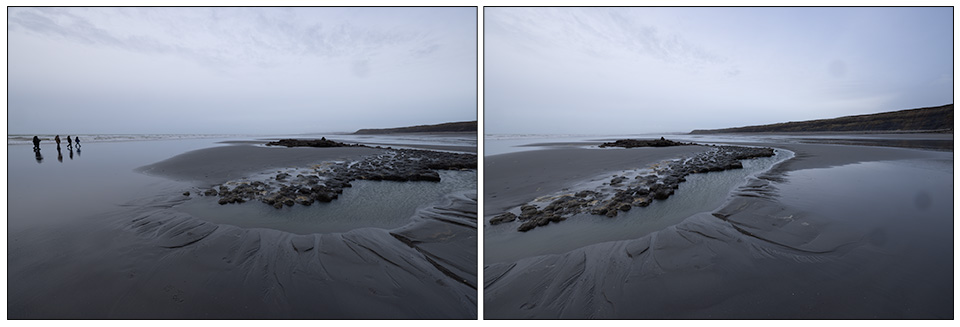
I had my 15-35mm lens on the camera and was standing close to the foreground. It was so large that I could not get it completely in the frame. So I took two photos, handheld. I thought, I will stick them together at home later.
But then I started thinking. Why go to the trouble of stitching two images together if I can simply stand a few metres further back and capture everything in one image? So that is what I did. And indeed, everything was captured in one photo.
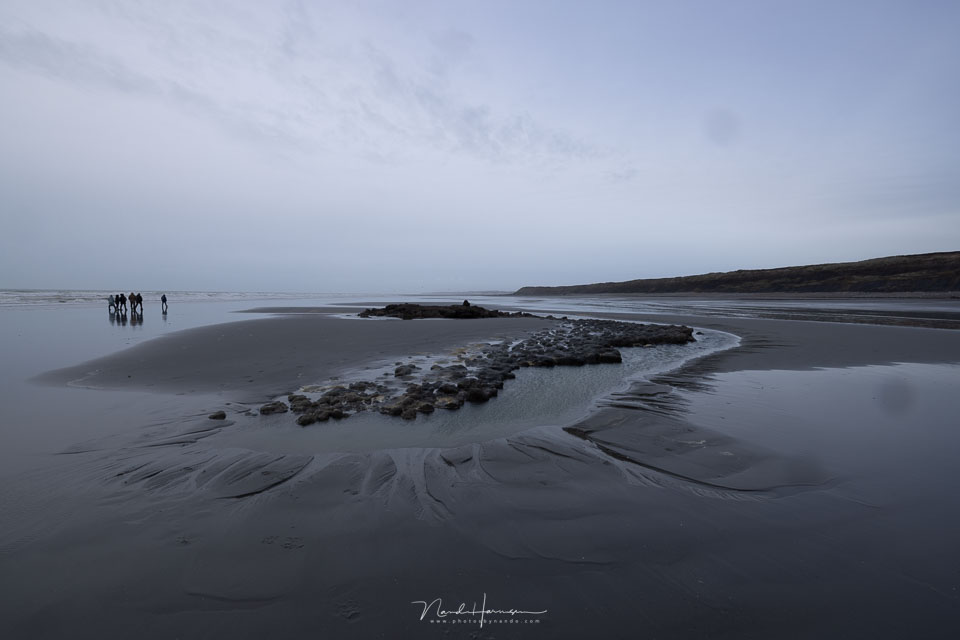
But an ordinary photo is not a panorama photo, of course. This is a normal 3:2 aspect ratio, as it comes out of my camera. With a lot of sky, too much even. A wide-angle lens has a wide angle not only from left to right, but also from top to bottom.
Fortunately, there is a good solution, one I often use. I select the crop tool in Lightroom Classic and make it a 2:1 ratio. A panorama crop, in other words. And yes, it gives a fantastic sense of space.
This raises the question: in this case, is it better to stitch the two photos together into a panorama instead of making a panorama crop? I would say, absolutely not in this case. In fact, all the work involved in stitching the photos together adds no value here.
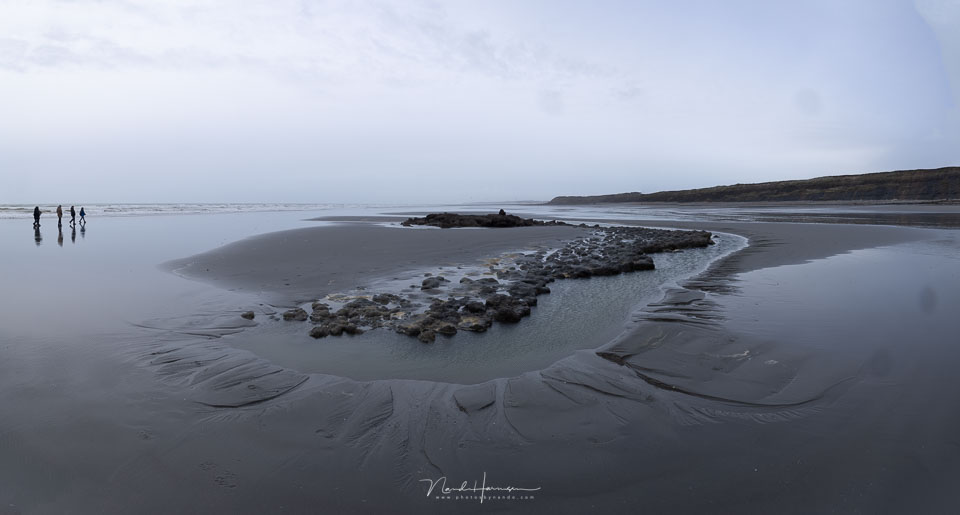
But especially for this article, I did stitch the photos together after all. It took quite a bit of work, since the alignment was not completely perfect everywhere. I had not taken parallax into account, and the photos were taken handheld.
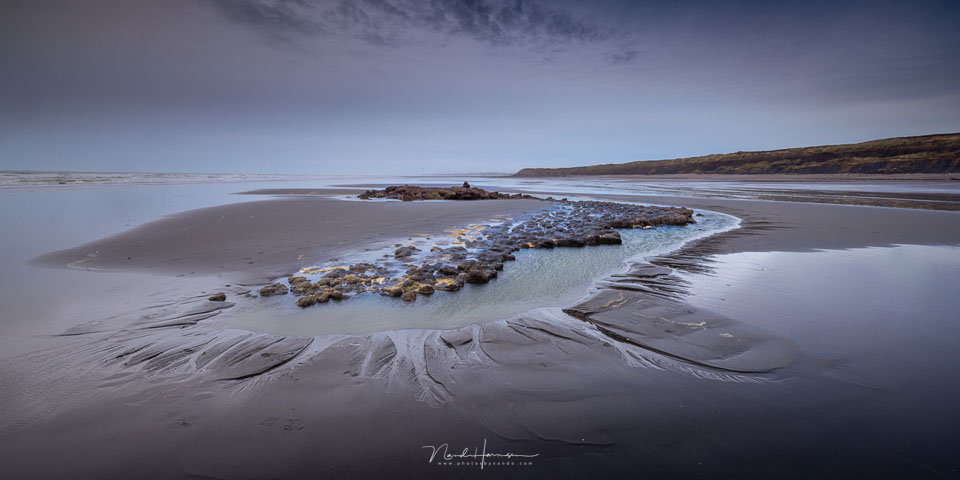
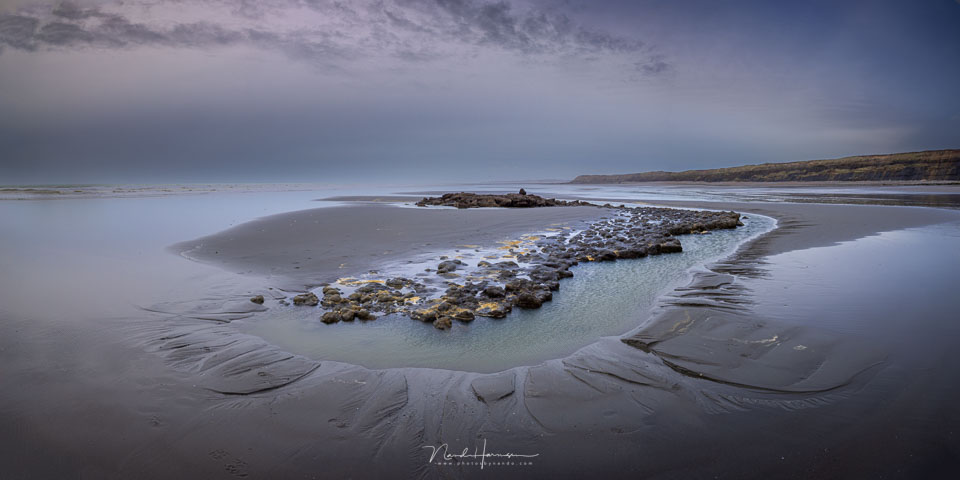
Although the photos look the same at first glance, they are actually very different. You will have to ignore the colour difference for now, since both photos have had their own editing applied. In addition, the cloud pattern is slightly different because of the time difference between the photos.
First of all, there is the distortion caused by my standing closer with the panorama. You can see this in the shape of the foreground.
Look closely and you will also see that the wider angle of view of the stitched panorama means that the rock face in the background appears smaller in the frame.
This is logical, of course, because the angle of view has become wider with the panorama than with a single image. This is certainly something to take into account.
Why is the foreground not smaller in the stitched panorama? Because in both cases I chose the distance to the foreground so that it appeared the same size in the frame.
Normally, a panorama with 30% overlap between the photos gives you a huge increase in resolution. In my case, the single photo in the 2:1 crop is 8,192 x 4,096 pixels. Because of the large overlap I used, the panorama is 8,357 x 4,179 pixels. Not such a big difference.
Of course, I can do this differently. I can take portrait-oriented photos for the panorama. In that case, the height would be around 8,000 pixels, which at a 2:1 ratio would amount to 16,000 pixels wide.
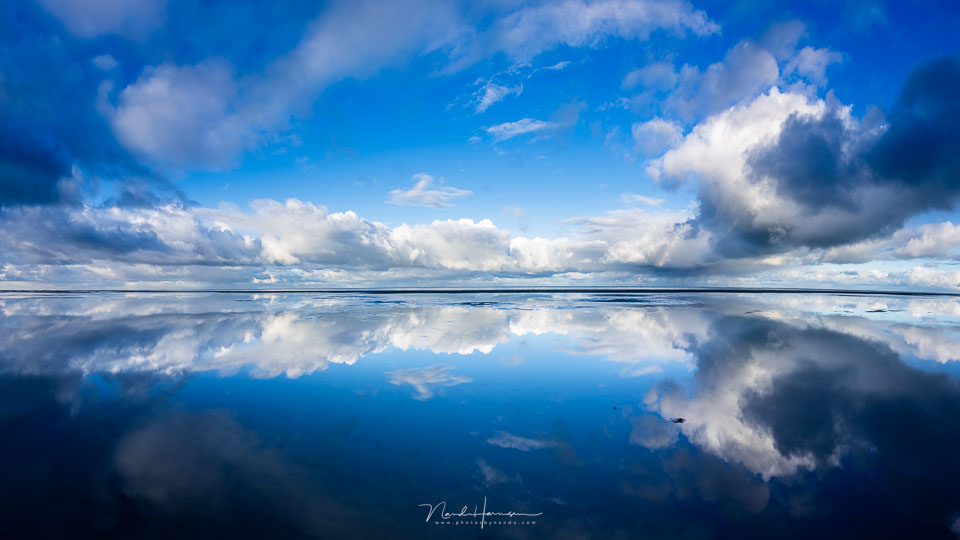
There are a few disadvantages to a panorama made from vertical shots. First of all, the resolution becomes enormous, and you have to ask yourself whether this is really necessary. Do you need 16,000 x 8,000 pixels?
Secondly, it takes time to stitch multiple shots together, and your computer needs enough processing power to handle this smoothly. Finally, the technique is difficult when there is movement in the photo.
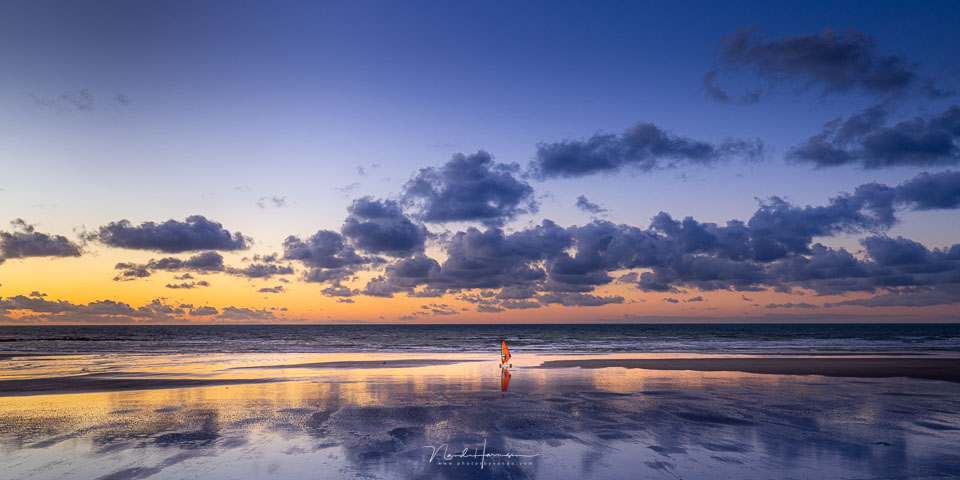
If you do need a lot of pixels, or your focal length is not short enough for the right angle of view, then you should photograph a panorama, preferably using portrait-oriented photos.
Just make sure that you do not use 15mm for your panorama, as I did. You will get far too much sky and foreground in the frame. A longer focal length is the best choice in that case.
About the author
Nando Harmsen has been photographing for more than 40 years. He specialises in wedding photography and landscape photography. Nando also gives talks, workshops, masterclasses and photo trips, and regularly reviews new and interesting equipment.
You might also like
-
 A panorama or a panorama crop?
by Nando Harmsen
-
The Biggest Disadvantage of a Panorama
by Nando Harmsen
-
 When to use which type of panorama?
by Nando Harmsen
-
Improve your panorama with a nodal slide
by Nando Harmsen
-
The opposite of cropping
by Nando Harmsen
-
 How far do you dare to crop your photo?
by Nando Harmsen
0 comments
Be the first to share what you think!
Have your say
Please note: Articles older than a week can only be commented on by signed-in visitors.Would you still like to comment? sign in or create a free account.
Become a better photographer every week
A practical photography tip in your inbox every week.
39,079 photography enthusiasts already receive the tips! More about the weekly mail. Or keep up to date via  Facebook.

Elja Trum
Photofacts; everything to do with photography!
Would you like to take better photos and keep up with what is happening in photography? Photofacts publishes articles that teach you something about photography — from a product announcement to a practical shooting tip or a look at a website. Photofacts covers photography every day and is a hobby project of Elja Trum's that got out of hand. The articles are written by a team of volunteer authors. If you would enjoy writing one or more articles for Photofacts, do get in touch.More about PhotofactsPhotofacts is made possible in part by
