

When to use which type of panorama?
Monday 18 September 2023, 22:11 by Nando Harmsen | 3,473 views | 10 commentsThis article was translated from Dutch with the help of AI. Read the original.
A panorama lets you capture a lot in one image. More than you can capture with your widest wide-angle lens. You can also use it to create high-resolution images. Or you can simply crop a normal photo to a panoramic format. There is plenty of choice, but how do you decide what to use?
The choice seems easy. Yet I notice there is a lot of uncertainty about the right choice. With this article, I will give you a guideline to make it easier to choose the right option.
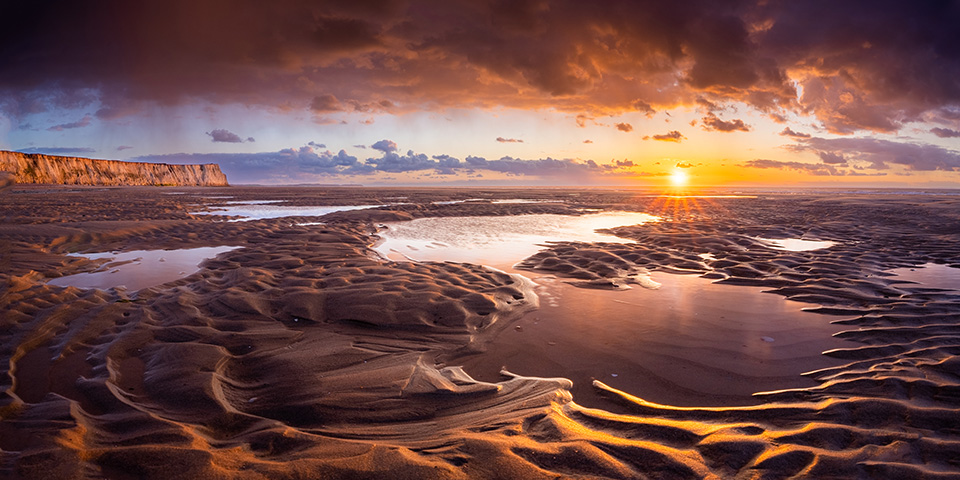
Creating a panorama takes time and energy. If you do it properly, you also need some extra equipment. The subject you are photographing also affects the choice that is best for you.
Sometimes you do not have the time, or you do not feel like putting a lot of time into it. At other times, one method does not produce the desired result. You may also never use the possibilities that the result offers.
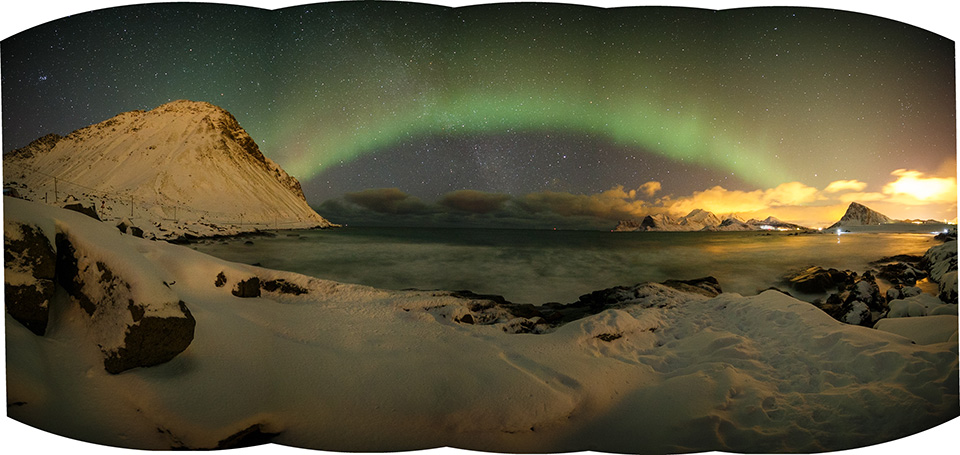
First, a few facts. A panorama made from multiple photos always produces a much higher resolution than your camera normally captures. With two photos, this difference is not that great. With four or more photos, the resolution quickly becomes enormous.
You should first ask yourself whether you actually need that enormous resolution. There is no point producing a 250-megapixel photo if you never print it larger than 30 x 40 cm. Or if you only use it for your online portfolio.
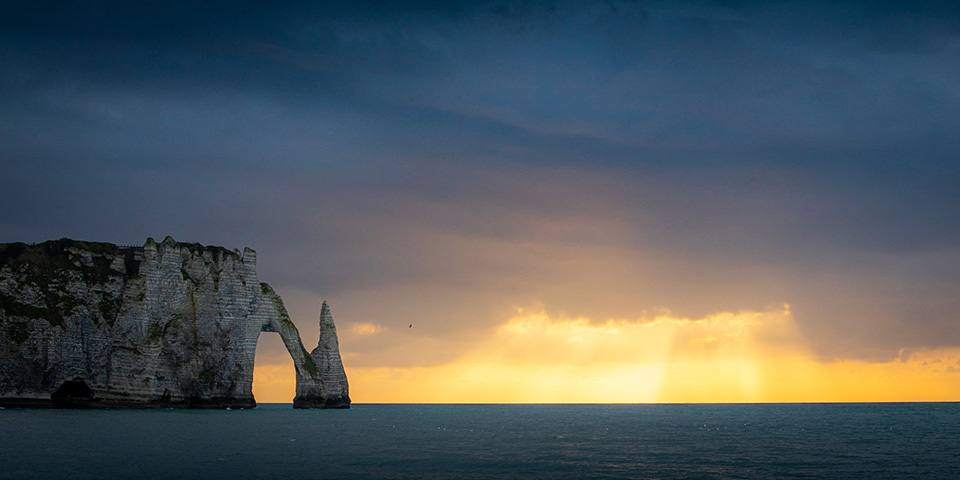
It also depends on the resolution of your camera. Is it 12 megapixels or 60 megapixels? That makes a huge difference. In the first case, a panorama of 6 photos produces a beautiful resolution of 50 to 60 megapixels. With the other camera, it will run into the hundreds of megapixels.
Then there is the angle of view you are dealing with. Do you want more in the frame than your widest wide-angle lens can provide? Then it is very clear. A panorama made from multiple photos is necessary. Otherwise, you simply cannot fit it all in the frame.
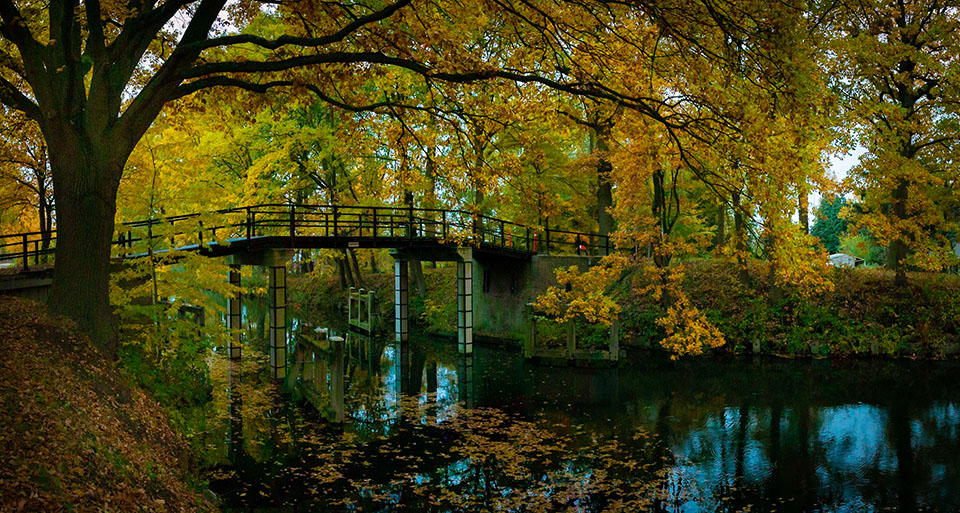
But do you have enough angle of view with your widest wide-angle lens? Then there is no need to make a panorama. At least, if your camera's resolution is sufficient. If it is not enough, a panorama made from multiple images will be necessary after all.
To put everything in a row, here are the guidelines.
- Do you want a wider angle of view than your widest wide-angle lens? Take multiple photos and combine them.
- Do you need more resolution than your camera provides? Take multiple photos and combine them.
- Do you have a sufficiently wide angle and is your camera's resolution sufficient? Consider a panoramic crop.
- Do you have a sufficiently wide angle but is your camera's resolution not sufficient? Take multiple photos and combine them.
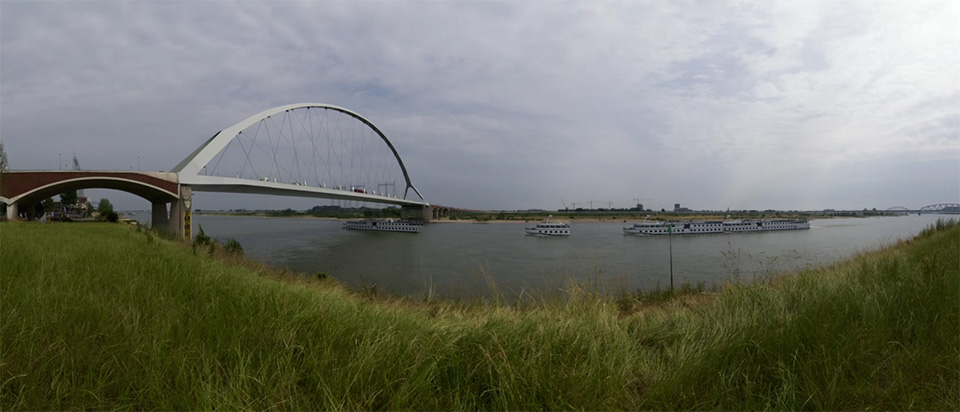
There is one more thing to take into account. When you photograph a subject that is moving, a panorama made from multiple photos can be a difficult task. Sometimes it is even impossible. In that case, there is only one solution. A panoramic crop from a single photo.
How do you prefer to make a panorama? Do you always take multiple photos and combine them for maximum resolution? Or do you make panoramic crops? Let us know in a comment below this post.
About the author
Nando Harmsen has been photographing for more than 40 years. He specialises in wedding photography and landscape photography. Nando also gives talks, workshops, masterclasses and photo trips, and regularly reviews new and interesting equipment.
You might also like
-
 A panorama or a panorama crop?
by Nando Harmsen
-
 Photographing or cropping a panorama
by Nando Harmsen
-
 Ten tips for panorama photography
by Nando Harmsen
-
The Biggest Disadvantage of a Panorama
by Nando Harmsen
-
The opposite of cropping
by Nando Harmsen
10 comments
-
 Trudy wrote on Tuesday 19 September 2023 at 11:29 | reply
Nando, I always find your posts very informative. Clear explanations and tips, with good (and beautiful) example photos. For me as an advanced photographer, they serve as a refresher, but I think beginners can also benefit a lot from them. Compliments!
Translated from Dutch. -

-
 Donald Willemsen wrote on Tuesday 19 September 2023 at 12:01 | reply
A fine article Nando, but I think you failed to mention one thing. That is the difference in angle of view between a full-frame or crop camera. On a crop camera, a focal length of 18mm corresponds to 29mm on a full-frame camera. That difference seems small, but it isn't.
Translated from Dutch.
I myself still have a 10-18mm lens available and a 7.5mm prime. Because I have a crop camera (R7), I naturally have to take the crop factor into account. The 7.5mm then corresponds to an angle of view of 12mm on a full-frame camera. The major disadvantage is the enormous distortion. Straight lines horizontally and vertically become curved, and you can't just straighten those in post-processing. In addition, everything is then displayed smaller.
In the end, I still have to make a difficult choice. What is the wise thing to do? -
 Nando
wrote on Tuesday 19 September 2023 at 12:08
| reply
Nando
wrote on Tuesday 19 September 2023 at 12:08
| reply
Dear Donald,
Translated from Dutch.
A crop factor is not important. Your camera and lens have an angle of view and you make use of that. Converting it to something else adds no value, and it's of no use to you.
It's very simple, is the angle of view you have with your lens too narrow? Then you can make a panorama. -
 Van Loon anToon wrote on Tuesday 19 September 2023 at 18:14 | reply
With analogue cameras there was a slit camera that took panoramas. With those long negatives.
Translated from Dutch.
Wouldn't there be a brilliant mind somewhere who could also provide this for the digital age?
I myself take a lot of panos horizontally and vertically. Usually handheld.
Your texts are always clear and your photography even clearer. -
Nando
wrote on Wednesday 20 September 2023 at 09:49
| reply
Indeed. I had forgotten about that kind of camera. In fact, the digital slit-scan camera is already here. It is moving your camera from left to right, as I also show in the course. Even your smartphone camera has that digital variant of the slit-scan camera.
Translated from Dutch.
Thank you for your nice response. -
 Mac wrote on Wednesday 20 September 2023 at 08:35 | reply
@Donald,
Translated from Dutch.
as nando already points out, crop or FF makes no difference. If you look through the viewfinder (or screen), then you see what you see and you have to make do with that.
Especially if you make panoramas by stitching, it is best not to have too large a field of view due to distortion. It is best to take photos vertically and stitch them. -
 Natuurliefhebber wrote on Wednesday 20 September 2023 at 08:36 | reply
Hi Nando, after watching your course on panorama photography, I got to work this week, resulting in some beautiful panoramic photos. Thanks for your very good and clear explanation!
Translated from Dutch. -
-
Donald Willemsen wrote on Wednesday 20 September 2023 at 10:22 | reply
@Mac, thanks for the tip. I know the theory.
Translated from Dutch.

Have your say
Please note: Articles older than a week can only be commented on by signed-in visitors.Would you still like to comment? sign in or create a free account.
Become a better photographer every week
A practical photography tip in your inbox every week.
38,982 photography enthusiasts already receive the tips! More about the weekly mail. Or keep up to date via  Facebook.

Elja Trum
Photofacts; everything to do with photography!
Would you like to take better photos and keep up with what is happening in photography? Photofacts publishes articles that teach you something about photography — from a product announcement to a practical shooting tip or a look at a website. Photofacts covers photography every day and is a hobby project of Elja Trum's that got out of hand. The articles are written by a team of volunteer authors. If you would enjoy writing one or more articles for Photofacts, do get in touch.More about PhotofactsPhotofacts is made possible in part by
