

A telephoto lens isn't just for birds
Sunday 28 February 2021, 14:28 by Erik Nevels | 5,420 views | 5 commentsThis article was translated from Dutch with the help of AI. Read the original.
For this final part of my blog series about my experiences with the Sony 200-600 telephoto lens, I am once again looking through my 4 and 5-star photos in Lightroom that I have taken with it over the past few weeks.
Birds are the subject in about 3 out of 4 photos. The remaining quarter includes various subjects, other animals, landscapes and even a little macro.
I will show you some of those images in this blog.
How and why were they taken with the 200-600?
Galloway
Within walking distance of my house lies the Isabellagriend. A beautiful area of nature between the Maas and the Oolderplas. Galloway cattle graze in the area and there is a small herd of Konik horses.
I visit it fairly regularly and, until recently, always took my 70-200mm with me to photograph these animals and birds.
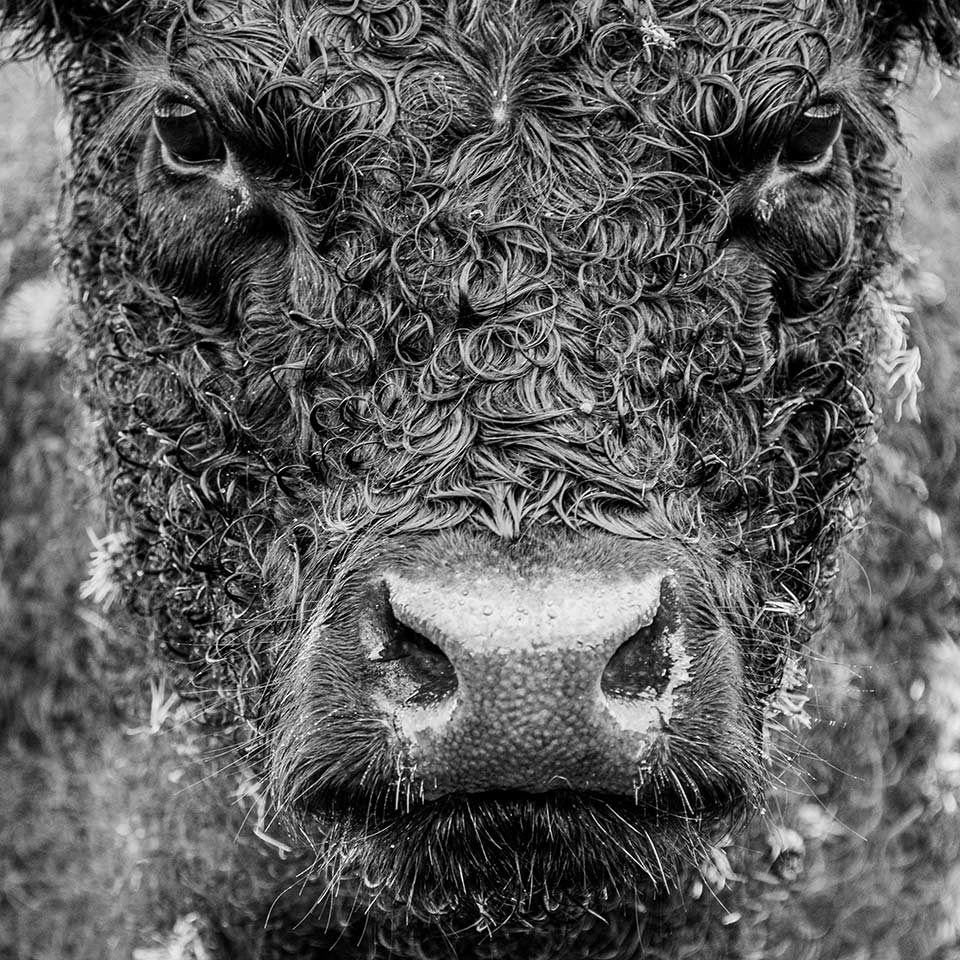
A few months ago, I dared to approach a ruminating Galloway cow step by step until, at 200mm, I saw its head filling the viewfinder nicely.
A lovely photo, but I did not feel at ease. And when the animal made a move to stand up, this bird was soon off.
With the Sony 200-600mm on trial, I decided to photograph the distinctive head of a Galloway once again. This time, a shaggy head blocked my way. The cow is covered in burrs, is standing in the middle of the path and is keeping a close eye on me.
Still, the distance I can keep now with 600mm feels reasonably safe. But not safe enough to start using my tripod, so I shoot handheld.
Fortunately, the animal stays still and I get away with a shutter speed of 1/100 second. I also fail to stop down the aperture a little for more depth of field.
Apparently, I am still feeling the tension. Once home at the PC, it turns out that the head is sharp from nose to eyes, although it is right on the edge.
Oxeye daisies
My photography partner and I recently went birding in the Wijnaerden area near Neer on the Maas. At a beautiful lake, we hoped to find equally beautiful waterfowl.
Unfortunately, there was hardly any cover and the birds turned out to be shy, always keeping their distance from us. Waiting patiently and standing still did not bring them any closer either, so I decided to see what else there was to photograph.
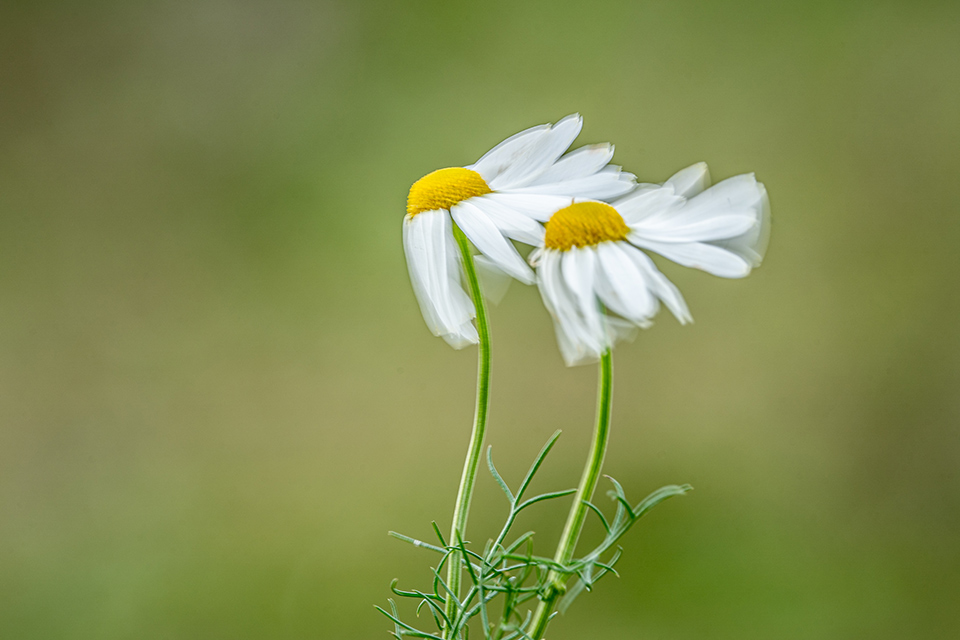
A few oxeye daisies were swaying cheerfully from side to side in the strong wind. The idea came to me to make a photo in which the strong wind would be visible.
I considered swapping the 200-600 for my macro lens, which I had left in the car. But I decided against it, because if a bird did come closer shortly afterwards, I would once again have the wrong lens on my camera.
So I decided to photograph the flowers with my telephoto lens. With my tripod as low as possible and at about three metres from my subject, I chose a shutter speed of 1/20 second to capture the movement in the photo.
ISO 100, giving me an aperture of f/14. I checked the first results and, despite the small aperture, the background remained nicely blurred.
As the flowers swayed from side to side, I took about 30 shots and checked again. Satisfied, I looked back towards the water, where the birds were still keeping their distance.
Landscape
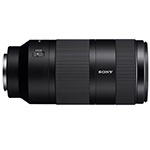
The three-week trial period with the Sony 200-600 ended more than a month ago now. It convinced me, and I have since bought this particularly versatile lens.
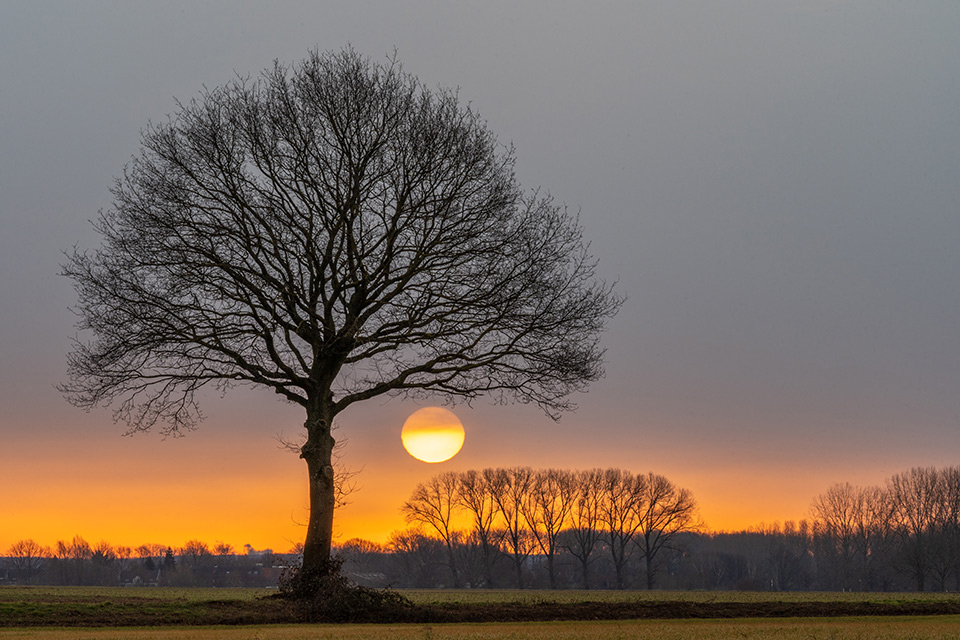
I use it surprisingly often. This morning was no exception, when I went looking for 'my tree' on the Linnerheide. I have photographed this tree several times before at sunrise. I always used a 28-75mm lens for this and 'crept' fairly close to the tree.
Now I plan to photograph the tree with the 200-600mm. The sun rises at quarter to eight, and I want to be ready.
The plan I came up with at home works. With the camera ready on the tripod and set to ISO 100, f/25 (I want both the tree and the sun to be sharp) and 1 and 1/3 stops underexposure (I do not want a blown-out sun), the shutter speed is 1/13 second.
There is no wind, which is a bonus. I get the tree nicely in the frame with a decent background. At a focal length of 225mm, I keep the distracting wind turbines in the background out of the frame. Now I just have to wait for the sun.
Not much later, the first sliver appears and then things move quickly. First, photos of the sun half and then completely above the horizon, to the left of the tree. Then quickly, a photo with the sun exactly in the centre behind the trunk.
I move my tripod a little to the left each time and wait until the sun is in the right place again. It is quick and precise work, because the orange ball is not hanging around.
Then the sun moves further away from the horizon and I move my tripod another bit to the right until the orange ball is completely visible to the right of the tree.
I take the final photos and look at them on my screen. Satisfied, I am about to pack up when I take another look at today's subject. Wow... that is beautiful.
The sun has risen quite a bit further, but is now almost half hidden behind the cloud cover. Enthusiastically, I move my tripod again, point my camera and make sure the sun separates from the tree and the trees in the background.
I have time for two photos, but I already know. These will be the best of the morning.
About the author
Steeds weer boeiend en op zoek naar de essentie! Dat is wat fotograferen in de natuur voor mij is. Gefocust op het landschap of het onderwerp in diens omgeving tracht ik meer dan alleen te registreren. Een continue uitdaging waarvan ik elke keer volop geniet. Meer foto's? Volg mij op Instagram en/of kijk op mijn website
You might also like
-
 Bird photography often requires a lot of patience
by Erik Nevels
-
 Landscape with or without an animal?
by Nando Harmsen
-
 Bird photography? Don't forget the common species.
by Nando Harmsen
-
 Show more than just an animal in the photo
by Nando Harmsen
5 comments
-
 Ton v/d Blaak wrote on Tuesday 2 March 2021 at 11:20 | reply
Is this the FE Sony 200-600 F5.6-6.3 OSS ?
Translated from Dutch. -
 Ton Camp wrote on Tuesday 2 March 2021 at 13:04 | reply
Good story
Translated from Dutch. -
 Ton camp wrote on Tuesday 2 March 2021 at 13:28 | reply
Good story
Translated from Dutch. -

 Erik wrote on Tuesday 2 March 2021 at 20:23
| reply
Erik wrote on Tuesday 2 March 2021 at 20:23
| reply
@Ton vd Blaak
Translated from Dutch.
That's right Ton. It's about the Sony 200-600 5.6-6.3 OSS. Also see my previous 2 blogs about this lens. -
Erik wrote on Tuesday 2 March 2021 at 20:25
| reply
@ Ton Camp. Nice that you think it's a good story. Then I've achieved what I set out to do.
Translated from Dutch.
Have your say
Please note: Articles older than a week can only be commented on by signed-in visitors.Would you still like to comment? sign in or create a free account.
Become a better photographer every week
A practical photography tip in your inbox every week.
39,087 photography enthusiasts already receive the tips! More about the weekly mail. Or keep up to date via  Facebook.

Elja Trum
Photofacts; everything to do with photography!
Would you like to take better photos and keep up with what is happening in photography? Photofacts publishes articles that teach you something about photography — from a product announcement to a practical shooting tip or a look at a website. Photofacts covers photography every day and is a hobby project of Elja Trum's that got out of hand. The articles are written by a team of volunteer authors. If you would enjoy writing one or more articles for Photofacts, do get in touch.More about PhotofactsPhotofacts is made possible in part by
