

The annoying red light when taking night photographs
Thursday 26 February 2026, 23:32 by Nando Harmsen | 1,906 views | 0 commentsThis article was translated from Dutch with the help of AI. Read the original.
Are you into night photography, or would you like to give it a try? Then you need a torch. Ask around and the red light will soon be mentioned. But be careful with that red light. It can actually be harmful.
For night photography, you need to use a torch. If it isn't to find the place you want to go in the dark, then it's to find the buttons on your camera. Or to get something out of your bag.
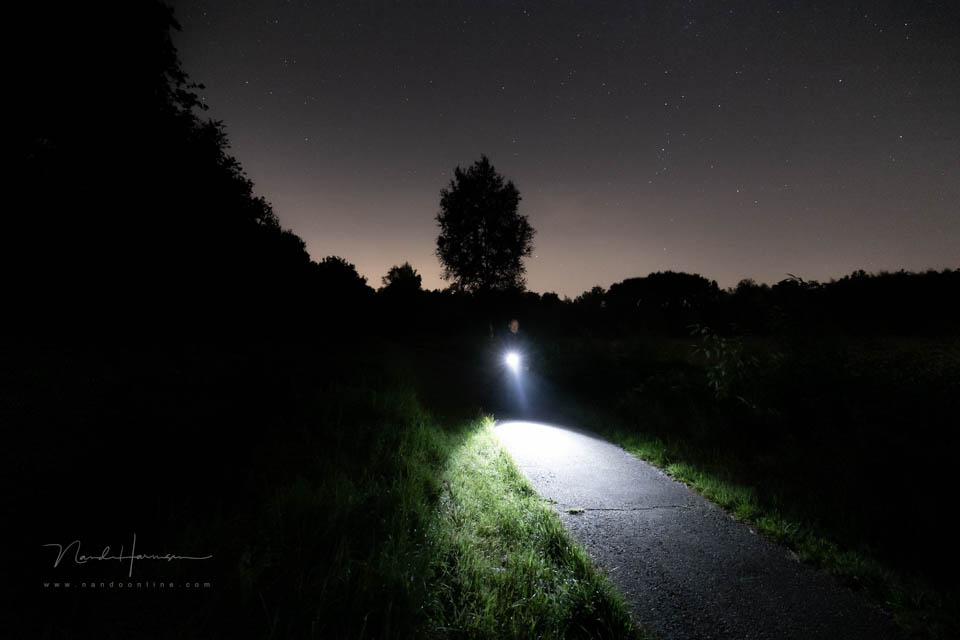
You know that the bright light from a torch means you can't see anything in the dark for a moment. Your eyes are dazzled by the light. If you want to see as well as possible in the dark, you need to develop night vision.
Night vision is nothing more than getting used to the dark. Your eyes adjust to the amount of light that is present. Developing night vision takes about 20 minutes. But one bright light and your night vision is gone.
The solution is red light. Our eyes are not as sensitive to it. This means that your night vision does not disappear with red light. So what do most people do? Use a red torch, preferably as bright as possible.
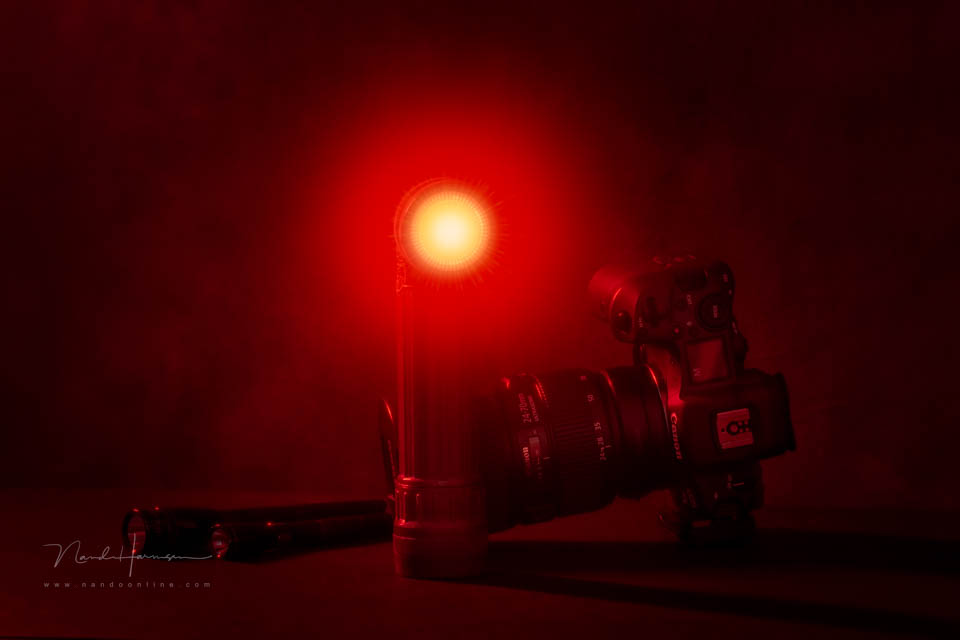
Although this can certainly be useful, it can also be very harmful. Our eyes may be less sensitive to red light, but the camera certainly isn't. In other words, the smallest amount of red light will show up perfectly in the photograph.
If you're on your own, that is often not such a problem. You turn the torch off when you take the photograph. If you're with several people, the red light is awful. There is always someone who uses it without thinking while you are taking the photograph.
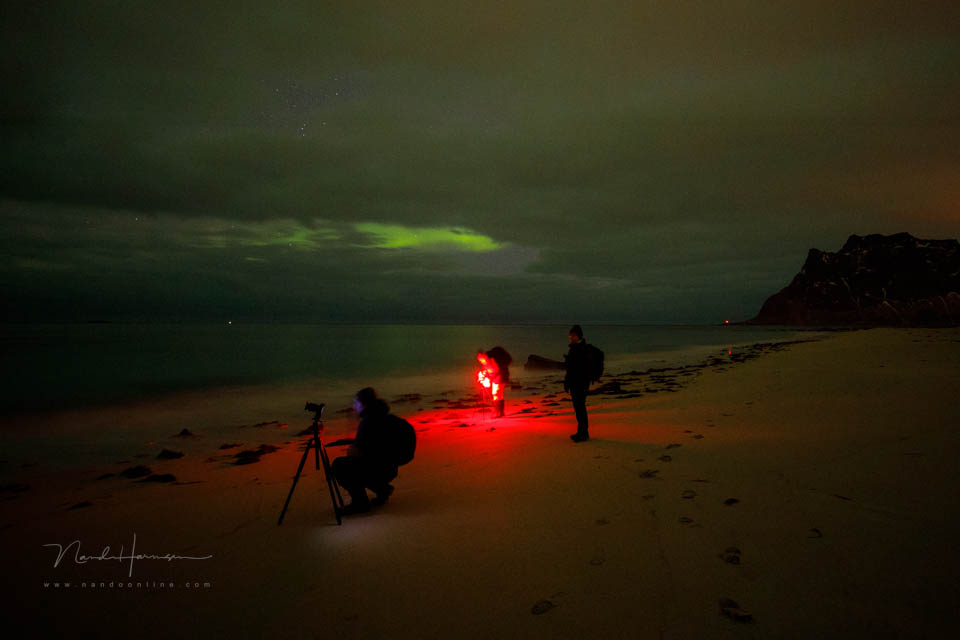
Red light is extremely difficult, or even completely impossible, to remove from the photograph. Normal 'white' light is much less of a problem in that respect. You can make that darker. But you can't do that with red, unless you make it completely black.
Red light can be useful, but in photography it is often just a nuisance. It is better to let your eyes get used to the darkness and not use any light at all. In the Benelux, there is so much light pollution that it never really gets dark anyway.
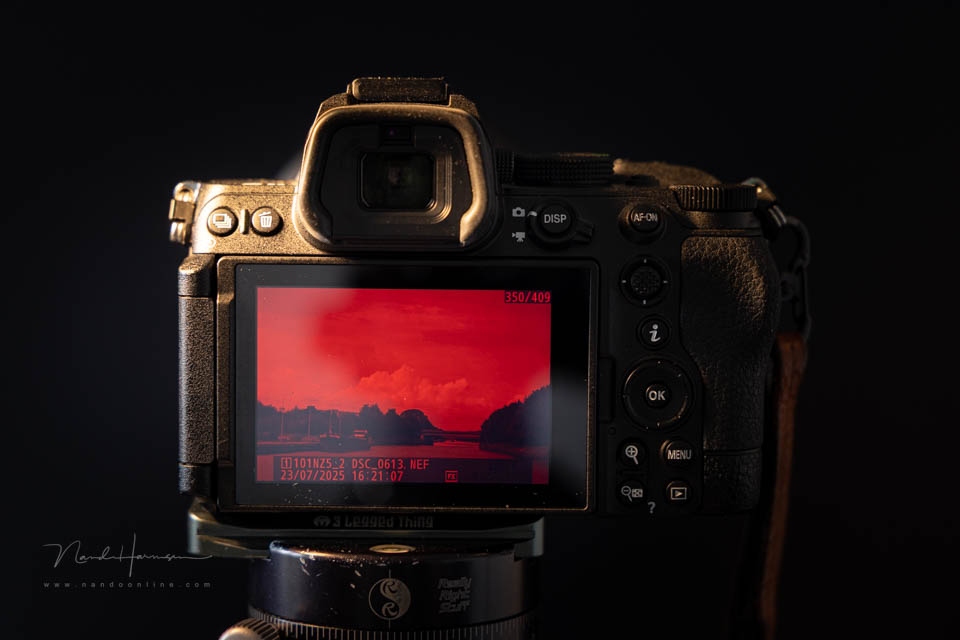
Don't use the LCD screen or the EVF either, unless your camera has a special night mode. Otherwise your night vision will be gone anyway. That red light is then completely pointless.
If you do want some light, use a very dim torch with normal light instead. If it accidentally ends up in the photograph, it can still be corrected in post-processing.
About the author
Nando Harmsen has been photographing for more than 40 years. He specialises in wedding photography and landscape photography. Nando also gives talks, workshops, masterclasses and photo trips, and regularly reviews new and interesting equipment.
You might also like
-
.jpg "Night photography on Schiermonnikoog (part 2)") Night photography on Schiermonnikoog (part 2)
Night photography on Schiermonnikoog (part 2)by Erik Nevels
-
 Night photography tip: wear a reflective vest for your safety
by Nando Harmsen
-
 Is Apple Vision the breakthrough for 3D photography?
by Elja Trum
-
 Editing photos with the Apple Vision Pro
by Elja Trum
-
 Night photography tip: consider a shoulder bag
by Nando Harmsen
-
 Groom wears Apple Vision Pro at his wedding
by Elja Trum
0 comments
Be the first to share what you think!
Have your say
Please note: Articles older than a week can only be commented on by signed-in visitors.Would you still like to comment? sign in or create a free account.
Become a better photographer every week
A practical photography tip in your inbox every week.
39,079 photography enthusiasts already receive the tips! More about the weekly mail. Or keep up to date via  Facebook.

Elja Trum
Photofacts; everything to do with photography!
Would you like to take better photos and keep up with what is happening in photography? Photofacts publishes articles that teach you something about photography — from a product announcement to a practical shooting tip or a look at a website. Photofacts covers photography every day and is a hobby project of Elja Trum's that got out of hand. The articles are written by a team of volunteer authors. If you would enjoy writing one or more articles for Photofacts, do get in touch.More about PhotofactsPhotofacts is made possible in part by
