

Night photography tip: try black and white too
Thursday 24 March 2022, 15:30 by Nando Harmsen | 4,735 views | 1 commentThis article was translated from Dutch with the help of AI. Read the original.
We are quickly impressed by all the coloured lights that push back the darkness at night. We often forget that these lights create a beautiful contrast in the dark.
Light and dark, light and shadow. These are the perfect conditions for black and white.
Let me first talk about colour casts. Although many traditional sodium lamps are being replaced by energy-efficient LED lighting, the yellow and orange lamps are still very common.
They give the photo an ugly yellow and orange colour cast that is barely, if at all, possible to remove.
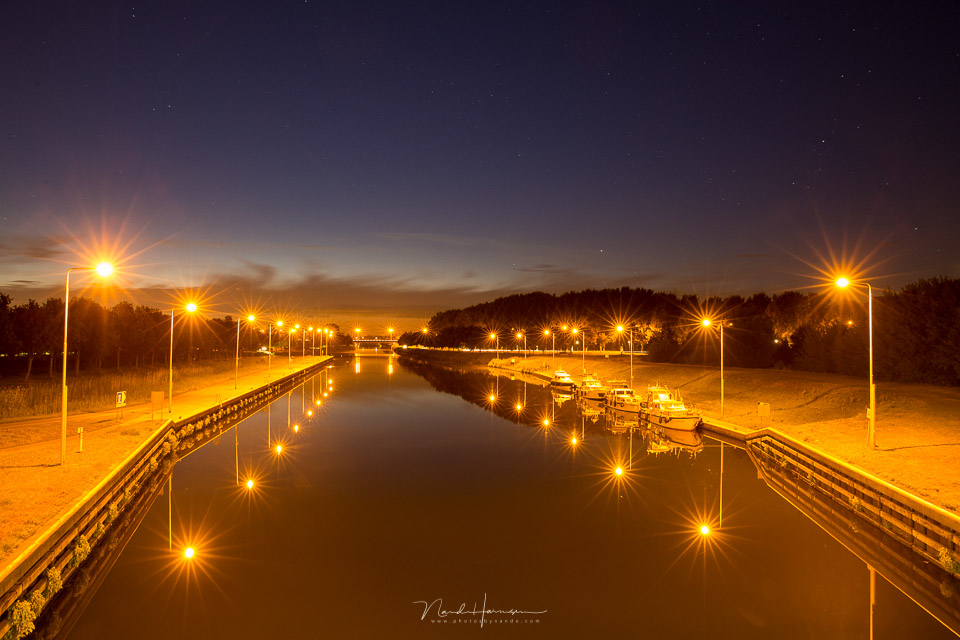
Converting the colour photo to black and white solves this problem. Suddenly the colour cast is gone, and all you have left is light and dark.
Of course, this is a lazy solution, but it simply works well. Also try to look beyond removing colour because you do not like the colour.
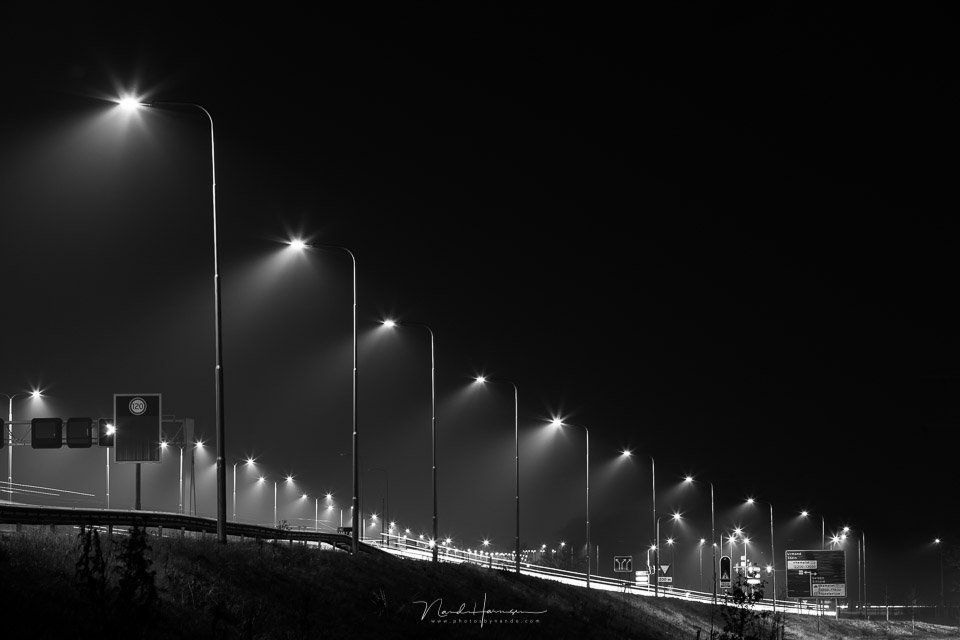
Black and white is perfect for night photography. In the dark, with all the lights, the contrast is always greater than during the day, when light is present everywhere.
In the dark, you have places where the light barely reaches, or does not reach at all. Mysterious places that can fire the viewer's imagination. What might be hiding in the darkness?
Then there is the light, which chases away the darkness in some places. What is better suited than black and white for telling an exciting story in a single photo? It is light with shadows, or rather, darkness where the light penetrates.
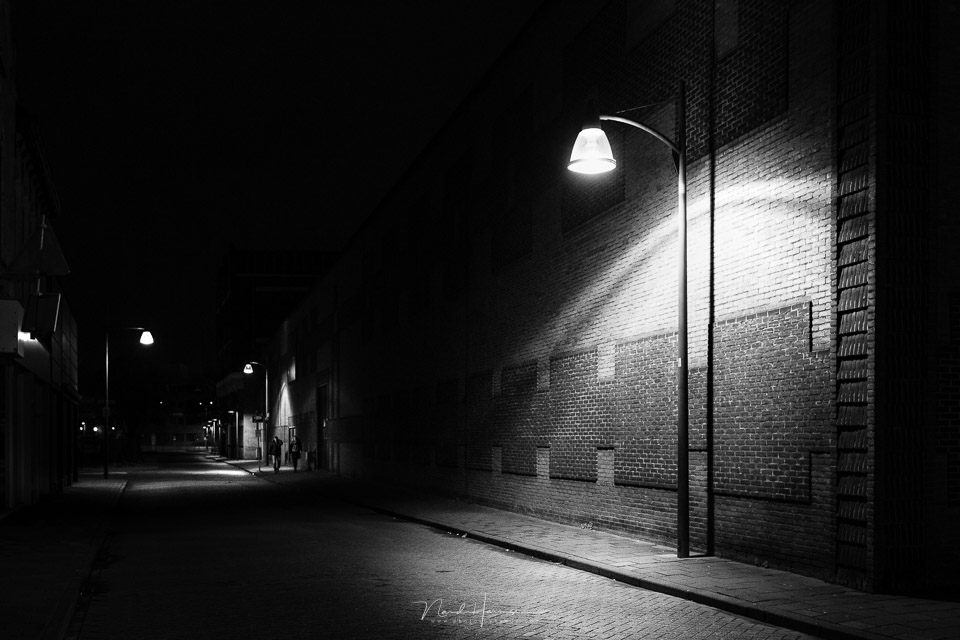
Black and white is extremely suitable for night photography, precisely because of the strong contrasts. Besides, you no longer have the distracting coloured lighting that can give the entire photo the wrong feel.
So do not be tempted by all those colours. Try thinking in black and white instead.
About the author
Nando Harmsen has been photographing for more than 40 years. He specialises in wedding photography and landscape photography. Nando also gives talks, workshops, masterclasses and photo trips, and regularly reviews new and interesting equipment.
You might also like
-
 Night photography tip: wear a reflective vest for your safety
by Nando Harmsen
-
 Night photography on Schiermonnikoog, part 1
by Erik Nevels
-
 Night photography tip: the eye is drawn to the brightest point
by Nando Harmsen
-
 Night photography tip: keep bright lights bright
by Nando Harmsen
-
 Night photography tip: choose the blue hour
by Nando Harmsen
-
 Night photography tip: Choose the right white balance
by Nando Harmsen
1 comment
-
 stanny correwyn wrote on Tuesday 29 March 2022 at 10:43 | reply
I just did a night workshop in Lier with my members after reading this article I’m going to put some in black and white at the next meeting, so definitely thanks for this tip
Translated from Dutch.
Stanny
Have your say
Please note: Articles older than a week can only be commented on by signed-in visitors.Would you still like to comment? sign in or create a free account.
Become a better photographer every week
A practical photography tip in your inbox every week.
39,024 photography enthusiasts already receive the tips! More about the weekly mail. Or keep up to date via  Facebook.

Elja Trum
Photofacts; everything to do with photography!
Would you like to take better photos and keep up with what is happening in photography? Photofacts publishes articles that teach you something about photography — from a product announcement to a practical shooting tip or a look at a website. Photofacts covers photography every day and is a hobby project of Elja Trum's that got out of hand. The articles are written by a team of volunteer authors. If you would enjoy writing one or more articles for Photofacts, do get in touch.More about PhotofactsPhotofacts is made possible in part by
