

Night photography tip: the eye is drawn to the brightest point
Friday 11 March 2022, 14:41 by Nando Harmsen | 5,056 views | 4 commentsThis article was translated from Dutch with the help of AI. Read the original.
We often think that a photograph has dark areas or shadows. But it is better to look at a photograph from the other side. A photograph has bright areas, and our eye is inevitably drawn to them. Keep this in mind in your photography, especially with night photography.
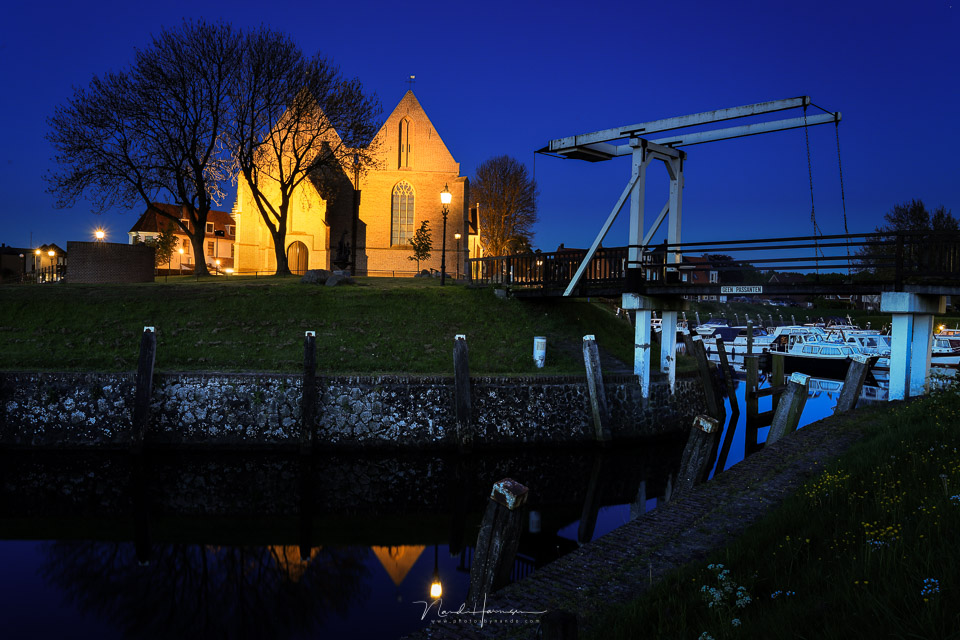
The starting point for looking at a photograph is to start with darkness and bring light into it. A portrait photographer will also build up their lighting this way when photographing in a studio.
You can use this for other types of photography too, especially night photography. The starting point for this type of photography is always darkness.
Our eye is naturally drawn to the brightest areas in a photograph. We need to use this in our photography. By keeping a bright area in the centre of the image, our eye is, as it were, caught in this dark frame. That is why vignetting works so well.
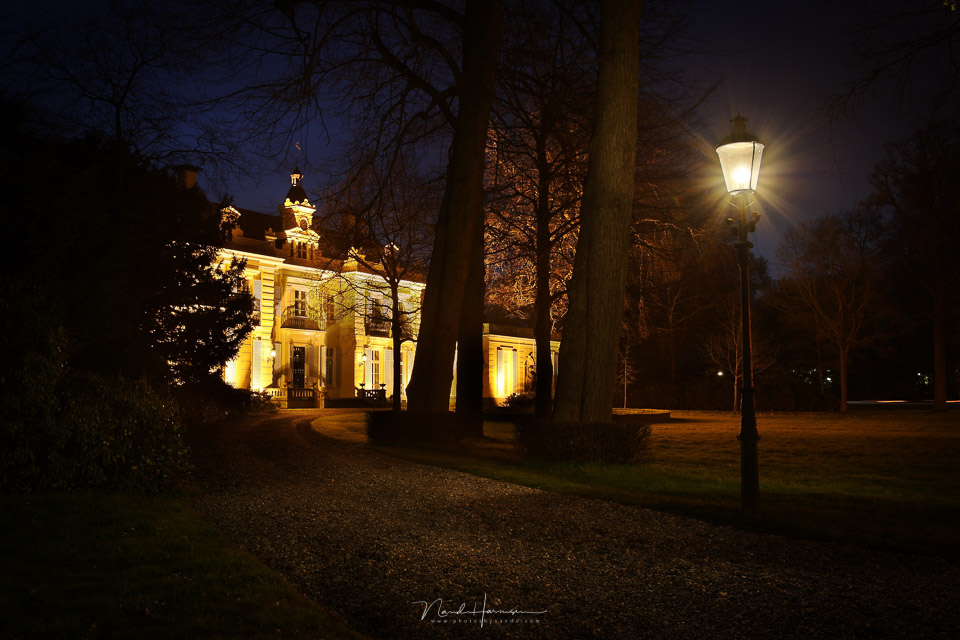
When you practise night photography, you are naturally already working in the dark. So do not try to fill an entire photograph with light. This makes you lose a point of attention. By using light in the darkness instead, you create a point of attention that draws the viewer's gaze.
Your subject does not necessarily have to be lit. It can also be a silhouette against a bright background. This is how you build tension and depth into a photograph.
Contrast is therefore of great importance. A photograph without contrast is a photograph without light and dark. It is a photograph that will have no point of attention.
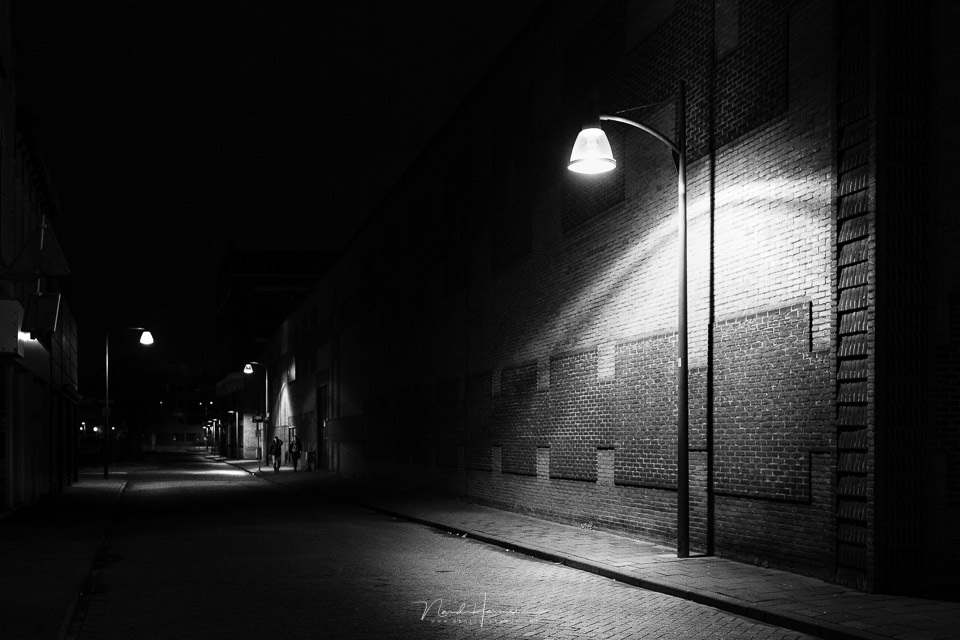
Use light and dark, and contrasts. Make sure your subject is either illuminated or against a bright background. Prevent the entire photograph from being light. This ensures that attention is drawn there. The eye is always drawn to the brightest point in the photograph.
About the author
Nando Harmsen has been photographing for more than 40 years. He specialises in wedding photography and landscape photography. Nando also gives talks, workshops, masterclasses and photo trips, and regularly reviews new and interesting equipment.
You might also like
-
 Night photography tip: try black and white too
by Nando Harmsen
-
 Night photography tip: keep bright lights bright
by Nando Harmsen
-
 Night photography tip: choose the blue hour
by Nando Harmsen
-
 Night photography tip: Choose the right white balance
by Nando Harmsen
-
 Night photography tip: wear a reflective vest for your safety
by Nando Harmsen
-
 Night photography tip: long exposure noise reduction
by Nando Harmsen
4 comments
-

 Donald Willemsen
wrote on Saturday 12 March 2022 at 22:52
| reply
Donald Willemsen
wrote on Saturday 12 March 2022 at 22:52
| reply
A great article Nando and I think you’re right with your argument. Still, I would like to say something about it. In your story you mention a number of arguments why a vignette works well. Then you’re only talking about a dark vignette. In that sense you’re right. But there is also an option for a light (white) vignette and that also works to guide the viewer’s eye. Of course, a white vignette doesn’t work in night photography. In the context of your story, I think the comparison with the vignette is flawed. A vignette is mainly used to guide the viewer’s attention towards the subject in the photo. In addition, depending on the subject, you can give a vignette any color you want.
Translated from Dutch. -
 Nando
wrote on Monday 14 March 2022 at 09:22
| reply
Nando
wrote on Monday 14 March 2022 at 09:22
| reply
@Donald Willemsen;
Translated from Dutch.
Of course it is possible to make a vignette white, or any other color. That is an "artistic" edit because you completely change the natural appearance of the photo.
But a white vignette is just like turning a photo sepia, a fad. Another color is... well.
So I don't see a white vignette or another color as a way to direct attention naturally.
It is true that a white vignette could work if you were to create a high-key image, but then the subject works as a silhouette against a light background.
The eye is drawn to the lightest part of an image. I even believe this is scientifically substantiated, although I would have to look it up to support this. -
Donald Willemsen
wrote on Monday 14 March 2022 at 14:45
| reply
@Nando, I agree with you in your response. In night photography, you often have a light part framed by dark parts, as you show in the photos in your article. This is a natural framing and not a vignette. Nowadays, you come across a vignette incredibly often in photography and it has then been added afterwards. That has nothing more to do with the natural framing you are referring to. The dark vignette that has been added afterwards is also a fad in my eyes. Just as you call sepia a fad. But I also think that a photo should convey atmosphere and that certain things are added in post-processing to emphasize the atmosphere. So a photographer uses all kinds of techniques to achieve that. You undoubtedly do that too, just like me. Because vignetting is ALSO a fad, I don't want to use it too often at every opportunity. But a natural dark framing in night photography is not vignetting.
Translated from Dutch. -
Nando
wrote on Monday 14 March 2022 at 15:20
| reply
@Donald Willemsen;
Translated from Dutch.
Vignetting is nothing more than the light falloff that takes place towards the corners of the photo. Light falloff... so that is the image becoming darker towards the corners. Vignetting, then.
Every lens has this to a greater or lesser extent. That can amount to a light falloff of no less than 3 stops.
In software, this 'lens defect' is often corrected automatically. Sometimes in the camera itself, more often in programs such as LrC, Capture One, and all the others. Adding vignetting is therefore bringing back that natural light falloff of the lens.
But a vignette is not always needed to the extreme, as you are referring to. On the contrary, a subtle addition is sufficient. For example, I think you rarely notice in my photos that it has been added.
Have your say
Please note: Articles older than a week can only be commented on by signed-in visitors.Would you still like to comment? sign in or create a free account.
Become a better photographer every week
A practical photography tip in your inbox every week.
39,024 photography enthusiasts already receive the tips! More about the weekly mail. Or keep up to date via  Facebook.

Elja Trum
Photofacts; everything to do with photography!
Would you like to take better photos and keep up with what is happening in photography? Photofacts publishes articles that teach you something about photography — from a product announcement to a practical shooting tip or a look at a website. Photofacts covers photography every day and is a hobby project of Elja Trum's that got out of hand. The articles are written by a team of volunteer authors. If you would enjoy writing one or more articles for Photofacts, do get in touch.More about PhotofactsPhotofacts is made possible in part by
