

Night photography tip: Choose the right white balance
Thursday 9 December 2021, 20:10 by Nando Harmsen | 5,237 views | 0 commentsThis article was translated from Dutch with the help of AI. Read the original.
White balance is very important for a photo. Simply choosing auto white balance for night photography is no guarantee of the right colour temperature.
Anyone who shoots in raw can always adjust it afterwards. Even so, it can be very useful to set the white balance as accurately as possible on location for night photography, even if you can adjust it afterwards.
The right white balance is important if you shoot in JPEG format. Adjusting the white balance afterwards will often lead to a loss in image quality. This is one reason why raw format is so useful. The white balance of those images can be adjusted afterwards without any penalty.
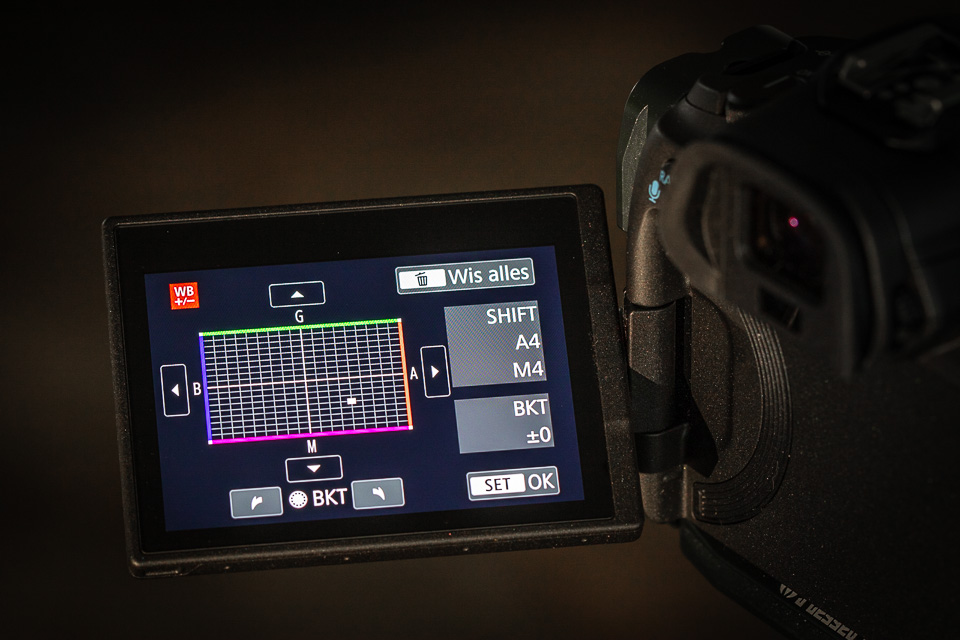
I always recommend setting a fixed white balance, especially for night photography. This ensures that all your images have a consistent colour temperature. Auto white balance will choose a different value for each photo.
For the JPEG photographer, this makes sense, but why should the raw photographer do this too? After all, they can adjust everything afterwards. The reason is simple. You can then judge the result on your screen much better after taking the photo, in terms of sharpness, exposure and composition. With an unusual colour, this is much more difficult.
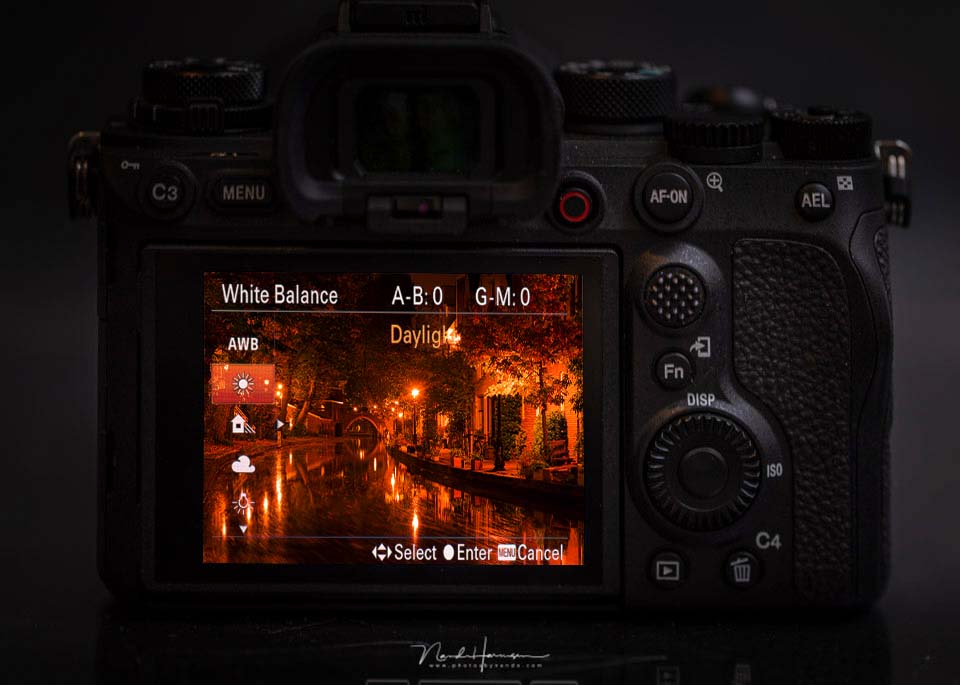
Give it a try. It will be much more pleasant to see and assess the result on the screen while you are still on location. In principle, auto white balance could work too, but then you are dependent on the camera's judgement, and that is not always correct. It will also be different for every photo.
Decide for yourself whether you like working this way. It is never compulsory, but simply a way of working. If you try it and do not like it, you can always go back to your own familiar way of setting the white balance.
About the author
Nando Harmsen has been photographing for more than 40 years. He specialises in wedding photography and landscape photography. Nando also gives talks, workshops, masterclasses and photo trips, and regularly reviews new and interesting equipment.
You might also like
-
 Choose white balance to suit your taste and create the right mood
by Nando Harmsen
-
 Night photography tip: the eye is drawn to the brightest point
by Nando Harmsen
-
 Night photography tip: keep bright lights bright
by Nando Harmsen
-
 Beware the so-called perfect white balance
by Nando Harmsen
-
 Night photography tip: try black and white too
by Nando Harmsen
-
 Night photography tip: choose the blue hour
by Nando Harmsen
0 comments
Be the first to share what you think!
Have your say
Please note: Articles older than a week can only be commented on by signed-in visitors.Would you still like to comment? sign in or create a free account.
Become a better photographer every week
A practical photography tip in your inbox every week.
39,005 photography enthusiasts already receive the tips! More about the weekly mail. Or keep up to date via  Facebook.

Elja Trum
Photofacts; everything to do with photography!
Would you like to take better photos and keep up with what is happening in photography? Photofacts publishes articles that teach you something about photography — from a product announcement to a practical shooting tip or a look at a website. Photofacts covers photography every day and is a hobby project of Elja Trum's that got out of hand. The articles are written by a team of volunteer authors. If you would enjoy writing one or more articles for Photofacts, do get in touch.More about PhotofactsPhotofacts is made possible in part by
