

The mirrorless camera and the looming lack of exposure knowledge
Monday 23 May 2022, 20:02 by Nando Harmsen | 5,595 views | 13 commentsThis article was translated from Dutch with the help of AI. Read the original.
With the arrival of the mirrorless camera, photographers gained a digital screen in the viewfinder. This simulates the exposure setting, so you can see at a glance whether the exposure is correct.
Does this convenience have a negative effect on our knowledge of photography? Or is it not too bad?
In the past, you had to know something about light, aperture, shutter speed and ISO, and the relationship between the three. If you knew too little about it, your photo would be too light or too dark.
Digital photography gave us the ability to check the result and, if necessary, correct it in the next photo.
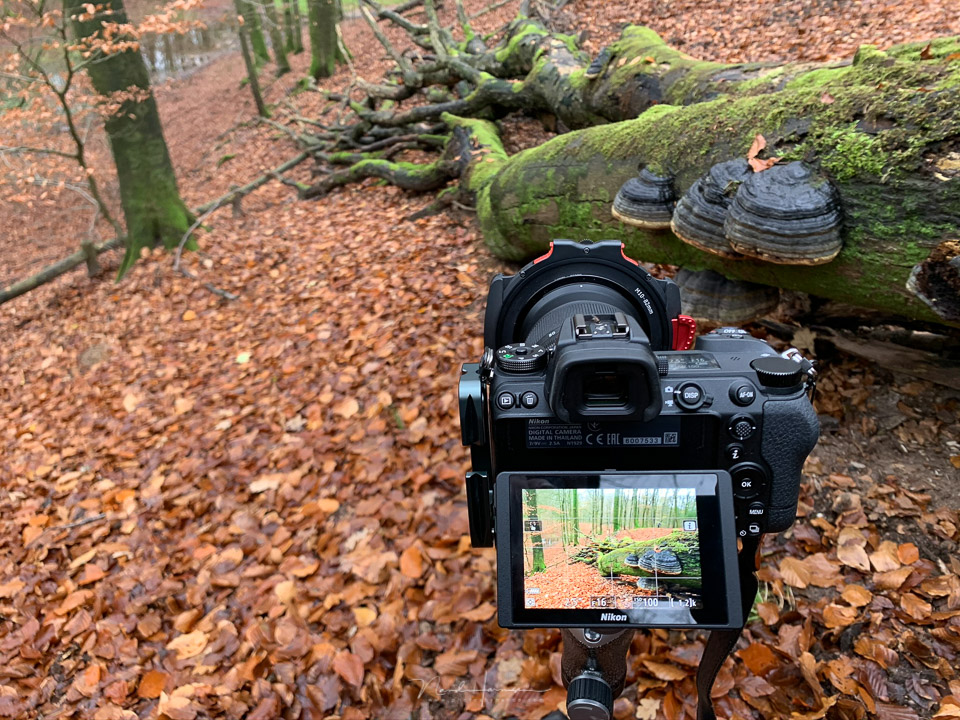
Mirrorless cameras now allow you to check the result before the photo is taken, both on the LCD screen and in the electronic viewfinder.
This is of course a fantastic feature that offers many benefits.
The recently published article about using manual exposure received several comments from readers who pointed out these benefits of mirrorless cameras. If a photo is too dark, the image in the electronic viewfinder will also be too dark. And vice versa, of course.
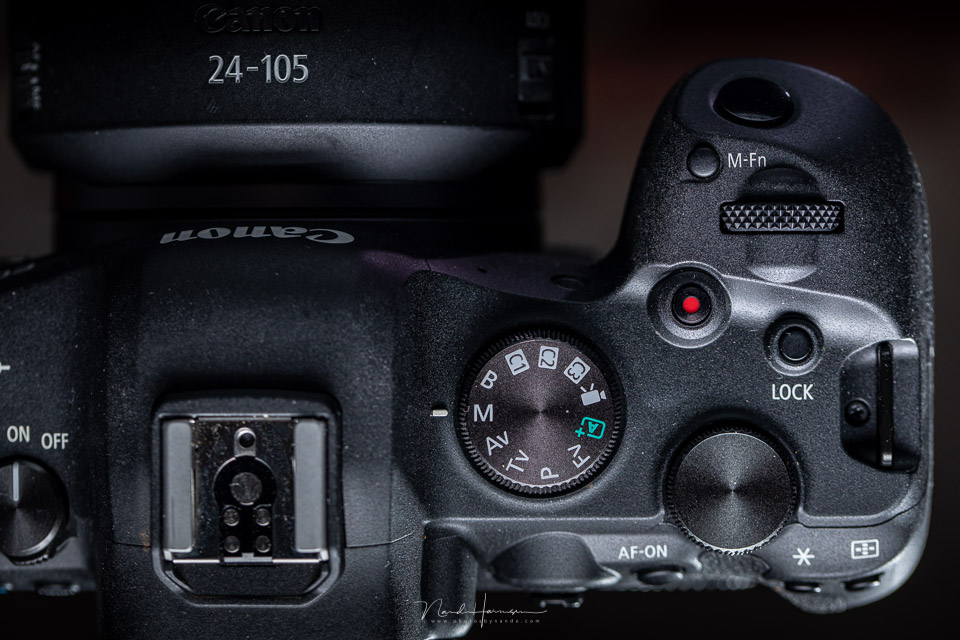
This means you can adjust the camera settings based on the result on your screen until the exposure is as you want it. In short, turn the dials for aperture, shutter speed or ISO until it is right.
Do you consciously choose one of those three settings to get the exposure right, or do you start with one of the three settings and see whether you can get it right? If that does not work, which one do you choose? Do you return the previous setting to its original value, or do you keep going until it is right?
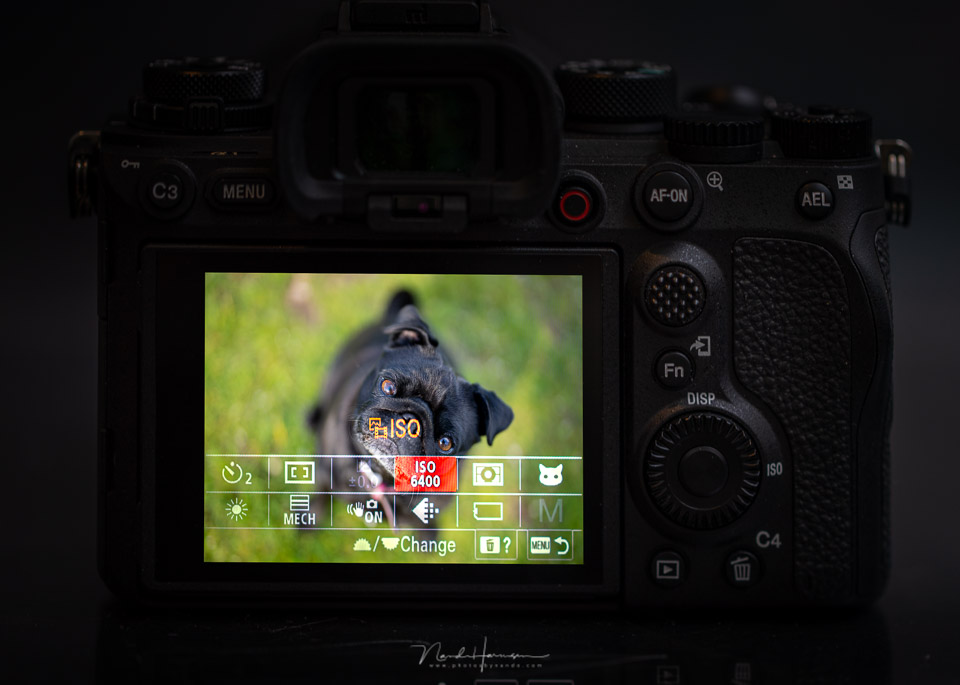
This may sound a little strange. But it is a real danger. Since the result of changing settings is immediately visible, do you still consciously choose the 'right' correction? Or is there a risk that it becomes arbitrary?
As a photographer, you of course know perfectly well that you cannot simply change one of the three exposure settings without consequences. If depth of field is important, you should leave that setting alone when correcting an exposure that is not correct.
Be careful with shutter speed, so that it does not become so slow that movement from your subject becomes visible in the image, or that you can no longer hold the camera steady.
Be careful with ISO, so that it does not become so high that noise becomes a source of annoyance.
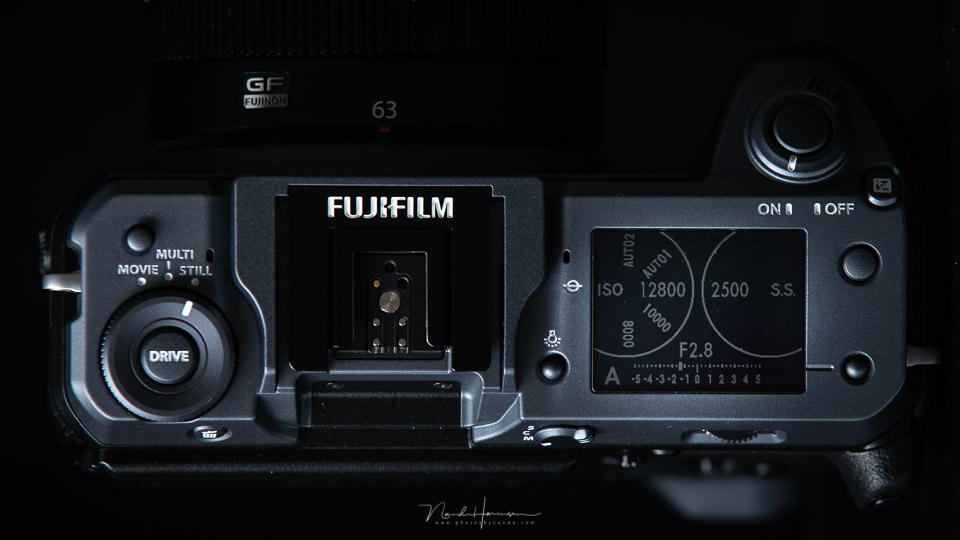
By changing exposure settings arbitrarily while only looking at the exposure of the image, you risk ending up with very illogical settings. I have seen it happen.
This can certainly happen when one correction does not produce the desired result, after which a second setting is used on top of it.
A photo of your family on the terrace in the sun with ISO 3200, an aperture of f/22 and 1/1600 of a second is simply unnecessary, even if the exposure is correct.
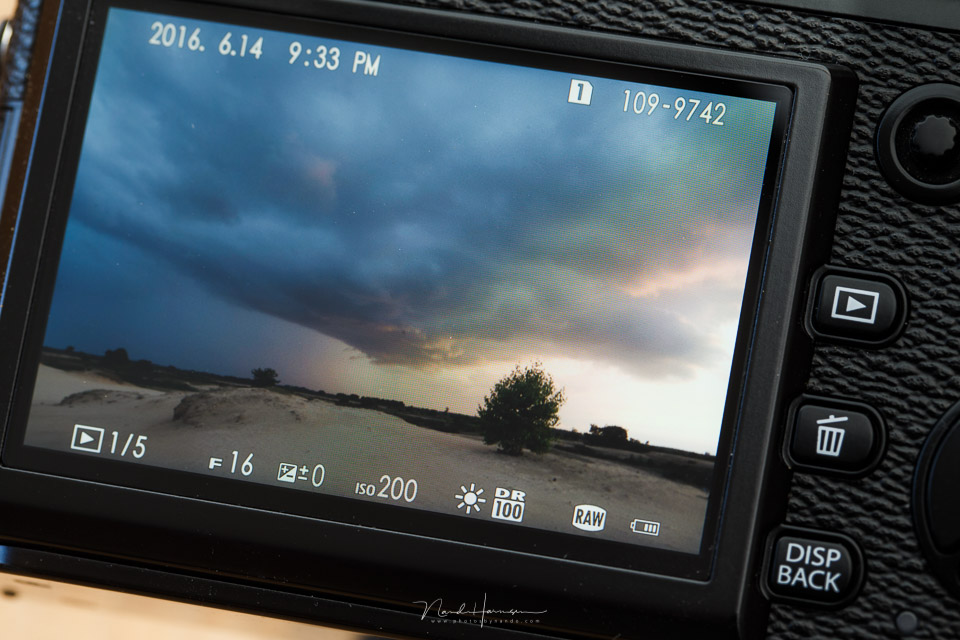
Knowledge of good exposure is therefore important, so you can make the right or best available adjustment when a photo in your electronic viewfinder is too light or too dark.
Simply turning the three dials until it is right is not the right way. However tempting that may be with mirrorless cameras.
What do you think? Do you get the idea that there are mirrorless photographers who started by randomly turning the dials until it looked right? Or do you think it is not that bad?
Let us know in a comment below this post.
About the author
Nando Harmsen has been photographing for more than 40 years. He specialises in wedding photography and landscape photography. Nando also gives talks, workshops, masterclasses and photo trips, and regularly reviews new and interesting equipment.
You might also like
-
 Six benefits of live view when photographing from a tripod
by Nando Harmsen
-
 The DSLR is dead, long live the mirrorless camera!
by Elja Trum
-
 Wildlife photography and switching to mirrorless
by Evert Doorn
-
 The battle between DSLRs and mirrorless cameras
by Michelle Peeters
-
 Review: Sony A6700 APS-C mirrorless camera
by Nando Harmsen
-
 Review: Nikon Z 6 full-frame mirrorless camera
by Michelle Peeters
13 comments
-

 Donald Willemsen
wrote on Tuesday 24 May 2022 at 10:48
| reply
Donald Willemsen
wrote on Tuesday 24 May 2022 at 10:48
| reply
If you expose as the camera indicates, you mainly get a very neutrally exposed image with flat lighting. That is often not very interesting. Many photographers, you too Nando, regularly apply ETTR. That is a correction to the exposure indicated by the camera. That is a conscious choice by the photographer. So you really do need to have knowledge of how to set your exposure on the camera. Moreover, you can also use exposure as a creative element in photography by deliberately over- or underexposing.
Translated from Dutch.
Nando, with this article you are making people think once again. A good thing. -
 RAWshooter wrote on Tuesday 24 May 2022 at 11:37 | reply
How do you become stupid if you can see what the exposure produces? SLR cameras, now those are stupid.
Translated from Dutch. -
 Ron wrote on Tuesday 24 May 2022 at 12:02 | reply
Everyone takes photos but only a few are photographers.
Translated from Dutch. -
 Rein Reijseger wrote on Tuesday 24 May 2022 at 12:31 | reply
It is actually a wonderful tool. Especially for people who have difficulty (in theoretical examples) understanding the interaction between shutter speed, aperture and ISO. In practice you constantly see what you are doing.
Translated from Dutch. -
 Liesbeth Verkade wrote on Tuesday 24 May 2022 at 12:52
| reply
Liesbeth Verkade wrote on Tuesday 24 May 2022 at 12:52
| reply
Question for RAWshooter: what's dumb about a DSLR?
Translated from Dutch. -
 Hans Smits wrote on Tuesday 24 May 2022 at 13:13 | reply
We control exposure through Shutter Speed and/or Aperture and/or ISO. Whether we let the camera do this or do it ourselves doesn't matter AS LONG AS everyone is aware that Shutter Speed, Aperture and ISO each have an impact on a second factor. Shutter Speed affects the sharpness of a moving subject. Aperture affects depth of field and ISO affects the amount of noise. I personally first explain the side effect and then that you can also influence your exposure with it. As long as one keeps that in mind, it doesn't matter whether the exposure is automatic or not.
Translated from Dutch. -
 Ben Fienieg wrote on Tuesday 24 May 2022 at 13:16 | reply
Nando, I think that for anyone who is seriously involved in photography, it makes no difference whether they work with a camera with a mirror or a camera without a mirror. These people will know the camera well, know the exposure triangle well and know how to determine their creativity using this knowledge.
Translated from Dutch.
The article will hopefully motivate people to pay more attention to a well-exposed and technically well-executed photo. Also perhaps to give the people who photograph completely on auto extra motivation to fully make use of the fantastic possibilities of today's cameras with or without a mirror. -
 Van Camp wrote on Tuesday 24 May 2022 at 13:33 | reply
You are right you first have to know what you are photographing , set your camera with the aim conscious setting then adjust the rest according to the proper exposure triangle , after that you can still choose for leather or binder light according to cold choices
Translated from Dutch. -
 Gert wrote on Tuesday 24 May 2022 at 13:58 | reply
And if the brightness of your display is set too high, the result is that the image that looked good before taking the shot nevertheless turns out to be much too dark when you look at it afterwards.
Translated from Dutch.
Nothing beats a well-exposed histogram. -
Ben Fienieg wrote on Tuesday 24 May 2022 at 14:28 | reply
Gert is absolutely right about that.
Translated from Dutch. -
 Marijke wrote on Tuesday 24 May 2022 at 15:02
| reply
Marijke wrote on Tuesday 24 May 2022 at 15:02
| reply
Take 50 photos of different kinds of scenes, turning the knobs until the image looks reasonably good to you. Stick the 50 photos in an album and write the EXIF data next to them. Then you will immediately see how illogically you worked, and how you can achieve qualitatively better results.
Translated from Dutch. -
 Lauran wrote on Tuesday 24 May 2022 at 17:06 | reply
Photography is a profession. Nowadays everyone calls themselves a photographer. For a profession you need training, and only then do you start learning it. Most of it can therefore be dismissed as pulp. The profession should be protected.
Translated from Dutch. -
 Stefanie wrote on Wednesday 25 May 2022 at 15:06 | reply
With all these kinds of tools, you (almost) no longer need any professional knowledge and the 'profession' of photography is increasingly becoming less of a 'profession'. You distinguish yourself less and less through skills, fortunately nothing has yet been invented that can replace the photographer's 'eye'
Translated from Dutch.
Have your say
Please note: Articles older than a week can only be commented on by signed-in visitors.Would you still like to comment? sign in or create a free account.
Become a better photographer every week
A practical photography tip in your inbox every week.
39,023 photography enthusiasts already receive the tips! More about the weekly mail. Or keep up to date via  Facebook.

Elja Trum
Photofacts; everything to do with photography!
Would you like to take better photos and keep up with what is happening in photography? Photofacts publishes articles that teach you something about photography — from a product announcement to a practical shooting tip or a look at a website. Photofacts covers photography every day and is a hobby project of Elja Trum's that got out of hand. The articles are written by a team of volunteer authors. If you would enjoy writing one or more articles for Photofacts, do get in touch.More about PhotofactsPhotofacts is made possible in part by
