

The battle between DSLRs and mirrorless cameras
Monday 11 May 2020, 20:02 by Michelle Peeters | 181,290 views | 128 commentsThis article was translated from Dutch with the help of AI. Read the original.
In the camera market, the traditional brands seemed to have had their day. All the attention went to Sony, which focused fully on mirrorless cameras. But Canon and Nikon are catching up! The expensive segment seems to be all that remains of the camera market.
The iconic Japanese brand Nikon has enjoyed a reputation as a builder of robust and innovative cameras since 1917. Indispensable equipment for brave war reporters, for example.
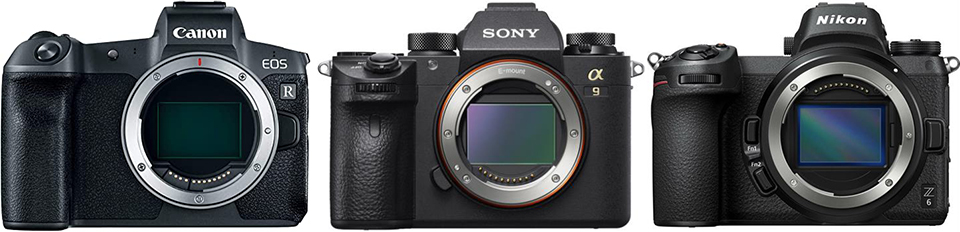
Ranking: Canon, Sony, Nikon
But recently, all the attention has gone to Sony, a brand that had no role in the serious camera market five years ago. Three years ago, they set aside no less than 9 billion dollars to become the number one camera brand in 2021.
They have already achieved that in the full-frame, more expensive camera segment. Across the entire market, the ranking is now: Canon, Sony, Nikon.
The compact camera market has shrunk by more than three quarters in ten years because mobile phones keep offering better camera performance. And you always have a mobile phone with you. This caused compact cameras to almost disappear from the market.
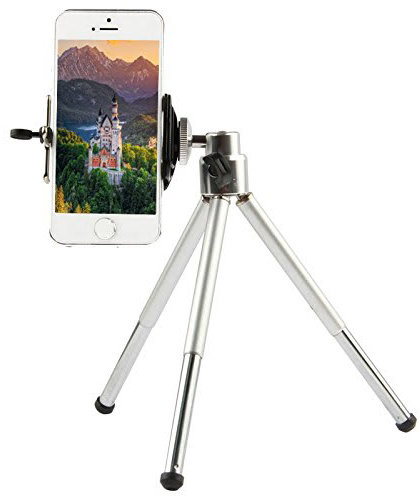
Only more expensive cameras are still in demand
It is expected that only more expensive cameras, often full-frame cameras with a large sensor, costing more than 2,000 euros will still be wanted and easy to sell. The market for these types of cameras has grown enormously. But time will of course tell...
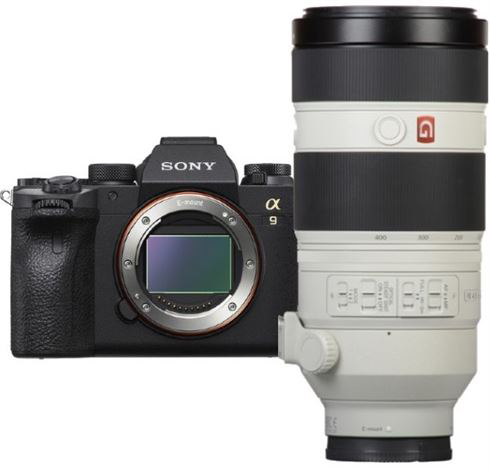
These types of cameras are more sensitive to light, for evenings, focus much faster, have more resolution and zoom range, you can attach a substantial 600mm zoom lens to one. The expectation is that eventually only high-end cameras will remain.
Renowned press and wildlife photographers are tempted by camera manufacturers to try their equipment and eventually invest in it.
Getting them to make the switch is often quite a job, because they are usually loyal to their own camera brand and do not feel like spending a fortune on equipment they have to learn to use all over again. Yet the headhunters do manage to tie top photographers to a particular camera brand, allowing them to call themselves brand ambassadors.
Brand ambassadors
A select group of top photographers are then given the latest equipment on loan, while the rest often receive a discount. The idea is that hobby photographers will then follow naturally.
Sony is particularly active in this area, although Canon and Nikon do it too, of course. Huub Keulers, for example, has already been approached and was allowed to work with a Sony A9.
You also regularly see Albert Dros in articles where he takes beautiful volcano photographs in Guatemala with the Milky Way as a backdrop using a Sony A7RII. The compact, lightweight package of camera equipment is of course a huge advantage on such a climb.
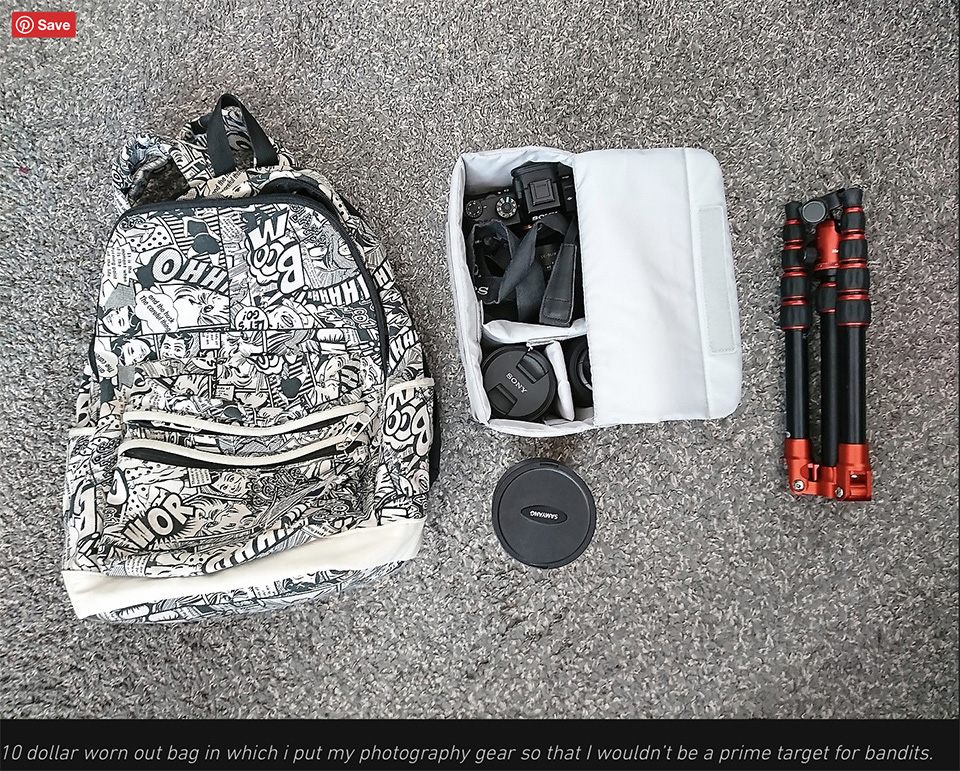
The switch costs photographers a lot of money, but apparently it often works out very well, despite the months needed to get used to the equipment. Sony does make sure of this, paying close attention and listening to suggestions. Suggestions for improvements then appear very quickly in a software update.
Sony can do this because it has a large marketing budget. In addition, it produces 70% of the phone sensors. Nikon also buys its sensors from Sony. Sony keeps new sensors for itself for a year first, so it is always one generation ahead.
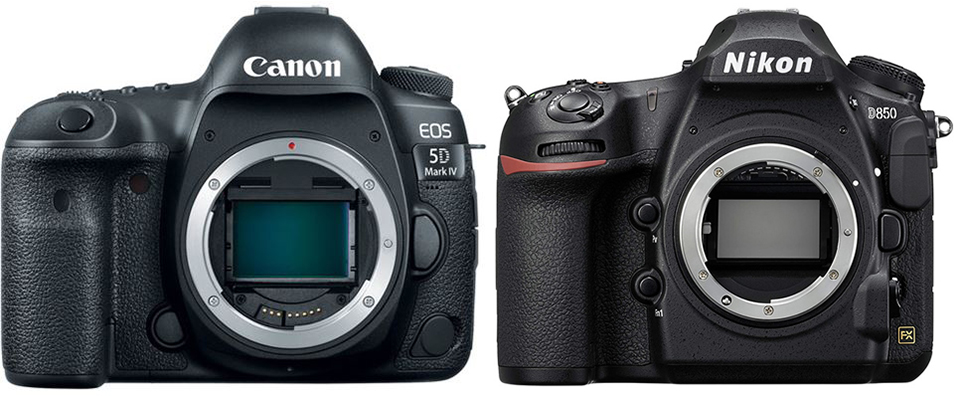
Nikon and Canon are suffering from the law of the handicap of a head start. They do not want to cannibalise their classic top models, such as the Canon 5D and the Nikon D850, which still use a flip-up mirror. Sony stopped investing in DSLRs a long time ago. It is only building its more modern mirrorless cameras.
Advantages of a mirrorless camera
The advantage of a mirrorless camera over a DSLR is that it is smaller and lighter. It also becomes outdated less quickly because software updates happen very quickly, especially for focusing.
Because the mirror does not have to flip up for every photograph you take, many more images per second can be captured in burst mode.
Whether the camera can actually do this also depends on the speed of the processors inside it, as well as the design and size of the image sensor. There are also fewer vibrations in the camera because there is no mirror.
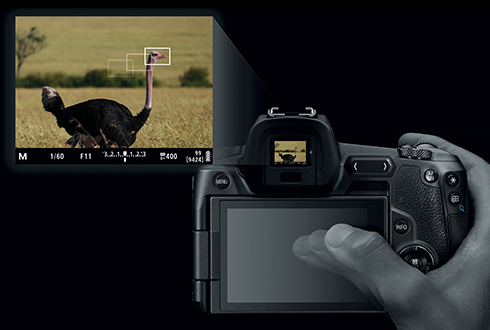
With a mirrorless camera, the autofocus and metering take place directly through the sensor. A DSLR focuses through a separate sensor that also takes in some of the light. This is always more accurate than using a mirror and prism. Micro-adjustment of the autofocus is therefore no longer needed!
Algorithms and artificial intelligence also make focus tracking possible through the software. This includes face detection and eye detection, that sort of thing, because focus tracking has also been a familiar concept in DSLRs for some time.
Through its built-in artificial intelligence, the camera recognises your subject and keeps it in focus, even if it flies in every direction. The latest camera models focus even more precisely on the eyes of people and animals. According to experts, the Sony A9-II is leading the way here.
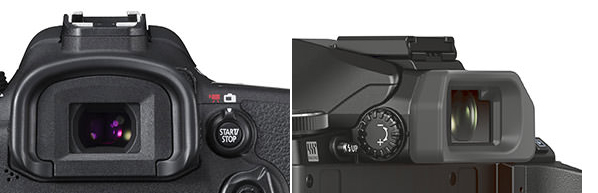
One advantage of a DSLR, however, is the optical viewfinder, the glass window you look through as a photographer.
A mirrorless camera has an electronic viewfinder that displays the world with a very small delay, from 0.005 to 0.11 seconds depending on the type of camera. This could be crucial for a sports photographer, for example.
With newer technology, however, this delay is becoming smaller and smaller, so the latest mirrorless cameras already look almost as if they have an optical viewfinder. It often remains visible with fast-moving subjects, though.
What you see is what you get when you look through the electronic viewfinder of a mirrorless camera. On top of that, you get a live histogram. An electronic viewfinder does use a lot of battery power, though, so the DSLR has the advantage here.
You therefore need to look at the light meter less often, or take a test shot to view the histogram. You also have highlight clipping directly in view, which is a major advantage of a mirrorless camera.
The AF assist light, which is also present on many DSLRs, helps enormously when focusing in the dark. If the subject is too far away, more than 4 metres, these assist lights no longer help either.
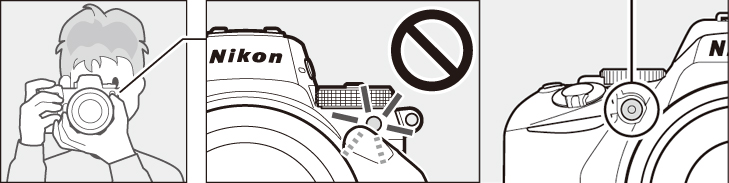
There can also be modes in which the AF assist light does not work at all. The camera's AF assist light only works with One Shot and AI Focus AF, for example, but not with AI Servo AF.
On some DSLRs, such an AF assist light only works by temporarily activating the built-in flash, if present, or by being emitted by an optional, special Speedlite.
Quite apart from the minimal amount of light, the subject must of course also have enough contrast. Almost every camera has difficulty focusing on an evenly coloured wall.
Sony raises its level of knowledge
Sony has invested heavily in training to raise the level of knowledge within the company. It has understood that a photographer wants to create things themselves and does not want to remain passive. So you need to understand what a photographer needs and be able to discuss this with retailers.
The Olympic Games, which unfortunately are not taking place this year because of the coronavirus crisis, have always been the event where the most demanding professional photographers gathered. They were always a benchmark for camera giants Nikon and Canon. Canon launched the EOS 1D X mark III especially for this, and Nikon the D6.
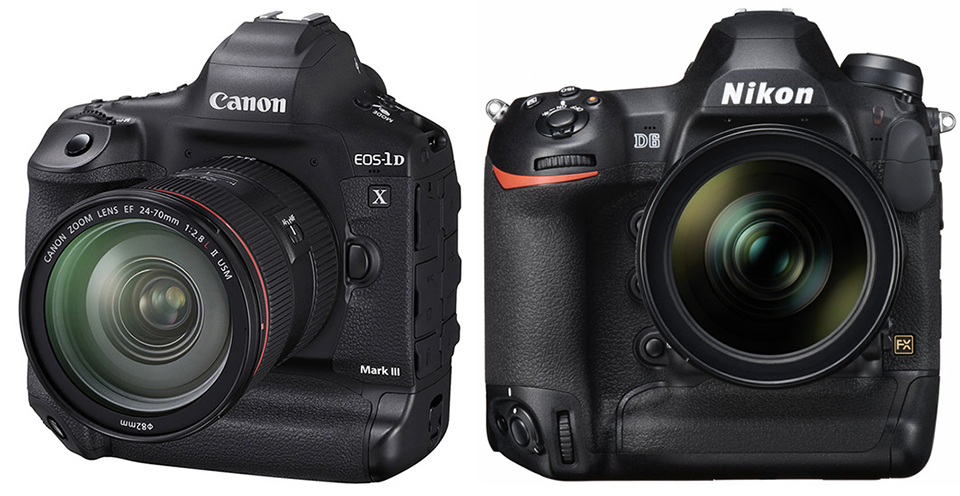
Cameras with hybrid technology, which still contain a mirror but also use mirrorless camera technology. But not many photographers will have almost 8,000 euros to spend on such a hybrid camera.
Nikon and Canon strike back
The expectation is still that mirrorless cameras will eventually beat DSLRs. However, this will be in the full-frame, more expensive camera segment, from 2,000 euros upwards.
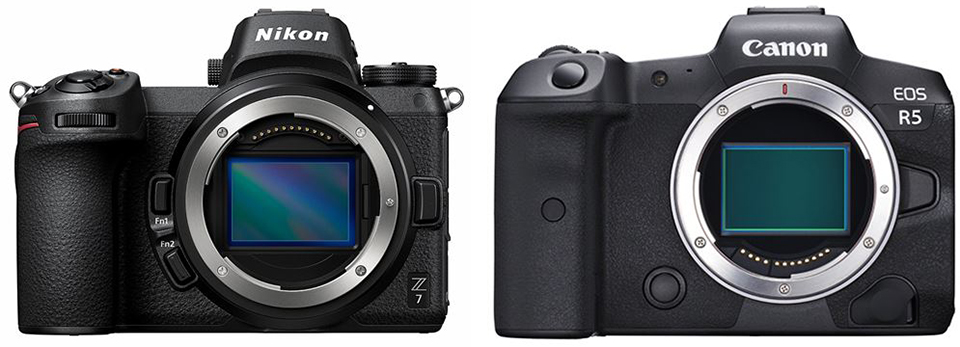
Nikon has, albeit somewhat late and with focus tracking still lagging behind a little, launched the Z 6 and Z 7 mirrorless cameras, which can compete with Sony. Canon has also received praise for its EOS R mirrorless camera, with its new EOS R5 set to make the impossible possible.
So it will certainly remain exciting! And it is certainly not a given that other camera brands, the Fuji T-system is promising, for example, will not catch up as well. The future will tell!
Are you already planning to switch to a different brand or mirrorless camera? Why are you making that choice? Let us know in the comments!
About the author
Michelle Peeters is fotografe en oprichter van DeuxBleus Fotografie. Michelle herkent het bijzondere in het gewone en het gewone in het bijzondere. Ze heeft zich nooit willen specialiseren en is daardoor van alle markten thuis.
You might also like
-
 Is a DSLR still a good choice in 2026?
by Nando Harmsen
-
 Choose DSLR lenses for your mirrorless camera
by Nando Harmsen
-
 Is Nikon stopping making DSLRs?
by Elja Trum
-
 DSLR lenses are still perfect
by Nando Harmsen
-
 6 Reasons to Stick with a DSLR and One Reason Not To
by Nando Harmsen
-
 Wildlife photography and switching to mirrorless
by Evert Doorn
128 comments
-
 roelof wrote on Monday 11 May 2020 at 18:28 | reply
ik vind de grootte van de camera toch wel bepalend in mijn keuze en overweeg terug te gaan naar Canon dit ivm bedieningsgemak daar komt bij dat ik de lenzen van sony erg duur vind ben benieuwd hoe de reacties van anderen zijn
This comment was written in another language and has not been translated yet. -

 Michelle Peeters wrote on Monday 11 May 2020 at 23:35
| reply
Michelle Peeters wrote on Monday 11 May 2020 at 23:35
| reply
@Roelof: welke Sony heb je? En met welke objectieven?
This comment was written in another language and has not been translated yet. -
 mac wrote on Tuesday 12 May 2020 at 08:37 | reply
1 nadeel van system cameras is, ze moeten altijd aan staan wil je iets zien (dus meer stroom verbruik).
This comment was written in another language and has not been translated yet.
een spiegelreflex kan gewoon uitstaan als je een compositie wilt maken. Zeker als je dieren fotografeert in schuilhut is het makkelijk. Kan je gewoon beetje jijken en wachten, en pas aanzetten als je denkt dat het moment nadert. -
 Metin
wrote on Tuesday 12 May 2020 at 08:47
| reply
Metin
wrote on Tuesday 12 May 2020 at 08:47
| reply
Ik ben bijna 20 jaar geleden voor de Canon gekozen, omdat ik toen de Nikon niet zo gebruiksvriendelijk vond. 4 jaar geleden een Sony in mijn handen gehad, kreeg dezelfde ervaring door o.a. de menustructuur. Puur door de gebruiksvriendelijkheid wil ik misschien voor de Canon R5 kiezen. Mits die goed in mijn handen past. Mijn vinger bleef haken tussen lens en body bij de Canon R, ik heb dikkevingers...
This comment was written in another language and has not been translated yet.
Op dit moment gebruik ik nog steeds een Canon 5D MKII en ben nog steeds een tevreden gebruiker. -
Roelof wrote on Tuesday 12 May 2020 at 10:14 | reply
Ik heb een a7iii met een 24-105 lens
This comment was written in another language and has not been translated yet. -
Michelle Peeters wrote on Tuesday 12 May 2020 at 10:46
| reply
@Roelof: as a Canon user myself, I’m really curious about the user-friendliness of Sony!
Translated from Dutch.
@Mac: the battery consumption of a mirrorless camera is indeed quite a bit higher, and that’s mainly because of that electronic viewfinder indeed. But I do find that WYSIWYG very pleasant. I immediately miss it now that I’m working with a DSLR again!
@Metin: does everything on Sony work through the menu structure instead of mainly through buttons like with Canon? I really should try working with the Sony sometime, I am curious... -
 Marcel Krijgsman wrote on Tuesday 12 May 2020 at 10:52 | reply
I work with two DSLRs (Canon 1Dx MII) and a Fuji X-T2. I have the Canons primarily for my concert/festival/event work, but still also for portraits for magazines. Speed, sitting firmly in the hand and the whole arsenal of lenses are decisive for me in that regard.
Translated from Dutch.
The Fuji can I use mainly for reportage on location when I don't want to stand out. Especially now that events/concerts/festivals are on hold and I work more on the streets, the Fuji is a godsend. -
 Chris wrote on Tuesday 12 May 2020 at 10:54 | reply
Lugging around my Canon became a bit too much for me. After using a Fujifilm camera for 1 month, I sold all my Canon gear. I haven't regretted it for a single day.
Translated from Dutch. -
 Robert Huygens wrote on Tuesday 12 May 2020 at 11:02 | reply
One important player in this market segment has been forgotten here, namely Fuji. They do have a camera in their lineup that solves the problem for wildlife photographers in hides, namely a camera with a hybrid viewfinder.
Translated from Dutch. -
Rawshootert wrote on Tuesday 12 May 2020 at 11:11 | reply
Is that a serious complaint? That a DSLR has the advantage that you can leave it switched off to make a composition? To save power or something?
Translated from Dutch.
It seems like the most far-fetched fallacy ever. -
 Frank Van de Vloet wrote on Tuesday 12 May 2020 at 11:26 | reply
I myself am completely convinced by my Nikon Z7. However, I do miss Fuji in this article. In the somewhat longer term, I think they have made a very strong strategic move by skipping the 'bloodbath' in the full-frame segment.
Translated from Dutch.
On the one hand, they offer a more compact solution around impressive cropped sensor technology, with an extensive range of high-performance lenses.
On the other hand, they are opening up the medium format segment with a very affordable camera. -
guest wrote on Tuesday 12 May 2020 at 11:40 | reply
Still somewhat strange that Fuji isn't mentioned at all...
Translated from Dutch.
I made the switch myself a few years ago from Nikon (D800) to Fuji X-T2. Equal in quality, but unsurpassed when it comes to ease of use and handling! -
Michelle Peeters wrote on Tuesday 12 May 2020 at 11:46
| reply
The Fuji T system indeed comes out very well in the tests! Strange indeed that they are not considered one of the ‘main players’. I’ll try to find out why that is!
Translated from Dutch. -
 Johan Vanhauwaert wrote on Tuesday 12 May 2020 at 11:50 | reply
I chose a Nikon DSLR and now have a number of very good lenses and accessories. I'm not giving those up now for a system camera that in turn requires a separate range of specialist lenses and accessories.
Translated from Dutch. -
 Ine wrote on Tuesday 12 May 2020 at 12:09 | reply
I'm switching from Canon 5D3 to Fujifilm X-T4 because of the stabilization in the camera body.
Translated from Dutch. -
 Jos Joosten wrote on Tuesday 12 May 2020 at 12:13 | reply
Also find it strange that Fuji isn't mentioned, currently have the Xt4 a hell of a and camera and Fuji also has super good lenses .
Translated from Dutch. -
guest wrote on Tuesday 12 May 2020 at 12:22 | reply
@Michelle; Unfortunately, I can no longer remember that....
Translated from Dutch.
I found the buttons and the settings of the menu to be in inconvenient/illogical places at the time. Later the Sony A9 came out, in the photos the new menu looked more like Canon's. So more user-friendly for me. But what the buttons are like now... I don't know. For now, I'll stick with Canon out of laziness.
The Sony cameras are technically in good order (apart from the battery capacity at the time), if the user-friendliness had also been fine for me back then, I might have switched as well. -
 Ronny wrote on Tuesday 12 May 2020 at 12:24 | reply
why isn't fujifilm mentioned? Nevertheless a formidable competitor to sony (albeit not fulframe) fuji's prices are humane and there is a wide range of lenses.
Translated from Dutch. -
 peter wrote on Tuesday 12 May 2020 at 12:36 | reply
I find it very strange that Fuji is not mentioned in your article, but I find it even stranger that you have to ask how this comes about.
Translated from Dutch.
I assume that you wrote the article yourself and did the research yourself. To now completely ignore Fuji and moreover 'look into' how this comes about suddenly gives me a lot less confidence in your articles. -
 Wim Hendriks wrote on Tuesday 12 May 2020 at 12:40 | reply
What quite a lot of photographers forget is that technology does not stand still and that is only a good thing, ultimately it is the image you have in mind that is decisive.
Translated from Dutch. -
 Leo wrote on Tuesday 12 May 2020 at 12:49 | reply
Unfortunately, not a word about Fuji. They still choose the aps-c format (and mid-frame, but that is too exotic for most people). Fuji makes fast, solid, relatively small (lightweight) and relatively reasonably priced mirrorless cameras (since the introduction of the X-T4 also with in-body stabilization) and excellent matching lenses. Wildlife photographers are happy with the aps-c format because of the crop factor. Firmware updates are regularly released that keep the camera up to date. I switched from a Canon 7d to the Fuji X-T3 two years ago and have not regretted it for a moment.
Translated from Dutch. -
Michelle Peeters wrote on Tuesday 12 May 2020 at 12:53
| reply
Maybe it is indeed because of that APS-C sensor that Fuji has remained so much in the background.
Translated from Dutch. -
 Wim wrote on Tuesday 12 May 2020 at 13:11 | reply
In analog photography I always worked with a canon SLR.
Translated from Dutch.
Later switched to digital photography .
I have already had various cameras from Panasonic and now own a Panasonic S1 with the 24-105 mm
This is a great camera for me because by using the accompanying kit lens you can do many kinds of photography.
also for filming this is an excellent camera. -
 Hans van Sterkenburg wrote on Tuesday 12 May 2020 at 13:18 | reply
It is very much alive. The system camera will therefore certainly be sold more than the DSLR. It also ‘sounds’ simpler. And the system certainly has advantages, just as it has disadvantages. My camera is a Canon; the 5DM3, which I might trade in one more time. For the 5DM5, if it ever comes out. What I also sometimes hear being said is that Canon is used more by men and Nikon more by women. That may well also happen with Sony/Fuji. As a craftsman, I prefer professional tools. That is also the case when photographing. I do need to have something ‘in my hand’.
Translated from Dutch. -
 Arjen wrote on Tuesday 12 May 2020 at 13:19 | reply
Luckily, there are many who are already pointing to the cameras in Fujifilm's X-T series, especially the XT-4 makes me think about switching from Canon. I have also had Sony, but the user-friendliness was too much getting used to for me.
Translated from Dutch. -
 Frans wrote on Tuesday 12 May 2020 at 13:19 | reply
Nice promo story for system cameras, and then the more expensive ones at that.
Translated from Dutch.
I therefore also think the headline of the article is absolutely wrong.
You hear this in the shops too, but when you ask for sales figures, they don't know. Makes sense, the more expensive ones bring in much more profit.
It turns out, however, that by far most people who go for a system camera buy one under €1000. So says a local friend who works at a camera shop.
Another personal downside, I think, is that you're looking at an electronic screen. It has also been proven that this is more tiring than an optical view. And with the cheaper models also clearly slower. -

-
 Henk Hulshof
wrote on Tuesday 12 May 2020 at 13:21
| reply
Henk Hulshof
wrote on Tuesday 12 May 2020 at 13:21
| reply
nice article Michelle!
Translated from Dutch. -
 ben Scherpenzeel wrote on Tuesday 12 May 2020 at 13:21 | reply
I find the electronic image of a mirrorless camera very restless. The size of the camera is important to me for a comfortable grip.
Translated from Dutch.
Currently I have a D500 and a Sony RX compact. -
Michelle Peeters wrote on Tuesday 12 May 2020 at 13:50
| reply
The sales rankings of somewhat cheaper mirrorless cameras also look a bit different if you look at dpreview, for example. The Fuji does indeed show up there!
Translated from Dutch. -
 PixelDude wrote on Tuesday 12 May 2020 at 13:50 | reply
I am glad that Jeannette mentions Olympus first, the inventor of the system camera and more recently the introducer of micro 4/3. Olympus also has the best-performing stabilizers on the market. I own 2 E-M1s which I am very satisfied with (what a saving in weight, size and price, especially with the lenses). A few months ago I bought an E-M1X which is designated as top 5 in many reviews. A top camera for top sports photographers, travel, nature and landscape photographers. And printing photos with the now high-quality crop 2 sensors, it is impossible to see a quality difference up to A3 plus prints (I cannot print larger myself). And then to think that the vast majority of hobbyists present photos exclusively via the internet where you cannot even see a quality distinction with a good Smart- or iPhone ... Buying a Formula 2 to drive it around in the garden ... mind-boggling.
Translated from Dutch. -
 marleen wrote on Tuesday 12 May 2020 at 14:15 | reply
I have a Canon 5D mark 4, but am considering switching to a Sony RX10 V. In addition to the real time Eye AF, this one will now also have real time tracking.
Translated from Dutch.
Possible zoom up to 600mm, without a tripod! tempting.
We like to travel and go hiking and the Canon becomes much too heavy.
I have been photographing with Canon for 40 years. and I am still doubting whether to make the switch while waiting for the new Sony to come out. -
 Peter van Dinther wrote on Tuesday 12 May 2020 at 14:21 | reply
I switched from Canon to Sony years ago. I now have the A7r3, couldn't be better. Over time you get used to the menu structure. Lenses aren't cheap, but then you do have top class with the GMs
Translated from Dutch. -
 Ghis Jannis wrote on Tuesday 12 May 2020 at 14:23 | reply
I almost fell off my chair too because I couldn't find anything about Olympus anywhere. I own an E-MI MarkII and an Olympus PEN. The PEN is slightly less weather-resistant than the E-M models but great to work with as a woman and in terms of capabilities it is hardly inferior to the E-M series. We weren't all born with strong sturdy men's hands after all. As women, we also have to find our way in this and choose what our own body can handle.
Translated from Dutch. -
 Nicolette Verdugt wrote on Tuesday 12 May 2020 at 14:26 | reply
I bought a Canon EOS RP last year alongside my 7D Mk2. I really like the RP, but it is too slow for e.g. wildlife photography. But it is especially ideal for macro photography, among other things because of the focus stacking. Looking forward to the R5 with anticipation and yes, then the 7D will go.
Translated from Dutch. -
guest wrote on Tuesday 12 May 2020 at 14:48 | reply
Why do you always talk about Nikon Canon and Sony,
Translated from Dutch.
and Olympus is never mentioned. although I have been a user of the lightest camera on the market for more than 2 years, namely: Olympus E-M5II
kind regards.
Martin -
 Gert-Jan wrote on Tuesday 12 May 2020 at 15:05 | reply
Another Olympus fan here. I used to photograph with Nikon and Canon, with search dslr as compact cameras, eventually ended up with Olympus... and stayed there. Besides the fact that I personally find them very beautiful and stylish cameras, their choice for an MFT sensor also makes the cameras incredibly fast and very handy. And definitely compare their 300mm pro lens with a 600mm full frame equivalent from Nikon or Canon, not only in terms of size, but also the price. Especially if you're often on the road, the choice is quickly made...
Translated from Dutch. -
 Carla de Haan wrote on Tuesday 12 May 2020 at 15:14 | reply
WYSIWYG is indispensable for me as a farsighted person. I can’t see a thing on an LCD screen without glasses, while I have perfect distance vision. The fact that I don’t have to wear reading glasses with my 70D and 6D mII is a great advantage, especially for macro photography. Weight is not an issue. I walk, so a 100-400 lens is more than sufficient, for wildlife and birds, and it isn’t too heavy. 25 years of Canon now, and that’s how it will stay.
Translated from Dutch. -
 Tim Groeneveld wrote on Tuesday 12 May 2020 at 15:15 | reply
As a serious hobbyist (turning photography into a side job is a serious option), I have a couple of Nikon D750s with the necessary f/2.8 zoom and F/1.8 prime lenses. These are perfectly adequate, but I cannot rule out that my next cameras will be mirrorless cameras. Because of the investment in lenses, a logical successor would again be a Nikon. Unfortunately, the current Nikon Z-series cameras only have one memory card slot, and it is also of an uncommon type. I focus on wedding and concert photography, and especially for wedding photography, having only one memory card slot is unacceptable in my view. My D750s can and should last for years yet, and I will see what is on the market by then. Reusing my lenses with Nikon F-mount would be a major plus.
Translated from Dutch. -
Peter van Dinther wrote on Tuesday 12 May 2020 at 15:18 | reply
Nice to see that there are many people who remain loyal to their brand. But yeah, it's not for nothing that Sony keeps coming out on top in the tests...
Translated from Dutch.
-
PixelDude wrote on Tuesday 12 May 2020 at 15:24 | reply
To put it perhaps (too) bluntly:
Translated from Dutch.
Anyone who still buys a FF SLR as a hobbyist today ... isn't right in the head.
I know only one (and even then 'possible') exception. That is the portrait photographer who makes billboard photos in a properly equipped studio.
I don't wish to shock anyone and of course everyone chooses the camera and lenses that are closest to her/his heart. But all too often, 3 wrong decisions lie at the root:
- the vicious circle of already available expensive equipment
- ignorance
- fear of stepping outside the comfort zone. -
Michelle Peeters wrote on Tuesday 12 May 2020 at 15:26
| reply
Nice to read, all those reactions about other camera brands too! In a future article I will pay some attention to mirrorless cameras that are below the high-end segment and that are nevertheless very promising (including the Fuji T-system and Olympus). Because nobody can really look into the future and know what will happen to the camera market!
Translated from Dutch.
What is also interesting, by the way, is the development of Canon DSLRs. These nowadays feature Hybrid CMOS AF sensors, which make a combination of contrast detection (mirrorless camera) and phase detection (DSLR) possible in live view mode. There is then a separate AF sensor (phase detection), and the image sensor itself works with Dual Pixel AF as a focusing sensor. And this even makes eye AF and tracking possible on a DSLR! -
 Lidy Knuever wrote on Tuesday 12 May 2020 at 15:29 | reply
Years ago I switched from the many Canons to Panasonics. had a GH5 then switched to the G9. Great cameras, very handy. Almost everywhere they write about those 3 brands. Other brands are probably better than those 3. They should write about those too!
Translated from Dutch. -
 vera van wauwe wrote on Tuesday 12 May 2020 at 15:53 | reply
I have the Sony Alpha 7 III but find it quite difficult to master how it works. The short course you offer was useful, but I would still really like to see a more extensive course for the hobby photographer appear.
Translated from Dutch. -
Peter van Dinther wrote on Tuesday 12 May 2020 at 16:00 | reply
@vera van wauwe. Besides the Photofacts course (which was excellent), there are also lots of informative videos on YouTube. I found a number of basic settings there at the time. Very handy. But still, a follow-up course is never a bad thing...
Translated from Dutch. -
 Jose Verstegen wrote on Tuesday 12 May 2020 at 16:01 | reply
I have always photographed with Canon and switched to a Fujifilm X-T2 mirrorless camera.I couldn't get used to it and found it too small in the hand,battery ran out quickly and too many bells and whistles
Translated from Dutch. . After 1year back with familiar Canon.
 -
 Fred Ruitenbeek wrote on Tuesday 12 May 2020 at 16:07 | reply
Dear Michelle,
Translated from Dutch.
You did not include a compact camera in your explanation. I have now set my sights on the Sony Cyber-shot DSC-RX10 MK IV. When you read broadly about this, it is quite a capable all-rounder. The camera will come along on walks and recreational bike rides. Of course also to photograph my (grand)children, on days out and actually everywhere and always. No changing lenses, always lots of zoom and, so to speak, macro up to 3 cm from the subject, excellent reviews overall and good in terms of weight. But when you go to shops, they all say something different. From acquaintances who take photographs you then hear, they need to get rid of their stock and they stand up for the brands they carry..... Who is objective? I am nothing more than a recreational photographer and take photos for fun. I now have a Panasonic DMC FZ-200. It takes very nice photos but light plays an important role and the photos (especially people/details/colour) could be better as far as I am concerned. I would like more.
Could you help me get started. I would greatly appreciate that and thank you very much in advance.
Kind regards,
Fred Ruitenbeek -
Michelle Peeters wrote on Tuesday 12 May 2020 at 16:11
| reply
@Fred: the expectation is that the compact camera won't make it in the future because smartphone cameras keep getting better. A while ago I wrote a review of the Sony Cybershot RX10, maybe it's of some use to you!
Translated from Dutch. -
 Ad wrote on Tuesday 12 May 2020 at 16:16 | reply
I've been using the Sony 7m3 for more than a year now, and my girlfriend uses a Canon D7
Translated from Dutch.
In terms of handling but also technical photo quality, I only see advantages with the Sony. -
 Rv.schuld wrote on Tuesday 12 May 2020 at 16:32 | reply
I've been convinced of the advantages of system cameras from the very beginning.
Translated from Dutch.
For 6 years now, an Olympus OMD-5EII. In the beginning, people often looked at me a little pityingly. When I said that in terms of camera it was the same as a DSLR but without the flapping mirror and prism, it went quiet.
It convinced me that it was often about status and image. Especially that you had to have full frame. -
 Guy D'Haen wrote on Tuesday 12 May 2020 at 16:35 | reply
I use both systems. Each has pros and cons, but as you get older, weight is also important. When cycling, I like to take an Olympus Pen with me, with a few extra lenses. For static photography; tripod work, landscapes, macro and portraits, I find Nikon DSLRs the better choice, with a preference for the older D200 and D90 models. Still, the system cameras are also well suited for evening shots on a tripod. You don't get overloaded quickly, do you.
Translated from Dutch. -
 paul wrote on Tuesday 12 May 2020 at 16:36 | reply
Well-written article Michelle!
Translated from Dutch.
In my view, it isn't smart to switch from one camera brand to another. It's not because one seller or another says that another brand is much better now that you should fall for it. (yes, I've experienced it several times at a well-known camera shop).
The differences between cameras at roughly the same price are so minuscule that you won't be able to tell from the photos which camera they came from. You can still invest in yourself better than thinking you can take better photos with another brand. I've been photographing with Canon for almost 20 years, take beautiful photos and am not even considering switching to another brand. -
Michelle Peeters wrote on Tuesday 12 May 2020 at 16:44
| reply
@Paul: I also don't think it's smart to switch from a familiar camera brand (in my case Canon). At least, I won't be doing it anytime soon! The differences are indeed very minimal and ease of use is also very important (I've experienced that myself and I also read it in the reactions to this article). I therefore think that marketing (and the budget for it) is largely why Sony, Canon and Nikon are still considered the three main players in the more expensive camera segment. The quality probably won't differ much between them.
Translated from Dutch. -
PixelDude wrote on Tuesday 12 May 2020 at 16:53 | reply
I see the future as follows.
Translated from Dutch.
You only want to take travel and family photos, then buy a better smartphone or iPhone.
You are adventurous and/or sporty, then buy an action camera or a small sturdy compact. I use an Olympus TG-6 for that. Such a camera survives a 2-meter drop without damage and is waterproof down to 15 meters.
You are a hobbyist with quite some expectations, then buy a micro 4/3 system camera. Handy, small, light and a lot cheaper. You won't notice any difference with an FF, certainly not on FB and also not up to already fairly large prints of 60x40 cm. I am head over heels in love with the Olympus series, up to and including the more expensive E-M1X body (3000 €).
You are a seasoned professional studio photographer, then buy a medium format camera because an FF may then perhaps still not quite meet your needs.
So FF? Why still? The FF was also just a ‘reduction’ of medium format because the FF was ‘back then’ a lot more convenient and practical. The same is now repeating itself from FF to the smaller sensors. And a mirror? Does nothing but get in the way, outdated technology. -
 Lauran van Schilt wrote on Tuesday 12 May 2020 at 16:55 | reply
Despite all the electronics, people are no longer learning to take photographs. With all those system cameras, they no longer learn the basics that a real photographer really has to know. Real photographers will always keep choosing between the top models from Nikon,Canon or Hasselblad.
Translated from Dutch. -
 linda wrote on Tuesday 12 May 2020 at 16:58 | reply
I switched to a mirrorless camera from Canon (EOS M50). It is much lighter and smaller than the EOS 600D that I also have. By using an adapter, I can also use the existing lenses from the 600D.
Translated from Dutch. -
Michelle Peeters wrote on Tuesday 12 May 2020 at 17:00
| reply
@PixelDude: a more expensive camera often ensures that you can still take good photos in (very) difficult (lighting) conditions. I think that is the big distinction.
Translated from Dutch.
@Lauran: but that has actually been going on for quite some time already, right? The days of separate light meters and manually focusing and exposures lasting minutes have been behind us for ages. And it still takes quite a bit of technical insight to be able to deal with all that built-in artificial intelligence! -
 Jan Akkermans wrote on Tuesday 12 May 2020 at 17:00 | reply
In the meantime, I have also become a very satisfied Fujifilm user. Of both the X-T series and the X-Pro series. I think this definitely belongs in the top 3 of the list of mirrorless cameras. The great advantage of Fuji is also that they regularly release major firmware updates, which not only improve the performance of the camera (such as, for example, faster and more accurate focusing), but also add completely new functionalities to the camera, so that 1 to 1.5 years after the purchase you almost have a completely new modern camera without having to buy a new one, and all of this completely free of charge.
Translated from Dutch. -
 Hans van Sterkenburg wrote on Tuesday 12 May 2020 at 17:02 | reply
Hi Michelle 16:26
Translated from Dutch.
Are you also talking about the 5DM5 then.
Regards
Hans. -
 Wouter wrote on Tuesday 12 May 2020 at 17:04 | reply
A mirrorless camera is great and certainly the future for me too, but switching is quite an investment and just a body (with lens adapters) doesn't really seem like a solution to me given the weight of my lenses.
Translated from Dutch.
But I hope that many (Canon) photographers switch soon and, for example, the EOS 5D mk IV drops considerably in value on the second-hand market. I can still get by with that for a few more years. -
Michelle Peeters wrote on Tuesday 12 May 2020 at 17:06
| reply
@Hans: it will undoubtedly have this on board! Even the EOS 90D (an aps-c dslr) already has it!
Translated from Dutch. -
 Will Herlaar wrote on Tuesday 12 May 2020 at 17:07 | reply
I switched from a Nikon D800 to first a Fujifilm x-t1 and now an x-t3 3 years ago. I have never regretted it. The advantage in weight and volume speaks volumes. I am regularly in Maryland, USA , a paradise for landscape photography. I don't have large formats printed, so sensor size no longer matters to me (77). Lens quality from fuji doesn't come into question! Excellent.
Translated from Dutch. -
Michelle Peeters wrote on Tuesday 12 May 2020 at 17:10
| reply
@Wouter: that's right, the weight of your own lenses remains... I recently tested the Canon EOS R with a 24-240mm RF lens (very versatile, then) and the quality was anything but disappointing! On top of that, for the first time in ages I didn't have to lug a ton of gear around, what a relief, especially during a strenuous hike! And then you do start weighing things up..
Translated from Dutch. -
 Stefanie wrote on Tuesday 12 May 2020 at 17:16 | reply
I still come from the analogue era when you didn't have to take battery life into account at all (everything was manual though) With my first digital camera, that was already a major stumbling block for me too, so I bought extra batteries and a battery grip to be able to keep going for longer. Over the years, this has improved considerably with stronger batteries, but with the mirrorless camera it feels like we've gone back a step again.
Translated from Dutch. -
 AdelheidSPhotography wrote on Tuesday 12 May 2020 at 17:21
| reply
AdelheidSPhotography wrote on Tuesday 12 May 2020 at 17:21
| reply
Last year all my camera gear was stolen (cameras, lenses, tripods, filters...everything). So I could make a fresh start and wasn't tied to certain lenses that had to fit again. And given all the advertising Sony does, I seriously considered them. In the end I stayed loyal to Canon, and bought the R. I'm very happy with it. The 24-105 mm lens that comes with it is great. It's just a shame that there are still so few (affordable) lenses with the new RF mount. I also have a Canon G1X as a smaller camera, but one that can shoot RAW. I'm very happy with that one too. I still find the jpgs from the latest smartphones many times worse, especially on a large screen. The limitation remains the small sensor.
Translated from Dutch. -
 Inez wrote on Tuesday 12 May 2020 at 17:24 | reply
It's a shame that the bridge camera wasn't included in the comparison. I would really like to hear some opinions about that.
Translated from Dutch. -
PixelDude wrote on Tuesday 12 May 2020 at 17:46 | reply
@Lauran, all the electronics 'notwithstanding'?? You don't count on your fingers to 1000 anymore when you have a calculator, do you?
Translated from Dutch. -
PixelDude wrote on Tuesday 12 May 2020 at 17:50 | reply
@Inez, you're absolutely right about the bridge camera. A great (less expensive) solution for, among others, the 'beginner' who wants to learn photography (maybe they won't like it at all or don't have the time for it) or the nature lover who's more interested in the critters and plants themselves than in taking a photo. A type of camera that's gaining a lot of ground.
Translated from Dutch. -
 Bert wrote on Tuesday 12 May 2020 at 17:51 | reply
I worked with (Nikon) SLRs for years, always good photos, but a bit of appearance came with it too. Especially when it came to wedding reports, you were literally more in the picture than when you showed up with a system (Fuji).
Translated from Dutch.
But still did it for a period.
Then I boldly bought a Fuji X100F... What a peace there was in that... The zoom is your legs and what you don't have with you means that you have to make an effort to make it work after all.
The point is, less is more. -
 Mario Bentvelsen wrote on Tuesday 12 May 2020 at 18:19 | reply
I have always found a system camera with a full-frame sensor to be a strange combination, because it is a body that is (too) small for my hands, to which you then attach a large lens. The balance is off in my opinion. The smaller mount also requires an unnecessarily complicated (read: expensive) lens construction. I don't like the optical viewfinder either because of the lag and the extra power consumption. I currently have a Canon 5d3 and want to move to the 1DX3 for assignment photography. I also use an iPhone X when I'm out and about.
Translated from Dutch. -
 Evert Warrink wrote on Tuesday 12 May 2020 at 18:37 | reply
I myself use Nikon's D750 DSLR
Translated from Dutch.
I chose this precisely for the convenience of the menuand the ease of use of the system. I also find the telephoto lenses from Nikon as well as Sigma and Sony more manageable than those big long lenses from Canon when you have the same apertures, for example.
The Sony is a beautiful camera but it also just depends on what you yourself grew up with or what your preference is.
Personally, I wouldn't quickly choose a system camera because of the light weight, but also because of my own feeling of still having a little more control myself, but I think that is also a matter of taste.
Even so, I think the Sony, Canon and Nikon are top-class cameras. -
PixelDude wrote on Tuesday 12 May 2020 at 19:05 | reply
I take advantage of micro four thirds because of the low weight and small size (contradictory as that may sound).
Translated from Dutch.
In a swing chest bag I can easily fit my 2 Olympus EM-1s, with a 12-40mm zoom on one (FF equivalent 24-80) and a 40-150 zoom on the other (FF equivalent 80-300) with an extra battery grip attached. Both zooms are 2.8 from start to finish. I take both along so I don't have to change lenses in nature and always have them ready to shoot. I also take some cleaning gear in the swing bag, a few batteries, a powerful LED light, and sometimes a 1.4x converter, an extra macro or wide-angle lens … ‘everything’ together still weighs less than 5kg.
I also bought the larger micro four thirds E-M1X and then I have to make some choices, or let it dangle at my side from a PeakDesign strap. It is very resistant to rain and dust, after all.
Try doing the same with a FF Nikon or Canon … then you'd better bring a trolley. -
Evert Warrink wrote on Tuesday 12 May 2020 at 19:24 | reply
I let my Nikon D750 hang calmly by my side with an extra battery, even with a telephoto lens. I usually bring two cameras and the second is also a Nikon but then the D7000.
Translated from Dutch.
I use the heavier classes because of the grip and less shaking than the lightweight cameras I tried it for a while with a lighter one but for me a heavier one is more stable but that could just be me haha -
 Henk Heijnen wrote on Tuesday 12 May 2020 at 20:41 | reply
I indeed also think that mirrorless cameras are winning.
Translated from Dutch.
However, not the full-frames but the Four Thirds standard from Olympus and Panasonic.
For the simple reason that the quality is virtually equal to full-frames and is getting ever closer.
But especially because notballen the body but also the lenses for Four Thirds are much smaller and lighter.
I switched from Nikon full-frame to Olympus OM-D E-M1 Mark II, what a delight, what amazing photos.
Because of the compactness (besides many other advantages), I can easily walk through the city or nature with my camera all day.
That was quite different with full-frame.
So for me, never anything else again. -
Mario Bentvelsen wrote on Tuesday 12 May 2020 at 20:52 | reply
Of course I mean: I don't see the electronic viewfinder working for me....
Translated from Dutch. -
 Marly wrote on Tuesday 12 May 2020 at 21:52 | reply
Just started taking photos, and immediately chose a mirrorless camera system (Sony a6300). Mainly because it is lighter. Although with a good lens it immediately becomes heavier as well. Until last month I worked with my kit lens. When choosing a new lens, I did notice that the lenses are noticeably more expensive for the E-mounts. Especially the lenses with image stabilization. But still happy with my choice.
Translated from Dutch. -
 Tanja Thomas
wrote on Tuesday 12 May 2020 at 22:05
| reply
Tanja Thomas
wrote on Tuesday 12 May 2020 at 22:05
| reply
Current issue and as you know certainly an issue I was pondering. Nice to read this article then and especially all the reactions to it.Technology is advancing in very big steps and so big even that keeping up with these steps with the accompanying financial steps is very difficult.I am a Nikon fan and the only reason for that is because these cameras sit nicely in my hand, feel good so to speak, my father gave me a Nikon when I was young. With Nikon I don't have to think about where all the controls are and even with newer version cameras I know almost immediately where everything is without looking in the instructions. So probably laziness and getting used to it. Yet Nikon, despite appreciated and indicated rankings with Nikon in third place, always gave me exactly what I wanted in a camera and image too. I am personally happy with it.Probably a matter of taste too. I see 'something' in the results of system cameras with enormous range. Difficult to describe what, but it often gives a kind of edge around the subject.Not really strange if you read the technical aspect of these cameras. But that too will soon disappear or has already disappeared in the more expensive new system cameras. So no cheap and lightweight system camera for me, because these don't feel right for me. Perhaps the more expensive and "heavier" versions with good sensors are something for me, but for now too expensive for me. Also still too 'expensive' to simply trade in my old, so nice "equipment" for a camera with everything on it and on it. A bit the opposite perhaps of what most people want. Photography is painting with light and that is how I like to keep seeing it. Painting with pleasure and with the means I have available and/or choose. Not disturbed by the consumer market and the newest of the new on the market. Yes, I will probably keep trailing behind the crowd and or go in a totally different direction, but figuring out for myself how to make a beautiful photo in my experience with the sometimes 'insufficient' technical means I have available to me at that moment, remains the greatest pleasure in photography for me. so I will stick with the Nikon DSLR cameras for a while longer.
Translated from Dutch. -
Hans van Sterkenburg wrote on Tuesday 12 May 2020 at 22:48 | reply
That’s how it went back then: when people in Limburg started playing with spinning tops in the schoolyards, the children in Groningen were spinning tops too in no time. How could that be?
Translated from Dutch.
And when people in Limburg start with system cameras then: you can fill in the rest yourself.
When God saw his creation once again, he burst out laughing uncontrollably. -
 Gerard wrote on Tuesday 12 May 2020 at 23:07 | reply
Thanks Michelle for the article and all the additions! What I miss in many personal reactions is some "own filtering" because around everyone's preference there are also factors such as, what is your current camera used for and how open or flexible are you yourself to another user menu of another brand/type/technology in order to make it your own?! I am conservative and I see that reflected in my choice of PC and tools too, and because I know my 7D well when it is properly set up, I can work with it super well. Change makes you uncertain, is risky for the quality of your photos...; when will they be just as good or better?... But that mirrorless cameras are gaining a strongly growing position (compared to my DSLR) seems evident to me. and I may prepare myself for that
Translated from Dutch. among other things by reading and following these articles. Thanks again! And you know, there are deep reasons for our brand loyalty!!! -
 Bernie Benz wrote on Tuesday 12 May 2020 at 23:40 | reply
For many years, many years, we have been taking long-distance hiking holidays of 2-3 weeks, usually in the Alps or Pyrenees. I had a large Nikon DSLR, having such a swinging thing around your neck all day or attached to the 12 kg backpack was no fun.
Translated from Dutch.
In 2015 I switched to Sony's first-generation Alpha cameras, the 7R. Much lighter and more compact, with Zeiss prime lenses a fantastic image quality! I wouldn't want anything else. -
Michelle Peeters wrote on Wednesday 13 May 2020 at 00:07
| reply
@Tanja and Gerard: being familiar with your camera and its settings is indeed something that keeps coming back in the comments. And it has also become clear to me that you become more creative and resourceful because of the lack of possibilities on your (old and robust) camera that you know inside out and can improvise with. But having to discover the possibilities and new functions on a new and modern camera also makes you more creative. You are often forced to try everything out in order to achieve the desired result. And once you have figured that out, you don't want it any other way. The investment is a different story and something that of course isn't within everyone's reach.
Translated from Dutch. -
 José Dequeker wrote on Wednesday 13 May 2020 at 08:20 | reply
Finally an article in Photofacts that makes it clear that Sony is doing very well. Understandable that more is said about Canon and Nikon (many more users), but Sony has been working on such a beautiful product (system camera) for sooo many years and that was barely mentioned here. Thank you. My experience is at least that once you have worked with the possibilities of a system camera, it is difficult to go back to a regular SLR. So many possibilities software-wise, light sensitivity, smaller cameras and of course the electronic viewfinder. And if Canon and Nikon have this now too, then that is thanks to Sony.
Translated from Dutch. -
Michelle Peeters wrote on Wednesday 13 May 2020 at 09:38
| reply
@Jose: that's indeed correct (that's also my experience), that it's difficult to go back to a DSLR once you've worked with a mirrorless camera. But Canon's DSLRs are also making headway when it comes to Eye-tracking AF capabilities, so who knows..
Translated from Dutch.
Sony has indeed been working with mirrorless cameras only for years (no DSLRs) and they spend quite a bit of money on marketing, which is paying off! But whether the quality differs all that much from other mirrorless cameras is of course the question... And I read a lot in the comments that the user-friendliness is somewhat less than, for example, Canon's. -
PixelDude wrote on Wednesday 13 May 2020 at 09:49 | reply
@Metin ... as far as I know, it’s not even Sony but Katsuhiro Takada of Olympus (together with Eastman Kodak) who is at the basis of all this. That was quite a while ago (1999), when Olympus also opted for the 4/3 sensor instead of FF. All the others jumped on the bandwagon later.
Translated from Dutch. -
PixelDude wrote on Wednesday 13 May 2020 at 14:22 | reply
@Michelle
Translated from Dutch.
You say: “A mirrorless camera has an electronic viewfinder that displays the world with a very slight delay (0.005 to 0.11 seconds, depending on the type of camera). This could be essential, for example, for a sports photographer.”
A lot of progress has already been made in this latter area as well, by Olympus among others.
The newer E-M1X has a Pro Capture photography function for this. Capturing begins when the shutter button is half-pressed. At the moment the button is fully pressed, the camera starts saving the last n captured photos to the memory card, where n stands for the number that was selected ‘before’ recording. If the button remains fully pressed, recording continues until the selected number of photos has been recorded. In other words, recording already begins ‘back’ in time before the moment the button is fully pressed.
There is a Pro Capture Low mode with shooting at 18 frames per second with up to 35 frames per second of pre-capture.
With the Pro Capture High setting, the camera records at 60 frames per second, with up to 35 frames per second of ‘pre-capture’ taking place as well.
Of inestimable value for sports and wildlife photographers. -
Michelle Peeters wrote on Wednesday 13 May 2020 at 14:39
| reply
@Pixeldude: that's indeed true and I've heard that story about that Olympus more often, they are really making progress in that area!
Translated from Dutch. -
 Marcel wrote on Wednesday 13 May 2020 at 15:28 | reply
Well, the next one will simply be another DSLR, namely the successor to the already fantastic 1DX-Mk2, the 1DX-Mk3. I don't see the point of those electronic viewfinders, they perform poorly or hardly at all in the dark, and saving battery power is of secondary importance with these cameras anyway.
Translated from Dutch. -
Peter van Dinther wrote on Wednesday 13 May 2020 at 16:23 | reply
Just to set a few things straight. I read quite a lot of bias against mirrorless cameras in the comments. Perhaps there is a bit of cold feet at play here?
Translated from Dutch.
The electronic viewfinder of Sony, in my case the A7R3, cannot be distinguished from a viewfinder on DSLR cameras, there is absolutely no question of any delay. In addition, I also have a flip-out screen at my disposal. The battery life has improved so much compared to the A7R2 that I can easily photograph for 1 whole day with 1 battery. -
 Leo wrote on Wednesday 13 May 2020 at 21:10 | reply
Having read the article and all the comments so far, I have come to the conclusion for myself that the discussion about the future of mirror vs. mirrorless cameras should therefore not really be based solely on the actions of Canon, Sony and Nikon. Fuji, Olympus and Panasonic apparently play at least as big a role. Which brand is the best (the biggest in the figurative sense) seems to be different for everyone, just like the preferences for mft, dslr, ff and mf. The 2 basic systems and all the brands have their own following, differ in certain respects, but nowadays they are all incredibly good and in that sense can all be described as "big". If "big" meant market share, then I'm out. I don't know those shares (but it would be interesting to include them). The preferences for mirror or mirrorless are apparently very personal and have less to do with the brands and much more with a preference for a lot or little weight, big or small, and the typical (but increasingly smaller) differences between the viewfinders of the different concepts. Battery life, being familiar with a concept used for years, not being able to say goodbye to glass and last but not least budget also play a role. If there is a battle going on between "mirror" and "mirrorless", then the general opinion nevertheless increasingly seems to be that "mirrorless" will emerge as the winner. Given the still large group of mirror enthusiasts, this will take quite a while and perhaps never happen. Maybe we will see a revival one day (just like with vinyl records, which seemed dead after the arrival of CDs, but are now experiencing a strong resurgence because they have "something" that digital stuff cannot offer). It seems a little too early to conclude that "mirrorless" automatically means full frame. Dslr (aps-c) and m4/3 have their own advantages and supporters. Weight and crop will always remain an important factor in the choice for many (hobby) photographers. I hope that the industry (the brands) will not push us into the straitjacket of "mirrorless" and full frame, but instead preserve the diversity (niches) and continue to meet all the different wishes and preferences among us. So I also hope that the battle will not be decided by the party with the biggest marketing budget.
Translated from Dutch.
And no matter how good smartphone cameras become, they will never be able to imitate the feeling and experience of fiddling around with a real device, with or without a mirror, with buttons and dials, with a real lens that you can really "shoot" with and where you "play" with light, time, movement, (un)sharpness in the foreground/background, etc. etc. And as enthusiasts, we also find that many times more fun, don't we?! -
Michelle Peeters wrote on Wednesday 13 May 2020 at 21:18
| reply
@Leo: what a nice summary of the reactions, thanks! And I also hope that the diversity (niches) will be maintained! The future will tell.
Translated from Dutch. -
Rv.schuld wrote on Wednesday 13 May 2020 at 21:22 | reply
# Peter van Dinther, I completely agree with you. I haven't even mentioned the advantage " what you see is what you get" especially with backlit shots you can beautifully adjust your composition. And also with e.g. spot metering you see exactly what the focus point is.
Translated from Dutch. -
Rv.schuld wrote on Wednesday 13 May 2020 at 21:33 | reply
# Peter van Dinther, And not to forget the possibility in twilight conditions to have your image displayed clearly in your electronic viewfinder.
Translated from Dutch.
No staring at that " beautiful " prism. -
Peter van Dinther wrote on Wednesday 13 May 2020 at 22:11 | reply
From what I read, the title of the article is very well chosen, especially amusing. Nice that it also proceeded respectfully for the most part.
Translated from Dutch. -
 Job wrote on Wednesday 13 May 2020 at 23:16 | reply
I find this (just like many others) a strange article. It doesn't live up to the title at all. The suggestion that Canon, Nikon and Sony would be the only suppliers of mirrorless cameras is of course entirely incorrect. Fuji, for example, has brought a number of excellent mirrorless cameras to the market, as many have already pointed out. And what's more, with a (much) better price-quality ratio than e.g. Sony, which is praised quite a bit in this story. And brands like Panasonic or Olympus also offer mirrorless cameras.
Translated from Dutch. -
Michelle Peeters wrote on Wednesday 13 May 2020 at 23:22
| reply
@Job: that is not what is being said, that Canon, Nikon and Sony would be the only suppliers of mirrorless cameras. But the focus is on the more expensive camera segment with large sensors, which are expected to ultimately remain in the future. But these are only expectations, you can never say this with certainty.
Translated from Dutch. -
PixelDude wrote on Thursday 14 May 2020 at 07:46 | reply
@Michelle. Your opinion that only the more expensive segment with larger sensors will survive' is not shared by many here, nor by me. Like others here, I think that ultimately the system cameras with the smaller sensors will survive ... because they actually come out much better in terms of price/quality for hobbyists. And it is precisely this group that forms the large majority. Should the FF mirror disappear? In no way. There will always be a market for the macho types among photographers (joke). Anyone who wants to have something in their hands and wants to spend a few more Euros will and may do so ... but not me, and I am not even a frugal Dutchman (another joke).
Translated from Dutch. -
PixelDude wrote on Thursday 14 May 2020 at 08:23 | reply
Canon and Nikon were superior brands for decades, and rightly so. Unfortunately, they continued to rest on the laurels of their elan for too long and missed the train of rapidly improving technology. Today we see that many other brands are emerging from their wake and sprinting to the front as well. Sony is the most striking example of this by joining the front within 5 years … and the others continue to approach just as intensely. Can Canon and Nikon remain at the top? Then they will have to take a very sharp turn and that requires quite a lot of manoeuvring skill, with the additional danger of completely capsizing. In my opinion, they will lose further ground for at least the next 5 years, in the hope that by then, by abandoning their stubbornness, they can climb out of the pit to once again belong among the top brands as before. I have nothing against Canon or Nikon, they may be more than welcome, but why should I declare my love for them when more beautiful, better, faster and more intelligent specimens are walking around?
Translated from Dutch. -
Michelle Peeters wrote on Thursday 14 May 2020 at 10:52
| reply
@Pixeldude: and is exactly what makes this discussion so interesting! Because there is of course something to be said for what you predict (that it is precisely the cameras with smaller sensors that will survive because of the more favorable price and still more than acceptable quality). Because not everyone has a huge budget at their disposal for camera equipment. A crystal ball would come in handy, especially for camera manufacturers...
Translated from Dutch. -
PixelDude wrote on Thursday 14 May 2020 at 11:12 | reply
@Michelle: I have a crystal ball ... for photography. Madame Blanche's was too expensive.
Translated from Dutch.)
It was and still is a very interesting discussion with many different opinions. What strikes me, however, and what has already been acknowledged by some, are the following characteristics that I myself mentioned earlier in this discussion:
- being financially stuck: already having too much other equipment to switch over.
- ignorance: once you own a camera with accessories, you don't read about newer equipment all that often.
- agoraphobia, hydrophobia ... or whatever you want to call it: many are struggling with the following concern 'I know my camera ... how long will it take me to master a newer one (and a very extensive electronic one at that)?' In other words, they no longer dare to step outside their comfort zone. -
Rv.schuld wrote on Thursday 14 May 2020 at 11:45 | reply
"Every disadvantage has its advantage" Canon and Nikon have a street-length lead with splendid lenses , to be able to sell those their SLRs do have to become cheaper.
Translated from Dutch.
So good news for the fervent DSLR enthusiasts !! -
Michelle Peeters wrote on Thursday 14 May 2020 at 11:51
| reply
@pixeldude: and then we haven't even thought about what impact the coronavirus crisis will have on the camera market! It could well be that camera sales will move more towards the cheaper (mirrorless) cameras again as a result..
Translated from Dutch. -
Hans van Sterkenburg wrote on Thursday 14 May 2020 at 15:53 | reply
Hi Michelle,
Translated from Dutch.
How nice, so much involvement with this aspect of photography. It makes me happy. I also look forward to the same involvement when it comes to taking photographs. And the worthwhile pieces about this that can also be read at Photofacts. For example, I recently read a thorough article about light values[EV]. Because we write with those too. Not only with the 'pen'. Right?
Regards,
Hans. -
 Richard wrote on Thursday 14 May 2020 at 17:19 | reply
Fuji won't catch up? Nikon and Canon need to catch up.
Translated from Dutch.
In 2013 I traded in my Nikon D800 for the Fuji X-Pro1. Even then I thought Nikon and Canon weren't keeping up with the times.
In the meantime, after the X-Pro1 and the X-Pro2, I have the new X-Pro3.
So I already knew it 7 years ago.
Compare the speed of the AF, startup, etc. with the old-fashioned DSLR.
Besides the electronic viewfinder, the Pro series also has an optical viewfinder.
Using the optical viewfinder saves a lot of power.
The X-T4 is also a powerhouse that can take on any camera.
I miss the knowledge about this in the above story. -
Michelle Peeters wrote on Thursday 14 May 2020 at 17:56
| reply
@Richard: I have no experience with the Fuji series. I did understand from the comments that they mainly have APS-C sensors. My experience is that with large (full-frame) sensors you have much less trouble with noise and you can also capture much more detail, which also makes sense. The downside of such a large sensor is of course the price. And the dimensions and weight of a full-frame camera with accessories are often considerably greater than those of an APS-C. And once you get used to that high quality, it is very difficult to then have to settle for less...
Translated from Dutch.
The comparison and advantages of a mirrorless camera compared to a DSLR that you mention are indeed correct. That optical viewfinder alongside an electronic one is indeed a stroke of genius by Fuji! -
PixelDude wrote on Thursday 14 May 2020 at 18:29 | reply
@ Michelle: You really can't see any difference in a print up to 60x40 cm between a FF and a 4/3 that is only 1/4 of a FF. Perhaps not even with an even larger print, but I haven't had one that large printed yet. The idea that you need more detail than what a good 4/3 provides is simply not true.
Translated from Dutch.
- Most hobby photographers just put their photos on FB, Instagram, Flickr, … and they are only viewed on a Smart- or iPhone and in the very best case on an expensive computer screen. For these applications, even a mini sensor from the better Smart- or iPhones is sufficient.
- How many do you think print larger than 60x40 cm? A 4/3 is more than sufficient for that too.
- When a wall is covered with a photo you are not going to stand with your nose against the wall. Then you can't see what you are looking at, after all. So detail isn't the most important thing there either.
A FF becomes more important when you are going to make very strong crops, e.g. 1/10 of the image. But who does that? Either you are not a good photographer or you need it professionally for sports (damn, where exactly is the ball) or a flock of ducks flies over (and you only want one of them in the photo).
‘More detail’ is absolutely not an argument.
As for noise … that is something slightly different. But you don't have to use a high ISO when, for example, you can use a tripod for dark scenes in combination with long shutter speeds. Or apply a good flash technique.
Or use the more expensive 4/3 such as my Olympus E-M1X. It takes a series of photos in rapid succession while the image sensor moves (high-resolution shooting) to convert them into a single photo of 80 megapixels. Noise? Gone. Detail, unbelievable (so far too much). -
Michelle Peeters wrote on Thursday 14 May 2020 at 18:41
| reply
@Pixeldude: I'm currently doing tests in which I'm trying to see the differences between a full-frame and an APS-C sensor. I photograph a lot of birds (also often in flight) with a long focal length, which means you often have to work with high to very high ISO values because of the very short shutter speeds and the degree of magnification. I noticed that there is a lot more noise visible in the same kind of shots when using an APS-C. Which of course also means detail is lost. Extreme settings perhaps, but for a reasonably serious bird photographer this can of course be a deciding factor. Do you go for a full-frame with a very expensive 600mm lens or do you use an APS-C and thereby automatically get more zoom range without losing too much quality? That is something I'm very curious about!
Translated from Dutch. -
PixelDude wrote on Thursday 14 May 2020 at 19:00 | reply
@Michelle: For a bird photographer who ‘wants to photograph birds in flight’, or a wildlife photographer who wants a fight between 2 tigers or water buffaloes (preferably then ... from a great distance) to be completely sharp, or the football photographer who still wants the ball kicked extremely hard to be sharp under stadium lighting … there a FF will undoubtedly have an advantage by having to choose a lower ISO. But, how many hobbyists are involved in that? Those are more often professionals who take that on. And … motion blur can sometimes evoke more ‘feelings’ than that ultra-sharp dead photo, especially for the photography-loving artist.
Translated from Dutch.
A 4/3 sensor that therefore has a crop factor of 2 compared to a FF, with an F2.8 300 mm lens, immediately gives you the equivalent of an F2.8 600 mm FF in your hands. That also gives you a considerably lower ISO choice. Moreover, my micro 4/3 is much nimbler at following subjects because of its much smaller size and much lower weight. That too should not be underestimated.
When you really need a FF I will be the first to agree and say ‘don’t hesitate, do it’. But forcing it on the vast majority as a ‘must’ is wrong. Why carry around that big heavy gear for 99% of your photos? But yes, far too many hobbyists still fall for it. -
Michelle Peeters wrote on Thursday 14 May 2020 at 19:13
| reply
@Pixeldude: I’ve been hearing for years from all kinds of photography shops that huge amounts are being invested in expensive photographic equipment, including by hobbyists, who apparently take the craft pretty seriously! If you look at the Veluwe, where rows of amateurs sit next to each other waiting with their outrageously expensive equipment for the perfect shot, your eyes really do open! Non-professional photographers come in all kinds, of course (a professional must of course invest) and the genre naturally differs enormously too. For astrophotography or wildlife/nature photography, you really do need serious equipment, especially because you often have to work in poor lighting conditions. And then that noise comes into play again.. But what effect this coronavirus crisis is going to have on our spending habits is of course also completely unclear, I’m very curious!
Translated from Dutch. -
Peter van Dinther wrote on Thursday 14 May 2020 at 19:20 | reply
Not that I have that much trouble with noise with my Sony A7R3...🤓 but I can recommend Topaz. I've been using this noise reduction tool for a while now with amazing results. It costs a bit but is well worth it.
Translated from Dutch. -
-
Peter van Dinther wrote on Thursday 14 May 2020 at 19:37 | reply
@Michelle: usable up to about ISO 64000 (at 100%) magnification, I just tried it. I could do a proper test sometime.
Translated from Dutch. -
Michelle Peeters wrote on Thursday 14 May 2020 at 19:47
| reply
@Peter: that sounds almost too good to be true! A little test, yes please!
Translated from Dutch. -
Peter van Dinther wrote on Thursday 14 May 2020 at 19:52 | reply
@Michelle: I'll make one over the next few days. I'll get back to you about it. I'll take photos at different ISOs and include a 100% enlargement. Without Topaz's noise reduction, of course...🤓
Translated from Dutch. -
Michelle Peeters wrote on Thursday 14 May 2020 at 19:53
| reply
Awesome, thank you Peter!
Translated from Dutch. -
Richard wrote on Friday 15 May 2020 at 00:06 | reply
It is shocking to read how many “photographers” are not up to date, and so easily believe the stories in the big photo shop.
Translated from Dutch.
The former comparison with full frame and APS-C has long since stopped being accurate, and a mirror in a camera is a component that no longer has a future. Any investment in a DSLR is money destruction.
As early as 2013, I (after 45 years of Nikon) switched to a Fuji X-Pro1. Together with a photography friend, I did a job in very dark conditions. Using flash was not possible. My buddy had a Canon full frame 5D II, but he couldn't take any photos because of the noise. I photographed with my Fuji at 6400 ISO, handheld at 1/6 second, 10-24 lens. Sharp photos without visible noise.
I can show the series, they are on Flickr with EXIF data.
My buddy traded in the Canon immediately.
If everyone would just take the trouble to see what my current new Fuji X-Pro3 and the new X-T4 can do, then you can see how times have changed.
When I read what is written above, then I don't understand that so many “photographers” let themselves be kept ignorant. The article above too is as if it were from years ago. So then I wonder what is behind that. It is sad. -
Michelle Peeters wrote on Friday 15 May 2020 at 07:45
| reply
@Richard: I think you're mixing a few things up now. The discussion about noise has nothing to do with whether it's a DSLR or mirrorless camera, but with the size of the sensor!
Translated from Dutch. -
PixelDude wrote on Friday 15 May 2020 at 09:21 | reply
I still want to set a few things straight and/or emphasize a few things.
Translated from Dutch.
Of course many photo shops (not all of them) recommend the ‘more expensive range’ to the uninformed and sell it to them as well. It is their job to achieve higher turnover figures.
There were 5 photographers on the Veluwe with enormous bazookas. Then a 5th person sits down next to them with a little camera. He is immediately looked at pityingly by the other 5. Damn, that won’t happen to me next time … a bazooka too. And that just kept growing.
Now let us suppose that there are, say, 50 people sitting in a row on the Veluwe with such Cannons (Nikon is also allowed). Then I ask myself the following questions:
1. What does the figure of 50 mean compared to the tens of thousands of others?
2. How are they going to show their photos to the public?
3. Will they stay sitting (lying, standing) there for the rest of their lives or do they also want to photograph other subjects?
I find the wording … ‘who apparently do take the profession fairly seriously’ rather disturbing. Because then you are implicitly saying that the tens of thousands of others do ‘not’ do that. But that probably wasn’t meant that way.
10 years ago you could still reasonably compare a FF with an APS-C sensor. Today there are still microscopic differences to be found between the two, with a FF coming out better. But what about when you view them with the best screens or print them with the best printers … no difference. Today you can quite reasonably look for the possible quality differences between the FF and the current 4/3 sensor. And there, once again, the screen and the printer are the weakest link.
What is given far too little attention is finding an answer to the question “What am I going to do with my camera and how do I want to show the photos?” There are more and more professional travel, nature and wildlife photographers choosing smaller equipment because they found a satisfactory answer to questions such as:
- how do I take it with me when travelling (by plane)?
- how do I move around in a mountain landscape?
- how do I stand out less in the poorer cities (so as not to get robbed)?
- how differently does the local population behave when I walk around with a camera the size of a tower?
- …
And one more word about Topaz Denoiser. I myself do not use the program but I did get the following feedback from a semi-professional photographer who teaches at institutes and is also an artist. He bought his first bundle in 2007 for €99 with lifetime updates, but gradually the various filters were integrated into PS or were even improved in NIK. There are still 3 filters in it that he still finds useful from time to time. At the moment he no longer uses the program for noise because in the newer RAW editors it does not work better at all. However, when you photograph in JEPG, it is still relevant.
And finally I would like to add that besides PS there are also other (at least equally good) editors that require a one-time ‘small’ fee and do not require an ongoing subscription, including Affinity Photo. But there too there are stubborn people who keep claiming that PS is better … because they only know ‘that’ program.
Everything is moving so fast these days that when you write something now, it is already outdated tomorrow. People remain stuck in the more familiar and trusted cozy environment for them. But that does not mean that the other environments are worse … perhaps they are actually better. -
PixelDude wrote on Friday 15 May 2020 at 09:46 | reply
I'm going to stop because it is and remains a hopeless discussion.
Translated from Dutch.
But as a closing note (for me, anyway), the following.
I 'know' 'perhaps' a little more about photography than the average hobbyist. But that doesn't mean I 'can do' it better, far from it. There is a world of difference between knowing and being able to do something. What good are the best of the best professional cameras when you don't 'know how' and perhaps don't even know anything about it? In my circle of photography friends, there are quite a few hobbyists who know less about it than I do but still manage to 'conjure up' more beautiful photos time and again ... because they CAN.
All other discussions about cameras pale into insignificance in comparison. -
Peter van Dinther wrote on Friday 15 May 2020 at 17:25 | reply
I would do a little test with the Sony A7R3. I did that in low light (indoors) At both f 2.8 and 8.0, noise becomes visible at ISO 25600 and higher.
Translated from Dutch.
Seen in Lightroom and fully zoomed in. -
Henk Heijnen wrote on Friday 15 May 2020 at 18:07 | reply
I completely agree with you Pixeldude.
Translated from Dutch.
Good luck to anyone who can still see the difference between a 4/3 from Olympus or Panasonic or a Fuji X-T3 and a FullFrame.
And with a mirrorless camera, what you see is want you get, a bit more convenient of course.
Plus much more compact and prettier.
I have a beautiful Olympus but find the Fuji X-T1,2,3 or 4 even prettier. -
Peter van Dinther wrote on Friday 15 May 2020 at 18:48 | reply
By the way: at 102000 there is of course some noise, but you can completely filter that out with Topaz.
Translated from Dutch. -
Wouter wrote on Friday 15 May 2020 at 19:28 | reply
Okay, the following.
Translated from Dutch.
I am an amateur nature photographer with a preference for the forest (so always too little light) and besides a whole arsenal of lenses I have a Sigma 150-600 Sport and an EOS 7D Mk II. The biggest problem for me is noise and, to a lesser extent, the weight. A logical upgrade of my gear would, in my opinion, consist of purchasing a 5D Mk IV, but even second-hand they are still a bit above my budget. Is there an alternative in the mirrorless camera world that is comparable in quality, but costs less? -
Henk Heijnen wrote on Friday 15 May 2020 at 19:56 | reply
You never need ISO 102000 on an Olympus or Panasonic.
Translated from Dutch.
The bodies have built-in image stabilization that offers an extra 6.5 or even 7.5 EV.
Shutter speeds of 1 or 2 seconds really aren't a problem anymore!
Noise? What noise? -
Peter van Dinther wrote on Friday 15 May 2020 at 20:22 | reply
@ Henk Heijnen...Sigh...That's not what it's about. It was a test to see if and to what extent noise occurs at high ISO values. That is completely separate from shutter speeds.
Translated from Dutch. -
Michelle Peeters wrote on Friday 15 May 2020 at 21:19
| reply
@Henk: with bird photography you sometimes do have to use shutter speeds as fast as 1/8000, so that built-in image stabilization is nice, but not always applicable if you don't want to have to increase your ISO value...
Translated from Dutch. -
-
 Frank de Groene wrote on Saturday 16 May 2020 at 14:23 | reply
I can't agree with the final conclusion. There are also very good mirrorless cameras to be found in the cheaper segment, such as the Fuji X-T200 and X-T30. These are cheaper than € 1000,- and produce fantastic photos (the X-T30 has the same sensor as Fujifilm's new flagship, the X-T4). I find the focus on full-frame, especially (but not only) for amateurs, completely unnecessary, the primes Fuji offers (35mm F1.4 and 56mm F1.2, for example) provide more than enough possibilities to work with a shallow depth of field. Sony also has nice (APS-C) cameras under € 1000,-, by the way.
Translated from Dutch. -
 Freddy Van Erp wrote on Sunday 17 May 2020 at 15:55 | reply
What is not being talked about here are the pioneers of mirrorless cameras. Namely Olympus and Panasonic. Moreover, still good cameras and apparently now somewhat overshadowed by names like Sony, Nikon, Canon...etc.
Translated from Dutch.
Have your say
Please note: Articles older than a week can only be commented on by signed-in visitors.Would you still like to comment? sign in or create a free account.
Become a better photographer every week
A practical photography tip in your inbox every week.
39,027 photography enthusiasts already receive the tips! More about the weekly mail. Or keep up to date via  Facebook.

Elja Trum
Photofacts; everything to do with photography!
Would you like to take better photos and keep up with what is happening in photography? Photofacts publishes articles that teach you something about photography — from a product announcement to a practical shooting tip or a look at a website. Photofacts covers photography every day and is a hobby project of Elja Trum's that got out of hand. The articles are written by a team of volunteer authors. If you would enjoy writing one or more articles for Photofacts, do get in touch.More about PhotofactsPhotofacts is made possible in part by
