

Persistent Myths in Photography
Monday 9 June 2025, 20:10 by Nando Harmsen | 8,863 views | 42 commentsThis article was translated from Dutch with the help of AI. Read the original.
There are a number of persistent myths doing the rounds in the world of photography. Many people consider them to be true and keep them alive as a result. In this article, I mention a few and explain why they are not correct.
The intention is not to go into every myth in great depth, otherwise this would become a longer article than intended. I briefly thought about turning it into a series, but that would be taking things too far as well.
Almost all of these points return in one form or another in the courses on Photofacts Academy. They are also easy to look up online. I recommend doing so if you want to read a little more about them. But be careful not to fall into another trap of myths.
1 - Zooming with your feet is not the same as zooming in and out
'I use a fixed focal length and zoom with my feet'.
You regularly hear this phrase as an alternative to a zoom lens. Zooming in and moving closer or further away are completely different things that cannot be compared.
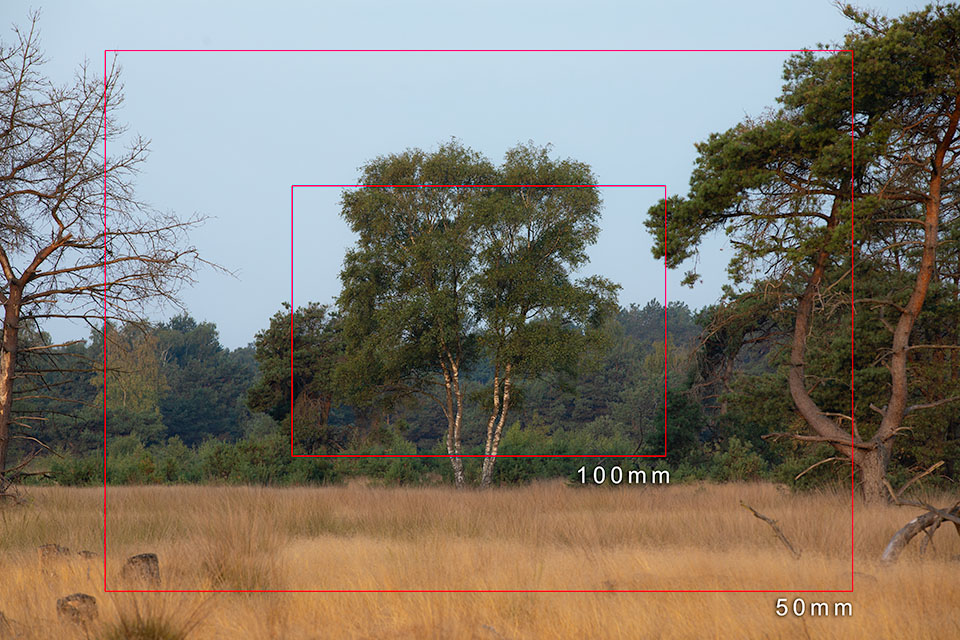
The reason why it is not the same is simple. A focal length gives you an angle of view. That angle of view changes when you zoom. This means that everything in the frame is enlarged or reduced.
When you 'zoom' with your feet, you move closer to the foreground so that it appears larger in the frame. But the angle of view does not change, so the background will not change in size.
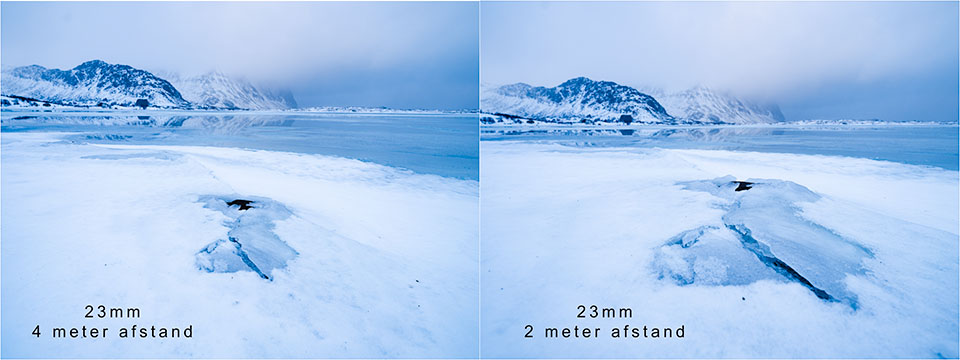
There are more differences, but this is one of the most important ones on that list. Zooming with your feet therefore produces a completely different look in your photo than zooming in with your lens.
2 - The serious photographer uses manual exposure
'If you want to take photography seriously, you have to switch to manual (M) exposure'.
It is still claimed. It gives the impression that professional photographers only shoot manually. That is anything but the truth. Only hobbyists cling stubbornly to manual.
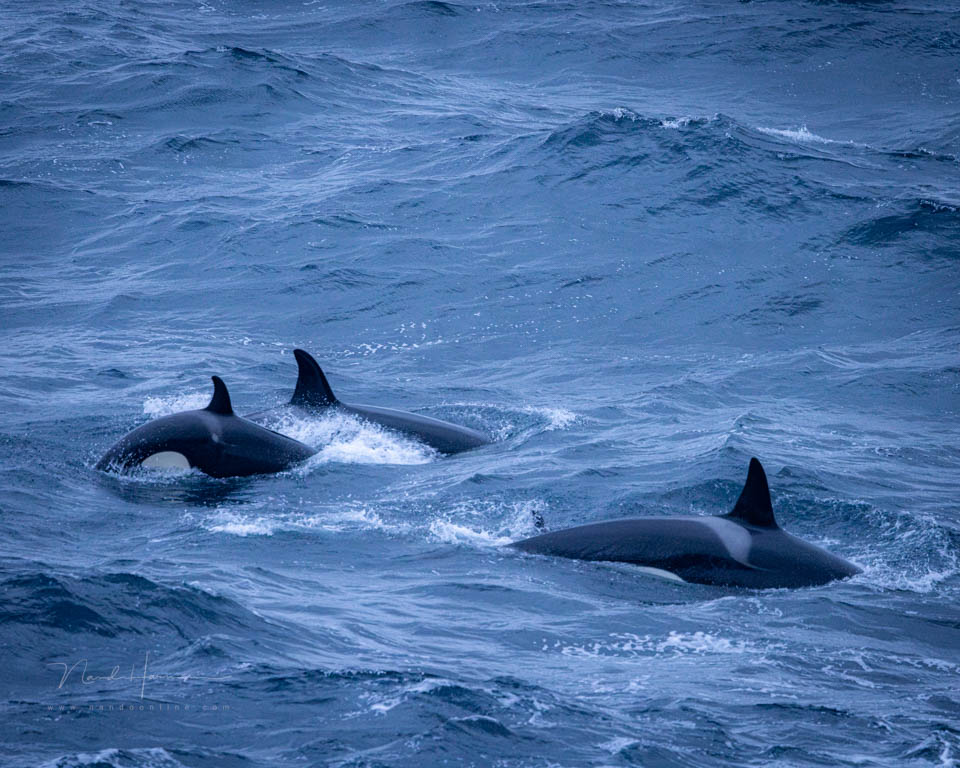
It is important to get a good exposure. You do that by choosing the settings based on the amount of light. The camera measures that amount of light.
It does not matter whether you set all three settings yourself or leave some of it to the camera. The end result is the same. Setting everything manually certainly does not give you more control over your exposure. Not always.
What the serious photographer does is make use of the options the camera offers. Choose aperture priority, shutter priority or manual to work as efficiently as possible.
3 - The thickest legs on your tripod
"Always extend the thickest tripod legs first for the best stability."
This is sometimes true, but often it is not. Do you have a very fragile, cheap tripod? Then it is true. In fact, you should never extend the thinnest legs.
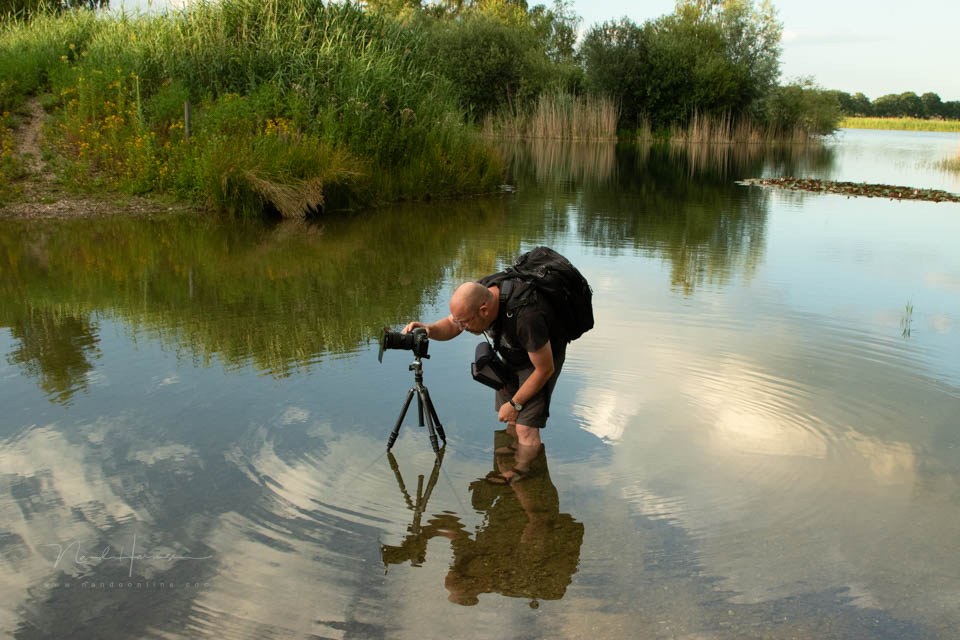
If you have a good tripod, using the thin legs is not a problem at all. Use them first, because this prevents you from always having to reach down deeply to adjust the tripod's height. Or having to lift the tripod, with camera attached, to reach them.
In fact, the clamps on the legs that have not been extended end up standing in the mud, snow or water. There is a good chance that dirt will get into them, which is bad for their operation and increases the chance of wear. Extending the thin legs first prevents this as much as possible.
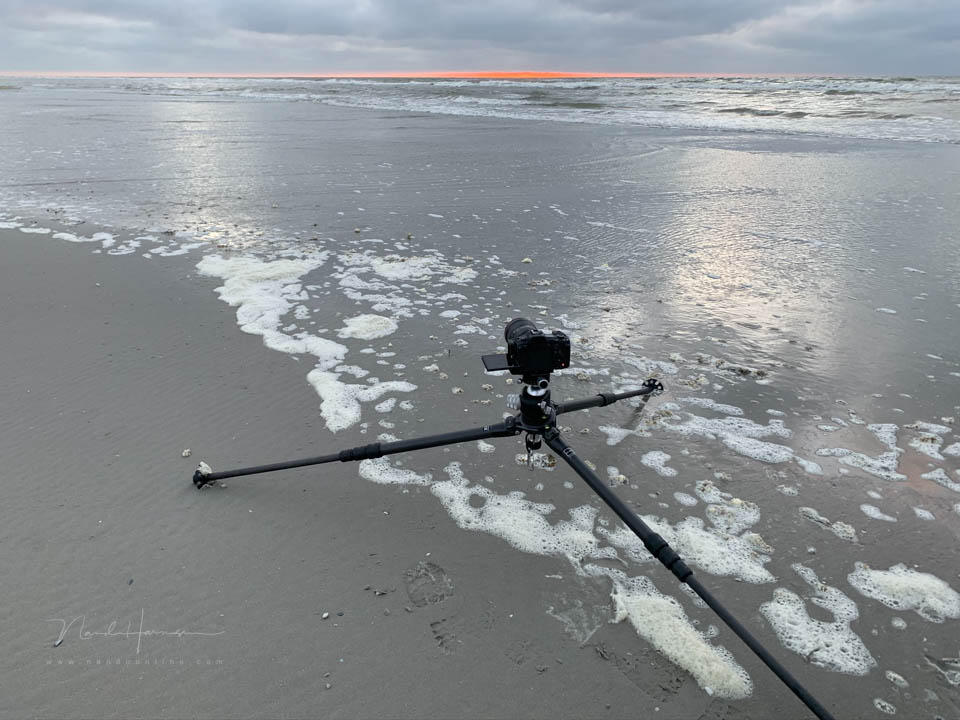
If the tripod were unstable because of the thin legs, then you certainly should not use them when the tripod is at maximum height. You never hear anyone mention that.
4 - The lowest ISO value is best
'You should always choose the lowest ISO value'.
It is a phrase that leads some photographers never to increase the ISO value. Not even when the photo would otherwise fail.
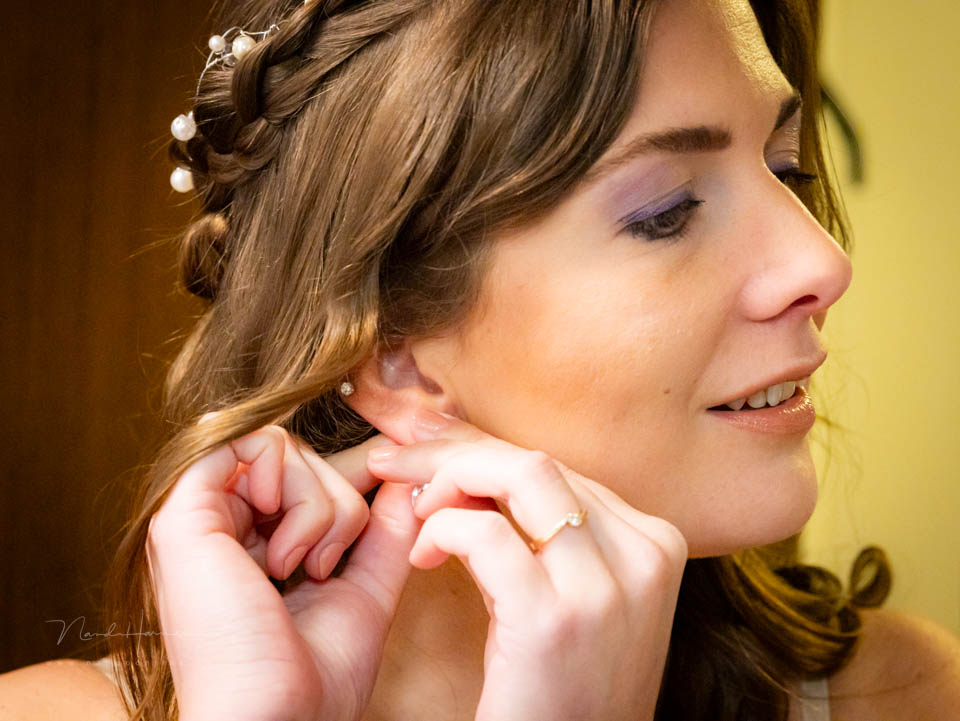
The ISO value is nothing more than a way to get successful photos in dark situations. It is true that some noise can appear, but if the exposure is good it will almost always be manageable.
Choose a high ISO value when necessary. A good exposure is more important than the risk of some noise.
5 - More resolution is always better
"A camera with more resolution produces better photos."
It is true that you can capture more detail, but that is not always better. What use is that enormous resolution if you only view photos on a 4K screen? Or if you only use them in a 30x30cm photo book?
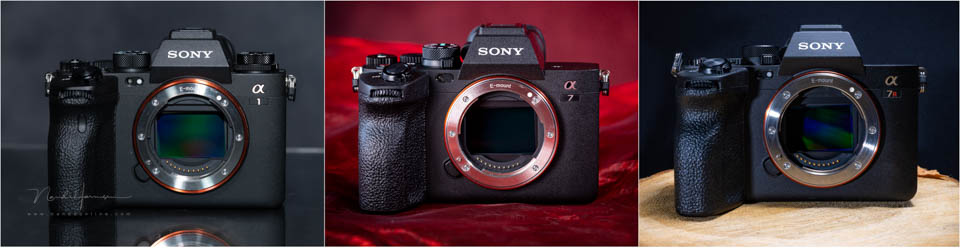
A high resolution is only needed when you are going to make extremely large prints. And even then, the need is questionable, because the larger the print, the lower the resolution of your print will be. Viewing distance also plays a part.
If you crop a lot, a higher resolution may make sense, but a longer focal length would then be a better option. In general, somewhere around 20-25 megapixels will be the most favourable choice.
More urban myths
There are many more myths that have become firmly established. They can increase uncertainty and act as a brake on your creativity. I do not know where they come from, but never accept them blindly. Always think logically and look things up.
Do you know of any other myths, the so-called urban myths? Leave them in a comment below this post.
About the author
Nando Harmsen has been photographing for more than 40 years. He specialises in wedding photography and landscape photography. Nando also gives talks, workshops, masterclasses and photo trips, and regularly reviews new and interesting equipment.
You might also like
-
 7 myths about the histogram
by Nando Harmsen
-
 Inspired by the documentary The World of Lars van de Goor
by Erik Nevels
-
 World Press Photo winners announced
by Nando Harmsen
-
 What should you look out for when buying a second-hand camera?
by Nando Harmsen
-
 The World Through a Glass Ball
by Laura van der Burgt
-
 Turn the World Upside Down
by Nando Harmsen
42 comments
-

 Donald Willemsen
wrote on Tuesday 10 June 2025 at 00:42
| reply
Donald Willemsen
wrote on Tuesday 10 June 2025 at 00:42
| reply
Another myth is that you absolutely have to screw a UV filter onto your lens to protect the front element. A good lens hood provides better protection. A cheap UV filter does more harm than good to your photos.
Translated from Dutch. -

-
 Bart Telling wrote on Tuesday 10 June 2025 at 10:49 | reply
Nice angle, Nando. And good that you bring it up. A lot of nonsense is told, not just about photography. Indeed, the UV filter is a persistent one too.
Translated from Dutch. -
 Evert wrote on Tuesday 10 June 2025 at 11:19 | reply
Nice to read this, I find high ISO especially very ugly because of the amount of noise.
Translated from Dutch.
With Lightroom you can remove a lot of it but it takes hours to get multiple photos looking good
I photograph a lot with a 70 200 f2.8 zoom lens but that noise makes many Photos look ugly -
-
 Harry Iwema wrote on Tuesday 10 June 2025 at 11:34 | reply
Thanks Nando for these tips, never too old to learn.
Translated from Dutch. -
 JW Genuit wrote on Tuesday 10 June 2025 at 12:50 | reply
another persistent one. always shoot in RAW and not in JPG. would give a better result. and be more editable in image editing software.
Translated from Dutch. -
Nando
wrote on Tuesday 10 June 2025 at 12:55
| reply
You're partly right.
Translated from Dutch.
RAW is better to edit than JPEG. That's a fact and simple to prove.
But that doesn't mean that an in-camera JPEG is necessarily worse than RAW. You're right about that.
I'd rather have a good in-camera JPEG than a poorly edited RAW.
-
 Marcel van den van den Heuvel wrote on Tuesday 10 June 2025 at 12:59 | reply
Ehhh JW Genuit, that seems like a factual truth to me, not an 'untruth'. What is RAW and what is JPG? Which contains more information?: RAW! Just think about highlights.
Translated from Dutch. -
JW Genuit wrote on Tuesday 10 June 2025 at 13:03 | reply
You can also process a JPG perfectly in a RAW editor, you just can’t adjust the ISO anymore, which you can with a RAW.
Translated from Dutch. -
Nando
wrote on Tuesday 10 June 2025 at 13:38
| reply
Of course you can still edit a JPEG somewhat. But you can go much further in 'developing' your photo and in your own way. Something that was done by the manufacturer in an in-camera JPEG.
Translated from Dutch.
White balance, exposure correction, dodging, burning, there is so much possible in RAW that with JPEG immediately results in a (drastic) loss in quality.
What you cannot adjust in RAW is the ISO. That is a fixed value. -
 MARCEL wrote on Tuesday 10 June 2025 at 13:21 | reply
Actually, a quick question: does working with a manually set white balance produce better results, even when shooting in RAW, or is this also a myth
Translated from Dutch. -
-
 Raphaël De Vos wrote on Tuesday 10 June 2025 at 14:13 | reply
The statement regarding high Iso that a good exposure in dark conditions is better than the noise inherently produced by it is absolutely true. But what unfortunately isn't mentioned, and is actually even more important here, is that by increasing the iso you first and foremost avoid motion blur (both from yourself, but equally from the moving object) as much as possible. All the more so because -at least for me - motion blur (even with app AI sharpen Topaz) can only be remedied in a very rudimentary way, and then simply makes your photo worthless.
Translated from Dutch. -
 Marthe de Jong wrote on Tuesday 10 June 2025 at 14:22 | reply
Another persistent falsehood: when you use a lens on a DX camera, the focal length becomes 1.5 x what it is when you use the same lens on an FX camera. A sort of telephoto effect, then. Well: all nonsense. A focal length does not change. But with a DX, compared to FX, the image is cropped and SEEMS closer.
Translated from Dutch. -
-
 Paul wrote on Tuesday 10 June 2025 at 14:38 | reply
Meanwhile, also a classic: Full Frame is better than APS-C - if you want to photograph seriously, you have to use FF.
Translated from Dutch.
1-the artistic/creative side of the photo is not primarily determined by the camera
2-both systems have pros and cons -
-
 Paul van Aken wrote on Tuesday 10 June 2025 at 17:55 | reply
Good piece again, and some of the reactions show well how deeply these myths have penetrated.
Translated from Dutch. -
 Martin Carels wrote on Tuesday 10 June 2025 at 18:32 | reply
RAW is needed for photo competitions because they sometimes ask for it.
Translated from Dutch. -
 Alain wrote on Tuesday 10 June 2025 at 19:11 | reply
Isn't it gradually time to define a lens by angle of view instead of focal length?
Translated from Dutch.
With all the different sensor formats, that would eliminate a lot of confusion. -
Paul van Aken wrote on Tuesday 10 June 2025 at 19:51 | reply
@Alain. The focal length is a fixed fact, the fact that some confusion sometimes arises now is because advertising works so disruptively. Different formats have existed throughout all (photographic) eras, but focal lengths were always indicated in mm or formerly in cm, the user usually knew the ins and outs. when I started photographing you had a lot of 6x6 and 6x9 cameras with 7.5 and 10 cm standard lenses, but for the more expensive 6x6 models you also had 40mm wide-angle 'lenses' and 100, 135 and 200mm 'telephoto lenses'. Nobody had any trouble with that. And I don't think so now either , if you shoot DX format, you know which focal lengths go with it, and the ratio to 'fullframe', or rather small format, and the people who use fourthird also know what they need.
Translated from Dutch. -
 Andy Staelens wrote on Tuesday 10 June 2025 at 22:03 | reply
APS-C came about because Full Frame was too expensive for hobbyists. Meanwhile, Full Frame has become affordable. But in the film era, it was only Full frame on a 35mm camera. Both systems have their pros and cons, but give me Full frame where 50mm really is 50mm. Looking through the viewfinder is also a big difference. My first camera was a Canon 60D, an ASP-C and I had a 17-50 ASP-C lens for it. Best lens ever for ASP-C! with, for example, Fujifilm, they only have ASP-C and medium format and then you still have Micro 4/3-sensor format, which also has its advantages. You can keep going like this of course.
Translated from Dutch. -
 thierry-hoornaert wrote on Tuesday 10 June 2025 at 22:54 | reply
"Full Frame is better than APS-C - if you want to take photography seriously, you should use FF." is indeed a classic.
Translated from Dutch.
In practice, lens quality is more important than the camera. It is more important to invest in good lenses, partly because they will in principle last longer than cameras. This way, good lenses respond better to your camera's autofocus.
A (more expensive) camera can, however, contain advanced features that are intended for a particular genre of photography or cinematography. -
guest wrote on Tuesday 10 June 2025 at 23:28 | reply
In the analog days there were also multiple cameras with a smaller image, the half-small-image cameras, mainly the Olympus Pen, of which even a single-lens reflex exists. The only problem was that the film was a bottleneck, which has not been an issue since the sophisticated sensors. An APS-C sensor can deliver images that are exactly just as good as an FF, the only disadvantage is the greater depth of field, nice "bokeh" is difficult.
Translated from Dutch.
The Dx format only has advantages otherwise, the lenses can namely be quite a bit smaller, tele is 1.5 times as long in terms of reach, my Sigma 150-600 is effectively 900 at the longest setting, try that on FF. And on the wide-angle side you don't miss anything, the shortest for FF is an 11, for Dx 8, which corresponds to 12, negligible, only that 8-15 weighs just 600 grams. That 11_22 mm I think, at least a kilo. -
Mac wrote on Wednesday 11 June 2025 at 08:31 | reply
In the film era, you didn't have a 35mm camera, you had 35mm film (which could also be used as half-frame, or as a panorama (hasselblad))
Translated from Dutch. -
Nando
wrote on Wednesday 11 June 2025 at 09:35
| reply
In the analog era, you had the 35mm camera, medium format camera, and large format camera. Later, the half-frame camera was added as well.
Translated from Dutch.
All sounds much more logical and intuitive than the modern naming conventions.
Oh yes, and you had the 110 pocket camera (the famous Agfa rits-rats-klik - who still remembers them?) -
 weerd wrote on Monday 16 June 2025 at 14:38
| reply
weerd wrote on Monday 16 June 2025 at 14:38
| reply
I still have an Agfa 110 here on the shelf in front of me, just like a Voigtlaender instamatic and various 6x6 cameras. For some, batteries can no longer even be found.
Translated from Dutch. -
 Paul wrote on Wednesday 11 June 2025 at 09:46 | reply
And..... don't forget the Minox (8×11) ??
Translated from Dutch. -
Paul van Aken wrote on Wednesday 11 June 2025 at 11:49 | reply
And the Kodak Instamatic 26x26, I believe.
Translated from Dutch. -
Paul van Aken wrote on Wednesday 11 June 2025 at 11:57 | reply
Aps c was because they couldn't make larger sensors. Nikon's D1 was aps c, Dx in their terminology, and cost 25000 guilders, for 4mp I believe. The D2 was also still on the smaller format.
Translated from Dutch.
And as for the viewfinder: Canon indeed had a lousy viewfinder, the one on my first DSLR, the D80 from Nikon, had just as large and clear an image as my F801 from before, and even now the Dx and Fx viewfinders are comparable, I have a D500, my daughter a D750, you can simply use them interchangeably, same image and ease of use.
and 50 mm on ff is 30-35 mm on dx -
Paul wrote on Wednesday 11 June 2025 at 12:16 | reply
Also still quite persistent: Full Frame has larger pixels (with the same number as APS-C) SO you get less noise. That may be true at infinity, but at shorter distances where you consciously choose a limited depth of field, with APS-C you can open up the aperture further (because you are working with a shorter focal length) and then choose a lower ISO. Comparing at the same ISO is not always relevant
Translated from Dutch. -
-
Paul wrote on Wednesday 11 June 2025 at 13:09 | reply
Example: FF 35 mm at 5.6 has approximately the same depth of field as 23 mm at 4 for APS-C. At the same shutter speed, you can therefore choose your ISO a factor of 2 lower with APS-C
Translated from Dutch. -
-
 Eduard wrote on Wednesday 11 June 2025 at 13:19 | reply
In my opinion, M mode is the same as Av mode, unless you use a separate light meter.
Translated from Dutch. -
-
Paul wrote on Wednesday 11 June 2025 at 14:46 | reply
That you have to use FF (read: buy) because you get more noise with APS-C. The assumption here is that you use the same ISO, but with APS-C you can use a lower ISO in the same situation. So the sales pitch "With APS-C you have more noise than with" is not correct (to zeroth order).
Translated from Dutch. -
Nando
wrote on Wednesday 11 June 2025 at 15:21
| reply
Suppose you have no possibility to change settings. For example, if you have to use 1/1000 sec to 'freeze' action and are already using the widest aperture?
Translated from Dutch.
And you need ISO6400 for a good exposure.
Is there then any difference in noise levels? -
 Rainer Kersten wrote on Wednesday 11 June 2025 at 21:57 | reply
Lol, I still have a German Revue FTM lying around here (a variant of the Agfa). Funny, by the way, that what we now call Full Frame was called 35mm back then. My Yashica 44 used 127 film. I still very occasionally use it with 135 film.
Translated from Dutch. -
 Ad van Duren wrote on Saturday 14 June 2025 at 12:17 | reply
I don't (completely) agree with you regarding manual exposure, Nando. I'm a serious hobby photographer and have been using manual exposure for years, after first working with aperture priority for many years.
Translated from Dutch.
If I photograph a bird against a dark background, e.g. a reed bed, and I manually expose for that bird, I get a well-exposed photo. If that bird then takes off and the background changes to a bright sky, that same bird remains well exposed without changing the settings, so I don't have to do anything. In the case of aperture or shutter speed priority, the camera sees the bright sky and will compensate for it, with the result that the bird becomes a silhouette. In that case you first have to add exposure compensation for a well-exposed bird, which takes time and then the bird has flown away.
Regards, Ad -
Nando
wrote on Sunday 15 June 2025 at 12:48
| reply
In your case, that is a good reason to set it manually. Perfect, right? It does not mean that you also have to set it manually in all situations. If that is the case, you are using the camera compulsively, instead of efficiently.
Translated from Dutch.
Of course, you may also simply find it pleasant. That is fine too. It can mean that you are sometimes too late.
Manual is not the holy grail. That is the point of the story.
Have your say
Please note: Articles older than a week can only be commented on by signed-in visitors.Would you still like to comment? sign in or create a free account.
Become a better photographer every week
A practical photography tip in your inbox every week.
39,079 photography enthusiasts already receive the tips! More about the weekly mail. Or keep up to date via  Facebook.

Elja Trum
Photofacts; everything to do with photography!
Would you like to take better photos and keep up with what is happening in photography? Photofacts publishes articles that teach you something about photography — from a product announcement to a practical shooting tip or a look at a website. Photofacts covers photography every day and is a hobby project of Elja Trum's that got out of hand. The articles are written by a team of volunteer authors. If you would enjoy writing one or more articles for Photofacts, do get in touch.More about PhotofactsPhotofacts is made possible in part by
