

7 wrong ideas that stop you improving your photography
Monday 3 August 2020, 15:15 by Nando Harmsen | 14,554 views | 43 commentsThis article was translated from Dutch with the help of AI. Read the original.
Do you ever read articles and discussions about camera equipment, or about old technology and how much better newer cameras are? Or perhaps you are convinced that manual mode is the only proper mode for taking a good photo.
Maybe you do not believe that you can take a good photo in JPEG, as I explained in this article with 10 tips for the JPEG photographer. Or perhaps you are simply wary of photographing in RAW.
If you recognise yourself in one or more of these claims, you are not the only one. There are many different assumptions about photography doing the rounds, which are either not true or only partly true. They may contain a grain of truth, but eventually they have taken on a life of their own.
I am convinced that believing these things stops you from growing in your photography, or makes it very difficult to grow. In this article I have collected seven wrong ideas and assumptions.
1. Thinking that post-processing is not necessary
There is still a group of photographers who believe that post-processing is not necessary. They are convinced that the photo straight out of the camera is the truth, and that post-processing does violence to it. In many cases, they are also proud of having an unedited photo.
Every photo is, in a sense, an edited photo. If you do not do it yourself, the camera does it for you. The manufacturer has built the processing into the camera's software, so that the signal from your sensor is converted into a usable image.
You can still influence this processing, which produces a JPEG image, to a certain extent with camera profiles, film simulations, or adjustments to contrast, brightness and colour. Believe it or not, you are already post-processing at that point.
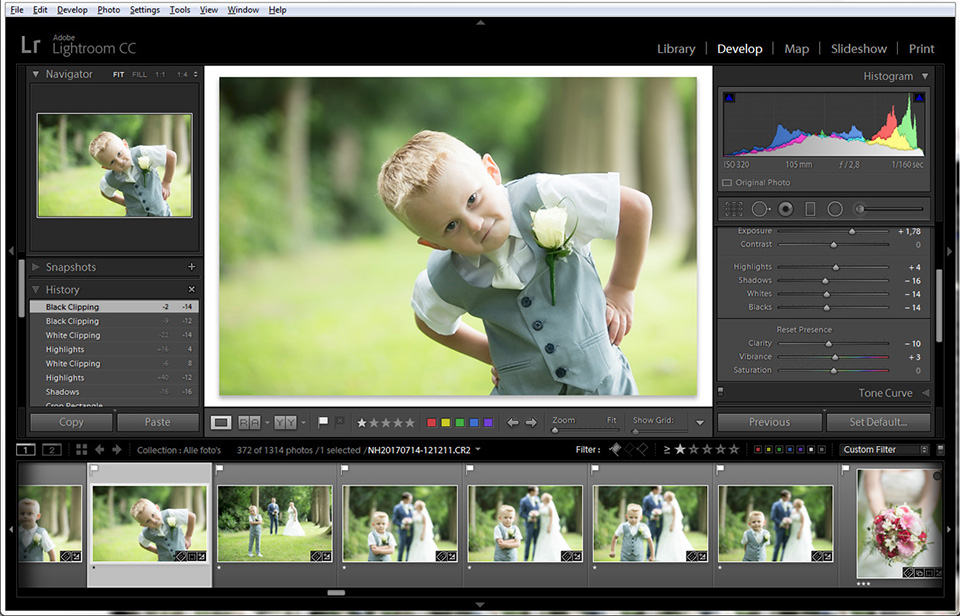
In short, without post-processing there can be no usable photo. Leave it to the camera, and in many cases you can assume that the processing will not be optimal.
Would you like to learn post-processing? Photofacts Academy offers a course in Lightroom or Luminar 4 to help you get started step by step.
2. Believing that photographing in RAW is too difficult
Many photographers are a little afraid of the RAW file. And that is understandable, because it implies that you have to develop it, or post-process it as it is called these days. This sounds difficult, but it is not.
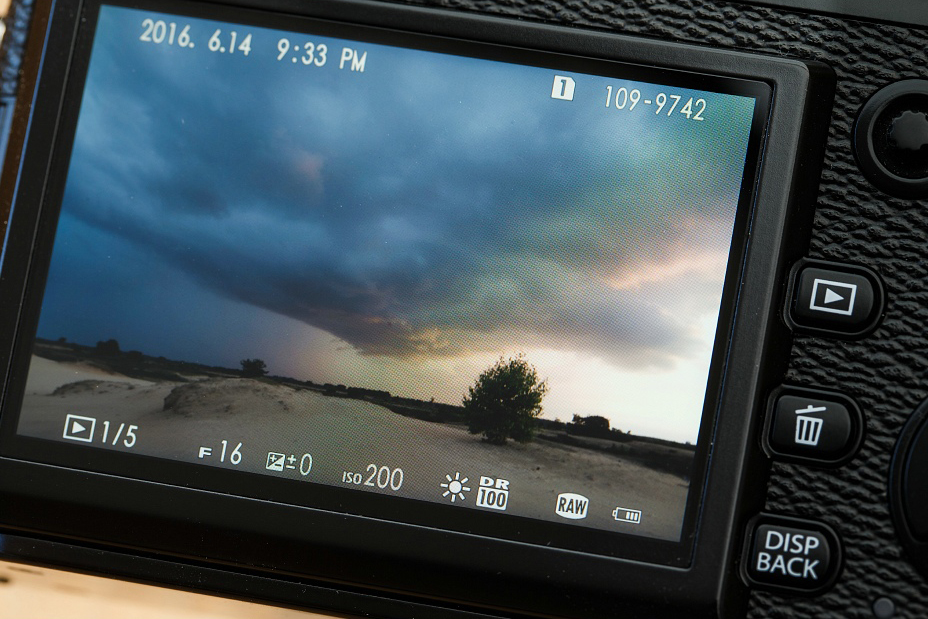
All your camera settings are included with the RAW file, and programmes such as Lightroom, ON1, Capture Pro, Luminar, and many others read that information and already show an edited image. If you want, you can have it written as a JPEG file at the press of a button.
Or you can change small things, such as the colour temperature, exposure, contrast, and all those sorts of things you can adjust in a RAW file. You do not have to, but you can. If you make a mistake and the photo is not right after your post-processing, it is simply a matter of pressing reset and you have the original RAW file again.
3. Being a natural-light portrait photographer
Are you a natural-light portrait photographer? Do you prefer photographing with available light? Or are you a photographer who does not know how to use flash properly? Because that is often the reason for photographing only with natural light.
Many photographers who prefer natural-light portraits often do not know how best to use flash. When you talk about flash, they are convinced that it is unnatural light, and that you can always see that flash has been used. They would rather resort to unacceptably high ISO values than use additional light.
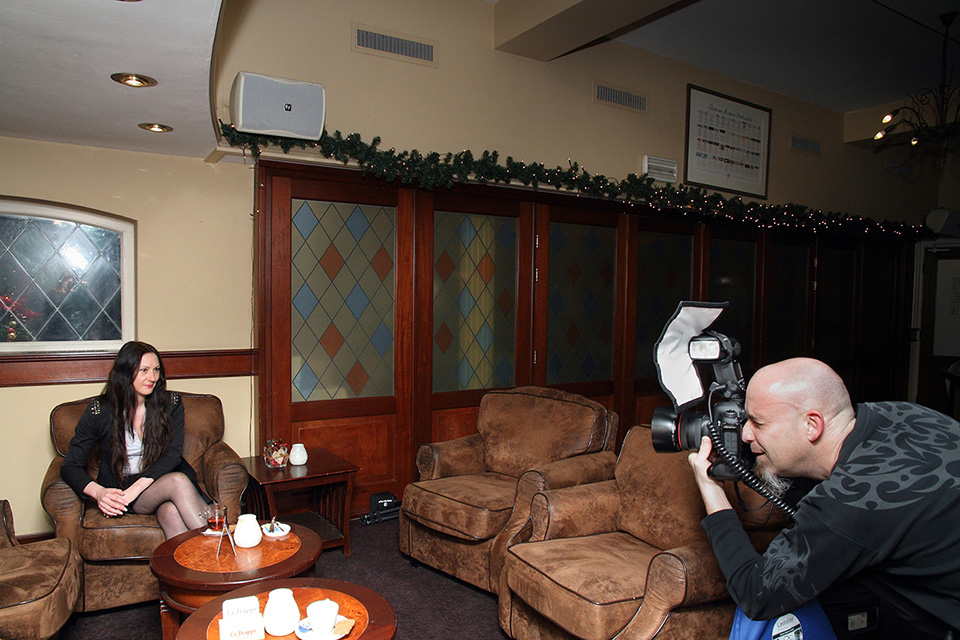
With a little knowledge of light, it is perfectly possible to blend flash seamlessly with the available light, giving you a very natural-looking photo. It can prevent the need for terribly high ISO values and it can lift terribly ugly shadows.
Ignoring flash and calling yourself a natural-light portrait photographer does not make you a better photographer. It only limits your options. Also remember that you do not always need flash. But when the quality of the light is not good, you should not limit yourself by rigidly sticking to the natural-light belief. A good photo is more important than a principle, after all.
Would you like to learn how to use flash in the best way? Photofacts Academy offers a course in on-location flash photography to familiarise you with these techniques.
4. Being convinced that setting the exposure manually is the only way to get a good exposure
There are still photographers who think that manual exposure is the only serious way to set up your camera. But unfortunately, it does not produce better photos, better exposure, or better control of the light.
People often forget that a camera is set manually based on what the camera's light meter indicates. You choose an aperture and turn the shutter speed dial until the light meter shows 0 EV.
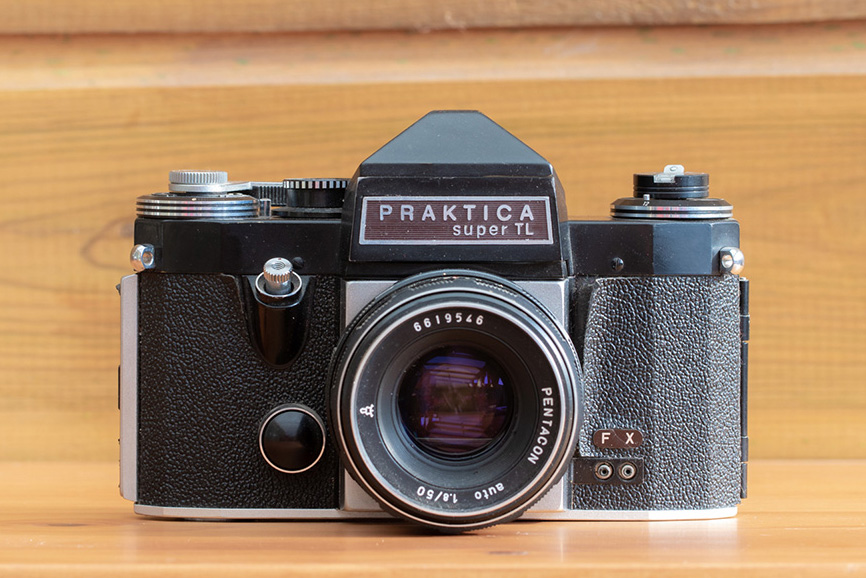
When you set the camera to aperture priority, exactly the same thing happens. The only difference is that the camera sets the shutter speed to the correct value for you. The camera does that based on what the light meter indicates. It just happens faster.
If you realise that the value indicated by the light meter is not correct, you can adjust the shutter speed by the necessary number of stops in manual mode. In aperture priority, you do the same with the exposure compensation button.
In short, manual is no better than aperture priority. It is simply... manual.
5. Taking too many photos of the same subject
I sometimes see photographers taking hundreds of photos of the same subject. Often from the same position, or almost the same position. This is absolutely not necessary, and it also makes your life as a photographer more difficult.
Think about what you have to do with all those photos. Everything has to be imported, sorted and edited, and then you still have to pick out the best ones, which is not always easy. When you take fewer photos, all that work becomes much simpler.
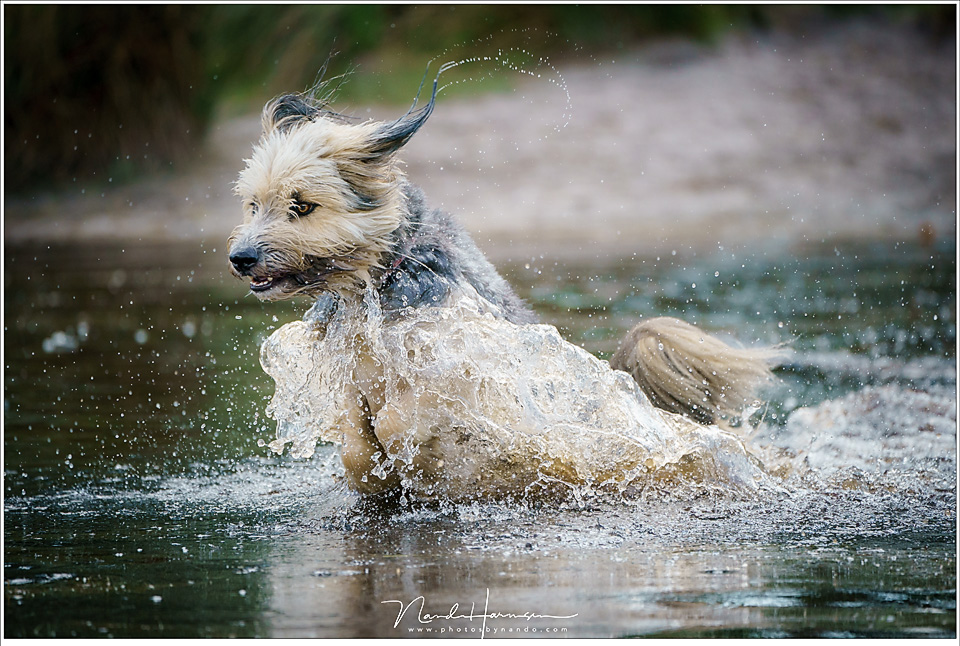
Continuously taking photos of the same subject also feels a bit like shooting at random. You keep taking photos without really thinking about composition or viewpoint. You just stare through the viewfinder without really seeing your subject, hoping for that perfect photo.
Do not get me wrong, some types of photography do benefit from taking lots of photos. Action photography in the broadest sense is one example. But do not make a sport of taking as many photos as possible when it is not necessary. Quality is better than quantity.
6. Posting an excess of photos online
Do you ever post photos online? On social media, photo communities such as forums, or photo-sharing websites? Then ask yourself how many photos of the same subject you post. Too many only do harm.
When you photograph something, only post the best photo online. Not one with a 24mm focal length, and one with a 16mm focal length, one from a distance of 10 metres and another from 15 metres. Choose the best one.
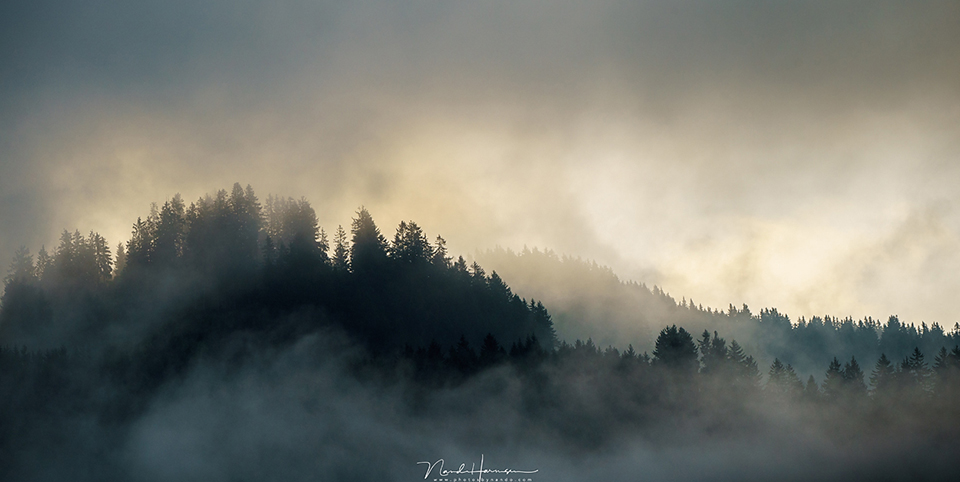
Showing only the best photo from a series has many advantages. You show only the best of the best, which impresses people, you do not overwhelm viewers, so they remain interested, and you build a reputation as a good photographer because you do not show mediocre work.
By showing the mediocre photos from the series alongside the best photo you took, you turn the entire series into a mediocre series, and that one good photo no longer stands out.
7. Believing that the latest camera produces better photos
The discussion about mirrorless cameras and SLR cameras is a good example of this. People are quick to say that old technology is outdated, which could lead you to believe that your older camera, which may not use the latest technology, can no longer take good photos.
Nothing could be further from the truth. Remember that you, as the photographer, take the photo, and that a camera is only your tool. You do not need the newest one, or the best one. If the camera can do its job properly, you do not need anything else.
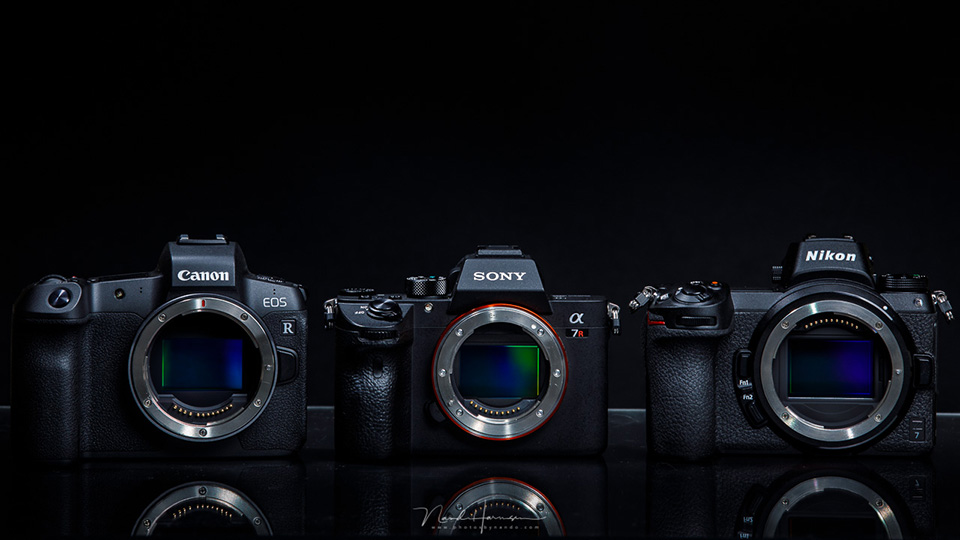
Of course, you may run into the limits of your camera, meaning that you cannot take that one photo. In that case, the camera needs replacing. Not because the camera is no good, but because it is no longer suitable for your type of photography.
So do not let yourself be talked into buying all the latest features of newer technology. They do not produce better photos, but they do leave your bank account empty. You take the photo, not the camera.
Do you know another wrong assumption in photography?
Perhaps you also know of a wrong assumption in photography that holds a photographer back in their photography, one that I have not mentioned. Then share it in a comment below this article. I am curious to know which ones you have.
About the author
Nando Harmsen has been photographing for more than 40 years. He specialises in wedding photography and landscape photography. Nando also gives talks, workshops, masterclasses and photo trips, and regularly reviews new and interesting equipment.
You might also like
-
 Komt er een Canon-systeemcamera met 100 megapixel?
by Elja Trum
-
 Persistent Myths in Photography
by Nando Harmsen
-
 7 photography tips for rainy days
by Elja Trum
-
 5 Tips to Improve Your Photography in the New Year
by Nando Harmsen
-
 7 Tips for Landscape Photography
by Elja Trum
-
 Nikon announces the Z 6 II and Z 7 II
by Nando Harmsen
43 comments
-

 martinphili wrote on Monday 3 August 2020 at 19:08
| reply
martinphili wrote on Monday 3 August 2020 at 19:08
| reply
An article close to my heart
Translated from Dutch. I can't think of any additions right now, but what you write here is soooo relatable!
 -
 Peter wrote on Tuesday 4 August 2020 at 07:47 | reply
The belief that a new lens suddenly makes you a completely different and/or better photographer. Whereas working with the limitation of working with 1 lens does make you a better photographer or can make you a better photographer (if you put in the time and effort to really work with it).
Translated from Dutch. -

-
 Beno Munneke wrote on Tuesday 4 August 2020 at 12:24 | reply
another common mistake: that other person takes much better photos than I do so I don't need to try it.
Translated from Dutch.
But you can always do more than you think! -
 Ton van Schilt wrote on Tuesday 4 August 2020 at 12:55 | reply
It is also recognizable to me as the administrator of an FB page (Dutch landscapes)I have often had this kind of reaction. Especially people who want to dump an entire memory card onto the page were common until I introduced the rule that people may post a maximum of 4 photos per day. People now have to agree to the group rules otherwise they will not be admitted (anymore). That is still sometimes violated but less than before. What strikes me especially on my FB page is that I can roughly divide the photographers into two categories. The people who go for the most beautiful picture and the people who go out for a day and make a photo report of their day out. Both are valuable because especially the latter category shows beautiful places in the Netherlands that can serve as a source of inspiration. The category that go for their most beautiful photo speaks for itself. I have not yet been able to give much depth to that fb page because of the time investment it takes.
Translated from Dutch. -
 Roland wrote on Tuesday 4 August 2020 at 12:55 | reply
Taking a photo of a subject while everyone else is already taking the same photo of the same subject !! monkeys copy everything !!!
Translated from Dutch. -
 Karin de Jonge wrote on Tuesday 4 August 2020 at 13:04 | reply
What a relatable piece, Nando! Great that you call the little critters that hold us back by their names. Thanks!
Translated from Dutch. -
 Aimé de Clercq wrote on Tuesday 4 August 2020 at 13:39 | reply
Always photograph at eye level
Translated from Dutch. -
 Bernard wrote on Tuesday 4 August 2020 at 13:42
| reply
Bernard wrote on Tuesday 4 August 2020 at 13:42
| reply
Yes, I have another one. I regularly see that a camera body is considered more important than a lens. Often in combination with the question: "should I buy a crop camera or a full-frame one to take better photos?" The discussions that then arise are usually about bodies from the more expensive segment. What surprises me is that with an expensive body, a lens from another brand is chosen. With cameras in the more expensive segment, the body and the lens are specifically fully matched to each other. I make the following comparison: you buy a Ferrari Testa Rossa and then put VW Golf rims on it because they're cheaper...
Translated from Dutch. -
 Jim wrote on Tuesday 4 August 2020 at 13:52 | reply
Finally an article with a somewhat more realistic view of photography in practice. Especially point 5; nowadays it is some kind of fashion trend that every snapshooter has to work in the so-called "burst" mode. Sometimes you imagine yourself sitting in the middle of some kind of war zone, because of all those sounds of rattling cameras, which in my opinion are usually handled by mostly a bunch of insecure, perhaps less knowledgeable, fickle snapshooters, who do not give themselves the time to look properly, observe, and act and strike at the 'right moment'!
Translated from Dutch.
I think these kinds of figures are made even crazier when, for example, a brand like Sony releases a camera with a "burst" mode of 20 shots or more!
Personally, I find it somewhat embarrassing to sometimes have to move among them. Or have all these figures perhaps secured themselves a spot in the press stands at the upcoming Olympic Games, ha, ha, ha!! -
 Janet Klaver wrote on Tuesday 4 August 2020 at 14:06 | reply
The level is too high for me, I can never manage to get the photo as beautiful as the other person's. I get so discouraged with myself
Translated from Dutch. -
 Peggy wrote on Tuesday 4 August 2020 at 14:16 | reply
I recognize myself in some of the points. In my early phase, point 5 is very recognizable. Fortunately, that has improved now. A tip is ... Mastery of your camera. Knowing what the possibilities of your camera are. In other words, being the "boss" of your camera and not the other way around. That can cause frustration.
Translated from Dutch. -
 Dre wrote on Tuesday 4 August 2020 at 14:41 | reply
Yes indeed Mr Harmsen, your first assumption; There is still a group of photographers who believe that post-processing is not necessary.
Translated from Dutch.
There are certainly recognizable points in your story, but to dismiss those who do not perform post-processing, and that is after all the vast majority flu of people who take photographs, as unbelievers I find rather short-sighted. Below there are certainly hobbyists who make more beautiful pictures than many who unleash edits on them.
Besides that, there are also those who do not photograph digitally and do not have a darkroom. -
Nando
wrote on Tuesday 4 August 2020 at 14:56
| reply
@Dre:
Translated from Dutch.
Yet I stand by this assumption. No photo straight out of the camera is immediately good. But of course you can change a whole lot of settings in the camera or use presets. That is the moment when you are carrying out an in-camera edit.
In other words, like it or not, when you use the camera in its neutral setting, straight out of the box, without using any image adjustment whatsoever, the photo will not be the best you can achieve.
And there are still photographers who proudly show their photos that way, hiding behind the words 'pure and unedited straight out of the camera.'
Making prettier pictures, incidentally, has nothing to do with post-processing. Then you are talking about composition and insight into image structure. You cannot achieve that in post-processing. -
 Guido Bellens wrote on Tuesday 4 August 2020 at 15:18
| reply
Guido Bellens wrote on Tuesday 4 August 2020 at 15:18
| reply
One more perhaps: First look around you and find a good spot, think about composition and lines before looking through your viewfinder. Move around if you can and don't keep reaching for that zoom.
Translated from Dutch. -
 Peter wrote on Tuesday 4 August 2020 at 15:28 | reply
Great argument. What I miss is the excessive attention paid to zoom lenses. The bigger the better, it seems. Your best zoom range is in your feet. Choose your viewpoint for a good composition. And of course it is a lot safer to photograph the “big 5“ on safari with a good telephoto zoom. And there are a few more situations like that. TIP: worry about the lens's light-gathering ability. That is what really gives you possibilities.
Translated from Dutch. -
-
Nando
wrote on Tuesday 4 August 2020 at 16:05
| reply
@Peter:
Translated from Dutch.
Zooming with your feet is not the same as zooming with a lens. They are two different things that produce completely different results and effects.
On the other hand, lens speed isn't everything either. Not everyone needs an f/2.8, or an f/4. It all depends on what you are photographing.
Nevertheless, I understand your point, and I agree with it. -
Dre wrote on Tuesday 4 August 2020 at 16:16 | reply
In response to the comment on my first opinion.
Translated from Dutch.
Now we are talking about the definition of 'good' and 'best'. Especially if you dare to claim that it is never good and never the best you can achieve with 'standard values'.
First of all, it is of course about what you want to achieve with your shot, what are you going to do with it. In my training courses I learned that the result is a personal approval or meets the client's specifications.
And if you want to get the absolute most out of it, yes, then we move towards your points of view and even then it is a personal opinion. The proof is there every time people are allowed to vote on the various photos. To each their own.
Just take a look at the programme 'The Perfect Picture'. Opinions differ and certainly those of the professionals, who, to the point of arrogance, think they always know better and rarely find a photo good or the best that a public jury would also choose. -
 Paulussie wrote on Tuesday 4 August 2020 at 16:26
| reply
Paulussie wrote on Tuesday 4 August 2020 at 16:26
| reply
I’m reading your articles with increasing attention.
Translated from Dutch.
This article too, I find it very recognizable, and even though I’ve been photographing for 60 years, here again I see something in which I recognize myself (something new, then it gets better!)
Other points are those I just can’t get my head around: people who take hundreds of photos in one day, e.g. of their dog. Of course, I spent most of my photographic life working on film, first roll film, 12 little negatives, then 35mm, hooray, three times as many! Then you learn to be economical, and you look much longer before pressing the shutter, but even now it rarely happens that I take more than a few shots of the same subject home with me. Although my D 500 is capable of taking up to around 100 shots in Burst, I’ve never tried it.
One more thing that gets in the way of better photos: many photographers think that the sun should be behind them..... -
 Robert wrote on Tuesday 4 August 2020 at 16:51 | reply
Everyone shoots with his or her tools. With his or her intention. A lot, a little, in colour and with whatever kind of file.
Translated from Dutch.
That is what makes photography ,( the modern painters) so beautiful.
Otherwise we would all have the same ' paintings'.
Tips, what is or isn't good, this and that , and what not to do from someone's experience....is subordinate to your pleasure.
Pleasure, above all pleasure and capturing those moments for perhaps eternity. We forget so quickly, you know!
Keep shooting.....
Photo shooting regards,
Robert -
 PixelDude Raoul wrote on Tuesday 4 August 2020 at 17:01 | reply
@dre:
Translated from Dutch.
Post-processing is an absolute must. And post-processing can even be limited to, for example, straightening a horizon. The horizon only a few mm crooked in a photo ... ruined. A photo without post-processing is like a painter who would stop finishing his painting when the base layer of tree; bush and sky is on it.
In JEPG, making the photo half a stop lighter or darker can make a world of difference in quality. Also a little more or less contrast can work wonders.
I edit all my RAW photos and 99% of them I edit in (an old 6.14 version of) LightRoom, never more than 1 minute per photo. I spend more time on the remaining 1% in Affinity Photo.
Don't edit? Past tense and above all missed opportunities for beautiful photos. You don't have to do any violence to a photo at all by editing it. On the contrary, you can make it 'realistic' if desired, which it isn't to begin with. -
Paulussie wrote on Tuesday 4 August 2020 at 17:12
| reply
Nice piece again, Nando.
Translated from Dutch.
Despite my 60 years of photography, I still discovered a point where I also make the mistake. Something new, then it gets better!
I don't understand that other point either, I sometimes read pieces by people who take hundreds of photos in one day b.c. of their dog, or on holiday.
Of course I learned to photograph on film, first roll film 6x6, 12 exposures per roll, then, hooray!, 35mm, 3 times as many, but even then, you thought three times before pressing the button. But I now have an 8 GB card in my D500, (people are astonished by that,: why such a small card, I put one in of 128, much faster, and then you can go on for the whole holiday. Yes, what if it breaks) that holds 250 shots (approximately), but even so I don't take dozens of shots of the same thing, I still first look carefully at how and from where.
And one more thing that sometimes ruins taking good photos: people often still think that the sun is not allowed in the frame.... -
 Marc lesage wrote on Tuesday 4 August 2020 at 17:21 | reply
A tripod is for professional photographers and not for me
Translated from Dutch. -
PixelDude Raoul wrote on Tuesday 4 August 2020 at 17:48 | reply
@Marc Lesage:
Translated from Dutch.
Using a tripod has nothing to do with whether or not you are a professional. It has to do with the ‘type’ of photos you take.
I am largely interested in landscapes and nature photography and I don't often have a tripod with me because I can use a camera and lenses with great stabilizers. Photos with a 400mm telephoto lens at 1/25” handheld, no problem, with a 42mm 1/3” … and longer exposures, doable. I also usually do focus stacking handheld.
But for things like long shutter speeds or for real macro photography 1/1 or 2/1 … then I can't do without a tripod. And, I am a hobbyist, not a pro. -
Paulussie wrote on Tuesday 4 August 2020 at 18:08
| reply
My first comment didn't want to go through here, but it's there now after all, so I'm mentioned twice with almost the same wording! Sorry.
Translated from Dutch.
Then one more thing, I have to completely agree with pixeldude. Every shot does need some form of post-processing, that indeed doesn't mean that it's no longer "real", but there are always little things, as he points out, a crooked horizon, or a cigarette butt that's still just in the frame.
And what he says, it's often a matter of seconds to a minute in a good development program. -
 kok.f@ziggo.nl wrote on Tuesday 4 August 2020 at 19:54
| reply
kok.f@ziggo.nl wrote on Tuesday 4 August 2020 at 19:54
| reply
Nail on the head. Here’s another one. The idea that with approximately 50mm you photograph “the truth” and telephoto or wide-angle are manipulations. Every photo is a manipulation, because distance (close or far) makes a big difference to the context in which you show the subject.
Translated from Dutch.
Furthermore 1000% agree with the comment about photo editing. Every photo is edited, including the out of camera photo. If you want to be more than a picture shooter, you take the trouble to do the editing yourself. -
martinphili wrote on Tuesday 4 August 2020 at 20:52
| reply
One thing that I think many photographers get wrong is getting lost in the technique. Taking photos that are technically completely perfect but lack all soul.
Translated from Dutch.
Of course, you need to have a fair amount of technique under your belt to be able to photograph effectively, but above all you still need to have an eye for the moment and for the emotion.
And I’ll be the first to say that I still struggle with that myself too. I regularly beat myself up over it. -
 JacquesKlarenbeek wrote on Wednesday 5 August 2020 at 07:18 | reply
Hi Nando,
Translated from Dutch.
An article close to my heart. I find that a difficult "situation" requires more patience and time with settings. Often, people don't make the effort then because they are ashamed to "fumble around" for so long. That way you almost never get to better photos -
 Fernand DeCanne wrote on Wednesday 5 August 2020 at 08:25 | reply
1 Wanting to imitate famous photographers
Translated from Dutch.
2 When judging a photo, relying only on the technical finish and considering the subject of the photo less important
3 Attaching exaggerated importance to rules that are constantly passed on (horizon at 1/3, not letting a person look out of the frame, etc )
4 Wanting to take part in model photography when one cannot have access to people who have mastered the profession -
Nando
wrote on Wednesday 5 August 2020 at 09:00
| reply
I'd like to thank everyone for the beautiful, nice, lively discussion. Great that there are so many opinions. Nice that there are so many great additions.
Translated from Dutch.
I find it very educational to read all the reactions, and certainly also the very critical ones about my points. Thank you for that -
PixelDude Raoul wrote on Wednesday 5 August 2020 at 09:39 | reply
I find opinions here that I can fully agree with. But in my eyes, the reactions of a few individuals are rather bizarre.
Translated from Dutch.
There are hobbyists, and possibly more than I can imagine, who, due to insufficient knowledge of both their camera, editing programs and photography techniques, regard better photography as ‘far from their bed’. It is much easier to say that it does not interest them or that they only want to take photographs without editing than to admit that their knowledge is insufficient. ‘Experience’ is an important factor and you need ‘time’ for that. And it is precisely time that many hobbyists lack. I too, as a hobbyist, have only been able to fully devote myself to my hobby since I retired 2 years ago. As preparation for that joyful day (for me, at least), I started photography 5 years ago. My entire life I have not been able to spend any time on this truly magnificent tool. I have only had a few cameras, in my youth one with 35mm rolls, later nothing at all, until I bought my first very simple digital compact in middle age. Purpose? My own travel photography, family parties, … nothing else. Five years ago, a very special world opened up before my eyes: digital photography. Low weight and smaller dimensions were an absolute requirement for me from the start. That is why I bought a crop2 mirrorless with professional lenses. In the meantime I have 4 bodies and a bunch of lenses that I use depending on the purpose and circumstances. I have been self-taught all my life and that was also the case with photography. I have not taken any photography courses. I did enrol in a few ‘online’ courses, but quickly discovered that they were all ‘below’ the level of knowledge I had acquired. So what I am still lacking is ‘experience’. Gaining that necessary experience as a 67-year-old struggling with a few physical problems … that is often difficult.
One thing that was said above stands as a rock-solid fact. Technique is often more important to many hobbyists (and professionals) than atmosphere and feeling. I often see perfect photos and think ‘okay, and now what’? If you are a famous photographer, blurry photos are ‘wow’. If you are not, then you are a loser. That just goes to show. -
-
 Ad Hartjes wrote on Wednesday 5 August 2020 at 16:10 | reply
Absolutely right going y one way great article, regards Ad
Translated from Dutch. -
Fernand de Canne wrote on Wednesday 5 August 2020 at 16:34 | reply
When I read that pixel dude has 4 cameras and a whole lot of lenses I can't help but get the impression that for him too, the technology and the camera are much more important than the photo itself. Do you know what Cartier Bresson made all his photo.s with ? With just 1 camera and 1 50mm lens
Translated from Dutch. -
PixelDude Raoul wrote on Wednesday 5 August 2020 at 22:38 | reply
@Fernand,
Translated from Dutch.
I know my equipment, I estimate, for 70 to 80%. I hope to know what I can do with it to take photos that tell something. I also look for a title for photos that are close to my heart. 99% of my photos are ordinary shots that I try to take as well as technically possible. But I am always looking for that one percent where I can put my feelings. So yes, I consider technique important in order to be able to make that one emotional photo. So the content is also more important to me than the technique. The technique is the tool to be able to make that photo with content. -
PixelDude Raoul wrote on Thursday 6 August 2020 at 08:33 | reply
Cartier Bresson was cited as an ‘example’.
Translated from Dutch.
Two important aspects are overlooked here: ‘the period’ and the corresponding ‘spirit of the times’.
1. One camera and one 50mm lens. Photography was an expensive affair in the 20th century. At the beginning and in the middle of that century, a very expensive one, and only towards the end a little more moderate. I think that the majority of photographers, and they were not numerous, only had one camera and one fixed lens at their disposal. Moreover, Cartier travelled a great deal. In other words, he had to make budgetary choices. Travel with one camera or stay at home with several cameras (for, for example, studio work).
2. The spirit of the times. In the 21st century, with the introduction of digital photography, the number of photographers did not increase tenfold, but perhaps rose by a factor of 10,000 or 100,000. In his glory period, it was less difficult to rise above the crowd. His name was, as it were, chiselled into the photographic stone and will perhaps thus survive history for decades or centuries. But … that is history. If you were to submit his characteristic photos to a publisher of a photography magazine today, they would undoubtedly be regarded as average and disappear vertically into the bin. His photos may be considered beautiful for nostalgic reasons, but beautiful by today’s standards they are, in my opinion, in no way. The current technical possibilities are the cause of that. A few days ago I saw a bit of the famous James Bond film Dr. No. A blockbuster at the time it was made. After watching for fifteen minutes I turned it off ‘what a load of rubbish’. Such a film does not fit into our spirit of the times because we are used to much better. I can only sit through such a film for nostalgic reasons. A few months ago I saw the first Star Wars film and laughed to tears at the clumsy production design. So in ‘that’ time, when there were no other possibilities, ‘top class’, today ‘not worth watching’. If I were to enter the Cartier Bresson museum, it would be out of historical curiosity, not because I think his photos are so great. -
 Stefanie wrote on Thursday 6 August 2020 at 10:38 | reply
I'm still missing this one from the list: But it's not nice weather for taking photos; the misconception that you always need blue skies and a few sheep clouds.
Translated from Dutch.
The 'burst photographers' without a sound reason should really go out with an analogue camera and a roll of 36 sometime, that teaches you to look and think before you click.
I also have a thing or two to say about social media, regularly you come across questions from beginners who are then flamed by fellow photographers with: take a photography course or read the manual, is it really so difficult to just keep scrolling if you don't have or want to give an answer? A lot of beginners don't dare to post or ask anything because of this, while doing and asking are precisely the most educational things right now -
Paulussie wrote on Thursday 6 August 2020 at 11:00
| reply
Unfortunately, it's getting bogged down here.
Translated from Dutch.
It was about misconceptions about photography, not about what people have ( or use).
And if people also insist on showing off about their 4 bodies and "professional lenses", the fun is kind of gone. -
PixelDude Raoul wrote on Thursday 6 August 2020 at 11:50 | reply
@ Stefanie
Translated from Dutch.
With this last point I have to agree with you not 100 but 200%.
I too have the impression that there are quite a few selfish people among our crowd who don't want to share knowledge and make fun of beginners. That is why I started an FB page myself, 'DIY photography', which by now has around 180 members. I am not an all-knowing person at all, certainly not a stubborn know-it-all and far from a professional who knows and understands almost everything, but a simple hobbyist who gladly shares his basic knowledge with others completely free of charge. And by doing so I absolutely do not wish to compete with Photofacts, which in my eyes offers a lot of excellent learning material at a reasonable price ... and offers much more professional and in-depth knowledge. I am a 2, they are a 9. -
PixelDude Raoul wrote on Thursday 6 August 2020 at 13:19 | reply
@Paulisse
Translated from Dutch.
Sorry to hear that you’ve ended up in quicksand. I’d say ‘keep your head above water’. But with your statements you’re no longer playing the ball but the man, and you oblige me ethically to remain silent, which I will do. -
Paulussie wrote on Thursday 6 August 2020 at 14:28
| reply
@ pixel,
Translated from Dutch.
Your comment can't exactly be called friendly, although my remark may be a bit prickly, it is justified. This thread is about misconceptions that keep you from improving your photos. Not about telling us what we have in the cupboard. -
 info@y-register.nl
wrote on Sunday 10 January 2021 at 14:14
| reply
info@y-register.nl
wrote on Sunday 10 January 2021 at 14:14
| reply
Good points for beginner photographers! Thanks : )
Translated from Dutch.
Have your say
Please note: Articles older than a week can only be commented on by signed-in visitors.Would you still like to comment? sign in or create a free account.
Become a better photographer every week
A practical photography tip in your inbox every week.
39,024 photography enthusiasts already receive the tips! More about the weekly mail. Or keep up to date via  Facebook.

Elja Trum
Photofacts; everything to do with photography!
Would you like to take better photos and keep up with what is happening in photography? Photofacts publishes articles that teach you something about photography — from a product announcement to a practical shooting tip or a look at a website. Photofacts covers photography every day and is a hobby project of Elja Trum's that got out of hand. The articles are written by a team of volunteer authors. If you would enjoy writing one or more articles for Photofacts, do get in touch.More about PhotofactsPhotofacts is made possible in part by
