

Time spent on photography has not changed much
Monday 20 January 2025, 16:32 by Nando Harmsen | 2,453 views | 13 commentsThis article was translated from Dutch with the help of AI. Read the original.
There are quite a few photographers who do not like editing photos on the computer. However, if you think about it for a moment, it is not much different from the way it used to be. There was time 'behind the computer' back then too.
Editing photos on the computer is considered a waste of time by a large group of photographers. This usually comes with the comment that the photo should already be right in the camera. I get the impression that they think this was also the case in the past.
When you think about it logically, there is not really that much difference from photographing in the analogue era. That photo was not immediately right out of the camera either. After developing, the photo had to be printed.
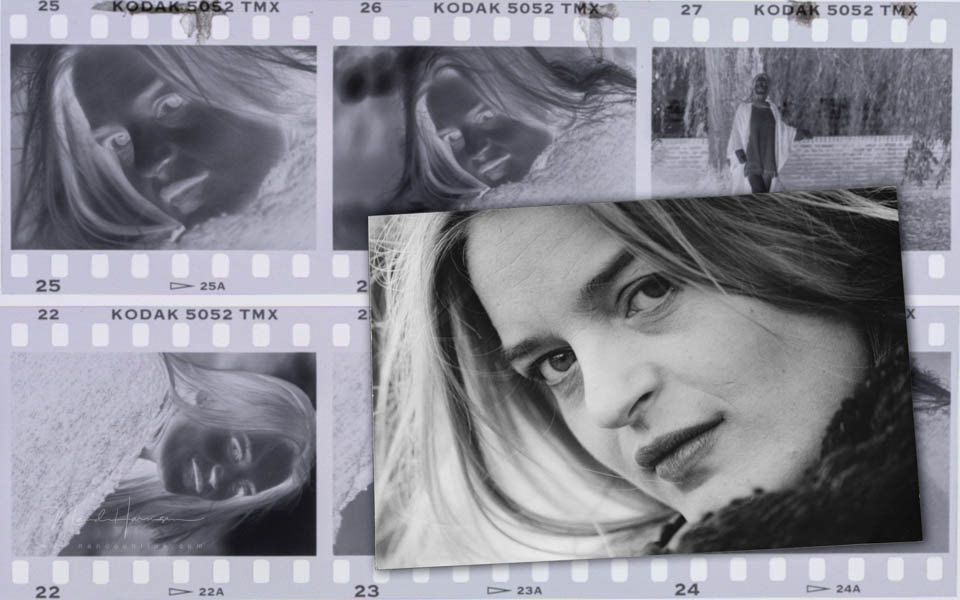
Those who had photography as a hobby might spend half a day taking photos. Afterwards, the same photographer would spend several more evenings in a darkroom. There, photos were printed in the light of a red lamp, with your nose above trays of chemicals.
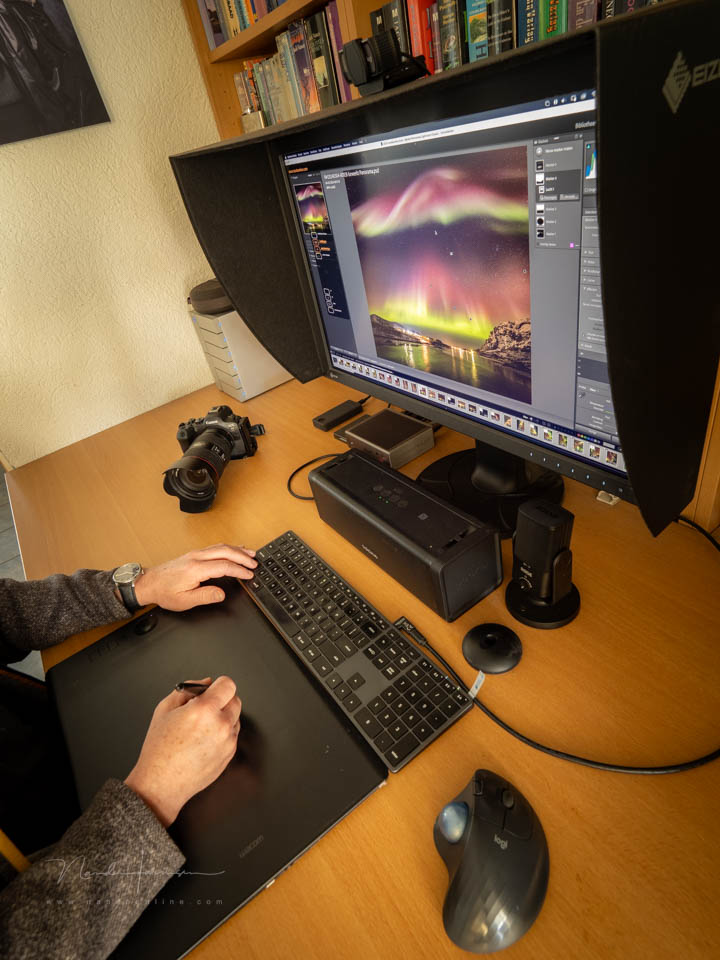
The only difference from the past is that we no longer spend time in the darkroom to get a print. We do it in the 'light room', or Lightroom. The evenings once spent in the darkroom are now spent behind the computer.
Those who did not want to spend time in a darkroom in the past took their film to the photographer. The photos were then printed at a printing lab. You got the photos back ready-made, with an automated standard print.
This is comparable to converting to JPEG in the camera. This photo is created using the edits that the manufacturer has built into the camera. On the whole, it is good, but never optimal.
You can see that there is not much difference from the past. However, there is one major difference that should not be forgotten. In the past, you had a roll of film with a maximum of 36 photos. These days, after an afternoon of photography, you can easily come back with hundreds of photos, or more.
Of course, everyone must decide for themselves what they want. You have to make that choice yourself. Just realise that, in this respect, the time spent on photography has not changed much.
About the author
Nando Harmsen has been photographing for more than 40 years. He specialises in wedding photography and landscape photography. Nando also gives talks, workshops, masterclasses and photo trips, and regularly reviews new and interesting equipment.
You might also like
-
 Mobile darkroom for analogue photographers
by Elja Trum
-
 Printing Colour Film in the Black-and-White Darkroom
by Erik van Rosmalen
-
 Is editing photos considered unacceptable these days?
by Nando Harmsen
-
 Dokaboek 2.0, all the basics of analogue photography in one book
by Erik van Rosmalen
-
 This is how Ilford film rolls are made
by Elja Trum
-
 Editing photos should not be rushed
by Nando Harmsen
13 comments
-
 Ron wrote on Tuesday 21 January 2025 at 11:27 | reply
I don't take the comment that photographers say "It should already be right in the camera" seriously when you consider that they probably shoot RAW and get to see an image from the camera manufacturer that is heavily compressed in the highlights and shadows. Then just shoot JPEG, it seems to me. But yeah, most photographers would be scared to death if they were to actually see a RAW image on the back of their camera. On the other hand, if they used to see a black and white negative, didn't they also choose which Ilford paper to use to get contrast? It's time camera manufacturers put a separate button on the camera so you have the choice to actually see RAW. But yeah, after that we're once again dependent on software idiots who think contrast is contained in a slider.
Translated from Dutch. -

 Nando
wrote on Tuesday 21 January 2025 at 12:51
| reply
Nando
wrote on Tuesday 21 January 2025 at 12:51
| reply
I think that anyone who 'wants to get the photo right straight away' never shoots in raw. They shoot in jpeg, because raw means post-processing.
Translated from Dutch.
It is impossible to view a raw file on your screen. A raw is raw image information, not a photo. To view a raw file, it must already have been converted to a jpeg, and that is what you see on your screen. You do have an influence on that display, which is essentially processing in the camera.
So, that button will never come because it is not possible. -
 Paul wrote on Tuesday 21 January 2025 at 12:40 | reply
Well put.
Translated from Dutch.
I've spent quite a few hours in the darkroom myself. And that was often hard work, you may not have forgotten, but you often had to make "test strips" before you could produce a print. You then also first had to put them through the entire process, in order to assess them. A 40x50 print would cost you a whole evening. Now half an hour. -
 Donald Willemsen wrote on Tuesday 21 January 2025 at 13:34 | reply
I completely agree with this article.
Translated from Dutch.
Nando, I think you even forgot something. In the analogue era, most people took their roll of film to the photographer /processing lab because they didn’t have a darkroom themselves and didn’t possess the skills to do it themselves. Now, behind the PC, everyone can learn how to edit and post-process their photos. The costs are also lower because nowadays most people have a PC or tablet at home. Editing software is readily available, whether free or not. Photography has thereby become more accessible and more 'democratic'. So accessible, in fact, that professional photographers increasingly have to take on side activities to earn a decent living or even keep their heads above water. Digital photography has thereby also given the phenomenon of 'Beun de Haas' much more room. -
Nando
wrote on Tuesday 21 January 2025 at 15:21
| reply
I mentioned it: taking the roll of film to the photographer.
Translated from Dutch.
As far as costs are concerned, I think it’s a bit of a mixed bag. In the past, it cost between 25 and 50 guilders to develop and print your photos, and the roll of film also cost about 10 guilders. One roll of 36 photos per month was already twice as expensive as a current Adobe Lightroom subscription.
Cameras and lenses, on the other hand, have become very expensive. -
 Edwin wrote on Tuesday 21 January 2025 at 14:49 | reply
Suppose you only shoot in RAW, even then the image can be seen on your camera, so you can definitely see RAW.
Translated from Dutch.
If you want to delete it, there isn't a JPG with it either -
-
Donald Willemsen wrote on Tuesday 21 January 2025 at 16:24 | reply
Nando, the fact that cameras and lenses have become much more expensive is true and also logical. Cameras can do a lot more now. It's no longer just a 'light-tight little box' with a lens and a viewfinder. It's full of electronics and you can even use it to film. Lenses are more expensive because of the better glass and also the built-in electronics that, among other things, make autofocus possible.
Translated from Dutch.
Actually, you can't really compare them with each other in a realistic way. -
 jeepee wrote on Tuesday 21 January 2025 at 19:27
| reply
jeepee wrote on Tuesday 21 January 2025 at 19:27
| reply
I enjoy spending time in the darkroom from time to time (a basement in my case, so not at the moment). A big difference is that we used to have albums and cookie tins with prints, and those can still be looked at today. Digitally, you take thousands of photos, but only a very small fraction ever gets printed (if it happens at all!). Where will all those digital files be in 25, 50 or 100 years? I have family photos that are more than 100 years old and are still very beautiful and valuable. So it is not a waste of time.
Translated from Dutch. -
Nando
wrote on Thursday 23 January 2025 at 09:40
| reply
Those thousands of digital photos are often no longer worth looking at. Only the best/most beautiful and most valuable ones are worth looking at again in 25 or 50 years. Only no one will take the trouble to look them up on a computer and there's a good chance that they will eventually be thrown away (by children, surviving relatives or, in their absence), or can no longer be found.
Translated from Dutch.
An album is somewhat more lasting as a memento in that respect, I think.
Seems like material for a little article...
-
Edwin wrote on Thursday 23 January 2025 at 11:31 | reply
Ok, clear
Translated from Dutch. -
Donald Willemsen wrote on Thursday 23 January 2025 at 12:01 | reply
Nando, sometimes it is still worth keeping all those thousands of photos. I've had it happen that years ago I couldn't get a photo to look the way I wanted in post-processing. Partly thanks to the current state of technology and software, I can now finish the photo the way I want. An article is of course always welcome.
Translated from Dutch. -
Nando
wrote on Thursday 23 January 2025 at 13:42
| reply
I hardly believe that this has anything to do with the state of technology or software. But with your own growth in knowledge and skill.
Translated from Dutch.
If you couldn't edit a photo from years ago properly, the photo was good and not ready for the trash.
All those photos that aren't good, and can't be repaired with post-processing either, and have no emotional value, or are almost the same as the other 99 in the same series, then I see no reason to keep them.
Have your say
Please note: Articles older than a week can only be commented on by signed-in visitors.Would you still like to comment? sign in or create a free account.
Become a better photographer every week
A practical photography tip in your inbox every week.
39,024 photography enthusiasts already receive the tips! More about the weekly mail. Or keep up to date via  Facebook.

Elja Trum
Photofacts; everything to do with photography!
Would you like to take better photos and keep up with what is happening in photography? Photofacts publishes articles that teach you something about photography — from a product announcement to a practical shooting tip or a look at a website. Photofacts covers photography every day and is a hobby project of Elja Trum's that got out of hand. The articles are written by a team of volunteer authors. If you would enjoy writing one or more articles for Photofacts, do get in touch.More about PhotofactsPhotofacts is made possible in part by
