

Is editing photos considered unacceptable these days?
Monday 10 April 2023, 20:10 by Nando Harmsen | 7,863 views | 50 commentsThis article was translated from Dutch with the help of AI. Read the original.
When photo editing comes up, opinions are divided. For some, it is simply part of photography. For others, it is unacceptable because a photo should be right straight out of the camera.
Is this a modern idea, or was it the same in the past?
In the past, there was the photographer who put a film roll in their camera and took photos. The photographer set up the camera as well as possible and took the photo. Sharpness, depth of field, exposure, composition, everything had to be right. Then two things could happen.
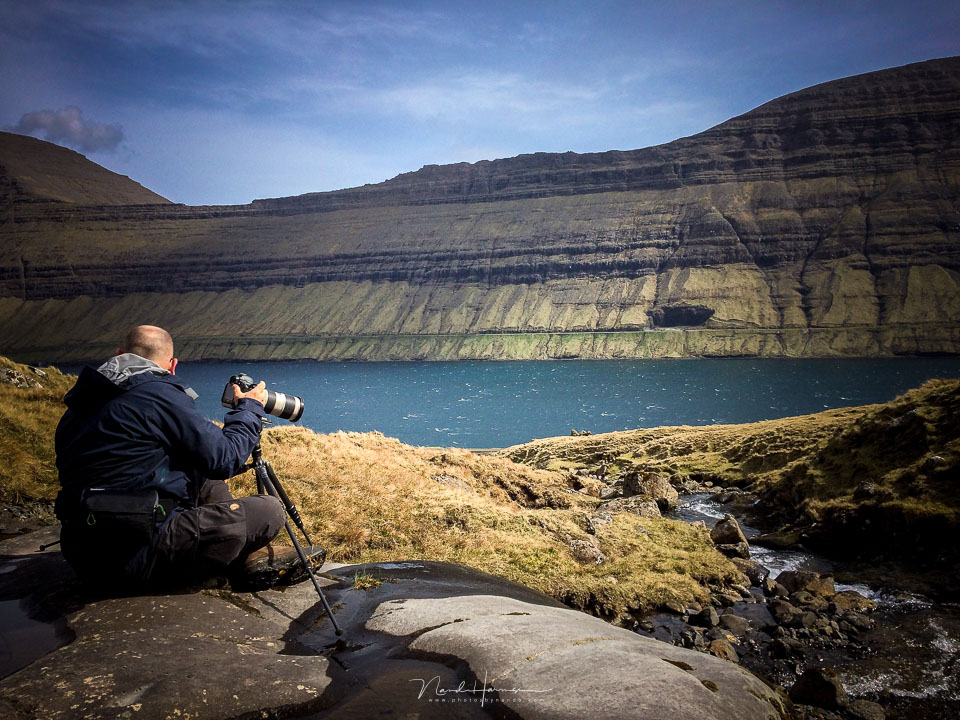
The photographer took their film roll to the photo shop and had the roll developed and the photos printed. The photographer had little control over this, as it was an automated system. You had to wait and see what the result looked like. You had no control over it.
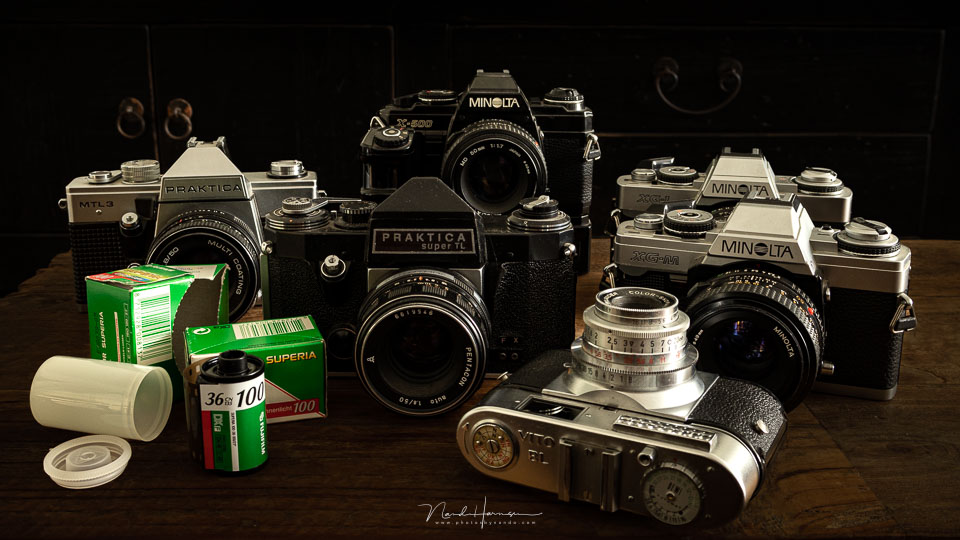
Or the photographer developed their own film roll in the darkroom. Then hours were spent printing the photos. You could choose between different types of photographic paper and work out exposure times. You could dodge, burn and do much more.
The darkroom has now been replaced by the light room, or Lightroom. Or one of the many other programmes you can use. With this software, you can do the same things as in the darkroom. It has simply become easier and less labour-intensive.
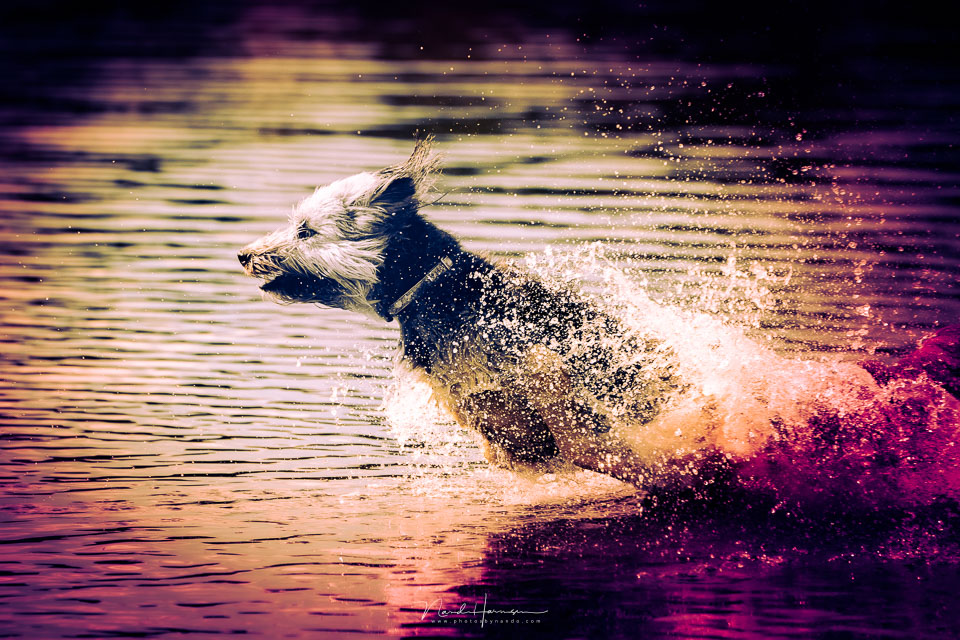
In fact, the photographer who used to spend time in the darkroom is now working on the computer. The aim is the same: to make the photo taken with the camera look as good as possible. Yet many modern photographers think this is unacceptable. The photo should be right straight out of the camera.
I have been wondering for some time why some people are so firm about this. Until I realised that this may be comparable to the photographer who used to have their film roll printed by the photo shop. Or the photographer who took slides.
The film was developed and printed, but using the settings chosen by the photo lab for you. That is exactly the same as photographing in JPEG, which is editing in the camera based on the manufacturer's settings.
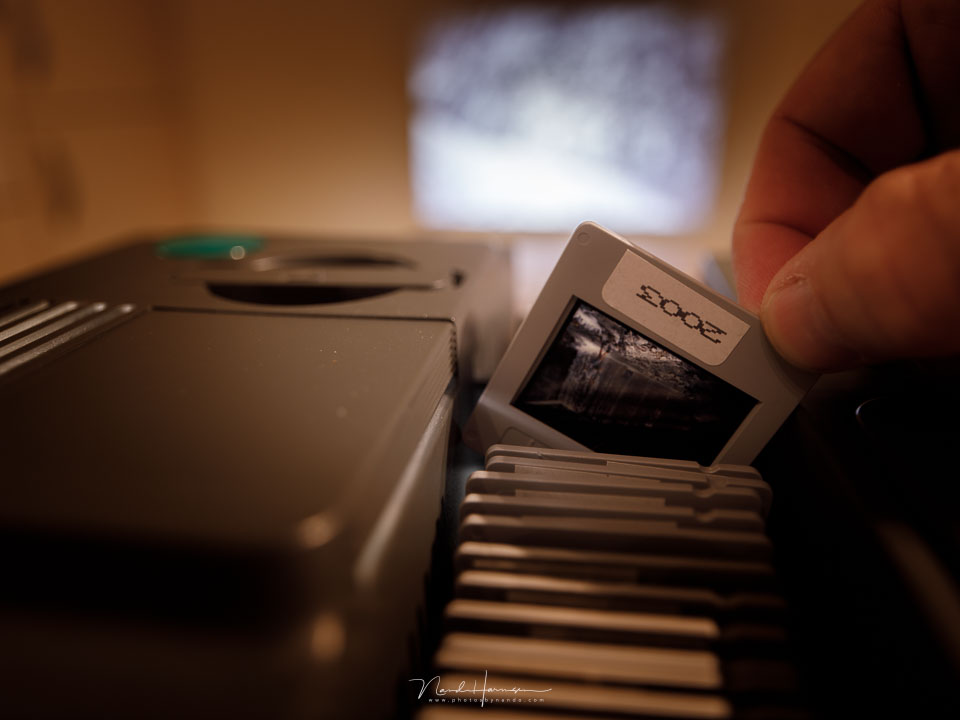
There is a difference, of course. In the past, you could choose between different film rolls and you had your camera's exposure settings.
Today, you have more settings available that affect the result straight out of the camera. But then, in fact, you are editing the photo in the camera.
If you think photos straight out of the camera should be the final result, that is entirely up to you. But I would be interested to hear what you think about what I have written in this article. Let me know in a comment.
About the author
Nando Harmsen has been photographing for more than 40 years. He specialises in wedding photography and landscape photography. Nando also gives talks, workshops, masterclasses and photo trips, and regularly reviews new and interesting equipment.
You might also like
-
 My 10-step Lightroom Classic workflow
by Nando Harmsen
-
 New AI feature for Lightroom and Lightroom Classic
by Nando Harmsen
-
 Wanneer Lightroom en Photoshop niet meer samenwerken
by Nando Harmsen
-
 How much do Lightroom and Photoshop subscriptions really cost?
by Nando Harmsen
-
 Mobile darkroom for analogue photographers
by Elja Trum
-
 Take your portfolio with you using Lightroom Mobile
by Nando Harmsen
50 comments
-
 Mac wrote on Tuesday 11 April 2023 at 08:31 | reply
I come from the time when you printed photos yourself, so as far as I'm concerned, a photo doesn't have to come out of the camera that way.
Translated from Dutch.
E ven then, a lot was done in the darkroom. As you already wrote:
"There was a choice of types of photographic paper, choosing exposure times, you could burn in, dodge, and much more."
And that much more, is indeed much more.
And even if you took your roll of film somewhere, you could still do all kinds of things. If you exposed an iso400 roll of film at, for example, 1600, you indicated that, and it was (if done properly) corrected at the lab. You could even ask whether a negative roll of film could be developed as a slide film (cross process), or the other way around of course.
I have even seen photos printed in the darkroom, where the sky was replaced by another sky (and many other photos, collages).
the only difference with now is that back then you were busy for days, now a few hours.
And I keep saying it, people who come up with arguments like I show it as it was, so I don't photoshop, are completely wrong.
you can't show how it was, because if you want to show how it was, then you have to look at the photo on the spot and possibly edit it on a calibrated monitor. Otherwise you're working from your memory, and your memory shows you things differently depending on how you felt at the moment of taking the photo, and when you look back at the photo.
Were you in love, and looking at a sunset, it will seem much more intense in your memory than when you looked at it while you were sad. So your photo will look different.
There is nothing wrong with wanting the photo as it comes out of the camera, but there is also absolutely nothing wrong with editing photos. -

 PixelDude Raoul
wrote on Tuesday 11 April 2023 at 14:26
| reply
PixelDude Raoul
wrote on Tuesday 11 April 2023 at 14:26
| reply
Funny. Not developing any further seems more like a coitus interruptus to me. Stop after foreplay?
Translated from Dutch. -
 MacBigfoot wrote on Tuesday 11 April 2023 at 10:21 | reply
Every photo is by definition an edit of reality. You always leave something outside the frame of your photo, the use of various lenses distorts reality, and in any case the dynamic (color-) range of reality is never achieved in a photo.
Translated from Dutch.
In addition, you can photograph purely to record, or work more like an artist. The latter is not new: painters already did that on a large scale in the past. And if you get to work as an artist, who determines whether your photo is "not done", the artist alone, surely? -
 Ronald Maas wrote on Tuesday 11 April 2023 at 10:43 | reply
There's nothing wrong with wanting the photo as it comes out of the camera, but there's also absolutely nothing wrong with editing photos. I agree with that too, but always in moderation, and if you go as far as removing objects or people then that's where I draw the line.
Translated from Dutch. -
 Piet Alberts wrote on Tuesday 11 April 2023 at 10:51 | reply
Never had a darkroom. Took a lot of slides. Started editing digital photos in 2004.
Translated from Dutch. -
 kok.f@ziggo.nl wrote on Tuesday 11 April 2023 at 10:55
| reply
kok.f@ziggo.nl wrote on Tuesday 11 April 2023 at 10:55
| reply
One does not necessarily have to be better than the other, although with RAW you cannot avoid at least some basic editing. And yes, a JPG straight out of the camera is also an edited photo. But every photo is a manipulation of reality. Your focal length, aperture, composition and crop all give the photo some context and as such it is only a fraction of reality. Although the tools for editing have become many times more accessible than in the darkroom days, photography is still a 'craft'. Perhaps that is also where there is a difference between just dragging some sliders in your software and crafting an image.
Translated from Dutch. -
 Francis wrote on Tuesday 11 April 2023 at 11:04 | reply
Editing the photo as little as possible seems the most logical to me......possibly white balance and contrast, a bit of cropping but nothing else. Eventually it is no longer a photo but a completely different image solely because of computer editing
Translated from Dutch.
I am absolutely opposed to overediting. -
 Donald Willemsen wrote on Tuesday 11 April 2023 at 11:09 | reply
It will always remain a discussion. In the analogue era, by far most people took an exposed roll of film to the photo shop and the developing and printing was done by the processing lab. In fact, those people also knew nothing about the (chemical) processes involved and what influence you could exert on them yourself if you did something like that yourself in the darkroom. So the saying applies here: 'What is unknown is unloved'.
Translated from Dutch.
This can therefore be extended to digital photography, where the same group of people are best off photographing in JPG because then the camera does the work for you and if you don't like it, you only have to adjust the picture style.
The photographer who previously dove into the darkroom to finish a photo in the way he wanted it himself, will now photograph in RAW to develop it into a photo the way he wants it. A picture style then does not even matter anymore, because you will no longer find that in a RAW image that looks unfinished and flat. The camera has done nothing else with that image.
The group that therefore likes to develop it themselves, will not want to leave anything to chance and finish the image according to their own insight. There is a 'but' to it. Just like the analogue photographer who develops and prints himself, you do have to know what you are doing and know how to handle the 'development software'. Exactly as an analogue photographer also had to learn how to handle the means used in the darkroom.
Likewise in digital photography, the saying applies again now: What is unknown is unloved'.
By doing it yourself you can get more out of a photo than the 'processing lab in the camera'.
So I agree with er Nando and Mac -
 Douenburg George wrote on Tuesday 11 April 2023 at 11:10 | reply
As in the old days in the darkroom and now behind the PC, my 'editing' of photos is limited to dodging or burning and removing a speck or bit of dust. I still photograph in M mode and try to edit as little as possible. Only when processing macro shots can I not do without editing/stacking, and I use Zerenestacker. But to each their own hobby and each their own way of photographing
Translated from Dutch. -
 M Verbaarschot wrote on Tuesday 11 April 2023 at 11:12 | reply
Perhaps by a “photo that comes out of the camera” the part of taking photographs before pressing the shutter button is also meant. In particular, looking and seeing. Determining the viewpoint and composition, waiting for the desired light, choosing the appropriate camera settings and lens. Then the photo is usually exactly right as it comes out of the camera. However, I call this “pre-editing”, or rather manipulations of the reality at which you want to point your lens. So “editing” an image before or after is inherent to photography. The “digital” box of pens and brushes with which to “write” with light has only become more extensive, easier, lighter, faster and cleaner. A blessing !
Translated from Dutch. -
 Gerard Ramaekers wrote on Tuesday 11 April 2023 at 11:19 | reply
Well, isn't it much more about what we now find beautiful or a technical feat in this day and age? Or not! I don't agree that analog offered the same possibilities as digital does now. Photoshop offers many, many more possibilities to completely change a photo, mind you, not immediately improve it! What strikes me, and bothers me, is that very many images (photos and video!) that appear in the media and can be seen at exhibitions are made far too colorful and smooth: look at how everything that is not considered aesthetic is photoshopped away into e.g. lifeless faces, look at how photos are often made far too colorful and lose contact with reality. Where Lightroom and Photoshop are used as an expression of mastery of technique (look what I can do!) or photographers go along with the hype of being far too colorful and smooth, photos very often lose their tension, emotional appeal to the viewer or depth. That is why I only use Lightroom in moderation (and sometimes am still a little jealous of those who have mastered Photoshop very well
Translated from Dutch. .
. -
 Guill. wrote on Tuesday 11 April 2023 at 11:23 | reply
I have been photographing for 75 years this year (and I am almost 89). I spent many, many hours in the DARKROOM. And not only to print. I did a lot of EDITING, often it was a MUST. I was often accused at the time of doing violence to reality. When I then showed the original shot next to the edited copy, people often reacted positively after all. In other words, there is nothing wrong with editing. Manipulation is something else. That sometimes goes too far, think of portrait photos, where, for example, models are presented as slimmer or the skin is transported into a BABYFACE
Translated from Dutch. -
 Jan Kleinjan - Zwolle wrote on Tuesday 11 April 2023 at 11:30 | reply
The only editing I apply to my RAWs in Lightroom is to make the photo look as much as possible like what I saw when I took the photo. So no boosting the colours, tweaking the sky a little, no filters, none of that. My edited photo corresponds (as closely as possible) to the original, and that's what matters to me. I have absolutely no interest in those beautifully edited photos, which in my opinion have nothing left to do with photography.
Translated from Dutch. -
 Louis Janssen wrote on Tuesday 11 April 2023 at 11:32 | reply
When judging photos, a frequently heard remark is: "It is about the end result" Viewers do not find it interesting whether a lot or, on the contrary, little effort has been made. I myself am a fervent advocate of editing and apply it extensively. I can well understand that there are also photographers who like "pure" photography. By mentioning with their photos that it concerns unedited photography, viewers are given the opportunity to appreciate the work in the right way.
Translated from Dutch. -
 Evert wrote on Tuesday 11 April 2023 at 11:35 | reply
In the past, with the rolls of film I sent away, I would always get a bit nervous because I never knew whether the photos would be printed with the correct colors. I often got worse photos back and they then seemed fine on the negative, so I had them printed again and then the photos matched my ideas exactly.
Translated from Dutch.
I am glad that I now have this in my own hands, although it does take a bit more time now. Lately I have been editing less because the photos simply come out of the camera looking good, but in my case it is sometimes necessary to straighten the photos a bit or sharpen something that is just not quite sharp enough, depending on what I want to use the photos for.
Before I was used to digital photography, I did need some extra courses, which I found much later at Photofacts. My thanks for that.
All in all, there is nothing wrong with post-processing, at least this way I keep control over the photos myself before publishing them. -
Francis wrote on Tuesday 11 April 2023 at 11:39 | reply
What really bothers me and what I really find 'not done' are photos that have been edited to such an extent that you can barely get the original out of them.....those are no longer photos but almost computer-controlled paintings ..... And unfortunately you are starting to see this phenomenon more and more...
Translated from Dutch. -
 Han wrote on Tuesday 11 April 2023 at 11:39 | reply
If you know about digital editing, the enjoyment of digital photography will only increase.
Translated from Dutch. -
 Bram van Maas wrote on Tuesday 11 April 2023 at 11:47 | reply
Everyone should do what they feel comfortable with.
Translated from Dutch.
I photograph in RAW so editing is already a must in my eyes and I don't pretend to show the photo that comes out of the camera but to show the photo that I would have liked to see that way. But fortunately everyone can do what they themselves like,beautiful and enjoy. -
RAWshooter wrote on Tuesday 11 April 2023 at 11:58 | reply
No digital photo is unedited. JPG settings in your camera change your photo and a RAW file is also edited.
Translated from Dutch.
The entire discussion is therefore pointless. There are people who don't understand what digital photography is and who believe in the SOOC fairy tale. Let them be. -
 Robert wrote on Tuesday 11 April 2023 at 12:00 | reply
In landscape photography, you cannot avoid doing at least a bit of post-processing. That's because the human also has a much greater dynamic range than a camera. In practice, that means, for example, that a sunset never comes out of your camera as beautifully as you see it yourself. So you will have to play with contrast and possibly "warmth". I understand that there are people who think you shouldn't go "too far" in that, but I think that the person who takes (and edits) the photo should decide that themselves.
Translated from Dutch. -
 alje creteer wrote on Tuesday 11 April 2023 at 12:24 | reply
Alje Creteer, at the photography school in The Hague we learned to retouch portrait photography, back then we made portrait photos on 13x18 plates and very carefully worked away the bags under the eyes and small pimples with a soft pencil, but there we did learn not to make photos of e.g. in face of Giethoorn, where the beautiful canals with bridges are shown and at the side a windmill next to a church, and also not to add skies that are not there at that moment. We did learn to correct the perspective of buildings back then by already using a technical camera when taking the photo.
Translated from Dutch.
The negatives at the time were valid proof in many a court case, that is of course no longer possible at all, oh well, let everyone do what they like, and if he or she wants to fool people with non-existent situations, they can decide that for themselves. -
guest wrote on Tuesday 11 April 2023 at 12:30 | reply
editing raw shots in Lightroom:obviously ; and in Photoshop such as stacking is also ok; however cutting pieces out of three different shots to then create a new photo together is a bridge too far
Translated from Dutch. -
 Galida wrote on Tuesday 11 April 2023 at 12:30 | reply
I agree with this. Editing beforehand in the camera and afterwards with a photo editing program seems perfectly normal to me. I also experimented back in the analogue days in my own darkroom. What I do have a problem with are people who add, for example, a new spectacular sky from their own or another file. Or add people or objects. That is only acceptable as a joke, for example on a birthday card or something. But not for exhibiting.
Translated from Dutch. -
 Henk van Weert wrote on Tuesday 11 April 2023 at 13:12 | reply
I see a RAW image coming out of the camera as a wheelbarrow full of data that you have to work with. Sometimes a little, sometimes a lot. Why not turn a flat RAW photo into a beautifully stylized image. I enjoy doing it and do it frequently.
Translated from Dutch. -
 Wim Hendriks wrote on Tuesday 11 April 2023 at 13:13 | reply
In photojournalism you may dodge or burn a little but editing, actually photoshopping, is out of bounds for newspapers, news sites and certainly if you participate in e.g. ZilverenCamera or WPP.
Translated from Dutch.
(Under parentheses) slides could also be edited to warm up rolls, filters and enhancing, done many times. -
 Ronald wrote on Tuesday 11 April 2023 at 13:23 | reply
As expected, various opinions. You encounter that everywhere. There are people very skilled at Photoshop and they really do make beautiful images. But of course I also find [that] beautiful. But what is the definition of natural. Because you can't avoid doing a bit of editing and that was already the case in the darkroom. Read photographing raw, or jpeg, both are edited. I see something to be said for both. It's a matter of taste. And that's a good thing, otherwise we'd only see one kind of image, everyone the same. Glad that tastes differ.
Translated from Dutch. -
 Richard wrote on Tuesday 11 April 2023 at 13:29 | reply
It regularly happens that people take photos of a light organ in the forest and when they look at the photos after they have been printed by the lab, the photo turns out not to be as one had expected, this has to do with your knowledge of photography and your white balance
Translated from Dutch. -
 Gerard Wielenga wrote on Tuesday 11 April 2023 at 13:36 | reply
My experience is that this is a discussion between people who see photography as a craft and are often fully occupied with mastering that craft and others who have moved beyond that stage (or skip it) and only use a camera as a means of expressing their creativity. Like a furniture maker who makes a beautiful chair and an artist who makes something from the same wood that you can hardly sit on. In short, completely different expressions that in the case of photography we call the same thing. 45 years ago I learned the craft at the photography vocational school in The Hague. Now, technically speaking, I use underexposed, tilted and blurry photos to get the result I see in my imagination. Is that still photography? No idea but I do use an expensive system camera for it.
Translated from Dutch. -
 Robert V wrote on Tuesday 11 April 2023 at 13:40 | reply
I agree with Francis. And a bad photo never gets any better with all those layers and tinkering.
Translated from Dutch.
With photo-shooting regards Robert V -
 michel wrote on Tuesday 11 April 2023 at 13:54 | reply
What ultimately matters ? Do you like the photo ? Do you think it is good or bad and why ?
Translated from Dutch.
How the result was obtained is nitpicking.
I'd rather have a beautiful photo even if it is edited than an ugly one that is unedited ! -
 Claudia wrote on Tuesday 11 April 2023 at 14:09 | reply
I 100% agree with this. A photo doesn't have to be perfect.
Translated from Dutch. -
 Maarten Kooijenga wrote on Tuesday 11 April 2023 at 14:20 | reply
My photos are almost always unedited. I take them based on the possibilities offered by the camera settings. I can straighten a horizon, after that it stops for me. A great deal, far too much information comes at me when editing, which I cannot store in my head.
Translated from Dutch. -
 Jan Engelkes wrote on Tuesday 11 April 2023 at 14:31 | reply
I completely agree with the response from Gerard Ramakers and Guill.
Translated from Dutch.
And what claudia says: a photo doesn't need to be perfect.
I look for example at the photos of Ed van der Elkesn. The intention of the depiction (situation) is determining. -
Mac wrote on Tuesday 11 April 2023 at 14:35 | reply
@Jan Kleinjan
Translated from Dutch.
This is exactly what I already wrote about, where it always goes wrong.
you don't edit a photo based on what you saw. You edit it based on what your memory tells you that you saw. And that doesn't only involve vision, but also emotion, feeling etc.
If you're happy, in love etc, colors in your memory look a lot more saturated than when you would have seen the same image when you're sad. So that has an influence on the outcome of your editing.
(and your state of mind also plays a role when you edit it) -
 Jan Spoel wrote on Tuesday 11 April 2023 at 14:36 | reply
You should simply do what you enjoy, and those who are opposed to photo editing usually don't master this subject, I can't do it so I'm opposed.
Translated from Dutch. -
 Remy wrote on Tuesday 11 April 2023 at 16:09 | reply
Just to respond to the rather provocative headline above the article: more photos are being edited nowadays than ever before! So the answer to the question is 'no', editing is done a great deal.
Translated from Dutch.
With the arrival of all kinds of smart software and apps on smartphones, the editing possibilities have become endless and within everyone's reach, and things were quite different in the past with a darkroom.
People edit photos like crazy, even if they don't have a 'dedicated camera', but simply use their smartphone photos. And more people are also taking photos than ever before, there are undoubtedly plenty of statistics about that to be found.
Photo editing can also go further and further, with AI programs you can simply change an entire background and you can also completely rebuild a photo.
But as is usually the case with everything, counter-movements tend to emerge as well. For some, this is because the sometimes very unnatural-looking photos start to grate, and it may also be that some photos start to look too 'uncanny'. Think, for example, of portrait photos with plastic-like skin and unnaturally brightened eyes. Or landscapes that no longer have anything to do with what they actually looked like. That's perfectly fine otherwise, everyone can decide that for themselves, but viewers are sometimes led astray and may then feel a bit 'cheated'.
And let's not forget that editing also requires a certain skill, not every edit is necessarily an 'improvement'. With some people, it seems as if editing has become a goal in itself, while they sometimes still have absolutely no understanding of the light/exposure/basic technique of photography.
It is therefore not all that strange that a (small) movement is emerging in the other direction, which would prefer to see very natural-looking photos. For this group, 'edited' has acquired the additional meaning of 'fake'. Or they simply don't like editing, which is of course also possible!
But not editing has certainly not become 'mainstream' in photography, because photography is still heading in the other direction: towards more and more editing. And with the influence of social media, I don't see that tide turning anytime soon.
For myself, I believe that a well-made photo can sometimes be made much more expressive with some post-processing. But an image that is mediocre at its core cannot be turned into a top photo with post-processing either! -
 John Boutsen wrote on Tuesday 11 April 2023 at 17:03 | reply
I think your photo (end product) may look the way you as a photographer want it to. If you need to edit for that, that is your choice and there is no need for anyone to comment on it. Isn't it also the case that unfamiliarity breeds contempt???
Translated from Dutch.
Where I do have a problem is when someone defends the position that you should not edit your photos while his/her photos clearly show (among other things halos and oversaturated colours) that he/she also edits (but without knowing what they are doing.
So yes or no..... that is your own choice, it would be nice if everyone respected that choice. -
 Sheila wrote on Tuesday 11 April 2023 at 18:25 | reply
Funny, I found the photo that was included in the email alerting me to this article more beautiful unedited (by the photographer, possibly not by the camera's software). (The photo from this article: https://www.photofacts.nl/fotografie/rubriek/landschapsfotografie/is-jouw-landschapsfoto-registrerend-of-leg-je-er-gevoel-in.asp).
Translated from Dutch.
That is a matter of taste. Otherwise, I completely agree with the opinions expressed above: the unedited photo no longer exists, certainly not in the digital age. -
 Dré van Hoof wrote on Tuesday 11 April 2023 at 18:38 | reply
When I was still working in black and white in the analog era, I was also often creative in the darkroom, creating images based on the photographs I had taken. For me, there was nothing wrong with creating an image myself that I liked, and it didn't necessarily have to represent the reality of what I had photographed. The opinions on that were divided at the photography club I was a member of. When I was one of the first in the club to start editing digitally, there were hardly any members left within the club who appreciated that. Unfortunately, that was a reason for me to cancel my membership at the time. Fortunately, computer post-processing is used much more nowadays. As far as I'm concerned, there are many possibilities within photography that make the hobby so beautiful and versatile. Some people fully devote themselves to analog photography and print the photos themselves using old techniques. Others create creative images, using multiple shots that they combine into a new image. Between these extremes are countless variations in which the photography enthusiast can indulge. In the hobby, it's primarily about the pleasure you get from it yourself. For me, that pleasure also lies mainly in the digital post-processing of photos.
Translated from Dutch. -
 Stef
wrote on Tuesday 11 April 2023 at 19:52
| reply
Stef
wrote on Tuesday 11 April 2023 at 19:52
| reply
No, editing photos is not necessarily a no-go, but it depends on how the edits are carried out and for what purpose.
Translated from Dutch.
In the photography industry, editing photos is a common practice and can help improve the visual appeal of the images and increase the quality of the end result. Professional photographers and graphic designers use editing programs such as Photoshop to retouch images, make color adjustments, remove backgrounds and make other adjustments to make the image look better and more visually appealing.
However, it becomes a problem when the edits are used to manipulate reality or to create unrealistic images. This can lead to unrealistic body images, influencing reality, or making changes to the image to make it look better or more attractive, which does not correspond to reality. This can lead to deception and can be harmful to those who identify with this.
Therefore, it is important to edit responsibly and ethically and to ensure that the edits do not manipulate the purpose of the image or make it misleading. It is also important to be transparent about the edits that have been made and not distort reality to create a certain image. This is Chatgpt's opinion, but it does correspond with my opinion -
 Hans den Boer wrote on Tuesday 11 April 2023 at 20:41 | reply
Well, in the 30s-40s of the last century, photography in Hollywood was done on a minimum of 8x10" sheet film. More was retouched with a pencil there than you could imagine (and quite a few tricks were also pulled). So no, it is definitely not new.
Translated from Dutch.
Everyone is entitled to their own opinion. If you keep the image as pure as possible, fine. If you create an image you have in mind using a camera and Lightroom/Photoshop (or other image editing software), then that is simply your choice. For me, the end result is what counts. -
 Metin wrote on Tuesday 11 April 2023 at 20:54 | reply
Photography is a means, for example just as a pen is intended for writing (or drawing) and a brush for painting, of what the maker wants to make. If a bit of imagination or other means are needed to achieve that, then so be it. After all, you make things for yourself, and only then for someone else.
Translated from Dutch. -
 mj wrote on Wednesday 12 April 2023 at 00:55 | reply
the photo that comes out of the camera is already an edit . A Raw photo has more information than you can see . You can only see it after the conversion . So this is an edit .
Translated from Dutch. -
 Rik Denekamp wrote on Wednesday 12 April 2023 at 07:14 | reply
For me, a photo has to be 95 % right when it comes out of the camera, it's about photographing on location. I do as little post-processing as possible, only what is absolutely necessary. I don't disapprove of heavy post-processing, that's a personal choice. It's great that it's possible and in case of emergency I will certainly make use of it.
Translated from Dutch. -
 Luc Vancamp wrote on Wednesday 12 April 2023 at 10:23 | reply
I have been cured for 15 years. Wonderful, that mental and physical independence.
Translated from Dutch. -
 Stefanie wrote on Wednesday 12 April 2023 at 11:17 | reply
A certain degree of editing always happens, either the camera does it for you or you do it yourself.
Translated from Dutch.
What you are photographing determines how far you can go in that. For reporting or documentary photography it is 'not done' to remove or add elements because you are trying to capture the 'truth', but as an art form I think you can go very far.
I myself am also working on compositing now, for some people that is not photography but I think that as long as the main part of it consists of your own photos it may indeed be called photography, even if parts from elsewhere or even AI have been incorporated.
What I really don't think is acceptable is to keep insisting that it hasn't been edited when everything shows that, for example, the sky has been replaced; don't lie! -
 Harman wrote on Wednesday 12 April 2023 at 12:34 | reply
Taking photos is purely a hobby for me , and that doesn't have to stop on the way back home.
Translated from Dutch.
At home it is simply the continuation of a nature walk, double the fun. -
 Gerard wrote on Wednesday 12 April 2023 at 14:57 | reply
I’m in favor of editing.
Translated from Dutch.
You can then make something beautiful the way you want it to look.
If someone doesn’t want that, that’s fine too. -
 martinphili wrote on Wednesday 12 April 2023 at 18:58
| reply
martinphili wrote on Wednesday 12 April 2023 at 18:58
| reply
How funny, I didn't know this was still a point of discussion these days
Translated from Dutch.
-
 Paul wrote on Friday 14 April 2023 at 11:50 | reply
What you write Nando, has also been playing through my head for some time.
Translated from Dutch.
Having started in the darkroom myself back in the 60s, it is obvious to me: editing is part of it.
That you shouldn't use edited photos as a news source is a point though,ndie should be "srtaight".
Without editing Ansel Adams would have been forgotten long ago, and not a single bruidlofts-shoot would hold up. If you take a snapshot as a memory, okay, if you want something for the wall, it can't be done without it.
Have your say
Please note: Articles older than a week can only be commented on by signed-in visitors.Would you still like to comment? sign in or create a free account.
Become a better photographer every week
A practical photography tip in your inbox every week.
39,024 photography enthusiasts already receive the tips! More about the weekly mail. Or keep up to date via  Facebook.

Elja Trum
Photofacts; everything to do with photography!
Would you like to take better photos and keep up with what is happening in photography? Photofacts publishes articles that teach you something about photography — from a product announcement to a practical shooting tip or a look at a website. Photofacts covers photography every day and is a hobby project of Elja Trum's that got out of hand. The articles are written by a team of volunteer authors. If you would enjoy writing one or more articles for Photofacts, do get in touch.More about PhotofactsPhotofacts is made possible in part by
