

A Camera for Every Occasion
Monday 2 December 2024, 20:10 by Nando Harmsen | 4,539 views | 35 commentsThis article was translated from Dutch with the help of AI. Read the original.
Most photographers have one camera, two at most. I think there is a small group that has three. If you have more, it is out of necessity or because you do not know what else to do with your money. Which cameras would you choose in that last case?
Having one, two or three cameras is quite common. Usually, one is a backup, and one is for less demanding situations such as holidays or day trips. Apart from the latter, you use one camera for all the types of photography you practise.
That means a camera often needs to be versatile. Especially when you practise several disciplines of photography. I am one of those photographers. Landscape photography, wedding photography, night photography and portrait photography. These, but not limited to them.
My camera is the Canon EOS R5. This is a very versatile camera that performs well or reasonably well in all these disciplines. Still, I would choose a different camera if I only photographed one discipline.
It is fun to think about which cameras I would use for each discipline. At least, if I did not have to think about money. What would I choose then? Let us take a look at my choices.

Landscape photography
This needs to be a camera with a reasonably high resolution, and one that can easily achieve a large depth of field. I would choose an APS-C camera. Dynamic range performance is not that important, because HDR is easy to do. A landscape will wait. Speed is therefore not important either.
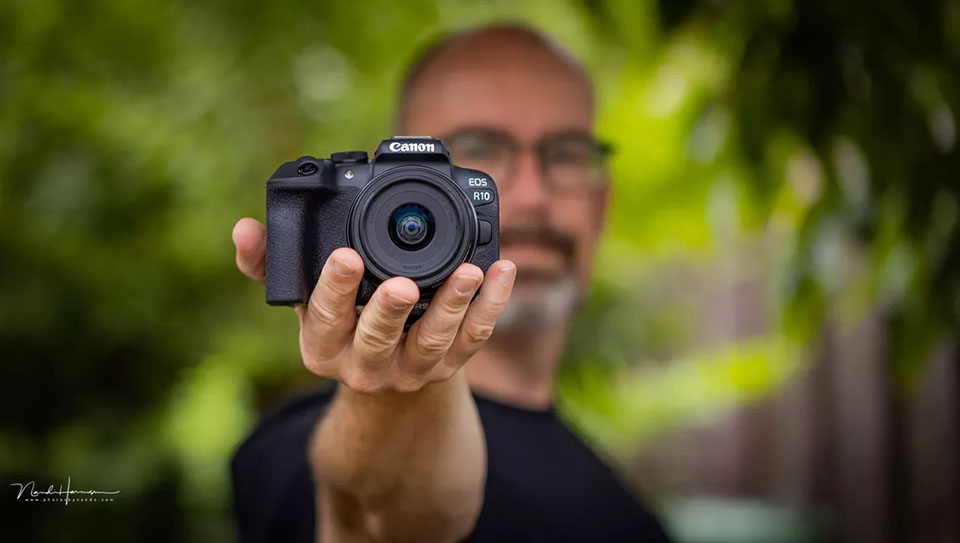
It is difficult to choose a camera, because there is a lot of choice. My first thought is a Canon EOS R10. Small, lightweight and packed with features. Or a Fujifilm X-T5 because of the higher resolution. Yes, probably the latter.
Wedding photography
The camera needs to be fast, have two memory card slots and offer a reasonably high resolution. The camera should not be too heavy, and should allow for shallow depths of field. A wide dynamic range is important.
A full-frame camera is the ideal choice for this. Which one is harder to determine, but I remember really liking the Leica SL when I was allowed to review it. However, as an alternative I would choose a Sony A7R V, if it were not for the menu. Perhaps I would still choose a Canon EOS R5?

Portrait photography
Dynamic range is useful for this type of photography, but only important if you take a lot of photos on location. It matters less in the studio. A good resolution is desirable, but not too high.
What I do like is the ability to achieve a very shallow depth of field. A medium-format camera would be my preference. Fujifilm is appealing, but I would still choose Hasselblad. An X2D, for example.

Night photography
Good ISO performance is very useful here, but not necessarily essential. It depends somewhat on the type of night photography. It does give you some room to manoeuvre, which is useful. This quickly leads you to a full-frame camera.
You can find good ISO performance at Sony. However, I personally find the focusing less pleasant in those conditions. A high resolution is not necessary either, especially when it comes to photographing the Milky Way.
I think I would quickly choose a Canon EOS R6 mark II. Sufficient resolution without too much, and very pleasant to use in dark conditions.
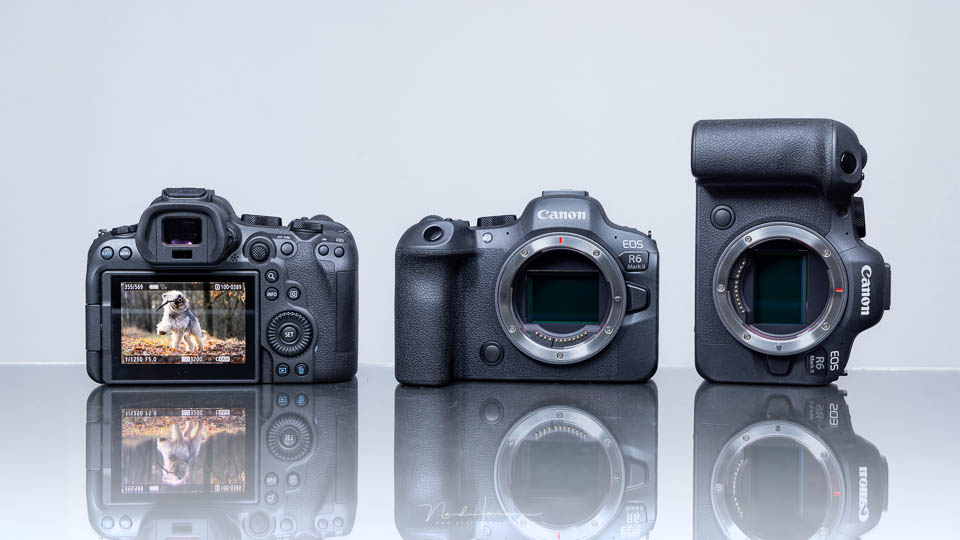
However, if night photography moves towards light painting, I would choose an Olympus camera. Or an OM-Systems. I have an OM-D E-M1 mark III and it works perfectly. I prefer to avoid higher ISO settings, but they are not needed for light painting anyway.

Macro photography
An APS-C camera is actually not a bad choice at all for this type of photography. It gives you a little more depth of field, and the angle of view at a given focal length is slightly narrower. But a full-frame camera can work perfectly well too.
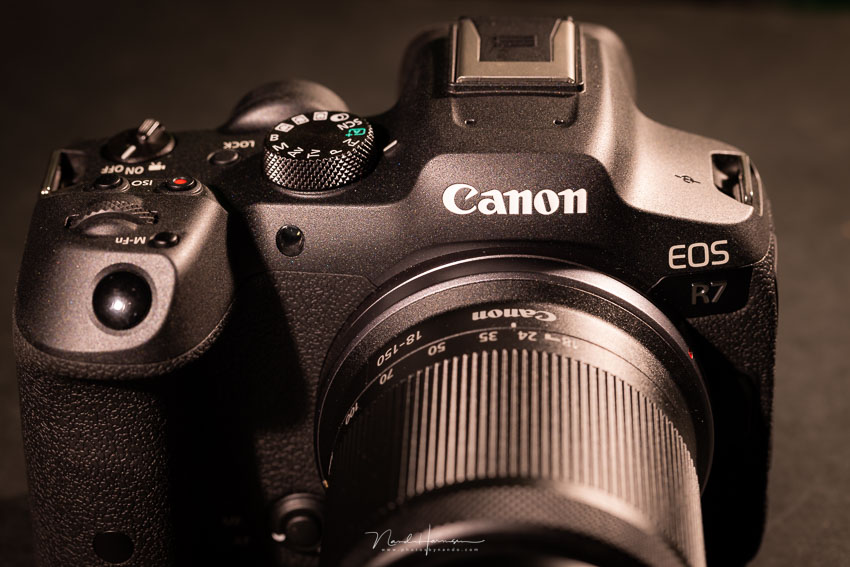
It is difficult to choose here, since the different brands do not differ that much. Perhaps a Nikon? Or a Sony? No, I think I would end up choosing Canon again. Maybe a Canon EOS R7 would be a nice camera for this purpose.
Action photography
For action photography, the number of frames per second is important, as are good autofocus and a large buffer. Cameras that qualify for this are a Canon EOS R3, Nikon Z 9 and Sony A9 III. I think I would choose the Nikon Z 9.

It is a beast of a camera, with more than enough frame rate and a lovely resolution. The autofocus may be slightly behind Sony's, but that is debatable. The built-in grip is a real bonus.
The conclusion
If I did not have to worry about money, and could buy whatever I wanted, my list of cameras would look like this.
- Canon EOS R10 (or Fujifilm X-T5) with an ultra-wide-angle lens and telephoto lens
- Leica SL 3 with three primes (wide-angle, standard, telephoto)
- Hasselblad X2D with three primes (wide-angle, standard, telephoto)
- Canon EOS R6 II with an ultra-wide-angle lens and fast standard lens
- Nikon Z 9 with a super-telephoto lens and telephoto zoom lens
- Canon EOS R7 with a macro lens
- Olympus OM-D E-M1 mark III with an ultra-wide-angle lens and standard lens.
Fortunately, I do have to keep an eye on the money, and a list of equipment and lenses like this is not possible. So I will stick with what I have, the Canon EOS R5, and that works perfectly for me.
But if I only practised one discipline of photography, I would choose one of the cameras above. What would you choose if you did not have to worry about money?
About the author
Nando Harmsen has been photographing for more than 40 years. He specialises in wedding photography and landscape photography. Nando also gives talks, workshops, masterclasses and photo trips, and regularly reviews new and interesting equipment.
You might also like
-
 Have a choice? Choose an odd number
by Nando Harmsen
-
 What are groups and channels on your flash for?
by Liesbeth van Asselt
-
 The ideal choice for primes
by Nando Harmsen
-
 The 5 Cameras You Should Never Buy
by Nando Harmsen
-
 Focusing on Large Groups of Animals
by Nando Harmsen
35 comments
-

 MacBigfoot wrote on Tuesday 3 December 2024 at 10:21
| reply
MacBigfoot wrote on Tuesday 3 December 2024 at 10:21
| reply
If you didn't have to worry about money?
Translated from Dutch.
Then on a whim (with or without some consideration) you could buy everything your heart desires.
And even if you limit yourself to, say, landscape photography: one day I might want to take a Hasselblad with me, the next day, during a trek through nature, I'd rather have something more manageable (lighter).
If money played less of a role, I'd start by trying out all kinds of things as extensively as possible, and probably never be satisfied. -

-
 Eduard Bakker wrote on Tuesday 3 December 2024 at 11:24 | reply
I had to save up hard for four of them , Canon eos R for portrait photography , Canon Eos r7 for bird photography. Fuji XT2 for nature photography, and finally the camera I take with me every day , compact and light, the samsung NX500
Translated from Dutch. -
-
 Peter van Dinther
wrote on Tuesday 3 December 2024 at 11:35
| reply
Peter van Dinther
wrote on Tuesday 3 December 2024 at 11:35
| reply
Nice list, I just don't really understand why the Sony camera menu keeps coming up as a negative aspect every time. I have a Sony A7r5 and don't find it complicated at all. These recurring views do detract from the photographic qualities of these cameras, in my opinion unjustly.
Translated from Dutch. -
-
 E.L. Warrink wrote on Tuesday 3 December 2024 at 12:02 | reply
Hello,
Translated from Dutch.
I photograph with two Nikon Z cameras because of speed and sensitivity. Also a reason because I have to change lenses very often, for example in the theater as well as in sports, where sometimes you have to be close and other times further away.
My lenses are Sigma 2.8 70-200mm and Nikon 4.5 24-70mm
Which lens would actually be better for me to be able to shoot the right pictures both up close and further away? Preferably I would like to do this with 1 lens, both in terms of light sensitivity and being able to get everything in the picture without too much loss of my assignment. I would appreciate your advice on what would be wise. -
Nando
wrote on Tuesday 3 December 2024 at 13:35
| reply
You can't get that in a single lens. So switch when necessary, or use two bodies.
Translated from Dutch.
An alternative could be something like a 24-250mm lens (or similar). But then you sacrifice so much quality and light sensitivity that it becomes unworkable. -
 Wim Moerkerken wrote on Tuesday 3 December 2024 at 12:09 | reply
Notable that no Panasonic is mentioned, nor why. Some other photography media are also selective and mainly choose one or a few brands. That says something about their objectivity, in my opinion.
Translated from Dutch. -
-
 johan bauwens wrote on Tuesday 3 December 2024 at 12:24 | reply
I have two cameras, since I got my Canon R6, I don't use the 5DIII. I don't see why you'd use multiple cameras with different menus, it only leads to confusion. Lenses are more important than the camera. If I had too much money, I'd buy a fast 600 or 800 mm for birds but actually I already have everything I need.
Translated from Dutch. -
-
johan bauwens wrote on Tuesday 3 December 2024 at 13:27 | reply
I do many different kinds of photography : weddings, concerts, landscapes, nature, animals, urbex, actually everything except sports and my R6 can handle it all
Translated from Dutch. .
. -
Nando
wrote on Tuesday 3 December 2024 at 13:31
| reply
The EOS R6 is indeed a very good all-rounder.
Translated from Dutch.
But that doesn't mean it excels in all types of photography.
For example:
For animals, an APS-C camera would give you a little more magnification per focal length, if you need that.
For landscapes, an APS-C would give you much more depth of field per angle of view, if you often make use of that. -
E.L. Warrink wrote on Tuesday 3 December 2024 at 13:30 | reply
I do several sports, but from a distance a 70-200 or a 60-600 is fine until I’m standing close to a podium with the winners, then I have to change lenses. In my case, this also applies in theaters where flash photography is not allowed and I don’t have a large distance /space. Even then I often need an extra lens. My question remains the same as last time. How do I manage this with 1 lens???
Translated from Dutch. -
-
 Els Blomme wrote on Tuesday 3 December 2024 at 13:56 | reply
And what would you use for street photography?
Translated from Dutch. -
-
MacBigfoot wrote on Tuesday 3 December 2024 at 23:59
| reply
No Q3 (28mm)?
Translated from Dutch.
That would be my preference.
The great thing about the M11 is precisely the interchangeable lenses and that it's a rangefinder. -
-
MacBigfoot wrote on Wednesday 4 December 2024 at 11:40
| reply
Hahaha, absolutely.
Translated from Dutch.
But money is no object, so then I’ll take the Q3 along exclusively for street photography.
The M11 with a 35mm, 50mm and a 90mm will then come along for a day in the city, with the possibility of taking a street portrait, a cityscape, or something unexpected. -
 Gert van Eck wrote on Tuesday 3 December 2024 at 13:56 | reply
I practice several types of photography: landscape, Milky Way, wildlife and sometimes birds or portraits. For that I have an Olympus OMD EM1 Mark II and an Omsystem Om-1 Mark II.
Translated from Dutch.
There are still two analogue cameras, Nikon and Exakta, in the cupboard (for sale to enthusiasts), so those don't count. If money were no object, I would look for a low-noise, high-dynamic-range full-frame camera for landscape and night photography and 2 fast lenses. But I wouldn't know which brand yet. -
 Donald Willemsen wrote on Tuesday 3 December 2024 at 14:22 | reply
In the past I used 2 bodies, one with a wide-angle zoom and one with a telephoto zoom. That way I didn't have to keep changing lenses, with the risk of getting dust on the sensor. Both were crop cameras
Translated from Dutch.
I am happy with what I have now. At the time I traded in 2 bodies to be able to buy the R7 with a kit lens and adapter.
Nando, you ask, if money weren't an issue. In my eyes, it is and remains a dream and dreams are deceptive. They are there to wake you up and make you return to reality.
I don't really need more and more expensive equipment. In fact, you can take beautiful, good photos with any camera. Especially if you are also willing to invest the time in optimal post-processing.
Expensive L lenses from Canon remain a utopia for me. That doesn't alter the fact that in the cheaper segment I do continue to pay attention to acceptable quality. Good accessories are also important to me. This includes a sturdy carbon tripod and a carbon monopod with a good ball head and/or geared head on it, a good reportage flash and an excellent filter set from HAIDA, for example.
It is not just the camera that takes the photo. The photographer who can creatively work with well-chosen accessories also plays an important role. Those accessories cost money too. Because dreams are deceptive after all, I have to row with the oars I have.
A satisfied person takes the most beautiful photos. -
 Carlo Linders wrote on Tuesday 3 December 2024 at 14:26 | reply
Dear Nando,
Translated from Dutch.
I would like to thank you once again this way for your excellent. clear photography talk at our place in Westerhoven. This talk had a high educational value. I personally (member of Fotoclub Lamina) have been photographing since 1980 and am self-taught, but that evening I was nevertheless given many approaches that have significantly filled my toolbox. For which Thanks.
Carlo Linders -
-
 janloonstra wrote on Tuesday 3 December 2024 at 15:08 | reply
Starting from what I began with, a Mnolta, I now have two Sony full-frame cameras, and four lenses, a 24 mm wide-angle lens, and a 28-75 wide-angle zoom, a short telephoto zoom 80 -180 and a telephoto zoom 15- 500mm. The latter mainly for bird and wildlife photography.
Translated from Dutch. -
 Evert wrote on Tuesday 3 December 2024 at 15:18 | reply
Thanks, clear
Translated from Dutch. -
 Dick de Roos wrote on Tuesday 3 December 2024 at 16:54 | reply
Started once with a Ferrania Lince 2 (35mm film!), followed by an Asahi Pentax 2.
Translated from Dutch.
Many cameras later, I have been photographing with an Olympus E-M1 and various lenses for quite some time now.
If money played less of a role, I would also like to acquire a few nice Pro lenses.
And if I am dreaming anyway, an OM-1 Mark II as well.
But until then, I make do with what I have. That works too.
I would like to trade in my video camera for one that produces better videos, but that was not what the question was about.
-
 Hennie Terheijden wrote on Tuesday 3 December 2024 at 18:51 | reply
For general use I have a Nikon Z7 ll . The Fujifilm X-T5 for landscape photography. I don't like carrying a lot of stuff around, so for street photography and on the go a Fujifilm X-100 VII. In case of emergency I fall back on an iPhone 14 (I'm usually pleasantly surprised by the result).
Translated from Dutch.
For video on the go, the DJI gopro 3 is more convenient than a camera.
I also have a Nikon Zf, don't know why anymore, but I'm still happy with it. -
 Slimpie wrote on Tuesday 3 December 2024 at 19:19
| reply
Slimpie wrote on Tuesday 3 December 2024 at 19:19
| reply
This one would be on my wish list. Technology yet still a little retro.
Translated from Dutch.
Hasselblad 907X & CFV 100C -
 Philippe Demeyere wrote on Wednesday 4 December 2024 at 17:15 | reply
I've been into photography for quite a long time.
Translated from Dutch.
The way I photograph has completely changed over the past few years.
I focus on one subject, street photography, landscapes, architecture, etc.
I take a specific lens with me for my subject and basta, a relaxed and carefree day. -
 Vivian wrote on Thursday 5 December 2024 at 13:17 | reply
Handy list. Funny, my cameras aren't included. But then again, I'm just an amateur and don't know any better. Since this year, I've been using the Canon 90D with zoom lens as my everyday camera, and because I wanted a huge telephoto lens for sailing races (Canon 200-800 mm), I also had to get a mirrorless camera, the cheaper Canon R100. And the now-retired Canon EOS 2000D still gets to carry a wide-angle lens now and then on days when I want to photograph with different lenses. Both my backpack and shoulder bag are worn out, so if I ever have some money again, that will be my next purchase. Expensive hobby it is
Translated from Dutch. -
Donald Willemsen wrote on Thursday 5 December 2024 at 14:00 | reply
Indeed, Vivian, it is an expensive hobby. But still, when you look at it properly, not really. Normally, a camera, lenses and accessories will last for years. Suppose you buy a camera for, say, €2000 and it lasts 10 years, then it costs €200 per year. So that is not too bad. But you are right that when you look at the total purchase price, you are spending a lot of money.
Translated from Dutch.
It is therefore advisable to establish a depreciation period within which you set aside an amount each year for the purchase of new equipment. That way, you keep the costs reasonably under control. -
 jeepee wrote on Friday 6 December 2024 at 19:53
| reply
jeepee wrote on Friday 6 December 2024 at 19:53
| reply
Sinterklaas has left the country again, so be happy with what you have
Translated from Dutch.
-
Donald Willemsen wrote on Saturday 7 December 2024 at 00:12 | reply
Jeepee you're forgetting Santa Claus. He's still coming
Translated from Dutch.
Have your say
Please note: Articles older than a week can only be commented on by signed-in visitors.Would you still like to comment? sign in or create a free account.
Become a better photographer every week
A practical photography tip in your inbox every week.
39,024 photography enthusiasts already receive the tips! More about the weekly mail. Or keep up to date via  Facebook.

Elja Trum
Photofacts; everything to do with photography!
Would you like to take better photos and keep up with what is happening in photography? Photofacts publishes articles that teach you something about photography — from a product announcement to a practical shooting tip or a look at a website. Photofacts covers photography every day and is a hobby project of Elja Trum's that got out of hand. The articles are written by a team of volunteer authors. If you would enjoy writing one or more articles for Photofacts, do get in touch.More about PhotofactsPhotofacts is made possible in part by
