

Photo recipe: make your subject dance, combining flash and long shutter speeds
Saturday 18 January 2020, 20:10 by Erik van Rosmalen | 9,343 views | 4 commentsThis article was translated from Dutch with the help of AI. Read the original.
Flash has many uses. The most obvious is, of course, adding enough light to take a photo at all. But you can also use it to separate a portrait subject from the background.
A rim of light can give someone with dark hair or dark clothing just enough of a contour, so they do not disappear into the dark background.
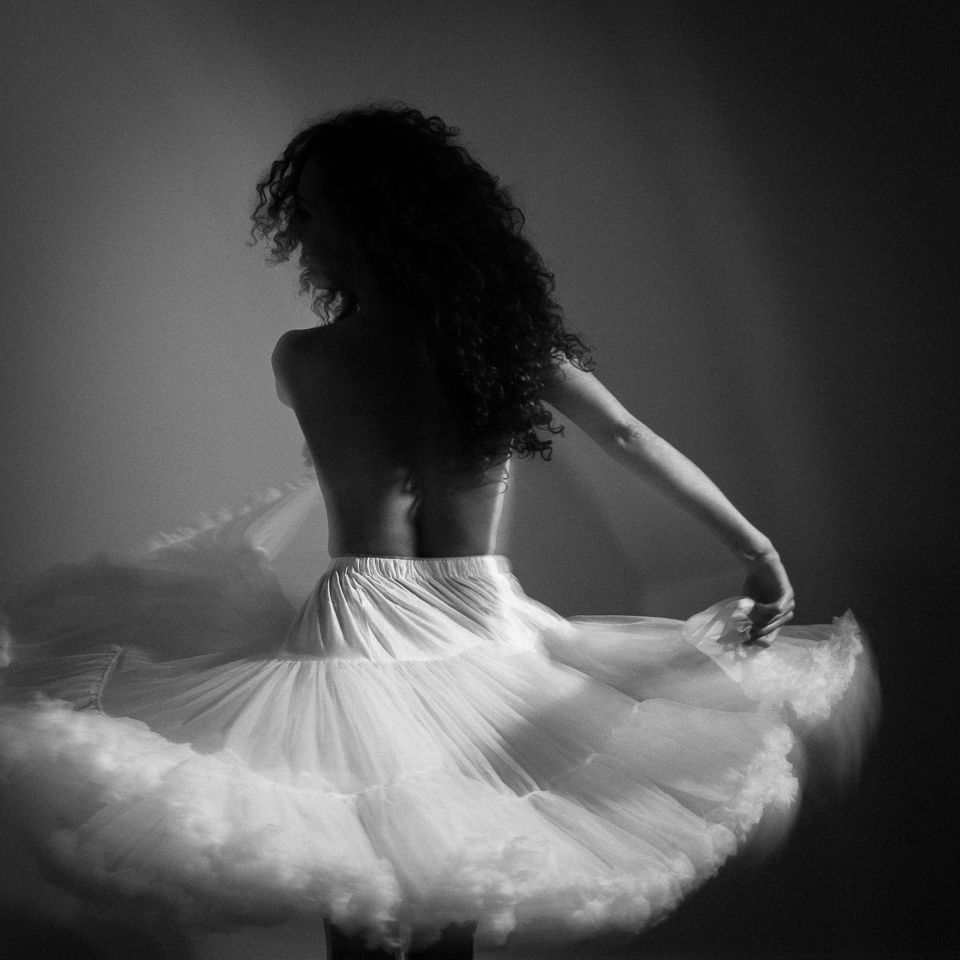
Something perhaps a little less obvious that flash can do very well is freeze your image. Sometimes you have situations where you want to use a longer shutter speed to capture the available light.
The disadvantage is that the subject is then not quite sharp in the image. You can also solve that with a tripod, but if the subject itself is moving, that is not enough. Flash can help you then.
Showing movement in an image
You can take this a step further by photographing your subject in motion. During a shoot with Valentina Rose, I went looking for that movement.
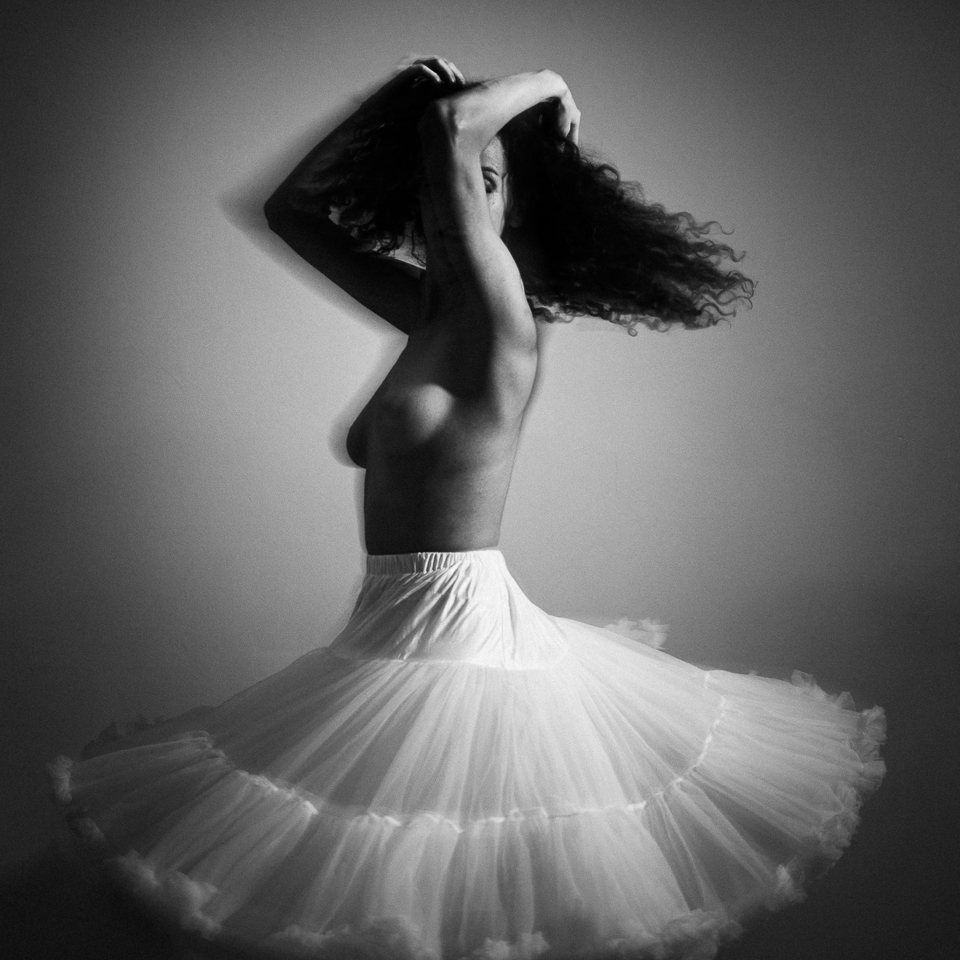
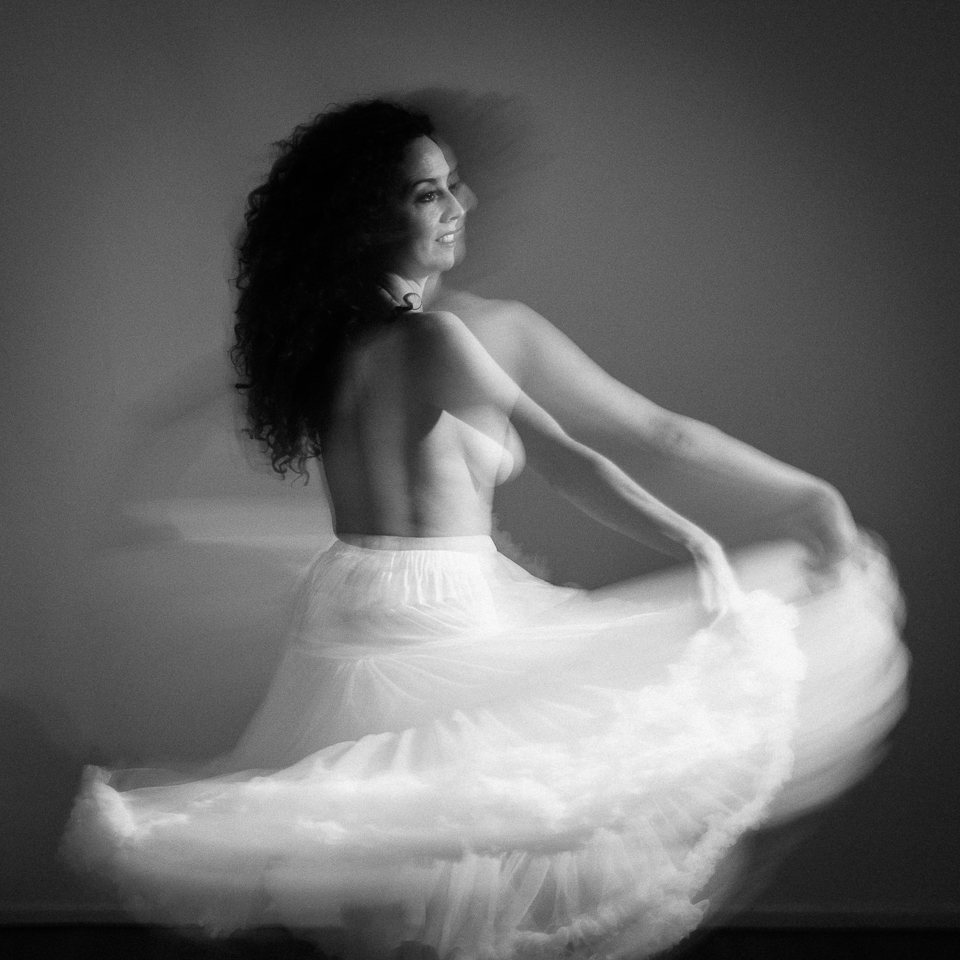
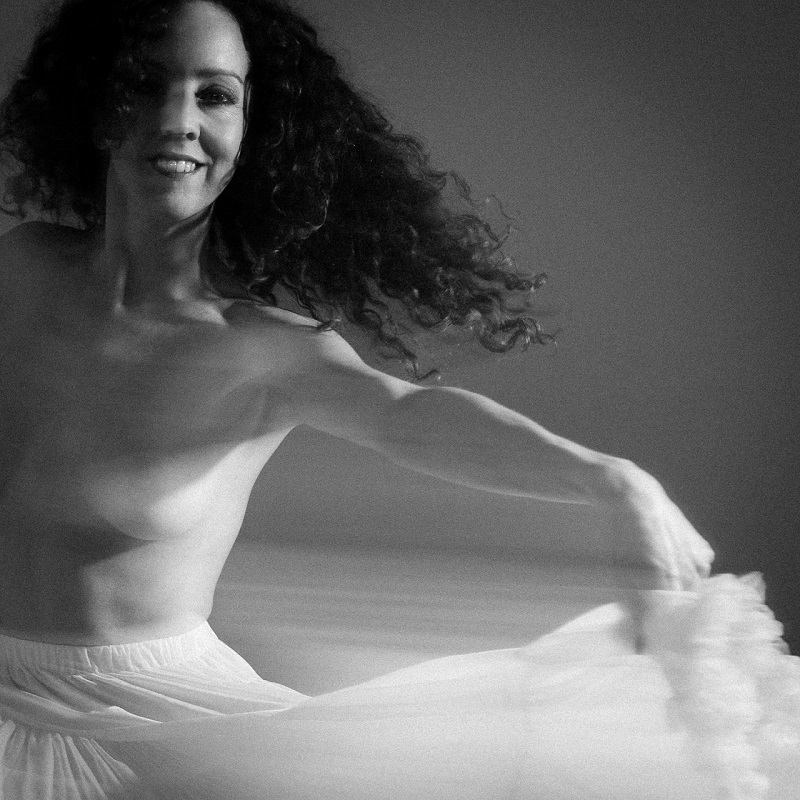
Valentina danced and spun around. With a long shutter speed, I deliberately tried to capture that movement in the image. After all, you want to show the dynamism, not a stationary dancer.
To still get some recognisable detail at that long shutter speed, which I varied between 1/5th and 1/10th of a second, I used flash to keep Valentina's contours or face sharp.
Setting up the photo
We took these images in a relatively dark room. Some light still came in through a large window, but evening twilight had already set in quite strongly. The autofocus no longer worked well either.
I therefore focused manually on the 'pivot point' of the dance movement. I had my 24-70mm f/2.8 on the camera. The light came from a single ELB400 flash head in a small softbox, high on the right.
For the shutter speed and aperture, you then need to see what the available light and the flash light are doing. To get movement in the image without it becoming one big blur, I ended up with a shutter speed of 1/5th or 1/10th of a second at f/5.6. I then adjusted the flash manually so that enough light fell on Valentina's face.
Flash and movement
Valentina spun around and had no specific direction in these photos. Sometimes your subject does, of course. Think of cars, bicycles or other moving objects. If you apply this method to them, it becomes important when you freeze your subject, at the beginning or at the end of the movement.
If you photograph a moving car, for example, the car lights will form streaks because of the long shutter speed. If you then fire the flash, that will (often) happen at the beginning of the movement. It then looks as if the car is driving backwards.
You can often choose on your camera to have your (reportage) flash fire on the 'second curtain'. The flash then fires just before the shutter on your camera closes again. You can read more about this in this article by Elja about the basics of flash photography.
About the author
Erik werkt als content specialist. Daarnaast is hij freelance tekstschrijver en fotograaf. Mensen vormen daarbij het hoofdonderwerp: portret- en reportage-fotografie. Volg Erik ook op Instagram!
You might also like
-
 Freezing movement explained
by Frank Doorhof
-
 Showing and freezing movement with flash photography
by Elja Trum
-
 How to Photograph Flowing Water Realistically
by Nando Harmsen
-
 Creating an HDR photo with movement in the frame
by Nando Harmsen
-
 Composition tip: Creating a sense of urgency
by Elja Trum
4 comments
-

 Huub Keulers
wrote on Monday 20 January 2020 at 16:06
| reply
Very unusual and very beautifully worded and presented Erik. Great! I regularly use the combination of longer shutter speeds and flash light in my sports photos. I experience it as a very strong combination.
Translated from Dutch. -
 ErikvanRosmalen
wrote on Tuesday 21 January 2020 at 09:11
| reply
Hi Huub,
Translated from Dutch.
Thanks for your response. Sports are indeed also perfectly suited for that! -
 Robert wrote on Tuesday 21 January 2020 at 13:47 | reply
Nice to see this again, Erik. It reminded me of the photo academy assignment again, among other things.
Translated from Dutch.
Fotoschiet regards Robert -
ErikvanRosmalen
wrote on Tuesday 21 January 2020 at 15:36
| reply
The assignment from Foac that you mean, I don't know it (I did the Fotovakschool myself once), but nice to bring it back like this for you
Translated from Dutch.
Have your say
Please note: Articles older than a week can only be commented on by signed-in visitors.Would you still like to comment? sign in or create a free account.
Become a better photographer every week
A practical photography tip in your inbox every week.
38,982 photography enthusiasts already receive the tips! More about the weekly mail. Or keep up to date via  Facebook.

Elja Trum
Photofacts; everything to do with photography!
Would you like to take better photos and keep up with what is happening in photography? Photofacts publishes articles that teach you something about photography — from a product announcement to a practical shooting tip or a look at a website. Photofacts covers photography every day and is a hobby project of Elja Trum's that got out of hand. The articles are written by a team of volunteer authors. If you would enjoy writing one or more articles for Photofacts, do get in touch.More about PhotofactsPhotofacts is made possible in part by
