

Interview with Photoholic John Wilhelm
Wednesday 6 March 2019, 20:20 by Michelle Peeters | 16,428 views | 2 commentsThis article was translated from Dutch with the help of AI. Read the original.
John Wilhelm is a unique Swiss photographer who has chosen an unconventional path. His IT background comes in very handy when creating quirky worlds for his children, resulting in wonderful magical-realist photographs.
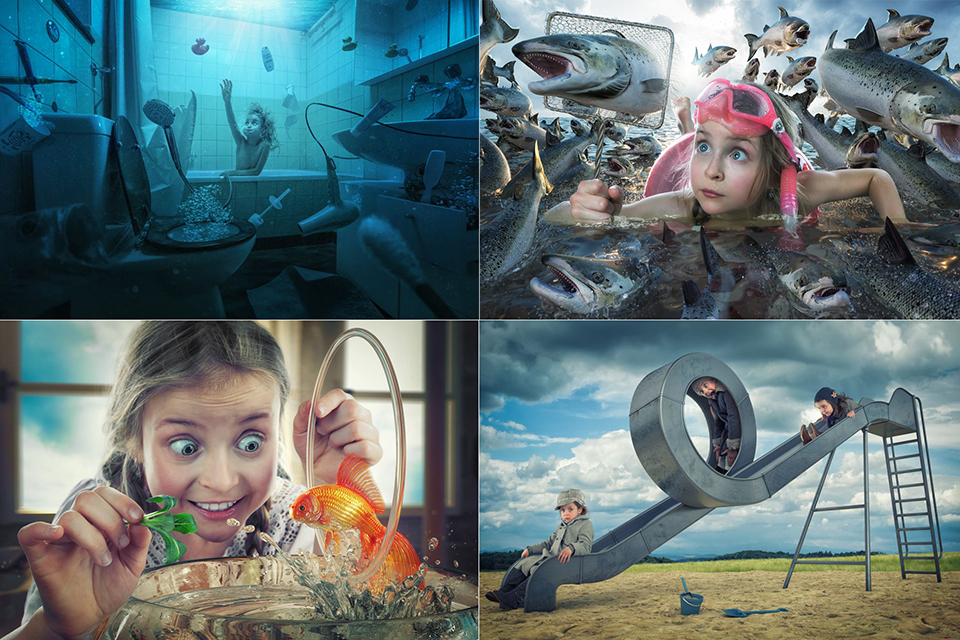
John digitally transforms the photographs he takes of his own children into scenes that seem to take place in surreal, funny and sometimes even bizarre environments.
He uses his own photographs 99% of the time. Unless it really isn't possible to shoot or create something himself with the help of 3D tools. Usually these are small elements, such as fire or sun rays, for example.
John Wilhelm's three daughters and one son know that their father is a photoholic. He is completely passionate about photography, and each of his photographs is a gem in which his children are more than happy to play the leading role.
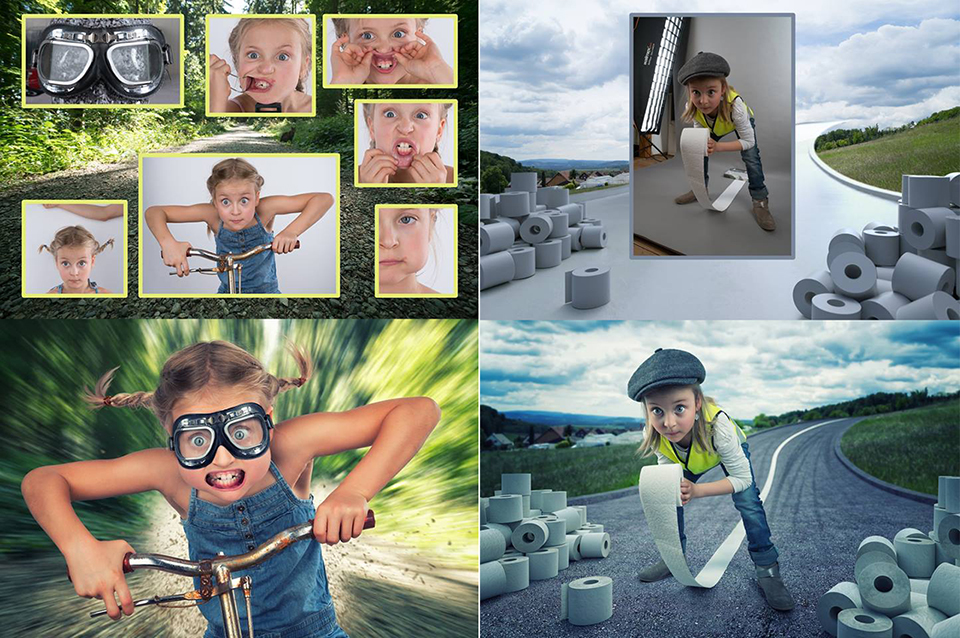
To create his photographs, Wilhelm uses graphic design software just as much as photography. He makes no secret of the fact that he uses Photoshop a lot. On his website, he regularly posts making-of photographs in which he shows all the original files alongside the final result.
John Wilhelm is not a professional photographer, but calls himself a 'photoholic' with a professional attitude to his work. Although he is not a professional, he is regularly interviewed and published in magazines all over the world.
It was therefore not easy to come up with questions that had not already been answered. In the video below, he answers nine questions using photographs.
Father was also a photographer
Because Photoshop is the central tool for much of his work, John looks back to his early beginnings. John often thinks back to his childhood and fondly remembers his father, who was a passionate and enthusiastic amateur photographer.
This was still in the analogue era, which certainly had its charm. Following in his father's footsteps, John shares a true remnant of that time on the polarize.ch website.

Really became active with digital cameras
It only became really interesting after the introduction of the first affordable digital cameras. John began experimenting with dozens of cameras, lenses and even mobile phones.
But it wasn't until he found real inspiration and got his hands on a copy of Photoshop in 2011 that he caught the photography bug. He then began to follow his own path with a style that is a mix of digital art and photography.
Remarkable figures such as Uli Staiger and Calvin Hollywood were the main sources of inspiration that encouraged John to learn, improve and develop a passionate hobby.
Although John loves photography, his interest lies more in bringing his ideas to life by adding 3D elements. He always just starts somewhere and is willing to step outside his comfort zone to learn something new.
Early inspiration
Inspiration is one of those things that comes and goes. For John, inspiration can suddenly come from browsing through his Lightroom library. An old photograph can suddenly trigger an emotion and an idea. That is exactly how it all began. John knew then that this was exactly the kind of work he wanted to do.
The process
When you look at John's montages, they seem mysterious and sometimes impossible to imagine how he managed to create them. The photographs are a wonderful synthesis of many elements that have to be combined in Photoshop to achieve the desired result.
When creating his works of art, John starts by photographing the individual elements needed for the final image. He only works with photographs he has taken himself. When the situation allows it, John takes the objects he photographs to his studio, or takes the photographs outdoors when necessary.
The key to getting it right and making it believable is to use the same focal length, aperture, focus, viewpoint and direction of light for every photograph. In the next stage, he combines all the elements in Photoshop.
He therefore always tries to get a good fit by planning the different shots in the same way. But if that isn't possible, or ideas change during post-processing, Photoshop offers many tools for correcting all those parameters.
He uses lots of dodge-and-burn layers to correct the lighting, and puppet warp and liquify are his favourite distortion tools.
To cut out elements, he mainly uses the Pen tool, after which he also often paints over hair in the correct colour. He usually paints with a coloured layer set to a different, adjacent blend mode, the Fill/Adjustment layer icon at the bottom of your layers panel / Solid Color.
He usually tries to use a particular colour palette. He has developed a feel for this over the years.
Sometimes he also uses elements he has created in 3D programmes. He uses ZBrush for this, to 'sculpt' and for everything else, including rendering, textures and so on. He also works with Cinema4D. Editing an image takes around 5-20 hours, depending on its complexity.
Sometimes I have a fairly clear concept in my head, and sometimes I just browse through my Lightroom library and if an idea comes up that really catches my attention and starts the photoholic fire burning inside me, I simply start working on it and something takes shape.
The acting
Getting the desired emotions onto the children's faces is the most difficult part. It takes a lot of practice and time to get it right. His children often don't understand why a shot still isn't finished after a few minutes.
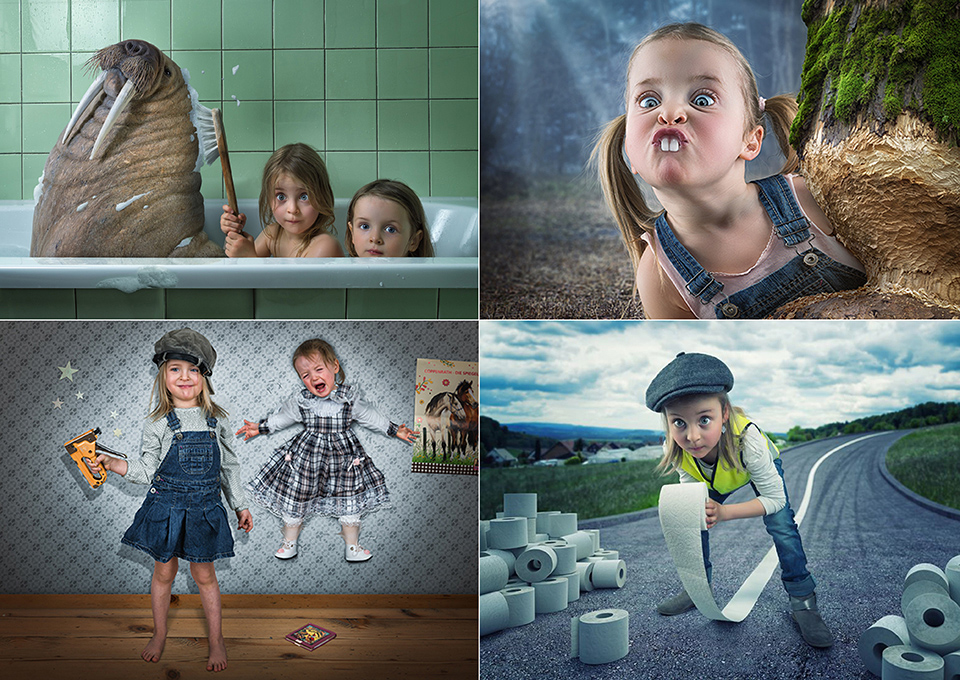
John then encourages them to carry on for a while longer. When he shows them the results on the computer screen, with the big difference between the right and wrong emotions, they usually have to admit that it is important to strive for the perfect facial expression and not just any expression.
On striving for success
Sometimes it is simply a matter of luck when you manage to sell your work. You have to compete with hundreds and thousands of other photographs of the same subject and landscape. It is the images that really stand out that win.
John advises fellow photographers to try different things. Do your best to bring originality to your work through aesthetics, models, humour, unexpected settings and surprising angles.
It is not easy to do, but it is absolutely something every photographer should strive for. The other side of success lies in how you promote yourself and how you share your work with the world.
Social media is everything these days. Without those platforms, nobody would probably know who he is. Sometimes it distracts a little from 'real life', with all the feedback and messages, but having lots of followers on those platforms is also a very good motivation.
The masterpiece
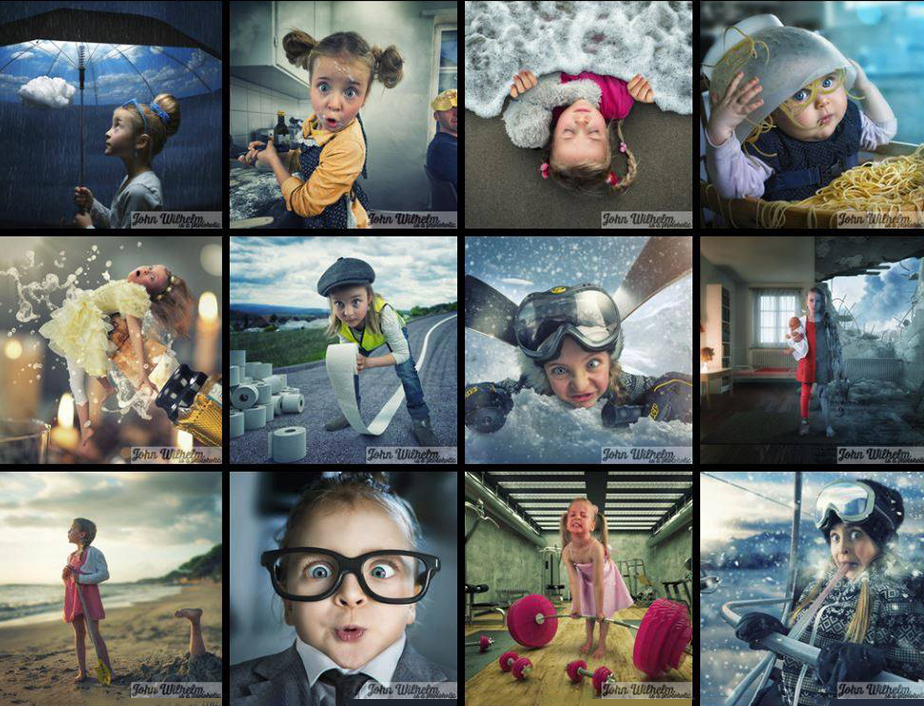
John worked on the compilation below for a long time while also processing many thoughts about war and its impact on families and children.
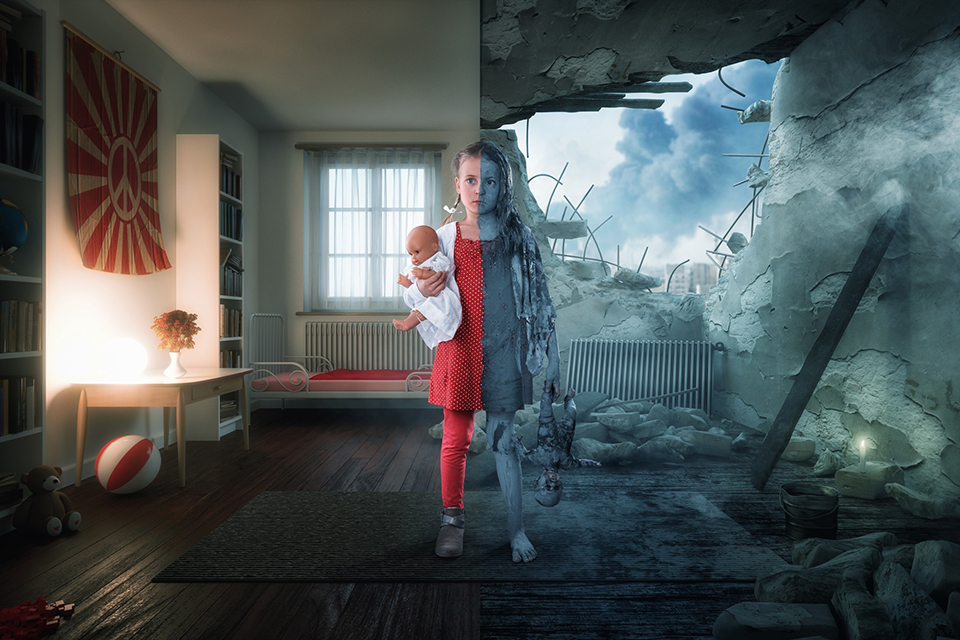
When the compilation was finished and uploaded, he had a kind of nervous breakdown and sat crying behind his computer. He was so desperate because he knew: it's a good message, but nothing will ever change.
With a powerful message and incredible talent, John is able to achieve the impossible. In the context of stock photography, the one thing he would like to see in the future is images with strong messages. The images and art we create should have the power to change a small fragment of the world we live in.
About the author
Michelle Peeters is fotografe en oprichter van DeuxBleus Fotografie. Michelle herkent het bijzondere in het gewone en het gewone in het bijzondere. Ze heeft zich nooit willen specialiseren en is daardoor van alle markten thuis.
You might also like
-
 Interview with photographer John Geven
by Michelle Peeters
-
 Interview with photographer Bob van Zalm
by Michelle Peeters
-
 4 Handy Items to Keep in Your Camera Bag
by Nando Harmsen
-
 Interview with wedding photographer Matty Maas
by Michelle Peeters
-
 6 handy apps for landscape photographers
by Nando Harmsen
-
 Solarcan Puck: photographing the path of the Sun
by Elja Trum
2 comments


Have your say
Please note: Articles older than a week can only be commented on by signed-in visitors.Would you still like to comment? sign in or create a free account.
Become a better photographer every week
A practical photography tip in your inbox every week.
38,938 photography enthusiasts already receive the tips! More about the weekly mail. Or keep up to date via  Facebook.

Elja Trum
Photofacts; everything to do with photography!
Would you like to take better photos and keep up with what is happening in photography? Photofacts publishes articles that teach you something about photography — from a product announcement to a practical shooting tip or a look at a website. Photofacts covers photography every day and is a hobby project of Elja Trum's that got out of hand. The articles are written by a team of volunteer authors. If you would enjoy writing one or more articles for Photofacts, do get in touch.More about PhotofactsPhotofacts is made possible in part by
