

3 practical tips for portrait composition
Monday 17 May 2021, 20:10 by Elja Trum | 6,503 views | 1 commentThis article was translated from Dutch with the help of AI. Read the original.
Composition is often made more complicated than it needs to be. A good composition makes your photo, but you don't have to make it harder than it is. In this article, you'll find three basic rules for an excellent composition in a portrait photo.
1. Your model's position in the frame
You determine a large part of your composition by where you place your subject in the frame. What I often see going wrong is that there is too much empty space above your model's head.
The simplest and quickest way to position your subject well is to apply the rule of thirds: divide the frame with 4 lines into 9 sections and place the most important parts on one of the intersections.
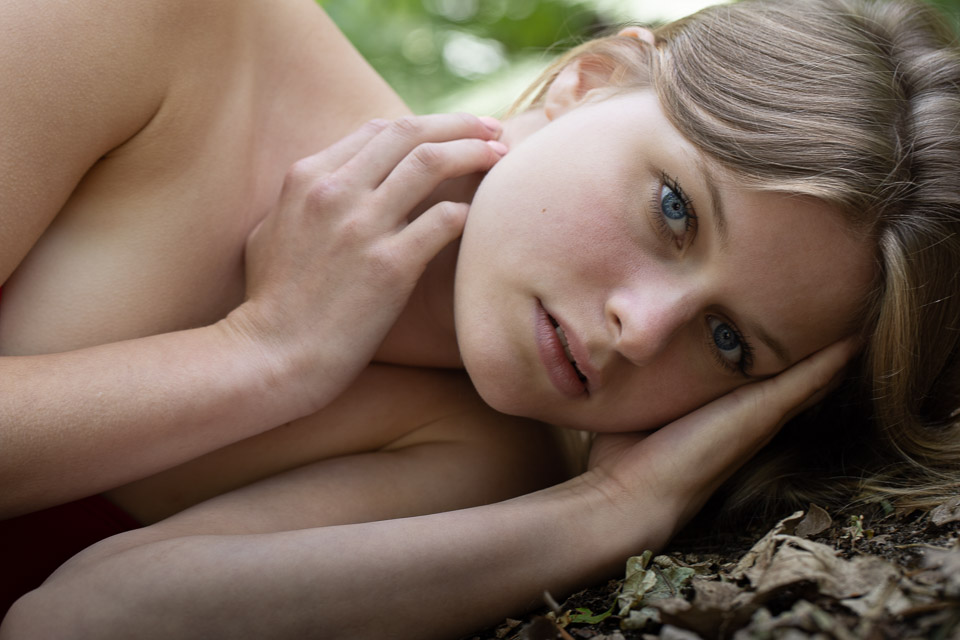
The most important part of a portrait is usually your model's eyes. So place them on one of those intersections and you'll almost always be fine. And it really doesn't matter if they aren't exactly on an intersection. Getting close is good enough.
2. Distance from your model
The distance from your model also plays a role, as well as their position. In many cases, the composition becomes stronger when your model appears larger in the frame. By this, I mean that the face is the only thing you can still see of the model.
Many photographers stand a few metres away and want to photograph their model from head to toe. But that only makes things difficult for the viewer. What is the photo actually about? You solve that by simply leaving a lot out of the frame and only photographing what the photo is about.
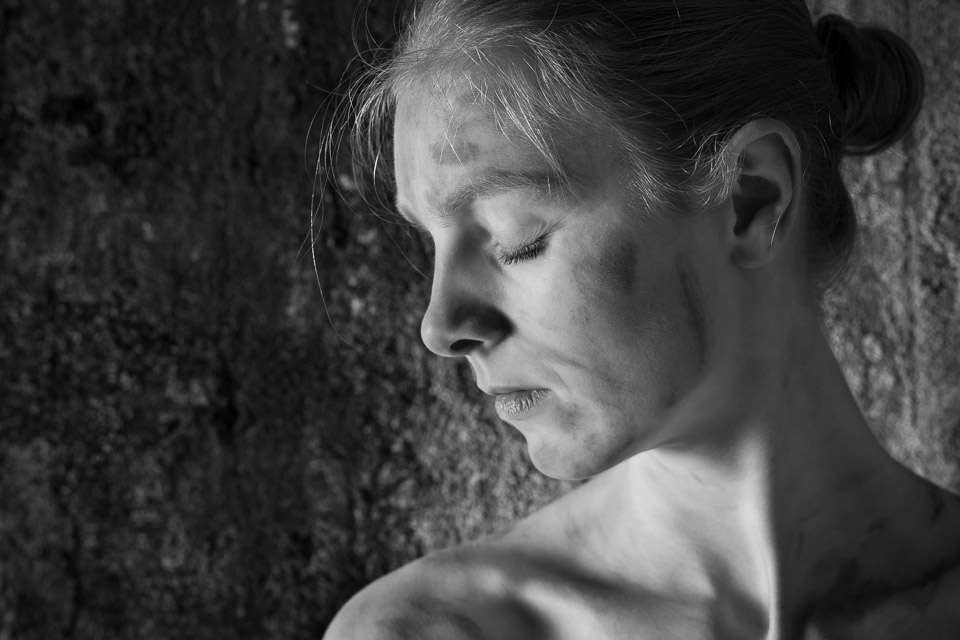
Of course, you don't actually have to get very close to your model. You can also simply use a telephoto lens. Between 70 and 135 mm is usually just right. This also helps prevent unflattering distortion of your model.
3. Look at the background
Before you take the photo, always take a good look at your background too. Sometimes you are so focused on your model that you forget to pay attention to what is happening in the background. It is annoying when you see a tree trunk sticking out of a head when you look at the photo on your computer.
With portrait photos, you often blur the background to reduce distractions. This of course helps prevent distracting elements in your background. But blurred areas still contain lighter and darker parts, shapes and lines, so it remains important to pay attention to the background.
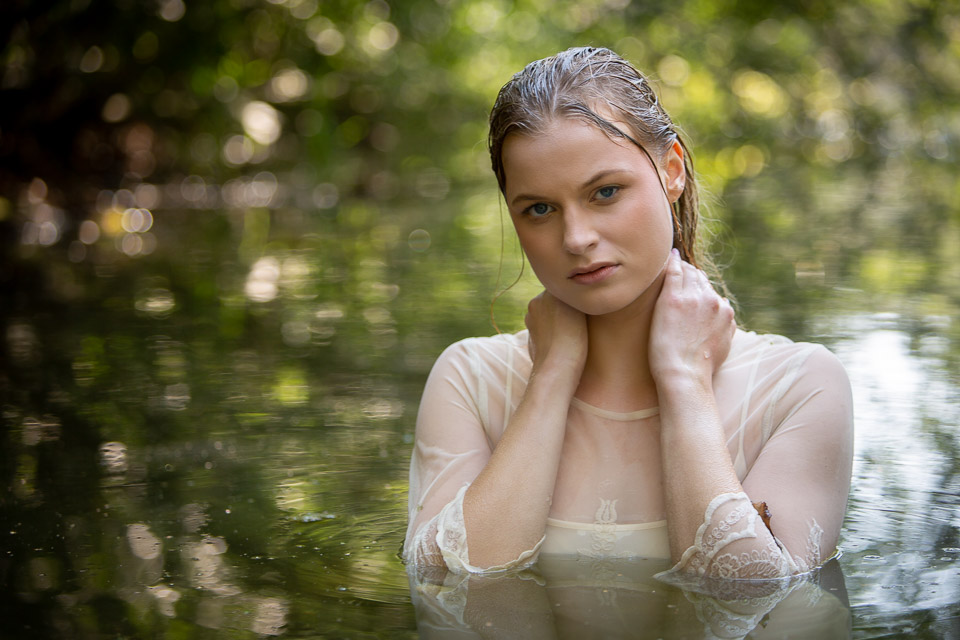
You can use lines visible in the background to guide the viewer's eyes through the photo. For example, by having the lines lead towards your subject.
You can often influence the background quite a lot by taking a small step to the side or adjusting your height. Usually, you don't even have to ask the model to move to remove distracting elements from your photo.
About the author
Elja Trum is the founder of Photofacts and online photography course website Photofacts Academy. He has been writing about photography since 2006. Elja is also the author of (Dutch) books on composition, black-and-white photography, flash photography and portrait photography.
You might also like
-
 Composition tip: Use symmetry
by Elja Trum
-
 Composition tip: Creating a sense of urgency
by Elja Trum
-
 Composition tip: Use horizontal lines
by Elja Trum
-
 10 Mistakes When Creating a Composition
by Nando Harmsen
1 comment
-
 Jan Budding wrote on Tuesday 18 May 2021 at 14:16 | reply
I would divide the image into 9 sections with 4 lines😂😂😂
Translated from Dutch.
Have your say
Please note: Articles older than a week can only be commented on by signed-in visitors.Would you still like to comment? sign in or create a free account.
Become a better photographer every week
A practical photography tip in your inbox every week.
39,088 photography enthusiasts already receive the tips! More about the weekly mail. Or keep up to date via  Facebook.

Elja Trum
Photofacts; everything to do with photography!
Would you like to take better photos and keep up with what is happening in photography? Photofacts publishes articles that teach you something about photography — from a product announcement to a practical shooting tip or a look at a website. Photofacts covers photography every day and is a hobby project of Elja Trum's that got out of hand. The articles are written by a team of volunteer authors. If you would enjoy writing one or more articles for Photofacts, do get in touch.More about PhotofactsPhotofacts is made possible in part by
