

Portrait photography tip: Vary your poses
Thursday 25 July 2024, 20:10 by Elja Trum | 2,610 views | 1 commentThis article was translated from Dutch with the help of AI. Read the original.
If your subject keeps the same pose throughout, it produces little variety in your photos. Of course, you can keep changing your position, camera settings or lighting setup too, but if your model appears in every photo with the same posture and expression, you won't get any great shots.
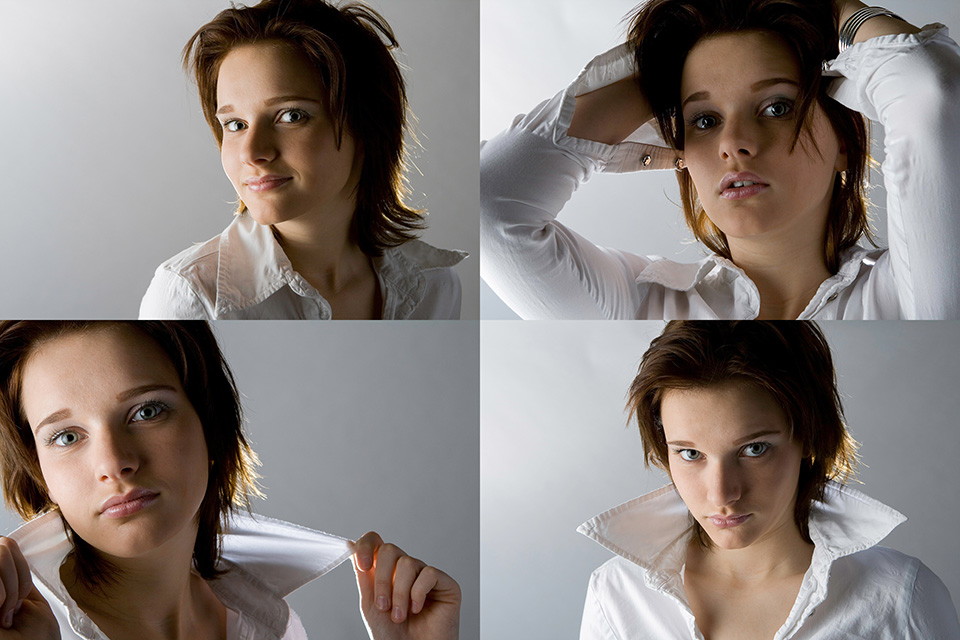
A good way to create variety is to ask your model to change something after every photo. An experienced model will often do this already, but if you're working with someone who doesn't regularly stand in front of the camera, it often won't happen by itself.
The change in each photo can be very small, an arm placed on the hip, a chin held slightly higher and so on.
If a pose doesn't work, that's not a problem, just take the photo and your model will try a new pose. If a pose works particularly well, respond enthusiastically and ask them to try more variations on that pose. Above all, point out what works well.
About the author
Elja Trum is the founder of Photofacts and online photography course website Photofacts Academy. He has been writing about photography since 2006. Elja is also the author of (Dutch) books on composition, black-and-white photography, flash photography and portrait photography.
You might also like
-
 10 posing tips for wedding photographers
by Elja Trum
-
 10 tips for panning, moving the camera with the movement
by Nando Harmsen
-
 Showing and freezing movement with flash photography
by Elja Trum
-
 5 Tips for Posing Couples
by Elja Trum
-
 Creating an HDR photo with movement in the frame
by Nando Harmsen
-
 Video: Posing tips for men
by Elja Trum
1 comment
-
 Donald Willemsen wrote on Monday 29 July 2024 at 10:10 | reply
If you work with (semi-)professional models or with experienced amateur models, you need to make sure that the model does not take control and present you with a few standard poses. It soon becomes too much of the same. Moreover, models (especially professionals) know very well how to show their good side and where their weaknesses are, and they will not show those.
Translated from Dutch.
I believe that the photographer should 'direct' the model, because the photographer often has a specific goal in mind. Of course, the model's input may also play a role in this, but that will certainly work if there is a good relationship of trust between photographer and model.
The photographer hires a particular model and therefore the photographer is the one who has a plan for a shoot with that model. They also determine what type of photos they want to have.
Have your say
Please note: Articles older than a week can only be commented on by signed-in visitors.Would you still like to comment? sign in or create a free account.
Become a better photographer every week
A practical photography tip in your inbox every week.
39,077 photography enthusiasts already receive the tips! More about the weekly mail. Or keep up to date via  Facebook.

Elja Trum
Photofacts; everything to do with photography!
Would you like to take better photos and keep up with what is happening in photography? Photofacts publishes articles that teach you something about photography — from a product announcement to a practical shooting tip or a look at a website. Photofacts covers photography every day and is a hobby project of Elja Trum's that got out of hand. The articles are written by a team of volunteer authors. If you would enjoy writing one or more articles for Photofacts, do get in touch.More about PhotofactsPhotofacts is made possible in part by
