

New Nikon fisheye zoom lens and two wide-angle lenses
Thursday 1 June 2017, 11:11 by Michelle Peeters | 6,564 views | 15 commentsThis article was translated from Dutch with the help of AI. Read the original.
Good news for Nikonians who love expansive views. Nikon is expanding its lens range with three wide-angle lenses, including its first fisheye zoom lens for full-frame cameras.
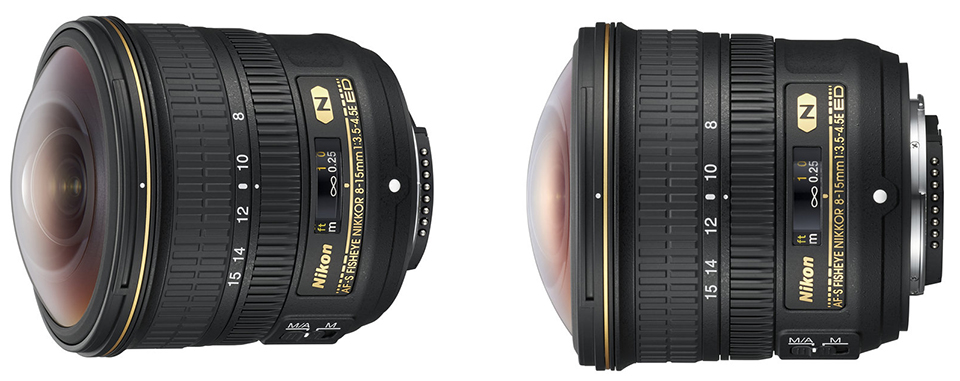
AF-S FISHEYE NIKKOR 8-15mm f/3.5-4.5E ED
Nikon full-frame photographers who want to capture extreme angles of view can now use Nikon's first fisheye zoom lens to vary between a circular perspective and a composition that fills the frame.
According to Nikon, the optical construction of the AF-S FISHEYE NIKKOR 8-15mm lens ensures that this versatility does not come at the expense of quality.
The closest focusing distance is 0.16 metres, which means that you should be able to create very unusual images in combination with the distinctive perspective.
The lens is dust-resistant and splash-proof. The new fisheye also has an integrated lens hood and lens cap.
AF-S NIKKOR 28mm f/1.4E ED
According to Nikon, the AF-S NIKKOR 28mm f/1.4E ED performs very well even at its widest aperture. The minimum focusing distance of just 0.28 metres offers extra versatility.
The lens is dust-resistant and splash-proof, so it can be used reliably in bad weather.
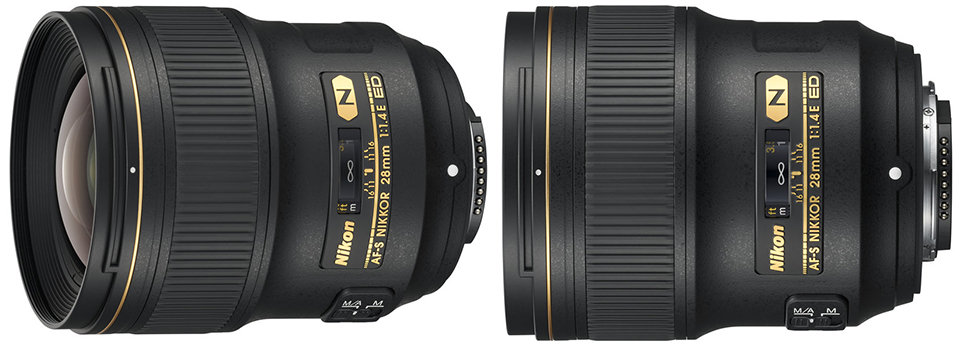
This latest addition to Nikon's fast f/1.4 range is a lens that, according to Nikon, enables exceptional artistic control in all kinds of light. And indeed, a 28mm lens with a wide aperture can be exactly what many photographers are looking for.
This means you can still capture images in difficult lighting conditions with a well-exposed main subject and a dynamic context, whether beautifully blurred or not.
AF-P DX NIKKOR 10-20mm f/4.5-5.6G VR
Photographers with a camera featuring an APS-C-sized sensor (DX) who enjoy exploring impressive viewpoints will certainly appreciate the new AF-P DX NIKKOR 10-20mm VR zoom lens.
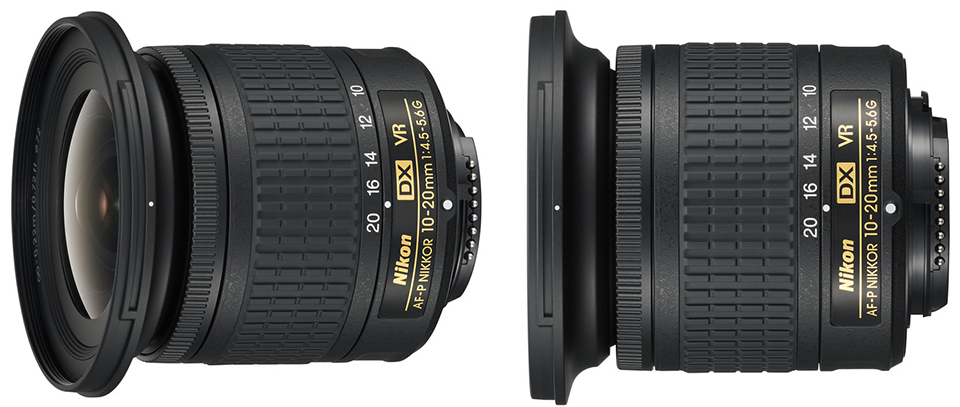
The lens has VR image stabilisation, which is designed to compensate for up to 3.5 stops. The lens uses a quiet AF-P stepping motor and has a minimum focusing distance of 22 centimetres.
The lens consists of fourteen elements in eleven groups and has two aspherical elements. 72mm filters can be used. The zoom has a diameter of 7.7 centimetres, a length of 7.3 centimetres and weighs 230 grams.
Prices and availability:
The AF-S FISHEYE NIKKOR 8-15mm f/3.5-4.5E ED will be available from mid-June, with a recommended retail price of 1,539 euros.
The AF-S NIKKOR 28mm f/1.4E ED and AF-P DX NIKKOR 10-20mm f/4.5-5.6G VR will be available from the end of June, with recommended retail prices of 2,469 and 399 euros respectively.
About the author
Michelle Peeters is fotografe en oprichter van DeuxBleus Fotografie. Michelle herkent het bijzondere in het gewone en het gewone in het bijzondere. Ze heeft zich nooit willen specialiseren en is daardoor van alle markten thuis.
You might also like
-
 Nikon introduces NIKKOR Z full-frame ultra-wide-angle zoom lens
by Michelle Peeters
-
 Nikon releases Nikkor Z 50mm f/1.4
by Elja Trum
-
 Review: Nikon Z 50
by Michelle Peeters
-
 Nikon announces NIKKOR Z 135mm f/1.8 S Plena lens
by Elja Trum
15 comments
-

 Paul Oosterlaak wrote on Friday 2 June 2017 at 22:18
| reply
"Photographers with a camera with an APS-C format sensor (DX) who like to explore impressive viewpoints will certainly appreciate the new AF-P DX NIKKOR 10-20mm VR zoom lens."
Translated from Dutch.
Unfortunately, there are many older cameras on which this AF-P does not function or only functions partially. -
 guest wrote on Tuesday 6 June 2017 at 18:30 | reply
Why are the lenses so ridiculously expensive?
Translated from Dutch.
That will be the downfall of DSLRs, just you wait.
The 28mm is nowhere near worth 2500, no matter how well it performs. It should have been half that and they'd still make good money off it. -
 Michelle Peeters wrote on Tuesday 6 June 2017 at 18:46
| reply
It is quite a complicated lens system after all and you can really see the quality in your photos (just my personal experience..). But indeed, it is quite an investment!
Translated from Dutch. -
guest wrote on Tuesday 6 June 2017 at 19:09 | reply
I bought the 28mm 1.8 second-hand for 350,- for use on a full-frame camera. Very good lens .
Translated from Dutch. -
Paul Oosterlaak wrote on Tuesday 6 June 2017 at 19:09
| reply
@Michelle Peeters: Sigma has been proving for a few years now that it can be done differently too. Sigma has a number of lenses compared to which Nikon's (and Canon's) counterparts simply pale in comparison.
Translated from Dutch. -
Paul Oosterlaak wrote on Tuesday 6 June 2017 at 19:17
| reply
@guest: the AF-S 28mm f/1.8G, I assume? That's a sharp lens, unfortunately quite a bit of CA, but that's a Nikon quirk. But you can't compare an f/1.8 lens with an f/1.4. Or well, not directly
Translated from Dutch. Of course, you rarely really need f/1.4, but in terms of construction an f/1.4 is definitely more difficult to make (and more expensive).
-
Michelle Peeters wrote on Tuesday 6 June 2017 at 19:51
| reply
@Paul: aren't those Sigma lenses very heavy? I always understood that was the reason they're cheaper?
Translated from Dutch. -
Paul Oosterlaak wrote on Tuesday 6 June 2017 at 19:58
| reply
@Michelle Peeters: they are heavier because they are optically better. The lighter Sigmas are just as good as their counterparts. The Sigma 35/1.4 Art is one of them, or the 85/1.4 EX. The 85/1.4 Art is a lot heavier but of a completely different caliber than the Nikon 85/1.4 or Canon 85L.
Translated from Dutch.
Edit: yes, it can be done differently too: Leica M. Then you have excellent optics in a small body (partly due to the choice of a rangefinder with a shorter flange distance). But then you really pay top dollar. €7000 for a 50mm f/2 APO. -
Michelle Peeters wrote on Tuesday 6 June 2017 at 20:00
| reply
@Paul: interesting, thanks for the info!
Translated from Dutch. -
 F. van Bemmel wrote on Tuesday 6 June 2017 at 23:04 | reply
It's really too bizarre for words, absurd prices for completely unnecessary new cameras, lenses and accessories that add hardly anything in terms of quality and innovations. For the manufacturers and related parties, it's all about money and more money. Simple smartphones often perform just as well as the far too expensive DSLRs. Where is this going ?
Translated from Dutch. -
Michelle Peeters wrote on Tuesday 6 June 2017 at 23:08
| reply
@F. van Bemmel: the quality difference between photos taken with a DSLR with good lenses or a smartphone is still quite clearly visible!
Translated from Dutch. -
Paul Oosterlaak wrote on Tuesday 6 June 2017 at 23:23
| reply
@F. van Bemmel: there's a world of difference between a smartphone photo and a dslr photo. Yes, if you view photos at 800x600 pixels with loads of depth of field and good light, then you don't see any difference, but as soon as you start looking at 100% and at background blur and such....
Translated from Dutch. -
 Lauran van Schilt wrote on Wednesday 7 June 2017 at 01:19 | reply
Nothing better than the brands' own lenses. Kudos Nikon !!
Translated from Dutch. -
Paul Oosterlaak wrote on Wednesday 7 June 2017 at 10:54
| reply
@Lauran: might as well stay under that rock and buy this lens then
Translated from Dutch. -
Lauran van Schilt wrote on Wednesday 7 June 2017 at 15:58 | reply
@Paul: indeed, I am happily staying there. I work exclusively with Nikon FF lenses and I like that very much.
Translated from Dutch.
Have your say
Please note: Articles older than a week can only be commented on by signed-in visitors.Would you still like to comment? sign in or create a free account.
Become a better photographer every week
A practical photography tip in your inbox every week.
38,764 photography enthusiasts already receive the tips! More about the weekly mail. Or keep up to date via  Facebook.

Elja Trum
Photofacts; everything to do with photography!
Would you like to take better photos and keep up with what is happening in photography? Photofacts publishes articles that teach you something about photography — from a product announcement to a practical shooting tip or a look at a website. Photofacts covers photography every day and is a hobby project of Elja Trum's that got out of hand. The articles are written by a team of volunteer authors. If you would enjoy writing one or more articles for Photofacts, do get in touch.More about PhotofactsPhotofacts is made possible in part by
