

Sony FE 8-14mm f/3.5 Fisheye G lens
Wednesday 9 September 2026, 11:44 by Elja Trum | 556 views | 0 commentsThis article was translated from Dutch with the help of AI. Read the original.
Sony has announced a new lens: the Sony FE 8-14mm f/3.5 Fisheye G. It is Sony's first fisheye for full-frame E-mount and also the first full-frame fisheye with a Sony logo in around twenty years.
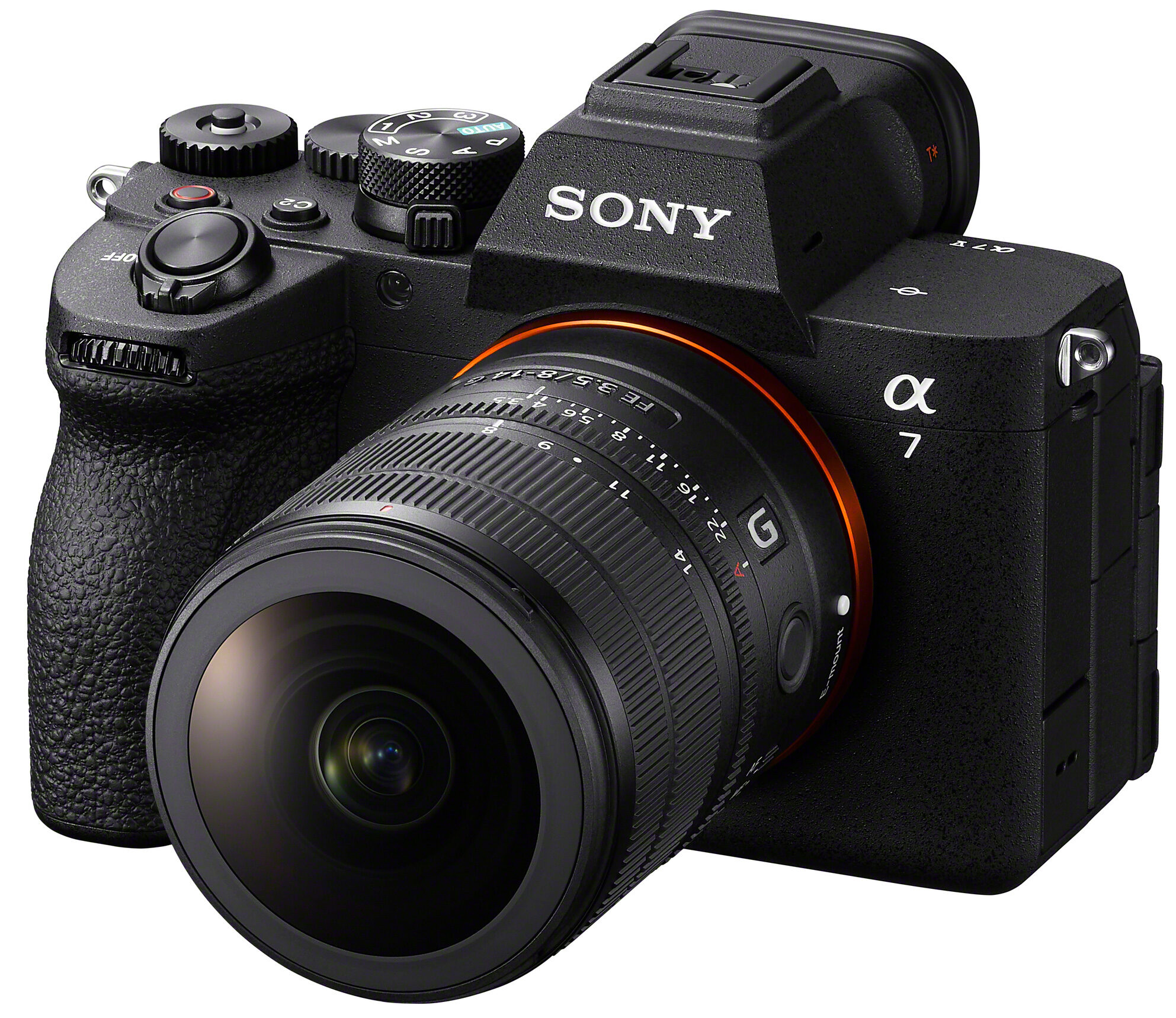
Sony FE 8-14mm f/3.5 Fisheye G
The lens also lets you switch between two very different types of fisheye images. At 8mm, you get a completely circular image, while at 14mm the lens fills the entire sensor with a diagonal fisheye perspective. In both cases, the maximum angle of view is 180 degrees.
Two fisheyes in one
The 8 to 14mm zoom range may sound small on paper, but with a fisheye, a few millimetres make quite a big difference.
At 8mm, you get the classic circular fisheye image, with black space around the circle. Zoom to 14mm and the entire full-frame image is filled. You still get the characteristic strong distortion, but without the black edges.
The intermediate focal lengths seem a little less interesting in practice. PetaPixel notes in its test that you do get the significant vignetting there, but no longer the clearly circular image of 8mm. They therefore see the 8-14mm more as two focal lengths in one lens than as a traditional zoom lens.
Compact
The new lens is fairly light and compact. The FE 8-14mm weighs just 314 grams, is 82.8 millimetres long and has a diameter of 63.1 millimetres. Zooming takes place internally, so the dimensions do not change and the centre of gravity barely shifts either.
That also makes it interesting for video, for example on a gimbal.
The lens features autofocus, an aperture ring that can be set without clicks and a zoom lock that can be fixed at 8 or 14 millimetres.
The minimum focusing distance is just 15 centimetres and at 14mm, a maximum magnification of 0.22x is possible. This lets you get extremely close to your subject while including a great deal of the surroundings.
That can produce interesting images, although keeping your own feet out of the frame will probably be a challenge.
How good is the image quality?
Sony uses ED glass and aspherical elements to minimise chromatic aberration and other lens faults as much as possible. According to Sony, this should keep the resolution high across the entire image and zoom range.
The first hands-on test by PetaPixel seems to confirm this. They give the lens 8 out of 10 and are especially positive about the sharpness, low weight, fast autofocus and good resistance to flare. The corners are slightly softer at f/3.5, but improve when stopping down.
For a fisheye, that good flare resistance is certainly no unnecessary luxury. With an angle of view of 180 degrees, the sun can appear somewhere in your photo very quickly.
Also aimed at video and VR
Although a fisheye is traditionally mainly a photography lens, Sony is also clearly targeting video makers. The autofocus works quietly and quickly, and focus breathing is limited.
A more specialised application is VR. Two copies of the lens can be used alongside each other in combination with two VENICE Extension System Mini units. The optical axes then end up approximately 64 millimetres apart, similar to the distance between human eyes.
For most photographers, that will of course not immediately be a reason to order two.
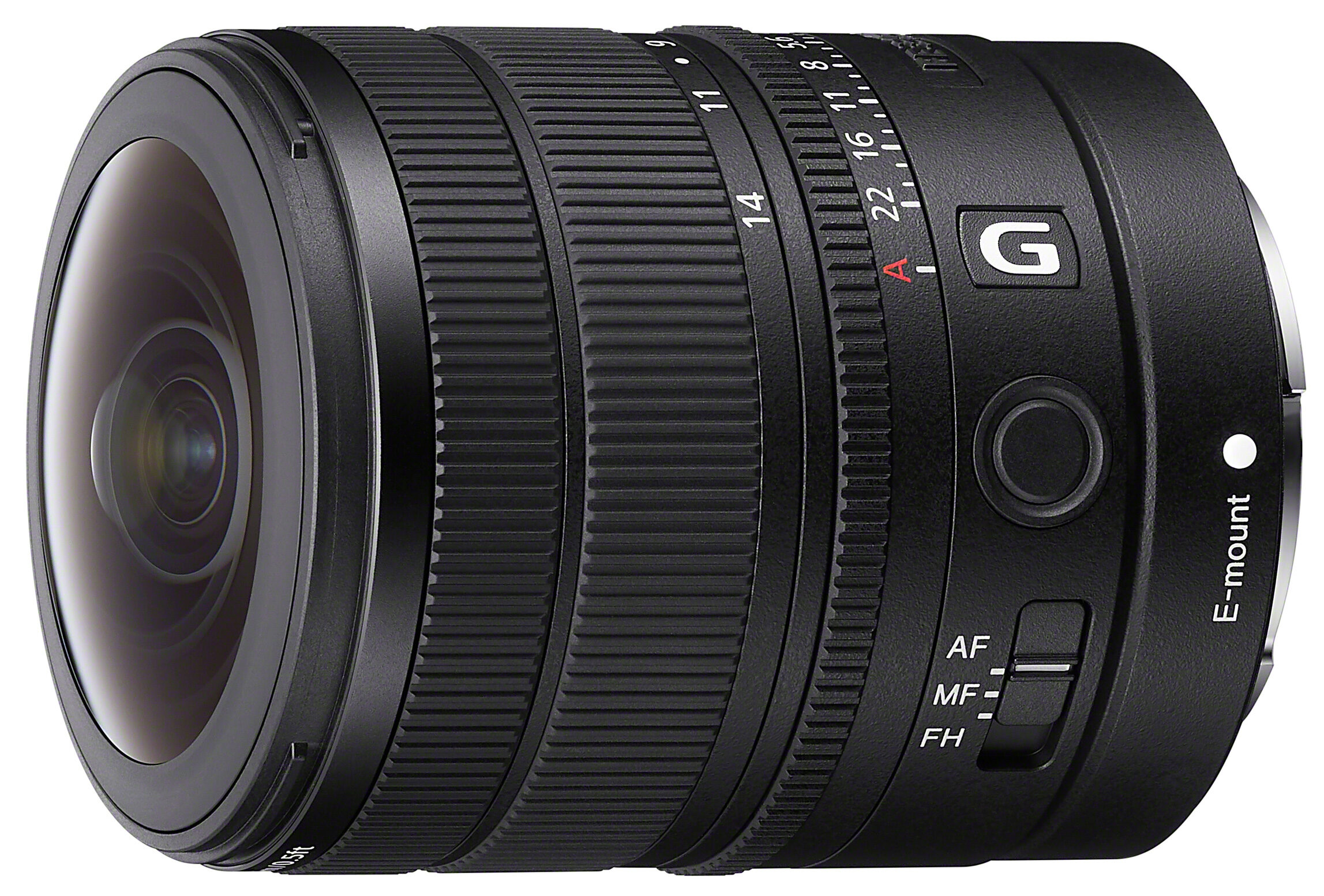
Sony FE 8-14mm f/3.5 Fisheye G
Specialist lens
A fisheye is of course not a lens you need every day. The effect is quite pronounced and if you use it too often, it can quickly become a gimmick.
But precisely for sports photography, concerts and events, architecture, landscapes and creative close-ups, this extreme perspective can offer some fun possibilities.
Thanks to its autofocus, this Sony will probably be much more practical to use than many of the manually focusing fisheyes available for E-mount.
Price and availability
The Sony FE 8-14mm f/3.5 Fisheye G is not cheap. The recommended retail price is 1,700 euros and the lens should be available by the end of September 2026. Sony's own webshop currently lists a price of 1,699 euros.
That clearly makes it a specialist lens. But if you regularly work with a fisheye and want autofocus, high sharpness and modern controls, you do get a remarkably complete and particularly compact lens.
About the author
Elja Trum is the founder of Photofacts and online photography course website Photofacts Academy. He has been writing about photography since 2006. Elja is also the author of (Dutch) books on composition, black-and-white photography, flash photography and portrait photography.
You might also like
-
 Sony introduces the new FE 85mm f/1.4 GM II
by Nando Harmsen
-
 Sony announces the FE 16mm f/1.8 G wide-angle lens
by Nando Harmsen
-
 Sony announces 100mm f/2.8 Macro G Master
by Elja Trum
-
 First impressions of the Sony FE 20-70mm f/4 G
by Nando Harmsen
-
 Sony introduces a new 70-200mm G Master lens
by Nando Harmsen
0 comments
Be the first to share what you think!
Have your say
Please note: Articles older than a week can only be commented on by signed-in visitors.Would you still like to comment? sign in or create a free account.
Become a better photographer every week
A practical photography tip in your inbox every week.
38,981 photography enthusiasts already receive the tips! More about the weekly mail. Or keep up to date via  Facebook.

Elja Trum
Photofacts; everything to do with photography!
Would you like to take better photos and keep up with what is happening in photography? Photofacts publishes articles that teach you something about photography — from a product announcement to a practical shooting tip or a look at a website. Photofacts covers photography every day and is a hobby project of Elja Trum's that got out of hand. The articles are written by a team of volunteer authors. If you would enjoy writing one or more articles for Photofacts, do get in touch.More about PhotofactsPhotofacts is made possible in part by
