

Review: Canon RF 24mm f/1.8 macro IS STM
Friday 25 November 2022, 14:28 by Nando Harmsen | 4,160 views | 0 commentsThis article was translated from Dutch with the help of AI. Read the original.
Canon has a whole range of compact, lightweight RF prime lenses. I was given the RF 24mm f/1.8 macro IS STM for a review. In this article, I look at how this lens performs and what it can be used for.
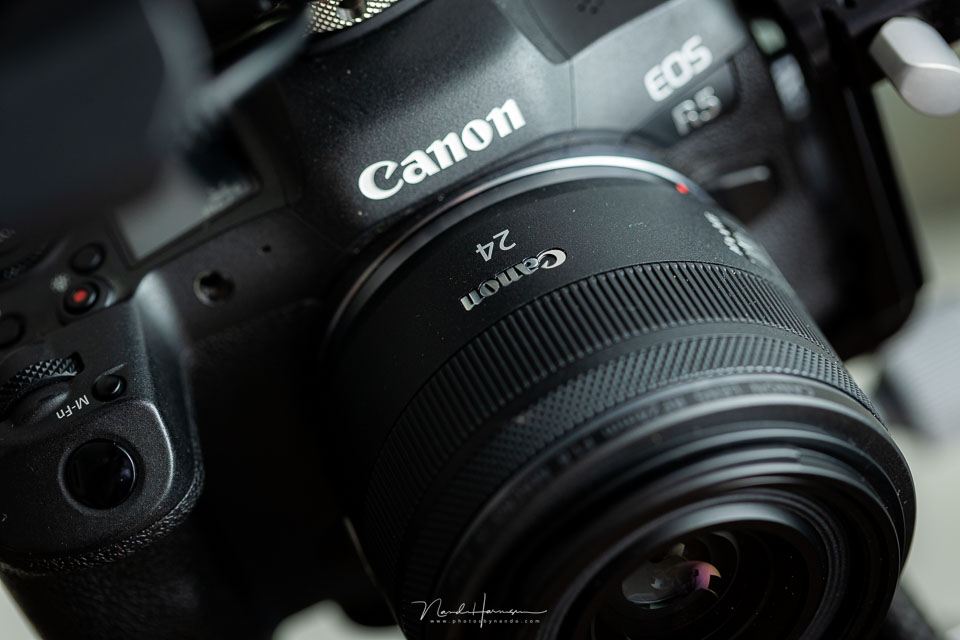
The RF 24mm f/1.8 macro IS STM can be seen as part of a series of affordable Canon RF lenses.
There is an 85mm version, a 35mm version, and now the 24mm version. You could also count the 50mm and 16mm, although these cannot be considered macro lenses.
The macro feature in all these lenses, including the RF 24mm, means that you can achieve 1:2 magnification. In other words, half the actual size can be shown. That may not be full macro with 1:1 magnification, but it does offer plenty of possibilities.
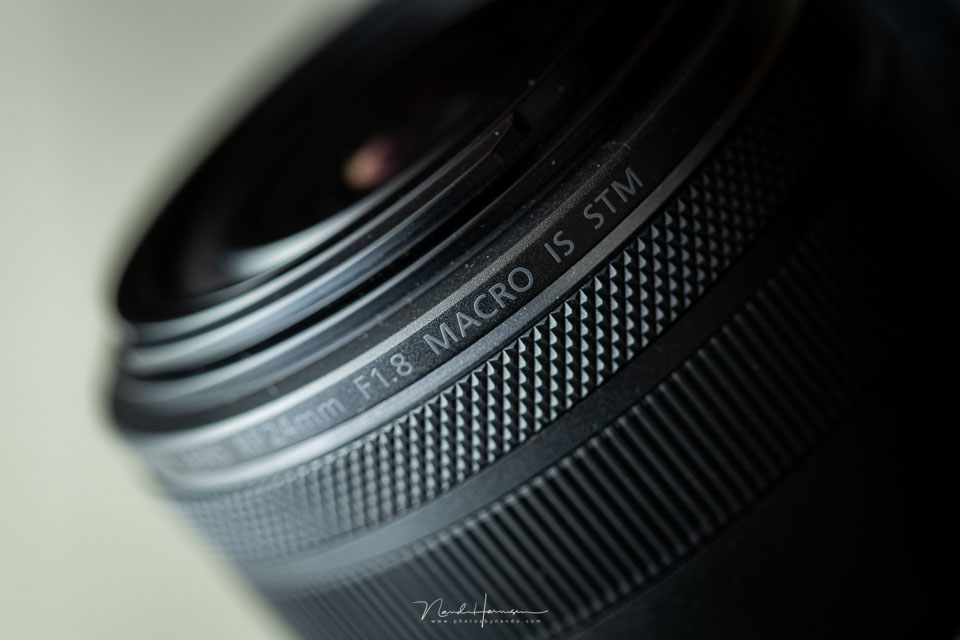
In terms of appearance, the RF 24mm is similar to the 85mm and 35mm. It has the same construction and a stepping motor autofocus system (STM).
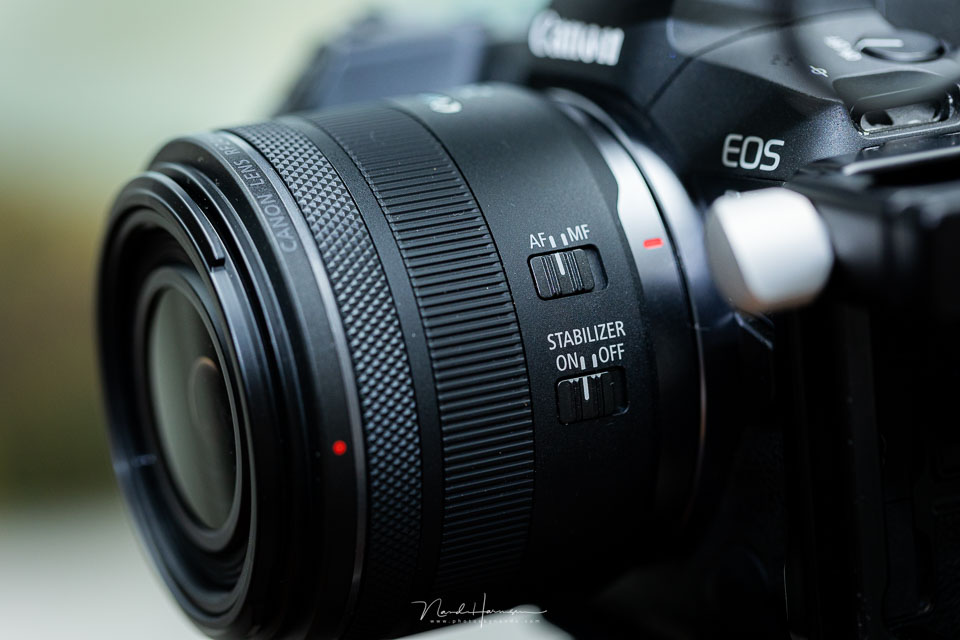
There are two switches on the lens. One for image stabilisation and one for autofocus. There is a relatively wide focus ring, as well as the programmable control ring.
Like all lenses in this range, the lens becomes slightly longer when you turn it to the minimum focusing distance.
When the camera is switched off, it retracts again, unless this has been disabled in the camera menu. If you remove the lens from the camera while it is still switched on, the lens remains in the extended position.
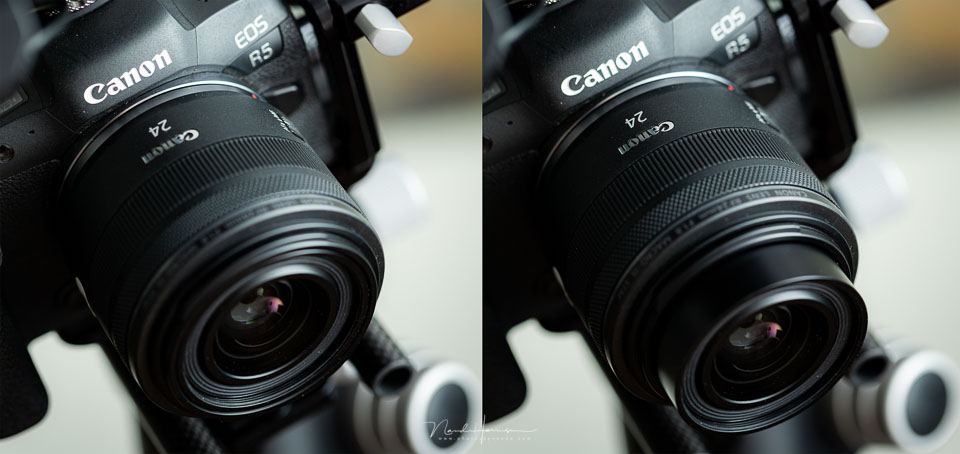
Image quality
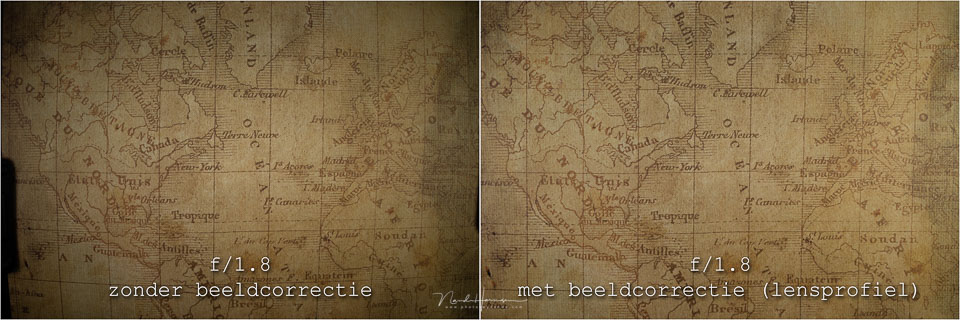
The image quality of the RF 24mm is reasonable and sufficient for normal use. You notice strong vignetting, up to as much as 4 stops in the corners when the lens is used at f/1.8. This quickly improves as you stop down towards f/4.
In terms of sharpness, the small lens performs well at f/1.8, but only in the centre of the image. Towards the edges, sharpness decreases considerably and can even be described as poor there.
Here too, corner sharpness improves as you stop the aperture down further. At f/4 and f/5.6, corner sharpness is good.
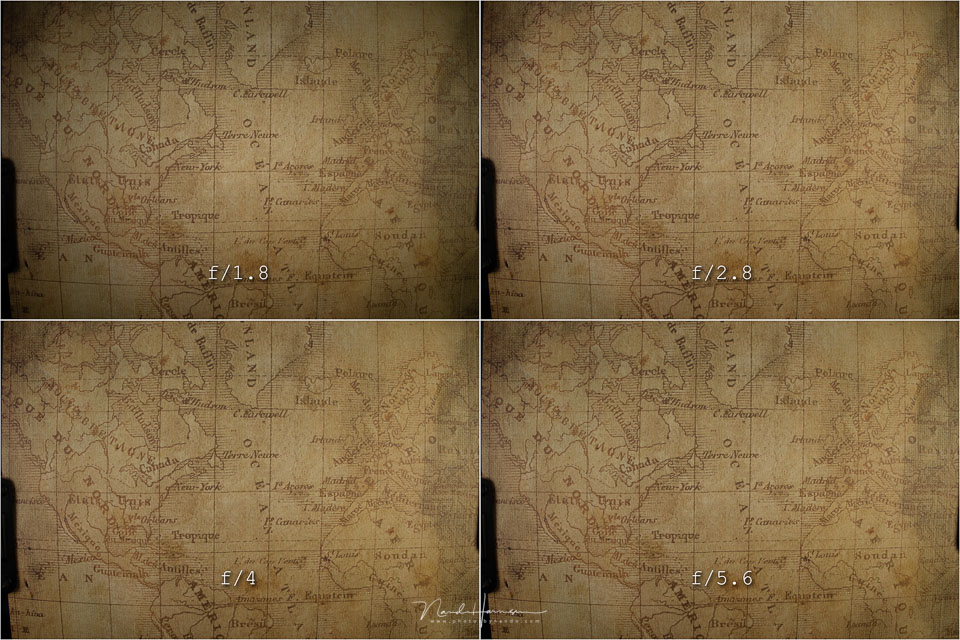
In general, a greater depth of field will be used with a 24mm focal length, giving you good sharpness across the entire image and little trouble with vignetting. In other words, the lens performs excellently in that situation.
The occasions when a shallow depth of field is used at 24mm are generally limited. In such cases, the question is how important corner sharpness is, since the corners often fall outside the area of focus.
Vignetting will also rarely become distracting in practice when using a shallow depth of field.

If you use the RF 24mm on an APS-C camera, such as the EOS R7 and EOS R10, the angle of view captured is smaller, meaning that blur and vignetting fall outside the frame.
The lens will then have a 35mm angle of view, ideal for wider portraits. Any blur in the corners and vignetting will not quickly be noticeable or distracting.
Macro
It is remarkable that the RF 24mm is also a macro lens. Thanks to the short minimum focusing distance, it is possible to achieve 1:2 magnification. This means that objects are captured at half their actual size.

Although there is no 1:1 magnification, it offers enough possibilities to capture small objects at a sufficient size in your photos. The focal length also offers unique possibilities. It is easy to include the surroundings in your macro image as part of the composition.

Conclusion
The RF 24mm f/1.8 IS USM is, in fact, a very suitable lens that will be highly useful despite its weak points.
It is an ideal focal length for a wide-angle lens: you get a huge angle of view without typical wide-angle distortions becoming an issue. Make sure you use at least f/8 to achieve ideal sharpness across the entire image, right into the corners.
For use with a shallow depth of field, it is best to limit yourself to subjects in the centre of the image. Sharpness is excellent there. Vignetting and blur in the corners will not be distracting.



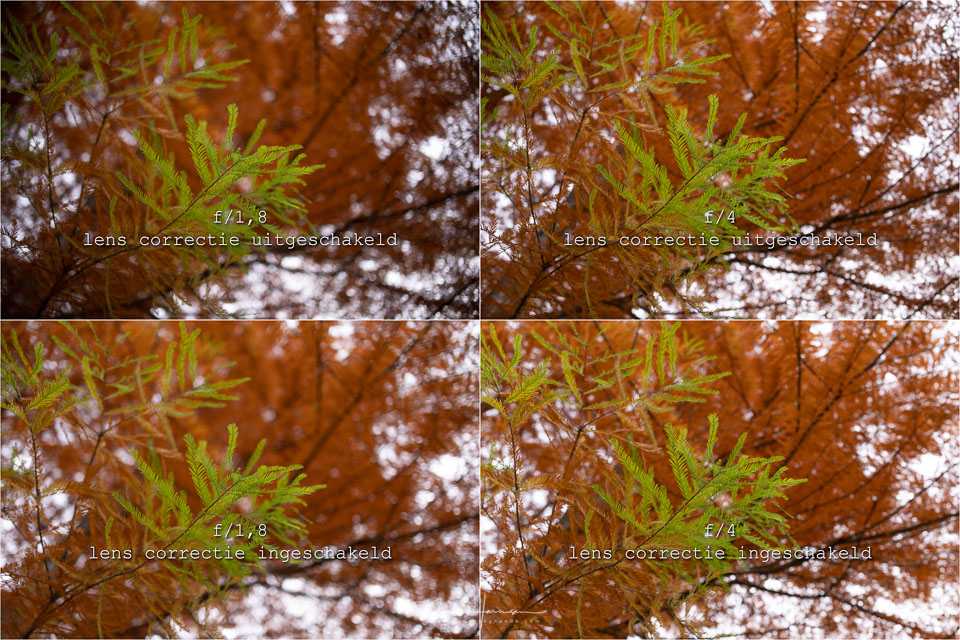
Despite a few drawbacks in terms of image quality, in-camera lens correction will solve some of them. Think of distortion, chromatic aberration and vignetting.
Pros
- Small, compact and lightweight
- Excellent image stabilisation of up to 5 EV
- Quiet and fast STM autofocus
- Switches for IS and AF on the lens
- No focus breathing
- Excellent centre sharpness at f/1.8
- Macro magnification up to 1:2
Cons
- Strong vignetting at f/1.8 (much less from f/4)
- Corner sharpness is poor at f/1.8 (better from f/5.6)
- Chromatic aberration at f/1.8 (much less from f/4)
- Not dust and splash resistant
- Strong distortion of points of light in the corners (astrophotography) at f/1.8
- Has strong image distortion (corrected with in-camera lens correction)
- Price is somewhat on the high side.
It is worth seeing the lens in the right perspective. The drawbacks are mainly related to performance at the widest aperture. Some issues are corrected by in-camera lens correction, while others improve considerably when stopping down.
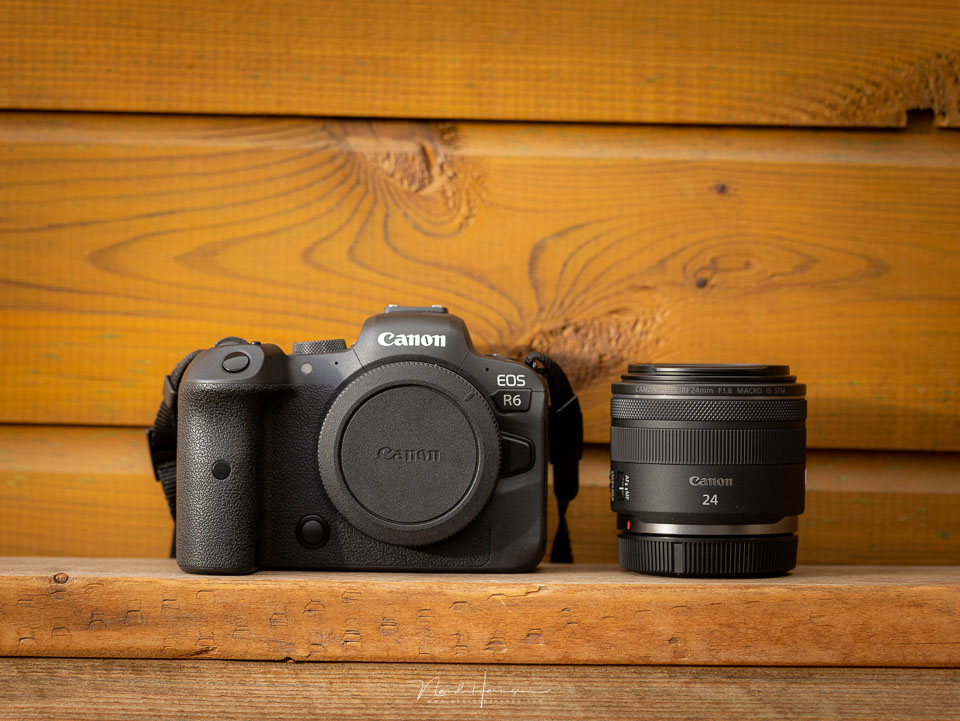
It is a trade-off you have to make, but ultimately, for 749 euros, you get a useful and practical lens. There are only a few compromises in image quality when using the widest aperture.
About the author
Nando Harmsen has been photographing for more than 40 years. He specialises in wedding photography and landscape photography. Nando also gives talks, workshops, masterclasses and photo trips, and regularly reviews new and interesting equipment.
You might also like
-
 Review: the Canon RF 50mm f/1.8 STM
by Nando Harmsen
-
 Review: The Canon RF 85mm macro lens
by Nando Harmsen
-
 Review: Canon RF 28mm f/2.8 STM
by Nando Harmsen
-
 Canon announces two new wide-angle RF lenses
by Elja Trum
-
 Review: Canon RF 135mm f/1.8L IS USM
by Nando Harmsen
-
 Review: Canon RF 100-300mm f/2.8L IS USM
by Nando Harmsen
0 comments
Be the first to share what you think!
Have your say
Please note: Articles older than a week can only be commented on by signed-in visitors.Would you still like to comment? sign in or create a free account.
Become a better photographer every week
A practical photography tip in your inbox every week.
39,083 photography enthusiasts already receive the tips! More about the weekly mail. Or keep up to date via  Facebook.

Elja Trum
Photofacts; everything to do with photography!
Would you like to take better photos and keep up with what is happening in photography? Photofacts publishes articles that teach you something about photography — from a product announcement to a practical shooting tip or a look at a website. Photofacts covers photography every day and is a hobby project of Elja Trum's that got out of hand. The articles are written by a team of volunteer authors. If you would enjoy writing one or more articles for Photofacts, do get in touch.More about PhotofactsPhotofacts is made possible in part by
