

Review: the Canon RF 50mm f/1.8 STM
Friday 30 April 2021, 20:02 by Nando Harmsen | 8,945 views | 3 commentsThis article was translated from Dutch with the help of AI. Read the original.
We all know Canon's famous, or infamous, Plastic Fantastic. The small and inexpensive 50mm standard lens with an f/1.8 aperture and surprisingly good image quality.
Canon has released the RF 50mm f/1.8 STM for its mirrorless system. I was given one to review.
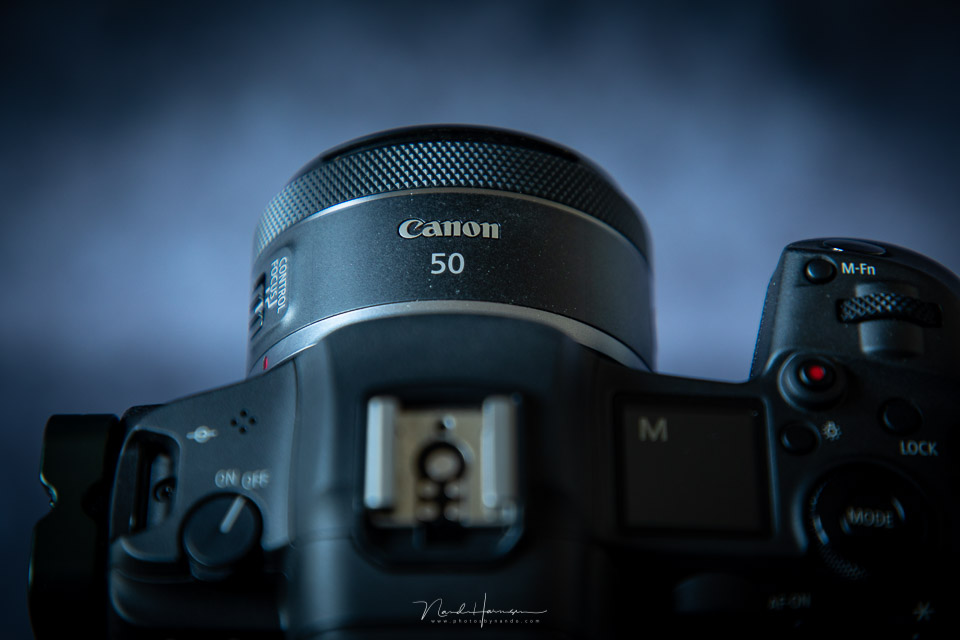
It was only to be expected that an RF version of the Plastic Fantastic would also be released. A small and compact 50mm lens with a large f/1.8 aperture for photographing with a shallow depth of field.
Why a 50mm focal length?
The advantage of a 50mm lens is probably well known. The lens renders reality at approximately 1x magnification. A shorter focal length reduces the view (wide angle), while a longer focal length enlarges it (telephoto).
This 1x magnification gives the image a perfect perspective, just as we see with our eyes. Distortion is minimal, unless you get very close, which makes a 50mm excellent for portraits.

A 50mm focal length is also excellent for other types of photography. Using f/1.8 also makes it possible to separate your subject nicely from the background.
A small and compact lens
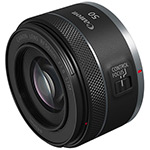
As tradition demands, the Canon RF 50mm f/1.8 STM is also a small and compact lens. It is 6.9 cm wide and just 4 cm long. At 160 grams, you hardly notice that you have a lens on the camera. Both its size and weight make it easy to have this lens with you at all times.
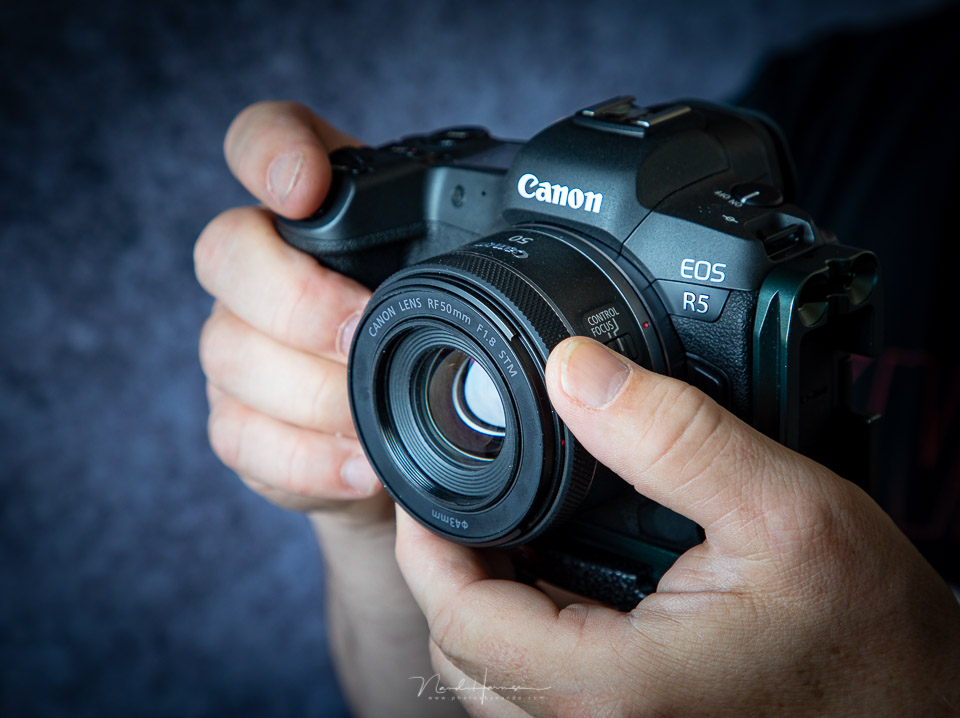
The Canon RF 50mm f/1.8 focuses using a stepping motor (STM). It is not silent, and especially with servo AF you can hear the lens continuously making adjustments to keep focusing.
On the side of the lens, you will find a button that lets you use the control ring as a focusing ring for manual focusing, or for using the programmed function from the camera.
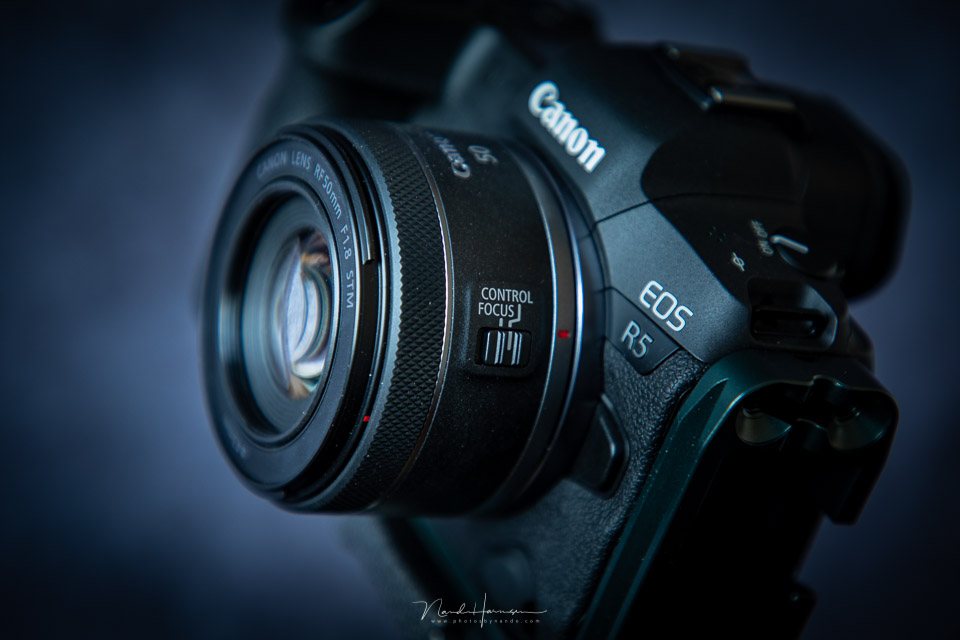
Apart from this function switch, the RF 50mm f/1.8 has no other buttons, and it has a neat, compact plastic body with the typical metal lens mount ring.
The lens varies in length when focusing. The lens barrel is only 43mm in diameter, which is also the filter size. The lens cap is small, so you need to take a little care when putting it on. It is easy to push the lens barrel in against the action of the STM motor.
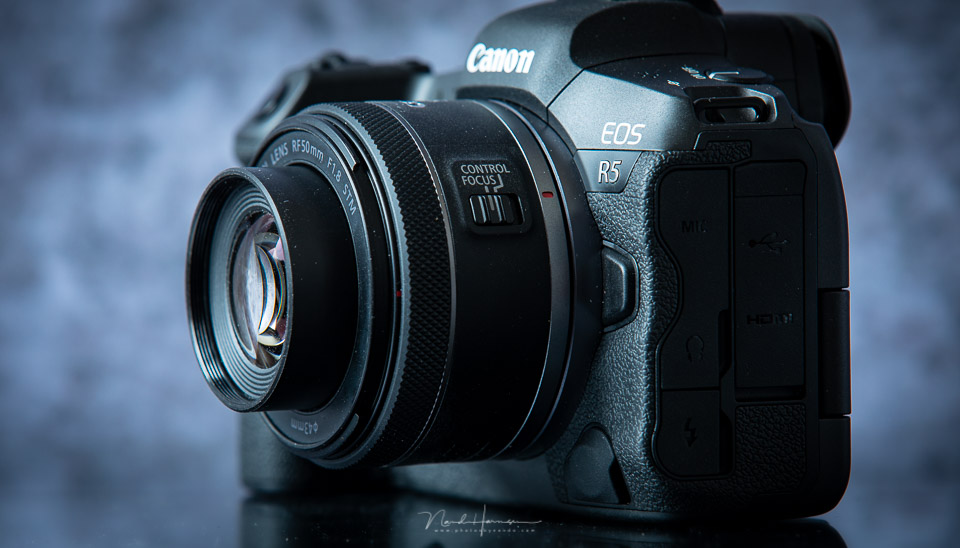
The lens barrel extends quite a way when focusing at the minimum focusing distance.
Image quality and value for money
At f/1.8, the image is reasonably sharp in the centre, but you can clearly see a drop in sharpness in the corners. Although centre sharpness improves as you stop down the aperture, this is hardly noticeable in the corners of the image.


Although it will not win any prizes for image quality, the image certainly cannot be called bad. Much of the softness at f/1.8 is offset by the softness caused by the shallow depth of field. This is certainly not a problem with portraits.
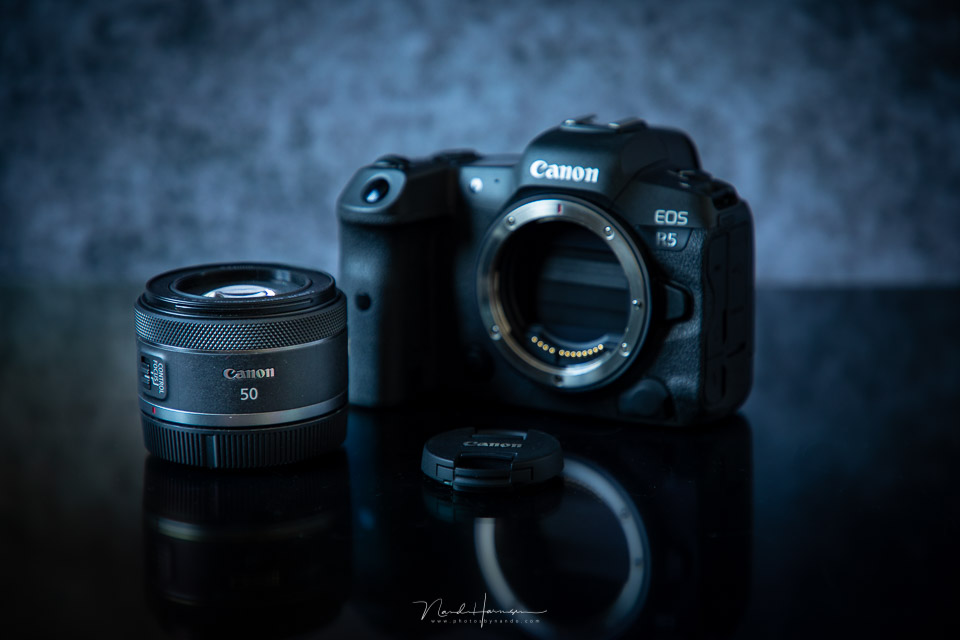
The small lens costs 229 euros, making it the cheapest RF lens currently available. In terms of value for money, it is certainly worth considering. However, if you are looking for a 50mm lens that delivers very sharp results right into the extreme corners, you will need to choose an alternative.
Conclusion
The RF 50mm f/1.8 STM lens is, in fact, a very good purchase. It is small, light and fits in every bag. The fixed 50mm focal length is highly versatile, while the f/1.8 aperture allows for a shallow depth of field.

The image quality may lag behind that of more expensive lenses, but you have to consider this in relation to the price. Even so, in practice the lower quality compared with the more expensive 50mm versions will not be particularly noticeable. Certainly not in everyday use and portrait photography.

All in all, it is a great addition to a photography kit, and to be honest, photographing with a lens like this is addictive. At least for me.
Pros
- Small, compact and light (160 grams, 6.9 x 4 cm)
- Switch between control ring and focusing ring
- Fast and accurate stepping motor for focusing
- Very good centre sharpness from f/2.8
- Excellent construction and finish
- Good value for money
Cons
- Soft image at f/1.8, especially in the corners
- Image remains soft in the corners up to approximately f/11
- Easy to push the lens barrel against the stepping motor when putting on the lens cap
- Relatively loud in servo AF
The alternatives
There are actually few alternatives available, unless you go back to the EF models such as the EF 50mm f/1.8 STM or the EF 50mm f/1.4 USM. You will need an EF-RF adapter to use these lenses, by the way.
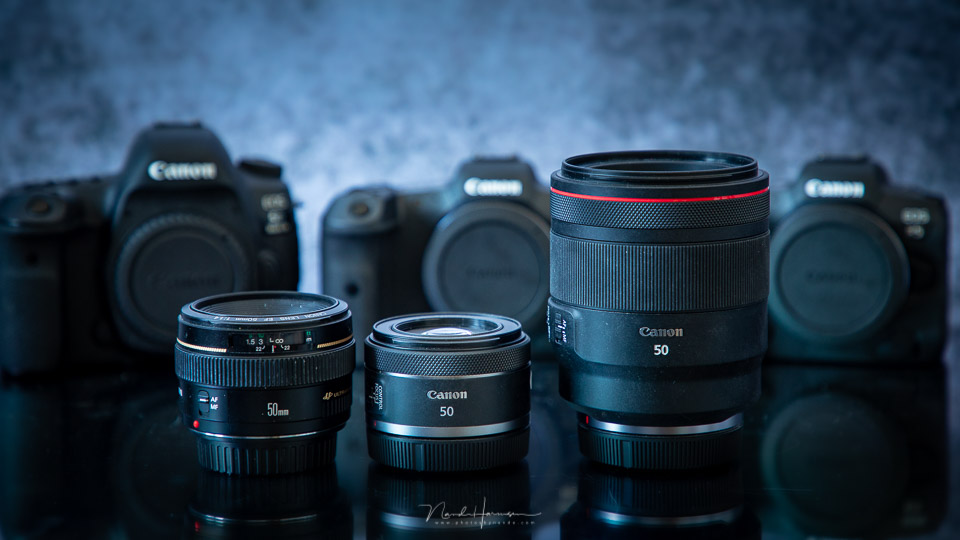
If you want to move up a step, you end up with the enormous Canon RF 50mm f/1.2L USM. It is many times larger, heavier and, above all, much more expensive. The image quality may be many times better, but compared with the RF 50mm f/1.8 STM, it is certainly not such a pleasantly small and easy-to-handle lens.
Thanks to Canon Nederland for making this lens available.

About the author
Nando Harmsen has been photographing for more than 40 years. He specialises in wedding photography and landscape photography. Nando also gives talks, workshops, masterclasses and photo trips, and regularly reviews new and interesting equipment.
You might also like
-
 Review: Canon RF 24mm f/1.8 macro IS STM
by Nando Harmsen
-
 Review: The Canon RF 85mm macro lens
by Nando Harmsen
-
 Review: Canon RF 28mm f/2.8 STM
by Nando Harmsen
-
 Review: Canon EOS R7
by Nando Harmsen
-
 Review: Canon RF 135mm f/1.8L IS USM
by Nando Harmsen
-
 Canon RF 50mm f/1.8 and 70-200mm f/4 announced
by Elja Trum
3 comments
-
 Luc Auwaerts wrote on Tuesday 4 May 2021 at 13:58 | reply
A good alternative is the EF 50mm 1.4 !!!
Translated from Dutch. -

 PvRFotografie
wrote on Tuesday 4 May 2021 at 14:15
| reply
PvRFotografie
wrote on Tuesday 4 May 2021 at 14:15
| reply
In the alternatives, the EF 35mm f/1.4 USM is mentioned, but looking at the photo I suspect it should be the EF 50mm f/1.4 USM.
Translated from Dutch. -

Have your say
Please note: Articles older than a week can only be commented on by signed-in visitors.Would you still like to comment? sign in or create a free account.
Become a better photographer every week
A practical photography tip in your inbox every week.
38,982 photography enthusiasts already receive the tips! More about the weekly mail. Or keep up to date via  Facebook.

Elja Trum
Photofacts; everything to do with photography!
Would you like to take better photos and keep up with what is happening in photography? Photofacts publishes articles that teach you something about photography — from a product announcement to a practical shooting tip or a look at a website. Photofacts covers photography every day and is a hobby project of Elja Trum's that got out of hand. The articles are written by a team of volunteer authors. If you would enjoy writing one or more articles for Photofacts, do get in touch.More about PhotofactsPhotofacts is made possible in part by
