

Review: The Canon RF 85mm macro lens
Friday 22 January 2021, 20:10 by Nando Harmsen | 8,532 views | 8 commentsThis article was translated from Dutch with the help of AI. Read the original.
As Canon's mirrorless cameras take the market by storm, many excellent lenses are becoming available for the system.
One of them is the RF 85mm macro, an affordable lens that is certainly worth considering. Canon Nederland provided this lens for a review.
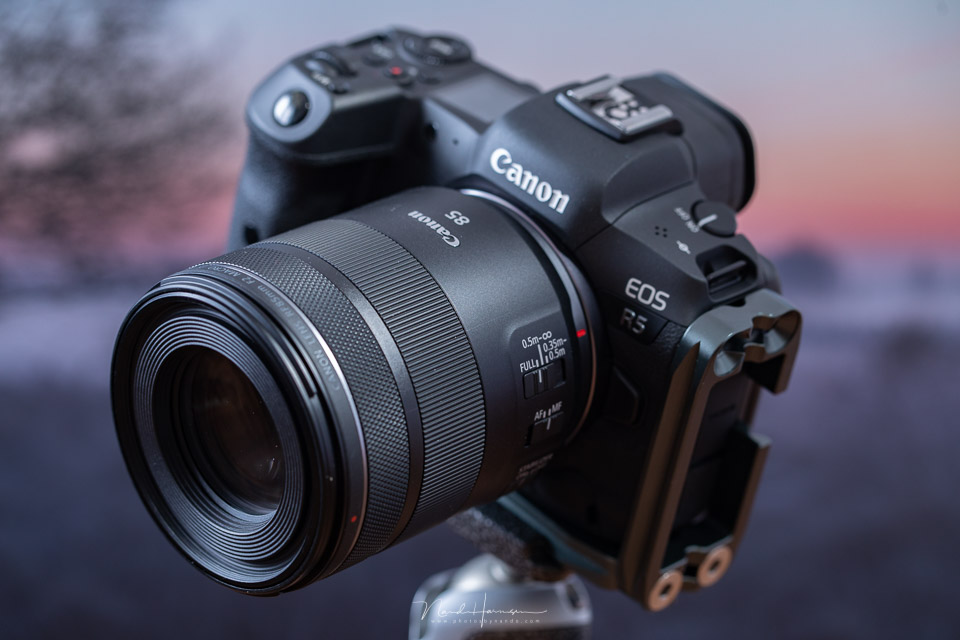
There are now many beautiful and unique lenses available for Canon's mirrorless full-frame cameras. They have the new RF mount, and therefore cannot be used on digital SLR cameras.
You hear so much about the fantastic but expensive L lenses that the others are overlooked or receive far less attention.
That is completely unjustified, because there are some fantastic lenses among them too. They are also affordable compared with the expensive L lenses. The RF 85mm f/2 macro is one of them.
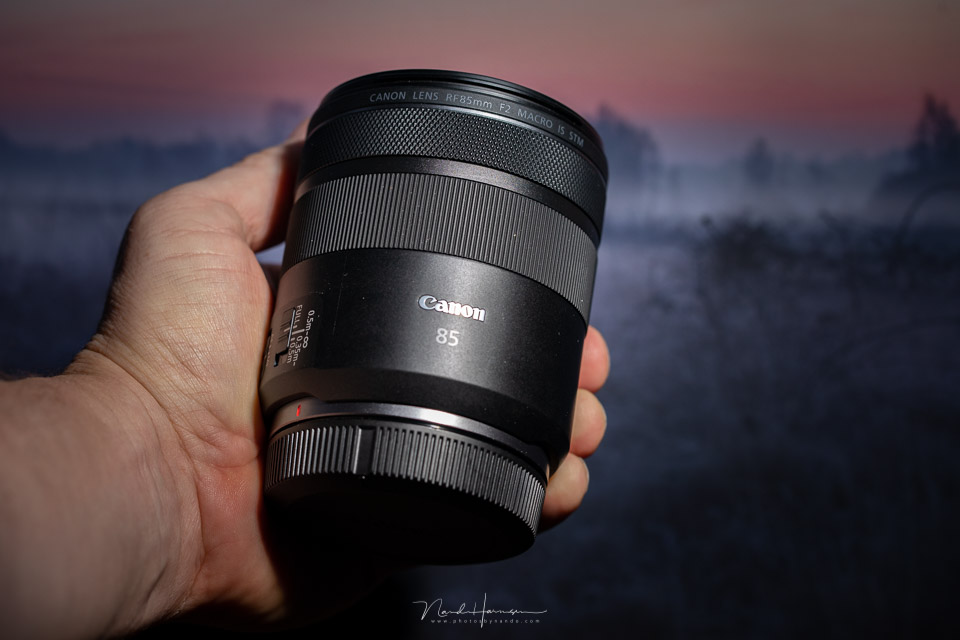
The great thing about the Canon RF 85mm f/2 macro is its size. This is a very easy-to-handle lens, small and light, but with a wide f/2 aperture. It is the mirrorless version of the popular EF 85mm f/1.8 for the digital SLR system. It does have an extra advantage, though. It is a macro lens.
85mm, a versatile focal length
An 85mm focal length is very versatile. It is very popular for portraits for good reason, giving you pleasant compression so that the proportions of a face look very natural. It also allows you to keep a comfortable distance.

For landscapes, 85mm works as a pleasant short telephoto lens. It allows you to isolate a subject somewhat from its surroundings, which can produce a nice three-dimensional effect.
The macro function also allows you to photograph flowers and mushrooms with the RF 85mm. The longer focal length also makes it possible to keep some distance when photographing insects.
Appearance and features
The Canon RF 85mm f/2 macro is a compact lens measuring approximately 8 x 9 centimetres and weighing no more than 500 grams. It will come as no surprise that the lens is mainly made of plastic, with only the RF mount made of metal.
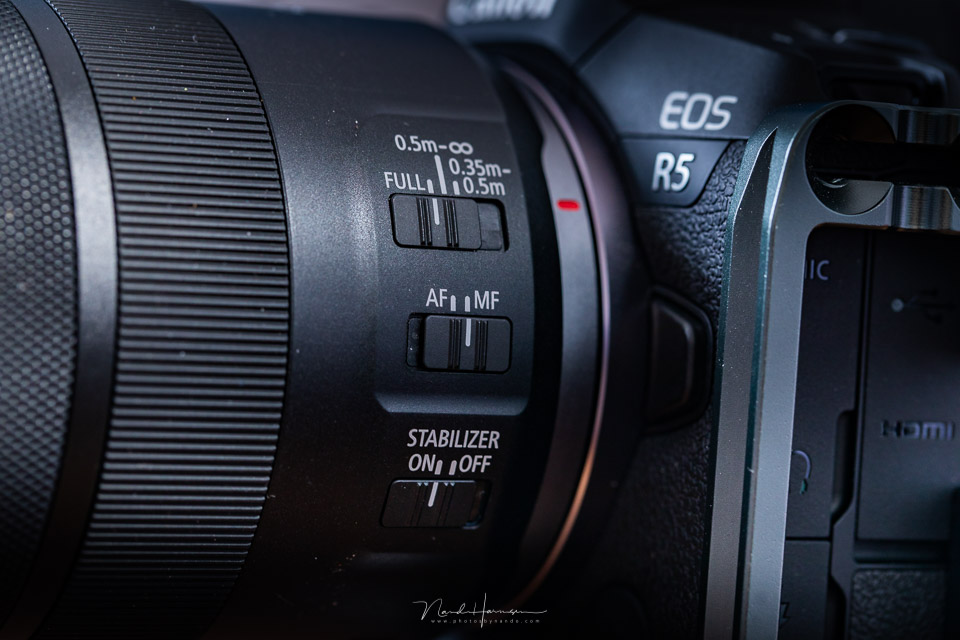
It does not feel cheap or fragile, though. The plastic is good quality and the switches on the lens are excellent. These switches allow you to turn autofocus and image stabilisation on or off, and to limit the focus distance.
Focusing
The focus distance limiter is useful and makes focusing faster because the entire focus range does not have to be used. This range normally runs from 35 cm to infinity. It takes three full rotations to cover it, 1080 degrees. This allows you to focus manually with great precision.
With such a large rotation of the focusing ring, it would be useful to have a variable rotation system, where the speed at which you turn the focusing ring determines how quickly the focus changes.
The Canon RF 85mm macro only has a linear motor, however, so you have to rotate the full 1080 degrees.
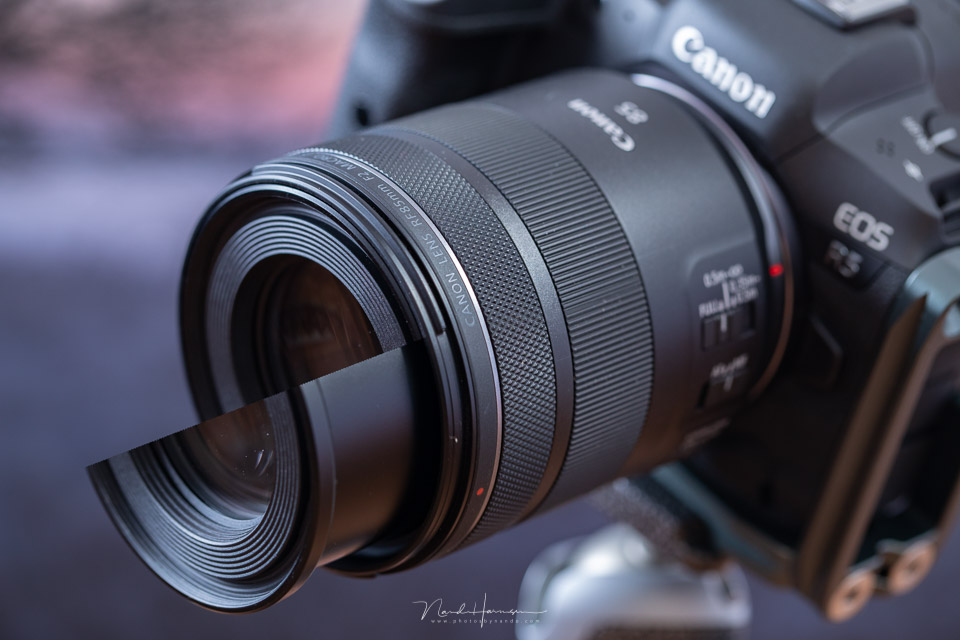
The lens gets longer when you turn it towards the minimum focusing distance. This is a considerable increase in length. It is therefore important to enable the "retract lens on power off" setting in the camera menu. This will retract the lens when you turn the camera off. If you do not do this, the lens barrel will remain extended when you switch off the camera.
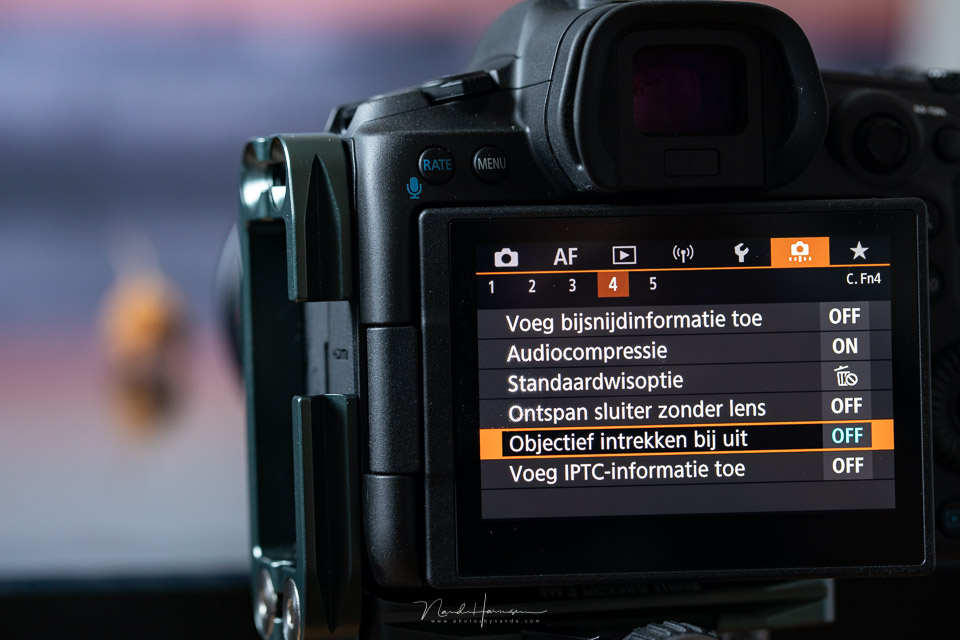
The Canon RF 85mm f/2 macro has an STM system, a stepping motor that works quickly and accurately. The STM system is not completely silent, something to bear in mind if you film with this lens.
Image stabilisation
The Canon RF 85mm macro has image stabilisation that works up to 5 stops. If you combine this with a camera equipped with IBIS (In Camera Image Stabilization), this can increase to an impressive 8 stops.
This allows you to take a handheld photo with a shutter speed of around 0.5 seconds.
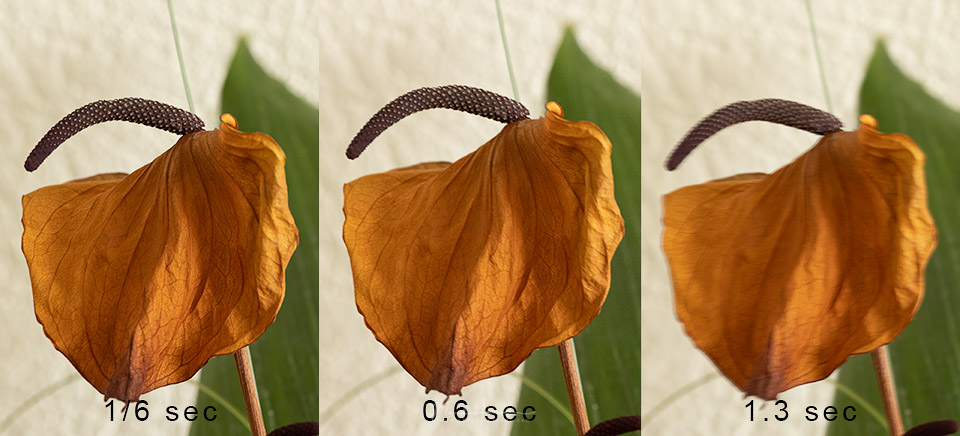
The effectiveness of image stabilisation also naturally depends on the distance. With macro photography, it is more difficult for image stabilisation to keep critical focus exactly in the right place.
Nevertheless, the image stabilisation of the camera and lens combination delivers impressive possibilities.
Macro, but not life-size
A useful extra feature of the Canon RF 85mm f/2 macro is the final addition to its name: macro. With a minimum focusing distance of 35 cm, a magnification of 1:2 can be achieved. This is half the life-size image of an object.
This means that the lens is not a fully-fledged macro lens, which can generally achieve 1:1 magnification. Even so, 1:2 magnification allows you to get small subjects into the frame at a pleasant size. After all, even with a fully-fledged macro lens, you do not always use the maximum magnification.
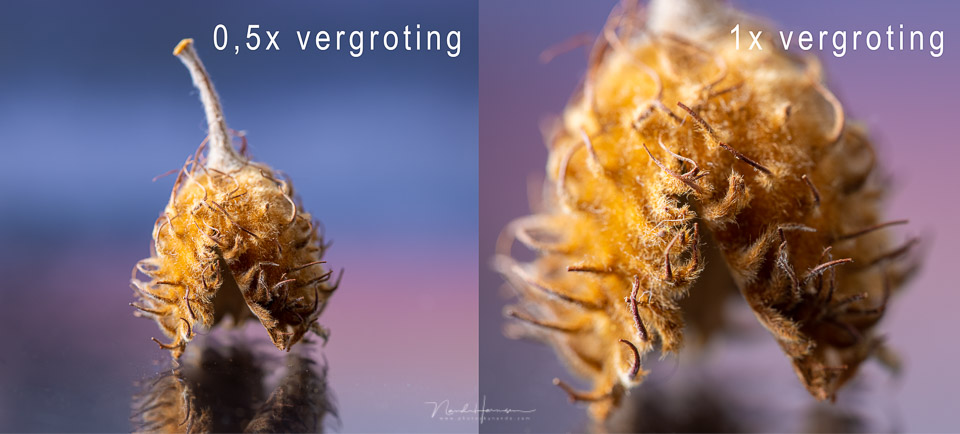
The macro feature is particularly useful for photographers who shoot weddings. It means you no longer need to bring an extra macro lens.
The Canon RF 85mm f/2 macro is perfect for tighter portraits at weddings and can also be used to capture the rings properly.
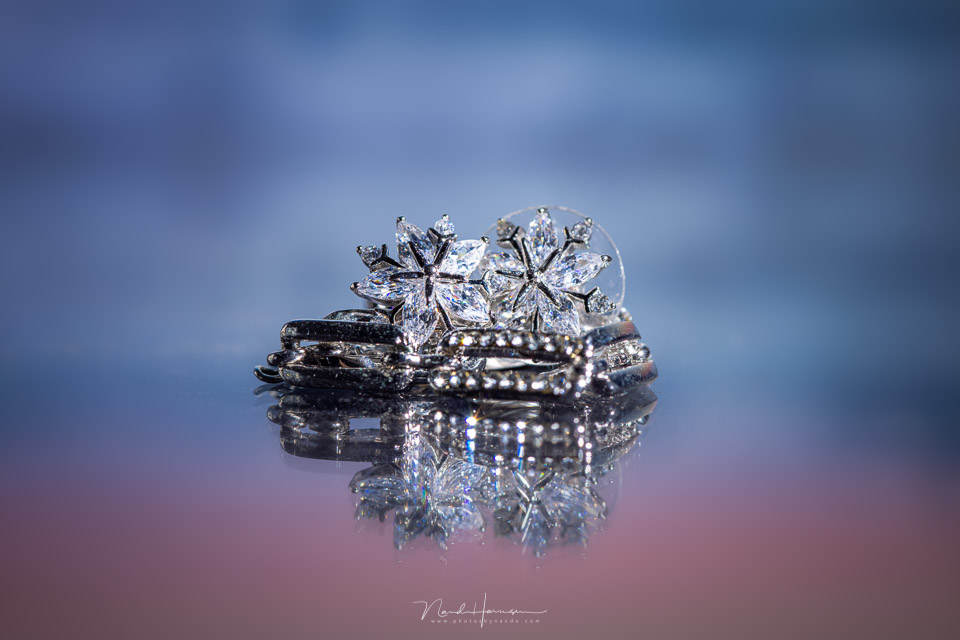
The combination of focal length, short focusing distance and magnification also makes the lens very suitable for photographing still lifes and other creative subjects.
The angle of view is very pleasant for keeping too much out of the frame. The short focusing distance hardly limits your ability to achieve the desired composition and magnification. In that respect, it is a true all-rounder.

Image quality
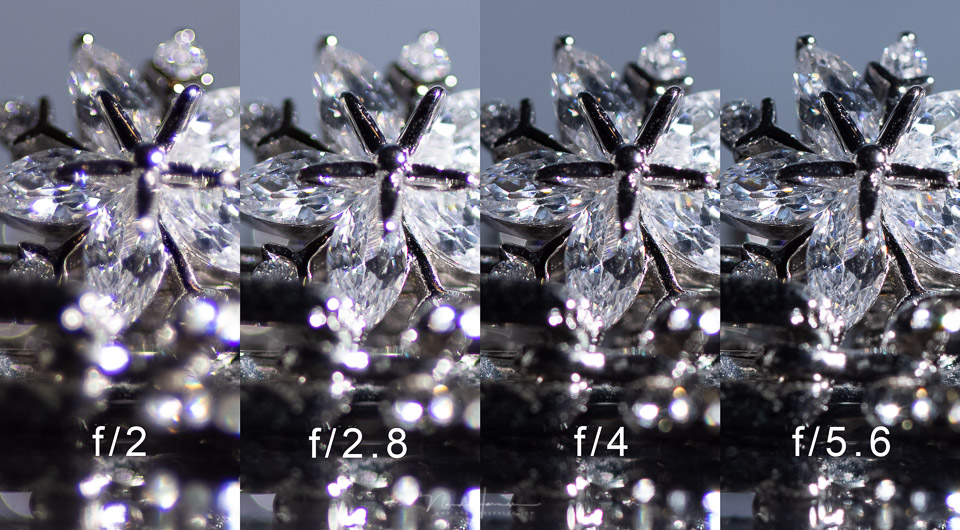
You can safely call the image quality of the Canon RF 85mm f/2 macro very good. Centre sharpness is excellent even at f/2. Stopping down to f/2.8 produces a little extra contrast and sharpness.
The edges of the photo are reasonably soft at f/2, which is not distracting. Stopping down to f/2.8 and f4 produces a significant improvement. At f/2, the Canon RF 85mm macro also shows almost 3 stops of vignetting. This may seem like a lot, but it is very normal at these apertures. This type of vignetting is hardly relevant for portraits.
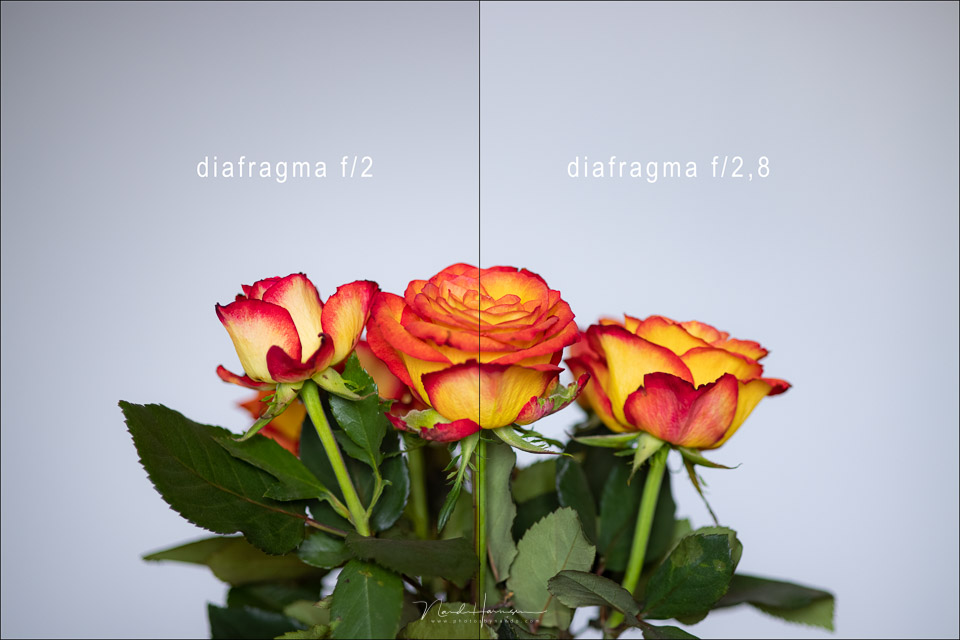
The vignetting improves quickly when the aperture is stopped down to f/2.8 and f/4. At f/4, only 0.6 stops of vignetting remain. The vignette can also be corrected by automatic lens optimisation in a camera, making it barely or no longer visible.
Light of different colours passes through the lens in different ways, causing coloured edges to appear where light and dark meet. This is called chromatic aberration (CA). Manufacturers try to compensate for this effect in clever ways.
The CA of the Canon RF 85mm macro is present at f/2 in the form of purple or green edges, depending on whether it is in front of or behind the focus point. This effect becomes less pronounced as the aperture is stopped down. At f/4, the CA has virtually disappeared. This effect can often also be corrected within limits during post-processing.
Conclusion
With the RF 85mm f/2 macro IS STM, Canon has brought a fantastic and versatile lens to the market. It will appeal to both amateur photographers and professionals. The compact size and weight are major advantages, as is the macro function.
The autofocus system is pleasantly fast. Although it may not be as lightning-fast as the L version of this lens, it is fast enough for almost all applications.
The STM system does produce some noise, which anyone wanting to film with this lens will have to bear in mind. With an external microphone, however, this will not be a problem at all.

The macro function of the RF 85mm does not produce 1:1 magnification. This will be sufficient for many purposes. Anyone who does a lot of macro photography may feel somewhat limited by the lack of 1:1 magnification.
The lack of internal focusing could be considered a disadvantage, as the lens increases in length. It is something you always need to take into account.
A greater disadvantage is the limitation to linear focusing, meaning you have to turn the ring through the full 1080 degrees to move from infinity to the minimum focusing distance.

The few minor disadvantages certainly do not outweigh the advantages of this fine lens. After using it, I can only conclude that this small, versatile lens is an excellent choice for any photographer. I can highly recommend the Canon RF 85mm f/2 macro IS STM.
Advantages
- Small, compact and light
- Fast f/2 aperture, also for a pleasant shallow depth of field
- Focus limiter included
- Macro function up to 1:2
- Image stabilisation up to 5 stops, up to 8 stops with IBIS
- Precise focusing thanks to the large 1080-degree rotation
- Excellent sharpness, which improves at f/2.8 or smaller
- Comfortably wide focusing ring
- Favourable price
Disadvantages
- No internal focusing
- Lens must be retracted before removal
- Mainly plastic, although it is good quality
- Only linear focusing is possible, it cannot depend on the rotation speed
- No weather sealing
Thanks to Canon Nederland for providing the lens.
About the author
Nando Harmsen has been photographing for more than 40 years. He specialises in wedding photography and landscape photography. Nando also gives talks, workshops, masterclasses and photo trips, and regularly reviews new and interesting equipment.
You might also like
-
 Review: Canon RF 100mm f/2.8L IS macro lens
by Nando Harmsen
-
 Review: Canon RF 24mm f/1.8 macro IS STM
by Nando Harmsen
-
 Review: the Canon RF 50mm f/1.8 STM
by Nando Harmsen
-
 Review: Canon RF 135mm f/1.8L IS USM
by Nando Harmsen
-
 Review: Canon RF 100-300mm f/2.8L IS USM
by Nando Harmsen
-
 Review: Canon EOS R8 full-frame mirrorless camera
by Nando Harmsen
8 comments
-

 Dies Groot wrote on Tuesday 26 January 2021 at 12:40
| reply
Dies Groot wrote on Tuesday 26 January 2021 at 12:40
| reply
Perfecte review, dank!
This comment was written in another language and has not been translated yet.
(Echter schrijf je volgens mij vignettering met dubbel-t.) -

-
 Eduard wrote on Tuesday 26 January 2021 at 17:16 | reply
Hi Nando, interessante review, maar..... Canon heeft al een uitstekende EF Macro lens (de 100/2.8). Ik had eigenlijk verwacht dat je deze twee objectieven met elkaar zou vergelijken. Voor mij is 1:1 belangrijk, dus dit objectief legt het af tegen het "oude" 100 mm exemplaar. Trouwens de RF 35 /1.8 is ook een 1:2 macro lens. Zou ook een aardige vergelijking op kunnen leveren.
This comment was written in another language and has not been translated yet.
Maar toch bedankt voor je interessante review. -
Nando
wrote on Wednesday 27 January 2021 at 12:49
| reply
@Eduard:
This comment was written in another language and has not been translated yet.
De 100mm f/2,8 zijn inderdaad uitstekende objectieven, zowel de gewone als de L-versie. Dit zijn echter EF objectieven, en geen RF objectieven. Bovendien is het RF objectief geen macro objectief dat 1:1 kan behalen, dus het is dan appels en peren vergelijken.
Ik denk ook dat een vergelijk met een 35mm macro niet realistisch is. Het brandpunt verschil zorgt voor een totaal ander soort foto. Je kunt die niet naast elkaar leggen. -
 Metin
wrote on Tuesday 2 February 2021 at 09:17
| reply
Metin
wrote on Tuesday 2 February 2021 at 09:17
| reply
Geweldige review, één klein 'maar', als je een paar keer over de prijs hebt, zou het fijn zijn als dat ook ergens vermeld staat. Iets in de trant van: 'Prijs bij publicatie:'
This comment was written in another language and has not been translated yet. -
Nando
wrote on Tuesday 2 February 2021 at 10:04
| reply
Hallo Metin,
This comment was written in another language and has not been translated yet.
Goed punt. Gelukkig is de prijs eenvoudig te vinden met alle online fotowinkels. En Google is daarbij ook je beste vriend. Ik heb het even voor je gedaan: 706 euro -
Metin
wrote on Tuesday 2 February 2021 at 10:20
| reply
Hallo Nando, dat had ik ook al gedaan. Maar toch bedankt. Gaat me meer om dat je iets een paar keer benoemd, maar niet toont.
This comment was written in another language and has not been translated yet.
Een flauw voorbeeld: je benoemd wel dat men veel aan de scherpstelring moet draaien om dichtbij scherp te kunnen stellen, gelukkig staat ook vermeld hoeveel. Anders had ik dat ook moeten googlen.
Voor de rest, keep up to good work. Goede informatie review. -
Nando
wrote on Tuesday 2 February 2021 at 11:21
| reply
@Metin:
This comment was written in another language and has not been translated yet.
Je hebt ook helemaal gelijk. Ik heb de review van de RF600, RF800, en RF100-500 in de blokken staan, en het is een goed kattebelletje om de prijzen te benoemen.
Have your say
Please note: Articles older than a week can only be commented on by signed-in visitors.Would you still like to comment? sign in or create a free account.
Become a better photographer every week
A practical photography tip in your inbox every week.
39,083 photography enthusiasts already receive the tips! More about the weekly mail. Or keep up to date via  Facebook.

Elja Trum
Photofacts; everything to do with photography!
Would you like to take better photos and keep up with what is happening in photography? Photofacts publishes articles that teach you something about photography — from a product announcement to a practical shooting tip or a look at a website. Photofacts covers photography every day and is a hobby project of Elja Trum's that got out of hand. The articles are written by a team of volunteer authors. If you would enjoy writing one or more articles for Photofacts, do get in touch.More about PhotofactsPhotofacts is made possible in part by
