

Review: Pentax Kp
Friday 8 December 2017, 20:20 by Johan van der Wielen | 6,442 views | 5 commentsThis article was translated from Dutch with the help of AI. Read the original.
Let me start by saying that I had no experience with Pentax as a brand or camera. I saw that Pentax had released a camera with specifications that looked very interesting for night photography and even photographing the northern lights.
I took the plunge and asked if I could try it out. It then came along as a second body alongside my own gear.
I went into it completely openly and without any preconceptions, after being given a quick tour of the controls and all the features this camera, and apparently all Pentax cameras, has. I mainly used the camera as a handy extra camera alongside my normal equipment.
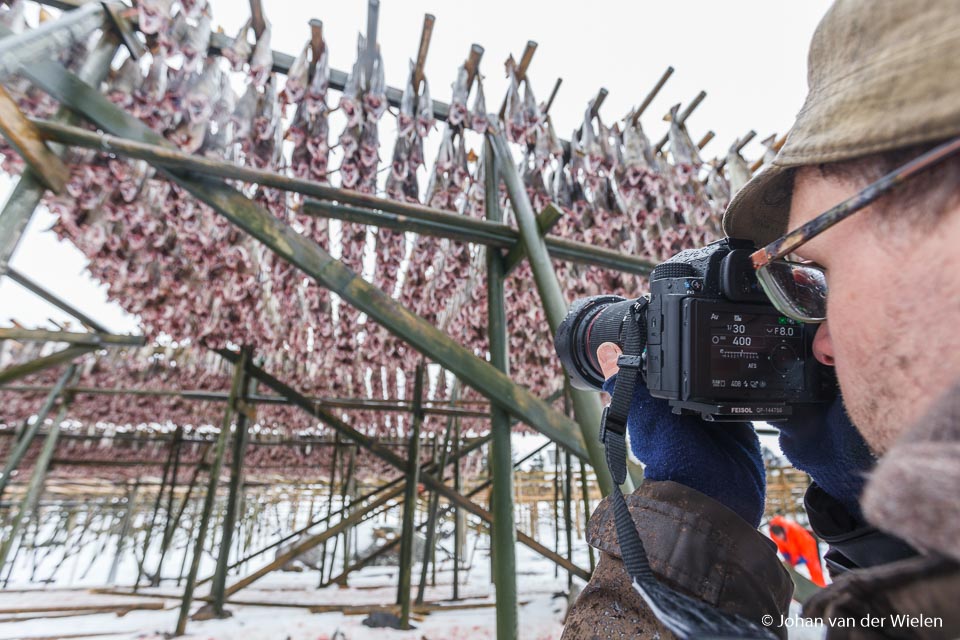
How this story eventually came about
My conscience: Johan? Haven't heard anything from you for ages
The photographer: Eeeh yes, I suppose that could be right.
Conscience: Didn't you once take a Pentax with you on a trip?
Photographer: I think so, yes
Conscience: That is quite remarkable, another brand.
Photographer: That's right, but I'm ashamed of it.
Conscience: Oh? Is that necessary then?
Photographer: Yes, absolutely!
Conscience: Oh dear, are you ashamed because you photographed with a Pentax?
Photographer: Eeh, no, sorry... if I gave that impression. No, certainly not.
Conscience: We're getting curious. If you didn't mind cheating on us with another brand again, why are you ashamed?
Photographer: Well ... because I didn't exactly share my experiences with this new camera at the time directly with the Dutch photography community.
Conscience: Aha, I understand. Let me guess? Busy?
Photographer: “Yes, you could call it that
Conscience: And? How long ago were you allowed to try this camera?
Photographer: Eeehhh well ...
Conscience: Yes?
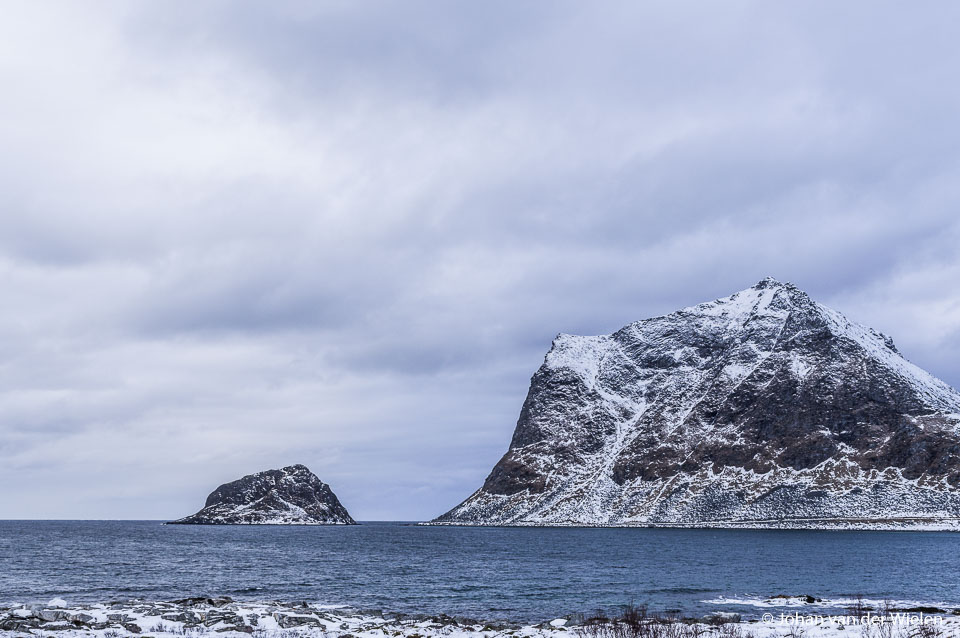
Photographer: Last March, on Lofoten ☹
Conscience: Shouldn't you get to work then?
And so it came to pass ... finally.
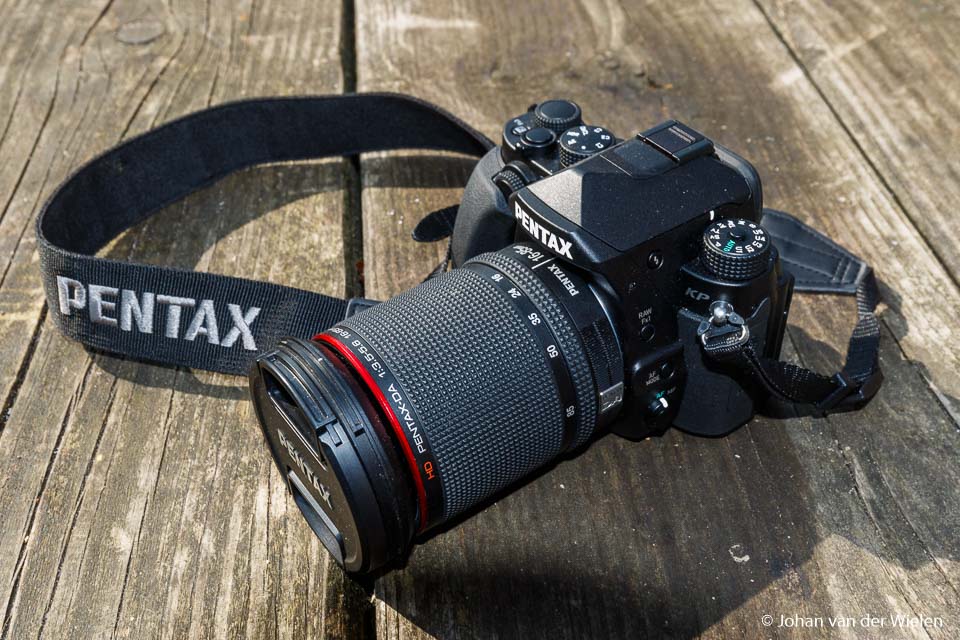
How high can the ISO go?
In one word: ISO 819,200. When I read that, I wanted to take this camera with me, even if it had been a Camera Obscura. Imagine what you could do with an ISO like that at night. That's simply 9 stops faster than ISO1600!
If I needed a 30-second shutter speed at night at ISO1600 on a moonless night, I would now need only 1/15 of a second. In fact, I photograph the most beautiful northern lights with a shutter speed of around 4 seconds, which would now be only 1/125!
That would simply mean I could photograph the individual curtains of the northern lights handheld. I'll go one step further: you always film at 1/50 of a second. I could simply film the northern lights in real time, without having to create a timelapse.
Is this calculation going too fast? Then here is the list of shutter speeds in full stops, factors of 2:
30” → 15” → 8” → 4” → 2” → 1” → 1/2 → 1/4 → 1/8 → 1/15 → 1/30 → 1/60 → 1/125
And all this in a small and affordable camera. A whole new world opened up for me.
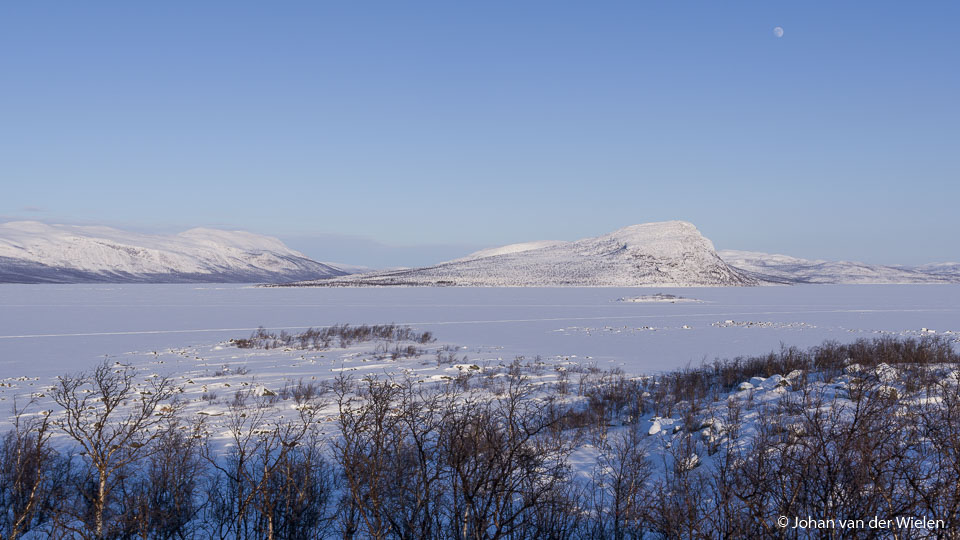
Pentax and I get to work
Then you get a camera from a brand you only know from stories. My father once photographed with 'Asahi Pentax', and that was the extent of my knowledge. So I approached it with an open mind and used the camera as I would use any camera.
I put it in my bag with the supplied 16-85 standard lens and used it alongside my own cameras and lenses.
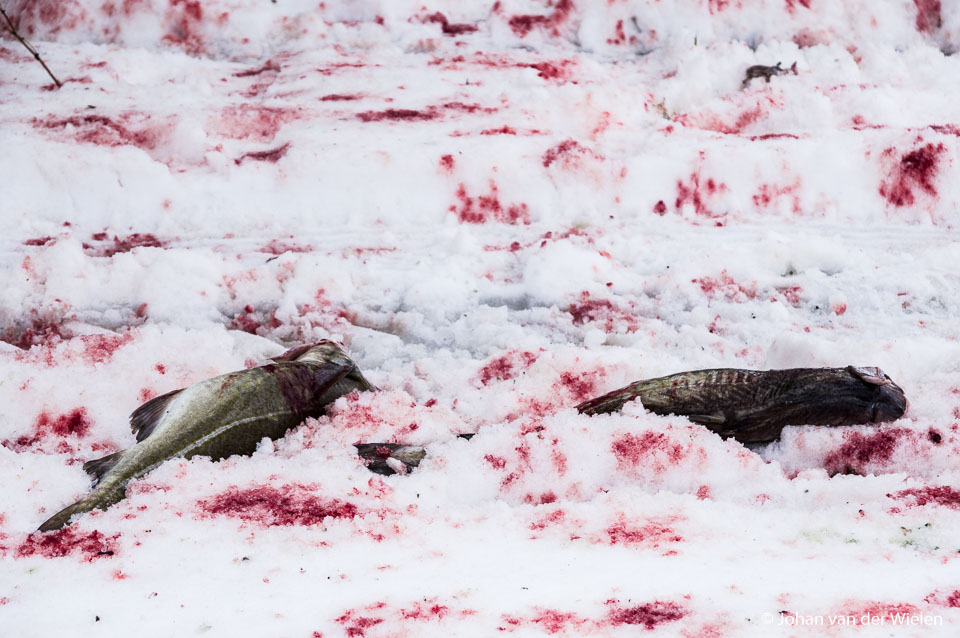
I test equipment thoroughly and take it along for my own work. That means I did not go easy on it, but I also did not expose it to unacceptable risks. Still, I have to admit that I had to make an effort to pick it up instead of my own equipment. And that's not the camera's fault, but mine. I don't like new equipment.
That may sound strange for a photographer, but when I am really working I need equipment that I know inside out and do not have to think about. I need to be able to grab it and operate it blindly, and even be able to feel without looking how the result has turned out.
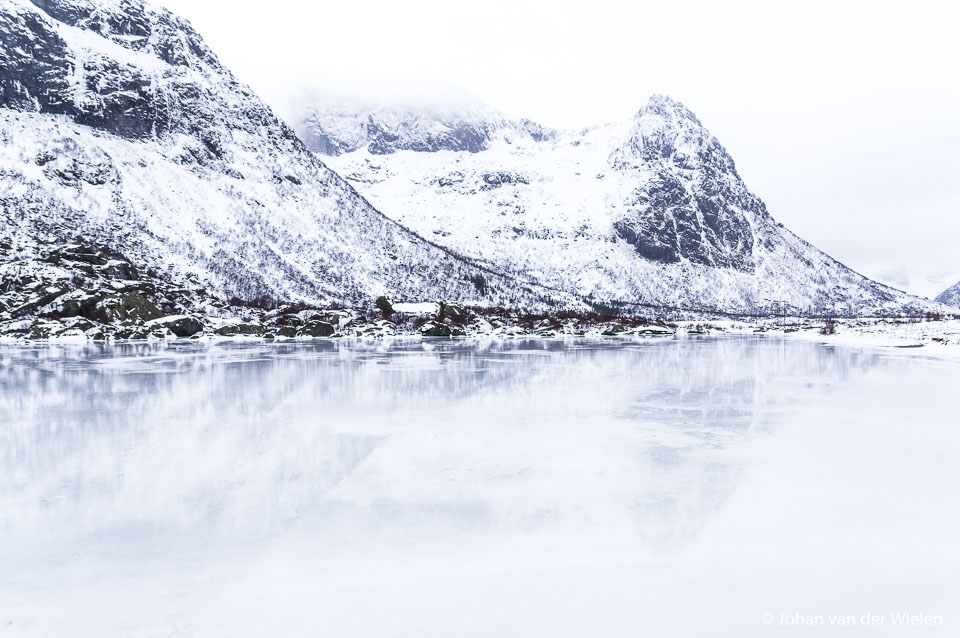
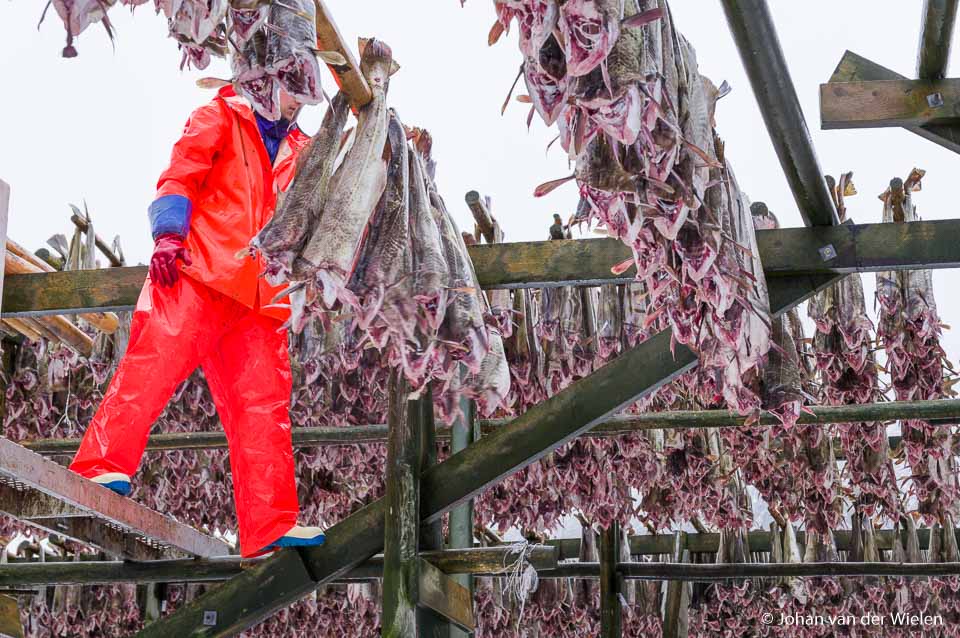
So when it really mattered, I trusted only my own equipment. And that was clearly noticeable afterwards... I kept forgetting to pick up the Pentax during the really beautiful photographic moments ☹ Even so, we had many wonderful adventures together and I got a good impression of this new member of the Pentax family.
People who know me will by now also know that I do not carry out scientific laboratory tests. I test equipment in the field, in the way I use it. For all specifications and graphs, I am happy to refer you to other websites.
What does the image look like at high ISO?
The Pentax has 24.3 megapixels on an APS-C sensor, a perfectly good resolution at the moment and more than workable for me. In terms of image quality, I am very impressed. With its 24 megapixels, it can easily keep up with the images from my own 30-megapixel camera, which costs three and a half times as much.
Of course you can see differences, especially in dynamic range, colour and contrast, but it is certainly not three and a half times worse. The images are perfectly usable and therefore go straight into my image archive.
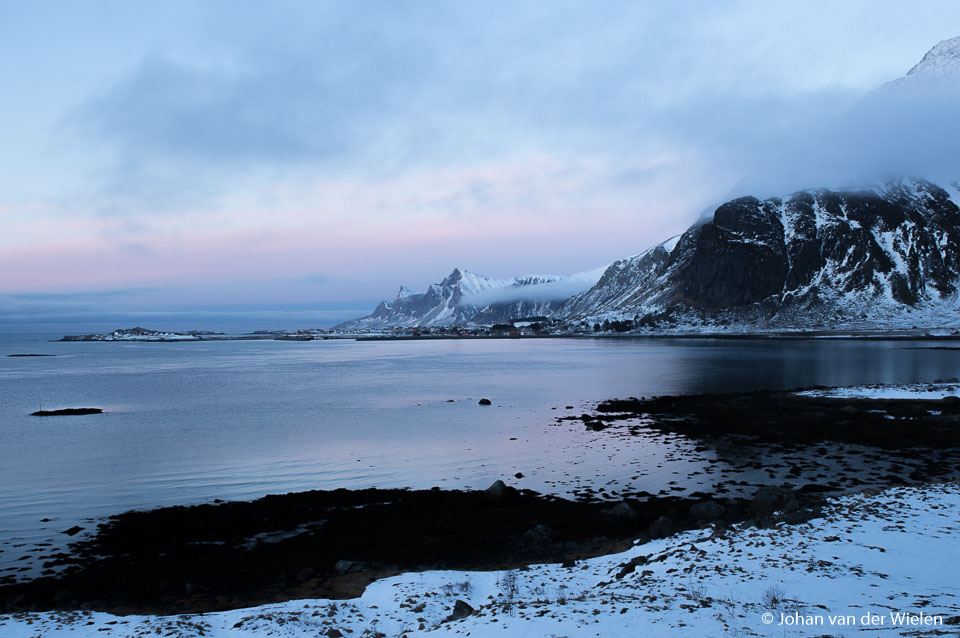
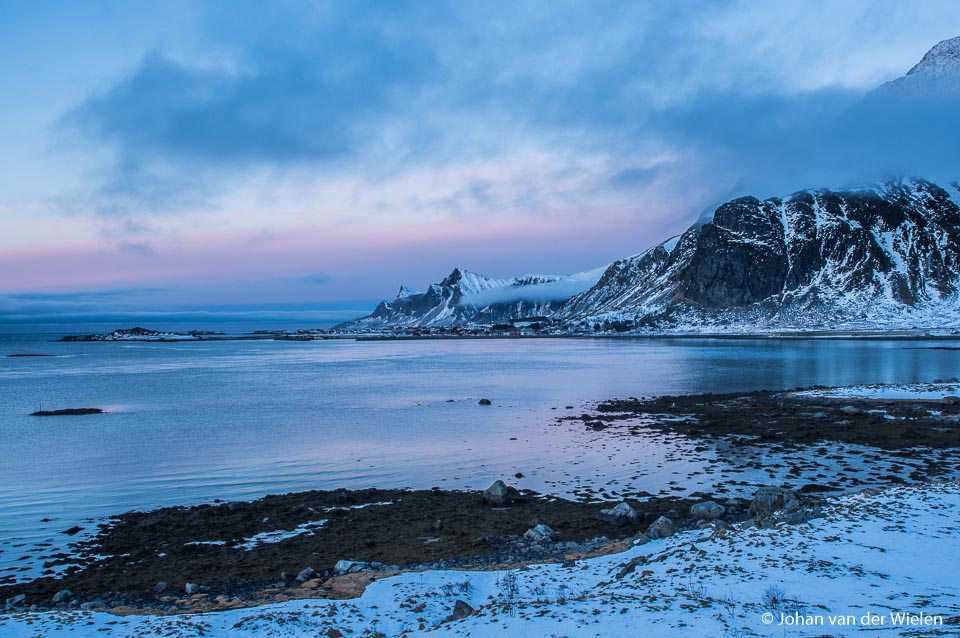
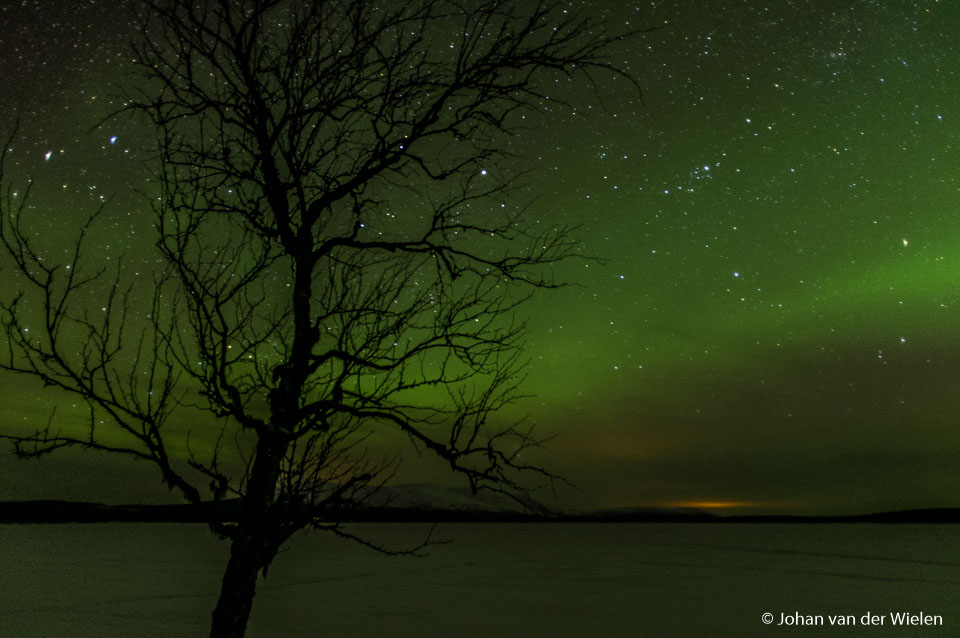
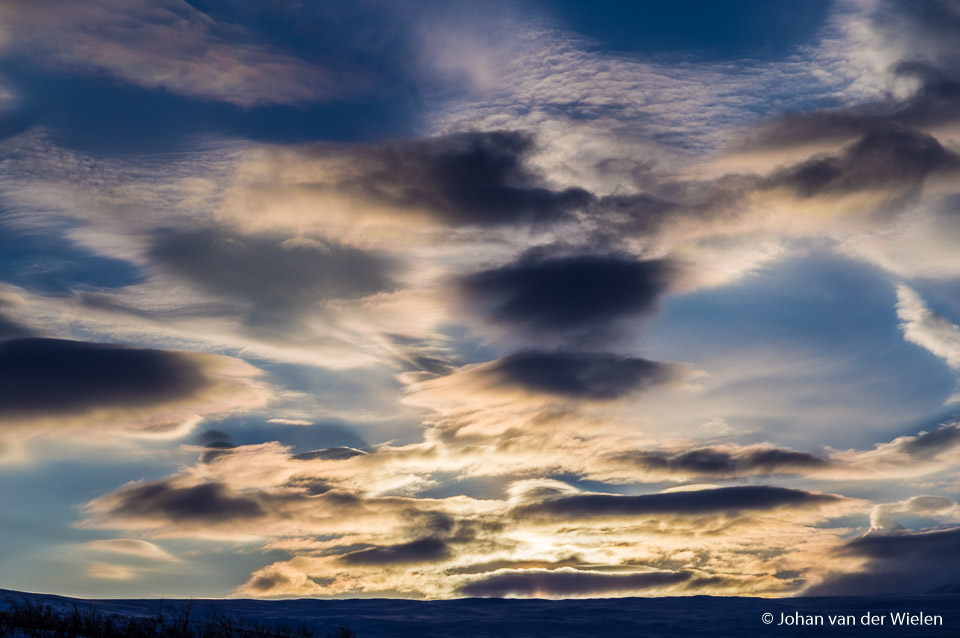
The main reason I wanted to try this camera was its impressively high ISO. For me as a night photographer, that would mean that filming the northern lights in real time might even be possible.
Now I know that the available ISO settings are always considerably higher than the limit of what is acceptable. My own cameras, for example, go up to 51,200, while they are only usable up to 6,400 or 12,800 respectively. Going one or two, or even three, stops beyond what is acceptable is therefore no surprise.
To test this, I took the camera to the Lofoten Viking Museum, where you are allowed to photograph the exhibition inside a dark room.
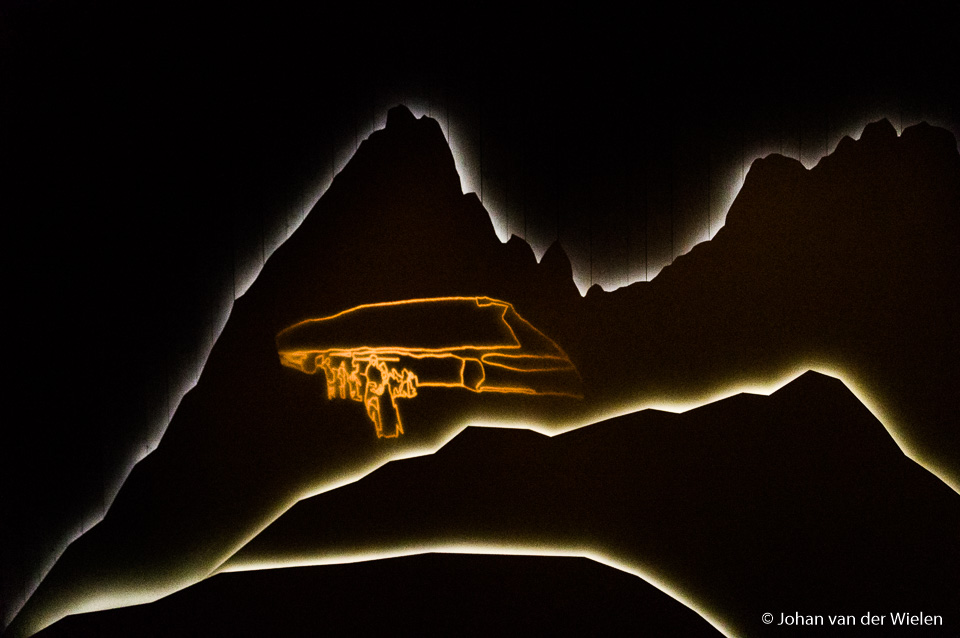
Still, I think Pentax is making a considerable overstatement here. Working backwards from the potential ISO 819,200, I would expect the acceptable level to be around 102,400, or at least 51,200.
That is not the case, however. Above 12,800, sharpness decreases considerably and noise becomes unacceptably high. In fact, from 204,800 onwards the photo gets a huge purple cast, and at 819,200 the photo is more purple and pink than anything I would still call a photo.
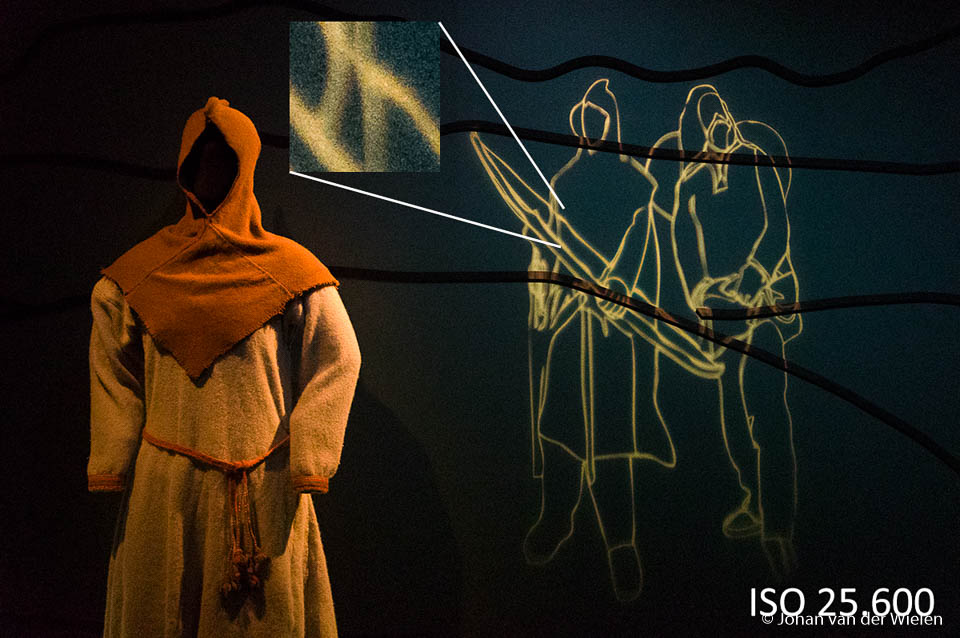
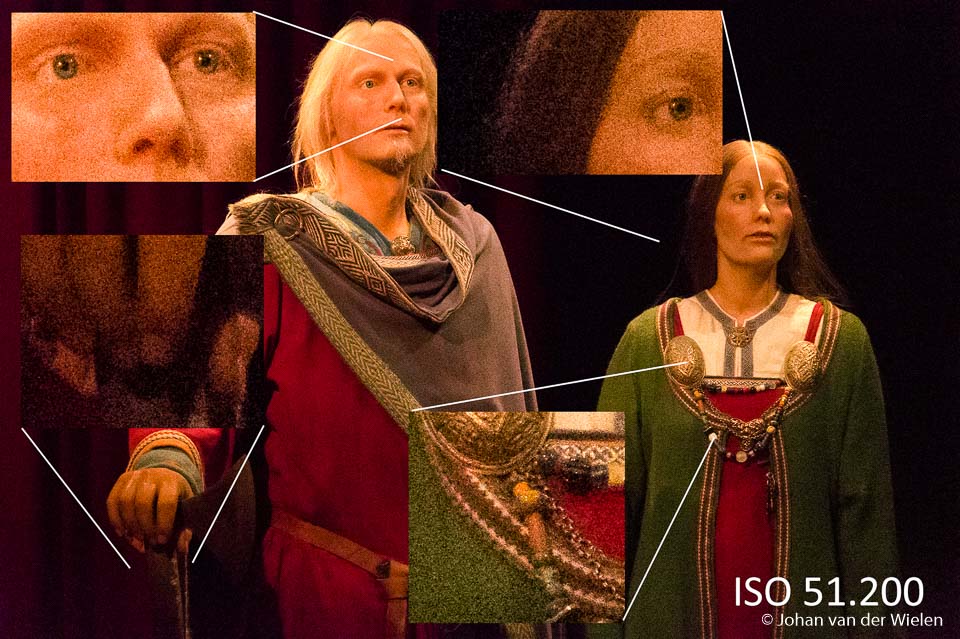
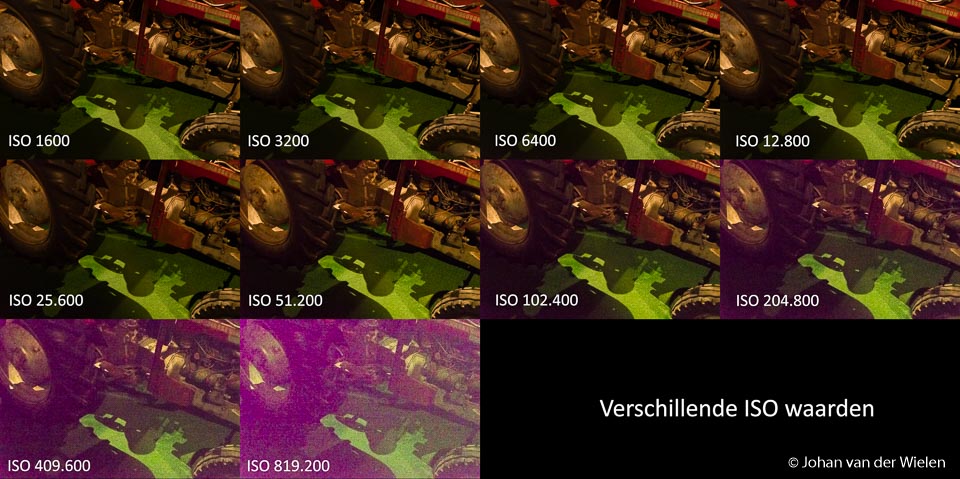
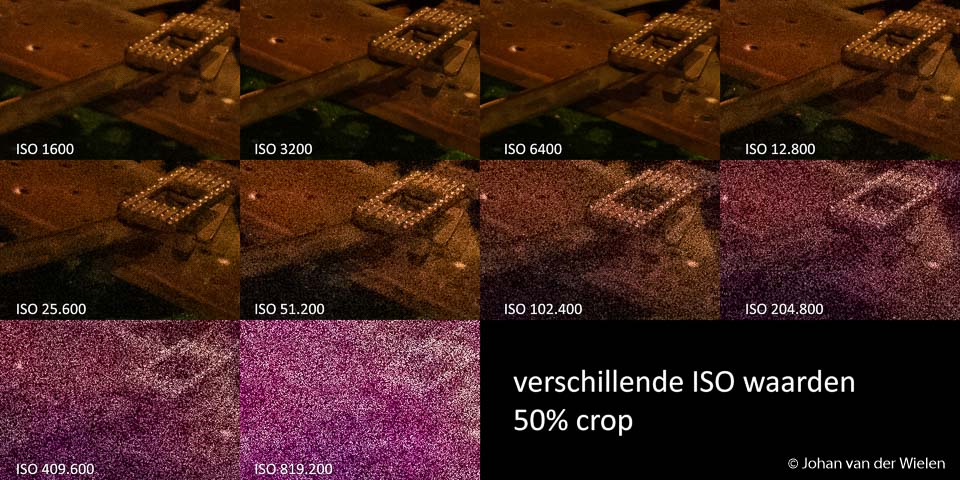
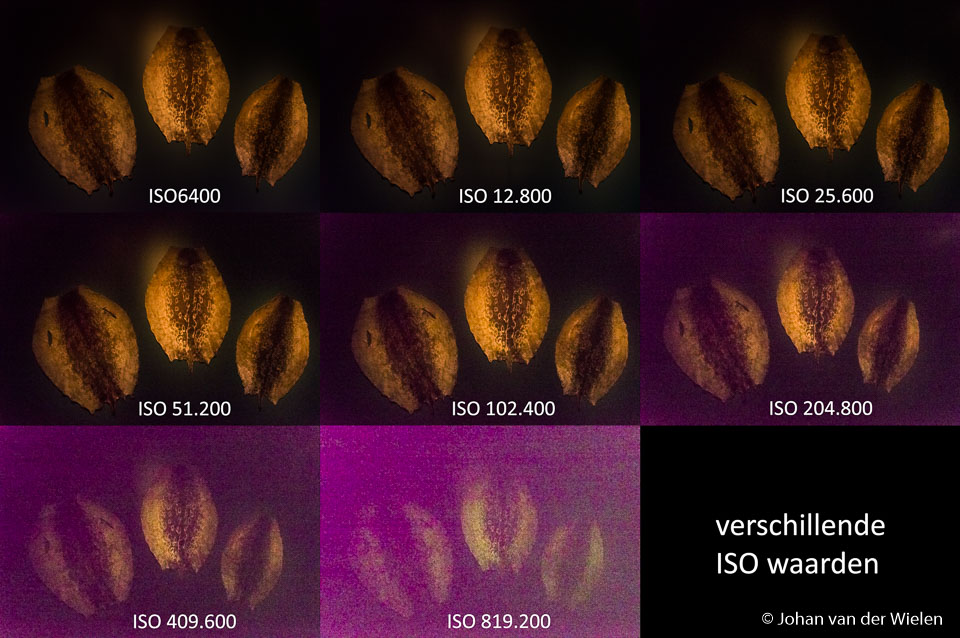
I think Pentax would have done well to round the ISO down to 51,200. I still think that a camera in this segment and price range that performs well at 6,400 or even 12,800 is already impressive.
But now expectations are created that cannot be met, and that is a shame. So yes, it performs very well at high ISO, but you need to set your own limit at 12,800. Then there is nothing to worry about.
Unless that one Yeti can only be photographed at that setting, in which case ISO 819,200 may be necessary. Although I suspect that, with a little goodwill, you can see a Yeti in a pink snowstorm in every photo taken at ISO 819,200 😉
Straightening the image yourself!
I am very impressed by how complete the camera is. I am not a gear freak who immediately tries out every feature, though. As a night photographer, I have not yet been able to test the star-tracking function, and the star-trail function turned out to produce a movie instead of a photo.
But the movement reduction provided by the built-in five-axis stabilisation is particularly impressive. Especially because the horizon is automatically straightened and I can still change the composition from the tripod.
With this, Pentax is genuinely far ahead of the competition! A short video showed me that filming handheld is almost as stable as using a full gimbal. Impressive!
Things such as the screen's night lighting are also a huge benefit for me at night. The colour of the screen turns red, so my night vision is not affected, just like with my red headlamp. Perfect if you spend a lot of time out at night, as I do!
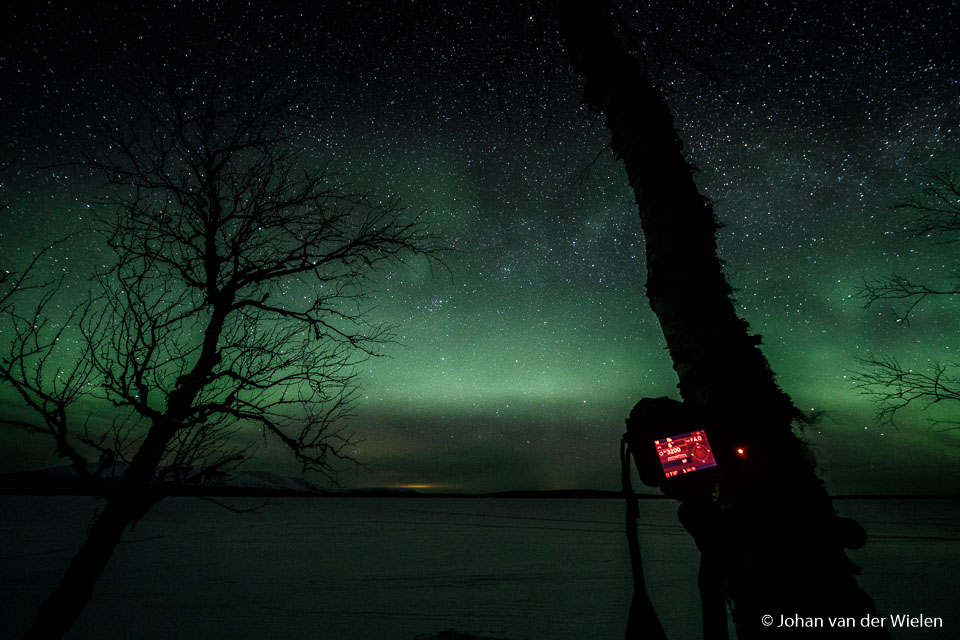
All in all, Pentax has not only thought about an impressive sensor, but has also built in many features that should actually be in every camera. Pentax is ahead of the competition in this respect.
The third control dial, to which you can assign a function yourself, is also brilliant. I immediately assigned ISO to it, which meant I could control all the basic exposure settings with three separate dials. Why other brands do not have this too is a mystery to me. For me as a photographer, it is really a must-have.
Features such as the built-in interval timer for timelapse also make this a very complete camera.
Angular and nostalgic
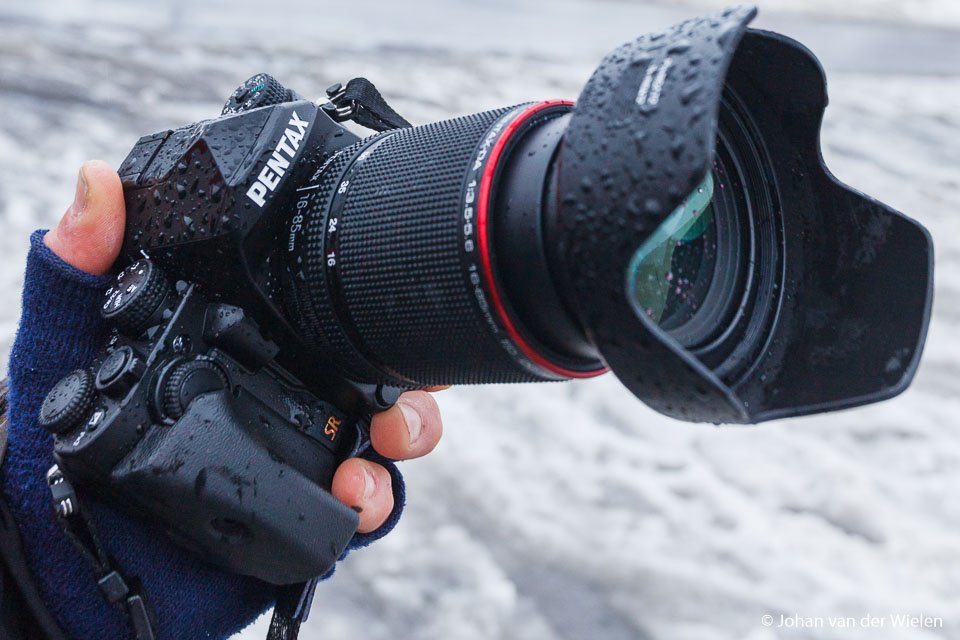
The camera is very angular and does not sit comfortably in my hand. Of course I am used to larger cameras, but even the small bodies I use for underwater photography and wide-angle wildlife feel much more ergonomic in my hand.
Several grips are supplied with the camera, and I fitted the largest one. Even so, it feels angular and does not follow the shape of my hand.
Perhaps this is a nod to classic cameras, as I also see with other brands that make 'retro cameras'. But in this day and age, when there are all kinds of ergonomic bodies that sit very comfortably and naturally in your hand, I find this choice rather surprising.
It is great that this camera has a tilting screen, but it would be even more useful if it could rotate in all directions. At the moment I can only tilt it, but I would also like to use it in portrait orientation or even turn it around completely to protect the LCD screen. And a touchscreen would not be a bad idea either...
Plenty of control options
I had to search quite a bit for the buttons. The shutter button, for example, is on top of the camera, like on old analogue cameras. I had to consciously look for it each time and often missed it. I would have preferred to see it at an angle on the front.
The exposure compensation button, Fx3, is also very small. Despite my not particularly large fingers, I regularly had to search for it. The small buttons are especially difficult to find when you are working in winter with gloves on.
That is not such a problem for less important functions, but you want to be able to change something like exposure compensation quickly, so it must also be easy to find.
The extra dial, which I set up for ISO, is brilliant again, but I would have preferred the exposure dial, currently on the left next to the viewfinder, and the customisable dial, on the right, to have been swapped. I use the left dial much more for exposure compensation, but I am used to doing that while photographing.
I then still had the camera in front of my face, and more than once I nearly poked myself in the eye with my thumb, I am left-eyed, which is not very common, while looking for the exposure compensation dial.
The rest of the controls were not always obvious either. For example, I regularly changed the focus points with my cheek and had to get used to the Fx2 button for the extra options.
What is a shame, and could in my opinion be fixed with a simple firmware update, is that many settings are not saved when you switch the camera off and on again. The night lighting is then gone, even though I often switch the camera off at night to save battery power. When I turn it on, I want it to go straight back into night mode rather than showing the white LCD light.
The fact that the rear screen is always on is also annoying. I can turn it off, but a little later it is on again anyway. I miss a sensor that automatically turns the screen off when I bring my eye to the viewfinder. At the moment the LCD bothers me a lot.
The screen does turn off when I half-press the shutter button, but when I release it, the screen comes back on.
However, actually turning off the LCD cannot be done in one operation, as I had hoped. I have to turn it off through the status screen. If I then want to use it again, I have to turn it back on through several operations.
I realise very well that I am comparing the Kp with my own camera from another brand. That makes it difficult to approach it with a completely open mind, but I genuinely tried. As a result, I also found many features that I would very much like to see on my own cameras.
But the things I particularly like about my own camera, perhaps also because of years of experience, stand out to me immediately as well.
Settings
I had to spend some time finding my way around the quick menus and working out where to find and set things. But that comes with familiarity and will sort itself out. The menu is clear and everything is easy to find.
Everything also looks good in the viewfinder, clear and bright, not too small and easy to see. I do think it is a shame that I cannot see the exposure compensation setting at a glance.
When I press Fx3, the scale suddenly appears, but afterwards only the marker remains visible. It is not clear whether I am at 0 or underexposing or overexposing.
I would like to see the scale remain visible all the time, not just when pressing Fx3. But otherwise, as a real man, you do not need a manual for the Kp. You can figure it out perfectly well by trying things yourself.
Under harsh conditions
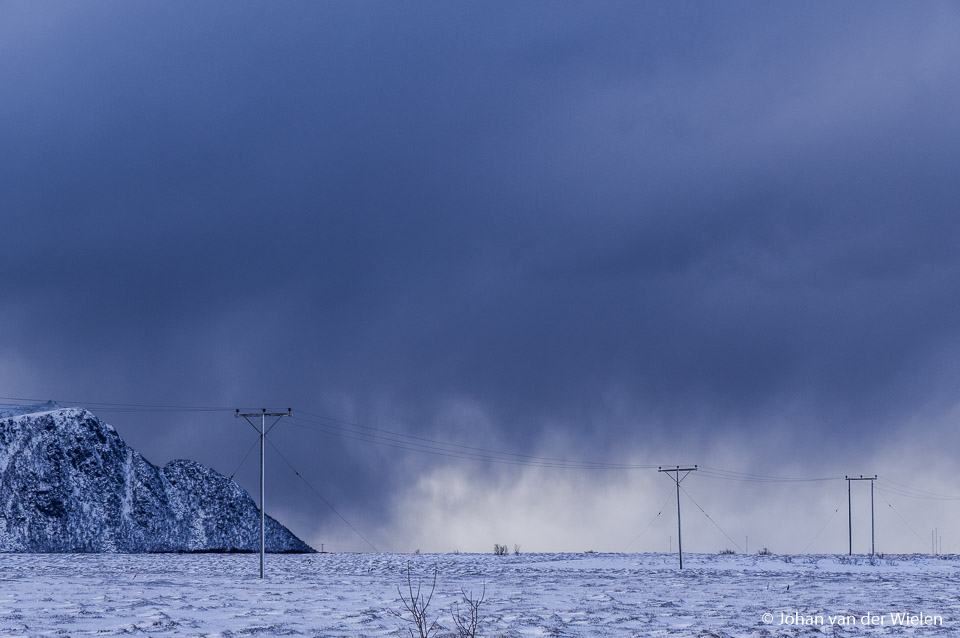
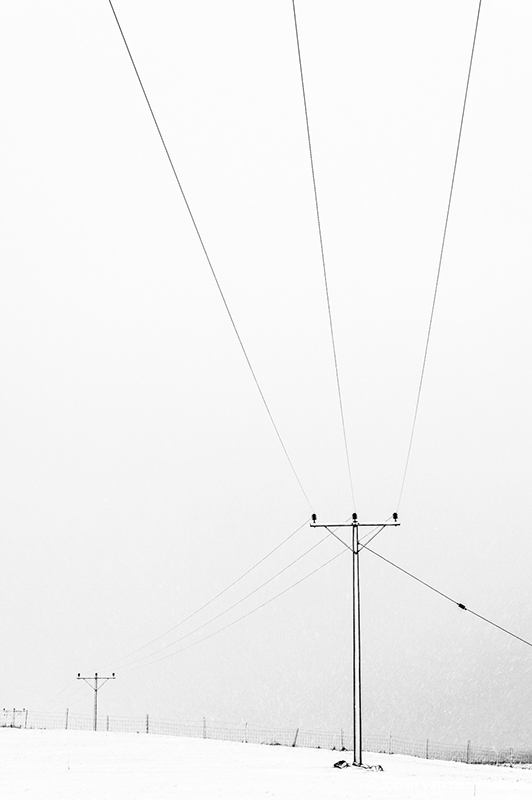
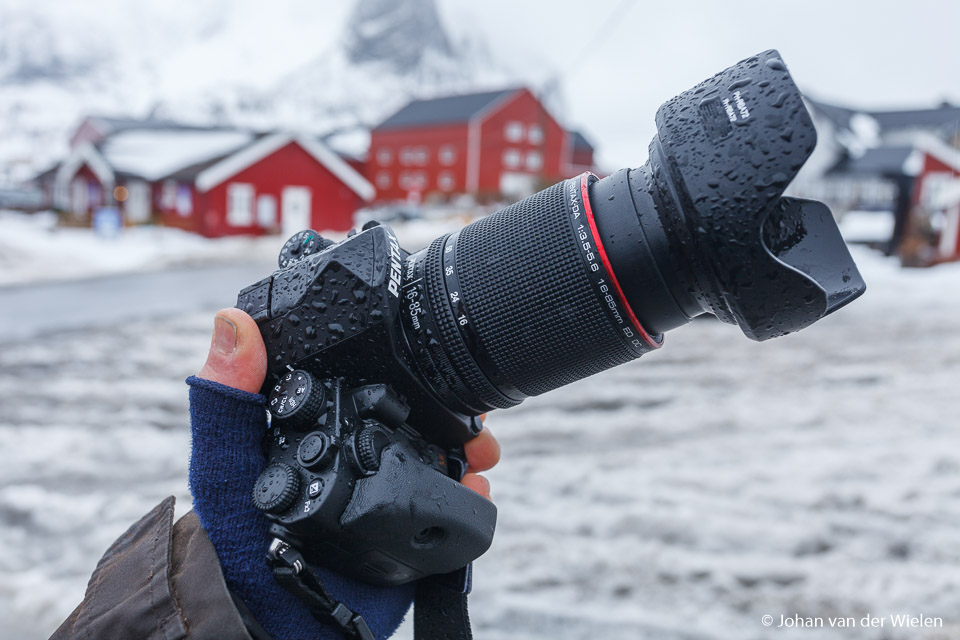
I mainly used the 16-85 lens because it allowed me to test the camera in many different ways under fairly severe conditions. Lots of storms, hail, snow, icy wind and extreme frost, down to -20. And through it all, the KP never let me down or disappointed me.
In all conditions, which were too much for many cameras, it performed perfectly. No glitches, no visible drop in battery capacity, it just kept going. It earned a great deal of my respect in that respect!
Other cameras belonging to participants on my photography trip did give up under the same conditions. Even the most severe wet snow did not make it glitch for a moment. Chapeau!
Final verdict
I made the most of my first introduction to Pentax by testing it in genuinely extreme conditions. The fact that it came through that with flying colours is the first great compliment!
The body feels solid and can take a knock. It does not complain and happily carries on where other brands have given up.
The Kp also contains an impressive number of features, with a brilliant moving sensor that opens up many new possibilities, all of which are put to good use.
The high ISO is an overstatement and unusable in my view. Rounding it down to 51,200 would already be impressive, and up to and including 12,800 is acceptable. That is good enough.
It is a small, very solidly built body that feels sturdy and can take a knock. In my opinion, a few steps could still be taken in terms of ergonomics, so that it sits more comfortably in the hand and the most frequently used buttons are easy to find and reach.
The settings could also do with some attention, especially the speed of changing things such as switching the LCD screen on and off, and saving these settings after switching the camera off and on.
A touchscreen would be a nice extra feature, but it is not essential. It would be very nice if the screen could rotate further.
That would bring it closer to, for example, the Canon 80D, which is also somewhat cheaper.
The Kp is not exactly cheap. Comparable cameras in the same segment cost less.
All in all, I am very positive and pleasantly surprised in some areas, but critical in others. Pentax is not yet a replacement for my own equipment, but it does have several features that I would love to see on my own cameras. I am therefore very curious about the cameras that follow this one.
This review previously appeared on the CameraNU.nl website.
About the author
Natuur- en landschapsfotograaf Johan van der Wielen wil met zijn beelden niet alleen de schoonheid maar ook het belang van de natuur laten zien. Met zijn enthousiasme, energie en passie voor de natuur wil hij anderen inspireren om naar buiten te gaan en zich te laten overweldigen door zowel de grootsheid als kleinste details van het leven om ons heen.
You might also like
-
 Pentax KP announced
by Elja Trum
-
 A Visit to Lofoten in Winter
by Nando Harmsen
-
 Review: Canon EOS R5
by Nando Harmsen
-
 An inspiring trip to Lofoten, Norway
by Nando Harmsen
-
 Review: Sony A1 mirrorless camera
by Nando Harmsen
-
 Review: Canon RF100-500mm f/4,5-7,1L IS USM
by Nando Harmsen
5 comments
-
 Hans Lotgering wrote on Saturday 9 December 2017 at 10:40 | reply
Good article, but......this really shows the lack of familiarity with Pentax, several criticisms of the settings are incorrect: pretty much everything can be configured yourself, you can assign whatever function you want to all the dials, and all settings can be saved, the info screen can be turned off permanently, etc etc. It does take a while to set everything up but then you really do have your 'own' camera.
Translated from Dutch. -

 Johan van der Wielen
wrote on Monday 11 December 2017 at 11:18
| reply
Dear Hans, thank you for your feedback. It is true that the Pentax was completely new to me and that is why I also had Pentax ambassador Mike Muizenbelt advise me. Together we looked at all the functions and the things I could not set were also things that Mike and I discovered together. So what I described above really is the case and has nothing to do with my unfamiliarity with the brand
Translated from Dutch. -
 guest wrote on Monday 11 December 2017 at 13:42 | reply
Thanks Johan for your response. I also contacted MM in March this year about settings on the KP when we had both just received them, since then I have used the KP intensively and nevertheless discovered a few things that we couldn't figure out together back then, and some of your objections can indeed be resolved, but I fully understand that you don't just come across that, Pentax will always remain a bit of an eccentric brand.
Translated from Dutch. -
Johan van der Wielen
wrote on Wednesday 13 December 2017 at 14:44
| reply
Thanks Hans for your explanation, good to know that everything can be resolved after all, but indeed annoying that it isn't obvious how to find it. I really did my best...
Translated from Dutch. -
 Piet Francken wrote on Wednesday 13 December 2017 at 22:30 | reply
nice review.
Translated from Dutch.
i already work a lot with Pentax KS2, that is my current model.
with a foldable screen though.
but still very interesting.
Have your say
Please note: Articles older than a week can only be commented on by signed-in visitors.Would you still like to comment? sign in or create a free account.
Become a better photographer every week
A practical photography tip in your inbox every week.
38,764 photography enthusiasts already receive the tips! More about the weekly mail. Or keep up to date via  Facebook.

Elja Trum
Photofacts; everything to do with photography!
Would you like to take better photos and keep up with what is happening in photography? Photofacts publishes articles that teach you something about photography — from a product announcement to a practical shooting tip or a look at a website. Photofacts covers photography every day and is a hobby project of Elja Trum's that got out of hand. The articles are written by a team of volunteer authors. If you would enjoy writing one or more articles for Photofacts, do get in touch.More about PhotofactsPhotofacts is made possible in part by
