

Review: Sony FE 16-25mm and FE 24-50mm f/2.8 G lenses
Friday 14 June 2024, 15:30 by Nando Harmsen | 3,426 views | 0 commentsThis article was translated from Dutch with the help of AI. Read the original.
Sony has two f/2.8 zoom lenses available. These are the FE 2.8/16-25mm G and the FE 2.8/24-50mm G. Thanks to their limited zoom ranges, these lenses are very compact and lightweight despite their wide maximum aperture. In this review, you can read all about how these two lenses perform.
Both the FE 2.8/16-25mm G and the FE 2.8/24-50mm G have a very unusual zoom range. That makes these two lenses unique in a way. Most zoom lenses range from 16mm to 35mm and from 24mm to 70mm.
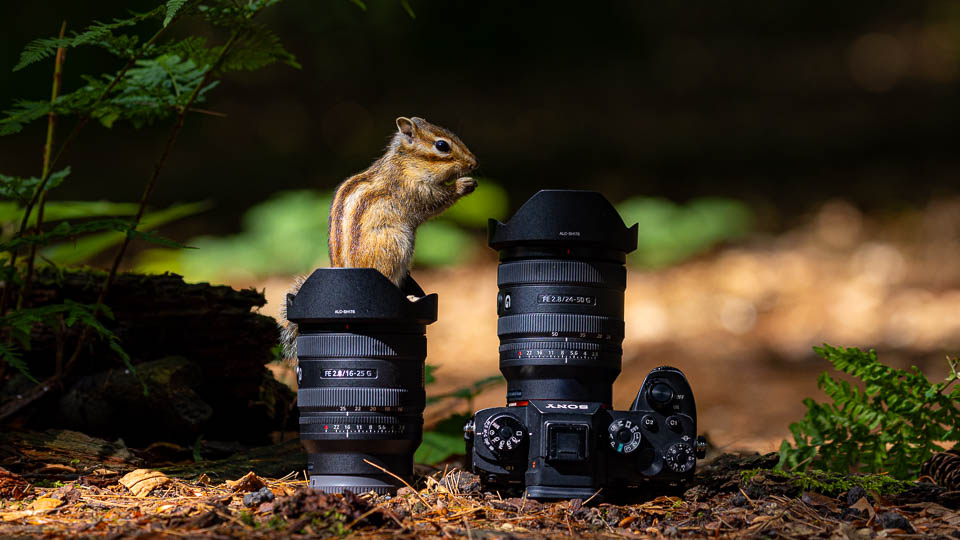
For zoom lenses with a maximum aperture of f/2.8, the lenses soon become large and heavy. Sony decided that reducing the zoom range would result in a much more compact and lightweight lens. And indeed, these two lenses are very compact and lightweight.
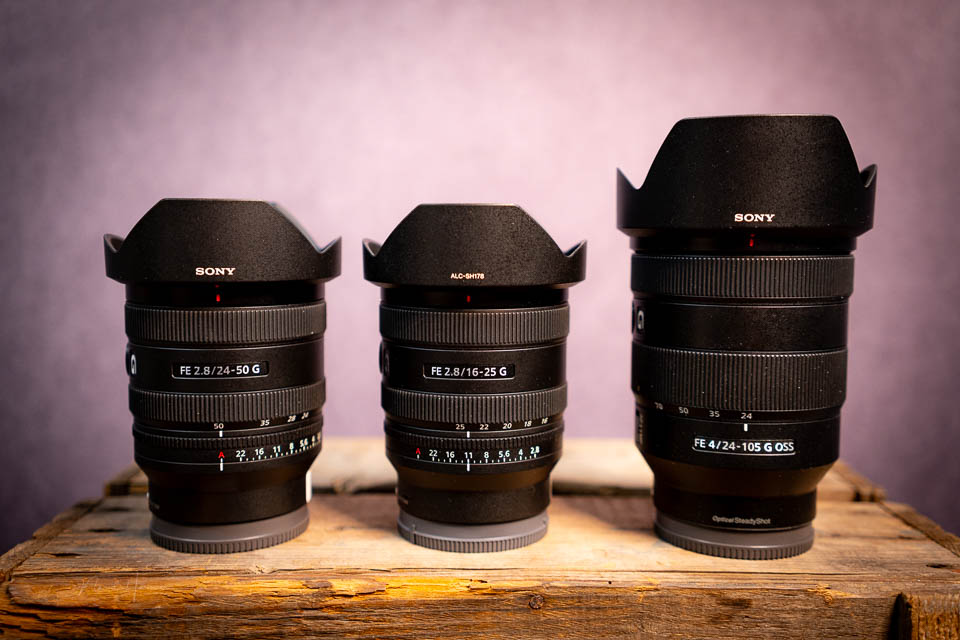
Appearance
Both lenses look very much alike. You need to read the name on the lens to know which one you are looking at. They have the same buttons and functions, an aperture ring and a custom button.
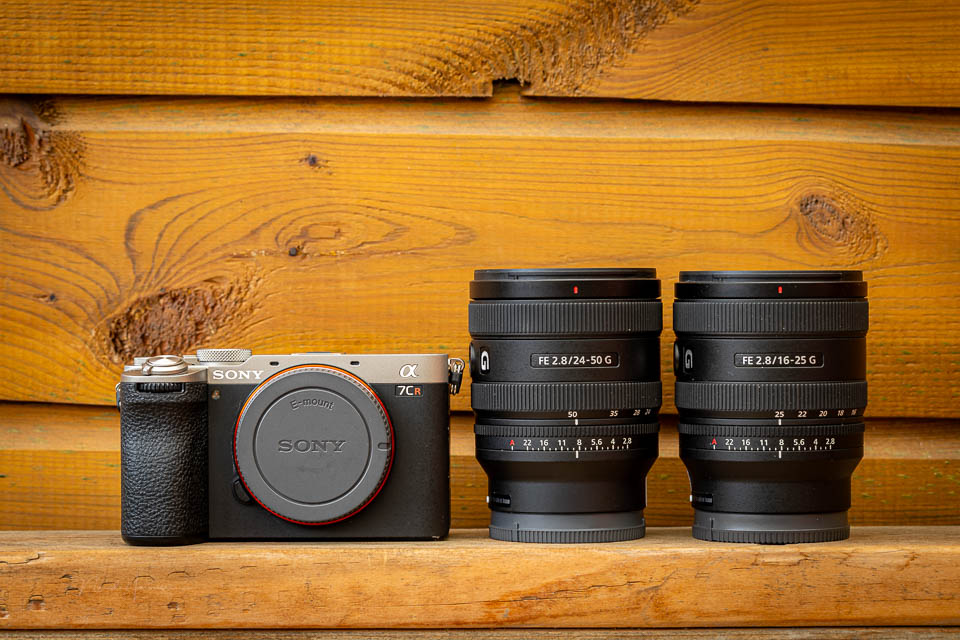
The specifications of the lenses are largely the same. Obviously, the zoom range is the biggest difference between them. The first number in the list is for the FE 16-25mm, the second is for the FE 24-50mm.
- Dimensions: 74.8 x 91.4 mm / 74.8 x 92.3 mm
- Weight: 409 grams / 440 grams
- Minimum autofocus focusing distance: 0.18m (W) and 0.24m (T) / 0.19 (W) and 0.30 (T)
- Minimum manual focus focusing distance: 0.17m (W) and 0.22m (T) / 0.18 (W) and 0.29 (T)
- Magnification with autofocus: 0.2x / 0.3x
- Magnification with manual focus: 0.23x / 0.33x
- 11 aperture blades, circular
- Two linear AF motors
- Aperture ring with click/de-click switch
- Dust and moisture resistant
- Fluoride coating, fingerprint-resistant and water- and oil-repellent.
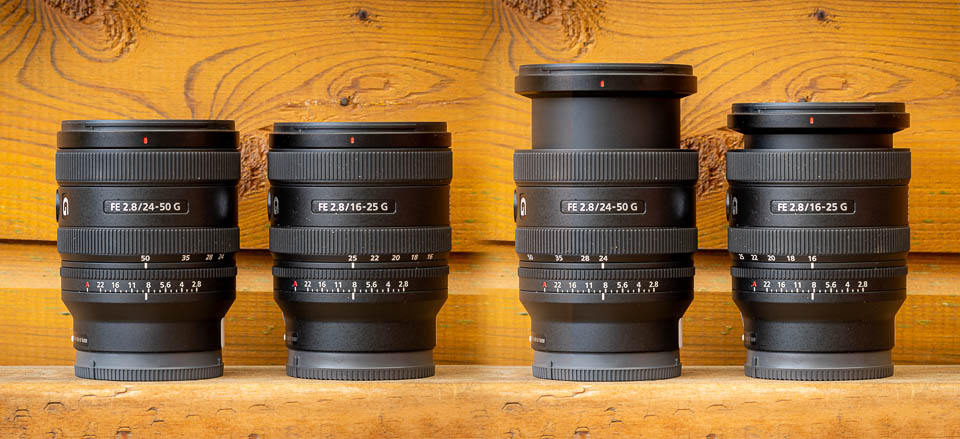
The lenses do not have built-in image stabilisation. This is partly what makes it possible to keep them so small and compact. You have to rely on the built-in stabilisation of the camera you use.
The physical controls consist of an AF/MF switch and a programmable lens button on the side. There is an aperture ring that clicks in 1/3-stop increments, with an A position for controlling the aperture through the camera. The clicks on the ring can be switched off, which is perfect for video.
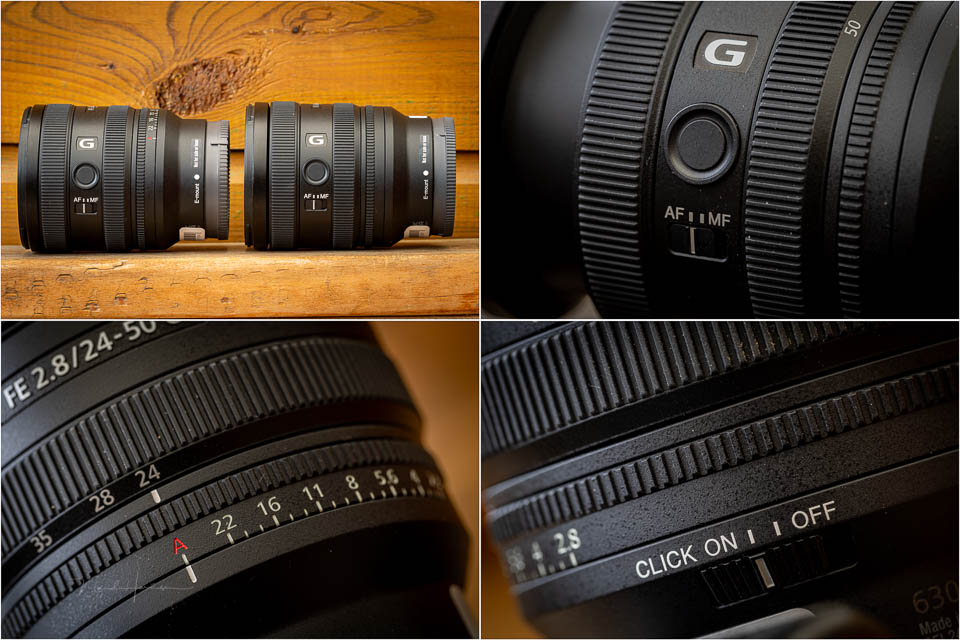
The lenses have a dual autofocus motor that is fast and quiet. The design should be able to keep up with the fastest autofocus, with up to 120 distance calculations per second.
When you switch to manual focus, it is possible to focus even closer. This is not much, but enough to get slightly greater magnification.
Image quality
The sharpness of the lenses is reasonably good. Both lenses are sharp in the centre. The corners are a little softer. This is particularly noticeable at the shortest focal length and widest aperture.
Like so many modern lenses, the FE 2.8/16-25mm G and FE 2.8/24-50mm G also rely heavily on in-camera image correction. It is therefore not possible to switch this option off in the camera menu.
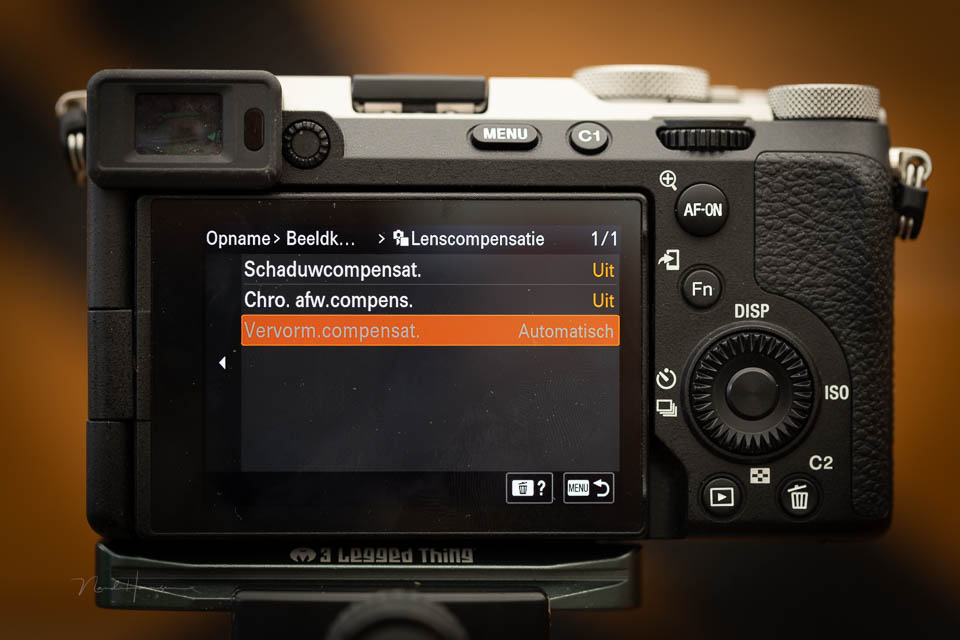
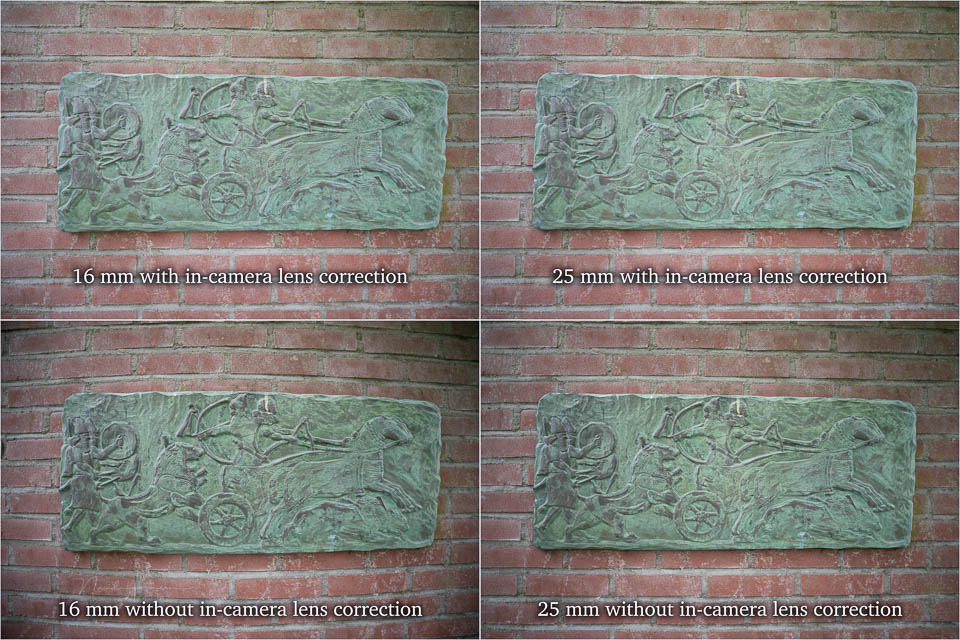
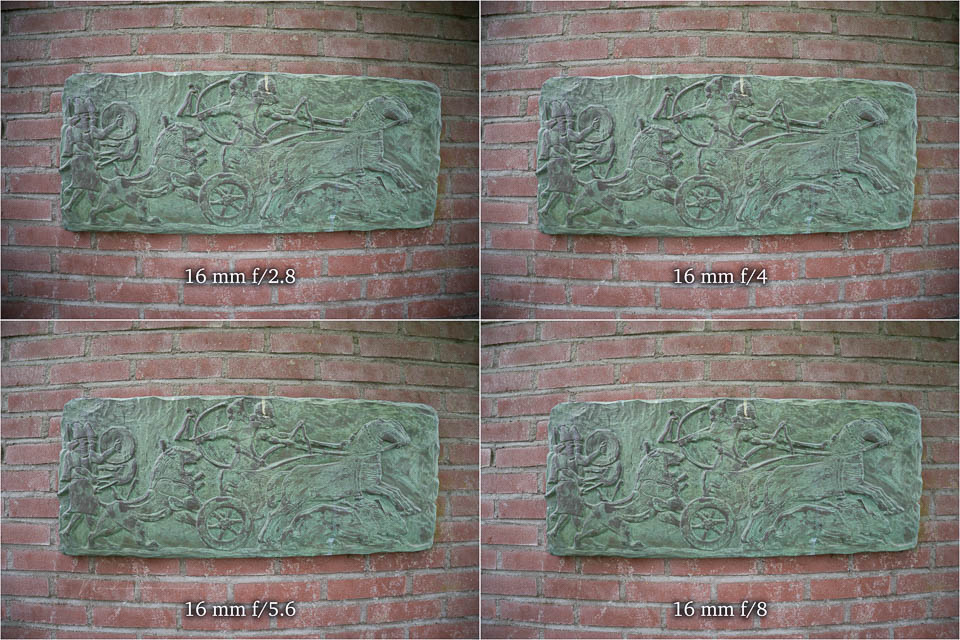
The image correction removes distortion and vignetting. These are very strong and it is important that these corrections are applied. Vignetting at the widest angle of view only disappears at f/8 to f/11. The FE 2.8/16-24mm G suffers slightly more from it than the other one.
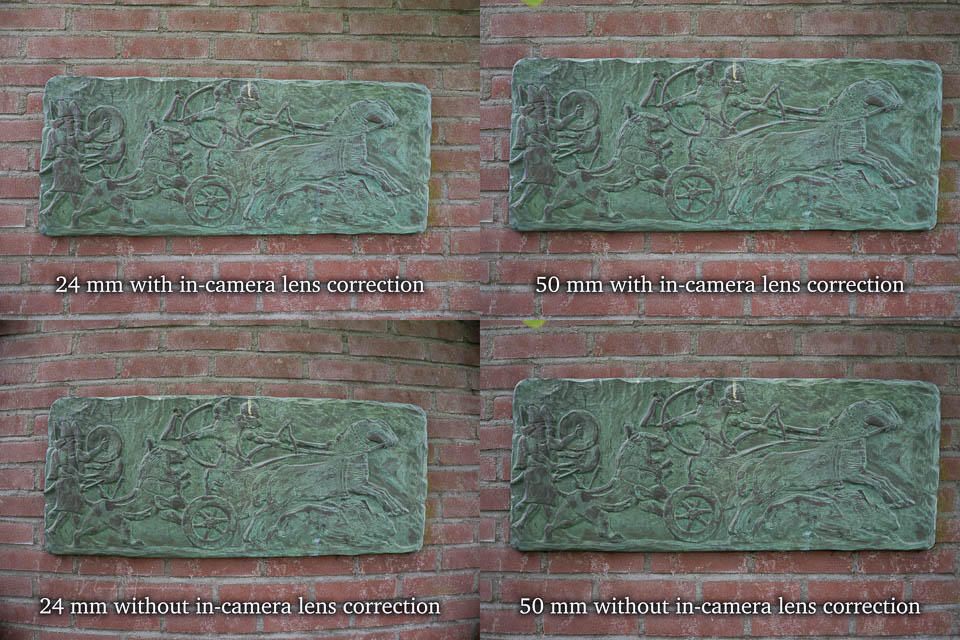
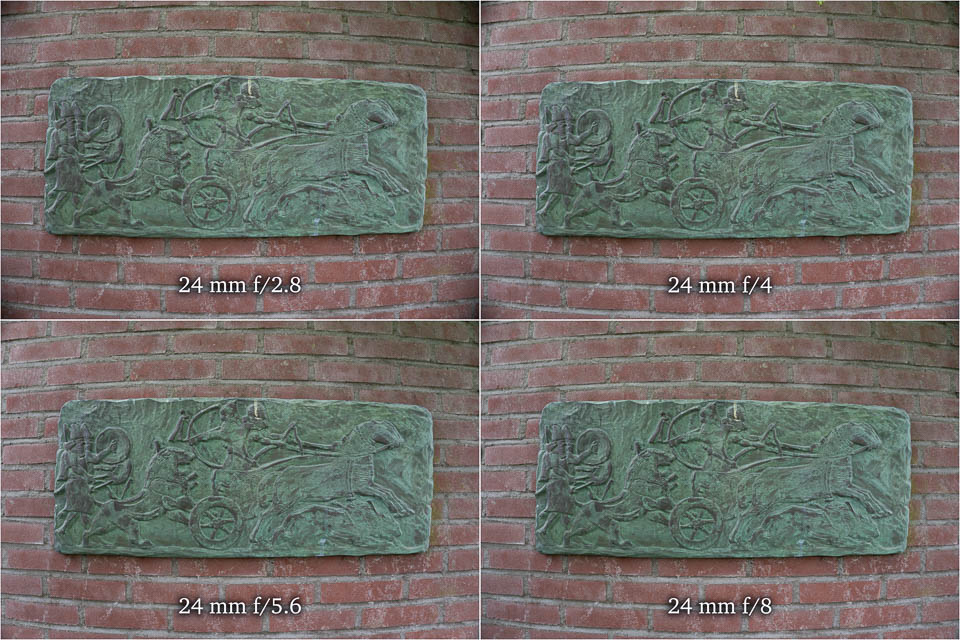
Chromatic aberration is noticeable, but easy to correct. It can be switched off if desired. The lenses are good at resisting excessive flare. It is present, but not very distracting.
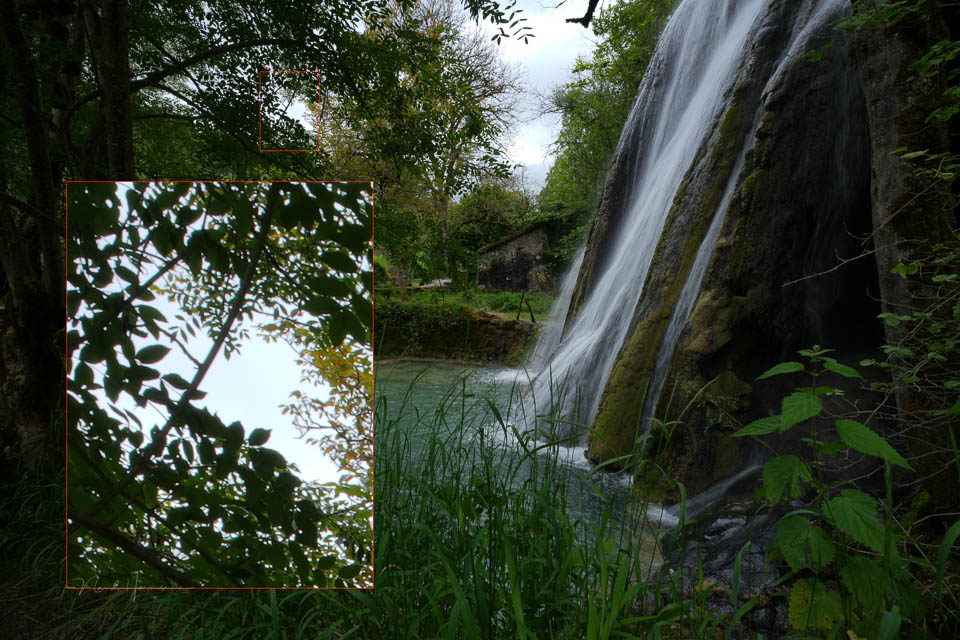

Almost all distortion, vignetting and chromatic aberration is removed by the image correction. It is striking, however, that Lightroom Classic does not fully apply the image correction.
Because the lens profile is built into the raw file, you cannot load a lens profile in Lightroom Classic, and some of the distortion remains. It can be challenging to remove this manually.
Bokeh
The wide aperture of f/2.8 means that the lenses let in twice as much light as an f/4 lens. They are perfect for situations with less light. The wide aperture also gives you a shallower depth of field.
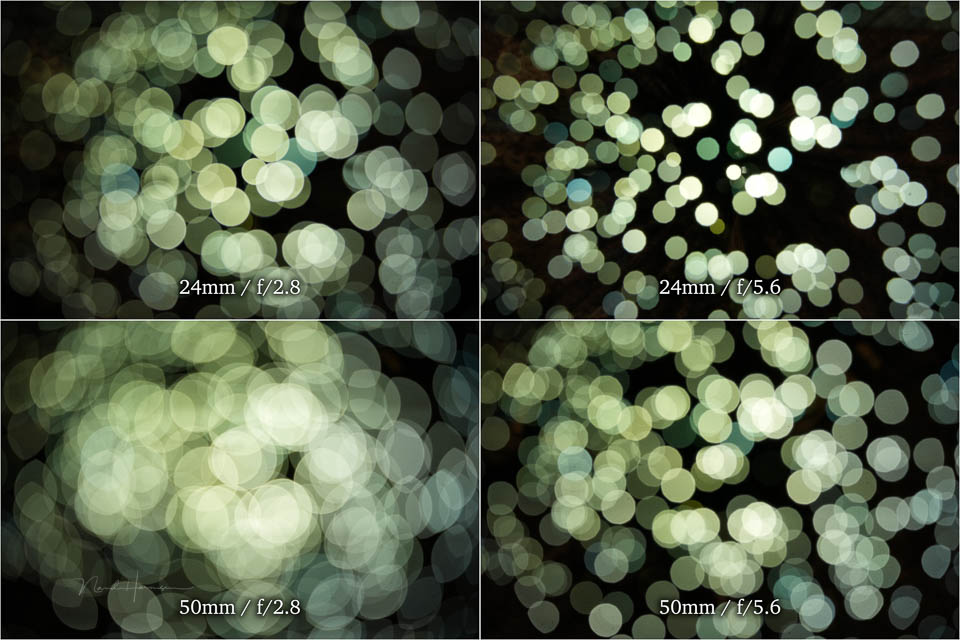
The shallow depth of field of the FE 2.8/16-25mm G is limited because of its focal length range. The FE 2.8/24-50mm G allows you to do a little more with blur.
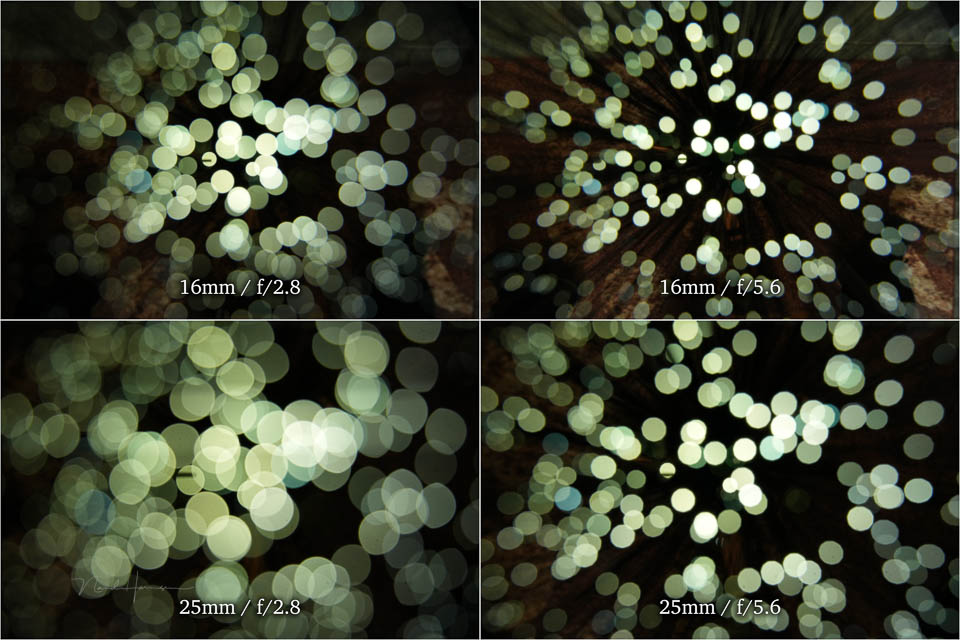
The quality of the blur is expressed as bokeh. The bokeh has a nice circular shape thanks to the round aperture. The 11 aperture blades also produce a nice star shape with 22 points.
In practice
Because of their small size and friendly weight, the lenses are excellent travel companions. The wide aperture provides enough light sensitivity to photograph in a city in the evening as well.
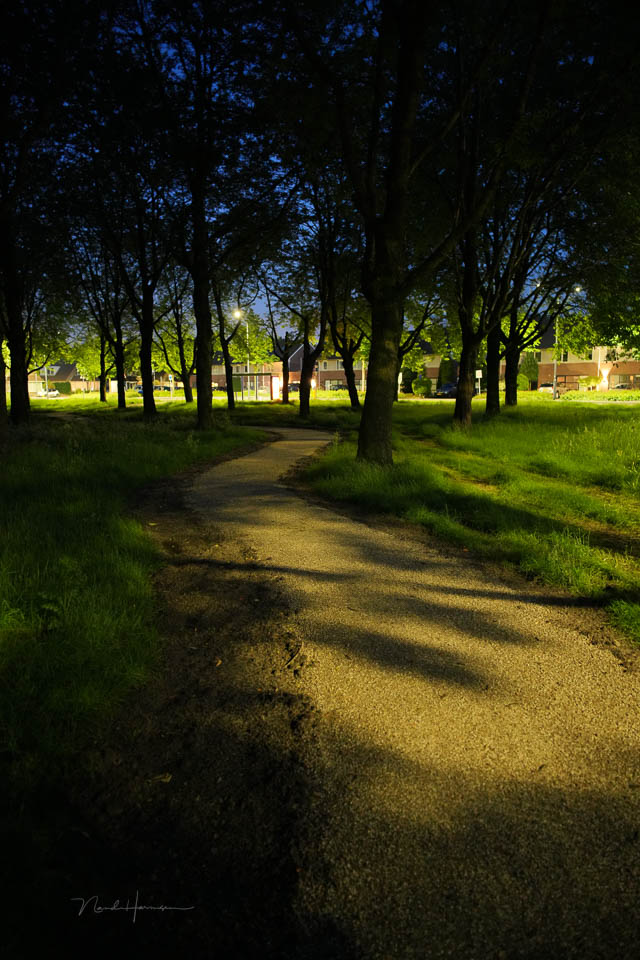
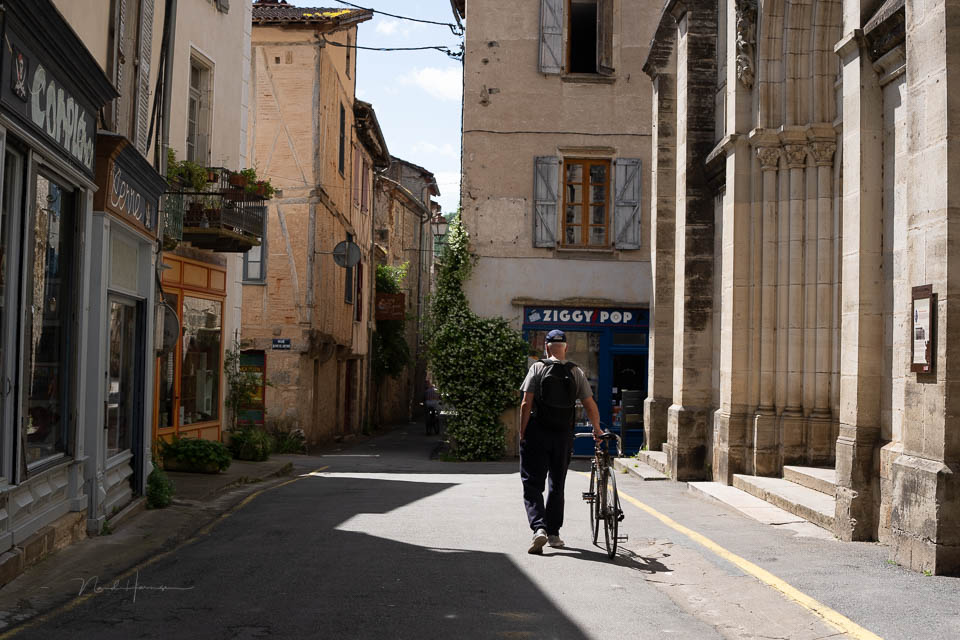
The limited zoom range can become an issue. Especially with the FE 24-50mm, you often miss the option to zoom in a little further. It is not without reason that a zoom range up to 70mm or 105mm is ideal in lenses like these.
I regularly found myself unable to get the shot because the zoom stopped at 50mm. This issue is less noticeable with the FE 16-24mm. Most lenses in this range go up to 35mm, and although those extra 10mm certainly make a difference, it is less distracting.
The limited zoom range is the price you pay for a handy and light f/2.8 lens. What matters more to you is very personal: lightweight and less zoom range, or heavy and more zoom range.
Conclusion
It is difficult to give these lenses a clear verdict. They are handy and produce good image quality. They rely heavily on image correction, but that is not unusual these days.
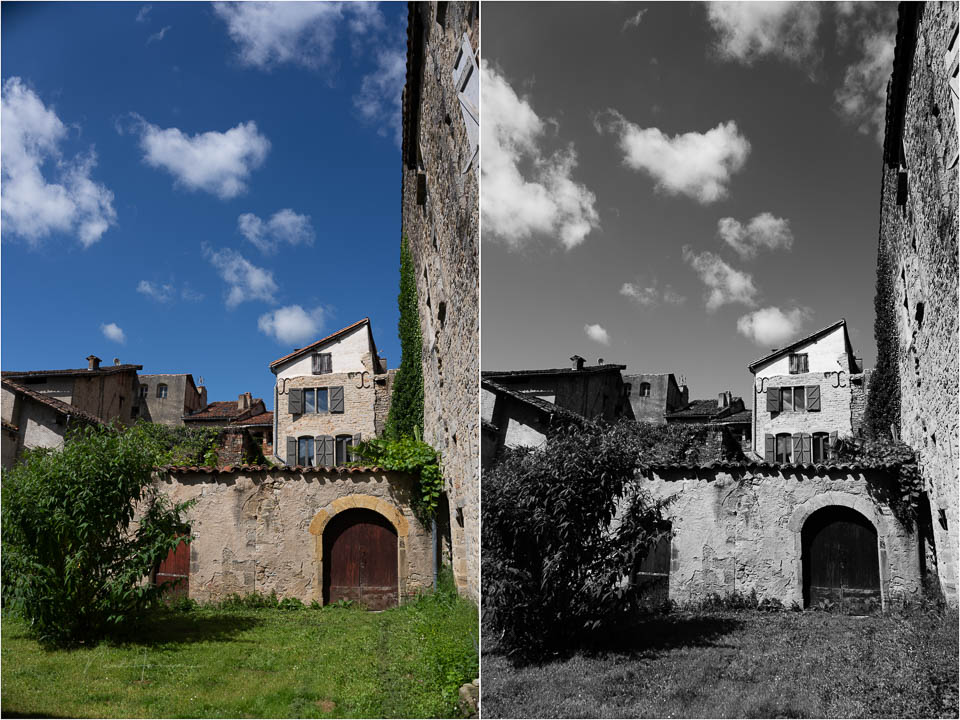
The handling is good, and they allow you to work with the fastest autofocus systems. The only issue that may matter is the short zoom range. Although f/2.8 is very appealing, I would still prefer an f/4 lens with a range of 24-105mm and 16-35mm.
When it comes to background blur and the bokeh of f/2.8 on these lenses, they perform well but not exceptionally. If bokeh and a shallow depth of field are important, a prime lens with an even wider aperture would be a better choice.
What I like
- Dimensions and weight
- f/2.8 throughout the zoom range
- Fast and quiet autofocus motor
- Overall image quality
- De-click button for the aperture
- Programmable lens button
What I like less
- Limited zoom range
- Very dependent on lens correction
- Lens correction is limited in Lightroom
- Shallow depth of field is limited by the focal length range

The lenses are reasonably priced. The FE 2.8/16-25mm G costs 1399 euros and the FE 2.8/24-50mm G costs 1,299 euros. If you also want a longer focal length, bear in mind that you will need a third lens.
Thanks to Sony Nederland for making these lenses available.
Gallery
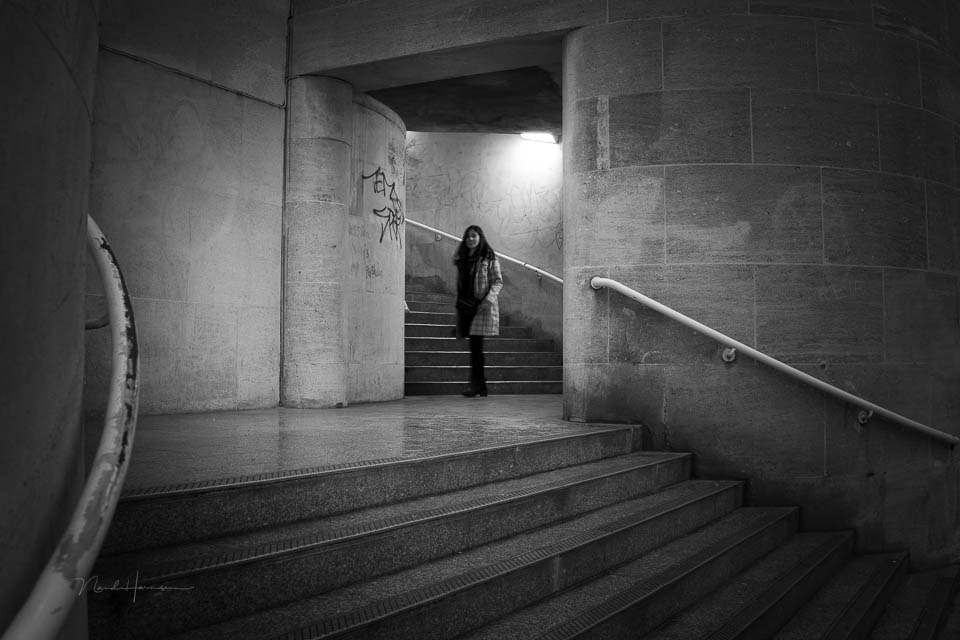
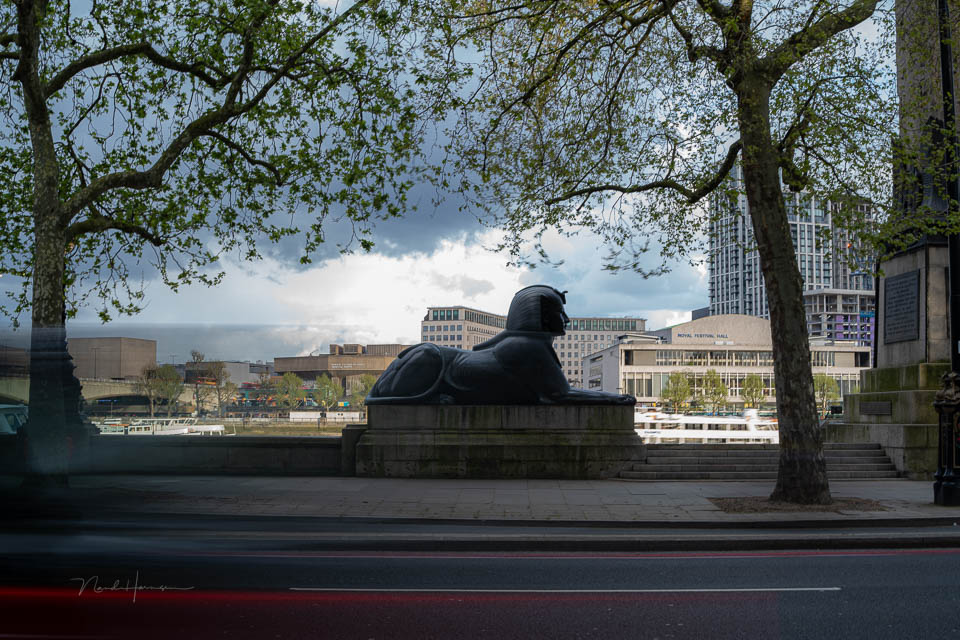

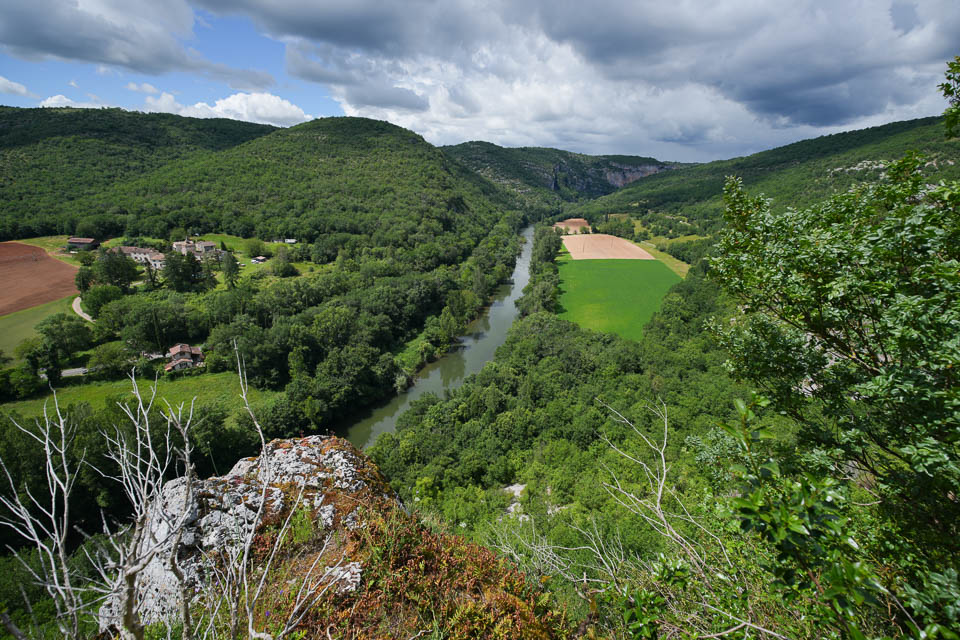
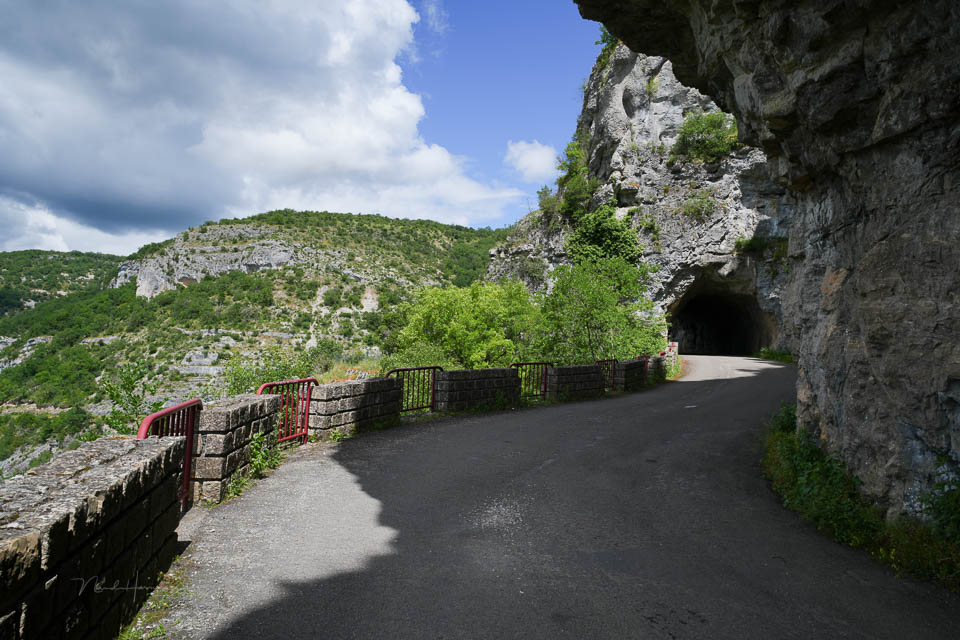






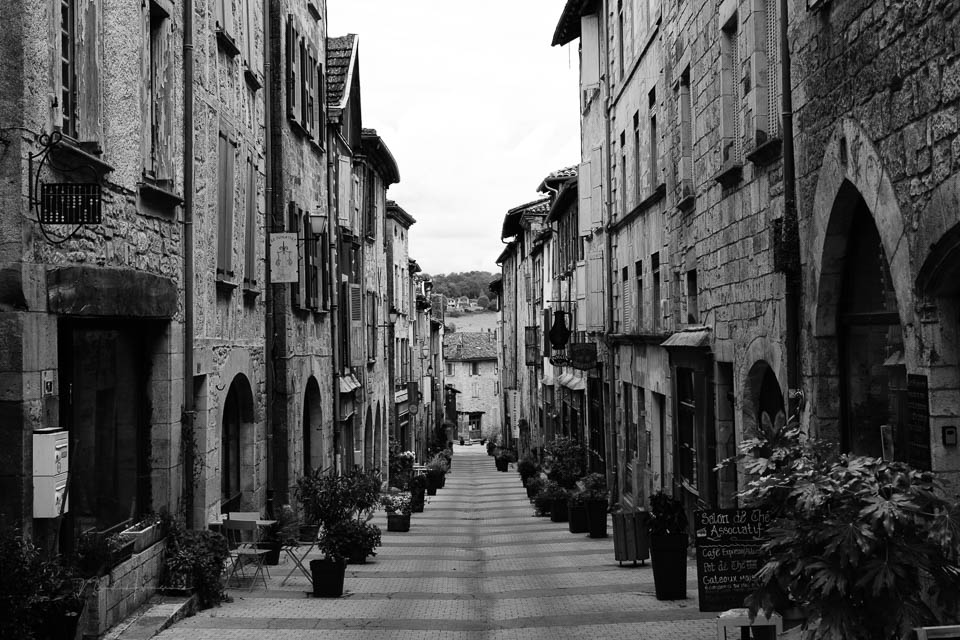

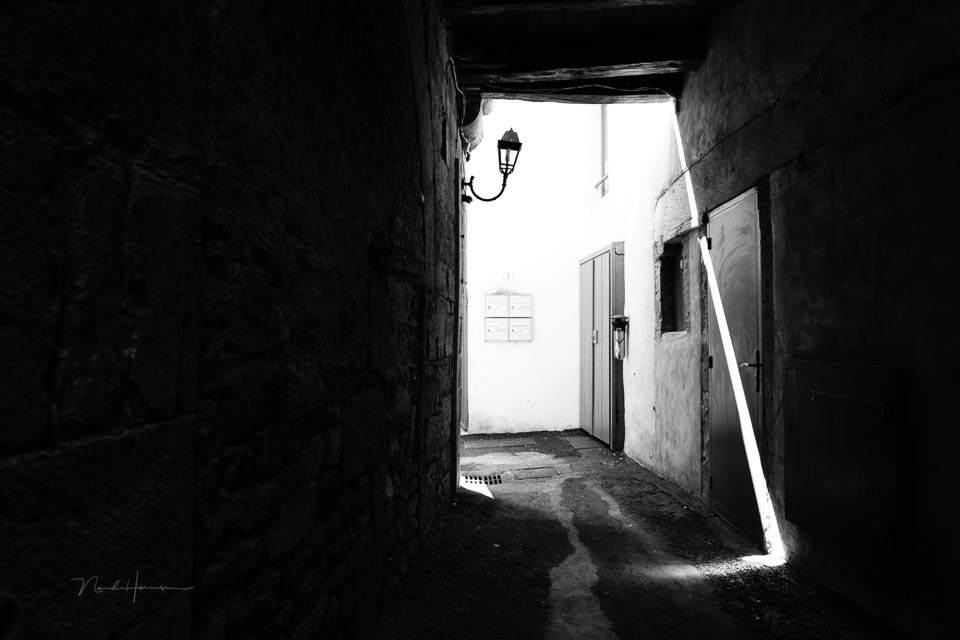

About the author
Nando Harmsen has been photographing for more than 40 years. He specialises in wedding photography and landscape photography. Nando also gives talks, workshops, masterclasses and photo trips, and regularly reviews new and interesting equipment.
You might also like
-
 Sony FE 16-25mm f/2.8G announced
by Elja Trum
-
 Review: Sony FE 2.8/16-35 GM II lens
by Nando Harmsen
-
 First impressions of the Sony FE 20-70mm f/4 G
by Nando Harmsen
-
Sony announces the FE 2.8/16-35 GM II
by Nando Harmsen
-
 Review: Sony A1 mirrorless camera
by Nando Harmsen
-
 Impression of the New Sony FE 50mm f/1.4 GM
by Nando Harmsen
0 comments
Be the first to share what you think!
Have your say
Please note: Articles older than a week can only be commented on by signed-in visitors.Would you still like to comment? sign in or create a free account.
Become a better photographer every week
A practical photography tip in your inbox every week.
39,013 photography enthusiasts already receive the tips! More about the weekly mail. Or keep up to date via  Facebook.

Elja Trum
Photofacts; everything to do with photography!
Would you like to take better photos and keep up with what is happening in photography? Photofacts publishes articles that teach you something about photography — from a product announcement to a practical shooting tip or a look at a website. Photofacts covers photography every day and is a hobby project of Elja Trum's that got out of hand. The articles are written by a team of volunteer authors. If you would enjoy writing one or more articles for Photofacts, do get in touch.More about PhotofactsPhotofacts is made possible in part by
