

Stock photography for photographers, are you robbing yourself?
Saturday 5 January 2019, 14:41 by Wilmar Dik | 11,173 views | 24 commentsThis article was translated from Dutch with the help of AI. Read the original.
There are plenty of inspiring stories about successful photographers who seem to earn good money by creating and selling stock photography.
The fact that most of these stories are written by stock agencies themselves, or by parties sponsored by a stock agency, is no coincidence.
If you delve a little deeper into the world of stock photography, you soon discover that it is a particularly good business model... for the stock agencies themselves.
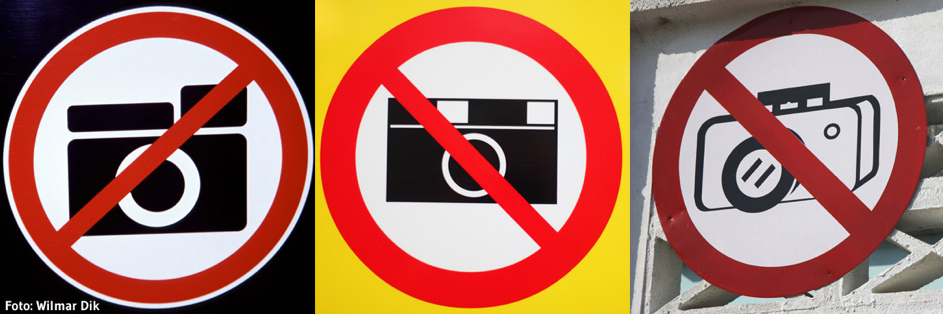
Using stock photos
A lot has already been written about using stock photography and how good, bad or beneficial it is. I do not want to go into that in too much detail in this blog article either.
I fully understand that if you need a nice photo of the Eiffel Tower, you buy a stock photo for a few euros rather than hiring a photographer to go to Paris and take a nice photo.
Many stock photos are created so they can be used by as many different parties as possible. Think of a call centre worker wearing a headset, or people in suits having a meeting.
There are no company logos or corporate clothing in the image, so the photos can be used by any company. These photos are ten a penny, and they do not really allow you to stand out as a photographer.
That is why many photographers decide to create more specific, more unique stock photos. It is not a bad idea in itself. There is a need for these kinds of photos among both stock agencies and companies, and it seems like a nice way to earn a little extra money.
That is why, when I was starting out as a photographer, I threw myself into creating a whole load of stock photos, and sold a lot of them through stock agencies. A nice little earner. Until I took stock of what it had actually earned me.
Income from a stock photo
When I look at my sales reports for the photos I have with a large stock agency, I see that my total sales amount to around 100,000 euros. A substantial amount!
A stock agency would happily use this as a success story. But that is not the complete story.
I received around 50,000 euros of this amount myself. The rest went to the stock agency. Still a substantial amount.
This amount is the result of uploading stock photos over a period of 16 years. That works out at an average of around 3,100 euros per year. Still a nice extra income, right?
Over that 16-year period, I uploaded around 42,000 stock photos. That works out at an average return of around 1.20 euros per photo I uploaded (50,000 euros / 42,000 photos).
When you set that against the time it takes to create the photos, travel costs, image processing and the investment in professional equipment, the positive picture we started with changes considerably.
And that is without even mentioning the time it takes to upload the photos and provide them with keywords, titles, licence forms, et cetera. All in all, it turns out that by the end of the day you are working hard for a few euros per hour.
Do you not want to take my word for it? Find out for yourself whether stock photography is worthwhile for you. Keep a careful record of the hours it takes you to create the photos, your travel costs, image processing, uploading the photos, and providing them with all the necessary information.
Then, after a few years, see what those photos have earned you and divide that by the number of hours it took you to get the photos online.
The role of stock photography
There is something to be said for standard cliché stock images. Think of the examples of the Eiffel Tower and the call centre worker I mentioned above. For parties that need a standard photo for, say, a blog article, stock is a quick and cheap way to make their content more visually appealing.
If they had to hire a photographer for every article, the costs would quickly mount up and they would soon think: then forget the photo.
It is different with unique and specific images. You also see these kinds of photos on stock agency websites. Photos that a large company can place on its website or in printed material for next to nothing.
It is not that they do not have marketing and communications budgets for photography, but why would they hire a photographer if they can buy the same kind of photo from a stock agency for very little?
I understand photographers' desire to sell beautiful and specific stock photos, clearly made in the Netherlands. That is how you distinguish your images from the worldwide offering, and the chance of selling some of them is greater.
But in the longer term, it is not good for the photography market, and you are the one who suffers the negative consequences. What every photographer should ask themselves is: Do I want to just about be able to pay for my shopping in the short term, or make a living from photography in the longer term?
I no longer supply photos to stock agencies
My stock photos are still for sale through one stock agency, but I have not supplied any new photos for several years. On average, you cannot make each hour you put into it pay, so I prefer to focus on paid assignments.
But how will people discover you then!?!
If a company has bought your photos through a stock agency and sees your name next to them, they will surely hire you for photography one day! Because if your work is seen often enough by lots of different parties, a job will surely come out of it eventually. Right?
Without Googling: Any idea who designed the euro banknotes? Me neither. And as a designer, you cannot get more exposure than that. Hopefully, he or she was paid for the assignment.
About the author
Wilmar Dik is beroepsfotograaf sinds 2008. Ook schrijft hij in diverse media over fotografie en is hij betrokken bij DuPho. Bij NVJ is hij vertegenwoordiger beleidsteam Werkvoorwaarden namens ledengroep NVF/Beeldmakers. Werk van Wilmar:mensen.photo, Reclamebeeld, Portfolio fotograaf en Tasfilms.nl.
You might also like
-
 Stock photography, still interesting?
by Tromp Willem van Urk
-
 Getting started with stock photography
by Tromp Willem van Urk
-
 Make money with stock photography (video)
by Elja Trum
-
 Review: 'Photoshop Masters' by Rob de Winter
by Huub Keulers
-
 7 ways to make money as a photographer in 2021
by Elja Trum

24 comments
-
 Frans Jonker wrote on Sunday 6 January 2019 at 10:26 | reply
I totally agree with you.
Translated from Dutch. -

 Michael
wrote on Sunday 6 January 2019 at 11:26
| reply
Clear.
Translated from Dutch.
I am still curious what your posted photos are earning you now, since you no longer post new photos. It still won't be super generous, but it will be recurring passive income, with no hours / work required anymore. -
 Wilmar wrote on Monday 7 January 2019 at 13:01 | reply
@Michael: Thank you for your response, Michael. Since 2010, the number of photos I sell has been declining by approximately 10% to 20% per year. There may be various reasons for that. Many photos are not timeless. Take, for example, a photo of a city's skyline. Within a few years, the city has already changed so much that the photo is outdated and hardly sells anymore. In addition, the supply of stock photos is increasing considerably: Good cameras are becoming increasingly affordable for hobbyists, who also offer their photos through stock agencies.
Translated from Dutch.
It is also not entirely true that the photos uploaded no longer take any time. Contracts are occasionally changed by stock agencies, and I have to study them and email back and forth with the stock agency. Moreover, I have to make sure that those contracts are complied with by the stock agencies. In my experience, that is not always the case and I have to chase them up again. -
 Donald Willemsen
wrote on Tuesday 8 January 2019 at 10:39
| reply
I completely agree with Wilmar. It isn't worth the effort, because the stock companies are making the big profits. In addition, the photos also have to meet a number of requirements with regard to, for example, colour saturation, etc. If a photo does not meet them, the photo is not accepted. If you really want to make serious money from photos, then you should start a stock company yourself. Wilmar points it out himself: average annual turnover €3,100. You can't live on that, let alone cover your costs.
Translated from Dutch. -
 Mieke wrote on Tuesday 8 January 2019 at 12:55 | reply
I understand your opinion that it isn't worth taking photos specifically for stock photos.
Translated from Dutch.
But what if you simply enjoy taking photos. You would have taken them anyway, whether they sell or not... And so you don't have to include the hours/travel time and so on as costs (because you aren't necessarily doing those for the stock photo). Then all you're left with is the time you put into uploading and the tags...
As a hobby photographer, I therefore do still see a reason to submit my (photos I'm going to take anyway) photos to a stock site... -

-
 Walter Frisart wrote on Tuesday 8 January 2019 at 15:02 | reply
I already had a gut feeling like that. Nice to have that confirmed now. Thank you.
Translated from Dutch.
I’ll just keep taking photos for parties that have a direct interest and benefit from them. -

-
Donald Willemsen
wrote on Tuesday 8 January 2019 at 15:21
| reply
@Erika, use social media. Show your work there. Buuuut, don't forget one thing: With the advent of digital photography, everyone thinks they are a good photographer. So there are now countless (amateur, semi-professional) photographers and image editors who want to get a piece of the pie. The result is that prices are falling and the highly trained professional photographer is left out in the cold. So to get work, you will have to distinguish yourself from the masses at fair prices.
Translated from Dutch. -
 Alain wrote on Tuesday 8 January 2019 at 15:48 | reply
How is it nowadays with paid assignments?
Translated from Dutch.
In Belgium you had/have to comply with the establishment law: with a diploma or certificate, and a business management certificate (accounting), you can get a VAT number. Only then are you officially allowed to start working, and earn money with your photos. (and pay taxes and social security contributions :-( ) -
-
Erika wrote on Tuesday 8 January 2019 at 16:04 | reply
@ Donald Willemsen I think I do stand out with underwater portrait photography, but charging a fair price isn't easy when you can't find anyone willing to pay it. Hence my question: How do you get assignments? I regularly post photos on fb, but no assignments come from that
Translated from Dutch. -
Donald Willemsen
wrote on Tuesday 8 January 2019 at 16:56
| reply
@Alain, the rules have also been relaxed in Belgium. You still need a VAT number, but you leave the bookkeeping to an accountant. An establishment diploma is no longer necessary. In addition, many do it as a 'side job', and then you may earn an additional certain amount tax-free. You do have to have a main job of 4/5.
Translated from Dutch. -
Donald Willemsen
wrote on Tuesday 8 January 2019 at 17:01
| reply
@Erika is there sufficient demand for your kind of photography? Find an already
Translated from Dutch.
established photographer to work with, who also does underwater photography. -
-
Wilmar wrote on Tuesday 8 January 2019 at 19:48 | reply
@Mieke: Taking photos is indeed super fun
Translated from Dutch. If you are an amateur photographer and have taken a few nice photos during your vacation, then I can imagine it would be fun to see if you can sell those photos through a stock agency. Usually, these are beautiful but fairly generic images: photos of, for example, a sunset, the Eiffel Tower, a beautiful landscape, a close-up of a flower, etc.
But there are also photographers who take stock photos because they think (or hope) that it is a good business model for them. They seek out situations that the average private individual does not encounter, in order to take stock photos. Those photos can subsequently be purchased by large commercial companies from a stock agency for a few euros. Those photographers fatten the stock agencies, shortchange themselves, and ruin the market for (semi-)professional photographers. -
Wilmar wrote on Tuesday 8 January 2019 at 20:02 | reply
@Erika: I see that Donald has already answered your question and given you a few good tips. I would like to add the following to that:
Translated from Dutch.
As a freelance photographer, you are also an entrepreneur. That means you have to spend time on everything that comes with entrepreneurship, including your own marketing, sales and expanding your network. Even if you are the best photographer on earth, if you do not develop yourself as an entrepreneur, it will not put food on the table.
I looked at your website, you really take beautiful and unique underwater photos. From your website, I gather that you mainly focus on private individuals. If I had to specify that further, I would guess that the clients you are targeting are: pregnant women and families looking for special and unique private photos and willing to pay a few hundred euros for them. That is a very small niche.
Have you ever shown your portfolio to advertising agencies, fashion magazines, perfume brands or other commercial parties? If you want to make underwater photography your full-time profession, you need to think about which target groups have a commercial need for that kind of photos, and those are not the private individuals you are currently targeting.
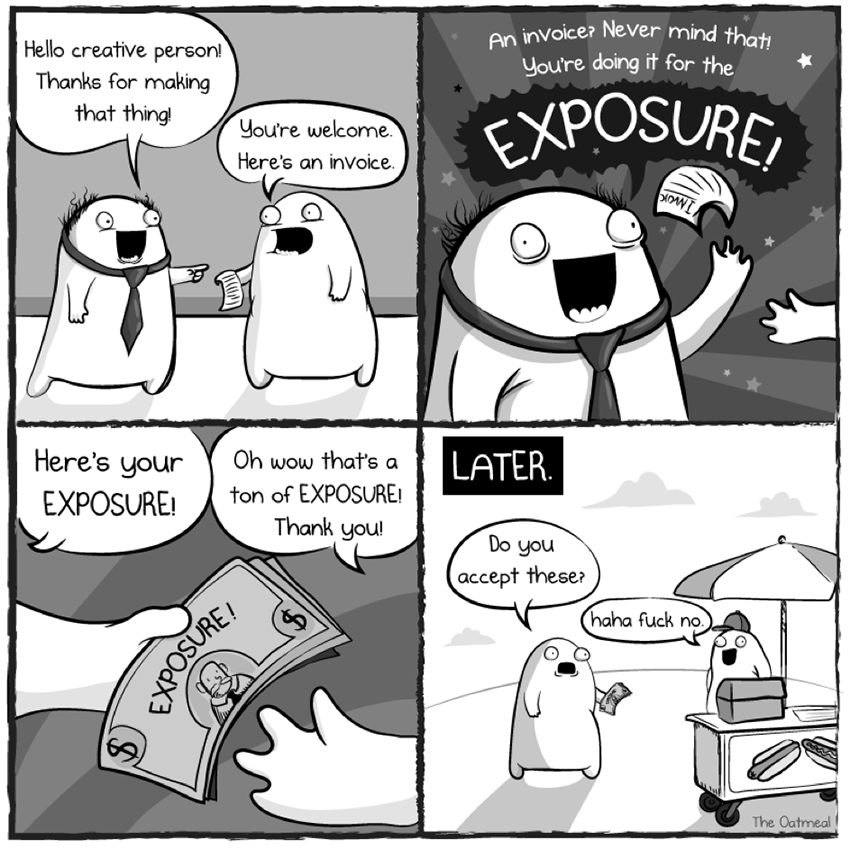
And please do not work for free for exposure. You have invested a lot of time in developing your unique style, your skills. You have invested money in your equipment. You have beautiful work in your portfolio, so you do not need to do it to build your portfolio either. Parties that are not willing to pay for your work do not value or deserve your work. If you take free photos for them, then it is for the exposure of their own product or service, because that is what is in the foreground in the article in which they place your photo, not your name. That is namely in tiny letters as a footnote, which no one will notice. -
Erika wrote on Wednesday 9 January 2019 at 10:49 | reply
@ Wilmar Thank you so much for responding so extensively to my question! And also for taking the time to look at my website. You hit the nail right on the head regarding my target audience. It never occurred to me to show my portfolio to commercial parties and I have no idea where to start then. But I expect that with some searching on the internet I should be able to find quite a few commercial parties who might be interested in my photography. So thank you so much for the tip. I can definitely do something with that!
Translated from Dutch.
Furthermore, I completely agree with you regarding stock photography. I also tried that for years and it yields very little for the hours you invest in it. I thought it was just me. So it's nice to read that others have had the same experience.
I have done a lot of free work, for exposure and to build my portfolio, but I'm really fed up with it now. Hence my question. It's really nice that there are people like you and Donald who take the trouble to respond to it. -
 August wrote on Wednesday 9 January 2019 at 10:49 | reply
If you take photos as a hobby during your travels, then this is a completely different picture. You are busy with your hobby and your travels are partly reimbursed. For 3,100 euros a year, you can make a nice trip to, for example, Canada or other great destinations.
Translated from Dutch. -
 John wrote on Wednesday 9 January 2019 at 11:07 | reply
Curious which stock agency is somewhat acceptable for submitting photos?
Translated from Dutch. -
Erika wrote on Wednesday 9 January 2019 at 11:33 | reply
@ John Not a single one
Translated from Dutch. that seems clear from this story. If you specifically go out photographing for stock agencies, you'll spend far too much time on it for what you get in return. If you photograph as a hobby, there are 100 others who have taken exactly the same photo and the chance that you'll sell through a stock agency is very small. So even then it doesn't seem worth it to me.
I myself worked with Alamy and DreamsTime for a very long time. You can also try Getty. -
Wilmar wrote on Wednesday 9 January 2019 at 12:44 | reply
@John: Me too
Translated from Dutch.
@August: those 3100 Euros per year do need to be put into the necessary context: it is an average over a period of 16 years, during which I had to upload approximately 42,000 stock photos. The uploaded photos are only a selection, I took many more photos. So it is not the case that I casually took a handful of beautiful pictures during my holiday. I invested an enormous amount of time in it, and money in equipment.
Travel photography is still a very enjoyable hobby for me, but I no longer do it with the illusion that I can recoup the cost of my trip through stock sales. These days I prefer to post my photos on my travel photography website (
www.reisfotografie.com ) or print them on canvas for home or for friends. I find that a much more enjoyable way to spend my free time than trying to get stock photos sold. -
 Tromp Willem van Urk
wrote on Friday 25 January 2019 at 20:13
| reply
Hi Wilbert,
Translated from Dutch.
If you want to make a living from stock photography as a professional photographer (full-time), then you're right! But as a (hobby) photographer who enjoys engaging with their photos in a different way, it can certainly be a nice extra income.
I myself have also been doing stock photography for years, and I simply enjoy it. Just as a hobby alongside my paid job. But I have still managed to pay for all my (expensive) equipment with it.
And every now and then I also work in my little studio specifically and exclusively to make stock photos. And I enjoy it a lot! -
 tinus10 wrote on Thursday 15 August 2019 at 16:23
| reply
The liberalization and commercialization of our society and economy have killed off a number of professions. Photography is one of them.
Translated from Dutch.
In the past, before the digital age, I also had images in an image bank. Among other things, postcards were made from them. That was fun. Especially because photography was still seen as a profession back then.
I understand that someone with a sole proprietorship does not have the financial means to purchase expensive photographic material for a website. In that case, I have no problem with them buying an image for a few Euros and placing it on their site.
But they are not the only ones who use them. Companies that actually could (and should) pay for them also use them.
The professional photographer has been completely strangled in this market.
I myself had an account with Shutterstock. I removed all my images from the site and closed my account. After uploading 450 images and making 1USD in revenue after a month, I quickly had enough. Better to turn back halfway than to get completely lost.
Because before you know it, you have invested so much time in it that you start to think it would be a shame to stop. And then you are trapped in the spiral. By then you have thousands of images in the image bank and to keep it going you have to keep uploading, otherwise all the effort will have been for nothing.
I recently watched a program about a Bolivian who is harvesting salt tiles on the salt flats. Hard work in extreme conditions.
That Bolivian gets 0.25 dollar cents per salt tile. He can harvest several dozen to hundreds per day.
As a stock photographer at Shutterstock, I scored 1 usd this month! 4 images of mine were sold.
I think I might emigrate to Bolivia!
Have your say
Please note: Articles older than a week can only be commented on by signed-in visitors.Would you still like to comment? sign in or create a free account.
Become a better photographer every week
A practical photography tip in your inbox every week.
38,938 photography enthusiasts already receive the tips! More about the weekly mail. Or keep up to date via  Facebook.

Elja Trum
Photofacts; everything to do with photography!
Would you like to take better photos and keep up with what is happening in photography? Photofacts publishes articles that teach you something about photography — from a product announcement to a practical shooting tip or a look at a website. Photofacts covers photography every day and is a hobby project of Elja Trum's that got out of hand. The articles are written by a team of volunteer authors. If you would enjoy writing one or more articles for Photofacts, do get in touch.More about PhotofactsPhotofacts is made possible in part by
