

Flash power has nothing to do with how hard your light is
Thursday 15 December 2022, 22:44 by Elja Trum | 3,453 views | 4 commentsThis article was translated from Dutch with the help of AI. Read the original.
If you want softer light, your first thought might be to make your flash fire less strongly. You then reduce the flash power, for example from 1/1 (full power) to 1/2 (half power).
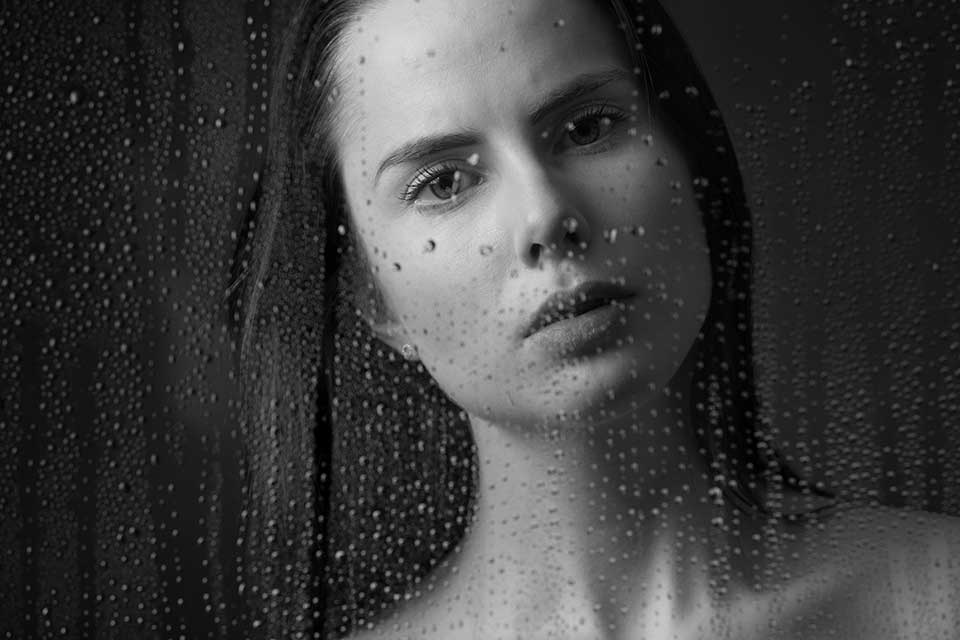
The result, however, is not softer light, just less light. Your subject is lit less strongly, so the image becomes darker. The light, and especially the shadows, remain just as hard.
If you really want softer light, you need to make the light source larger. It is important to be aware of the difference.
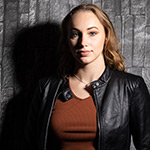
The photo above of Danien was taken with a large octabox that was positioned close to the model. This creates the lovely soft transitions between light and dark on her skin.
If I now set the flash power twice as high, nothing changes about those soft transitions. I will probably get overexposed areas in my photo, though. To compensate for that, I would need to adjust my settings, for example by changing my aperture to f/16.
The result would then be exactly the same photo, only with a little more depth of field. Setting the flash power twice as high is equivalent to a difference of 1 stop. Changing your aperture from f/11 to f/16 is also a difference of 1 stop, as you halve the amount of light coming in).
About the author
Elja Trum is the founder of Photofacts and online photography course website Photofacts Academy. He has been writing about photography since 2006. Elja is also the author of (Dutch) books on composition, black-and-white photography, flash photography and portrait photography.
You might also like
-
 Black and white photography tip: Choose hard light
by Nando Harmsen
-
 Make clouds soft and fluffy, not hard and harsh
by Nando Harmsen
-
 Flash photography tip: Save your batteries
by Elja Trum
-
 Be careful when removing power lines and dust spots in Luminar NEO
by Nando Harmsen
4 comments
-
 Hugo VERRET wrote on Tuesday 20 December 2022 at 14:16 | reply
A flash consists of a gas tube and it always needs full power to be able to flash. At so-called half power, the flash does not fire, but the light is controlled through the duration.
Translated from Dutch.
In summary, at half the duration, the subject is exposed for half as much time, resulting in a softer exposure. -

 Nando
wrote on Tuesday 20 December 2022 at 14:26
| reply
Nando
wrote on Tuesday 20 December 2022 at 14:26
| reply
@Hugo Verret:
Translated from Dutch.
Soft light or hard light is caused by the shape of the light source. A point light source will produce hard light because it comes from a small source, regardless of the flash power/flash duration.
If you want soft light, you need to make the light source larger. That's what softboxes, octaboxes, strip lights and those kinds of light shapers are for.
The closer you place that large light source to your subject, the larger the surface that generates light is relative to your subject. That causes soft light.
The flash power/flash duration has nothing to do with it. Just try it out for yourself. -
Hugo Verreth wrote on Tuesday 20 December 2022 at 16:14 | reply
Hereby a response to your answer: I completely agree with you when you say that light modifiers play a very large role in soft and hard light and also in how it is directed towards the subject. But the flash duration of a reportage flash, with or without light modifiers attached, can also play a role in providing light
Translated from Dutch.
in difficult circumstances, such as limited space for example. I rarely, if ever, flash with a reportage flash directly at the subject, but rather via the wall, or ceiling, and then you can clearly see the difference in flash duration. I usually work with studio lights because there you have more control over light, shadows, background etc...
kind regards -
 Lefevere Paul wrote on Tuesday 20 December 2022 at 19:48 | reply
If the latter happens, then this is due to the influence of the ambient light. The hardness of the light depends on the surface area of the light beam in combination with the distance/position of the light source relative to the subject. The author is absolutely right: hardness has nothing to do with the light intensity.
Translated from Dutch.
Have your say
Please note: Articles older than a week can only be commented on by signed-in visitors.Would you still like to comment? sign in or create a free account.
Become a better photographer every week
A practical photography tip in your inbox every week.
39,178 photography enthusiasts already receive the tips! More about the weekly mail. Or keep up to date via  Facebook.

Elja Trum
Photofacts; everything to do with photography!
Would you like to take better photos and keep up with what is happening in photography? Photofacts publishes articles that teach you something about photography — from a product announcement to a practical shooting tip or a look at a website. Photofacts covers photography every day and is a hobby project of Elja Trum's that got out of hand. The articles are written by a team of volunteer authors. If you would enjoy writing one or more articles for Photofacts, do get in touch.More about PhotofactsPhotofacts is made possible in part by
