

Pentax K-1 ideal for astrophotography
Friday 8 September 2017, 13:13 by Mike Muizebelt | 5,850 views | 5 commentsThis article was translated from Dutch with the help of AI. Read the original.
The full-frame Pentax K-1 is packed with features that landscape photographers, and especially those interested in the night sky, will appreciate.
At the end of 2016, I finally had the chance to test the much-praised astrotracer function of this camera. To capture beautiful images of the night sky, you want as little light pollution in your image as possible.
Nxai Pan in Botswana was perfect for this. The nearest city is 141 kilometres away as the crow flies.
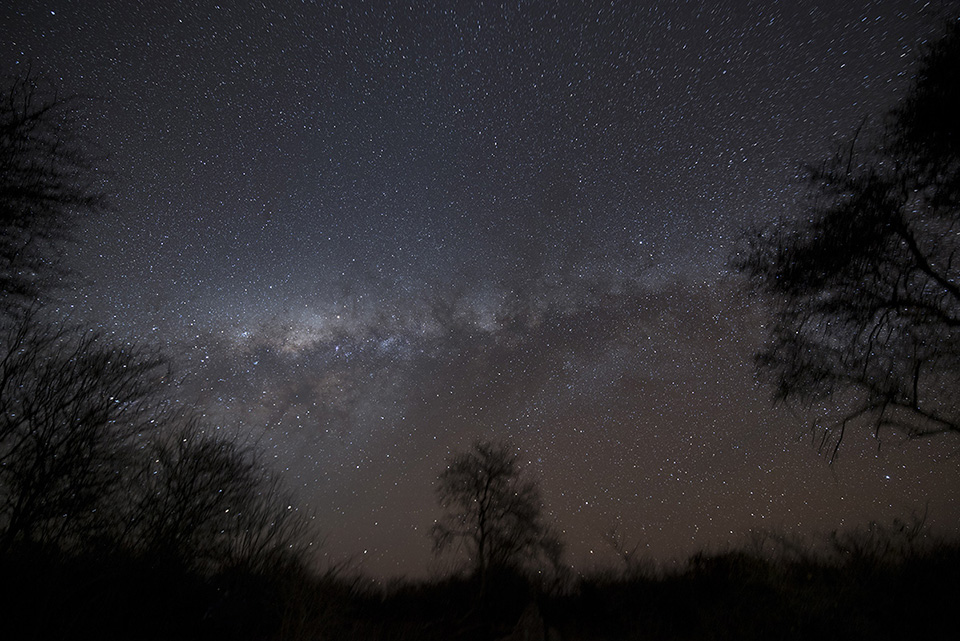
When capturing images of the night sky, we photographers are always struggling with our shutter speeds. As a rule of thumb, you should always use a shutter speed shorter than 30 seconds with a wide-angle lens.
At longer shutter speeds, the stars are no longer shown as points, but turn into short trails. We use fast lenses for this, which are often not the cheapest option, to stay within those 30 seconds, or we increase the ISO, which can lead to noise in the final image.
Astrotracer function
Thanks to the astrotracer function of the Pentax K-1, this struggle is a thing of the past. The camera contains an ingenious system that makes additional hardware unnecessary, while still being able to produce a perfect image of, for example, the Milky Way.
The K-1 contains an image sensor connected to the 5-axis stabilisation mechanism. In regular photography, this system is good for a gain of around five stops.
This stabilisation mechanism, combined with its built-in GPS module and the digital compass, makes astrophotography of celestial bodies easier without the need for an equatorial telescope.
The K-1 calculates how the celestial bodies move based on data from GPS satellites and the direction and horizontal and vertical tilt of the camera.
The camera then synchronises the movement of the image sensor with that of the celestial bodies with great accuracy. Because the K-1 captures stars without trails even at long exposure times, you can photograph faint stars, which are barely visible to the naked eye, with extreme sharpness.
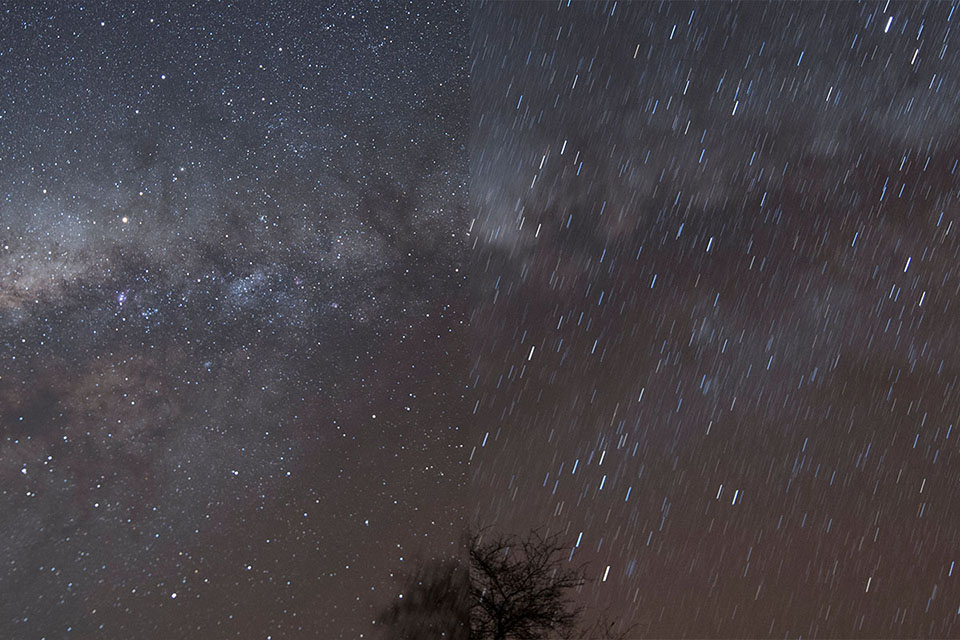
The results are particularly stunning in the centre of the image and, depending on the focal length used, this function can create exposures of up to five minutes. Above five minutes, the Earth rotates more than the sensor can follow.
My tests showed a good balance with exposures of around one minute. With three-minute exposures, the night sky looked very beautiful at just ISO 1100, but because of the rotation of the Earth, landscape elements such as bushes and rocks were rendered too blurry for my liking.
One solution, however, would be to combine an image with astrotracer on and an image with astrotracer off in post-processing, using a simple Photoshop layer. This gives you both a perfect night sky and sharp landscape elements.
Astrophotography at ISO 400
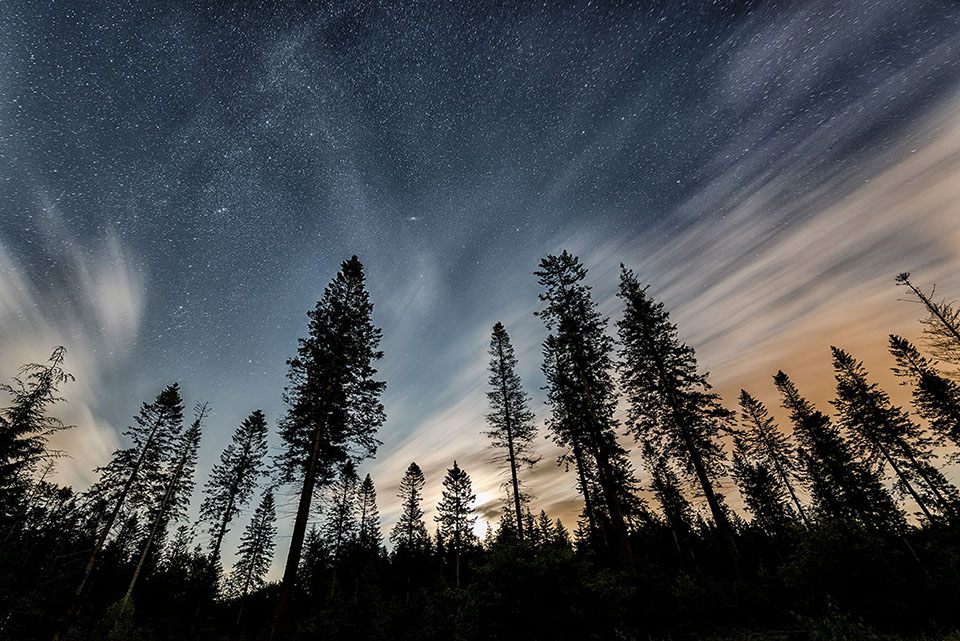
I recently made an example of this on the Veluwe (see below), with the night sky captured with the astrotracer function switched on and the spruce trees in the foreground captured with the function switched off for maximum sharpness. Until recently, photographing stars at ISO 400 was of course still a dream!
Nightvision
To further cater for photographers who are active at night, the camera has built-in LED lighting. The rear of the pull-out and tilting LCD screen has four lights that can illuminate the back of the camera.
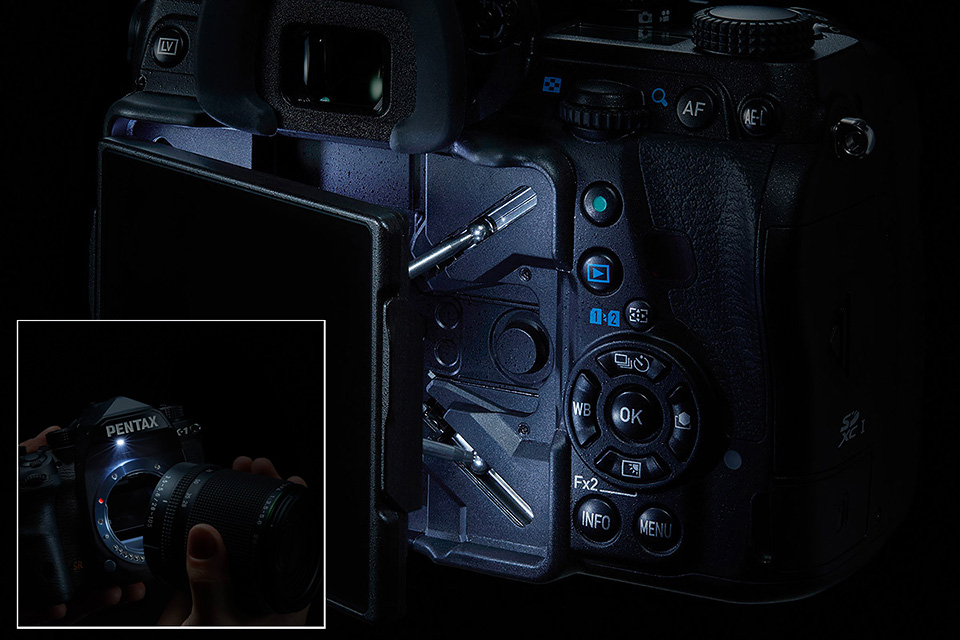
This means that the controls are easy to use even in complete darkness. From firmware 1.4 onwards, there is also a special night mode that displays the screen in a dimmed red colour, so that your night vision is not lost.
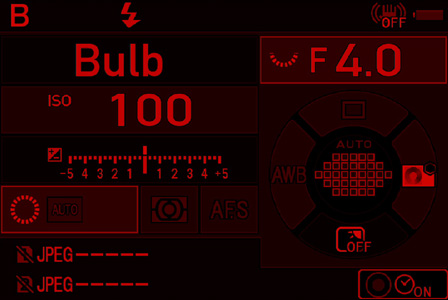
The disadvantage of this function, however, is that your captured image is also displayed in the red 'nightvision' colours, making it impossible to properly assess your image.
Star Trails Photography Course
Would you like to discover more about photographing stars? Also take a look at our online star trails photography course with Nando Harmsen.
About the author
Mike Muizebelt is een full time professioneel natuurfotograaf met een uitgesproken passie voor reisfotografie, met name op het Afrikaanse continent. Zijn 30 jaar aan ervaring als fotograaf deelt hij graag tijdens workshops, presentaties & persoonlijk reisadvies.
You might also like
-
 Review: Pentax Kp
by Johan van der Wielen
-
 Pentax K-3 Mark III announced
by Elja Trum
-
 Pentax K-1 Mark II announced
by Michelle Peeters
-
 The Pentax K-3 mark III Monochrome for black-and-white photographers
by Nando Harmsen
-
 6 Tips for Creating Star Trails
by Nando Harmsen
5 comments
-
 huub wrote on Saturday 9 September 2017 at 16:05 | reply
I’m actually very curious how you neatly layer those two on top of each other. The layer with the astrotracer function turned on (where the starry sky is sharp) and the layer with that function turned off for a sharp foreground.
Translated from Dutch. -
 Mike wrote on Sunday 10 September 2017 at 11:19 | reply
Hi Huub, it goes a bit far to explain that here completely in a comment, but as a starting point I begin by creating a "luminosity mask". The silhouettes of the trees are then easy to select. We keep these and replace the blurred stars with the sharp stars.
Translated from Dutch. -
Huub wrote on Sunday 10 September 2017 at 13:49 | reply
Thank you Mike, exactly what I wanted to know!
Translated from Dutch. -
 Jozef de Groof wrote on Wednesday 13 September 2017 at 16:32 | reply
Nice to get a positive opinion of the Pentax K1
Translated from Dutch.
haven't used this function yet ,but it gives me a good feeling about my new camera -
 Mike Muizebelt wrote on Thursday 14 September 2017 at 12:12 | reply
Hi Jozef,
Translated from Dutch.
the K-1 has, apart from the image quality, many features that can be very useful in specific situations.
If you turn on the pixel shift resolution at high ISOs, you also get images with minimal noise.
Have fun with it!
Have your say
Please note: Articles older than a week can only be commented on by signed-in visitors.Would you still like to comment? sign in or create a free account.
Become a better photographer every week
A practical photography tip in your inbox every week.
38,764 photography enthusiasts already receive the tips! More about the weekly mail. Or keep up to date via  Facebook.

Elja Trum
Photofacts; everything to do with photography!
Would you like to take better photos and keep up with what is happening in photography? Photofacts publishes articles that teach you something about photography — from a product announcement to a practical shooting tip or a look at a website. Photofacts covers photography every day and is a hobby project of Elja Trum's that got out of hand. The articles are written by a team of volunteer authors. If you would enjoy writing one or more articles for Photofacts, do get in touch.More about PhotofactsPhotofacts is made possible in part by
