

Photo tip: try looking from right to left!
Thursday 13 September 2018, 20:02 by Elvira Smit | 7,444 views | 5 commentsThis article was translated from Dutch with the help of AI. Read the original.
I've been taking photographs for years, but I was never aware of a huge cultural visual blind spot: we look from left to right, which means we see far less. Fortunately, you can do something about it.
How do we actually look?
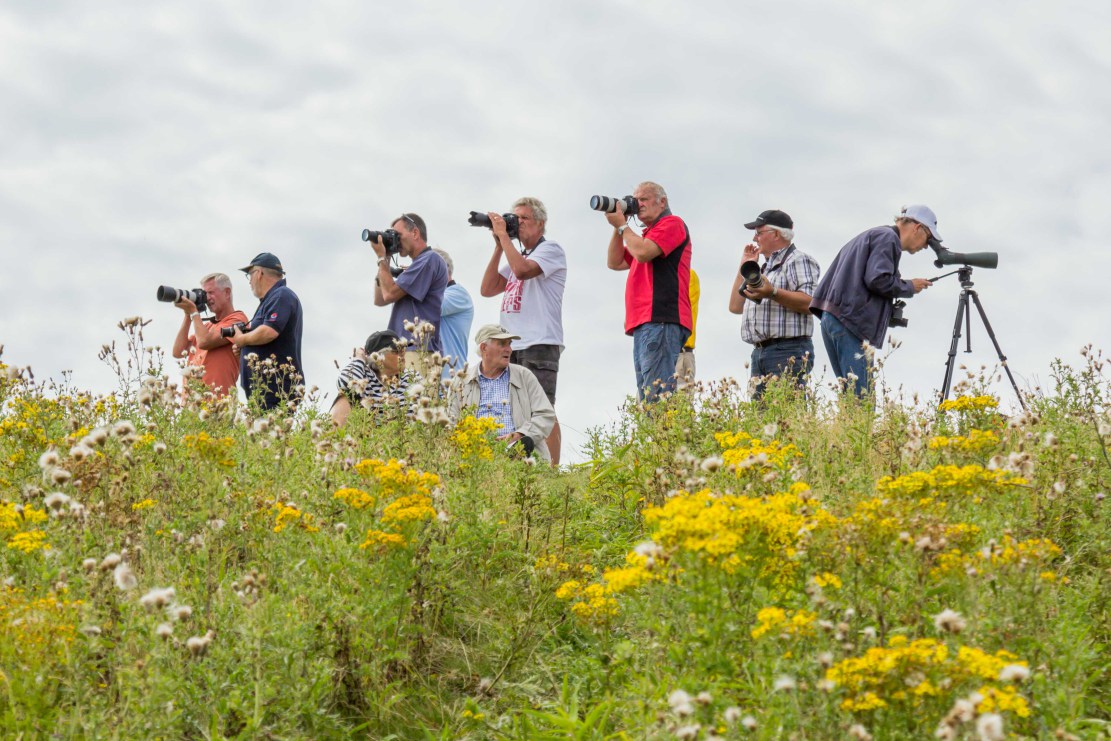
You see something that catches your attention and decide to take a photo of it. What happens (too) often with many beginner photographers is that, when you get home, you see that your subject doesn't attract any attention in the photo at all. It blends into the background or is shown far too small.
On location, it received all your brain's attention: you recognised it, and your brain filled in the rest of the situation. You didn't realise that translating it into two dimensions might not work out so well. Because you weren't really looking.
Recognise your viewing habits
How do you prevent this? Well, by learning to look. To really look, as if you have just stepped out of your spacecraft and are seeing everything on this planet for the first time, without knowing what it is. First, though, you need to become aware of your viewing habits.

Looking and reading from right to left
We look the way we read. So a Westerner generally views everything from left to right. Because of that automatic habit, we mainly fail to see a lot of things.
When I learned to read, I paid attention to each word separately. I followed along with my finger and said the syllables out loud. Now, fortunately, that's different. You can experience this yourself in two steps:
Step 1: Read the sentence above again at your normal reading speed, and pay close attention to how your eyes move.
Step 2: Read the same sentence from right to left, while still reading the words themselves in the 'normal' way.
What do you experience?
There's a good chance that in step 1 you noticed that you don't read word by word. Your eyes probably jumped back and forth. These little jumps are called 'saccades'. You scan the text and your brain fills in words here and there based on logic and expectation.
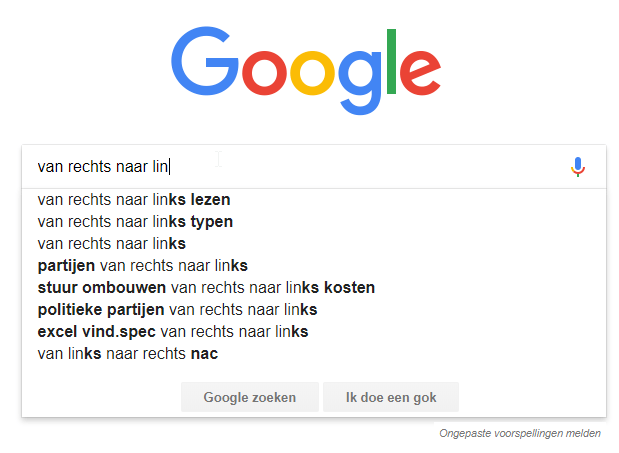
It's a bit like giving Google a search query and Google starting to complete it after just three letters. Sometimes that works well, and sometimes it doesn't at all.
In step 2, reading from right to left, you suddenly pay much more attention to the words and their order. You're not used to this method, so it's as if you're six years old again, struggling with letters and words.
Looking with your brain
Well, we also used to look at the world around us with our full attention. You can see this behaviour in babies, who can stare at you or an object for minutes on end without embarrassment.
The shapes, colours and changing angles fascinate them. Until they have seen something several times. At that point, expectations start to play a role.
A toddler no longer looks at a chair for minutes on end. No, they see that it is a chair, and that information is enough to know that they can sit on it. This is how we gradually learn to focus on the main points.
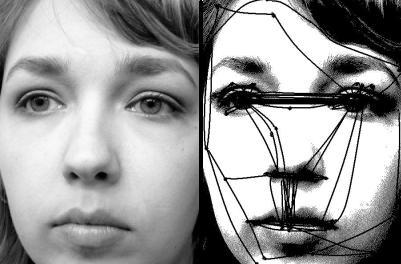
Below you can see the saccades of someone looking at a photograph of a face. The eyes receive the most attention, then the mouth, then the nose. The rest is barely examined:
The army looks from right to left
Those saccades aren't much help to you as a photographer. And even less so as a soldier. After all, failing to notice your camouflaged enemy can be a matter of life and death. That's why the US Army trains people to actively look from right to left:
'One of the first tricks I learned many years ago was drilled into me by an army sergeant. It only took a few smacks up the back of my head to learn how to look from right-to-left when scanning a landscape in an effort to see the hidden "enemy" in our mock battles.
This process of reverse reading forced me to slow down and read each tree as if it were a syllable I was seeing for the first time.'
~Dale Wilson (former soldier)
From right to left and upside down
Ha, so now we're getting somewhere. There is a way to stop looking automatically, by looking from right to left. Because that doesn't happen automatically, there's a much smaller chance that your brain will take over the work.
You can also decide to look from bottom to top or diagonally from left to right. As long as the result is that you look attentively, it works.
Henri Cartier-Bresson used the same principle when assessing his photographs. He always looked at his contact sheets upside down.
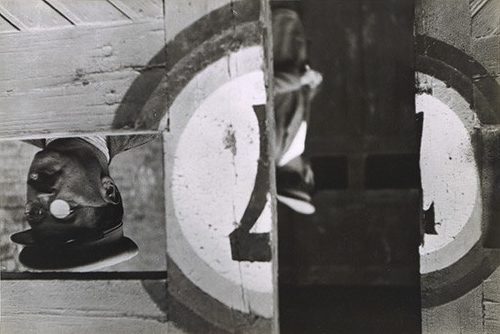
Instead of:
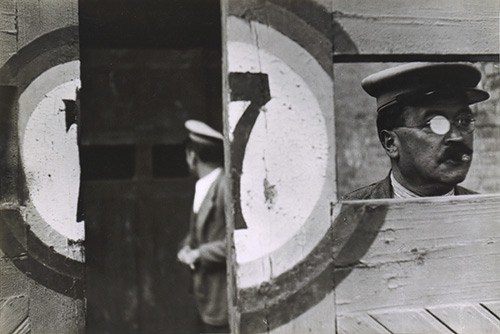
Looking upside down
But walking around with your head upside down all day is a bit much. For now, I'm busy teaching myself to look attentively from right to left a few times a day, as if I were a soldier looking for a camouflaged enemy.
Looking for more useful tips on how to look? You'll find a whole collection on my Kronkeling blog. Would you rather be inspired by the work of other photographers? I also enjoy writing about that.
About the author
Ik heb een eigen fotografieblog, Kronkeling. Daar schrijf ik om de week twee artikelen. Over hoe je je blik kunt scherpen, je creativiteit kunt aanwakkeren, en over fotografen die mij inspireren. Geen technische zaken, wél over hoe je leert kijken. En dat blijkt nog een hele klus. Een mooi startpunt zijn de Kronkeltips, die vind je hier.
You might also like
-
 Turn the World Upside Down
by Nando Harmsen
-
 The reaction of a colour-blind man seeing colour for the first time
by Michelle Peeters
-
 Adobe's improved Content-Aware Fill coming soon to Photoshop
by Michelle Peeters
-
 'Color Adaptation' gebruiken om Content-Aware Fill te verbeteren
by Michelle Peeters
-
 Control your light with an optical spot
by Elja Trum
-
 Visual Storytelling: make an impression with your photos
by Laura van der Burgt
5 comments
-
 De Cuyper wrote on Tuesday 18 September 2018 at 11:36 | reply
Yes, very good explanation. Wonderful example of a photo at the top, showing how it keeps happening, some time ago I took photography lessons, a class of 16 students, a week later discussing the photos, I saw the same photos 15 times and they asked me where did you take this photo ?? (I was barely three meters further away from them !!)
Translated from Dutch.
How do they say that !! monkeys, monkeys copy everything !! -
 marijke wrote on Tuesday 18 September 2018 at 12:22 | reply
Very interesting piece. I will take it to heart, thanks!
Translated from Dutch. -

 Elvira Smit
wrote on Tuesday 18 September 2018 at 12:23
| reply
Hi De Cuyper, thanks for your response! And yes, it's good to be aware of our tendency to imitate others.
Translated from Dutch.
We can use it to our advantage by looking the other way and taking an original photo. Something you're already putting into practice, from the sounds of it
-
Elvira Smit
wrote on Tuesday 18 September 2018 at 12:27
| reply
Nice to hear, Marijke! Another right-to-left viewer added
Translated from Dutch.
-

Have your say
Please note: Articles older than a week can only be commented on by signed-in visitors.Would you still like to comment? sign in or create a free account.
Become a better photographer every week
A practical photography tip in your inbox every week.
38,886 photography enthusiasts already receive the tips! More about the weekly mail. Or keep up to date via  Facebook.

Elja Trum
Photofacts; everything to do with photography!
Would you like to take better photos and keep up with what is happening in photography? Photofacts publishes articles that teach you something about photography — from a product announcement to a practical shooting tip or a look at a website. Photofacts covers photography every day and is a hobby project of Elja Trum's that got out of hand. The articles are written by a team of volunteer authors. If you would enjoy writing one or more articles for Photofacts, do get in touch.More about PhotofactsPhotofacts is made possible in part by
