

Photographing pine martens and stone martens
Saturday 18 November 2017, 20:20 by Johan van der Wielen | 9,359 views | 8 commentsThis article was translated from Dutch with the help of AI. Read the original.
Two mammal species that both occur in the Netherlands, but which I had never seen, at least not to photograph. To me, these nocturnal animals have something illustrious about them, something mysterious.
Once, a pine marten raced along the path in front of me while I was trudging through the forest with a pushchair. It climbed a tree and watched me very intently for a few seconds before racing away through the branches again.
I have never forgotten that moment. And that I love martens is proven by my enormous affection for the largest member of the marten family, the wolverine.
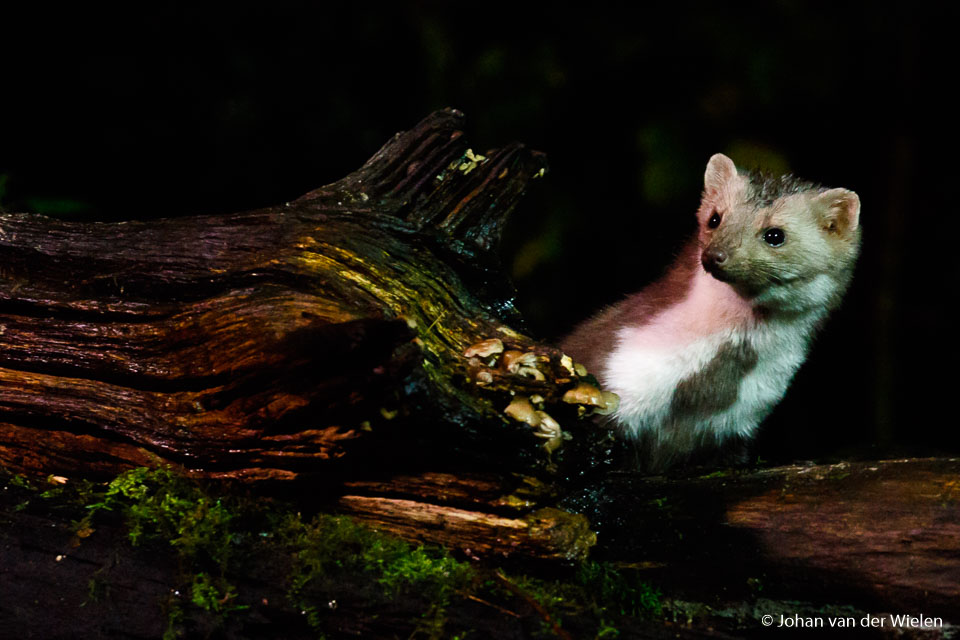
So when I saw that nature photographer and ecologist Edo van Uchelen had managed to get both species to a hide, and that they even allowed themselves to be photographed, I could not wait to see these shy animals with my own eyes.
A rainy Friday evening
It is already dark when we arrive at the location. Drizzle gently taps on my cap as I get out of the car and sort out my equipment. Large camera bag, two tripods, a bag with an emergency supply of food and drink, and a sleeping bag.
I know how to tie everything to my bag, and with the tripods in our hands we walk into the dark night, following the directions from the email. Through the gate, along the path, I am a little shorter than my photography companion and therefore miss the branch hanging too low, to the hide, which is half-buried in the ground.
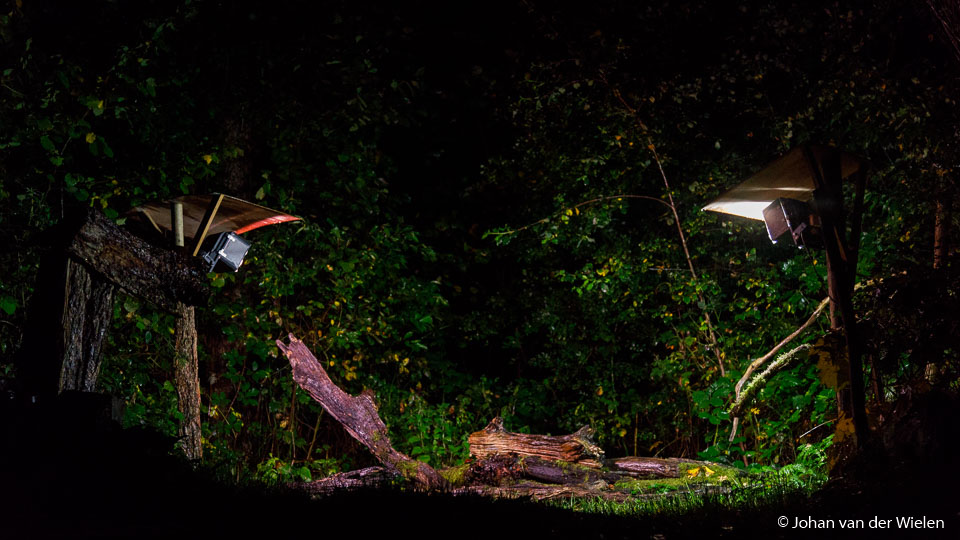
We can already see the lights shining in front of the hide, a guiding beacon in the night. The drizzle gently turns into a real downpour as we make ourselves comfortable in the armchairs.
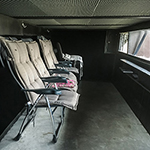
Low viewpoint from club armchairs
The hide itself is spacious enough and well insulated. There is an electric heater in the corner, which makes it comfortable on cold nights and helps prevent condensation on the glass. You photograph through high-quality glass, after all.
In front of it are the logs where the martens will hopefully appear. You sit in comfortable club armchairs. They are a little large for the hide, but when you consider that you wait for 14 hours and photograph for only a small part of that time, they are very comfortable indeed. You can sleep well in them too!
Martens do not like rain
During my last phone call with Edo, I cautiously asked him how martens cope with rain. “Not well, they do not come out when it rains.”
He must have heard the disappointment in my voice. “But it only needs to be dry for a little while, then they will probably come.” And with that hope, we set off.
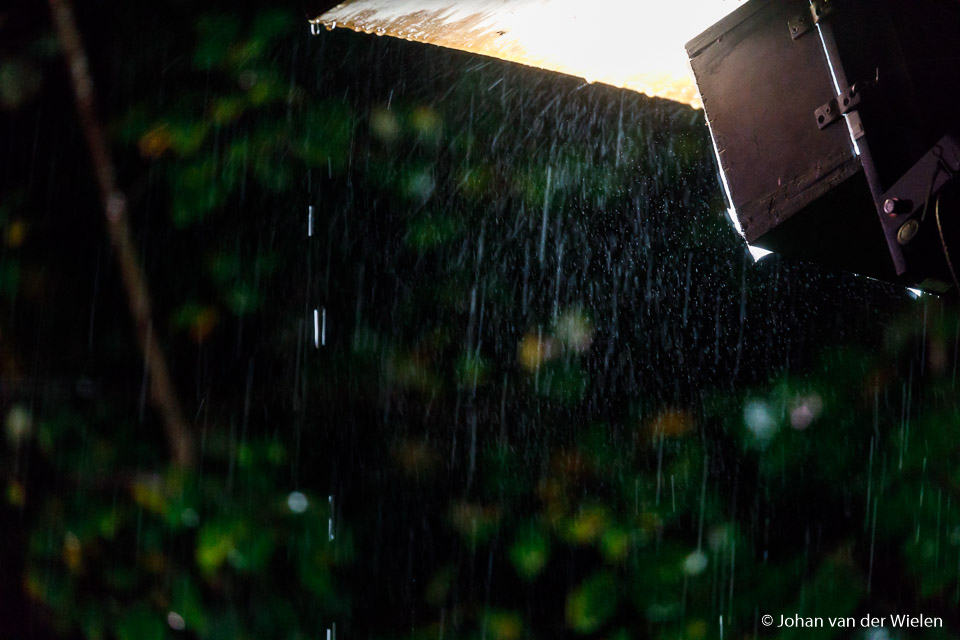
Our hope that the martens would show themselves from 18:30 onwards soon disappeared when we felt not just a shower but the full deluge pouring over the hide.
The waterproofing passed the test. My feet did not get wet, unlike once in a bear hide. Water streamed from the lamps and the logs. It would not be long before we could photograph sticklebacks and pike from behind the beautiful glass.
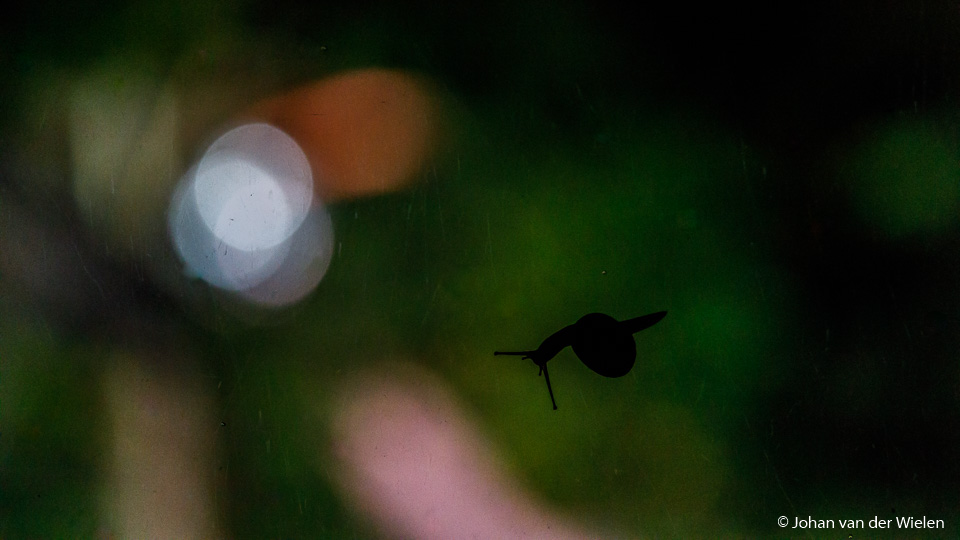
The only animal that showed itself was a snail... and even it found it too wet, so it felt the need to decorate the outside of the window with its trail of slime.
And then...
After many hours of rain, the radar finally indicated that it would be dry after midnight. When the spitting rain eventually seemed to ease and we no longer saw ripples in the bird bath, the tension between us increased.
Would they brave the wet forest to show themselves? How bad are dripping trees? And wet paws? Or wet food?
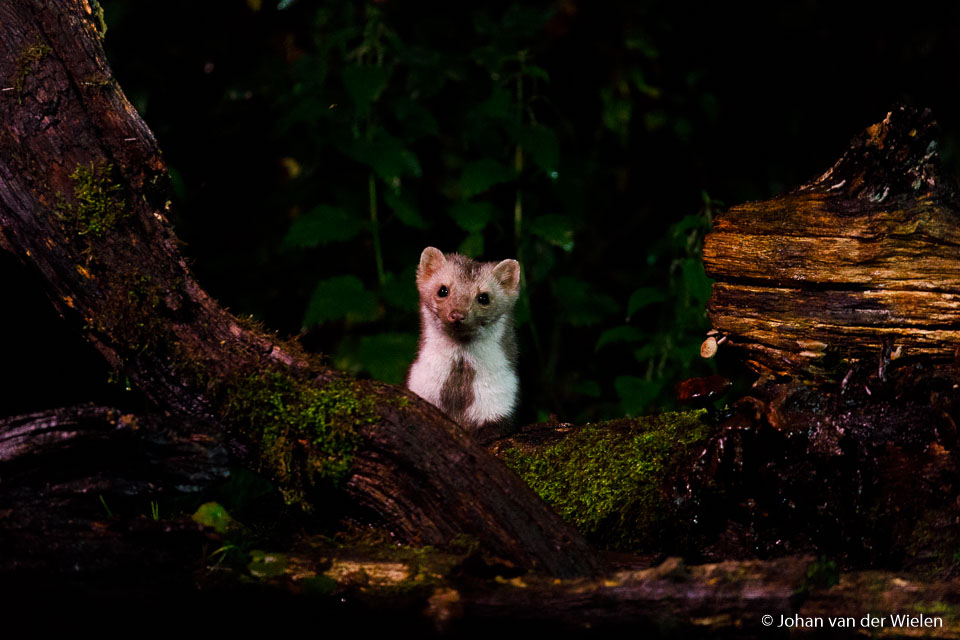
Too often I had mistaken mushrooms for ears or taken the many mice scurrying past for martens, until suddenly... a white bib with two round ears rose up from behind the log. Two round, beady eyes explored the surroundings, and for 1 minute we were allowed to enjoy the stone marten's first visit!
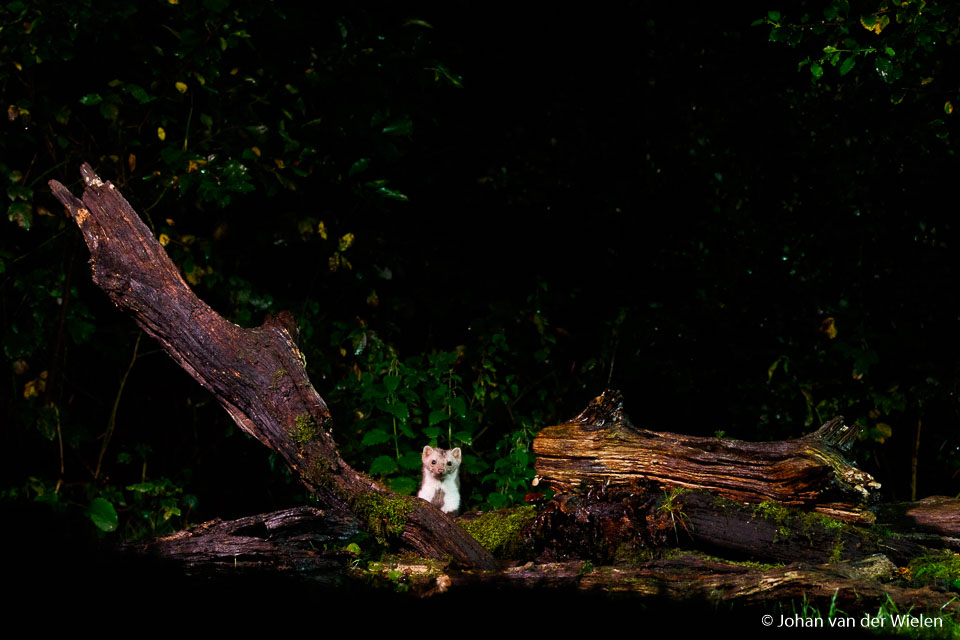
Marten in the tree
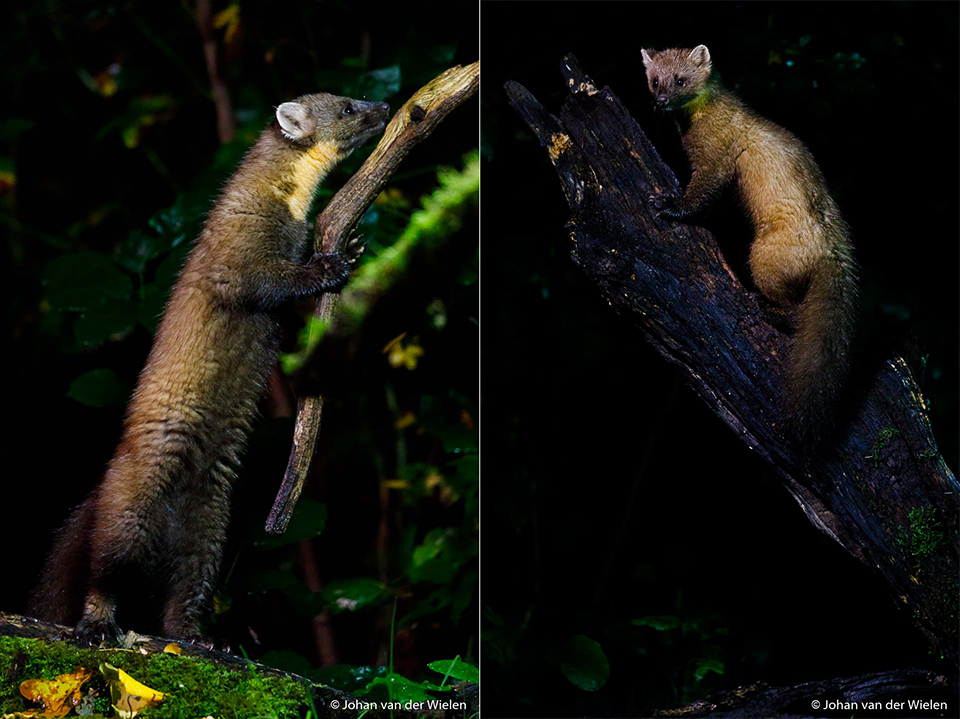
The tree on the left is not there for nothing, of course. I hoped that a pine marten would appear in it. But when I looked for a stone for its brother, I discovered that this joke could not be made.
After several visits from the stone marten, my desire to see its illustrious fellow marten grew ever stronger.
Would I be able to see the difference? How different are they in size? Could they even appear in the frame together? Edo had already taken away any hope of the latter. The pine marten is much shyer and the stone marten bolder. You will not encounter them together.
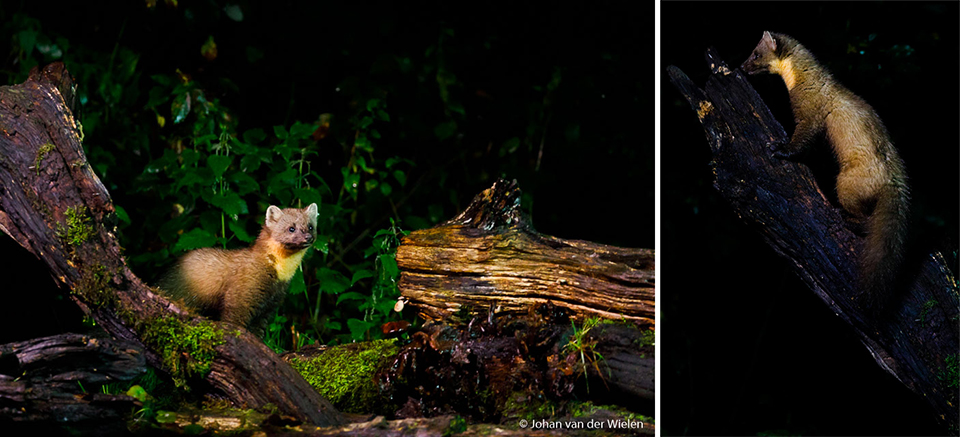
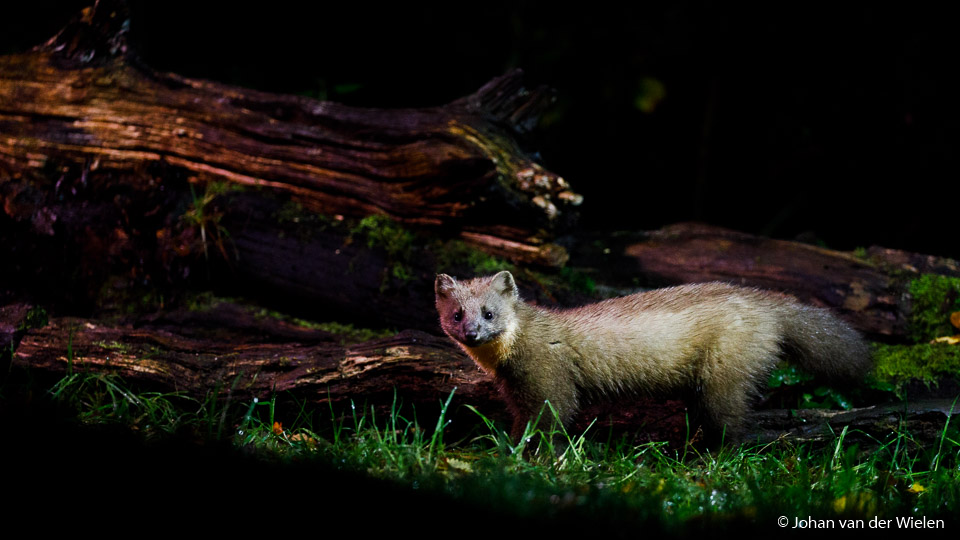
What a fantastic moment it was when, after the many visits from the stone marten, the pine marten finally showed itself too. I almost forgot to take photos. I enjoyed the playfulness, speed and cuteness of this small predator so much.
It moved across the logs much faster than the stone marten, and I recognise much of the wolverine I know so well.
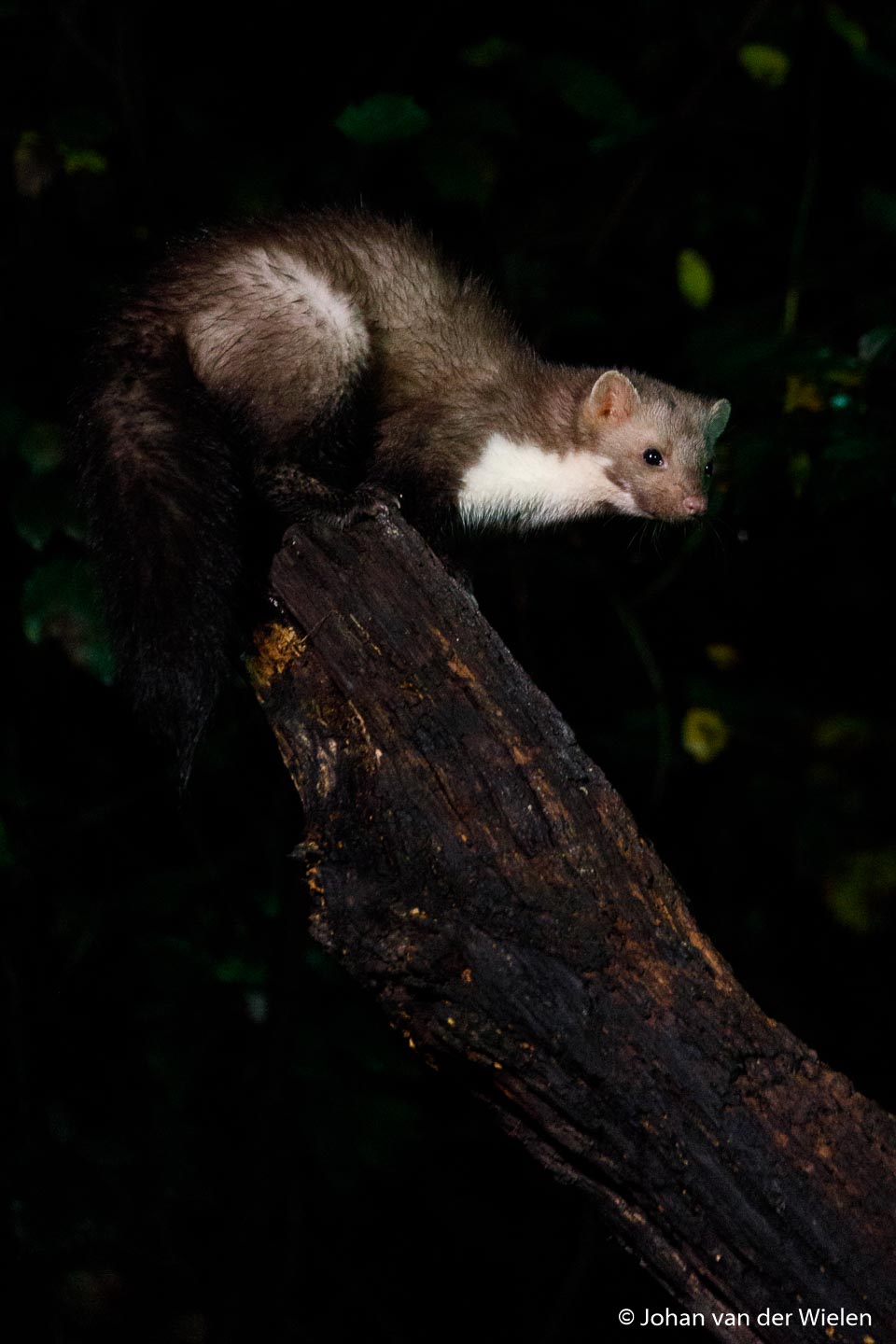
Wildlife hide, make use of the knowledge gained
For me as a photographer, this hide offers the perfect opportunity to photograph stone and pine martens in a relatively simple way.
Of course, there is still a large element of luck involved, whether both species appear and whether they come to the places I want, as well as skill on the part of the photographer. There are two large lamps, but you still photograph at high ISO, wide apertures and not particularly fast shutter speeds.
But most importantly, I can benefit from the knowledge and skill of the person who managed to get two shy species to come to one hide. Martens do not like light and had to get used to the lamps over a very long period.
This familiarisation process took a very long time, and with a lot of patience it became possible to get both animals to visit almost every night.
By now they are used to the camera clicking softly (!) and the food has been adjusted so that not all the birds run off with it, or the martens themselves.
If you use a wildlife hide, it is good to realise this. For you as a photographer it is relatively simple, but think about the knowledge and experience the designer must have to make all this possible for you as a customer!
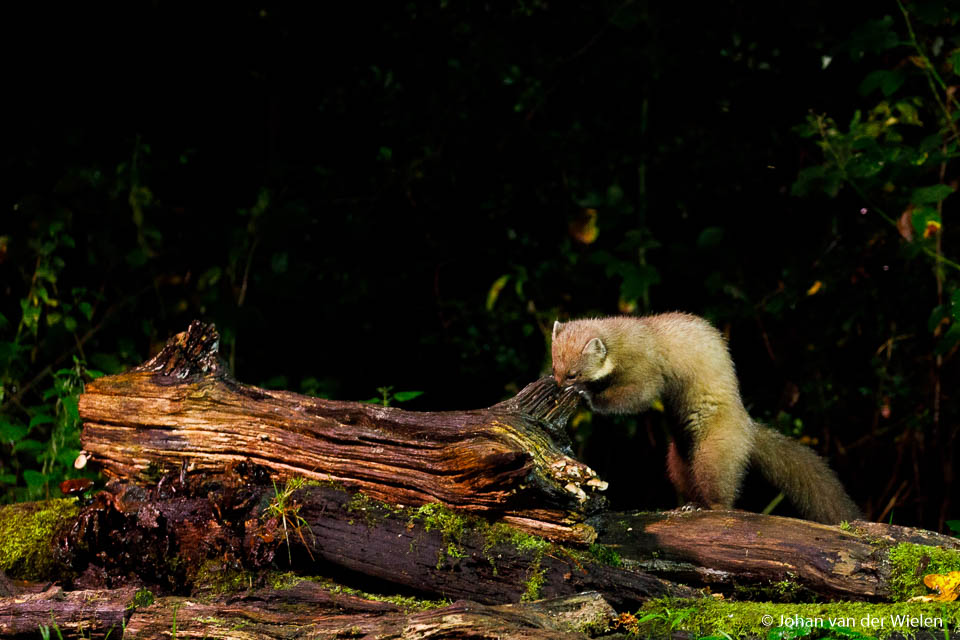
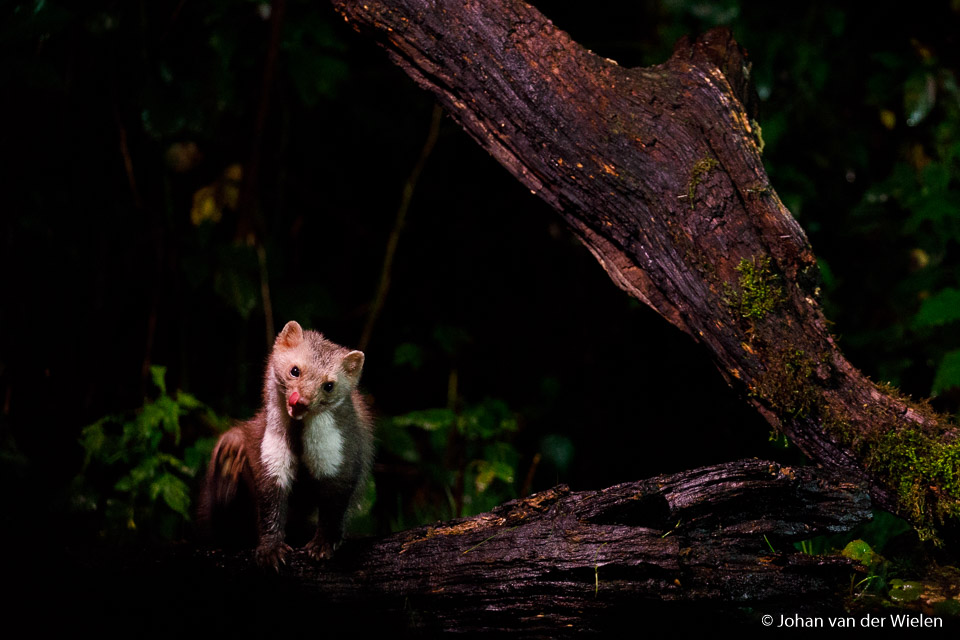
The obese rat
The time spent developing and getting used to the hide has paid off. But not just for the martens. Other animals also benefit greatly from the permanent feeding spots.
The mice race back and forth to carry the peanuts to their little burrow. It is funny, because mice are food for the martens themselves, yet the marten has barely been gone for 10 seconds before the mice show themselves again.
The real highlight, though, was watching the fortunes of a very fat rat. It was clear that it had been enjoying the easy supply of food for a long time. Its fat, pear-shaped body could barely make it over the log as it searched for the next nut.
If I were a stone marten, I would go after that rat. Not just an easy prey animal, waddling so slowly across the forest floor, but also the perfect opportunity for a meal of peanut-filled rat.
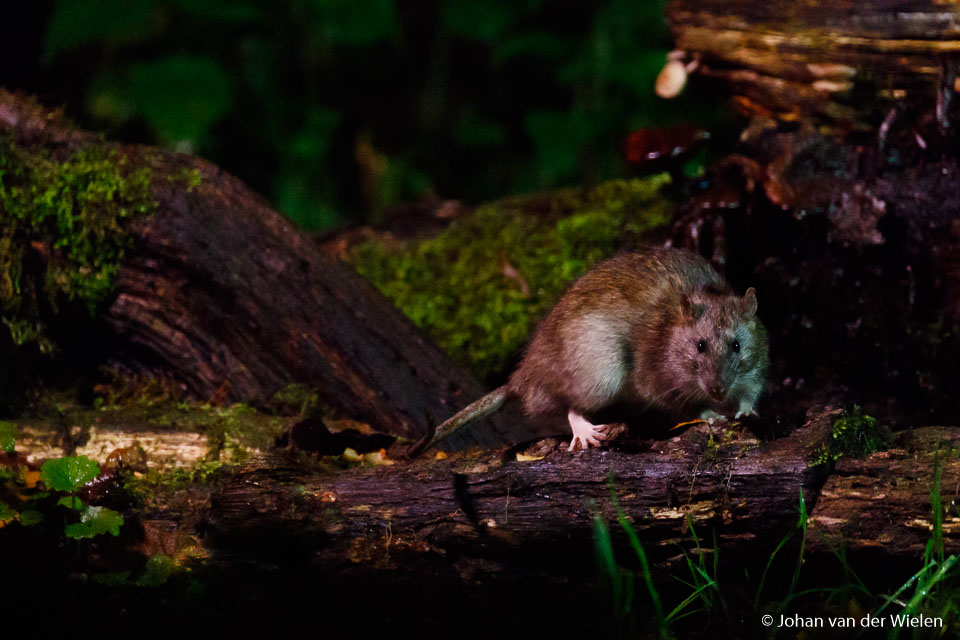
Enjoying and experiencing 12 hours
Previous visitors to this hide said that they went home halfway through the night. I did not. Once I sit somewhere, I cannot get enough of it. And when I am told that martens can still visit until 6:00, I stay until 6:30, of course.
I did not get much sleep. Somehow, the martens knew exactly when my companion was asleep, they let him have his night's rest, and when it was my turn, my longest sleep lasted less than 30 minutes before they were dancing on the log again.
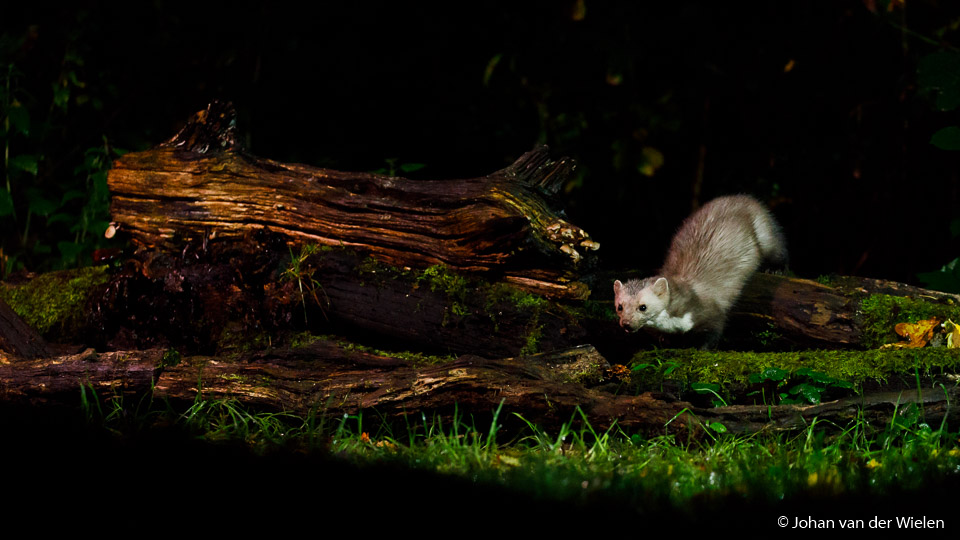
Even so, I never once thought about going home. I am now so used to bear hides, where I spend 14 to 16 hours watching, waiting and photographing, that this was no problem either.
In fact, it was one big adventure, and during the animals' final visits I watched and enjoyed myself more than I photographed.
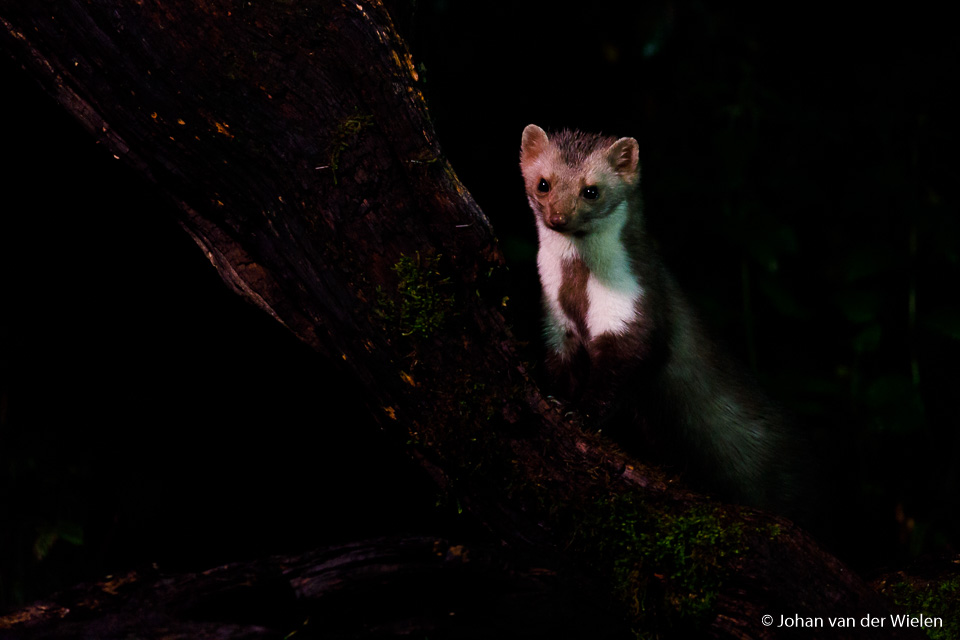
And so our marten adventure came to an end. After 12 hours, half of them spent in the rain, we had six visits from a stone marten and two from the pine marten. One minute at first, but the final visit lasted half an hour! More than enough opportunity to make beautiful images of these unique and equally shy species.
Highly recommended... even if it is only for the experience of seeing both species in real life.
More information: The Marten Hide at Wildernistrek
About the author
Natuur- en landschapsfotograaf Johan van der Wielen wil met zijn beelden niet alleen de schoonheid maar ook het belang van de natuur laten zien. Met zijn enthousiasme, energie en passie voor de natuur wil hij anderen inspireren om naar buiten te gaan en zich te laten overweldigen door zowel de grootsheid als kleinste details van het leven om ons heen.
You might also like
-
 Are you a species hunter or a wildlife photographer?
by Nando Harmsen
-
 Bird hide: for lazy photographers or hard work?
by Roland Smanski
-
 A day photographing from a photography hide
by Nando Harmsen
-
 Wildlife photography and switching to mirrorless
by Evert Doorn
-
 7 tips: Wildlife photography for beginners
by Rob Dijkstra
-
 Nature photography tip: Don't let a photo hide limit you
by Rob Dijkstra
8 comments
-
 Lucien wrote on Saturday 18 November 2017 at 21:24 | reply
Many congratulations and your patience has been rewarded . I enjoyed it. I myself wouldn't be able to do it . I do read high ISO values, which was probably necessary.
Translated from Dutch.
Lucien -
 Andius Teijgeler wrote on Tuesday 21 November 2017 at 13:59 | reply
I also visited this hide and really enjoyed it. I wrote a blog about my experience on my site: https://www.natuurfoto-andius.nl/2017/10/31/marterhut/
Translated from Dutch. -
 Marijke de Bie- Wentholt wrote on Tuesday 21 November 2017 at 14:08 | reply
Beautiful photos. I really enjoyed them!
Translated from Dutch.
I think the photo of the pine marten with its nose in the food is actually the very best one!
An interesting story to go with it too.
Thanks!
Marijke de Bie - Wentholt -
 Marcel Leysen wrote on Tuesday 21 November 2017 at 14:46 | reply
a very nice account of a "night" adventure with the martens
Translated from Dutch.
you expertly dealt with the high ISO values
congratulations -
 Marie-Louise Cleuren wrote on Tuesday 21 November 2017 at 21:21 | reply
very beautiful and fascinating !!!
Translated from Dutch. -

 Johan van der Wielen
wrote on Tuesday 21 November 2017 at 22:20
| reply
Thank you very much for all the comments!
Translated from Dutch. -
 Pieter Visser wrote on Wednesday 22 November 2017 at 00:34 | reply
Which lenses did you use, or rather how many mm? And what were the EXIF data? Which ISO? In December I’m going to visit the same hut.
Translated from Dutch. -
Johan van der Wielen
wrote on Wednesday 22 November 2017 at 10:57
| reply
@Pieter Visser: that's quite a lot of inside knowledge you want to know
Translated from Dutch. Let's just say that somewhere between 200mm and 400mm is fine but that you do have to take very high ISO into account (I took a lot of them at ISO1600 to 3200).
Have your say
Please note: Articles older than a week can only be commented on by signed-in visitors.Would you still like to comment? sign in or create a free account.
Become a better photographer every week
A practical photography tip in your inbox every week.
38,764 photography enthusiasts already receive the tips! More about the weekly mail. Or keep up to date via  Facebook.

Elja Trum
Photofacts; everything to do with photography!
Would you like to take better photos and keep up with what is happening in photography? Photofacts publishes articles that teach you something about photography — from a product announcement to a practical shooting tip or a look at a website. Photofacts covers photography every day and is a hobby project of Elja Trum's that got out of hand. The articles are written by a team of volunteer authors. If you would enjoy writing one or more articles for Photofacts, do get in touch.More about PhotofactsPhotofacts is made possible in part by
