

Bird hide: for lazy photographers or hard work?
Thursday 10 October 2019, 10:40 by Roland Smanski | 8,410 views | 13 commentsThis article was translated from Dutch with the help of AI. Read the original.
Gazing tensely through the glass, I look outside. Just now, all the small birds flew noisily into the bushes. A blackbird keeps calling out a warning from a tall tree. And suddenly, out of nowhere, a beautiful dark brown buzzard lands on the branch, about ten metres in front of the hide.
Holding my breath and almost instinctively, my right hand moves towards the shutter button. Wait a little longer, the buzzard looks around inquisitively, is everything safe? I can feel the tension in my body. Only then do I dare to carefully press the shutter, once, twice and then a short burst. Wow! He is so impressive from this close…
Popular
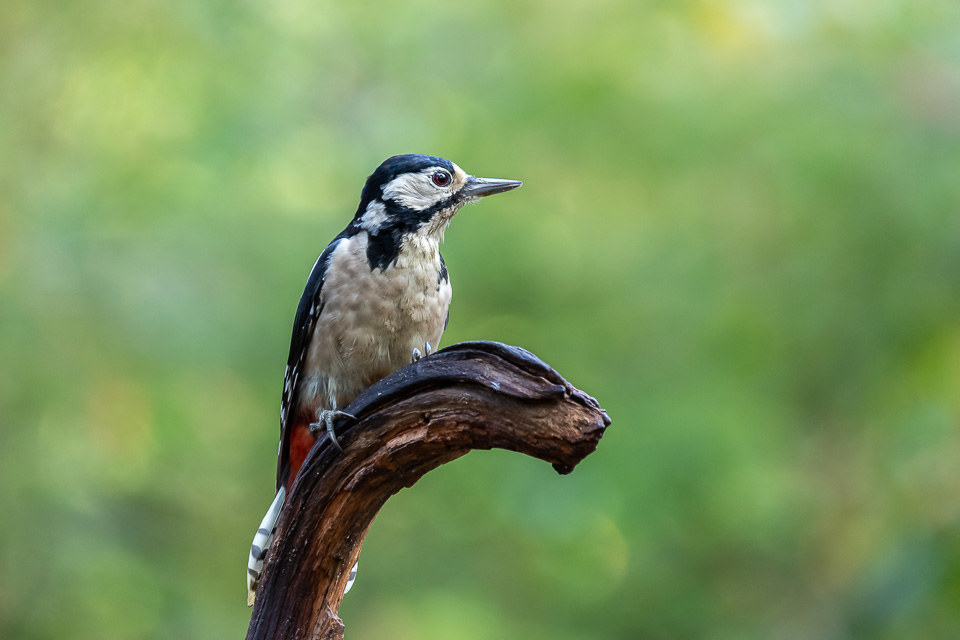
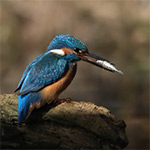
Bird hide photography is a very popular form of photography. On various forums and social media, you see the most beautiful examples passing by. From kingfishers and crossbills to imposing buzzards, sparrowhawks and goshawks, and the little squirrel.
But what does it involve and what do you need to take into account? I gradually got into this branch of photography myself. By now, I use a bird hide a great many times a year, whether paid for or rented. A very logical choice for me as a photographer with a great love of landscapes, animals and nature.
Types of hide
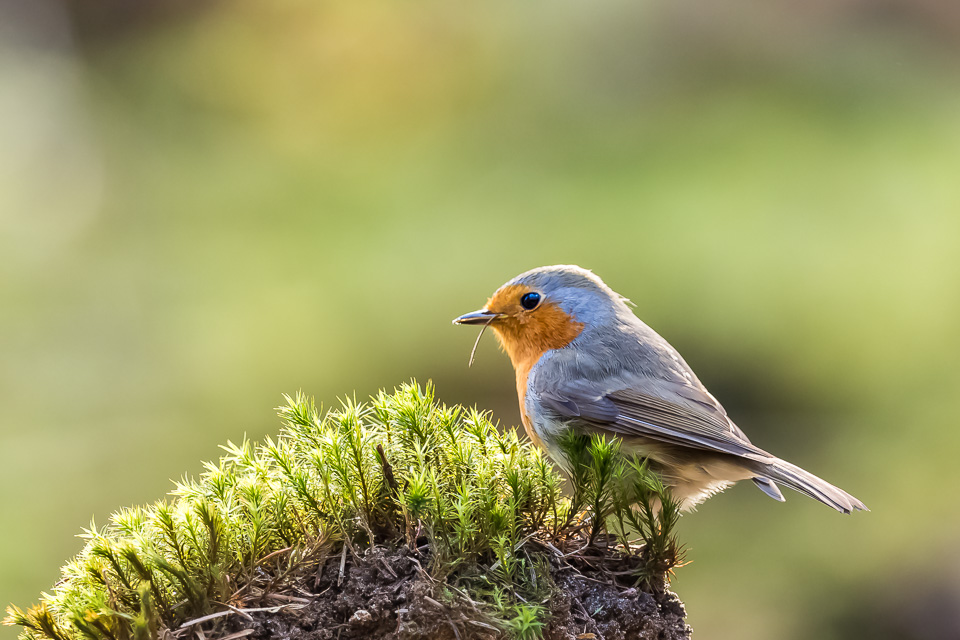
Broadly speaking, you can divide bird hides into two categories, free-access hides and paid hides, which you rent. As well as birds, you can often see other animals at hides. Voles and squirrels are also frequent visitors.
But it can also happen that a roe deer or wild boar appears, depending on the surroundings of the hide. Some hides are by the water, some are in the middle of the forest and others are on the edge of a field. It is clear that this produces completely different animals in front of the lens.
I started by photographing birds from free-access hides. You can find a useful overview of public hides in the Netherlands and Belgium on the Vogelkijkhut.nl website.
If you want to rent a bird hide, you can find various options online and on Facebook. The Vogelhutfotografie website provides a good and detailed overview, with reviews too.
The owners of the hide often have their own website, with lots of information, such as the species you can see there. In some cases, there is also an online calendar and/or an email address where you can book.
The size of a hide varies from one person to often as many as four, and the price varies too, sometimes depending on the number of people booking the hide. Expect prices from around 25 euros per person.
There are bird hides where birds of prey are seen almost every day, or one where you can only see kingfishers. There is a hide where you can stay overnight, with lighting on the setup, or where you can spend the night and enjoy the beautiful light on waterfowl during sunset and sunrise.
The different hides often offer a great variety of birds, so check carefully beforehand what you can expect to see there. The time of year also determines whether certain species come to the hide.
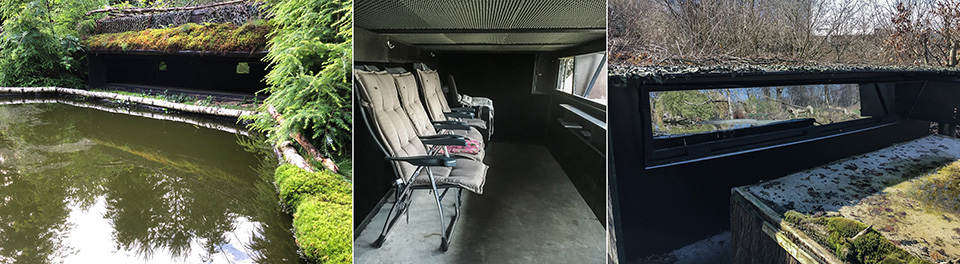
You photograph through one-way glass or through a hole in the front of the hide. One-way glass lets in slightly less light, but birds are less likely to see you when you move. That is why it is wise not to move your lens too quickly when photographing through a hole in the front.
Birds are lured in
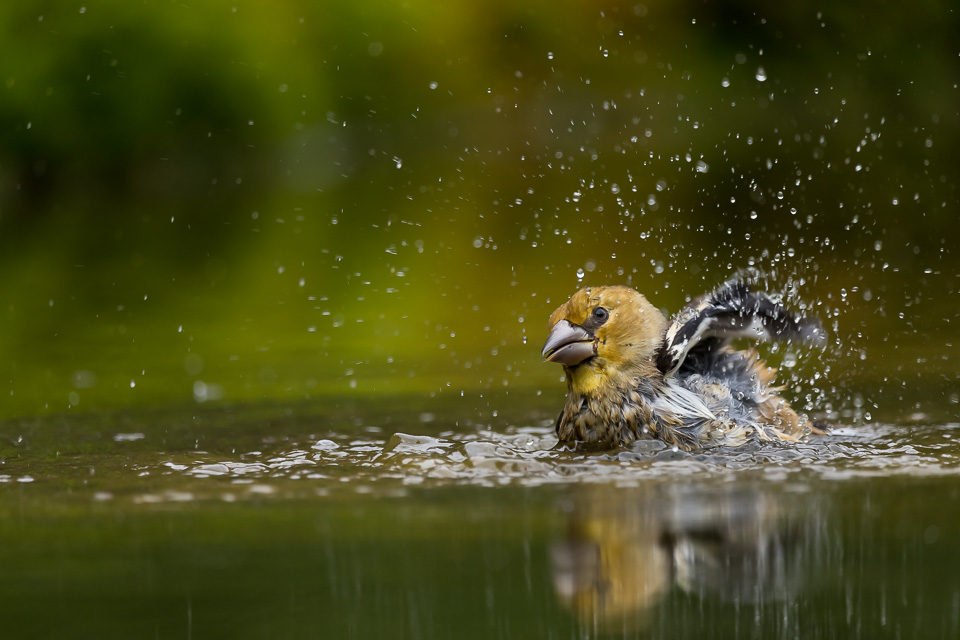
Without wanting to start a discussion about feeding or luring animals, this is simply a fact. First of all, there is the water in the pond, which is at eye level in front of most paid hides. Because of the low position in the hide, you are nicely at eye level with the birds themselves. Birds are attracted to water for drinking or taking a cooling bath.
There is also food in the form of nuts and shelled sunflower seeds, and often a prey animal for birds of prey.
I have no problem with this myself. The birds that come into my garden also get seeds and a treat such as special peanut butter, with less salt. And of course, a bird hide is still nature… No guarantees can be given, it is up to the animals themselves whether they come to eat, drink or bathe.
What do you need?
For a good photo, you need a 'sturdy' telephoto lens. Think at least 200 mm, but preferably 400 mm or more on a full-frame camera.
It goes without saying that a crop camera, with a factor of 1.4 to 1.6, or an extender will extend your reach somewhat, increasing the chances of taking a good portrait photo. You also need a camera with a so-called burst mode, for continuous shooting. Birds are very active and fast.
Take lots of photos in short series and choose the best ones later. I prefer to photograph in Av mode, aperture priority, making sure that the shutter speed is high enough. The blurrier the background, the more your subject stands out from it, which is why I prefer Av mode.
And the earlier in the morning you can be in the hide, the more beautiful and softer the light will be. The same naturally applies to the end of the afternoon. Of course, you can also play with the shutter speed to capture movement in the wings, for example.
Take some test photos in the hide right at the start to check your settings. Bear in mind that the light can vary enormously over the course of the day.
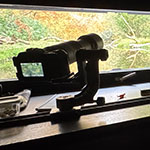
In free public hides, a beanbag or tripod, possibly with a gimbal head, is useful. Many paid hides now have extensive facilities. Some even offer a slider system with a gimbal head, or a ground tripod, so you only need to bring your own gimbal head or tripod head.
Some paid hides are very luxurious, with heating, electricity, Wi-Fi or even a toilet. You also need a lot of patience, in other words, plenty of staying power. Speak quietly, or preferably remain completely silent, wear dark clothing and bring food and drink. It is wise to leave the hide as little as possible for a toilet break.
Breathtaking
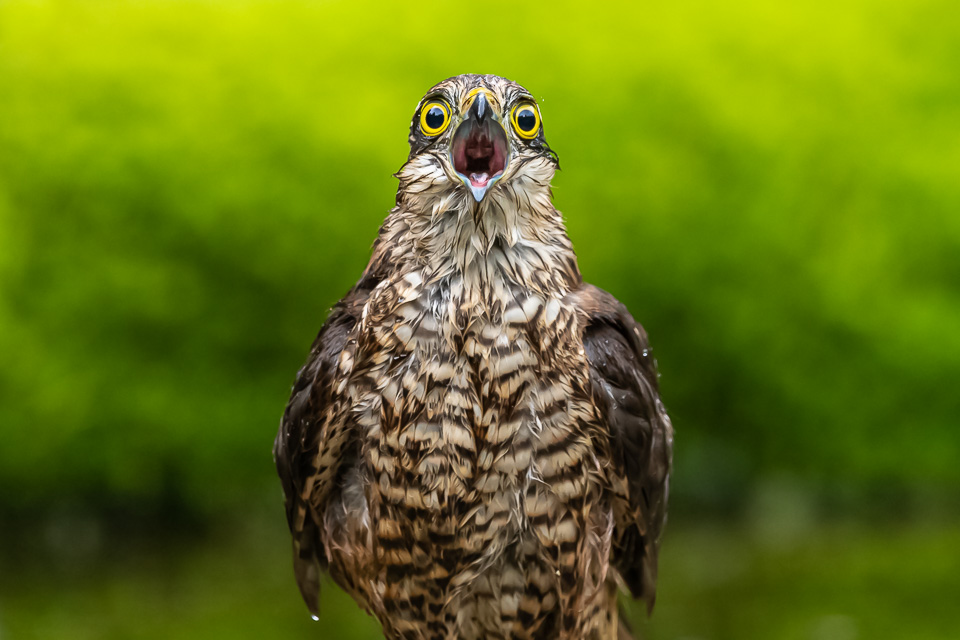
I am a great fan of birds of prey myself. I still find it incredibly beautiful and impressive when a buzzard, sparrowhawk or goshawk suddenly lands in front of the hide. Especially when they come closer to drink or bathe, you hold your breath.
Strangely enough, most birds of prey are quite 'used to' the sound of the camera clicking, but staying calm and moving as little as possible gives you the best chance of taking good photos. Many birds of prey land in front of the hide and first calmly check whether it is safe to stay.
As you feel the adrenaline rushing through your body, you keep taking short series of all kinds of moments. Be particularly alert when they are bathing or flying away, for example. If you spot the bird in a tree in front of the hide early enough, you can make a beautiful series of images, such as the landing.
I still really enjoy it when they come so close and you can observe the behaviour of such an impressive bird so beautifully. When you are sitting at home in front of the computer, you start sorting through all the images.
And then I often have a second moment of enjoyment, looking at the successful images on the large screen.
Bird photography course
If you want to learn more about photographing birds well, the bird photography course on Photofacts Academy might be for you.
» Discover what you learn in the Bird Photography course
You can follow this and other courses for two weeks with a free trial membership.
About the author
Roland is een actief amateur fotograaf met grote voorliefde voor natuur, dier en landschap. Hij vindt het interessant om bij te leren en zich niet de focussen op één vorm van fotografie. Samen met zijn vrouw is hij veel op pad om te fotograferen en zijn ze lid van een actieve fotoclub. Het is heerlijk om buiten te zijn en daarna thuis foto’s te selecteren, bewerken en te plaatsen op Instagram of hun eigen website.
You might also like
-
 A day in a photography hide
by Erik Nevels
-
 Bird photography often requires a lot of patience
by Erik Nevels
-
 Photographing birds? Practise first.
by Nando Harmsen
-
 A day photographing from a photography hide
by Nando Harmsen
-
 Accessibility at workshops and locations for people with disabilities
by Juliette Gribnau

13 comments
-
 Peter Reinders wrote on Thursday 10 October 2019 at 17:29 | reply
Beautiful, inspiring story that I read with pleasure. Time to visit a hide soon.
Translated from Dutch. -

 Roland wrote on Friday 11 October 2019 at 08:02
| reply
Thank you Peter ! Nice to hear. There is at least plenty of choice.
Translated from Dutch. -
 Lex wrote on Friday 11 October 2019 at 14:07 | reply
Nice story Roland and it really resonates with my experiences.
Translated from Dutch.
Not everyone can happily wander around in nature for hours. Some people are more limited and for them too, photo hides are an ideal solution. And it always remains a surprise what you take home after your shoot. -
Roland wrote on Friday 11 October 2019 at 16:02
| reply
You certainly make a good point Alex ! Wandering around in nature isn't for everyone. And a bird hide certainly offers good opportunities in that case. Thanks for your nice response !
Translated from Dutch. -
 Josée wrote on Tuesday 15 October 2019 at 13:06 | reply
Very interesting article, and I completely agree with lex, I didn't know that those bird hides exist and can be rented.
Translated from Dutch. -
 Arjen wrote on Tuesday 15 October 2019 at 14:14 | reply
Don't bet all your horses on 1 visit.. as is already partly touched upon: nature offers no guarantees. I've now rented a hide about 5 times and the last one was specified for a visit from the kingfisher... what do you think? 0.0 kingfisher that day. And I also think this is what makes something like this so beautiful, nature can't be controlled. Looking back, focus especially on what you did see, also sit back every now and then and enjoy the moment.
Translated from Dutch. -
 jos wrote on Tuesday 15 October 2019 at 16:47 | reply
Beautiful photos, very inspiring. I have now bought a full-frame Canon system camera, Canon Rp. Now I don't know which lens to buy. Also because I like walking with my camera to take some photo`s. I am really hesitating between 2 lenses, the Canon 100-400 5.6 II. Or the Sigma 150-600 Sports. Can you also photograph handheld with both? Who can help me make up my mind?
Translated from Dutch. -
 Michelle Peeters wrote on Tuesday 15 October 2019 at 16:52
| reply
@Jos: at 400-600mm it is difficult to still photograph handheld, even with image stabilization. I also have a full-frame camera with 2 lenses: one of 24-70mm and a 70-200mm (with 2.0 extender), both fast (f/2.8 throughout the entire range). And besides that a separate macro lens (100mm). I can get by quite well with this, also in bird hides. You do have to change lenses occasionally, though. I can imagine that you also sometimes want to photograph expansive landscapes and then starting at 100mm is already quite difficult....
Translated from Dutch. -
Roland wrote on Tuesday 15 October 2019 at 19:30
| reply
@Arjen, thanks for your response. You are absolutely right, you should certainly not forget to enjoy the animals and the behavior you see, for me it is definitely a big part of such a day at a bird hide.
Translated from Dutch.
@Jos, thanks for your compliment and nice that it provides inspiration.
The Sigma 150-600 Sports version is quite heavy to carry around with you and shoot handheld for a whole day. I have the Contemporary version (1.9 kilos) myself on a full-frame camera, which I am very happy with. Quite easy to carry with a good strap too.
The 100-400 II is definitely worth considering, it is also perfectly fine in terms of weight for shooting handheld and walking around with.
Specifically for bird photography, the principle is 'the more millimeters, the better'. -
 Ray wrote on Tuesday 15 October 2019 at 20:35 | reply
This year I also started bird photography from a bird hide. I often went into the polder or to a "public" hide. These are often very busy, which means the result is often less than expected. In February I visited a paid bird hide with 2 photography friends. From that moment on I became enthusiastic. The result was great and especially also the photo post-processing, through which you relive the day, going through the photos, etc. On average, we go to a paid hide 1X p/m and the fun thing is (when you look back) that you become increasingly critical and that the results keep getting better. We compare and give each other tips and additionally you also have a pleasant day. If you show the results to the people around you, they are also enthusiastic about the result and everything you do and listen to your story and ask more about nature and so there is also more interest among them in nature/birds. Next year I am going abroad for a week to photograph birds, for this I have already been saving for a year. I realise that this is not for everyone. I am also going to make a yearbook with my best bird(nature) photos from 2019.
Translated from Dutch.
In short, a very nice hobby to engage in, through which you also get to know many other people/photographers. -
Roland wrote on Tuesday 15 October 2019 at 21:47
| reply
@Josée, thanks for your nice comment, now that you know it exists you could take a look to see if it's something for you
Translated from Dutch. -
Roland wrote on Tuesday 15 October 2019 at 21:50
| reply
@Ray, nice to read that you enjoy it so much and even go abroad for it.
Translated from Dutch. -
Lex wrote on Tuesday 15 October 2019 at 22:16 | reply
@Jos,
Translated from Dutch.
I have Nikon FF and APS-C and use a 200-500 Nikon on them. The lens is almost a kilo lighter than the 150-600 S and that is more comfortable to walk with. I mainly shoot birds with the APS-C because of the reach and that is more than doable (effectively comes down to 750mm on FF). You can always get a monopod.
I think that with 400mm on FF you will very often find yourself lacking reach, especially if you go for a walk. In hides you may have more luck because the little feet come closer. On the other hand, it is nice to have everything from one brand (Canon).
Good luck deciding and photographing
Have your say
Please note: Articles older than a week can only be commented on by signed-in visitors.Would you still like to comment? sign in or create a free account.
Become a better photographer every week
A practical photography tip in your inbox every week.
38,981 photography enthusiasts already receive the tips! More about the weekly mail. Or keep up to date via  Facebook.

Elja Trum
Photofacts; everything to do with photography!
Would you like to take better photos and keep up with what is happening in photography? Photofacts publishes articles that teach you something about photography — from a product announcement to a practical shooting tip or a look at a website. Photofacts covers photography every day and is a hobby project of Elja Trum's that got out of hand. The articles are written by a team of volunteer authors. If you would enjoy writing one or more articles for Photofacts, do get in touch.More about PhotofactsPhotofacts is made possible in part by
