

5 tips for photographing the blue moor frog
Thursday 5 April 2018, 16:32 by Michelle Peeters | 6,896 views | 0 commentsThis article was translated from Dutch with the help of AI. Read the original.
On Sunday 25 March, Mari de Bijl from Brabants Landschap organised a moor frog excursion for supporters of Brabants Landschap.
Yvonne Vloemans took part with an enthusiastic group of walkers and photographers. They went looking for the wonderful blue moor frog. This article shares 5 tips for photographing this special natural phenomenon.
After an earlier unsuccessful attempt to spot the blue moor frog, they finally got lucky. The species is on the red list. The moor frog can only be seen for a short time, and the male turns blue during the mating season to impress the females.
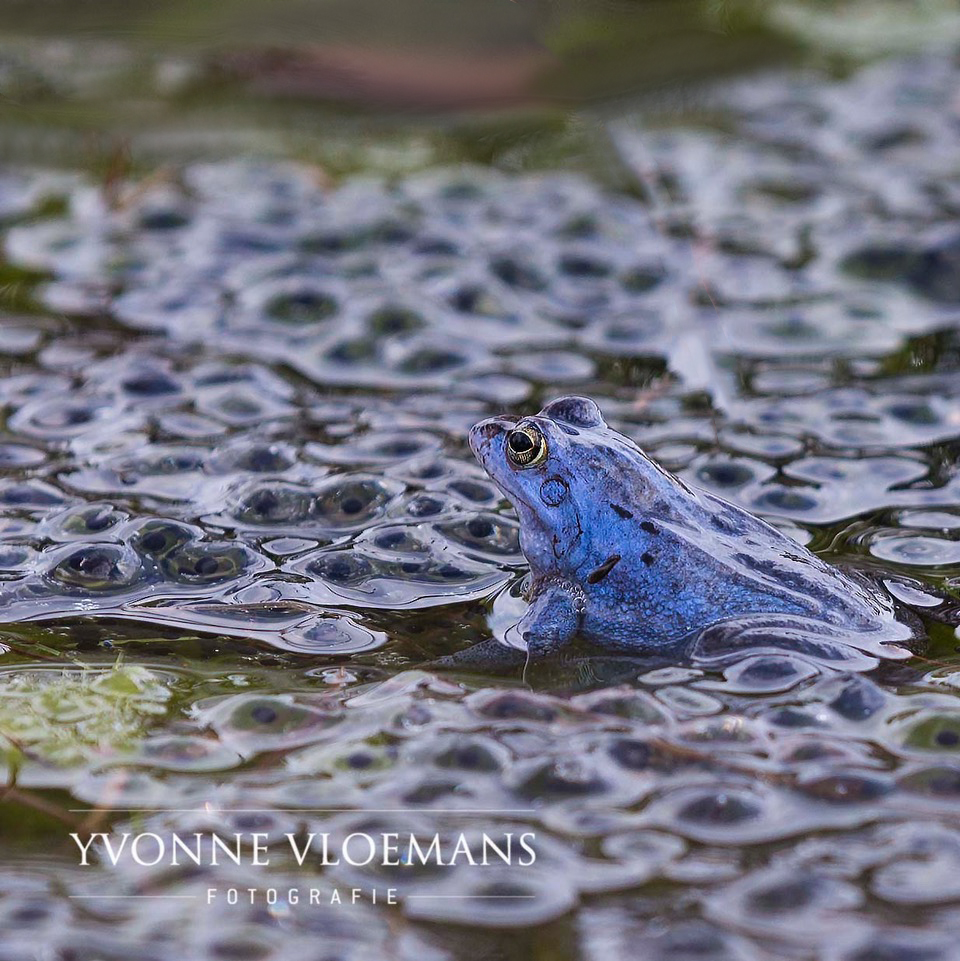
Blue frogs
Nature is wonderful and unpredictable. Some moments are so beautiful and unique that many photographers are eager to capture them. The same goes for the phenomenon of the blue frog. The male moor frog turns bright blue in early spring under the influence of hormones.
After a week of breeding, it turns brown again, just like its female counterparts.
For this excursion, Brabants Landschap kept a close eye on various forums, wildlife observation sites and the website of Ravon, but they had not received a single report of blue frogs yet, even though breeding had already begun.
1. Where and when?
You can find the moor frog in wet woodland and nature areas on sandy and peaty soil. It is normally brown with spots on its back. During the mating season, around the end of March, the male turns blue. The bluer he becomes, the more attractive the female finds him.
You have to be very quick, because the blue colour only lasts for a few days. The moor frog makes a muted, barking sound, so you can hear it from a distance. However, because it is so shy, it is difficult to spot. They also do not all turn equally blue every year.
2. Prepare well
Good preparation is most of the work and is very important. You have to find the creatures first. So keep an eye on forums or check Waarneming.nl. Study the behaviour of the moor frog and find out when they are active.
Do not head out early in the morning, as the frogs are not active yet. They are most active when it is sunny and warm. Fine spring days are therefore perfect. Preferably wear waterproof and warm clothing, because the frogs' habitat is wet and boggy.
3. Lens
To capture the blue moor frog properly, you need a fast telephoto zoom lens. With plenty of millimetres, for example a 70-200 millimetre lens. This means you do not have to get close and will not scare the frog away.
A fast lens with a long focal length can of course be very heavy. A tripod that can be positioned low to the ground is very useful in this case. This takes the strain off your arms and makes it easier to settle down in a spot near the animals.
If you do not have one, a beanbag can also help. You can rest your lens on it and keep it nice and stable.
4. Settings
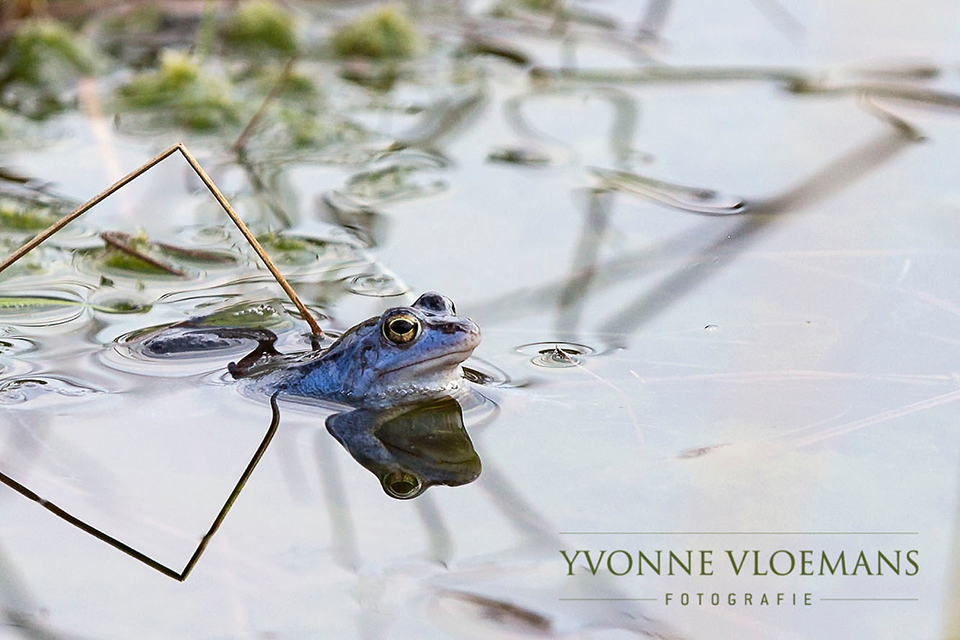
To draw all the attention to the frog, you need a shallow depth of field. So use a wide aperture, a low number, such as f/4.
The moor frogs can quickly disappear when they notice you, so keep your shutter speed on the fast side. To prevent motion blur, a useful rule of thumb is that your focal length should also be your minimum shutter speed to prevent motion blur.
So with a 200 millimetre lens, it is best to shoot at 1/200 of a second or even faster.
Keep your ISO value low, especially as you are photographing during the day. This helps prevent overexposed photos and noise.
5. Patience
Let the frog's unique sound guide you, and you will find where they are. Approach carefully so you do not scare them, as they are shy creatures.
Once you have found a good spot, settle down there and wait for the perfect moment. You will often have to wait a long time for a good opportunity, but patience is a virtue!
More tips?
If you have more or other tips for photographing this special natural phenomenon, do let us know in the comments!
About the author
Michelle Peeters is fotografe en oprichter van DeuxBleus Fotografie. Michelle herkent het bijzondere in het gewone en het gewone in het bijzondere. Ze heeft zich nooit willen specialiseren en is daardoor van alle markten thuis.
You might also like
-
 How do you photograph tree frogs?
by Erik Nevels
-
 Capturing the Blue Hour with Your Phone
by Elja Trum
-
 Documentary review: Step into the World of Lars van de Goor
by Michelle Peeters
-
 Night photography tip: choose the blue hour
by Nando Harmsen
-
 How blue can the blue hour be?
by Nando Harmsen

0 comments
Be the first to share what you think!
Have your say
Please note: Articles older than a week can only be commented on by signed-in visitors.Would you still like to comment? sign in or create a free account.
Become a better photographer every week
A practical photography tip in your inbox every week.
38,886 photography enthusiasts already receive the tips! More about the weekly mail. Or keep up to date via  Facebook.

Elja Trum
Photofacts; everything to do with photography!
Would you like to take better photos and keep up with what is happening in photography? Photofacts publishes articles that teach you something about photography — from a product announcement to a practical shooting tip or a look at a website. Photofacts covers photography every day and is a hobby project of Elja Trum's that got out of hand. The articles are written by a team of volunteer authors. If you would enjoy writing one or more articles for Photofacts, do get in touch.More about PhotofactsPhotofacts is made possible in part by
