

8 tips for photographing in a zoo
Monday 15 July 2019, 16:32 by Michelle Peeters | 16,708 views | 10 commentsThis article was translated from Dutch with the help of AI. Read the original.
A visit to the zoo is great fun, and the animals are incredibly photogenic too! All those different animals that you can photograph from close range.
But how do you capture them well? If you want to improve your skills as a zoo photographer, the 8 tips below will certainly set you on the right track.
Why would you want to?
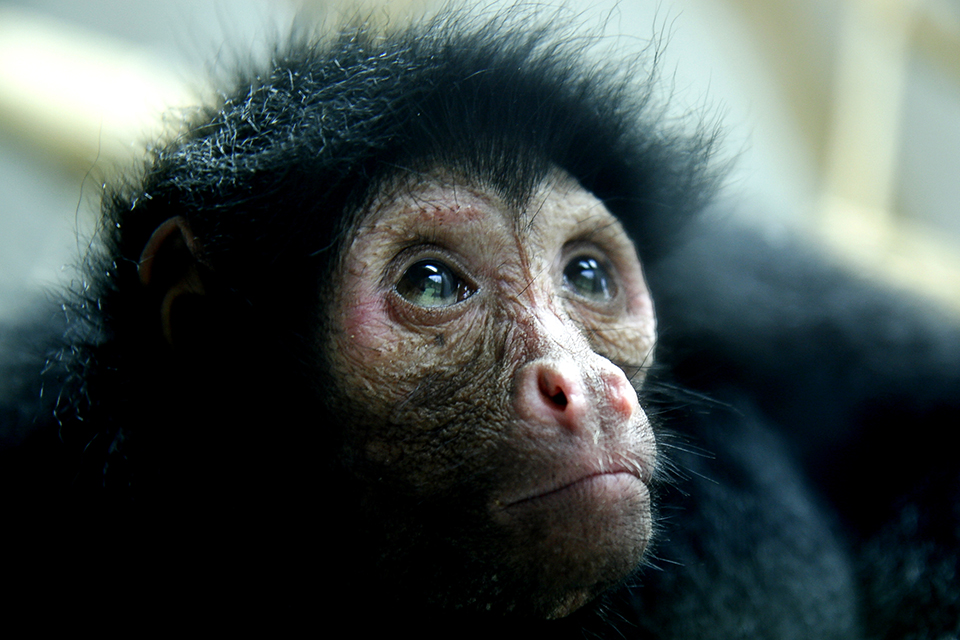
The first question you should probably answer when it comes to zoo photography is why would I want to photograph in a zoo? Zoo photographers are rather controversial.
Some see it as a great opportunity to photograph animals they would otherwise never be able to see up close, while others consider it 'cheating'.
Many photography competitions featuring animal photos ban zoo photos, and passing off an image of an animal photographed in captivity as one taken in the wild is in fact cheating.
But when it comes to personal work, zoos are of course an excellent opportunity to photograph animals you would otherwise never see, let alone up close.
I also suspect that the reason many photographers cringe at the mere idea of zoo photos is that they have seen it go wrong too often. Capturing good zoo photos is a very different kind of challenge from photographing animals in the wild.
Zoo animals wait patiently, they cannot leave of course, and are willing subjects. Creating the image is about dealing with the surroundings and isolating the animals from their not-so-natural habitat.
1. Choose a good zoo
When it comes to animal photography, not all zoos are equal. The species of animals may differ from zoo to zoo, but more importantly, the types of habitats in which the animals live vary considerably.
Safari parks are ideal for obtaining natural-looking animal photos. The disadvantage is that you usually drive through them with a large group of people at the same time. This means that you do not really control either the positions from which you can photograph or the time you can spend on it.
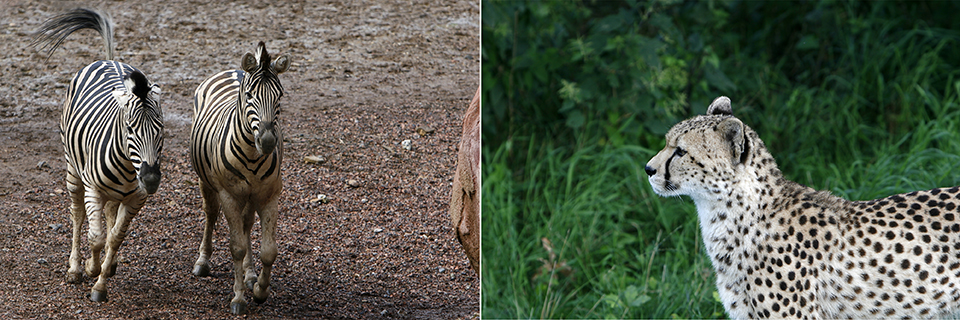
More and more zoos are designed with open habitats, where the enclosure is surrounded by lower walls, so you do not have to deal with bars and/or nets in front of your lens.
The disadvantage of this type of enclosure is that you often look down into the animal enclosure below. This means you only get a top-down view of the animals, which is quite limited and not the most flattering.
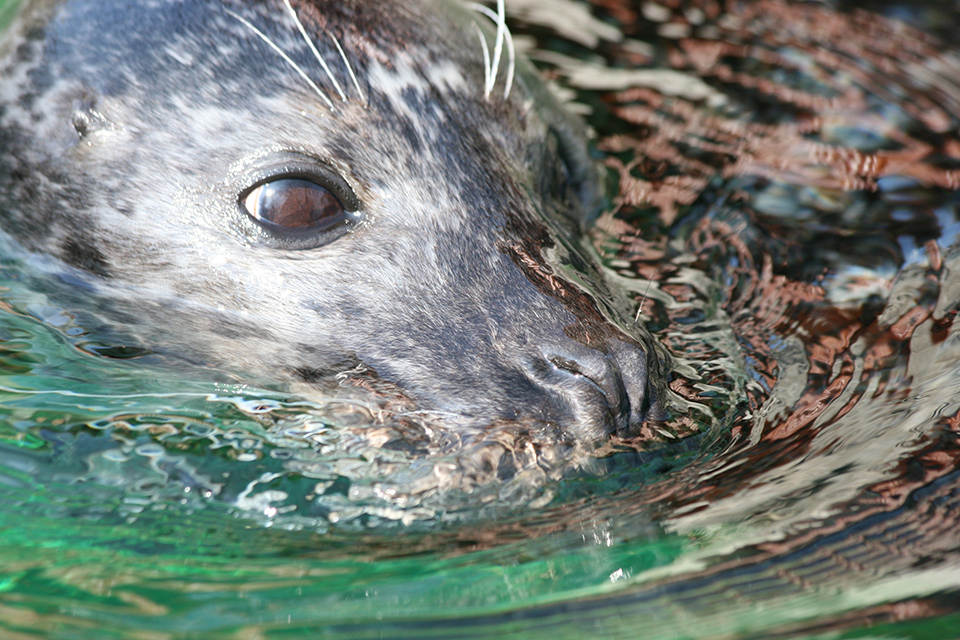
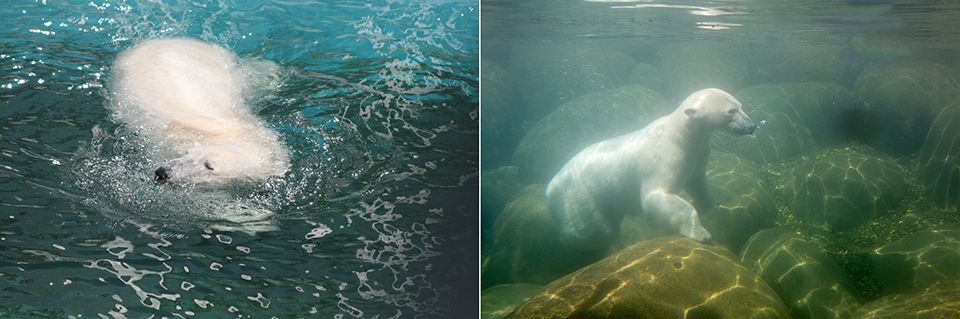
Enclosures surrounded by glass can offer close-up and fairly unobstructed views of animals, although reflections and glare create their own challenges. You can photograph through bars if you use a wide aperture, a small number.
The type of enclosure is important, but so is the kind of habitat the animals live in. Many zoos build enclosures that look little like cages and instead provide a beautiful, natural habitat for the animals to live in.
The better and more natural the habitat in which the animals live, the greater your chances of getting natural-looking 'wildlife' photos.
2. Come at the right time
Just after the zoo opens, the light is at its best and the animals are active because they have just come out of their night enclosures. You also do not have to deal with many visitors yet. Of course, unlike most landscape photography, you are limited by opening and closing times.
If you find yourself stuck, photograph in the sun directly towards the shady areas. In enclosures with good tree cover, overhead light will not be as much of a problem.
Bear in mind that bright sunlight reflecting off bars and fences makes it almost impossible to photograph through them.
Cloudy days are actually the best time to visit a zoo. In heavy cloud, you do not have to deal with harsh, contrasty light, and it is often much quieter too.
Cloudy days also reduce reflections in glass walls, for example. You often also have the advantage of lower temperatures, and in most cases animals are most active when it cools down.
3. Zoom in
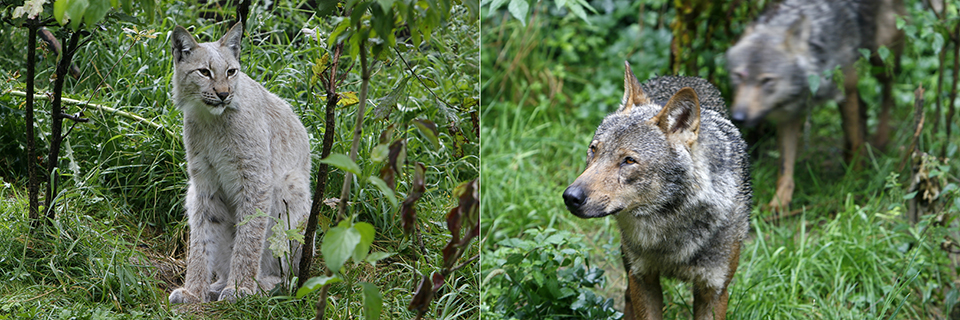
Use a telephoto lens. This lets you bring the animals closer.
You really do not need expensive equipment to take good zoo photos.
In general, the animals do not move very quickly and are in an enclosure that is often designed for an optimal view.
That is why you do not need the same focal lengths as when photographing on the African savannah.
Long focal lengths and a wide aperture, a low number do, however, offer a very clear advantage when photographing animals. These two options allow you to photograph with a shallow depth of field.
4. Watch the background and foreground
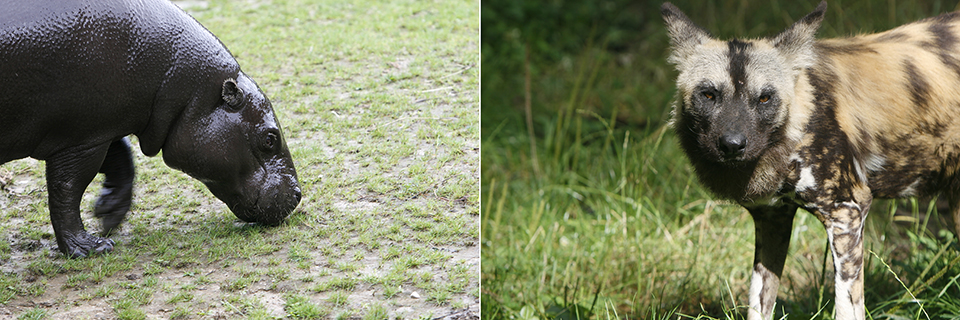
Getting the subject properly in the photo is of course the most important thing. But if there are fences in the background, the photo suddenly becomes much less attractive.
This distracts from your main subject, the animal. It also makes for a better image if you photograph an animal in its natural surroundings rather than with fences around it.
If you are bothered by the bars in front of the animals, know that you can photograph through them. Put your lens hood against the bars so you do not damage your lens. And use the widest possible aperture, a small number. You will see the bars disappear from your photo.
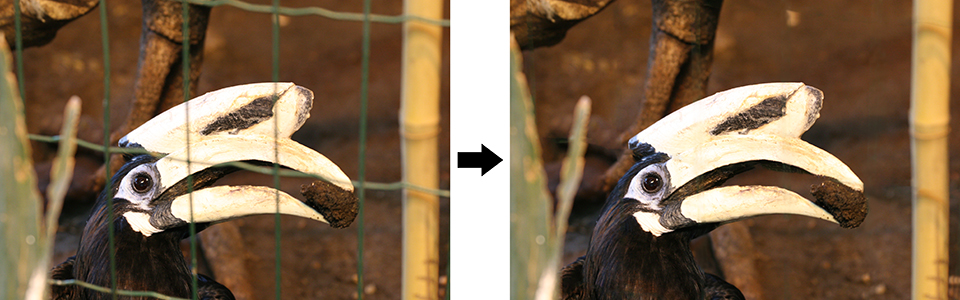
It is important here that the animal is far enough back in the space. When you focus on the animal, the fence then falls outside the focus area. The shallower the depth of field, the shorter the distance between the animal and the fence can be without the fence or bars appearing sharp in the image.
If the animal is resting right against the front of the cage, this obviously will not work at all, but I can usually make wire mesh, bars or other fencing disappear.
Finally, it is of course also important to keep a close eye on your shooting angle or perspective to get natural-looking zoo photos. Most animal enclosures offer a variety of viewing positions.
Often, a slightly changed position, for example a little further to the side, makes the difference between a good, natural photo and one that looks like an 'animal in captivity'. Moving your position up or down can also make a big difference.
You can often photograph the animal with grass or sky as the background instead of a fence. This is another reason why using a zoom lens is an advantage.
And sometimes tight cropping really is the only way to prevent the photo from obviously looking as though it was taken in a zoo.
5. Shallow depth of field
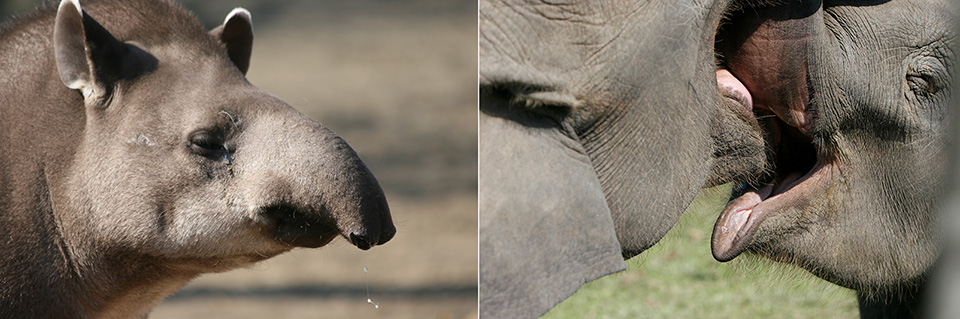
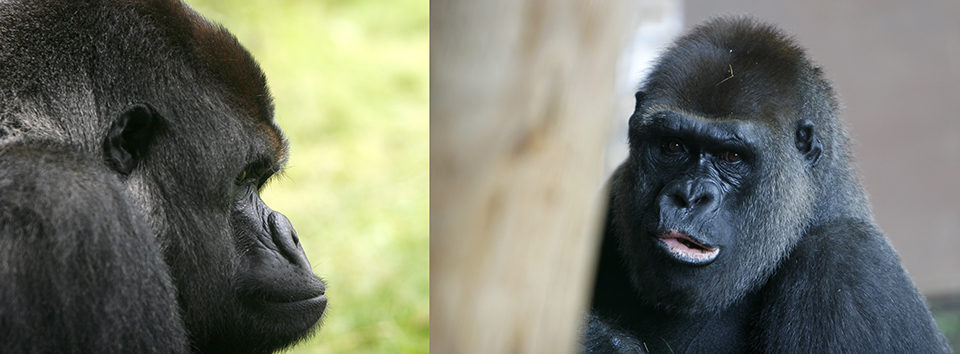
Use a low aperture number, a wide aperture, to get a blurred background. This makes the animal stand out well from the photo.
Because the background becomes blurred, you can nicely hide an enclosure that may be less than realistic. A shallow depth of field is also important because it allows you to photograph an animal straight through the fence or enclosure.
When an animal is surrounded by screens, nets or bars, use your longest lens and widest aperture and focus on the animal. If the fencing is far enough outside the camera's focus zone, it becomes "invisible" in your image.
Both the focal length and the aperture of your lens affect the depth of field.
The longer the focal length and the wider the aperture, the shallower the depth of field. You can consult an online depth of field calculator to get an idea of the influence of focal length, aperture and background distance on depth of field.
The shallower your depth of field, the more likely you are to keep the surroundings out of focus while the animal itself is sharp.
6. Feeding time
Check the times when the animals are fed in advance. At those moments, the best action photos are there for the taking.
Another thing to look into is what kind of 'behind the scenes' tours and experiences your zoo may offer. Often, this is possible for an additional fee.
The experience and a direct encounter, plus the opportunity to photograph your chosen animal, are often well worth the extra cost. One thing to note is that there is sometimes a ban on using the photos for commercial purposes.
7. Observe behaviour, capture movement
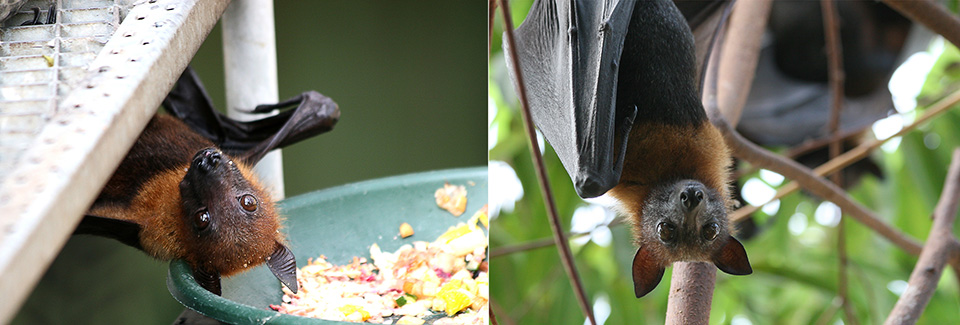
Have a good look around before you start photographing. Take in the animal's area properly. Look for the best place to stand for a photo. Study the behaviour and wait for movement.
Animals also tend to be more active when the weather is a little cooler. In the middle of the day on a sunny summer day at 30 degrees, you will probably only get images of animals sleeping in the sun. On a cloudy day, they will be much more active.
Warmer winter days are also great for photographing active animals. They are much more likely to display interesting activities and/or behaviour, which is of course fun to photograph.
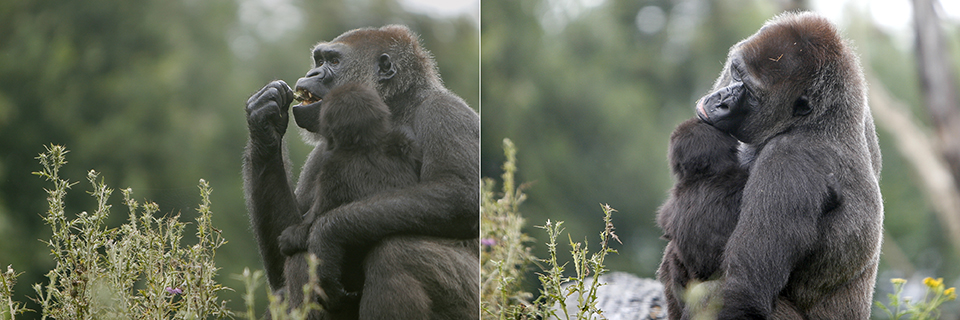
If you are just starting out with zoo photography, simply getting a good portrait of an animal is a challenge. Trying to find animals sitting in good light, with a good available angle from which to photograph them that eliminates any indication that they are in a cage.
And finding a way to photograph them through bars, screens, glass or other obstacles as well is already a lot of work! But once you have mastered animal portrait photography skills, it is time to start taking photos that properly reflect the animal's behaviour.
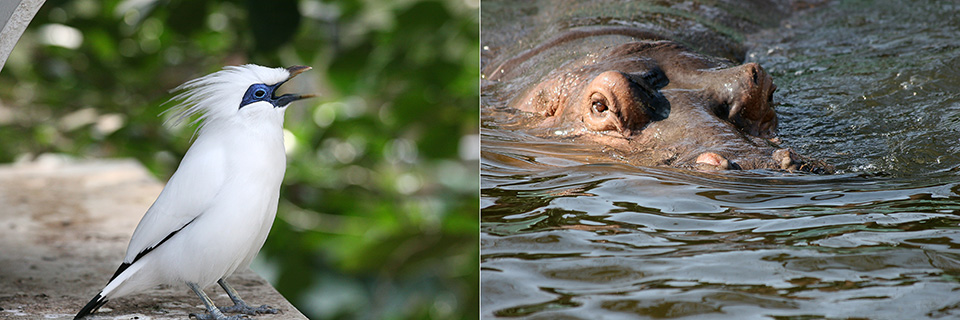
Animal behaviour is not limited to movement, although movement is already great, but also includes the right tilt of the head, the position of the body or wings, anything that makes an image more than just a close-up of an animal's face.
Flying bird of prey shows can be a good place to start capturing behaviour. The secret to capturing animal behaviour is patience. Find an animal that is well positioned, in terms of light and possible perspectives, in a way that works for a good photo, and wait patiently for the moment.
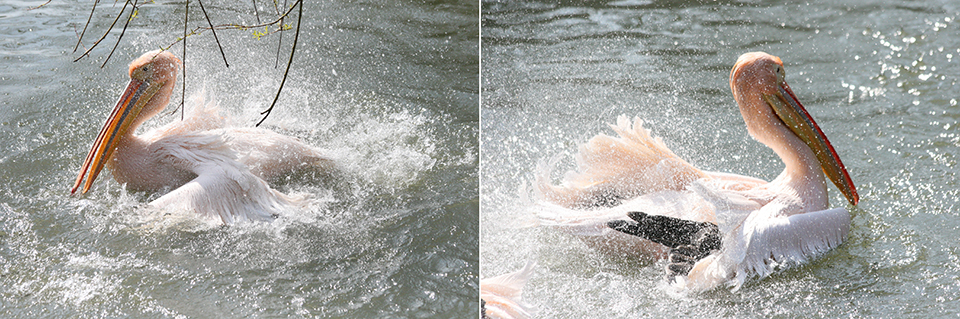
8. No flash!
Never use flash through a window. You disturb the animals and your flash will not reach your subject anyway, because it scatters across the glass.
Many animal enclosures are enclosed in glass, allowing you to see the animal up close from a natural position. The disadvantage of glass enclosures is that photographing through glass may be more difficult than it initially appears.
If the glass is particularly thick or dirty, your camera may struggle to focus using autofocus, and you may need to focus manually on the animal. Using the long focal length and wide aperture mentioned earlier can also make dirty glass blur.
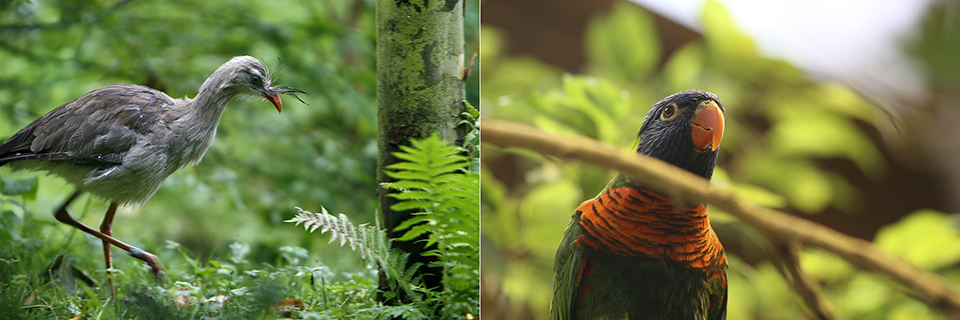
But the biggest challenge with glass is that it introduces reflections. You can use a polarising filter to reduce these reflections. When photographing through glass, wear ordinary, dark clothing.
A dark T-shirt absorbs light instead of reflecting it back onto the glass in front of you, and it also considerably reduces reflections and glare.
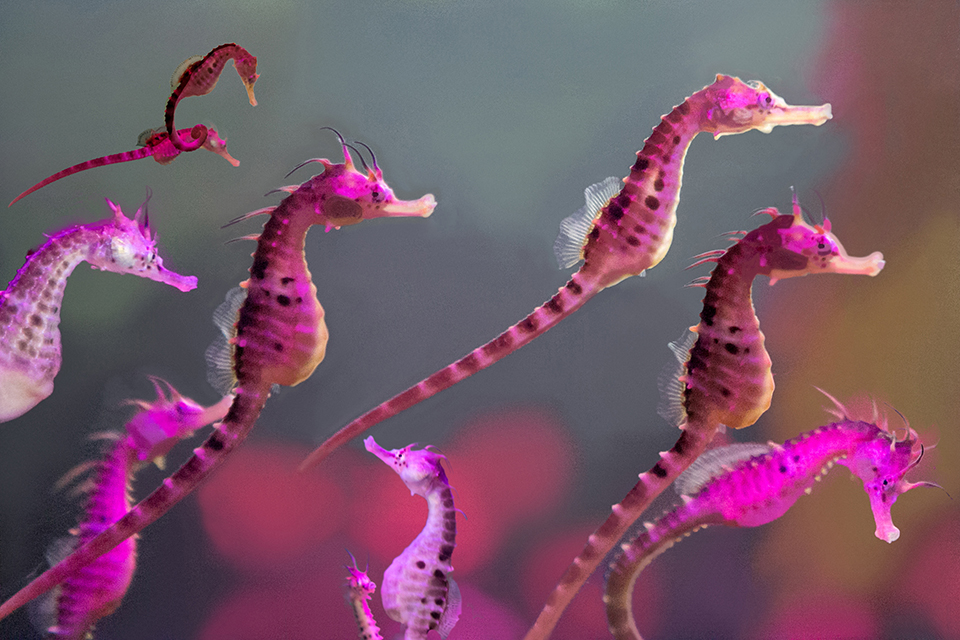
You cannot control what everyone wears, but if you wait until the girl in the bright pink T-shirt has gone past, your dark clothing will not introduce new glare and reflections into your images. These tips for photographing through glass also work well in aquariums.
Personal experiences and/or tips
Whatever your subject, style or choice of equipment, it is always fun and educational to visit your local zoo and see whether you can come home with some beautiful and unique photos this summer.
What do you think? Is the zoo a place where you enjoy taking photos, or somewhere to avoid as a photographer? We would love to hear about your experiences in this area in the comments. Additional tips are welcome, of course!
About the author
Michelle Peeters is fotografe en oprichter van DeuxBleus Fotografie. Michelle herkent het bijzondere in het gewone en het gewone in het bijzondere. Ze heeft zich nooit willen specialiseren en is daardoor van alle markten thuis.
You might also like
-
 Are you a species hunter or a wildlife photographer?
by Nando Harmsen
-
 Wildlife photography and switching to mirrorless
by Evert Doorn
-
 A bridge camera for wildlife photography?
by Rob Dijkstra
-
 7 tips: Wildlife photography for beginners
by Rob Dijkstra
-
 7 Tips for Unique Wildlife Photos
by Michelle Peeters

10 comments
-
 Ien de Rooij wrote on Tuesday 16 July 2019 at 10:59 | reply
I am a passionate zoo photographer and indeed always hear the aforementioned comments. Unfortunately, I don't have the money to go on a 'real' photo safari in Africa, so I am very happy with what I can do. I also want to mention the bird hide photographers who nail prey to a branch to make sure there is a bird sitting in front of the lens for a nice photo and then call that nature photography.
Translated from Dutch. -
 guest wrote on Tuesday 16 July 2019 at 15:21 | reply
as long as everyone enjoys their way of photographing, that's fine, right? one person travels for it, another may not be able to, nothing wrong with that, enjoy your hobby
Translated from Dutch. -

 Michelle Peeters wrote on Tuesday 16 July 2019 at 15:38
| reply
@Ien and guest: the point is that at a zoo it's also possible to take photos in such a way that it looks like they were taken in the wild. That's the fun challenge!
Translated from Dutch. -
Michelle Peeters wrote on Tuesday 16 July 2019 at 15:46
| reply
Robert Vogels was at the zoo to take photos some time ago too:
Translated from Dutch.
Even a monkey head that wanted to look back to see if he looked good in it. Lol,....and you can't stage that. And the tapir... found my belt yummy yummy....

-
 Fredero Redbarn wrote on Tuesday 16 July 2019 at 18:40 | reply
There is nothing wrong with photographing animals in a zoo. If the photos are also nice, you have twice the fun. Photography is a hobby and should remain that way. I am a beginner and in a zoo I can gain a lot of experience. I just do my own thing and photograph whatever I like and that is the point, isn't it.
Translated from Dutch. -
Michelle Peeters wrote on Tuesday 16 July 2019 at 18:41
| reply
@Fredero: that's how it is!
Translated from Dutch. -
 Noreen wrote on Tuesday 16 July 2019 at 19:04 | reply
By coincidence, I was at Blijdorp yesterday and managed to take some nice photos, also thanks to the cloudy weather.
Translated from Dutch.
In the aquarium, I still find it difficult. I had a tripod with me, but in the end I wondered why. To get the swimming fish sharply in the frame, you actually need to use a very fast shutter speed. Is it a matter of opening the aperture all the way and using a high ISO to still get a good exposure? -
Michelle Peeters wrote on Tuesday 16 July 2019 at 19:56
| reply
@Noreen: with aquariums, the main challenge is countering glare and reflections. And little fish and/or other animals can indeed move very quickly while it’s often not all that bright either. Try to catch the moment when such a little animal is just sitting/swimming or standing still for a moment. Just like with a ballet dancer, where you try to catch the highest point (also a very brief moment of stillness).
Translated from Dutch. -
 Ton Brosse wrote on Tuesday 16 July 2019 at 21:00 | reply
For many years now, I have regularly visited zoos to take photographs. It is fun and you get the most beautiful pictures. Apart from this, I also photograph in the wild. For example, I took the Vultures and the Black Kite in Spain. The Cormorants and the Red Fox were photographed in the Oostvaardersplassen. The Black-tailed Godwit was photographed in Waterland. With some photos on my website, you can see that they were taken in a zoo, but with many others you cannot. For me, it is about getting the animal well in the picture and, if possible, also showing something of the animal's characteristics or nature. Logically, that is not always possible. I am also not able to travel halfway around the world. So I simply continue visiting zoos and taking photos in the the wild in the countries I visit. Kind regards, Ton
Translated from Dutch. -
Michelle Peeters wrote on Tuesday 16 July 2019 at 21:23
| reply
@Ton: that works fine in a zoo too, as long as it's a nice one (with lots of freedom and entertainment for the animals) and you have plenty of patience and interest in their behavior. At some point something always happens. As if they can feel that you're observing and photographing them!
Translated from Dutch.
Have your say
Please note: Articles older than a week can only be commented on by signed-in visitors.Would you still like to comment? sign in or create a free account.
Become a better photographer every week
A practical photography tip in your inbox every week.
38,937 photography enthusiasts already receive the tips! More about the weekly mail. Or keep up to date via  Facebook.

Elja Trum
Photofacts; everything to do with photography!
Would you like to take better photos and keep up with what is happening in photography? Photofacts publishes articles that teach you something about photography — from a product announcement to a practical shooting tip or a look at a website. Photofacts covers photography every day and is a hobby project of Elja Trum's that got out of hand. The articles are written by a team of volunteer authors. If you would enjoy writing one or more articles for Photofacts, do get in touch.More about PhotofactsPhotofacts is made possible in part by
