

Report: A Photography Trip to China
Friday 19 July 2019, 15:15 by Manon Sas | 4,759 views | 3 commentsThis article was translated from Dutch with the help of AI. Read the original.
An eleven-day photography trip to China. How much fun is that? And, more importantly, does it stay enjoyable after a few days? Just to be safe, I also pack my drawing supplies, plan B.
But mostly I am looking forward to it: visiting the most beautiful places in Yangshuo, China, with like-minded people.
Under the professional guidance of two photographers, one of whom has been teaching at various photography courses for years. And with well-timed visits to special places.
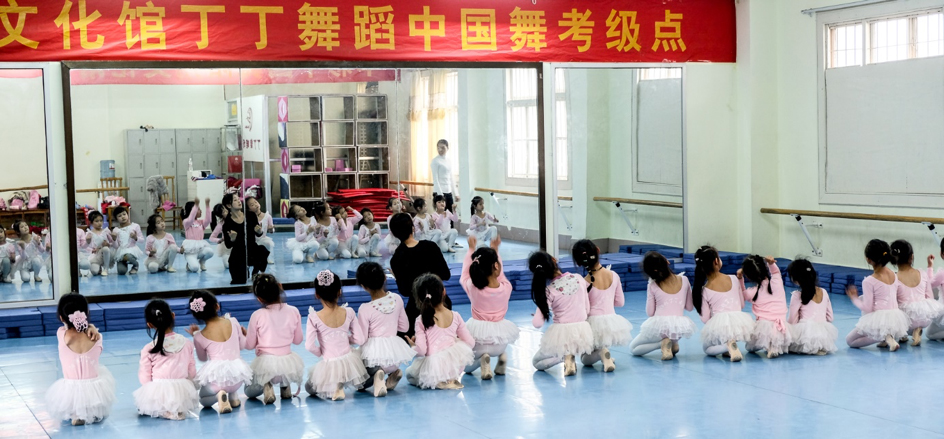
From the local ballet school to the traditional Fuli market, where the food is so fresh that it is still making sounds.
From 'calendar image' to working from a plan
Work from a plan! Kees, one of the two organisers, cannot emphasise this enough during the information meeting before we leave. Work from an idea and work towards it with purpose, then you will come home with the best photos.
Randomly clicking around, which is secretly what I like doing best (freedom!), may sound fun, but it often results in disconnected images with little impact. Especially in the eyes of people who were not there.
The term 'calendar image' comes up: photos that are ten a penny. They may be very beautiful, but completely interchangeable. Photos where the photographer was mainly recording rather than creating.
In short, plenty of reason to start thinking about a concept. And it can be anything: a colour, a shape, an action (elderly people eating), doors left ajar that leave something to the viewer's imagination, and so on. Concrete, abstract or somewhere in between.
The Plan
A few weeks later, I greet my fellow travellers with a big grin. In my head is a wonderful photography concept: sweet & sour.
A reference to a popular way of preparing food in Chinese cuisine, popular with the traditional Dutch takeaway customer as well as in China, and above all a way to show the contrast and connection between the 'sweet' and harsh sides of life in China. Brilliant!
Kill your darlings
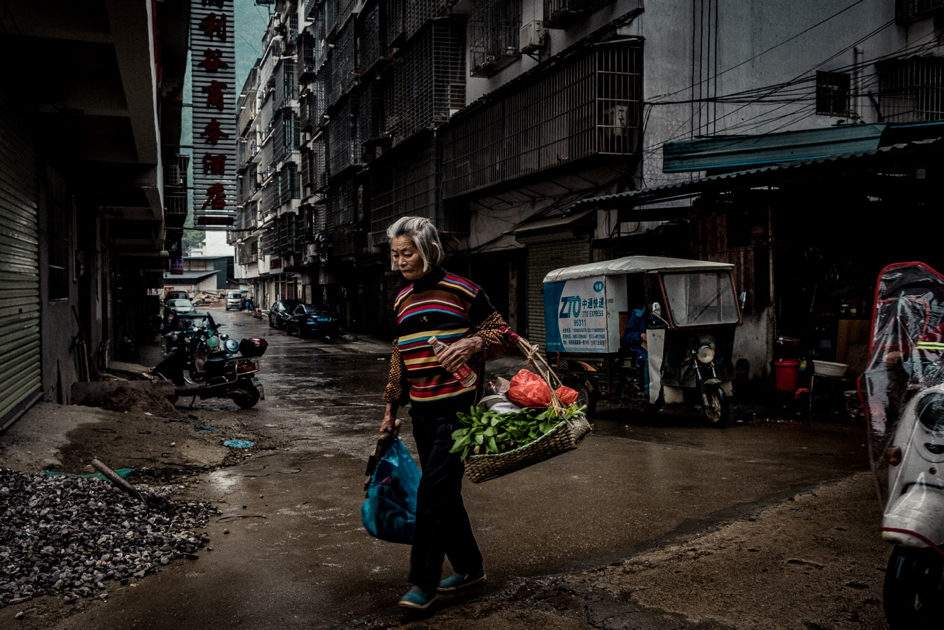
It soon becomes clear that the concept is far too broad. Besides, in my eyes everything is sweet. At the Fuli market, I see the beauty of dangling intestines, displayed pig snouts and the weathered, lived-in faces of the locals.
A raggedy neighbourhood with bars on the windows has an enormous attraction.
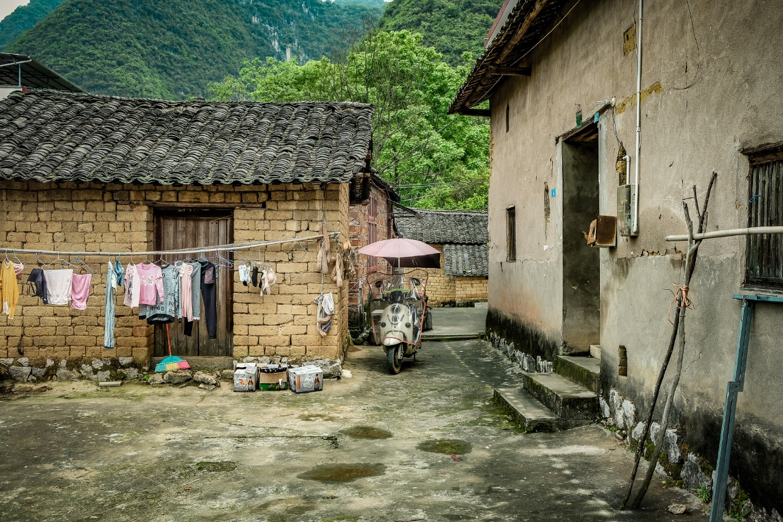
And the glimpses into modest homes, with or without a watchful Mao on the wall, are beautiful. And I have not even mentioned the hospitality of the people. Time and again, people invite us into their homes after we gesture and ask whether we can have a look.
Looking for the best conditions
We spend most of the trip just outside busy Yangshuo. Our guesthouse has a tropical garden, atmospheric outbuildings and red lanterns that show you the way to your room at night.
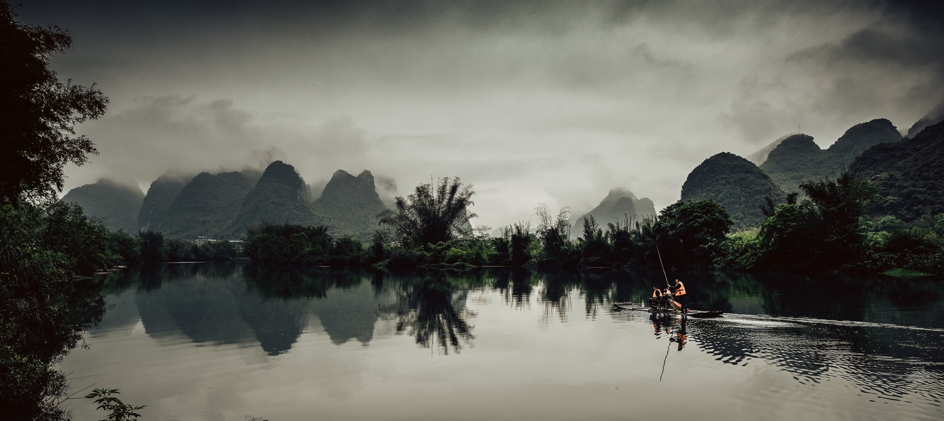
A winding path past farmhouses, rice fields and the village square, where there is always a villager hanging around, leads to the nearby Yulong River.
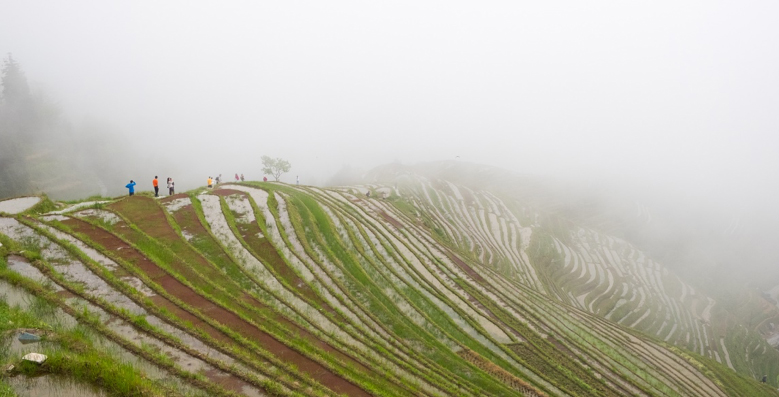
The light, colours and framing by the Karst mountains are breathtakingly beautiful. Ideal for landscape photographers. You can return to the same place several times and take photos at the very best moment.
Yangshuo is also a perfect base for excursions. From rugged mountain peaks to old towns and wide river landscapes.
There is another advantage to staying in one location for longer: it is easier to create series because you become more familiar with a place and look more closely each time. And it is relaxing. You are not living out of a backpack, but really coming home.
Not a photography course
But what is a photography trip like? First of all, the trip I booked is not a photography course. Even so, Annemieke and Kees, the two photographers leading the trip, offer tips and advice if you want them.
This can be anything from sharpening your concept to finding the right settings, experimenting with studio lighting and flash technique, and discussing photos along the way. This gives you the guidance that suits what you need.
And that comes in handy in a group where one participant is putting her brand-new mirrorless camera on manual for the first time, while another heads out with a Hasselblad and has worked as a professional photographer for years.
Another feature of this photography trip is that the research into locations and timing has already been done. Transport is arranged too. That makes travelling relaxed. At the same time, the programme leaves enough room to go your own way and discover 'your own' places, which is at least as much fun.
Turn up your ISO
Meanwhile, the requested and unsolicited advice continues. Sometimes it is a little cryptic. 'Turn up your ISO' is one example. From 100 to 400? Or from 100 to 6400? Over the course of the week, this kind of tip starts to make more sense. I learn by doing, observing and experimenting.
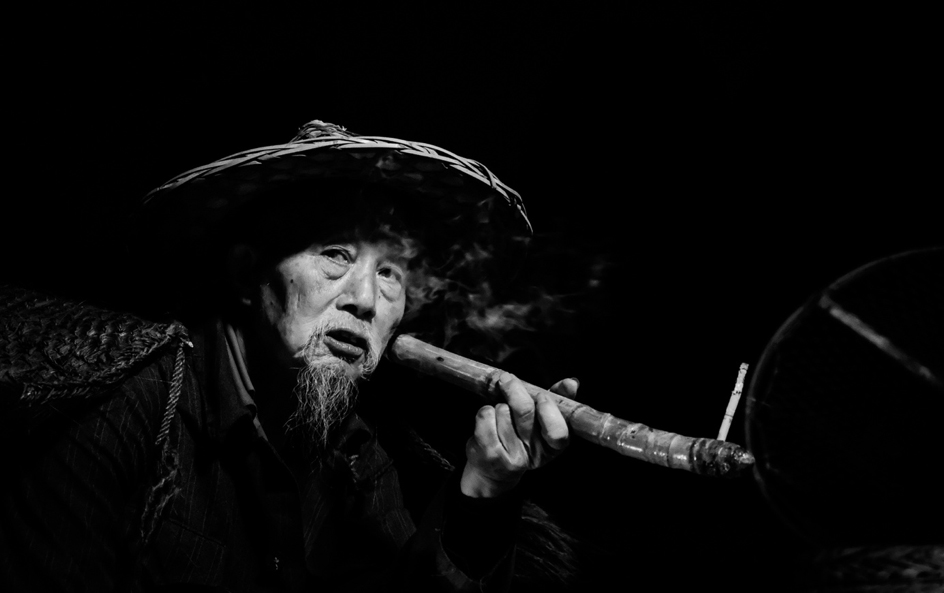
On location and in the 'studio' at our guesthouse, in a characteristic outbuilding where a hotel employee acts as a model during a portrait shoot. A longer shoot takes place on the Li River. As dusk falls, two cormorant fishermen and four cormorants pose for us.
The birds turn their heads away at the crucial moment every time, which is much like photographing children and puppies, and the whole thing is 'staged', but above all it is a special experience that produces cinematic photos.
Looking
It is interesting to see how everyone looks in their own way. The circumstances are more or less the same, apart from where you are, what equipment you have with you and what knowledge you bring. But everyone still looks at and photographs things in their own unique way.
While I photograph the exposed little teeth of a pile, yes, a pile, of dogs in the meat section of the market, a fellow traveller creates a beautiful series of Chinese people, with their often incomplete teeth as the recurring theme.
Even more often, the themes and perspectives differ completely. This makes it extra enjoyable to look at each other's photos and find inspiration.
Once I am home, it turns out that I still have to work quite hard to create series from the individual photos. The importance of working from a plan becomes clear once again.
Making sure that a good photo or series does not just happen to you, but that you organise coincidence and look with purpose. And really, I know perfectly well how to do that. Now I just need to focus. I am already getting excited about another trip!
About the trip
I made the trip with China in Beeld, an organisation that organises photography trips to China several times a year. The trip was led by photographers Annemieke Kok and Kees Rutten.
About the author
Manon Sas verruilde begin 2019 haar iPhone camera voor een systeemcamera. Ze is gek op de schoonheid van lelijkheid en heeft oog voor bijzondere settings - ver weg en dichtbij.
You might also like
-
 Tips for a photo trip. Part 2: the tripod
by Nando Harmsen
-
 I'm Going on a Trip and I'm Taking
by Nando Harmsen
-
 Tips for a photography trip. Part 3: know your camera
by Nando Harmsen
-
 Tips for a photography trip. Part 1: The camera bag
by Nando Harmsen
-
 An inspiring trip to Lofoten, Norway
by Nando Harmsen
-
 5 tips to turn your holiday photos into great travel photos
by Nando Harmsen
3 comments
-
 Frans Smets wrote on Friday 19 July 2019 at 22:16 | reply
Indeed, it seems necessary to have a plan, especially if you're visiting these areas of China for the first time. A number of years ago I was in the area around Chengdu with an unclear plan. In the end, it did work out with a plan. So ... definitely recommended, especially with this guidance.
Translated from Dutch. -
 Robert wrote on Tuesday 23 July 2019 at 11:48 | reply
Beautiful photos Manon and very varied. Photo shooting greetings Robert.
Translated from Dutch. -

 .
Have your say
Please note: Articles older than a week can only be commented on by signed-in visitors.Would you still like to comment? sign in or create a free account.
Become a better photographer every week
A practical photography tip in your inbox every week.
38,982 photography enthusiasts already receive the tips! More about the weekly mail. Or keep up to date via  Facebook.

Elja Trum
Photofacts; everything to do with photography!
Would you like to take better photos and keep up with what is happening in photography? Photofacts publishes articles that teach you something about photography — from a product announcement to a practical shooting tip or a look at a website. Photofacts covers photography every day and is a hobby project of Elja Trum's that got out of hand. The articles are written by a team of volunteer authors. If you would enjoy writing one or more articles for Photofacts, do get in touch.More about PhotofactsPhotofacts is made possible in part by
