

The difference between bokeh and shallow depth of field
Monday 11 October 2021, 16:16 by Nando Harmsen | 8,103 views | 11 commentsThis article was translated from Dutch with the help of AI. Read the original.
Sometimes people talk about shallow depth of field, and at other times about bokeh. If you don't know the difference, you might think they are almost the same thing. But they aren't. They are two different things. At the same time, they are related in some way. More or less.
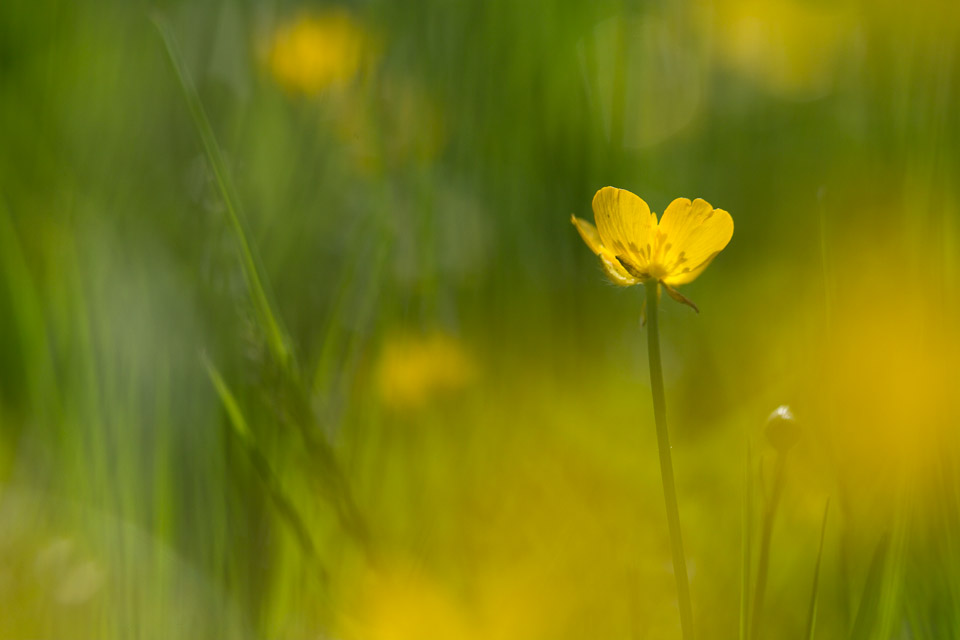
When you set the aperture, you also choose a depth of field. If you've been taking photographs for a while, you'll know that. A narrow aperture gives you a very large depth of field. This is when the aperture number is large.
On the other hand, a wide aperture gives you a very shallow depth of field. The aperture number is then small. This can also serve as a useful reminder. The larger your aperture number, the greater the depth of field.
With a shallow depth of field, the background will become blurred. This can be very extreme with apertures of f/1.8 or f/1.4. Bear in mind that focal length also plays a role in the amount of blur, as does the distance between your lens and the subject, and the distance between the subject and the background.

I don't want to tell you everything about depth of field in this article, but it is clear that the background can become blurred or even completely unrecognisable when you create the right situation. The quality of that blur in the background is called bokeh.
Bokeh is derived from the Japanese word Boke, which can in turn be translated as "blur". Bokeh is very subjective. In other words, what one person likes, another person may not.

The bokeh of a lens can therefore be beautiful or less beautiful, which is a matter of personal opinion. Bokeh will also depend on the chosen depth of field. The bokeh at f/1.8 on an 85mm lens may be beautiful, for example, but less beautiful at f/5.6.
Then there is such a thing as bokeh balls or spheres. These are the round spots that light sources in the background turn into when using a shallow depth of field. This can produce beautiful results, especially in portraits, but it can also lead to surprising results in nature photography.
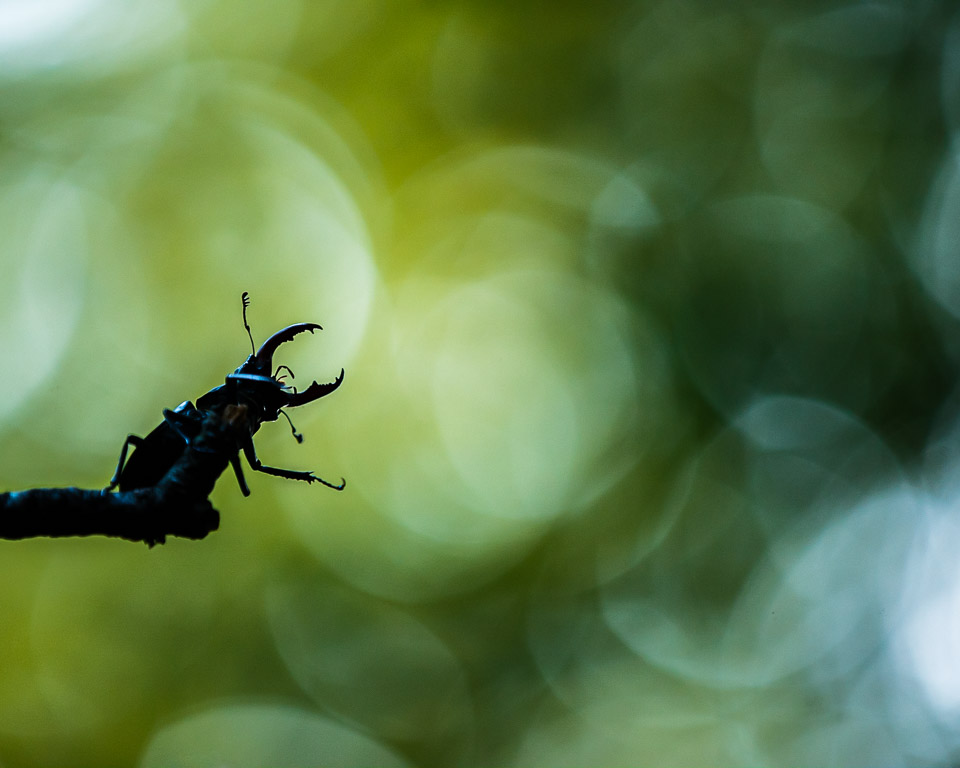
Strictly speaking, bokeh balls is a wrong name, because they are the result of a shallow depth of field. But the shape and appearance of these balls of light in the background can be beautiful or less beautiful. In that case, the bokeh of the photograph is beautiful or less beautiful respectively.
To sum up. You can achieve a shallow depth of field with a lens by choosing a wide aperture. The quality of the blur is then referred to as bokeh. It can be beautiful or less beautiful. In the worst case, you don't like it at all. Ugly bokeh, in other words.
About the author
Nando Harmsen has been photographing for more than 40 years. He specialises in wedding photography and landscape photography. Nando also gives talks, workshops, masterclasses and photo trips, and regularly reviews new and interesting equipment.
You might also like
-
 Night photography tip: using bokeh rings
by Nando Harmsen
-
 Electronic First Curtain Shutter and Bokeh
by Nando Harmsen
-
 Does Lens Blur in Lightroom have any value for photographers?
by Nando Harmsen
-
 Mushrooms with bokeh
by Erik Nevels
-
 A shallow depth of field for landscapes
by Nando Harmsen
-
 Playing with blur
by Laura van der Burgt
11 comments
-
 Marcel van den heuvel wrote on Tuesday 12 October 2021 at 10:53 | reply
hmmm I don't find this explanation clear. (while you usually are
Translated from Dutch. )
)
Boke(h) is therefore a Japanese term for blur.
A small depth of field is then just the same, right?
You can also speak of a beautiful (soft/gradual) blur (of the background), can't you?
Bokeh is perhaps more of a fashionable term? -

 Nando
wrote on Tuesday 12 October 2021 at 11:09
| reply
Nando
wrote on Tuesday 12 October 2021 at 11:09
| reply
@Marcel:
Translated from Dutch.
No, a shallow depth of field is not bokeh. Bokeh is a word for the quality of that blur.
An example. Take an 85mm lens and photograph a subject at f/1.8.
For a lens from one brand, the blur is very beautiful with a wonderfully soft transition. The bokeh is very beautiful.
For a lens from another brand, the blur is harsh with abrupt transitions in blur. The bokeh is not beautiful.
Both have the same depth of field, but the bokeh is very different for both. -
 Guy Ackermans wrote on Tuesday 12 October 2021 at 11:09 | reply
Boke means blur in Japanese. Bokeh is the term used for the quality of the blur and refers to the Japanese 'boke-aji'. The 'h' was added because of the pronunciation. Bokeh is at least a lot shorter than 'the quality of the blur'.
Translated from Dutch. -
Marcel van den heuvel wrote on Tuesday 12 October 2021 at 11:13 | reply
thanks for the further explanation
Translated from Dutch. -
 Paul Lefevere wrote on Tuesday 12 October 2021 at 12:46 | reply
Bokeh can also be seen as the out-of-focus part of the image, which is located outside the subject. It is usually behind the subject, but can also be in front of it (cf. the photo with the buttercup). The quality is the result of the distance between lens and subject, of the aperture opening and of the characteristics of the lens, but also of the crop factor of the camera that lens was mounted on.
Translated from Dutch. -
-
 Matt wrote on Tuesday 12 October 2021 at 13:52 | reply
Bokeh is a property of the lens. Two equivalent lenses (same focal length and aperture) can produce very different bokeh.
Translated from Dutch.
The ultimate in bokeh is produced by so-called STF (Smooth Transition Focus) lenses. The bokeh is very soft and everything flows into each other.
On the other hand, there are Reflex lenses. Because of the way these lenses are constructed, they don't produce bokeh balls, but rings ("donuts" . Reflex lenses are notorious for this ugly "donut bokeh". This is 1 of the reasons why they have fallen out of favor.
 -
 Myl wrote on Tuesday 12 October 2021 at 14:01 | reply
What's in a name ?
Translated from Dutch.
It is the emotion that a photograph evokes for me. For example, I find those light balls in the photo of the girl a failure, distracting in that beautiful portrait and distracting from the subject. I find those of the stag beetle supportive of the subject and very beautiful. the technique you work with is one thing, the emotion that the result evokes, that's what it's about -at least for me,-. But otherwise , nice that it's being talked about ! -
 johan wrote on Tuesday 12 October 2021 at 15:24 | reply
I'm not much wiser after this explanation either ...
Translated from Dutch. -
 Donald Willemsen
wrote on Tuesday 12 October 2021 at 23:22
| reply
Donald Willemsen
wrote on Tuesday 12 October 2021 at 23:22
| reply
That there is a difference between 'bokeh' and 'shallow depth of field' seems logical to me. You could say that bokeh can arise through the use of a shallow depth of field. Nando, you have given a good explanation. Thank you for that. You can have differing opinions about the quality of the bokeh. That is no problem for me. But the quality of the bokeh also strongly depends on the quality of the lens. Among other things, the number of aperture blades in a lens can play a major role in this. The latter is not discussed in the article and is perhaps, according to Nando, 'out of topic'. Nevertheless, in my opinion it is important for obtaining a beautiful (subjectively measured) bokeh.
Translated from Dutch. -
 Smits wrote on Wednesday 13 October 2021 at 19:08 | reply
When the sun comes through the canopy in the forest, you also see all kinds of "bokey" rings being created. Basically the same effect.
Translated from Dutch.
Have your say
Please note: Articles older than a week can only be commented on by signed-in visitors.Would you still like to comment? sign in or create a free account.
Become a better photographer every week
A practical photography tip in your inbox every week.
38,981 photography enthusiasts already receive the tips! More about the weekly mail. Or keep up to date via  Facebook.

Elja Trum
Photofacts; everything to do with photography!
Would you like to take better photos and keep up with what is happening in photography? Photofacts publishes articles that teach you something about photography — from a product announcement to a practical shooting tip or a look at a website. Photofacts covers photography every day and is a hobby project of Elja Trum's that got out of hand. The articles are written by a team of volunteer authors. If you would enjoy writing one or more articles for Photofacts, do get in touch.More about PhotofactsPhotofacts is made possible in part by
