

What is the aperture of a camera?
Friday 6 January 2023, 16:32 by Ava de Groot | 3,880 views | 3 commentsThis article was translated from Dutch with the help of AI. Read the original.
The aperture is an important part of every camera. The aperture is usually located in the lens and determines how much light can enter through it. It also affects depth of field. In this article, I explain what aperture is and how to use it.
What is the aperture?
The aperture is a mechanism used to control the amount of light entering the camera. The aperture consists of a number of blades that work together to form an opening that can be made larger or smaller.
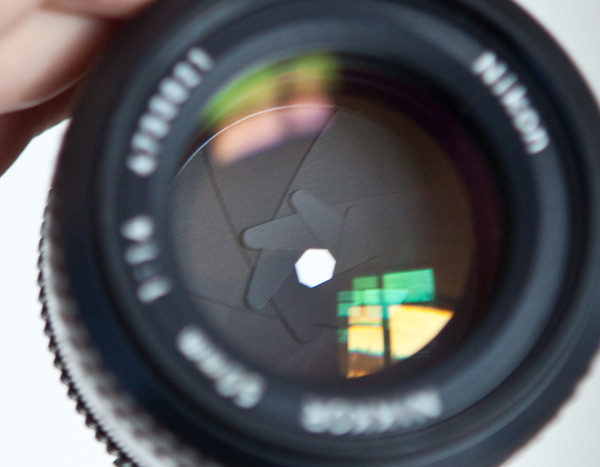
When the aperture is open wider, more light enters, and when the aperture is closed, less light enters.
The aperture is usually indicated by a number called the aperture value. In English, it is usually referred to as aperture or f-stop.
A low aperture value means that the aperture is wide open and lets in more light, while a high aperture value means that the aperture is closed and lets in less light.
For example, if you take a photo with an aperture value of f/2.8, this means that the aperture is wide open and lets in more light than an aperture value of f/16, where the aperture is closed and lets in less light.
Why is the aperture important?
The aperture is important because it determines how much light enters the camera. For example, if you are taking photos in a dark room, you will need to open the aperture wider to let in enough light (low aperture value, large opening).
If you are taking photos in bright sunlight instead, you will need to close the aperture to prevent too much light from entering.
The aperture is also important because it affects how sharp or blurred certain parts of the photo will be. For example, if you want to take a portrait with a sharp subject and a blurred background, you will need to open the aperture wider to create a smaller depth of field.

If you want to take a photo where everything is sharp instead, you will close the aperture to create a smaller depth of field (you then use a higher aperture value, for example f/16).
The aperture is therefore important because it determines how much light enters the camera and how sharp or blurred certain parts of the photo will be.
By using the aperture, you can determine what your photos will look like and adapt better to different lighting conditions and photographic goals.
How do you set the aperture on your camera?
Setting the aperture on a camera can vary depending on the type of camera you have. Here are some general steps for setting the aperture on a camera:
- Make sure your camera is switched on and ready to take photos.
- Find the 'A', 'Av' or 'Aperture Priority' mode on your camera. This is a mode in which you can set the aperture yourself, while the camera automatically adjusts the shutter speed to maintain the correct exposure level.
The Av mode can usually be found on the dial or wheel on top of the camera. - Select the Av mode by turning the dial or wheel until the correct mode is selected.
- Find the "aperture button" on your camera. This is usually a button or wheel on the back of the camera.
- Press the aperture button and turn the wheel or button to set the aperture to the desired value. The aperture value is usually shown on the screen or in the viewfinder of your camera.
- Take the photo by half-pressing the shutter button to determine the focus point, and then pressing it all the way down to take the photo.
Keep in mind that some cameras allow you to set the aperture using a menu on the screen or through a setting in the camera's settings. Sometimes you set it by turning a ring on your lens.
Consult your camera's manual for specific instructions on how to set the aperture on your camera.
You might also like
-
 Why the crop factor also affects depth of field
by Nando Harmsen
-
 When to Use Which Depth of Field in Landscape Photography
by Nando Harmsen
-
 A shallow depth of field for landscapes
by Nando Harmsen
-
 How to use depth of field correctly?
by Elja Trum


3 comments
-
 B.G. Engelen wrote on Tuesday 10 January 2023 at 16:49 | reply
Aperture isn't part of a camera after all but rather of the lens. (see first bit)
Translated from Dutch. -

-

 Donald Willemsen
wrote on Saturday 11 March 2023 at 00:12
| reply
Donald Willemsen
wrote on Saturday 11 March 2023 at 00:12
| reply
This story contains no news for me. It is presented rather simplistically. The shutter speed also determines how much light reaches the sensor. It is precisely the relationship between the 'holy trinity' (ISO, shutter speed and aperture) that is very important. You cannot simply change the aperture without consequences for the correct exposure of the photo.
Translated from Dutch.
With the aperture, you indeed determine what does and does not appear sharp in the photo, but the focal length of the lens also plays a role here.
Have your say
Please note: Articles older than a week can only be commented on by signed-in visitors.Would you still like to comment? sign in or create a free account.
Become a better photographer every week
A practical photography tip in your inbox every week.
39,079 photography enthusiasts already receive the tips! More about the weekly mail. Or keep up to date via  Facebook.

Elja Trum
Photofacts; everything to do with photography!
Would you like to take better photos and keep up with what is happening in photography? Photofacts publishes articles that teach you something about photography — from a product announcement to a practical shooting tip or a look at a website. Photofacts covers photography every day and is a hobby project of Elja Trum's that got out of hand. The articles are written by a team of volunteer authors. If you would enjoy writing one or more articles for Photofacts, do get in touch.More about PhotofactsPhotofacts is made possible in part by
