

6 Reasons to Stick with a DSLR and One Reason Not To
Monday 31 March 2025, 20:10 by Nando Harmsen | 7,416 views | 59 commentsThis article was translated from Dutch with the help of AI. Read the original.
If you still take photos with a digital DSLR these days, you barely count as a photographer anymore. Mirrorless is all the rage. Yet switching to a mirrorless camera is not always necessary. I have listed six reasons to stay with a DSLR, and one to make the switch.
Are you the photographer who still uses a DSLR? Then you are not actually doing anything wrong. A DSLR is perfectly suitable for a lot of photography. All those latest features made possible by a mirrorless system are not always necessary.
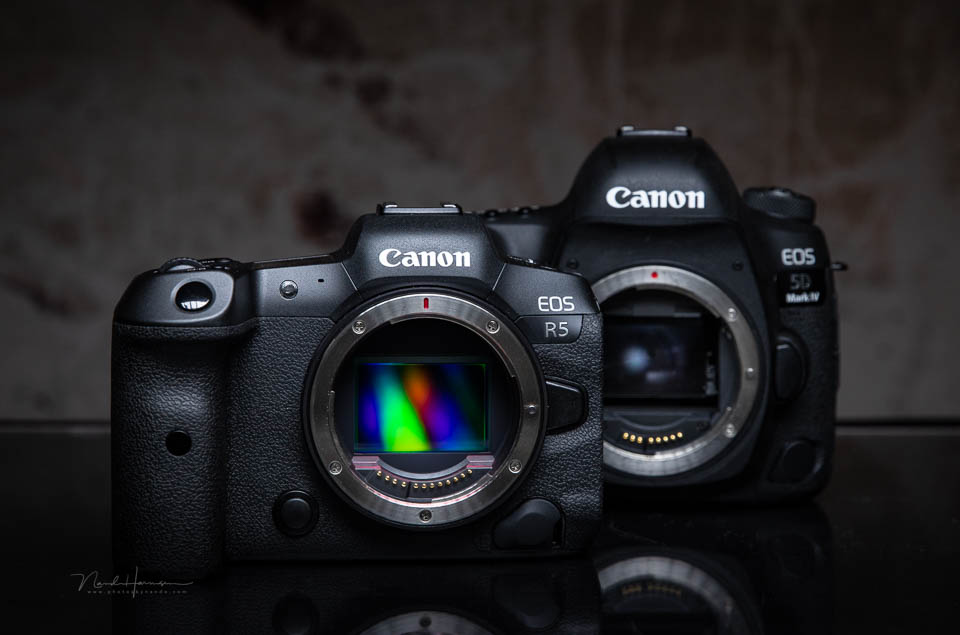
Have you not made the switch yet, but are you considering it? Then take a look at the reasons below and think about it carefully. You may be the kind of photographer for whom the advantages of a mirrorless camera do not apply, or hardly apply.
1. You won't take better photos with it
Sometimes you get the idea that a mirrorless camera is something magical that takes much better photos than a similar camera with a mirror. Unfortunately, nothing could be further from the truth.
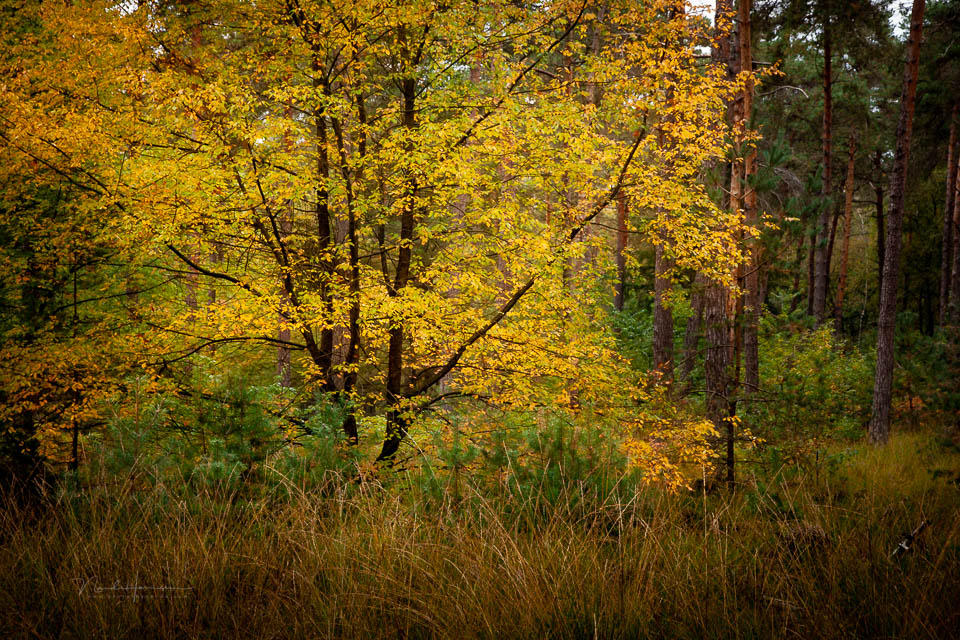
A mirrorless camera is exactly what the name says: a camera without a mirror. Apart from that, it is simply a camera, just like all the other cameras. It only works in a different way thanks to modern technology.
You won't take better photos with it. It is true that there are more technical possibilities, which means there are situations where the chance of taking a successful photo is greater. But whether you are often or quickly in those situations is another question.
2. You don't need autofocus magic
One of the possibilities offered by mirrorless systems is an intelligent autofocus system. Objects can be recognised and tracked across the entire image area. You only benefit from this if you are going to use it.
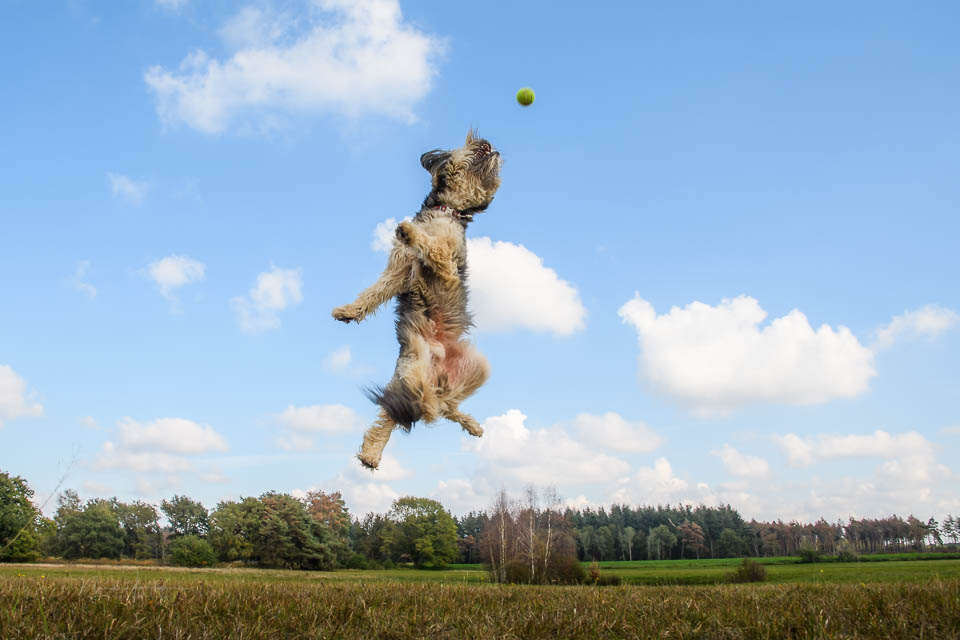
Do you always focus on a single point, or do you focus manually? Then you do not need all those complex focusing options. In fact, many DSLR cameras perform perfectly well for action photography too. They did then, and they still do now.
Does the autofocus system on your DSLR do what you need? Why is it necessary to switch then? If it works well now, it cannot get any better.
3. WYSIWYG is already available with live view
Mirrorless cameras show the result of the exposure, both in the viewfinder and on the LCD screen. What You See Is What You Get (WYSIWYG). That is useful, but no more than that. If you are a photographer, you know how to read and set the exposure, even without seeing the exposure on the screen.
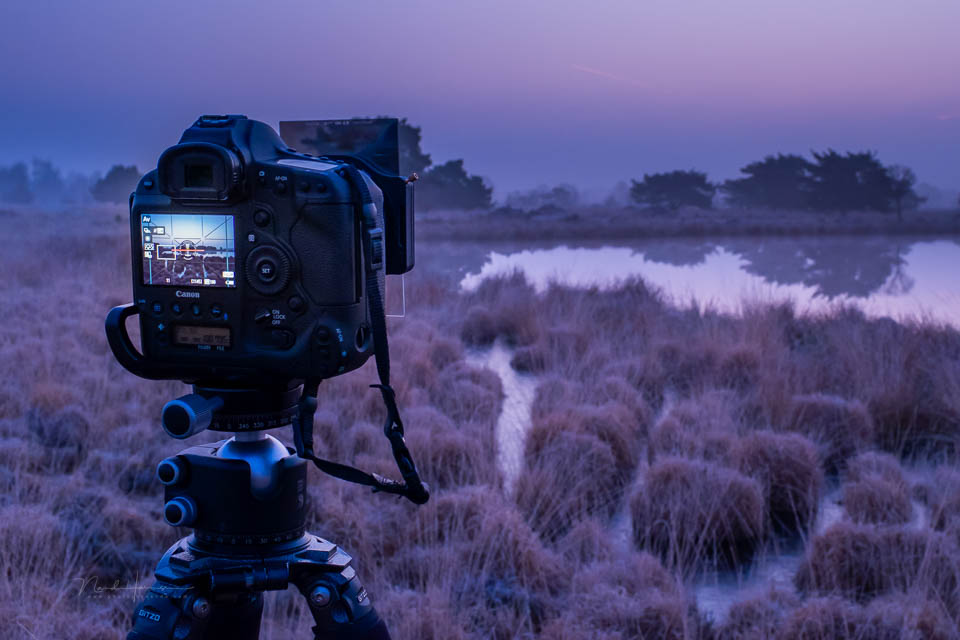
In fact, almost all 'modern' DSLR cameras have live view. Essentially, this is the mirrorless function of the DSLR camera. You can also see the exposure in real time there. But even that is not essential, because all cameras show in the viewfinder and on the LCD screen whether the exposure is set correctly.
4. The battery lasts forever
One disadvantage of all the electronics in a camera is its power consumption. The more electronics there are, the more power is needed. That is why all mirrorless cameras last less long on a battery than a DSLR.
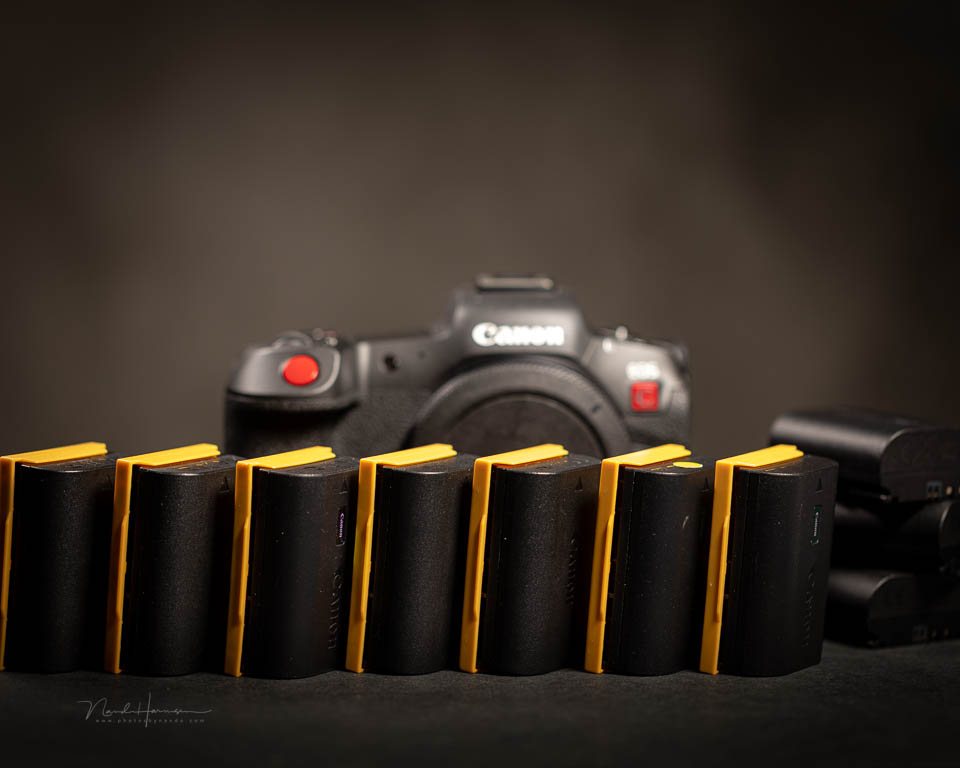
Especially when using an electronic viewfinder frequently, a battery runs down quickly. But all the processing power needed for the fast autofocus systems also requires plenty of energy. With a DSLR, you only need one spare battery. With a mirrorless camera, perhaps four.
5. It saves you a lot of money
All new technology costs money. Sometimes an enormous amount. Yet many photographers switch, whether or not they need to. This means that all the old cameras and lenses end up on the second-hand market.
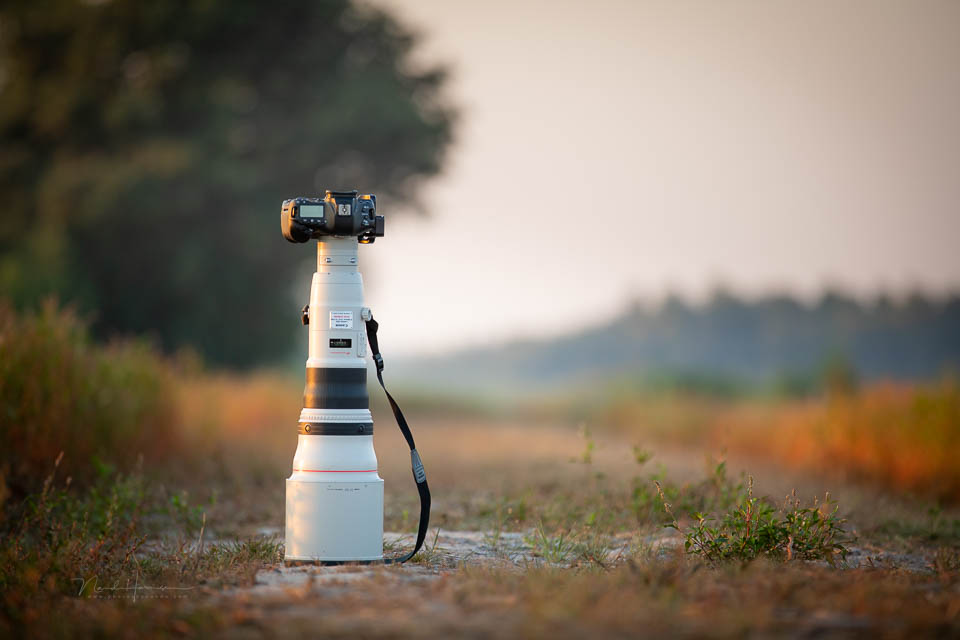
If you stick with a DSLR, you can now find professional cameras and lenses for very reasonable prices. Sometimes they are even indistinguishable from new. If you do not switch, you may even have money left for that one lens you could never otherwise have afforded.
6. The weight saving is very limited
A mirrorless camera is lighter and smaller. And although that is true to some extent, the weight saving will be very small in almost all cases. It is often just a few hundred grams and a few millimetres in size.
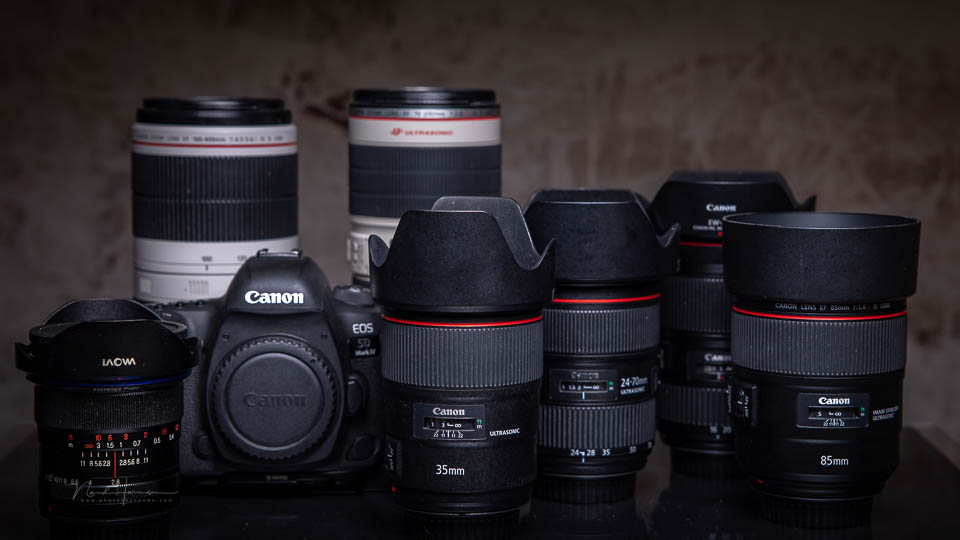
However, the lenses are not smaller or lighter. It is virtually impossible to make a lens for a full-frame camera smaller. In other words, you may save 200 grams on the camera, but the four lenses in your bag remain the same size and weight.
Do you really want to go smaller because the weight is becoming a problem? Choose an APS-C camera, or an M43. The smaller sensor also gives you the option of using smaller lenses. That is a real win-win situation.
7. If you need the new possibilities
Why should you switch to a mirrorless camera? There is only one genuinely good reason. That is if the new possibilities help you achieve a good result more easily and efficiently.
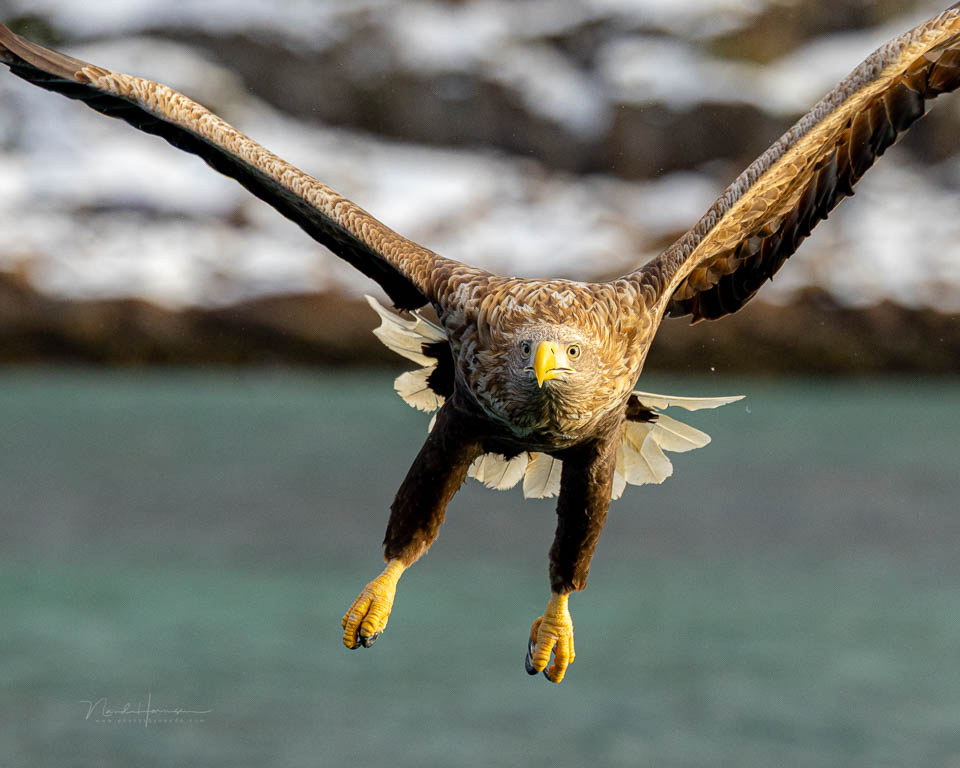
That could be through more accurate and faster autofocus with face detection, eye detection and all that sort of thing. It could be through a higher frame rate for action photography. But that is really about it.
If you benefit from these new features, a mirrorless camera genuinely adds value for you. But perhaps you simply want to have the latest and greatest. That is possible too. And to be honest, for many photographers that is often the real reason for switching.
What was your reason for switching? Or are you still taking photos with an old, trusted DSLR? Let me know in a comment below this post.
About the author
Nando Harmsen has been photographing for more than 40 years. He specialises in wedding photography and landscape photography. Nando also gives talks, workshops, masterclasses and photo trips, and regularly reviews new and interesting equipment.
You might also like
-
 DSLR lenses are still perfect
by Nando Harmsen
-
 Wildlife photography and switching to mirrorless
by Evert Doorn
-
 Is a DSLR still a good choice in 2026?
by Nando Harmsen
-
 Choose DSLR lenses for your mirrorless camera
by Nando Harmsen
-
 Is Nikon stopping making DSLRs?
by Elja Trum
-
 The DSLR is dead, long live the mirrorless camera!
by Elja Trum
59 comments
-

-
 Bert Schaeffer wrote on Tuesday 1 April 2025 at 11:05 | reply
Completely agree Nando,
Translated from Dutch.
I still photograph with great satisfaction with a Canon 5D Mark IV, which recently started counting from the beginning again. You don't have that with a mirrorless camera, where you can keep photographing.
When I inquired at the local camera shop, I heard that replacing the shutter with a new one should cost around € 550,-, that is a lot of money, which you don't have with a mirrorless camera.
My only uncertainty now is that I don't know when I should replace my mechanical shutter if it stops working? -

-

 MacBigfoot wrote on Thursday 10 April 2025 at 13:41
| reply
MacBigfoot wrote on Thursday 10 April 2025 at 13:41
| reply
On sites such as ‘Camera Shutter Life Expectancy Database’ (https://www.olegkikin.com/shutterlife/) you can find an estimate of the lifespan of the shutter of a specific camera.
Translated from Dutch.
Via other sites (search for ‘Shutter Counter’) you can check the number of clicks of your own camera. The number of clicks is separate from the counter the camera uses for numbering the photos themselves. -
 Hans wrote on Tuesday 1 April 2025 at 11:19 | reply
Hi Nando,
Translated from Dutch.
I still miss the autofocus of my canon 5D4, it was unparalleled, especially in combination with the flash. The reason I am switching to the canon R6 is nevertheless the weight and the addition of stabilization in the RF 24-70mm L. and finally I now make a lot of use of the possibility to immediately see adjustments in exposure in the viewfinder. -
-
 Arjan Spaander wrote on Tuesday 1 April 2025 at 11:22 | reply
For the past six months (after more than 16 years with a Pentax K10D) I have been using a Pentax K3III with an amazing viewfinder. I still maintain that you take photos with the camera to your eye so that your head and camera become one. Better for stability and your focus on the subject. An added advantage: I can continue using all the accessories from my old camera...
Translated from Dutch. -
-
 Ed wrote on Tuesday 1 April 2025 at 11:22 | reply
Nice to read such an article
Translated from Dutch. because you really do put the dot on the i.
The weight of the whole thing is always a bit of an issue for me, but you learn quickly by doing. In addition, I have to say that the new functionalities sometimes do make you wonder. On the other hand, it is very important to keep thinking realistically about how you make the images. At the same time, it also creates a challenge when looking for the right possibilities should you 'miss' something. -
 Henri
wrote on Tuesday 1 April 2025 at 11:35
| reply
Henri
wrote on Tuesday 1 April 2025 at 11:35
| reply
Switched from a 5D Mark IV to an R5 Mark II last August (2024, that is).
Translated from Dutch.
The biggest drawback is the 937-page manual (!)
Who remembers all that? And with a camera costing € 6099 (including 24-105), I still find it hard to swallow that it doesn't even come with a paper manual....
The slightly changed layout of the buttons and the lack of a number of buttons also quite often cause 'delays' while photographing: with the 5D I could operate all the buttons without taking my eye away from the viewfinder. I still can't do that with the R5II.
The positive thing is that I can use 'focus stacking' for product photos, and it works (usually) fantastically! Eye and face recognition are also top-notch!
The viewfinder image in low light isn't great either: that takes some getting used to as well.
And yes, there's now something more compact in the camera bag.
With the 5D series, I initially had an EF 4.0/70-200 and I sold it and bought the 2.8/70-200 MkII. I always regretted that because I couldn't see any difference in image quality in my photos, but the increase in weight was enormous.
Now I'm back to F4.0 again and the RF 4.0/70-200 is fantastic in terms of image quality and it's over 500 grams lighter than its predecessor. And much more compact! Now it does come along on long walks.....
With the 5D MkIV I already carried at least 3 batteries with me, just to be sure, and I do that now too. (No, I don't use disposable batteries, only rechargeable ones because they can be recharged...)
A major omission while travelling is the lack of a built-in GPS function. Now I absolutely have to take a phone with me with the Canon app. And that didn't work on my 6-year-old Samsung J6 phone either, so I also had to get a new mobile phone, even though the old one was good enough for me.
All in all, the switch is somewhat of a mixed bag. -
Nando
wrote on Tuesday 1 April 2025 at 12:52
| reply
What difference does it make how thick your manual is. You can simply ignore 75%, because operating a camera is no different. You could look at only the specific new functions, and only if you are going to use them.
Translated from Dutch.
As for finding the buttons, that is rather because of a new camera, and not because it is mirrorless. That is just a learning process which you will get the hang of quickly enough. -
Henri
wrote on Tuesday 1 April 2025 at 14:10
| reply
The thickness of the manual is more to indicate how complex cameras have become and how many possibilities there are. (My first camera was a Nikon F. This professional camera had a 32-page manual)
Translated from Dutch.
Since I never shoot film, for example, I can indeed skip a substantial section, but still...... -
Nando
wrote on Tuesday 1 April 2025 at 14:40
| reply
Use it as a reference... if you don't know something, look it up. Preferably digitally with a search function, because that works faster than leafing through a table of contents
Translated from Dutch.
The funny thing is, I still didn't understand some of the camera's functions, despite the manual. In the end, a YouTube video provided the solution.
There you are with your 750p thick book
hahaha
-

-
 Evert wrote on Tuesday 1 April 2025 at 11:43 | reply
Well written Nando, I myself no longer have a DSLR but a Mirror or system camera, two actually, which I regret a little in hindsight. For some purposes I think it's great but when I look at the photos afterwards I sometimes think, "if only I had kept my DSLR camera"
Translated from Dutch.
Still happy with the system cameras -
-
 Rob wrote on Tuesday 1 April 2025 at 11:52 | reply
With, among others, the mirrorless Nikon Z8, the lenses have a larger diameter.
Translated from Dutch.
Just listing the advantages of such lenses.
A larger lens diameter makes it possible to create lenses with a higher maximum aperture (such as f/1.2 or f/0.95).
This provides:
•Better performance in low light (higher shutter speeds, less noise).•
- More bokeh effect due to a shallower depth of field.
2. Better image quality (less aberration and distortion)
The larger diameter allows optical designers to create better lens constructions with:
• Less chromatic aberration (colors spreading around edges).
• Less distortion, especially with wide-angle lenses.
• Better sharpness across the entire image, even in the corners.
3. More efficient light transmission (less vignetting)
With a smaller lens diameter, light is sometimes cut off at the edges, which can lead to vignetting (dark corners in the image). A larger diameter helps direct the light to the sensor more efficiently.
4. Suitable for larger sensors in the future
Although the Nikon Z8 has a full-frame sensor, a larger optical system could in the future be compatible with larger sensors or higher resolutions without loss of quality.
Conclusion
Lenses with a larger diameter, such as those on the Nikon Z8, can provide better image quality, better performance in low light and fewer optical aberrations. This is especially noticeable with professional prime lenses such as the Nikon Z 50mm f/1.2 S or the Noct 58mm f/0.95 S, which benefit optimally from the large Z mount. -
Nando
wrote on Tuesday 1 April 2025 at 12:48
| reply
With this list, you're basically saying that all AF-S lenses were bad.
Translated from Dutch.
I don't agree with that. The differences are marginal and not noticeable in practice in 95% of cases.
Incidentally, you could also get AF-S lenses with an f/1.4 aperture. -
Henri
wrote on Tuesday 1 April 2025 at 12:53
| reply
Well, all nice in theory. However, most people can't even tell from my photos whether they were shot with a prime or a zoom lens, let alone whether they were made with a Z-mount....
Translated from Dutch.
And who is going to buy a 6,999.- Noct 58mm that also weighs approx. 2 Kg.?
No, in practical terms this is all irrelevant theory that is mainly fodder for marketing departments.... -
 onckelinx bob wrote on Tuesday 1 April 2025 at 12:11 | reply
.... rarely this honest wisdom on the net ... Bravo & Chapeau (just to be very sure) ... bob
Translated from Dutch. -
 guest wrote on Tuesday 1 April 2025 at 12:42 | reply
I let myself be driven crazy by all that advertising can throw away everything that fit on the nikon 5600 afterwards dead dead sins,
Translated from Dutch. -
Henri
wrote on Tuesday 1 April 2025 at 12:57
| reply
Oh yes, just one more
Translated from Dutch.
PS:
Almost forgot, but I am very, very happy with the movable screen on the back of the R5 MkII.
Now, with my bad knees, it is finally possible again to take photos from a frog's-eye view....
By the way, I never understood why that was never implemented on the 5D series.
PSII: Nando, good story! -
Nando
wrote on Tuesday 1 April 2025 at 13:00
| reply
That would have been a nice option back then. Maybe technically not (as) relevant or interesting for that 5D series? After all, the R series was on its way.
Translated from Dutch.
I had an angle finder for those low viewpoints back then. Not the same, difficult to use, but also handy, especially when live view didn't exist yet. -
 Peter wrote on Tuesday 1 April 2025 at 13:04 | reply
I've never had so much fun with my Sony A7r5 and G Master lenses. So much lighter (and smaller) than those from Canon or Nikon. It costs a bit, but then you get something for it.
Translated from Dutch. -
Nando
wrote on Tuesday 1 April 2025 at 13:13
| reply
Then you have the wrong idea about the size of that A7R V
Translated from Dutch.
That camera weighs within a few grams of an EOS R5, and has virtually the same dimensions.
The time when A7-series cameras were smaller is long gone.
The lenses aren't much smaller either. -
 Ludo Van den Schoor wrote on Tuesday 1 April 2025 at 13:31 | reply
In 2012 I bought myself a Nikon D800. In 2014 I added a Nikon V1, which was already a system camera. In 2018 a Fuji XT2, XE2 and X100T followed because they are lighter to take along when going out. For a month now I have owned a Nikon D500, indeed because it was very affordable. So yes, why those Fujis? GAS for sure, I think.
Translated from Dutch. -
 André Kremer wrote on Tuesday 1 April 2025 at 13:42 | reply
I switched from DSLR (Sony A99, A-700) to mirrorless (A7R5) for a banal reason: during a burglary (during the day...) my cameras and some of the A-mount lenses were stolen, and I saw that the new e-mount lenses are better than the old A-mount ones, faster in terms of focus and some with a better combination of quality and range. I now use the Tamron 35-150 as my standard lens, and that is still a much wider range than the Zeiss 24-70 I had before. And focusing, also in the studio, is a lot easier with this A7R5. And maybe because of that (lens/focusing) I do manage to take good photos a little more often ...
Translated from Dutch. -
 Liesbeth Verkade wrote on Tuesday 1 April 2025 at 13:44
| reply
Liesbeth Verkade wrote on Tuesday 1 April 2025 at 13:44
| reply
Nice to hear a counterpoint about mirrorless!
Translated from Dutch.
I bought an Eos 90D 4 1/2 years ago and am still very happy with it, but all those messages sometimes made me doubt. Now I can simply use the lenses from my old 500D, so no additional purchase.
I prefer to use the viewfinder. It seems as if I have more control then. But the tilting screen is a godsend now that I am no longer as mobile.
I see no reason to switch to mirrorless. -
 Tim wrote on Tuesday 1 April 2025 at 13:48 | reply
I always carried 2 Nikon D750s at weddings. Great cameras! Both shutter counters were over a hundred thousand and one of them developed some age-related issues, for example a clock that started running incorrectly. If you use multiple cameras to capture a day, it is important that the clocks are synchronized. Some of the covering also started coming loose.
Translated from Dutch.
First bought one new Z5. It does everything I need. With an adapter so I could continue using the AF-S lenses. That took some getting used to, it also sat in the bag as a backup for a few months. After that it went well. I am very happy with the WYSIWYG for quickly switching between situations and cameras. It was annoying to use two different cameras at the time, so I bought another Z5. I am very happy with it. The difference is not huge, but the WYSIWYG is nice. -
 Donald Willemsen wrote on Tuesday 1 April 2025 at 13:48 | reply
You can download the manual as a PDF file on your smartphone. Then you always have it at hand.
Translated from Dutch. -
-
Peter wrote on Tuesday 1 April 2025 at 13:54 | reply
Okay. The Sony camera is indeed somewhat lighter, but for example the difference between the two 24-70 (GM and RF) lenses is more than 200 grams in Sony's favor.
Translated from Dutch. -
Peter wrote on Tuesday 1 April 2025 at 13:58 | reply
One more addition: the weight difference between the two 70-200 2.8 lenses is more than 300 grams in Sony's favor.
Translated from Dutch. -
Nando
wrote on Tuesday 1 April 2025 at 14:29
| reply
Sorry that I have to correct you again.
Translated from Dutch.
The Sony FE 70-200mm f/2,8 GM II is 1045 grams
The Canon RF 70-200mm f/2,8L is 1070 grams
That 24-70 is correct.
But why do you still want to turn it into some kind of competition. Those differences in the weight of the camera (because that is what this article is about) is negligible. Besides, you have a Sony or a Canon, or a Nikon, or whatever brand. If you start comparing the brands with each other, it's apples and oranges. You can't use a Sony lens on a Canon or vice versa.
If you now compare a new Canon lens with an old Canon lens, or a new Sony lens with an old Sony lens.
Or an old Sony camera with a new Sony camera... Although, you shouldn't do that either, because those new Sony cameras are much heavier than those old models. In short, you have gone backwards in terms of weight savings. -
Donald Willemsen wrote on Tuesday 1 April 2025 at 14:06 | reply
To be honest, I am happy with the switch to mirrorless. The AF of my R7 is much better than that on my previous 70d and 80d. The IBIS also contributes to better sharpness in my photos. The aids for manual focusing also help me to see better what is and is not in focus. With the DSLR I had problems focusing because of my eyes. Now with my R7 that problem no longer exists. A big difference is also that the mirrorless always focuses at the level of the image sensor. With the DSLR this happens via a separate sensor just behind the mirror. The latter can lead to having to calibrate a lens/camera combination if you suffer from front or back focus.
Translated from Dutch.
A mirrorless camera should never be calibrated for that problem.
I have noticed that RF lenses are generally still lighter in weight than EF lenses.
For me, the switch to mirrorless is clearly an improvement.
But you are right, Nando, with your argument if you look at it in general. For people like me, in my specific case, the switch is a good thing. -
 Gina Heynze wrote on Tuesday 1 April 2025 at 14:13 | reply
For certain types of photography, it's wonderful when you don't hear the mirror slap but can quietly do your work. I also like to keep up with developments a bit for as long as I can. "A mirrorless camera is exactly what the name says: a camera without a mirror". So why don't we just write "mirrorless"?
Translated from Dutch. -
Nando
wrote on Tuesday 1 April 2025 at 14:33
| reply
It is almost always and only the photographer who finds the sound of the mirror flipping up disturbing. You are sitting right next to it with your ear. A meter further away and you can already hardly hear that mirror anymore. In all the decades of photography, under all circumstances, I have only had it be annoying once.
Translated from Dutch.
You are right: we should all be using mirrorless - or mirrorless if we prefer the English term. I just hate that everyone (including the manufacturer) calls it a system camera. That makes no sense. Because an SLR is also a system camera.
Typically Dutch... -
 Lauran wrote on Tuesday 1 April 2025 at 14:56 | reply
People often buy a much too expensive camera compared to what they are capable of. What is an amateur supposed to do with a camera costing, for example, 4000 euros plus.
Translated from Dutch.
Rather spend your money on a proper education. And then take a look at that one expensive fast lens. Jealousy is often the driving force underlying that. -
-
guest wrote on Tuesday 1 April 2025 at 15:19 | reply
I am very happy with my Canon R5. I am a portrait photographer and often take photos on location in churches, castles and other old buildings. There is usually little light there and the camera performs brilliantly in those conditions. In the studio it is a little less important because I work with flash and LED light there, although I do think the eye detection is really fantastic. Always works perfectly. So for me it is a real improvement compared to the DSLRs I have had.
Translated from Dutch. -
guest wrote on Tuesday 1 April 2025 at 15:26 | reply
Very happy with my Olympus 3/4 set: due to physical ailments, weight is an important factor
Translated from Dutch. -
Rob wrote on Tuesday 1 April 2025 at 15:49 | reply
No, that's not what I'm claiming. They are excellent lenses; I've worked with them too. Now I'm working with S lenses again. Before this I had a Nikon D850, but now a Nikon Z8. For the kind of photos I take, that is a major improvement in terms of autofocus, especially regarding speed, precision and tracking - and much more.
Translated from Dutch. -
Nando
wrote on Tuesday 1 April 2025 at 16:21
| reply
I didn't think you meant something like that either, but that's how it sounded.
Translated from Dutch.
The speed of autofocus, precision and tracking are of course not because of the lens, but because of the camera. The Z8 and Z9 perform very well in that regard.
Obviously, the lenses are capable of keeping up with that speed and precision. However, that has little to do with the diameter of the lens mount. -
 Guido Van Belle wrote on Tuesday 1 April 2025 at 16:39 | reply
The difference in weight can sometimes be considerable. I switched from a Nikon D7500 to a Sony Alfa 7CR. Instead of my brilliant superzoom 16-300 APSC I now work with an APSC lens 18-135. But it makes an enormous difference in weight and dimensions. If I could still lug around a lot of weight, I would have been better off sticking with my Nikon for my photos. But it became too heavy.
Translated from Dutch. -
Nando
wrote on Wednesday 2 April 2025 at 09:41
| reply
You are now using an 18-135mm APS-C lens, you say. On a Sony A7CR full-frame camera?
Translated from Dutch.
Then you are always using the camera as a crop camera, because otherwise that lens cannot work. Wouldn't it have been better to choose a crop camera directly, such as the A6700? -
Rob wrote on Tuesday 1 April 2025 at 16:47 | reply
It’s all relative of course, Nando.
Translated from Dutch.
In my case, specifically regarding Nikon (I also work with Leica mirrorless)
One more thing:
Advantages of a larger lens diameter (Z-mount vs. F-mount)
Better autofocus? Because Z lenses are specifically designed for mirrorless cameras, they work faster and more precisely with the on-sensor AF technology of the Z8, compared to F lenses on a D850, which still uses a separate phase-detection sensor.
The larger lens diameter of the Z-mount offers optical and technical advantages, especially with fast and wide-angle lenses. As a result, the Z8 gets more potential out of new lens designs than the D850 with F lenses. -
 Henk Elshout wrote on Tuesday 1 April 2025 at 19:34 | reply
I've always been a contrarian (no railway without sleepers), I photograph with the Pentax K1 M2, one hell of a DSLR, I've also had more or less all its predecessors, including analogue from 1980. And if another successor comes along, I'll buy that one too, but unfortunately I'm afraid that isn't going to happen. For that reason I'm looking around for something else, but switching to another brand will obviously be an expensive affair, if I need new lenses again. I do think that if I switch, it will be a mirrorless camera, but it's not necessary for me, because the advantages mentioned don't play any role for me.
Translated from Dutch. -
 Willie Kiek wrote on Tuesday 1 April 2025 at 21:10
| reply
Willie Kiek wrote on Tuesday 1 April 2025 at 21:10
| reply
I’m still happy that I traded in my 5Ds for the R6. It’s great in low light. I didn’t think I’d be carrying so much weight, but in the end I also bought a battery grip. Because I thought I was going to use my EF lenses, I bought an adapter as well. I traded those lenses in too and I’m very happy with the RF lenses.
Translated from Dutch.
Now I’ve been looking enviously at R5 users for a while, who can crop better afterwards, handy with nature photos. So I thought about buying the R5 Mk2. But, it’s quite expensive. I was advised to wait for the R6 Mk3, trade in the R6 and buy a second-hand R5 because they might be offered cheaply soon.
Not long ago someone advised me to buy a (good) second-hand R3 and keep the R6. The R3 also has a number of nice options. Pffft, choices, choices. (I’m still happy with my R6.) -
Nando
wrote on Wednesday 2 April 2025 at 09:30
| reply
If you want a camera with more resolution to crop in post-processing, then you really shouldn't choose an R3. It has just as many pixels as the R6
Translated from Dutch.
Only the R5 then comes into the picture, and that one can be gotten second-hand at favorable prices due to everyone switching to the R5 Mark II. -
 Jef Debacker wrote on Tuesday 1 April 2025 at 22:54 | reply
Great article. I can totally relate to it.
Translated from Dutch.
My previous camera was a Canon 5D mk II. I used it for about 10 years. Great camera, only I thought the autofocus could be better. The middle focus point worked fine, the other 8 just so-so.
For a good year now I have been using a Canon R6 mk II. The sublime autofocus capabilities of mirrorless cameras, regardless of the brand, convinced me. And all the other extra features and improvements were a nice bonus.
I usually use the viewfinder, but often the flip-out screen as well. Taking photos from stomach height is less noticeable, and gives a different, often better, perspective.
With my Canon 70-200mm f/2.8L IS (first generation) I occasionally get blurry photos. The sharpness is then not where the camera / raw file indicates it should be. I suspect this is because the autofocus in this older lens is too slow for this modern camera. Replacing it with its RF successor is quite expensive, so I am still undecided. -
 Arie willem jonkman wrote on Wednesday 2 April 2025 at 09:11 | reply
Nice advertisement for the DSLR. I work with a D850 and bought another new one in case they are no longer available. I have photographed with a Sony A7RII but it is sitting idle in the cupboard . Batteries always empty etc . So for me, a reflex after all. That is what I have become accustomed to over the past 50 years
Translated from Dutch. -
 Ben wrote on Wednesday 2 April 2025 at 09:27 | reply
You can also use your old lenses on a mirrorless, you know. In fact, they seem to get a bit better.
Translated from Dutch.
And both EF and EF-S lenses fit on the R. -
 Thoni wrote on Wednesday 2 April 2025 at 12:47 | reply
Canon has already largely switched to mirrorless cameras. There are only 3 professional DSLR models and a few beginner models still available.
Translated from Dutch.
By now, fewer and fewer lenses from the L series are also available new.
I hope that with your article you mean: if you have a good DSLR, just keep using it and enjoy all the beautiful lenses that are now being offered second-hand.
If you are going to buy new, a mirrorless seems like the logical choice to me. By the way, with the use of lenses with an EF mount and adapter. -
Nando
wrote on Wednesday 2 April 2025 at 13:57
| reply
Of course. If you're going to buy new, an ML is an obvious choice. Although, of course, you can also choose a second-hand DSLR if that's more favorable for you.
Translated from Dutch.
Second-hand is a perfect choice for many. It saves a lot of money. -
 muonen wrote on Wednesday 2 April 2025 at 13:38 | reply
Because the new mirrorless cameras are true ISO monsters, I now shoot with lenses with an f4 aperture throughout the entire range instead of f2.8 and that really saves a serious amount of weight. Not having to lug that weight around increases my enjoyment of photography enormously and does not outweigh a little more DOF.
Translated from Dutch. -
Nando
wrote on Wednesday 2 April 2025 at 14:00
| reply
New cameras perform well in terms of ISO. Not necessarily mirrorless, although the new cameras are almost all ML.
Translated from Dutch.
Remember that a large aperture also has other advantages, especially for your autofocus.
Just read my article about it: https://www.photofacts.nl/fotografie/rubriek/tips_en_truuks/betere-autofocus-dankzij-een-grote-lensopening.asp -
 Wim wrote on Wednesday 2 April 2025 at 13:59 | reply
Good day, the only thing that is increasingly starting to bother me is (especially in nature) the noise that the Camara (Sony A500) makes when taking photographs. Which somewhat ruins the enjoyment of nature photos.
Translated from Dutch. -
 Fred Hermans wrote on Wednesday 2 April 2025 at 15:06 | reply
Last September in Italy at Lake Garda I had a rain shower on my roof. So intense that there was even water in my camera (Nikon D3500 DSLR), which was in my camera bag that was supposed to be waterproof. You can see it coming, that was the end of the line. So a new camera had to come and that was also the moment for me to ask myself whether I would switch to a mirrorless camera or not. For me, the consideration was that if I switched I would have to work with adapter rings to be able to continue using my current lenses. The fact that the lenses could not be used to their full potential on a full-frame was also an issue for me. What you describe about more lenses coming onto the market also applies to the cameras themselves. I was able to purchase a beautiful D7500 for a very acceptable price, in perfect condition, and I am very happy with it and this has been the best option for me.
Translated from Dutch. -
 Jan wrote on Wednesday 2 April 2025 at 16:17 | reply
What a great article Nando, with a wonderfully down-to-earth tone. Cameras are just like phones. A thousand and one possibilities, of which you generally only use a number on a regular basis. My Sony A77II from 2015 has an excellent electronic viewfinder with translucent mirror technology. The 79-point AF system, with 15 cross-type points, is sufficient for me to take wonderful shots.
Translated from Dutch.
The technical possibilities I use a lot, such as face recognition and focus peaking, were already added to this camera by Sony 10 years ago. The continuous autofocus is fast enough for me as an amateur photographer to take beautiful action shots. All in all, very satisfied with this camera, which has more than enough functions and speed to enjoy for years to come. I would rather spend that money on a good second-hand lens than on a new camera.
Have your say
Please note: Articles older than a week can only be commented on by signed-in visitors.Would you still like to comment? sign in or create a free account.
Become a better photographer every week
A practical photography tip in your inbox every week.
39,079 photography enthusiasts already receive the tips! More about the weekly mail. Or keep up to date via  Facebook.

Elja Trum
Photofacts; everything to do with photography!
Would you like to take better photos and keep up with what is happening in photography? Photofacts publishes articles that teach you something about photography — from a product announcement to a practical shooting tip or a look at a website. Photofacts covers photography every day and is a hobby project of Elja Trum's that got out of hand. The articles are written by a team of volunteer authors. If you would enjoy writing one or more articles for Photofacts, do get in touch.More about PhotofactsPhotofacts is made possible in part by
